Shownotes
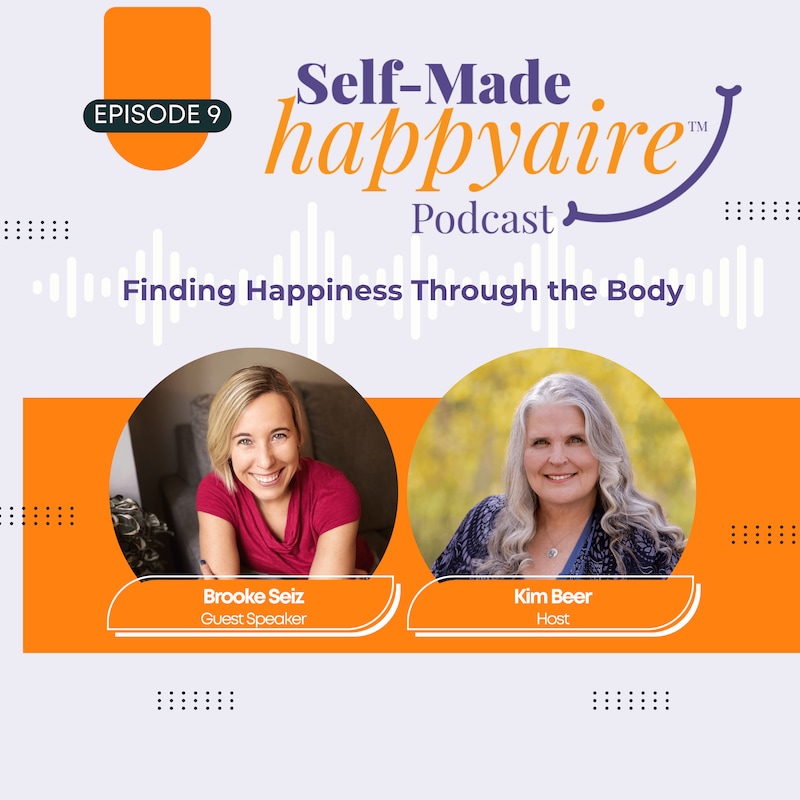
In this episode of The Self-Made Happyaire, I’m joined by Brooke Seiz, somatic experiencing therapist and functional nutrition provider at Evolve Wellness KC. Together, we explore happiness as a bodily frequency — one that becomes accessible when the nervous system feels safe, regulated, and present.
We talk about why happiness can feel “lost” when your body is busy protecting you, how somatic experiencing helps remove the barriers without forcing positivity, and why gut health plays a surprisingly powerful role in emotional regulation and joy. We also share simple, practical ways to begin tuning back into your body — even in the middle of a busy day.
This conversation is for anyone who’s tired of being told to “just think positive” and is ready to experience happiness from the inside out.
www.evolvewellnesskc.com
https://www.instagram.com/brookeseiz/
www.linkedin.com/in/brooke-seiz
913-213-1272
Brooke Seiz, LCPC, SEP, NTP, IFMCP is a somatic and relationship therapist and functional nutrition provider. She works with both individuals and couples, and specializes in developmental trauma, chronic pain, as well as overall nervous system regulation. As a certified functional medicine practitioner, Brooke helps women get to the root cause for their fatigue, gut issues, and hormone imbalance, addressing these root causes with somatic therapy, holistic nutrition, and counseling. She takes an integrative approach to help folks come into greater alignment with themselves so they can show up with more presence and fulfillment in their lives. Brooke is also trained in Touch Trauma skills and utilizes table and touch work in her practice.As a former musical theatre performer, Brooke loves how music, theatre, and dance bring connection to self and community. She enjoys helping folks integrate play into their lives and work! Brooke teaches workshops and continuing education trainings to empower folks with strategies and choice around their health and wellness. Brooke finds purpose and great joy in supporting folks in finding embodied connection to self and community!
Transcripts
EPSMH Brooke
===
Kimberly: [:Brooke: I'm Brooke Seiz Uh, I have a private practice in Prairie Village, Kansas, right on the state line of Missouri. I'm licensed in both states as a licensed clinical professional counselor, do somatic therapy. I do relational therapy, but a lot of trauma work, a lot of developmental trauma. Table touch trauma work.
Brooke: So that is my main thing. And then I'm also a functional nutrition provider and work quite a bit with gut health, gut brain connection, and hormones.
Kimberly: I'm glad to be here. It's all connected, right? It's we, we cannot deny that we are an entire system and treating one part means that the other parts get affected even by the treatment.
I love that you do have this [:Kimberly: So when I say that frequency that we tune into, how does that land for you? What is your somatic experience perspective of that thought?
Brooke: Yeah, I think of that and will respond, you know, kind of from like the felt sense that I have with it and then also from like kind of how we can speak about it and come to understand it.
It's like coming back home. [:Brooke: I mean, there's a whole range in each of these states, but we talk about ventral vagal sympathetic activation, dorsal vagal. And happiness is kind of in this ventral vagal place, which can also be thought of as like where we have presence, where we're in social engagement, where we feel like we're not in a lot of, we're not in fight or flight, but we're kind of alive, we're present, we're not asleep, we're not dissociated, but we're here and we're more in this kind of neutral connected place.
ppiness when you are in that [:Speaker: zone of connecting happiness. Now I also hear people when they're talking, they use the language of, I, I've lost my happiness, or I can't find happiness. It's, it's like this. Yeah. I imagine it is like they're lost pet or something kind of wandering around and they're going, I don't know where to find it any longer.
Speaker: From your work, where do you see happiness getting lost in the body?
Brooke: It's almost like we gain other things, you know, we go into protection, we go into a survival state. I always feel hear people talk about sensation in the chest. Like it feels tight.
Brooke: I feel guarded, I feel and it feels like it's lost. When it feels like it's lost. That's a really frustrating place to be. I don't think of it as lost. I try to talk to people about, like, it's there, but we have to kind of come back to regulation and like, almost like remove some barriers that have shown up and make us feel like we can't access that.
bring into this part of the [:Speaker: The practice that I utilize it in, in Gestalt, it's not about forcing positivity. And I think there's a lot of people out in the world right now who are kind of weary of being told that just being positive will fix all their problems. Where do you land on that particular subject? Like what are your thoughts around the positivity epidemic?
Brooke: Thinking about mindset can be helpful, right? But if I don't feel it in my body, if I'm just like trying to be positive or say the positive things that for a lot of people, I mean, it's not to say that that can't work in many ways, but. That's not really what we're talking about with happiness, right?
ck to kind of more like a, a [:Brooke: But I know what you mean. Like this is a conversation that comes up a lot with clients is if we're used to living in a more activated place that can go to fight or flight, but it can also go to excitement. And for a lot of people like excitement moving forward, productivity feels like happiness but I never really feel like fulfilled and that fulfillment feeling or that satiety is like more, I think, you can weigh in Kim, but like what I would say is more towards happiness.
Speaker: Well, I think that so many times we adopt what the collective consciousness or what the collective culture that we live in perceives as happiness.
iving in the United States in:Speaker: Right. So it gets really wrapped up in us being really lost in not knowing what truly makes us happy. When I started this podcast, I wanted to talk about happiness.
Speaker: That was the ultimate goal of this. And when I started talking to people about what their perceptions of happiness are, every single person tried to define happiness a little differently, and most of them are like I may never have thought about what is happiness?
define and how to even make [:Speaker: It's a sensation, but if you're so disconnected from feeling, it's really hard to identify what happiness is. And you're right, we tend to get, like my clients get excitement and fear wrapped up with each other because they seem kind of similar. It's sometimes hard to define of, am I really scared of it or am I just excited for it?
Speaker: Yeah it's confusing and, and I'm assuming that in your work, that's what you do, is you help people sort all of those little threads out so that they can determine what that is for them.
lk about excitement and fear [:Brooke: There's some different things going on, there's a different mindset, there's a different, there's a different meaning. There's a little bit of different chemicals happening, but like same place. So one can quickly turn to the other. And happiness it's in that more ventral vagal presence place. And I can say for me personally, I mean, I was totally like, I'm a sympathetic activation
Brooke: go, go, go. You know, I've made jokes about like, once you finally find your presence and your peace and your happiness, so what happens with my business? You know?
Speaker: Yeah.
Brooke: Because I was in that place and the other thing that I know I noticed and I see it with clients is sometimes, at first it feels boring.
lly get used to it and start [:Speaker: Yeah, I just listened to a whole thing of a, for another professional that I belong to her programs, and she was just talking about making your business boring and how we could all use a little bit more boring in our business. And I'm like, you know what? There are times that, as a person who loves to adventure into new things, I can always create excitement, but creating boredom is a lot
Speaker: harder ask in that relation. I wanna switch over a little bit in our conversation and talk about somatics and gut health because if, if we think about it, and here's how I kind of relate these two things together. Well, first of all, your gut health is part of your body, right? And it's part of a system.
rically, especially with our [:Speaker: And then we have, root and foundation and all of those things that wrap up into gut health. And what role does gut health play in your access to happiness and emotional regulation?
Brooke: There's a million nerve endings in the gut and when you say all those phrases, you know, we are literally that language.
at the gut will twist, spit, [:Brooke: It's literally doing that in those states. And so when we say that that's happening and then all of that bacteria in there, in our, our gut microbiome, that bacteria will respond to all the sensory information coming in and share that information with the brain. And anything coming from the brain, we'll share that with the bacteria in the gut to reflect back how we feel.
Brooke: And there's this like direct communication happening there that then impacts our mood. And so if we're in. You know, and it's normal through the day to get stressed or things like that. But if we end up in that place and we're never really settling in our system, we're never having the time or taking the time to settle it's hard to access happiness because when we're in that place in the nervous system, it's not gonna happen.
omeone's gut can feel really [:Brooke: And when somebody feels happiness, usually they're describing like, oh, it feels like my stomach is calm and quiet. It's relaxed. It's, I feel like space. And probably their digestion gets better because their nervous system is in a more settled, regulated, ventral vagal place.
Speaker: Absolutely. The whole system is in harmony is kind of what I would describe that as.
Speaker: Every, everybody is doing their job and there is nothing exceptionally upsetting or, and then that opens up the door to experience a different sensation that sometimes feels odd and weird to us. So that happens. Right, right. I know to me sometimes it's like, oh my goodness, this, this feels different. Back to that boring.
e boring is a good thing. It [:Speaker: I have some self-regulation practices I love to do. I have one that I call recalibration where I spend it a lot of time just I lay and I I just do the bilateral stimulation in my own mind of thinking of one side of my body to the other, and I move all of the way up through my body, and it's a practice that helps me reach that more neutral state.
Speaker: And I'm curious for you, is there any simple somatic or body-based practices that someone could try to start better tuning into themselves? To tuning into their body?
Brooke: I'm gonna say one thing around a practice that also involves the gut since we were just on that topic, and then I'll throw in a few more.
t to do about a situation or [:Brooke: Like, is this what I really want? That can be a way to kind of also take in some information from the body. It's just an interesting practice. We don't always get all the answers, but it's kind of a, an interesting practice to see what information does come up. And then a lot of times at the start it's like, where is my body?
Brooke: How can I just come back to it? 'cause our mind will take us all over the place. It's like this challenge of being human is that we're animals, but we we can tell time. Yeah. So we're in the future or in the past, and it's like a total practice just to come back and be like, where's my body now? Right now?
if I'm gonna throw this in, [:Brooke: Yeah. I have people take one hand under one arm over, drop their chin and curl forward and just squeeze as small as they can get. Curl in, you can feel your abs get engaged when you do that. Like all the muscles can squeeze legs together, just contract and then release by 50%, release by 50% more, and then release all the way, and then just move a little, you know, there's no rule, but just like stretch
hat's happening and in their [:Brooke: If we had green right now, right now, it could be look for some things poking out of the snow. And moving the head actually stimulates the vagus nerve, which can help the parasympathetic system, which helps us get back to presence and the here and now. Usually when folks do that in session, even if they're still activated, like just doing that, brings it down a couple degrees and then they can find their breath and then check in with like, can I feel my body, what's happening in my body?
Brooke: That's a
Speaker: starting. I love that exercise. I'm gonna adopt that. I love that practice. That's a really nice thing to be able to do. If you're in a, a small business owner, you can do it at your desk. Nobody knows what you're doing. Like it, it helps you. I love things that I can do to help regulate myself and others without it being something that's super obvious to the world around me.
s do that, as well as assist [:Speaker: Where can people find you and how would somebody go about working with you to, to dive deeper if you found this at all helpful today?
Brooke: I have quite a lot on my website. There's blogs and information on there as well. That is evolvewellnesskc.com. There is a link on there if somebody was ready to chat and see if it's a good fit for them, that they can book a 20 minute complimentary
[email protected] or [:Speaker: I love that and I'll link that in the, the show notes as well. And I do wanna say I have worked with Brooke and I will say she is kind and understanding and she truly listens to you. So if you are a little nervous about bringing topics that maybe are uncomfortable for you to talk about, Brooke definitely
Speaker: opens a very safe space for you to be able to discuss things with her. So I really, I really encourage you to reach out 'cause I, I think you'll find that she's a pretty awesome human to work with. So thank you Brooke, for hanging out with me today. I appreciate you coming in and talking with me and with my audience about this.
Speaker: And somatic experiencing and gut health are both such an important part of being in alignment with that frequency of happy. So thank you so much.
Brooke: Yeah, it's an honor.
