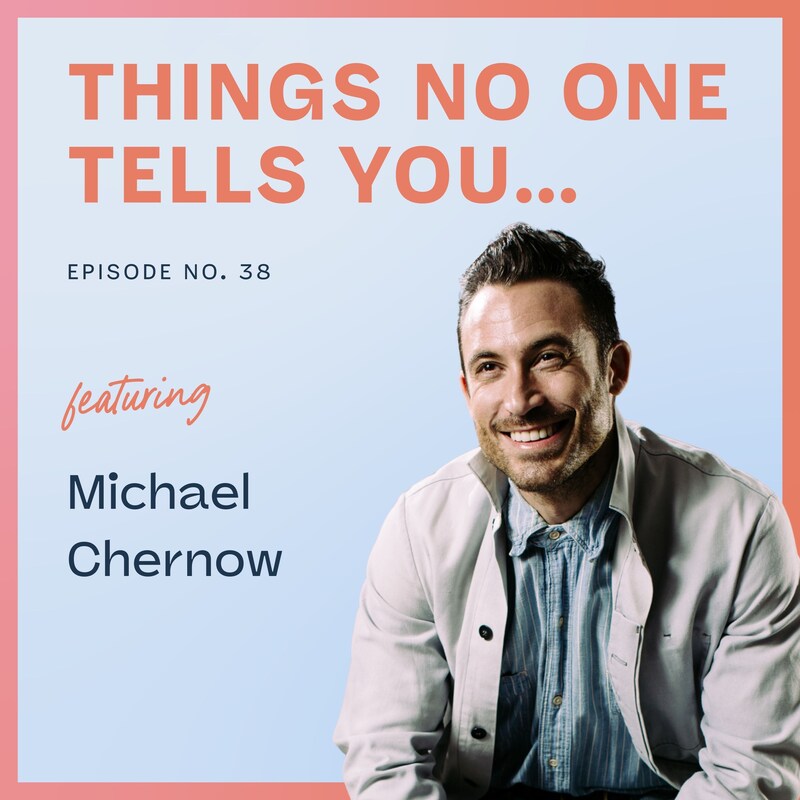
Shownotes
We talk a lot about transformation. We don’t talk enough about what it takes to sustain it.
Michael Chernow thought he was going to die at 24. After years of addiction and a near-fatal overdose, he didn’t believe he could stop. He couldn’t imagine a different life. What changed everything was structure after hitting rock bottom. A mentor who gave him an hour-by-hour plan. Small wins he could control.
In this episode, Michael opens up about addiction as a disease, the fears and misconceptions of sobriety, and how fitness and nutrition became the tools that rebuilt his confidence. He shares the story behind Kreatures of Habit and why he created Sober Fit Dude to help other men find mission and community in recovery.
What You’ll Hear:
- The overdose and the turning point (15:43)
- Why asking for help felt impossible (22:57)
- The discipline that built confidence (27:00)
- Entrepreneurship after sobriety (33:14)
- The daily habits that matter (59:19)
This is a conversation about rebuilding from scratch, about turning chaos into structure, and about what’s possible when you commit to the long game.
If this episode spoke to you, be sure to follow the show and leave a rating so others can discover it, too.
You can watch this interview on YouTube: https://youtu.be/seEn8c-9COI
For a full transcript and more, check out our blog post: https://www.lindsaycz.com/show-notes/michael-chernow-38
Check out more from Michael Chernow:
Follow Michael Chernow on Instagram: https://www.instagram.com/michaelchernow/
Follow Kreatures of Habit on Instagram: https://www.instagram.com/kreaturesofhabit/
Discover Kreatures of Habit’s website: https://kreaturesofhabit.com/
Check out SoberFitDude: https://www.soberfitdude.app/
Mentioned in this Episode:
Navigating the Impact of Addiction with Stable Recovery https://www.lindsaycz.com/show-notes/stable-recovery-28
Support this podcast:
Follow Things No One Tells You on Instagram: https://www.instagram.com/thingsnoonetellsyoupod/
Stay connected with Lindsay https://www.lindsaycz.com/ and follow her on Instagram https://www.instagram.com/lindsaycz/
Subscribe to my YouTube channel https://www.youtube.com/@lindsaycz
Transcripts
[00:00:27] And so discipline for me has been at the cornerstone of my success. And I'm not perfect by any stretch, but discipline for me does equal freedom.
[:[00:00:57] Maybe this helps somebody. I've talked in this space before about addiction and about how I lost my cousin to a drug overdose. It was actually a year ago that I first visited Stable Recovery, which is the recovery program that works with horses. They're in Lexington, Kentucky, and I was just so blown away by the work that they do.
[:[00:01:44] and he uses that as tools that he tries to teach and he uses in his work as a life and wellness coach. For Michael, really a lot of it is about habits and development. One strong habit leads to another and another. So even if you are not touched by the disease of addiction, or it's not something prevalent in your family, the structure that he teaches within the theme of habits I found fascinating and something that I definitely could implement, specifically, how he structures his day.
[:[00:02:27] Michael Chernow. I am, I'm so excited to have this conversation with you because honestly, there are a million things I would love to ask you. But besides the fact of the work that you're doing in the wellness space, you're an entrepreneur to the max degree, you know, your journey with sobriety is something that, having gone down that path of working with recovery programs, I'm just deeply interested in. How are you doing? Where are you to start?
[:[00:03:08] Lindsay: Oh, nice. Okay. Not that far from me.
[:[00:03:10] Lindsay: We're in Connecticut.
[:[00:03:12] Lindsay: In Fairfield County, Connecticut. Yeah, right down the road. So let's start, I wanna actually start with telling you about an experience that I just had because I was really looking forward to talking to you after this. I just came from Indianapolis, where I was, we were getting ready to interview all the Indy car drivers at the start of the season.
[:[00:03:51] This is what you're able to understand: these themes of the drivers. Several of them said, you know, I have to calm myself down. It's about patience. It's about simplicity. And when I've been reading, you know, and listening to different interviews and things that you've done. It struck me that those are some of the same things that you have talked about, you know, in your path of sobriety.
[:[00:04:39] Does that make sense?
[:[00:05:02] Lindsay: Yeah. Yeah. It was just interesting. And, I'd love to start, and first, if you could just explain to our audience that is watching, that is listening, tell me about Kreatures of Habit and exactly what your mission is with that. Also, the work that you're doing in terms of the overall wellness space.
[:[00:05:42] And, you know, being exposed to that, like the, be like the beginning of hip hop and just like New York City fashion and street culture. I. I think it also has something to do with the fact that I'm a Libra, believe it or not, which is kind of weird. I don't know much about astrology, but I do know a little bit about Libras and, okay.
[:[00:06:29] You know, when I had a toy that I didn't want anymore, I would kind of put it aside, and then when I piled up enough toys when I was like five and six years old, I would ask my older sister to come downstairs with me in front of our apartment building. I'd lay down a blanket, and I'd like to place all my toys neatly on it and try to sell them for a dollar or two.
[:[00:06:50] Michael: It worked. People loved it. Honestly, they thought it was the cutest thing in the world. But I've just always been driven to make, do, and create, and I think I am. Sort of this inherent kind of salesperson, but not in a pushy way. Yeah. Not like a used car salesman, a salesman with a mission, and, okay.
[:[00:07:28] You know, but really, when I figured this out, I was working in restaurants, and so I worked in restaurants all through high school, got outta high school, did a year of college, realized that it was totally not for me. I slept through the first year and dropped out. I went to a, you know, a city college, and I should also mention that I was really battling addiction. I was battling addiction from about 13 to, to just before my 24th birthday. So that probably played into why college wasn't for me at the time. But when I was 23 years old, at the end of my 23rd year of life, I overdosed on heroin and had to make a call.
[:[00:08:25] Lindsay: Exploring meaning.
[:[00:08:34] I didn't know that there was a solution for me. I just didn't, I really didn't think that there was, I thought I was just gonna die young and die this way because after I overdosed, I swore I would never do this again. And I was right back at it, you know, hours later. So if anybody knows anything about addiction or know, or has a family member who is, you know, in the grasp of addiction or potentially is an, you know, dealing with or battling addiction themselves, you would understand that there is a very, it is very difficult to understand that there's another way and because you walk around with this like blanket.
[:[00:09:24] Lindsay: I also think, not to interrupt you, but that. It's really hard for families to get that because of how, and that's what struck me. You know, folks that are, you know, viewers and listeners of things, no one tells you know about the episode I did with Stable Recovery, which is about a horse.
[:[00:10:06] You know? So it sort of shone a light for me on the fact that this is really an epidemic where also families don't realize how incredibly difficult it is. And also, it struck me that anyone who is in the deepest depths can get better. Can change. You know, I didn't see that until I was down there listening to those stories, and it kind of smacked me in the face.
[:[00:10:50] Michael: I 100% agree. And, you know, I think one of the greatest challenges is, you know, there's obviously Fentanyl now, now and there's a bunch of new drugs that are really dragging people down, but specifically fentanyl and, you know, the hotspot is like Kensington, Philadelphia, right? And there are content creators who are walking around the streets of Kensington just filming these people battling with substance abuse.
[:[00:11:55] So the success rate of sobriety is very low, even in the greatest program for addicts of all time, which is the 12 steps.
[:[00:12:23] You know, there's definitely a percentage of people who leave a treatment center who stay sober. But the perception, the success rate in Alcoholics Anonymous, I think, is only 5%. So it's a really difficult life. And what I learned, because on my podcast, I had a double board-certified neurologist and an addiction and substance abuse specialist.
[:[00:13:13] walked the path of sobriety and channeled the extreme, like ideation of life in a positive way, and built a life way beyond anything I ever thought was possible for me. I thought I was gonna be dead at 24, so I made a decision to get sober. In August of 20 of 2004. I was 23 years old, and everything in my life changed.
[:[00:14:08] I went to culinary school. I got a degree in culinary arts and restaurant management. I graduated from that, spent a year working on a business plan, and opened up my first business when I was 28, called the Meatball Shop. Super successful. Opened up six of them, sold some equity there, opened up a second restaurant, right in between selling the meatball shop and starting Seymour's.
[:[00:14:48] There's no doubt about it. Nothing exists in my life. Had I not made that decision, the stars aligned for me that day. And so yeah, so had Finley, which was obviously incredible, and then opened up Seymour's and built that brand to seven stores and sold equity there in 2019.
[:[00:15:19] And so I should mention that when I got sober, I was introduced to a guy, day one. T knew only one sober person. I called her, and I said, Hey Karen, I need help.
[:[00:15:43] Michael: So I overdosed late July, right? July 20 something, and I swore to leave that apartment. I swore that I wasn't gonna do this again. I just basically flatlined. And somehow, some way, the girl that I was in that apartment with, put me in a bathtub, put me on my back, turned the cold water on me, and let the cold water run for like 30 minutes.
[:[00:16:30] And I was very lucky to be alive. And I lay in a bed shivering for about three hours. I left there early in the evening, and it was a hot summer in New York. I was walking west on 13th Street, and I said, that's it. This is it. How could you have ever let this get this far? Like you're, 23 years old.
[:[00:17:11] And I got back to my apartment, and kind of just like four hours later, was right back at it. And I just, I, realized, I was like, oh my gosh. Like, I can't stop this. This is more powerful than me. There's nothing I can do. Like, I don't wanna do this anymore. I am miserable. I hate myself.
[:[00:17:37] Lindsay: Did you, had you had, like, did you have anything else, like a purpose that you would point to? Was there something, do you feel like, you know what I mean? If there had been something that you were, that might sound like a weird question, but it's like, I think that isn't that kind of part of it, too.
[:[00:18:01] Michael: Yeah. Yes. That's very, that's, very true. And, unfortunately, at that stage in my life, there was no purpose. I had no purpose. The only thing that was tethering me to life was the job that I had. I had a job in a restaurant, I was a bartender, and I loved my job, and I was able to.
[:[00:18:40] Yeah. In the world of nightlife in New York City. And I don't know how bad it is now, but certainly in those days it was bad 21 years ago and before and prior to that, you know, so because
[:[00:18:55] Michael: Very young. Yeah. Yeah. I got a job in a nightclub when I was 16.
[:[00:19:20] and so I, you know, I just had a lot of stuff going on. And I was like a tried and true, real New York City kid. I just was, I was a New York City kid, and if anybody's ever seen that movie, it kind of depicts it pretty well. So, anyway, I got to this place where I just, I didn't feel like it was possible to stop, so I just said, all right, let's just end it.
[:[00:20:10] I'm sorry, it's just part of my story. But luckily, I was able to pass out. I blacked out before it happened, and I came to, like 16 hours later, I had slept through work and called my boss. I lived upstairs from the bar. I called my boss, and I said, man, I'm so sorry. And he said, Mikey, you gotta come down. And I came down, and he was like, I love you, dude, but you're done.
[:[00:20:52] Lindsay: Wow.
[:[00:20:58] And when he said that, it was like an echo chamber in my head. It was like I had heard it for the first time, and I certainly knew it wasn't the first time I heard it, but he said, you need to get sober. And I begged him for my job. I said, if I get sober, can I please have my job back? And he said, listen, I can't give you a job working behind the bar here, but if you get sober, I'll allow you to come to the restaurant and clean it with the porters at 8:00 AM And and we'll see how that, how it goes.
[:[00:21:55] I had never met Marcus before, but I didn't know what to expect. Honestly, what was going through my mind is that I'm gonna live my life as a boring, you know, librarian, right? Like, I just didn't know what sobriety was. And this guy walks through the door, shaved head, tattoos, big gold Rolex on, like, tough dude.
[:[00:22:14] Michael: Not what I imagined. And he sat down, and he listened to me for four hours, telling my story. And I looked, I was like, wow, if this is what sobriety is like, I want to be like him. He was like 15 years older than me. Totally the coolest dude ever. I was like, I want to be like him. I wanna be sober and be like him.
[:[00:22:48] Michael: You know, I was still a kid, right? I was 23. Now, most people don't start drinking and using drugs the way I did at 13.
[:[00:23:19] I just didn't know that life was so awesome on the other side of addiction. I had no clue, and I was just scared to death of everything. I was scared because I had used, I was, I, you know, control is obviously something that addicts have a problem with, right? They want to be able to control everything.
[:[00:24:05] And so I just was terrified, but this guy showed up, and really it was a soft landing because I just felt like this guy really cared, and he didn't know me from Adam.
[:[00:24:20] Michael: He was sober for, he was sober for like 12 or 15 years or something like that. But he's still one of my, one of my great friends, and I still talk to him all the time.
[:[00:24:50] I promise you that. And I was so desperate. And finally I saw, I like, like this guy was like, I was like, man, this guy's gonna be like my older brother. Like he's really gonna carAndand I, 'cause I felt that like almost immediately when meeting him, and he was that, and he wrote me a plan that night.
[:[00:25:37] The minute you wake up, jump outta bed and turn around and make that bed. Go right to the bathroom, brush your teeth, wash your face, put on your contact lenses, take a piss, drop down on your knees, and ask God for help. And I was like, whoa. Like, I, what? What do you mean? And he is like, I don't care if you believe in God, you have any experience with God.
[:[00:26:10] And as soon as you're done with that, put on a pair of shoes and get outta the house and take a walk. It could be a block, it could be 10 blocks. Eventually, it'll turn into a jog. But once you get back home, you're gonna have a big bowl of oatmeal. And that's the first thing nutritionally you're gonna put into your body because it's easy, it's accessible, and you can make it taste like anything you want.
[:[00:26:44] And then you're gonna shut up and listen. And then at the end of the meeting, you're gonna try to meet with some people, introduce yourself, get a few phone numbers, and then you're gonna beeline it down to this Muay Thai gym, and I'm gonna teach you how to train in Muay Thai kickboxing. And I was like.
[:[00:27:18] You're gonna take a nap, and you're gonna go to work. And, you're gonna work until, you know, work is over. And you're gonna try to have chicken and broccoli again for dinner. And as soon as you're done with work, you're gonna go home, you're gonna wash your face, you're gonna get into bed. And right before you hit, you know, you hit the, you hit, you get into bed, you're gonna drop down again on your knees, you are gonna say thank you.
[:[00:28:04] Lindsay: Followed that same pattern every day?
[:[00:28:30] I didn't know what was gonna happen with this. I knew a lot of friends of mine in the restaurant business were, you know, closing their stores, and it was, it was a nightmare. So I had some time because I had taken an exit with Seymours. I had some time to really think about what I was gonna do next.
[:[00:29:16] And one day it just hit me, I was on a run, and I was like, my oatmeal, I was like, I've been eating this oatmeal every single day for years and years.
[:[00:29:34] Michael: Decades at, well, at that point it was probably like 16, 17 years. Okay. So, yeah. And there were a few, there were obviously, you know, brief moments of time where I transitioned to eggs, but it was always my oatmeal, and it always took me 20 minutes to make, and it was always one of my favorite meals every day.
[:[00:29:53] Michael: It was a win.
[:[00:29:55] Michael: It was a win. I didn't know how powerful a nutritional win was for someone like me at the time that I needed it most.
[:[00:30:18] When we have the power to control our winds, what we put into our body and how we move our body. And that's what Marcus told me, dude, you have control over these things. You can control what you eat. And trust me, eating well and healthy is going to make you not only feel better, look better, but also build confidence in your body and a healthy inside.
[:[00:31:08] Lindsay: Wait, what were they like 13? Like what? Can you run that?
[:[00:31:28] And I would, sometimes I would put a little bit of vanilla extract in there. Every once in a while, some almond butter, you know, I made it kind of tastes whatever, fruit, like, you know, I mixed up my toppings. But the base of it was always oats, pin, Himalayan salt, protein powder, chia seeds, flax seeds, and pumpkin seeds.
[:[00:32:09] So I was on this run, and I'm thinking to myself, man, like, how can I figure out a way to package this? This is like a massive win that's been with me since the day I changed my life. That's gotten me through, you know, finding the woman of my dreams, opening up my first business, and having my kids competing in multiple sports.
[:[00:32:40] Lindsay: I mean, that's part of your business too, right? You coach people,
[:[00:32:43] Lindsay: In fitness.
[:[00:32:48] I ended up, you know, running multiple marathons. I competed in bodybuilding. Like I did all sorts of crazy things, you know, as a hobby. And, you know, so this meal was like, this is how I started my day every day. And it was a, and it's a win, and it still is a win. And so I said, I came back from this run, I said to my wife, I think I know what I'm gonna do.
[:[00:33:36] So I called everybody I knew and I, you know, asked for as much help as I could. And I owe that to my morning practice of getting on my knees and asking God for help, right? Like, I just got so comfortable asking for help. I think the one thing that entrepreneurs, one thing that entrepreneurs, do well is they've just gotten comfortable asking for help.
[:[00:34:17] Lindsay: That doesn't know Gary, Gary is who
[:[00:34:43] I was just asking him his opinion, and he was like, I want in. And he was the first investor and creature of habit. And, you know, he brought in a bunch of his friends, and we raised some money, and I launched the brand. And, we started with the product, it's called Meal One and it's, and it's a high-protein, overnight oatmeal.
[:[00:35:26] So it's a melatonin-free sleep support. That's super delicious.
[:[00:35:31] Michael: It's really good. And then, and then two months ago, we launched what I think will be the greatest product to date, our protein bar called The Daily Bar. And it's an unbelievably clean, delicious protein bar with 20 grams of protein and three grams of creatine.
[:[00:35:58] Lindsay: So, how does this all, how does this align with your passion for helping others and what your journey has been?
[:[00:36:12] Michael: Nine out of 10 people wanna live a healthier lifestyle. Not everybody understands how to do it or has the commitment skillset to do it, but if you ask most people, they're gonna say, yeah, I'd love to be in the greatest shape ever. I'd love to be, I'd love to live a healthier way of life.
[:[00:37:03] Like benchmarks throughout the day to say, oh, this is a reminder. I am living this life. I am choosing this over that. And so that's what Kreatures of Habit is. You know, we also raise money with an organization called the Release Recovery Foundation. We raise money every year to pay for people who are struggling with substance abuse, who don't have the means to afford treatment.
[:[00:37:47] Lindsay: I'm so embarrassed to ask you, what does the word ruck mean?
[:[00:37:56] Lindsay: Okay.
[:[00:37:58] Lindsay: Okay. Which I love, but,
[:[00:38:01] Lindsay: I was so captivated by listening to your interview with Rich Roll, and I was like, ruck. I was like, I need to, and recently I realized that there are so many words that I don't know, which is like just me being old, but I was like, what?
[:[00:38:36] What have you learned about those habits that you were sort of forced to adopt but now are very much a part of your life, just in terms of what you can share about doing that for so long and living in that clean way? What is that like?
[:[00:39:40] And that is what discipline is. Discipline is having the understanding that you do what you say you're gonna do. And that's where respect is. Comes from others. It's, you know, I think the words that come out of our mouths are very powerful. Words are so powerful.
[:[00:40:24] And so they just look at themselves as liars. But the people around you also begin to adopt that thought about you. And so, discipline for me has been at the cornerstone of my success. And I'm not perfect by any stretch, but discipline for me does equal freedom when I know when there are certain things.
[:[00:41:26] And I have found that, you know, another thing that I'll say also on this journey is like, I don't say I could think about things all day long. I could write things down, things I want to do, ideas I have. But I've learned that if we come up with this great idea or we have this thing we want to do, it could be a challenge.
[:[00:41:58] Lindsay: I think that's brilliant. I love that. Right? Like, you don't have to share everything. Is that what you mean?
[:[00:42:17] Right. Like, you don't have to tell everybody Yeah. That you're starting to, you know, go to the gym. You don't have to tell everybody that you're cutting out refined sugar. You don't have to tell everybody that, like, you're gonna start, you know, jogging or start a diet. Just do it. And one other thing that I should mention too, and this is something that we alluded to prior to going to live here.
[:[00:43:10] And we're so different. We are, we're so different in many, in, in many ways, but we're, we have the same values in life. I've wanted her to do things with me. We're like, I'm an extreme person, and she's not an extreme person. I've wanted her to do all sorts of crazy things with me. And she's like, no, I have no interest in that.
[:[00:44:03] The point that I'm trying to make is that, like, you don't need the people around you to wanna do the exact same things that you're doing when it comes to habits, as long as they're not going to shoot you down for wanting to do them. Right. Like the, like, all you need to ask for is, all you need to ask for is support.
[:[00:44:41] So instead of saying, Hey, do you know, would you do this with me? Hey, I'm gonna do this thing. All I'm asking for is your support. It, like, just supports me on it. And that is gonna be a far more successful path. Trust me. I am, I have, you know, this is something that I'm very experienced in.
[:[00:45:25] My. You know, my boyfriend, my girlfriend, my husband, my wife, they're not gonna get sober. And I'm like, that, you're never gonna convince them to want to get sober or be able to control them in any way, shape, or form. People can't control people, so all you gotta do is ask for their support.
[:[00:45:59] Lindsay: And you think from your experience too, and just, you know, people that you've met, that being sober, and you don't have to be with someone that is sober.
[:[00:46:13] Lindsay: Is it hard? Are there times that you struggle wanting again, to have a drink or to do a substance?
[:[00:46:32] Like, you know, we'll be sitting in Italy at like a, you know, charcuterie spot and she's sipping on a glass of sparkling rose on the, you know.
[:[00:46:41] Michael: Looking at the Mediterranean. And the thought comes through my mind, oh my gosh, that would be so wonderful to be able to share a bottle of wine with her. And then I hit play, and I'm like, oh, yeah, like that glass of wine leads to two leads, to three leads
[:[00:47:17] Lindsay: Mentally hitting play is enough at that moment. That's how you do it.
[:[00:47:24] Lindsay: Yeah, no, thanks for sharing that. I think because I suspect that there are a lot of people who are in that type of boat, and I think that's really clear. a clear example of how to.
[:[00:47:50] Now, I think a large chunk of that. Is because people are using their iPhones way more, and they're more addicted to their phones than they are to like community. Like, it's
[:[00:48:01] Michael: Socialization,
[:[00:48:03] Michael: People would rather be sitting on their couch scrolling than they would be going to the bar, potentially, right?
[:[00:48:39] If the thought ever crossed your mind, if it's a problem for you, that means that it already is. And life without alcohol, like people are, you know, like, I would say the greatest hack of all time for getting in the best shape and feeling your best and sleeping well. And, you know, being able to show up and be responsible.
[:[00:49:18] Like, I didn't even know this was possible. You know?
[:[00:49:29] Michael: Oh, I'll have a, I'll have a non-alcoholic beer. I love the taste of beer. I'll have non-alcoholic beer.
[:[00:49:57] So like, if there's, I start my day with fitness every single day so that I get that like real, I put my body to work in a way that I just absolutely love. And the thoughts of needing to escape just don't exist in my life. Like, I never think about drinking, I never think about using drugs.
[:[00:50:30] Is that fair to say? What do you think?
[:[00:50:57] It was violent, it was abusive. My mother was very loving, but she was also caught in the crossfire and abused by my dad. My father was just a very angry guy, and he didn't know how to control himself, and he took a lot of his anger and aggression out on me specifically. And so we had a lot of trouble together, and it started really young.
[:[00:51:49] I mean, we have breakfast every morning, we have dinner every night. We hang out all the time. All I want to do is be with them. I like, you know, I'm a business guy and I've spent years and years building businesses, and I could honestly say all I want to do is go on vacation with my family. And I'm not ashamed to say that.
[:[00:52:11] Lindsay: Do you have a favorite vacation spot with your family?
[:[00:52:36] There. It's just, it's a magical place. And so we, you know, we love that.
[:[00:52:59] Yes. So when I was having a conversation down in Lexington at that recovery program, one of the experts down there was saying the exact same thing and was really talking about how there is a correlation between being a disease,e and some people have the wiring for it,t and some people don't. And what they were also talking about is that oftentimes, people who have found themselves in the boat where they have become addicted, there's also a connection to a feeling of loneliness.
[:[00:53:56] You have to put in the work, but it's, you know, people should not be lost causes, I guess is what I mean.
[:[00:54:03] Lindsay: Right?
[:[00:54:28] Lindsay: Meaning?
[:[00:55:00] And what that means for me is that I'm just never alone. I'm never alone. I check in every day. I talk to God. I really do believe that there's something out there that's just looking out for me. And not everybody's gonna want to get on board with that. But that is, it has been like a really successful component for people in recovery.
[:[00:55:54] Lindsay: Right.
[:[00:55:57] Lindsay: I have an addiction.
[:[00:56:02] Yeah. And so I guess just to bring it back to the, you know, Kreatures Of Habit is a business that I run. It was based on my journey in, in, in coming from the dark to the light. And it's giving me a real opportunity to tell my story and impact as many people as possible.
[:[00:56:25] Lindsay: What would you say the thing no one tells you is from your experience on your journey?
[:[00:57:06] So no matter how hard it gets,
[:[00:58:00] is this, your heart and your soul. And, I don't know if that's, you know, something that nobody tells you. But I do think that understanding for me,
[:[00:58:52] Lindsay: Yep.
[:[00:59:17] Lindsay: Thank you so much for sharing your story.
[:[00:59:36] Michael: So I think the biggest, the biggest one, and this might sound weird, is going to bed early, setting go-to-beded alarm.
[:[01:00:19] Right. Most, most great things happen when the sun's up. And so by going to bed at nine 30, waking up at five 30 in the morning just happens. It just happens, right? Like it's eight hours. Like, and the beauty of 5 35 to five 30 in the morning is that you get like an hour and a half before most people on the planet wake up.
[:[01:00:45] Michael: Yep. So for me, you know, my wife and I wake up at like six 3,0 and I'm typically out of bed, out of bed by five 15, which gives me a good hour and a chance to fully indulge in myself. Like I, you know, if it, whether I wanna work out, whether I wanna sit in the sauna, whether I wanna meditate, do cold plunges, like I have all these things that I like to do.
[:[01:01:38] That's 365 hours a year. That's 15 straight days, 15 straight, 24 hours a day, 24-hour days a year that you just won, that you just earned back into your life. And typically, those hours when you're fresh outta bed, they might not start super productive because you're just getting used to it. But once you get into the groove of being up early in the morning, you are the most productive.
[:[01:02:18] Lindsay: Great idea.
[:[01:02:29] You know what I mean? That's an easel, that's a tangible thing that I can actually envision, you know?
[:[01:02:36] Lindsay: Back timing. I don't know. Maybe.
[:[01:02:51] Lindsay: Right.
[:[01:03:16] Those early morning hours that you get to like, really work on yourself and grow and be selfish. Be selfish when you're not sacrificing time with the family. and, and then the last one, I think for me, you know of course, like nutrition and fitness, like, I mean, if I had to choose one from my personal life, I would choose just being open-minded to the world of spirituality.
[:[01:04:20] I heard more than one of the athletes that I've recently talked to say I had to take time for self-review. When they do that, it's not only that there's a realization of the things that they could do better and a really honest assessment of that, and even sometimes asking others about that for their insight, but it's also an openness that allows sort of magic to happen.
[:[01:05:00] Michael: Can I just say one more because I think it's important, especially today, to spend as much time as you possibly can laughing with and loving the people closest to you, as much time laughing and loving the people that mean the most to you.
[:[01:05:58] Lindsay: Yeah,
[:[01:06:18] Tell your friends something awesome about themselves. Make sure that you're finding ways to laugh every day. And something that I do every single morning, which is really silly, but it is really powerful, is I smile, first thing I smile, and I go right into a gratitude list. And I know that's, that might sound corny to people, but like,
[:[01:06:43] Michael: Like, it's hard.
[:[01:07:06] And I promise you, you're gonna feel something, I promise
[:[01:07:20] Michael: Stoked to be here. Really grateful that you asked me to come on. And, yeah. Thank you. I hope I said something that made it, made someone smile.
[:[01:07:39] Michael: Thanks so much.
[:[01:07:46] I mean, whether it's the food you eat, whether it's the time you go to bed, I know, like myself, I now have to sleep with an eye mask because I've gotten so used to it. But I have found that it really helps me, and it actually, I believe, helps me fall asleep, which may sound cheesy, but I think it's great.
[:[01:08:21] So if you loved this episode, we would love for you to rate and review. And as always, one of the best ways that you can support is by sharing this podcast episode with a friend from our team here at Things No One Tells You, to you. Thank you so much for joining this episode, and we will see you next week.
[:[01:08:53] We are so grateful that you're a part of it. See you next time.




