Shownotes
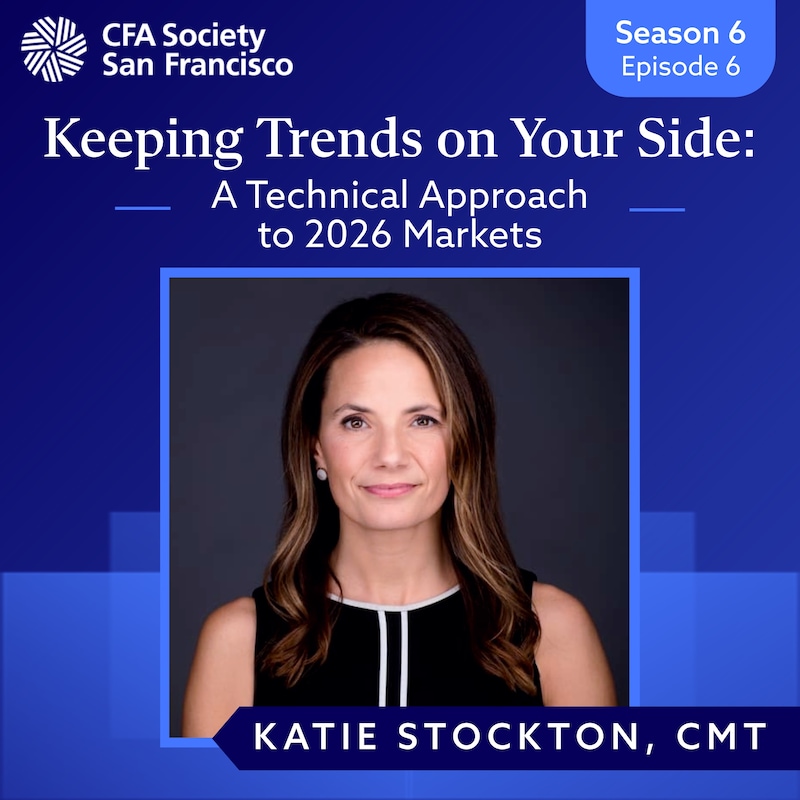
In this episode of Financial Perspectives, host Tanya Suba-Tang sits down with Katie Stockton, CMT, Founder and Managing Partner of Fairlead Strategies, to pull back the curtain on the technical signals driving today's markets. As the market navigates a more volatile 2026, Katie explains how technical analysis provides an objective framework for interpreting price action, sentiment, and the significant sector rotations currently underway.
Katie breaks down why the energy sector is seeing a massive breakout while traditional tech leaders are struggling. She also shares her "go-to" toolkit for navigating a corrective tape, including how indicators like the VIX and key support levels help professional investors stay on the right side of a trend. From the breakout in energy to the shifting momentum in mega-cap tech, this conversation is a deep dive into the mechanics of market transitions.
The episode explores:
- The Dynamics of Sector Rotation: Interpreting the wide performance spread between energy’s long-term breakouts and the recent underperformance in technology.
- Sentiment as a Contrarian Gauge: How to utilize transactional indicators like the VIX and the Fear & Greed Index to identify market extremes.
- The Art of Support Discovery: How to recognize potential areas of buying pressure and the technical signals that suggest a corrective phase is maturing.
- Trend Following vs. Predictive Analysis: Why technical analysis focuses on maintaining alignment with existing trends rather than setting rigid price targets.
- Intermarket Relationships: Understanding how high-risk asset classes can serve as informational signals for broader equity market posturing.
Whether you are managing risk or looking for the next intermediate-term catalyst, this conversation offers actionable insights into keeping the trends on your side.
Transcripts
Lindsey Helman: Hello and welcome to Financial Perspectives, a CFA Society San
Speaker:Lindsey Helman: Francisco podcast where we interview and discuss trends
Speaker:Lindsey Helman: with leaders from across the investment and finance industry.
Speaker:Lindsey Helman: This month, our host Tanya Suba-Tang, Programming and
Speaker:Lindsey Helman: Membership Director with CFA society San Francisco, had the
Speaker:Lindsey Helman: pleasure of speaking with Katie Stockton, Founder and Managing
Speaker:Lindsey Helman: Partner of Fairlead Strategies.
Speaker:Lindsey Helman: Listen in as they discuss the critical role of technical
Speaker:Lindsey Helman: analysis in navigating twenty twenty six market volatility.
Speaker:Tanya Suba-Tang: Good morning Katie.
Speaker:Tanya Suba-Tang: It's so great to have you on our podcast.
Speaker:Katie Stockton: It's great to be with you.
Speaker:Tanya Suba-Tang: So Katie, I'm really thrilled
Speaker:Tanya Suba-Tang: that you can join me today
Speaker:Tanya Suba-Tang: because I don't think we've
Speaker:Tanya Suba-Tang: covered this topic yet in our
Speaker:Tanya Suba-Tang: podcast, in the six seasons that
Speaker:Tanya Suba-Tang: we've had.
Speaker:Tanya Suba-Tang: And as the founder and managing
Speaker:Tanya Suba-Tang: partner for Fairlead strategies,
Speaker:Tanya Suba-Tang: you use technical analysis for
Speaker:Tanya Suba-Tang: your research and in, your
Speaker:Tanya Suba-Tang: investment.
Speaker:Tanya Suba-Tang: So I know a lot of people are
Speaker:Tanya Suba-Tang: probably very curious about
Speaker:Tanya Suba-Tang: this.
Speaker:Tanya Suba-Tang: And, you know, I have to kind of ask you, and you're the perfect
Speaker:Tanya Suba-Tang: person to do it.
Speaker:Tanya Suba-Tang: jumping right in into the questions.
Speaker:Tanya Suba-Tang: What are you seeing with the
Speaker:Tanya Suba-Tang: sector rotation so far this
Speaker:Tanya Suba-Tang: year?
Speaker:Tanya Suba-Tang: And can you discuss how the seasoned investment
Speaker:Tanya Suba-Tang: professionals utilizing technical analysis should
Speaker:Tanya Suba-Tang: interpret these shifts?
Speaker:Katie Stockton: Of course.
Speaker:Katie Stockton: Yeah. And thanks for that intro.
Speaker:Katie Stockton: I do feel like technical analysis is almost coming into
Speaker:Katie Stockton: focus more, this year than last year because we have a shift
Speaker:Katie Stockton: underway, and that shift always makes people a little bit
Speaker:Katie Stockton: nervous or unsettled in regards to the market posturing and
Speaker:Katie Stockton: their in drive some demand for technical analysis, which helps
Speaker:Katie Stockton: people navigate the volatility that we have already seen year
Speaker:Katie Stockton: to date in twenty twenty six.
Speaker:Katie Stockton: Looking at the sector rotation
Speaker:Katie Stockton: in particular, it's been pretty
Speaker:Katie Stockton: wild.
Speaker:Katie Stockton: Not that many people seem to be
Speaker:Katie Stockton: talking about it, and that the
Speaker:Katie Stockton: energy sector within the S&P
Speaker:Katie Stockton: five hundred is up nearly twenty
Speaker:Katie Stockton: percent year to date, whereas
Speaker:Katie Stockton: consumer discretionary
Speaker:Katie Stockton: technology, those are in the
Speaker:Katie Stockton: red.
Speaker:Katie Stockton: So already that's a really big
Speaker:Katie Stockton: spread in terms of sector
Speaker:Katie Stockton: relative strength or
Speaker:Katie Stockton: performance.
Speaker:Katie Stockton: And I do think it's meaningful.
Speaker:Katie Stockton: I say that not just because of the magnitude of the spread, but
Speaker:Katie Stockton: because of the impact on the indicators that we use.
Speaker:Katie Stockton: So the energy sector, as an example, has broken out above
Speaker:Katie Stockton: some very long term resistance.
Speaker:Katie Stockton: That means that it cleared a
Speaker:Katie Stockton: potential area of selling
Speaker:Katie Stockton: pressure where it had peaked
Speaker:Katie Stockton: previously.
Speaker:Katie Stockton: And then at the same time, we've seen technology.
Speaker:Katie Stockton: When you look at the ratios, if
Speaker:Katie Stockton: you looked at the technology
Speaker:Katie Stockton: sector relative to the S&P five
Speaker:Katie Stockton: hundred as an example, those
Speaker:Katie Stockton: have reversed.
Speaker:Katie Stockton: We have seen enough underperformance to impact our
Speaker:Katie Stockton: trend following gauges.
Speaker:Katie Stockton: And that means that maybe it's not a long lasting shift, but it
Speaker:Katie Stockton: is indeed a significant one.
Speaker:Katie Stockton: And I'd say taken together, it
Speaker:Katie Stockton: would be more indicative of a
Speaker:Katie Stockton: tape that should have more
Speaker:Katie Stockton: corrective action, more
Speaker:Katie Stockton: volatility.
Speaker:Katie Stockton: And that's, of course, different from twenty twenty five, right?
Speaker:Katie Stockton: It puts us on edge a little bit, because we're so accustomed to a
Speaker:Katie Stockton: market environment where we had just a very uninterrupted
Speaker:Katie Stockton: uptrend as of last April.
Speaker:Katie Stockton: So April twenty twenty five low.
Speaker:Katie Stockton: I feel like the market really hasn't looked back.
Speaker:Katie Stockton: But since October, we have seen
Speaker:Katie Stockton: a loss of intermediate term
Speaker:Katie Stockton: momentum that now is certainly
Speaker:Katie Stockton: affecting price.
Speaker:Katie Stockton: And it's especially prevalent as mentioned on the sector level.
Speaker:Tanya Suba-Tang: So there's been a lot of volatility lately.
Speaker:Tanya Suba-Tang: We know that.
Speaker:Tanya Suba-Tang: How are you navigating through these conditions.
Speaker:Tanya Suba-Tang: And are there any go to technical tools or strategies
Speaker:Tanya Suba-Tang: that you rely on.
Speaker:Katie Stockton: Yeah, of course as technicians
Speaker:Katie Stockton: we focus a lot on market
Speaker:Katie Stockton: sentiment.
Speaker:Katie Stockton: So sentiment gauges are a big part of our process.
Speaker:Katie Stockton: We always give more weight at
Speaker:Katie Stockton: fair lead to price action
Speaker:Katie Stockton: though.
Speaker:Katie Stockton: So we want to not only understand what the market
Speaker:Katie Stockton: sentiment backdrop is, but also how price is reacting.
Speaker:Katie Stockton: So that can be super informational in our work.
Speaker:Katie Stockton: And there are a lot of ways to read market sentiment.
Speaker:Katie Stockton: There are investor polls for
Speaker:Katie Stockton: one, but we feel the volatility
Speaker:Katie Stockton: index or VIX is one of the
Speaker:Katie Stockton: better gauges because it's a
Speaker:Katie Stockton: transactional gauge.
Speaker:Katie Stockton: And that gauge is used for the construction of something called
Speaker:Katie Stockton: the Fear and Greed Index.
Speaker:Katie Stockton: And the fear and greed index is another way to to you know,
Speaker:Katie Stockton: think about market sentiment.
Speaker:Katie Stockton: And it oscillates between zero and one hundred percent.
Speaker:Katie Stockton: And it will tell you if the
Speaker:Katie Stockton: bearishness is at an extreme
Speaker:Katie Stockton: level.
Speaker:Katie Stockton: And when you see that, it's a contrarian takeaway.
Speaker:Katie Stockton: And we don't have that yet.
Speaker:Katie Stockton: As you can imagine, we just
Speaker:Katie Stockton: haven't seen enough of a bearish
Speaker:Katie Stockton: sentiment shift yet to suggest
Speaker:Katie Stockton: that we're into this
Speaker:Katie Stockton: capitulation phase for the
Speaker:Katie Stockton: equity market.
Speaker:Katie Stockton: But we have seen some capitulation action in
Speaker:Katie Stockton: cryptocurrencies for one, and that has us paying attention to
Speaker:Katie Stockton: sentiment even more.
Speaker:Katie Stockton: So, the divergences that we have
Speaker:Katie Stockton: seen from some risk assets from
Speaker:Katie Stockton: one another is really quite
Speaker:Katie Stockton: interesting.
Speaker:Katie Stockton: And so it's partly looking at
Speaker:Katie Stockton: not just the sentiment gauges,
Speaker:Katie Stockton: but also the intermarket
Speaker:Katie Stockton: relationships.
Speaker:Katie Stockton: And when correlations break up,
Speaker:Katie Stockton: that can be information in and
Speaker:Katie Stockton: of itself.
Speaker:Katie Stockton: And when you have a risk asset like Bitcoin, which is pretty
Speaker:Katie Stockton: far on that risk spectrum, I think that when it's acting the
Speaker:Katie Stockton: way it has been, which of course is a big explosive downdraft, it
Speaker:Katie Stockton: is another thing to give equity investors pause in adding
Speaker:Katie Stockton: exposure at least.
Speaker:Katie Stockton: But when you zoom out, when you
Speaker:Katie Stockton: look at the S&P five hundred,
Speaker:Katie Stockton: it's very much a long term
Speaker:Katie Stockton: uptrend.
Speaker:Katie Stockton: So we still always stick to that long term trend following
Speaker:Katie Stockton: analysis as our primary driver.
Speaker:Katie Stockton: And then we're consulting these volatility gauges and things
Speaker:Katie Stockton: that can help us understand when a move is overdone on the
Speaker:Katie Stockton: downside or on the upside.
Speaker:Katie Stockton: And we just don't have those indications right now.
Speaker:Katie Stockton: but we'll be obviously on the lookout for them.
Speaker:Katie Stockton: The other thing that we watch really closely when we see
Speaker:Katie Stockton: volatility pick up is support.
Speaker:Katie Stockton: So support meaning a potential
Speaker:Katie Stockton: area of buying pressure on a
Speaker:Katie Stockton: chart.
Speaker:Katie Stockton: And technicians are always talking about levels.
Speaker:Katie Stockton: And we'll all have maybe different opinions as to which
Speaker:Katie Stockton: is the most important level.
Speaker:Katie Stockton: So there is subjectivity to it or an art to it.
Speaker:Katie Stockton: But you can see it.
Speaker:Katie Stockton: You can see where something's bottomed in the past.
Speaker:Katie Stockton: You can see where there's maybe a moving average like the two
Speaker:Katie Stockton: hundred day moving average.
Speaker:Katie Stockton: These are all things that come into our analysis.
Speaker:Katie Stockton: And when we see key levels broken, well, that means that
Speaker:Katie Stockton: the buyers just weren't there.
Speaker:Katie Stockton: And that can be indicative of a deeper corrective phase.
Speaker:Katie Stockton: So that's that's the mode that we're in right now is watching
Speaker:Katie Stockton: support, watching those sentiment metrics and then
Speaker:Katie Stockton: watching how the asset classes are interplaying, because that
Speaker:Katie Stockton: can be pretty well interesting, but also informational.
Speaker:Tanya Suba-Tang: Now a lot of people are talking about a possible correction in
Speaker:Tanya Suba-Tang: the US stocks.
Speaker:Tanya Suba-Tang: How do you think about that risk.
Speaker:Tanya Suba-Tang: And, you know, I'm sure listeners would love to know.
Speaker:Tanya Suba-Tang: What would you see for the rest of twenty twenty six?
Speaker:Katie Stockton: Of course.
Speaker:Katie Stockton: Yeah. And listen, technical analysis I think has a
Speaker:Katie Stockton: reputation for being predictive.
Speaker:Katie Stockton: But in reality we're just trying to keep the trends on our side.
Speaker:Katie Stockton: So I don't know where the S&P
Speaker:Katie Stockton: five hundred will be at year
Speaker:Katie Stockton: end.
Speaker:Katie Stockton: But we can assume that the long term trends will maintain
Speaker:Katie Stockton: themselves until they prove otherwise, and that they have
Speaker:Katie Stockton: not done that yet.
Speaker:Katie Stockton: The long term uptrend still have the support of upside momentum,
Speaker:Katie Stockton: albeit not the momentum that they had for much of last year.
Speaker:Katie Stockton: So we have seen a downtick, and
Speaker:Katie Stockton: that would be one thing that
Speaker:Katie Stockton: would suggest that maybe it
Speaker:Katie Stockton: won't be such a big up year, but
Speaker:Katie Stockton: we assume it's going to be an up
Speaker:Katie Stockton: year.
Speaker:Katie Stockton: January's, you know, trading action can be somewhat, um, I'd
Speaker:Katie Stockton: say informant of the year.
Speaker:Katie Stockton: Historically January's when you
Speaker:Katie Stockton: see a good up January,
Speaker:Katie Stockton: especially if you see a good
Speaker:Katie Stockton: first week of January that tends
Speaker:Katie Stockton: to be associated with a better
Speaker:Katie Stockton: market environment.
Speaker:Katie Stockton: It's somewhat of a reliable seasonal phenomenon.
Speaker:Katie Stockton: So we did have that in January.
Speaker:Katie Stockton: Even though that the tech sector
Speaker:Katie Stockton: just wasn't there, participating
Speaker:Katie Stockton: in the way that we're accustomed
Speaker:Katie Stockton: to.
Speaker:Katie Stockton: So we are on the lookout, though
Speaker:Katie Stockton: for a correction, as you
Speaker:Katie Stockton: mentioned.
Speaker:Katie Stockton: And to that end, we're watching support.
Speaker:Katie Stockton: If we were to see support broken by the S&P, that would be that
Speaker:Katie Stockton: trigger for we think more downside follow through,
Speaker:Katie Stockton: something more significant than what we've seen already.
Speaker:Katie Stockton: We do already at this point in February, have a short term
Speaker:Katie Stockton: short term breakdown by the Nasdaq one hundred index.
Speaker:Katie Stockton: And that is another risk metric, potentially because the S&P five
Speaker:Katie Stockton: hundred is also broad, a little bit lower beta.
Speaker:Katie Stockton: so if we see the S&P five hundred follows through, that
Speaker:Katie Stockton: would be something we would want to react to.
Speaker:Katie Stockton: And that doesn't mean you go out and sell everything.
Speaker:Katie Stockton: Of course, it just means that either you're in the mindset of
Speaker:Katie Stockton: maybe waiting to add exposure to a position you were considering,
Speaker:Katie Stockton: or at least making sure there is some kind of near-term catalyst.
Speaker:Katie Stockton: For me that might be a breakout or a MacD buy signal for a
Speaker:Katie Stockton: fundamental analyst that might be, you know, a news event or
Speaker:Katie Stockton: fundamental data point.
Speaker:Katie Stockton: So I just make sure that there
Speaker:Katie Stockton: is a catalyst to warrant adding
Speaker:Katie Stockton: exposure.
Speaker:Katie Stockton: If you think also that there could be a corrective phase and,
Speaker:Katie Stockton: you know, with that in mind, the corrective phase, we did see one
Speaker:Katie Stockton: the last major correction we saw, around this time last year.
Speaker:Katie Stockton: So it's pretty remarkable that
Speaker:Katie Stockton: we're here a year later and just
Speaker:Katie Stockton: finally talking about the same
Speaker:Katie Stockton: thing.
Speaker:Katie Stockton: hopefully it won't be as dramatic as that.
Speaker:Katie Stockton: You don't really have any way to
Speaker:Katie Stockton: know what the downside will be,
Speaker:Katie Stockton: but we can adhere to the support
Speaker:Katie Stockton: levels as at least a gauge of
Speaker:Katie Stockton: downside risk.
Speaker:Katie Stockton: But what we look for when trying to understand if a corrective
Speaker:Katie Stockton: phase has matured is not a specific level necessarily.
Speaker:Katie Stockton: We can't say, okay, well, we're going to buy the market when the
Speaker:Katie Stockton: S&P hits, whatever, six thousand four hundred or something.
Speaker:Katie Stockton: But rather we want to see a setup in the indicators.
Speaker:Katie Stockton: And the indicators are measuring price momentum.
Speaker:Katie Stockton: They're measuring overbought and oversold levels or conditions.
Speaker:Katie Stockton: And they're measuring also relative performance.
Speaker:Katie Stockton: All of those can inform whether a market low is is underway.
Speaker:Katie Stockton: And so it's a combination of things that we're looking for.
Speaker:Katie Stockton: But the most important is
Speaker:Katie Stockton: support discovery where you see
Speaker:Katie Stockton: something come down to a level
Speaker:Katie Stockton: and and hold right and and
Speaker:Katie Stockton: holding well.
Speaker:Katie Stockton: That means that momentum is improving.
Speaker:Katie Stockton: And you can usually see that in the indicators as well.
Speaker:Katie Stockton: So we think a more volatile year, still assuming it will be
Speaker:Katie Stockton: an up year because the market hasn't really told us otherwise.
Speaker:Katie Stockton: And perhaps though not as
Speaker:Katie Stockton: explosive of a year as we've
Speaker:Katie Stockton: been accustomed to lately, and
Speaker:Katie Stockton: also with the rotations that
Speaker:Katie Stockton: we've seen year to date,
Speaker:Katie Stockton: something that looks different
Speaker:Katie Stockton: in the composure on the stock
Speaker:Katie Stockton: level and on the sector level,
Speaker:Katie Stockton: because we had a very narrow
Speaker:Katie Stockton: tape in a way, narrow
Speaker:Katie Stockton: leadership, not necessarily
Speaker:Katie Stockton: narrow breadth.
Speaker:Katie Stockton: There was good participation,
Speaker:Katie Stockton: but the relative performance was
Speaker:Katie Stockton: very concentrated, especially in
Speaker:Katie Stockton: large cap technology, the mega
Speaker:Katie Stockton: cap complex, these for now three
Speaker:Katie Stockton: years or so, have been the
Speaker:Katie Stockton: source of the primary gains in
Speaker:Katie Stockton: the equity market here in the
Speaker:Katie Stockton: US.
Speaker:Katie Stockton: So in a way, I think investors
Speaker:Katie Stockton: will welcome an environment
Speaker:Katie Stockton: where fundamental analysis is
Speaker:Katie Stockton: rewarded because I think we'll
Speaker:Katie Stockton: have a broader tape in terms of
Speaker:Katie Stockton: leadership, not just
Speaker:Katie Stockton: participation.
Speaker:Tanya Suba-Tang: Well, thank you so much, Katie,
Speaker:Tanya Suba-Tang: for all that wealth of
Speaker:Tanya Suba-Tang: knowledge.
Speaker:Tanya Suba-Tang: I'm sure our listeners are going to have to replay this over and
Speaker:Tanya Suba-Tang: over again to take every bit that you just shared.
Speaker:Tanya Suba-Tang: So thank you so much for
Speaker:Katie Stockton: first,
Speaker:Tanya Suba-Tang: your insights.
Speaker:Katie Stockton: Tony, I'm
Speaker:Tanya Suba-Tang: Have
Speaker:Katie Stockton: glad
Speaker:Tanya Suba-Tang: a wonderful.
Speaker:Katie Stockton: I could.
Speaker:Tanya Suba-Tang: I hope to see you again soon.
Speaker:Tanya Suba-Tang: Have a day.
Speaker:Katie Stockton: Same here, you two.
Speaker:Lindsey Helman: Thank you to this month's guest, Katie Stockton, for joining us
Speaker:Lindsey Helman: today to discuss technical analysis and managing risk in a
Speaker:Lindsey Helman: shifting equity landscape.
Speaker:Lindsey Helman: Join us next time for another
Speaker:Lindsey Helman: Financial Perspectives episode
Speaker:Lindsey Helman: airing on the last Tuesday of
Speaker:Lindsey Helman: the month.


