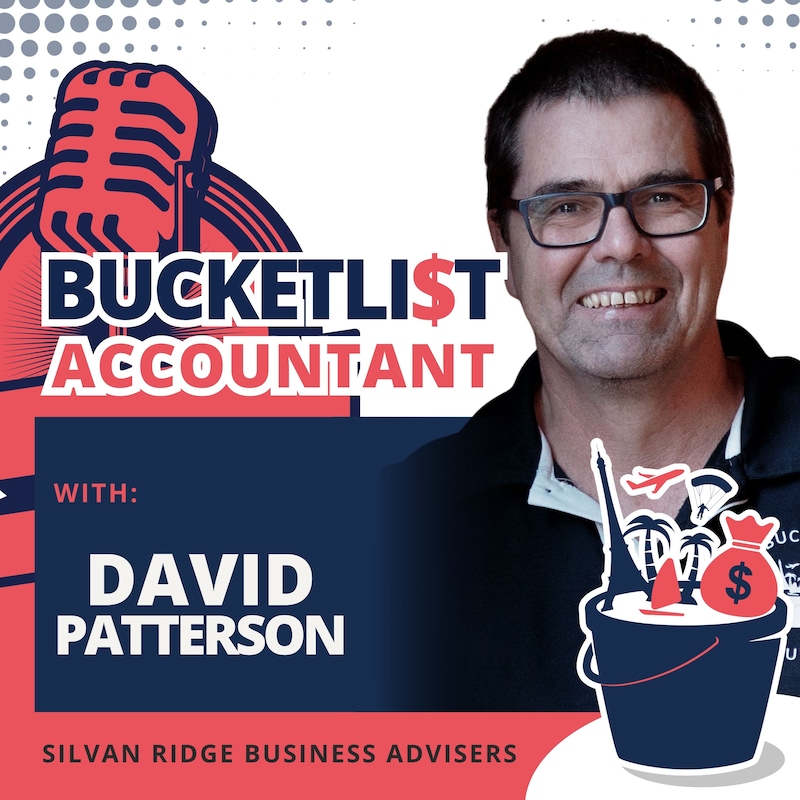
Shownotes
The recent budget has sent shockwaves through the small business community, not just because of the numbers, but because of the way it was delivered. After years of relative consistency, business owners and investors were hit with significant changes to trusts, capital gains, and negative gearing with almost no warning. This lack of transparency has led many to question whether the risk of running a business is still worth the reward.
In this episode, I explore the psychological and financial fallout of these sudden shifts. We look at why the erosion of confidence is the biggest threat to the economy and how business owners can regain their footing. It is a conversation about staying calm in the face of uncertainty and finding the opportunities that still exist within a changing playing field.
Whether you are feeling the pinch of new superannuation rules or worrying about the future of your family trust, this discussion provides a roadmap for navigating the next two years. We break down why mindset is just as important as the balance sheet when the government decides to change the rules overnight.
What You Will Learn:
• Why was the secrecy surrounding this budget so unusual compared to previous years?
• How do sudden changes to trust taxation impact long-term wealth creation strategies?
• What is the best way to handle the anxiety of potential future rule changes?
• Why is cashflow monitoring becoming even more critical for small businesses right now?
• How can you determine if it is time to bring your business sale forward?
• Why does loving your business make you more resilient to legislative shifts?
Key Takeaways:
• Avoid knee-jerk reactions: We have a window of time before many changes take effect, so use it to analyse rather than panic.
• Confidence erosion: The way the budget was handled has made business owners question the long-term stability of the rules.
• Focus on core strengths: A profitable and cashflow-positive business can be adapted to almost any tax environment.
• Strategic timing: The new rules might provide a prompt for those near retirement to consider selling sooner rather than later.
• Mindset matters: Maintaining enthusiasm for growth is difficult but essential for navigating economic ups and downs.
-
#SmallBusinessAustralia #AusBudget #TaxStrategy #BusinessConfidence #BucketListAccountant #FinancialPlanning
#EntrepreneurMindset #WealthCreation
Contact details:
The Bucketlist Accountant: Because financial freedom shouldn't mean sacrificing your wildest dreams.
Subscribe now and get ready to take control of your money and your life!
Co-host: Anthony Perl
Produced by: 'Podcasts Done for You'
Transcripts
The budget impact, navigating uncertainty
2
:and restoring confidence.
3
:Join the bucket list accountant
himself, David Paterson, as we
4
:explore the significant and unexpected
changes from the recent budget.
5
:Learn why the secrecy surrounding these
announcements has eroded small business
6
:confidence, discover why you should not
overreact to legislative shifts, and gain
7
:insights into how to maintain a positive
mindset when the rules of the game change.
8
:You will get a real-world look at how
to assess your business strengths in
9
:the face of the new tax regulations.
10
:I'm your co-host, Anthony Perl.
11
:Let's get into making your bucket list
happen David, an important episode of
12
:the podcast because we're gonna talk
about something that's been in the news
13
:quite a bit, the budget, and it seems
to have had a bigger impact than any
14
:budget I can remember in some time.
15
:David Patterson: I'd agree, Anthony.
16
:I think probably the last, I don't
know, 10 to 12 budgets at least,
17
:at the very least, they have a few
little changes chucked in there, but
18
:nothing of any great significance.
19
:And most changes that have happened
in prior budgets, you've got a
20
:little bit of a heads-up about them.
21
:You know, they've just leaked some
information just prior to budgets to get
22
:a feel for the changes and how people are
gonna impact on them, whereas this one,
23
:I mean, it just hit us between the eyes.
24
:There was no warning and pow,
it, it whacked all of us.
25
:Anthony Perl: Yeah, I mean, I think that's
the interesting thing that you make the
26
:point of there is that normally with a
budget- Mm … there's a bit of testing
27
:the waters, there's a bit of consultation
before they're, you know, looking at it.
28
:There's a lot of leaks that
happen immediately prior to it.
29
:It seems like this time they just
threw a whole bunch of stuff out
30
:there and hoped that everyone
was gonna jump and go, "Yay."
31
:David Patterson: Like I said, it's
just bizarre the way it came about
32
:and the secrecy that seemed to
be around it prior to the budget.
33
:These changes aren't small changes,
they're significant, highly impactful
34
:changes on all of us, small business
owners, you know, investors, you name it.
35
:This has had a f- big
significant impact on everybody.
36
:Anthony Perl: I guess the importance
of the discussion we're gonna have
37
:today is not so much about the
details of all the ins and outs of
38
:the budget, except to say that that's
one of the challenges, isn't it?
39
:Even for accountants, is to
how do you actually work out
40
:what all of these things mean?
41
:What actually is the right
advice to be giving people?
42
:Because you need the right advice too
in what is kind of something that seems
43
:to be growing and changing by the day.
44
:David Patterson: That's right, and the
hard part for me in between, you know,
45
:budget announcements and going into
legislation, was trying to help clients
46
:navigate changes to their business
that were happening in conjunction.
47
:So all of a sudden they changed the rules
and starting to tax trusts, for example,
48
:and changes that we'd been building into
existing clients, you suddenly have to
49
:re-look at them and say, "Well, you know,
is going into a trust the best option for
50
:them, or is there now a better way to make
the changes that we were looking to make?"
51
:And it just became really difficult
to be able to give proper advice to
52
:clients in that little window because
no one knew exactly where it was gonna
53
:end up and where it was gonna sit.
54
:So probably been a difficult
couple of months to try and get
55
:your head around those changes.
56
:To be able to properly advise clients
57
:Anthony Perl: And again, without going
into too much detail, if you just look
58
:at, it covered a myriad of different
areas, 'cause it wasn't just one thing.
59
:It wasn't just, as you say, about trusts.
60
:There was a whole range of
things that this is-- that
61
:different things have come up.
62
:David Patterson: Well, it's, it's
covered off on everything, you know.
63
:The trusts, the capital gains, negative
gearing, all of these areas that…
64
:And bucket companies and not being able to
get the flow-through of tax from a trust.
65
:All these things that have been set
up over the time with clients to help
66
:them maximize their wealth creation
as much as anything suddenly becomes
67
:difficult to maneuver and to manage and
other things that we need to change.
68
:A-And to have it come out of the
blue, I think was the extra bit
69
:that really impacted on people,
the fact that no one knew these
70
:things were gonna come into play.
71
:I had a client, for example, who was
looking to buy an investment property
72
:as the budget was coming through.
73
:No one knew what was going to happen,
and then all of a sudden they're ringing
74
:me sort of the night after the budget
in a panic saying, "Well, should I still
75
:be buying these investment properties?
76
:Is there something we should be doing?"
77
:And again, trying to make a decision
from my perspective as the accountant
78
:and advising them on that, knowing
how it was all gonna play out at that
79
:point in time, was frustrating for
both of us to be able to work through
80
:what the best thing to do there was.
81
:Anthony Perl: Yeah.
82
:And before we get into sort of what that
has done for people and businesses in
83
:particular, I think it's important to
give it a context of there were things
84
:that we knew were changing already anyway
in terms of superannuation and credit
85
:cards and the way they're being treated,
all of those things already in motion.
86
:So this is coupled on the back of that.
87
:David Patterson: Well,
that's exactly right.
88
:And just the impact on, if we just
look at small businesses for the in--
89
:first minute, there's the, the credit
card and the stopping of the surcharge
90
:in the end of September, the effective
doubling up of superannuation over a
91
:quarter, so paying for the June quarter
and paying for the September quarter
92
:on a weekly or fortnightly basis
just adds to the, I guess the stress
93
:of cash flow for a small business.
94
:They were the known things
coming in, like you said.
95
:To then chuck in on top of that all these
other areas that whilst they may not for
96
:the small business have a impact day to
day, it's still from an overall planning
97
:perspective something that got a lot of
business owners talking as to what that
98
:meant for them and what impact it was
gonna have and whether they were doing the
99
:right thing, whether they should change.
100
:And trying to keep them calm, I guess,
in the face of that, it was hard.
101
:But also trying to instill a bit of
confidence in them too was difficult
102
:as well, and I think that's another big
part that's come out of this budget, is
103
:the lack of confidence that people now
have in decision-making going forward.
104
:Anthony Perl: You've kind of alluded to
that a little bit here, but I just wanna
105
:unpack it a little bit more in terms
of saying: where would you see a small
106
:business in terms of its thinking process
and its assessment of the market was,
107
:let's say, six months ago, two years ago?
108
:How have you seen that change?
109
:David Patterson: At least in the last
few years, things have been fairly
110
:consistent and solid in, in how things
are tracking along, and people could
111
:make decisions and plan based on what
the rules are and what the rules had
112
:been for a fairly long period of time.
113
:Obviously, you have your economic ups
and downs from time to time, where
114
:you lose a little bit of confidence
in how things are going, and interest
115
:rate movements can have a bit of
an impact in those things as well.
116
:But from an overall structural
perspective, we had a fair amount
117
:of consistency for years coming into
the budget, which meant that people
118
:could plan for a bit of a longer
term future, knowing that the rules
119
:were what the rules were and that…
120
:And we didn't think they were really
gonna change going forward, but that's
121
:turned out to be not quite correct.
122
:Anthony Perl: This podcast is brought
to you by bucketlistaccounting.com.au.
123
:Speak to David Patterson and his
team if you want to take better
124
:control of your life and business.
125
:Helping small business
owners like you be successful
126
:David Patterson: designing
the life of your dreams.
127
:Go to bucketlistaccounting.com.au
128
:or check out the show
notes for more information.
129
:Now back to the program.
130
:Anthony Perl: Change is always difficult
for anybody, whatever the change is.
131
:And there's always going to be
an element of people that are
132
:going to be, "Right, that's it."
133
:Yep.
134
:"The change is gonna
be the tipping point."
135
:And so how do you see that in terms
of the people you're dealing with,
136
:particularly those in small business?
137
:What percentage are sort of at that
tipping point, right, going, "That's
138
:it, I'm out," versus, "This is just
a mindset thing that people need to
139
:change, and we can see a way around this
in terms of continuing with business"?
140
:David Patterson: Yeah, that's
a really good question.
141
:I think the mindset part is very
important, and I think off the back of
142
:the budget and the first little small
period of time there off the back of
143
:that, there were a lot of conversations
with small business owners around
144
:what-- them wondering whether it was
all worth it and why should they keep
145
:working hard to build their business
when the government might change the
146
:rules at any point in time and sort of
take the rug out from underneath them.
147
:And for me, that's a really disappointing
element of all of this, is the erosion
148
:of people's confidence in being able
to run their own small business and
149
:looking to the future and not really
being able to see the fact that there
150
:is light at the end of the tunnel if
they continue doing what they're doing.
151
:So from that point of view, these changes
that were coming in, for me, that's
152
:the biggest impact that it's had, is
just eroded people's want to work hard
153
:to grow and to build their business
because now they're unsure as to what
154
:that's gonna look like in the future.
155
:And I think it's twofold.
156
:One was the rule changes that came
in, but I think the biggest part
157
:of it was just the way it was done.
158
:Prior to the election, you know, it
was, it was categorically put out
159
:there that we're not gonna mess with
these certain areas, we're not gonna
160
:change this, we're not gonna do that.
161
:And, and then budget night comes along
and bang, the things that they weren't
162
:gonna change have suddenly changed.
163
:And so then the question came
from small business owners.
164
:It was like, "Well, if they can do that
and change those things, what else are
165
:they gonna change in the future that's
gonna make it harder and harder for us
166
:to, you know, retire and be able to do the
things that we wanna do in, in retirement?
167
:Are they gonna completely
change the rules?
168
:And everything that we've been working
within, the parameters that we've
169
:been working within for the last
ten, fifteen, twenty years, are we
170
:gonna wake up one budget night and
it's gonna be completely different?"
171
:And it's a difficult conversation to be
having and a disappointing conversation
172
:to be having 'cause I think the last
thing we wanna be trying to do is dampen
173
:a small business owner's enthusiasm for
the growth and expansion and building
174
:their business to be able to provide
for their family and to be able to do
175
:the things they wanna do down the track.
176
:You know, they're-- the small
business owners are the ones
177
:that are really having a go.
178
:They're taking the risk.
179
:They're worrying about all the
things that they have in their
180
:business, cash flow, profitability,
employing people, looking after
181
:their customers, all of those things.
182
:To then have them wondering whether
it's even worth it, I think that was…
183
:I found that really disappointing.
184
:Anthony Perl: Yeah, and I suppose
that's the hard part here, isn't it?
185
:Because you've got the going from
expectation that it would continue on same
186
:as, you've got the surprise element, and
then you've got the unknown of what is it
187
:going to actually look like in the future,
assuming it changes, and that's the other
188
:part of the unknown is we're making an
assumption that this is now going to
189
:be in place for some period of time.
190
:And of course, we probably get a sense
that if the government were to change
191
:in the next election, and let's forget
the fact as to whether that's possible
192
:or not or likely or not, is that if it
did change, the likelihood is it, all
193
:of this would be potentially reversed.
194
:David Patterson: Well,
that's exactly right.
195
:There'd be a real possibility that some
of the bigger changes in the budget would
196
:get reversed under a different government.
197
:So you're playing here within, I
guess, two-year timeframe of these
198
:new rules, and so we have to make
changes, we have to implement
199
:different strategies to cater for that.
200
:Is it a short-term thing?
201
:In two years' time, whenever the next
federal election is, are we gonna revert
202
:back to the old ways, and what does that
do to the decisions that you make now?
203
:You know, is that gonna, uh, be a
detrimental impact on those decisions
204
:if there is a change of government?
205
:So it's becomes just a minefield,
which I don't think we needed.
206
:I'm sure there are other ways that they
could've done what they did to not impact
207
:small business as much as what it has.
208
:Anthony Perl: So when it comes to dealing
with people and small businesses in
209
:particular, where they've got a mindset
of, "Well, I don't know if this is worth
210
:it or not," how do you make an assessment
as to looking properly at the numbers and
211
:go Well, is there another way around this?
212
:Is it worth it, or is it
just, "No, you know what?
213
:I'm gonna support you in,
'Okay, you've had enough.
214
:Tipping point.
215
:Let's try and move to
another circumstance.'"
216
:David Patterson: Yeah.
217
:I think it, it really does become a
case by case on each of the clients.
218
:But the main part of that is to
not overreact, but not react too
219
:quickly and make changes too quickly.
220
:Because one of the benefits that we
do have is we have this 12-year period
221
:where some of these changes aren't gonna
come into place until July next year.
222
:So we have a little bit of time just to
let the dust settle and see where things
223
:sit, and it gives us an opportunity
to review a person's business, review
224
:where it's at, how it's performing,
how it could potentially perform under
225
:the new rules and the new changes,
and gives us the time to be able to
226
:make our own tweaks to how things are
operating to try and get the most out of
227
:any new changes that are coming along.
228
:So I think it's mainly about trying
to just calm it down a little bit and
229
:get people just to stop and have a…
230
:take a breath and see where things lie.
231
:But it could create the opportunity for
someone who's getting towards the end
232
:of their business life to say, "Okay,
well, I'm gonna bring the sale of my
233
:business forward a year, two, three years.
234
:I've had a look.
235
:I don't wanna go on beyond next year."
236
:Gives us an opportunity to sell now.
237
:So it's just a matter of sort of
taking that step back, analyzing
238
:where everything's at, and then
making a decision based on all the
239
:information, not just sort of a spur
of the moment decision based off of
240
:the disappointment of what happened.
241
:Anthony Perl: The interesting outcome
of that is does it create a whole
242
:lot of indecision in the market?
243
:David Patterson: Oh, it definitely
creates indecision because
244
:there's selling of houses for one.
245
:You know, do I sell now?
246
:Do I hold?
247
:Do I wait?
248
:Same with a business.
249
:Do I sell?
250
:Do I wait?
251
:Which way to go?
252
:And that makes it hard.
253
:And even whilst you can say, let's
just wait and see what happens over the
254
:next few months and see how it settles
down, people are still anxious because,
255
:I mean, for some people, this is a
business that they've been in and grown
256
:and, and worked in for 15, 20, 30 years.
257
:You know, it's kind of like an
extended part of their family.
258
:So all of a sudden, something they've been
working on, working towards these goals-
259
:They're just worried that everything's
gonna change, and all those years of
260
:hard work are gonna be ripped out and
they're not gonna get the benefits.
261
:So it does create anxiety amongst
business owners, absolutely.
262
:Anthony Perl: Do you see it as a role
that you need to play in being a bit of
263
:a mindset coach as part of this process?
264
:David Patterson: Oh, 100%.
265
:It certainly adds that bit into the
whole thing definitely because the
266
:negativity that we've got created from
that budget night and the decisions and
267
:the announcements that were made, that's
a hard thing to try and turn around.
268
:And from my perspective as well, I'm
running my own small business, so I've
269
:got my own thoughts and processes going on
about how I'm running my business and what
270
:I need to do and all that kind of thing.
271
:But to be able to, I guess, to
some degree, put that to one side
272
:and, and to be able to focus on
clients' business and decisions.
273
:But I think the other thing that it
had, did do as well is that clients,
274
:my clients also understood that I
was effectively in the same boat.
275
:You know, we're all in the same
boat as far as what's happening.
276
:But it's another opportunity
to create that positive mindset
277
:on how things are happening and
looking at it and going, "Okay.
278
:Well, what can we do?
279
:What can we change to make the most of
the change that are gonna come through?"
280
:Anthony Perl: And do you see there
being a better future for some
281
:of the small businesses that are
prepared to take hold of some of the
282
:opportunities that are now in front
of them as a result of all of this?
283
:Is the positivity that you can look at,
that it's going to enforce a stricter
284
:monitoring of cashflow, of putting
things in different places, of where you
285
:put your investments and what you do?
286
:Is it going to be a lot more process
driven as a result of this and therefore
287
:through a bit of a hiccup, there might
be a stronger outcome in the end?
288
:David Patterson: I'm not so
sure about a stronger outcome.
289
:I think it'll be a different outcome
that could still be just as beneficial as
290
:before playing in the rules that we had.
291
:So I think it's just a matter of
assessing where your business is at.
292
:And the more you can concentrate on
the strengths of your business and
293
:trying to grow your business and, and
making it as profitable and as cashflow
294
:positive as you can, get those elements
right, and then we can work around any
295
:of the tax changes that have come into
place or any of the future tax changes
296
:that'll be in years to come, you know?
297
:I think as long as we're focusing on
the right areas of small business,
298
:the outcome will still be good.
299
:It'll be probably different in, in
how we get to it, but I think we can
300
:still make it a positive and a good
outcome for small business owners.
301
:Anthony Perl: Just to wrap up this
discussion, David, I think it's important
302
:to talk to the idea that when it comes
to mindset and looking at all of this
303
:and the implications of changes that
happen and this budget and changes that
304
:might happen in the future, at the end
of the day, it all centers around whether
305
:you love what you're doing, doesn't it?
306
:I mean, if you really love
what you do as a business, then
307
:you're going to find a way.
308
:David Patterson: 100%.
309
:You're right.
310
:If you're in a business that you
love and you love working on, you
311
:love getting there every morning
and making it as successful as you
312
:can, then you won't give up on it.
313
:You'll sit back, and again, like
I said, once you kind of, the dust
314
:settles and you can see what the
playing field's like, you'll find ways
315
:to continue to make it successful.
316
:So I think you're right.
317
:Those that are in a business
that they have less passion about
318
:will find it harder to keep going
through these changes, definitely.
319
:And maybe, you know, some of
these changes might create a great
320
:opportunity for people to make a
change into something different or
321
:a different version or whatever.
322
:You know, that could turn out to be
a positive at the end of the day.
323
:Anthony Perl: Well, that's all we have
time for on today's episode of The Bucket
324
:List Accountant, where David discussed the
bizarre secrecy of the recent budget and
325
:its impact on small business confidence.
326
:We've put together a downloadable
episode workbook, which you can find
327
:via the link on the show notes to help
you assess your business strategy.
328
:Next time on The Bucket List Accountant,
David explains how having the right
329
:business structures and a dedicated travel
budget allowed him to leave his laptop
330
:behind, go on a last-minute trip with
friends, and be fully present, proving
331
:that with the right planning, you can say
yes to life's unexpected opportunities.
332
:Connect with David Paterson on LinkedIn
or visit bucketlistaccountant.com.au
333
:to learn more about aligning your
finances with your life goals.
334
:This podcast is produced by my
team at podcastdoneforyou.com.au,
335
:helping professionals share
their expertise through
336
:powerful podcast content.
337
:If you found value in today's episode,
wherever you're tuning in, please
338
:like, share, comment and subscribe
so you never miss an episode.
339
:I'm Anthony Perl, and until next time,
keep making your bucket list happen.
