Shownotes
📺 Watch on YouTube and Spotify
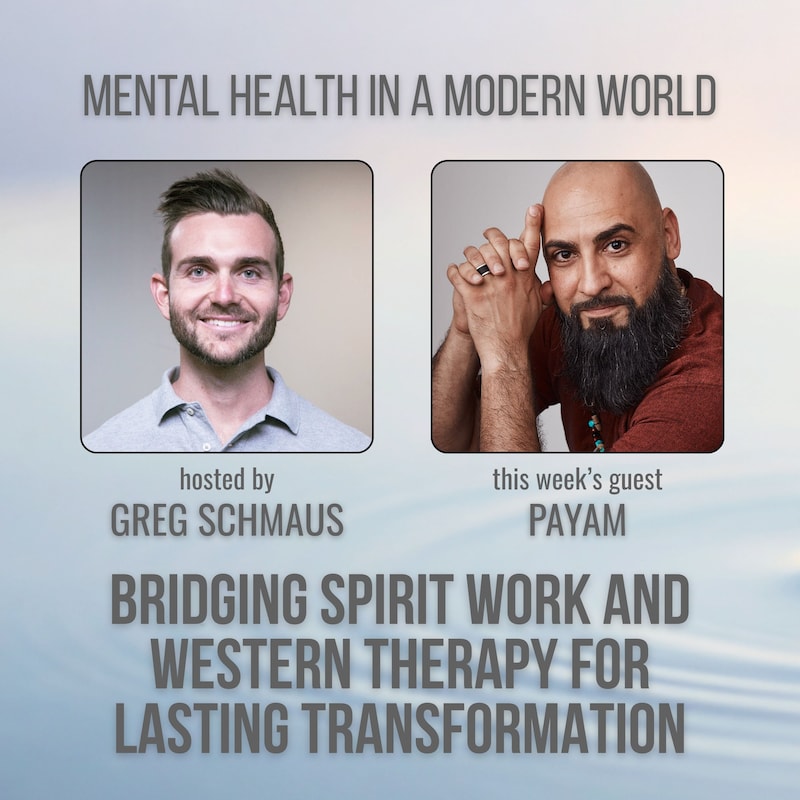
“This is a vocation that chooses you. Ultimately, it's not a vocation that you choose,” says Payam, a shamanic medicine carrier and integrative healer, joining the Mental Health in a Modern World podcast to illuminate the true demands and sacred responsibilities of medicine work. Far from a fashionable trend or therapeutic add-on, Payam explains that working with plant medicines—and safely facilitating others in these deeply transformative realms—requires enduring rigorous spiritual initiation, facing dismemberment of the self, and developing the character to carry others through profound psychic rebirth.
In this riveting conversation, Payam shares how his path unfolded unexpectedly, bridging years in New York’s creative world with shamanic initiation rooted in both Western psychology and indigenous spiritual wisdom. He dissects the gulf separating clinical, retreat-based psychedelic approaches from authentic lineage-based facilitation, exploring why pain and suffering are essential to spiritual initiation, and why true healing goes far beyond symptom management.
Tune in to this episode of Mental Health in a Modern World to hear Payam and Greg Schmaus open up about soul wounds, the dangers of bypassing initiation, and the real reasons you should be deeply discerning both as a seeker and (especially) as a would-be facilitator. If you’ve ever felt the “call” of plant medicines or questioned mainstream approaches to mental health, this is one conversation you can’t afford to miss.
5 Key Takeaways
Discover how to truly honor the power of medicine work and begin your healing journey with integrity, discernment, and courage.
- Trust your intuition when choosing a facilitator or community for medicine work—seek those who demonstrate integrity, openness, and a willingness to answer all your questions fully 01:06:22.
- Understand that true healing and initiation require facing discomfort, pain, and even disintegration—don't seek to numb your suffering, but move courageously into it to discover your authentic self 31:49.
- Recognize the difference between credentialing and true readiness; look for guides who are genuinely initiated, experienced, and chosen by the medicine—not just certified by a training program 27:01.
- Prioritize doing your own shadow work and continually question your beliefs and conditioning—discernment is key to sovereignty and avoiding indoctrination 01:11:25.
- Embrace community and brotherhood (or sisterhood) as medicine in itself—healing alongside others who have walked the path fosters authenticity and deeper transformation 40:06.
Take one real step today: initiate a conversation with someone you trust about your healing journey, and approach the path with respect, patience, and a willingness to be truly transformed.
Memorable Quotes
"This is a vocation that chooses you. Ultimately, it's not a vocation that you choose."
"When we go into medicine work, it's about remembering by forgetting. Remembering is to bring back together, but to bring back together requires you to completely let go and to dissolve to the Great Spirit, to dissolve into that universal consciousness where you no longer exist as who you thought yourself to be."
"The reality of the experience is substantially more demanding of your character, your patience, your mind, your body, your spirit, your resources, your life."
Connect with Payam
PAYAM (official website) – https://payam.com/
The Psychedelic Executive – https://thepsychedelicexecutive.com/
LinkedIn: https://www.linkedin.com/in/payam-a5b35a6/
Instagram: https://www.instagram.com/the_psychedelic_executive/
Resources Mentioned
In the Realm of Hungry Ghosts: Close Encounters with Addiction by Gabor Maté – https://amzn.to/4cyV7JF
Sensory Motor Psychotherapy (Pat Ogden) – https://www.pesi.com/sales/bh_c_001577_patogdencomplextrauma_organic-328416
Internal Family Systems (IFS) – https://ifs-institute.com/
Connect with Greg
Website - https://www.healing4d.com/
Instagram - https://www.instagram.com/4d_healing/
YouTube - https://www.youtube.com/@gregschmaus
LinkedIn - https://www.linkedin.com/in/greg-schmaus-22929589/
🎙️🎙️🎙️
Podcast Production & Marketing by FullCast: https://fullcast.co
Discover the best podcast services in the world at The Podosphere: https://www.thepodosphere.com/
Mentioned in this episode:
Embark on The HTM Journey
Embark on The HTM Journey
Transcripts
But the reality of the experience is substantially
Speaker:more demanding
Speaker:of your character, of your patience, of your mind, of your body,
Speaker:of your spirit, of your resources, of your life.
Speaker:This is a vocation that chooses you.
Speaker:Ultimately, it's not a vocation that you choose. In a world
Speaker:moving faster than our minds were designed to handle, mental health is becoming
Speaker:one of the defining challenges of our time. Welcome to Mental Health in a
Speaker:Modern World with holistic health practitioner Greg Schmauss.
Speaker:After overcoming severe anxiety and OCD in his own life,
Speaker:Greg dedicated the past decade to helping others heal through a fully
Speaker:integrated approach to mental health, combining lifestyle coaching,
Speaker:psycho emotional healing, mindfulness and archetypal work.
Speaker:Over the years, he's facilitated thousands of sessions guiding people back
Speaker:to peace, clarity and a deeper connection with themselves.
Speaker:Each week, Greg shares powerful solo insights, conversations with
Speaker:leading voices in holistic healing, and immersive live coaching sessions that
Speaker:take you inside the healing process itself. New episodes every
Speaker:Friday. Follow the show and start reclaiming sovereignty over your mind
Speaker:in a modern world. Here's Greg Pay, and welcome to the
Speaker:show. Thanks for having me. For the third time, yeah, we've been having
Speaker:some technical difficulties, but the third time's the charm. So,
Speaker:you know, most of my listeners are aware of your work
Speaker:just because you and I have been collaborating for many years. But
Speaker:for those that are not and are new to Payam's work, would you be
Speaker:open to just starting by sharing a little bit about your background and what brought
Speaker:you into some of this medicine work? Yeah, my
Speaker:background. In short, I spent about 15 years in the creative field in New
Speaker:York and I found my work
Speaker:in the shamanic realm in New York City of all places, where I would
Speaker:have never imagined that I would be doing spirit work. And there I was, I
Speaker:got initiated, initiated into working with medicines, not having
Speaker:sought it out, so to speak, but the medicine
Speaker:finding me and me finding the medicine in the way that it needed to happen.
Speaker:That was around 2018 or so
Speaker:and I started working with the medicines that I work with
Speaker:since then. And I work
Speaker:with shamanic medicines and shamanic philosophy approaches
Speaker:as well as the western evidence based practices, namely
Speaker:family systems and somatic experiencing to help people heal from
Speaker:various material in their subconscious or unconscious mind and
Speaker:effectively become better human beings on this planet.
Speaker:Beautiful. And you know, when we
Speaker:do our work together, you know, one of the ways that we always start
Speaker:by opening up sacred spaces with a prayer. And
Speaker:so I would love for you to just guide us through a little prayer and
Speaker:invocation before we move forward. I'll be happy to
Speaker:you. Ready? All right.
Speaker:Great spirit,
Speaker:Mother Earth, Grandmother Moon, Mother sun,
Speaker:the spirit of Aya, spirit of Botok,
Speaker:spirit of the fungi, a spirit of
Speaker:Hape Mapacho,
Speaker:the spirit of the heart,
Speaker:The spirit of our guides, our teachers and body
Speaker:and beyond around us. Your spirits all check.
Speaker:Whole spiritual
Speaker:or spirit. The spirit of our ancestors,
Speaker:spirit of our parents, our siblings, our partners,
Speaker:wives, our husbands and our children,
Speaker:our spirit brothers, our spirit sisters on the quest.
Speaker:I thank you for bringing Greg and I together.
Speaker:We honor you for all your wisdom, to your medicines, to your
Speaker:sustenance, your lessons through darkness, through
Speaker:light, through pain, suffering, through joy, laughter,
Speaker:through love, through abundance.
Speaker:We thank you for your wisdom and your healing within us and
Speaker:this brotherhood. We ask you to
Speaker:guide us, shed light into our wisdom so that we may share
Speaker:it with the audience. That we may all
Speaker:alleviate suffering, so that
Speaker:we may all be free. Walk gently, lovingly and
Speaker:compassionately on this earth towards
Speaker:earth, towards all the sentient beings
Speaker:that we encounter. Show us the
Speaker:way to truth, to healing and to love as we receive you
Speaker:with gratitude. Wow.
Speaker:Oh, thank you.
Speaker:So one of the things that I really love about your
Speaker:work is how you bridge a lot of the western
Speaker:clinical therapeutic model with a lot
Speaker:of the shamanic spirit work. And most of
Speaker:the times you don't see those really integrated.
Speaker:You either see people working in the clinical western
Speaker:therapeutic setting or you go down to the Amazon and you see
Speaker:the shamans doing the spirit work. Can you talk a little
Speaker:bit about your journey bridging the two and why you feel
Speaker:like that's so important, especially in this day and
Speaker:age? Yeah,
Speaker:well, I think fundamentally when we
Speaker:strip ourselves of all these labels, these mass identities, these
Speaker:cultural polar programming, programmings,
Speaker:fundamentally we all return back to source.
Speaker:We return back through source
Speaker:by going through the nobodyness or nobody in this training of around
Speaker:us when we start to shed all these armors and
Speaker:these identifications with all the things that we've been acculturated
Speaker:to believe about ourselves.
Speaker:But within these cultural frameworks, we
Speaker:going to somebodyness programming based on certain
Speaker:common consensus realities of the cultures that we're in
Speaker:the programming.
Speaker:And when you look at
Speaker:a western society that's by
Speaker:and large completely divorced from the spirit of
Speaker:Earth, there's no language to be had to even be able to
Speaker:conceptualize and connect to what
Speaker:is natural and integral to the psyche of
Speaker:the people that are connected deeply to these
Speaker:ancient technologies, technologies within the
Speaker:societies that are still connected to the earth.
Speaker:The aboriginal, the native, the first nation
Speaker:tribes in Colombia, Brazil,
Speaker:the Amazon. So.
Speaker:Westerners need a, a technology
Speaker:in the form of language to explain symbols
Speaker:that they may be able to understand through their mental process,
Speaker:because without that language, they're not able to understand what the medicine may be
Speaker:showing them to be able to be in the
Speaker:medicine, to be able to dance with the spirits,
Speaker:to be able to establish a relationship and move
Speaker:forth with the benevolence of the spirits that they're working with.
Speaker:And so there needs to be some sort of language that
Speaker:we can use to help people understand what they may be going into.
Speaker:And whether it's through archetypal language that you use when you do your
Speaker:work, which is pretty close to some of the
Speaker:spiritual ifs language, those help people
Speaker:understand what they're going through,
Speaker:because there's no cultural scaffolding as such here in the
Speaker:west to help people undergo an
Speaker:initiation into a medicine journey.
Speaker:And
Speaker:when consider
Speaker:first nations or the tribes in the Amazon,
Speaker:they may not necessarily have
Speaker:been exposed to some of the illnesses that the Westerners carry,
Speaker:because it's not part of their paradigm. The
Speaker:pages in the Amazon don't recognize trans people.
Speaker:They recognize men, they recognize women. It's a
Speaker:duality of masculine and the feminine, neither being
Speaker:able to cop one another. And recently Max, who
Speaker:is our spirit brothers of ours, was down in the Amazon
Speaker:and there was this big uproar about
Speaker:this trans identified person who insisted on
Speaker:being in a woman's ceremony and a woman's clearing ceremony, and
Speaker:they weren't, they weren't having it. And
Speaker:they talk about decolonizing. The critical
Speaker:social justice activists and
Speaker:their accolades talk about decolonizing.
Speaker:But then they go down to the Amazon and insist on colonizing their
Speaker:spiritual beliefs that are fundamentally founded on the reality of Earth,
Speaker:the masculine or the feminine, the duality that exists.
Speaker:So the pages are looking at this person like they've lost their
Speaker:minds because they don't understand what they're talking about. So there are
Speaker:certain disparities of
Speaker:ideology, beliefs,
Speaker:disorders or
Speaker:distortions of thinking and being that may not necessarily
Speaker:be in alignment with one another.
Speaker:So having a relationship with the spirits that I work with in medicine and also
Speaker:being Westerner, so to speak,
Speaker:gives me a more of a tool to be able to
Speaker:negotiate both without excluding the other.
Speaker:Right. You know, one of the
Speaker:things that I was hearing you say is the difference
Speaker:between. And you've talked about this a little bit, treating a soul wound
Speaker:versus appealing to a social construct.
Speaker:And so, you know, what I've experienced in medicine work,
Speaker:both with my own work, but also doing a lot of deep Work
Speaker:with you. And collaborating in spirit work is
Speaker:really helping people
Speaker:remember their soul blueprint. And
Speaker:their soul blueprint is very
Speaker:different than the social construct that they've
Speaker:created or adapted themselves into.
Speaker:And so I would love for you to speak a little bit about that
Speaker:and how this medicine work and spirit work.
Speaker:The real intention of it is to help people remember
Speaker:that sole blueprint that they have forgotten. Yeah, that's
Speaker:really beautiful, Greg. Thank you for asking that question. I've really been working with this
Speaker:and grappling with all these very deep aspects
Speaker:of what I see as disease and distortion of mind
Speaker:in this society. I've seen it in
Speaker:the institutions that are training therapists to be psychedelic facilitators.
Speaker:I've seen it within the trainings that are spearheaded by
Speaker:certain people who have another agenda and are basically
Speaker:informed by Wiko and their own shadows that they're not able to reconcile
Speaker:with and acknowledge much of those work with in park and obviously with
Speaker:people. And fundamentally, Greg, it
Speaker:distills into the disconnection of our connection with our
Speaker:spirit that is connected to Mother Earth, that is connected to Father
Speaker:Sky. Because when you're connected in
Speaker:your essential self, you don't need to put on these
Speaker:masks or these constructs to develop a
Speaker:survivable identity that is
Speaker:rewarded and applauded
Speaker:by these
Speaker:ideologues, so to speak. And
Speaker:because we were disconnected initially from that source of love and
Speaker:expansion and connection to the Great Spirit, because we had
Speaker:to come into Somebodyness, we forgot.
Speaker:But we became and came from Source only to be
Speaker:disconnected to then come into somebodyness training,
Speaker:which mostly, mostly gets us into disorders, you and I both know,
Speaker:because we were there, to then realize,
Speaker:hey, I'm suffering, there's something wrong with my soul. To then realize that what
Speaker:my soul thought it was is actually the mass that it assumed, or
Speaker:the mass that assumed the soul to survive and then
Speaker:to realize, okay, I'm not the mass, I'm actually
Speaker:a soul. So how do I strip myself of the mass that I've assumed to
Speaker:go back to Source to then leave this body to reincarnate
Speaker:again? So
Speaker:when we go into medicine work, depending on what's being worked with,
Speaker:it's about remembering by
Speaker:forgetting. It's almost like these are the
Speaker:paradoxes of spirit work. Remembering is to bring back together, but to bring back
Speaker:together requires you to completely let go and to
Speaker:dissolve to the Great Spirit and to dissolve into
Speaker:that universal consciousness where you no longer exist
Speaker:as Greg or I no longer exist as I am, as we
Speaker:ourselves to be. Yeah,
Speaker:you know, one of our shared teachers is
Speaker:our good friend Gabor Mate. And,
Speaker:you know, I love Gabor Mate's work when he
Speaker:really speaks towards the,
Speaker:the inner conflict between authenticity and attachments.
Speaker:And that if that soul blueprint is really our authentic self,
Speaker:we forego that to secure attachments to our
Speaker:parents, our primary caretakers, our culture.
Speaker:And so, you know, to me, it seems like that's one
Speaker:of the bridges is in the therapeutic world. They do
Speaker:talk about attachment injuries and things like that. But
Speaker:the way the shamanic spirit work really bridges with
Speaker:the clinical work, from my perspective, is what Gabor
Speaker:Mate is talking about is when we heal the attachment wounds
Speaker:and we remember our authenticity. That's really
Speaker:a lot of the healing journey. I'm wondering if you want to expand upon that
Speaker:at all. Well, the first thing that came up in my mind, Greg,
Speaker:and I'll flow with it from this as a foundation, is
Speaker:the societal and cultural
Speaker:programmings that were
Speaker:programmed in our minds, maybe epigenetically.
Speaker:You and I've done some work around that. I'd like you to touch on that
Speaker:at some point, maybe after I say this. But so we,
Speaker:we come into incarnation carrying what was not even
Speaker:ours. So fundamentally, as we start to take
Speaker:embodiment or, or take out this
Speaker:incarnation, we're naturally given these burdens.
Speaker:And then they come from our parents, our family, all the educational
Speaker:institutions, religious institutions, and it just goes outwards. And
Speaker:most people live like this. I, I, like I said, I'm not perfect at all
Speaker:by any stretch of the imagination. So I took birth into this
Speaker:incarnation, not given understanding what that meant. And then here I was
Speaker:operating. Attachment versus authenticity, I think is
Speaker:one of the pieces, but it's not the piece
Speaker:that keeps us from being an essential self or soul
Speaker:self, because as I just mentioned, there's a lot of things that we carry. And
Speaker:God Word doesn't necessarily subscribe to past life stuff,
Speaker:incarnations, and maybe not necessarily the
Speaker:spiritual epigenetics of what we carry as we come into
Speaker:incarnate here and so forth. And maybe that's a little too far for many
Speaker:people. It's a little esoteric, but it can and it does
Speaker:exist on this level. But if someone is
Speaker:suffering from anxiety disorder, last thing you want to do is, okay,
Speaker:let's go back into 10 incarnations when he got stabbed
Speaker:in, in the chest or in the battlefield. How's that going to really help them?
Speaker:Maybe that takes them into spiritual bypass because they haven't worked through their stuff here.
Speaker:So my work is about really working about on these elements
Speaker:that keep us in a disordered nervous
Speaker:state, self and the nervous state,
Speaker:self being, the mental and the physical experience of
Speaker:being embodied in this vehicle that we're in. And then obviously, as
Speaker:you and I do, working with other people on our team that
Speaker:support people with herbs, with Western
Speaker:medicine, with these different modalities that support the body into
Speaker:finding homeostasis and balance, through which then
Speaker:you can start to let go of the things that you thought you were.
Speaker:Yeah, you know, one of my
Speaker:mentors who's a shaman, his name's Foster, Foster
Speaker:Perry. And,
Speaker:you know, one of the things that he's taught me is whenever you're working with
Speaker:an individual, you're from a
Speaker:shamanic lens. You're usually looking at three things. You're looking at
Speaker:childhood trauma, you're looking at
Speaker:ancestral imprints, intergenerational
Speaker:trauma, and you're looking at the possibility of past
Speaker:lifetimes. And so I'm curious, when you're,
Speaker:you know, doing skirt work and medicine work, are you
Speaker:tuning into all three of those, you could say dimensions
Speaker:and kind of working in that way? I'm curious, when you're
Speaker:working with someone in the spirit world, I'd love for you to take us through
Speaker:what your process is when you're. You're.
Speaker:You're tracking back to the root of someone's pain or
Speaker:trauma. Because that's, from my perspective, what shamans are.
Speaker:They're master trackers. And so I'd love for you to take
Speaker:us through your process when you. Because you go into medicine with
Speaker:people, which is very different than the clinical setting
Speaker:where people are serving, you know, patients, medicine, but they're
Speaker:not actually going on the journey with them. So I'd love for you
Speaker:to take us through that, almost like a little journey, what your process is
Speaker:like when you're going into the spirit world and you're operating as
Speaker:that tracker to really find the root of someone's pain. You
Speaker:made a distinction. And I'd like to first
Speaker:lay out the foundation of what that distinction is for people
Speaker:that may not understand and then go into working in the spirit realm, which
Speaker:is the clinicians that don't take the medicine, whereas the. The
Speaker:shamans that do. Yes,
Speaker:the. The first thing I want to
Speaker:recognize is that I know clinicians personally that are really amazing
Speaker:facilitators that are. That are working in integrity with these medicines.
Speaker:There are men and women of integrity that I. That I trust.
Speaker:There are then clinicians who are taking these
Speaker:medicines as another tool
Speaker:because inherently they. They want to help, but
Speaker:it's like adding another tool to the system without fully
Speaker:understanding that this tool and one tool in the toolbox
Speaker:requires a lifetime to learn. So there's a
Speaker:major distinction there. And just because
Speaker:you choose a tool doesn't mean the tool chooses you.
Speaker:And there's another distinction. That's
Speaker:why when you're working with spirit medicine, the medicine chooses you as much
Speaker:as you ask the medicine for its wisdom. There are certain medicines
Speaker:that won't agree with each and every person
Speaker:and the medicine will not speak to you.
Speaker:That's another distinction within the clinical model.
Speaker:So what they're doing is essentially maybe having their own experience.
Speaker:And again depends on the level and degree to which they really are actually
Speaker:committed to this work. There are trainings, quote unquote, as I'll
Speaker:say, where they do one experiential or role
Speaker:playing of a psychedelic session and then they're
Speaker:certifying therapists to go facilitate medicine without having
Speaker:any requirement for inner work, shadow work.
Speaker:Seeing if they actually have the, they possess the character,
Speaker:then this is critical to actually have the character to be able to carry this
Speaker:medicine, to be able to sit with this medicine and see someone through
Speaker:with or without actually being in medicine. And therapists obviously can't because
Speaker:that's outside of the agreements, their clinical agreements.
Speaker:So it's this naive understanding that,
Speaker:okay, I've been trained and now I may have my own experience,
Speaker:I may have one experiences or two experiences. Now I'm going to facilitate this person
Speaker:through an experience that is incredibly vast. And these medicines open
Speaker:up many different layers of the consciousness
Speaker:of not only the individual, but also the individual within the field that being in
Speaker:the ceremony or more the therapeutic room. In my view, it's irresponsible and
Speaker:dangerous to work with these medicines and claim that you know what you're doing with
Speaker:without really fully understanding the power of these tools.
Speaker:And let's just say a therapist has had
Speaker:some training or has, you know, has had some
Speaker:experience with the medicine and has gotten their certification,
Speaker:but they haven't really fully experienced the
Speaker:relationship with the medicine and the medicine hasn't given them permission to go to the
Speaker:spirit realm. So they're just
Speaker:watching and trying to guide someone through an experience
Speaker:as though it were an individual sitting in a command
Speaker:post telling someone in a submarine how to navigate the
Speaker:Mariana Trench without ever having been in the trench,
Speaker:much less ahead of the U boat as it's navigating these very
Speaker:treacherous waters. The
Speaker:obverse of a shaman, a paget,
Speaker:a spirit walker, a medicine keeper, is that they've been
Speaker:initiated into the medicine. The
Speaker:medicine has a relationship with the Medicine Keeper.
Speaker:The Medicine Keeper has a relationship with the medicine.
Speaker:The medicine will show the Medicine Keeper what the Medicine Keeper needs
Speaker:to see as this conduit between the
Speaker:spirit realm and this earthly realm. And to
Speaker:help someone navigate the spirit realm through
Speaker:their body, through their felt, energetic
Speaker:psychic experience, and help them navigate these
Speaker:planes of consciousness to get to the root of what may be ailing them.
Speaker:You know, the image that comes up in my mind is
Speaker:if I were wanting to climb Mount
Speaker:Everest, I would want to hire a guide
Speaker:who has climbed to the summit of Mount Everest a few thousand
Speaker:times, where if a
Speaker:guide comes along and says, hey, I'm happy to accompany you
Speaker:on your summit, your climb to Mount Everest. And I ask
Speaker:the guide, have you ever been to the top? And they say, no,
Speaker:that's not someone that I would want to work with. And so
Speaker:I would love for you to speak about the importance, importance of initiation
Speaker:and the people that you're choosing to do medicine work with.
Speaker:What do people need to pay attention to when they're
Speaker:choosing a facilitator? Because, you know, this medicine
Speaker:is becoming very popular. It's almost becoming like
Speaker:a fashion trend to be doing psychedelics and to be serving
Speaker:medicine. And I think the,
Speaker:the prevalence of this medicine right now is a blessing and a curse,
Speaker:depending on how it's used. So I'd love to really hear
Speaker:your perspective on this psychedelic
Speaker:renaissance, this shamanic renaissance that we're experiencing,
Speaker:and some of the, you know, benefits and potential
Speaker:dangers that people could possibly
Speaker:find themselves in entering this world. Another distinction
Speaker:I again, looking
Speaker:at how the
Speaker:traditional cultures worked with these medicines,
Speaker:the pages were
Speaker:initiated through lineage or through shamanic
Speaker:initiation that oftentimes involved some shamanic sickness,
Speaker:perhaps a psychic breakdown of some kind. And that's
Speaker:really the spirit world challenging them to see if they can survive that. The experience
Speaker:versus the Western, where anyone can go to a training,
Speaker:pay them 5 to 10,
Speaker:$15,000 or euros to get a certification to
Speaker:facilitate medicine.
Speaker:Credentialing does not mean competency, whether it's in
Speaker:the shamanic realm or in the therapeutic
Speaker:realm. I've seen some
Speaker:highly credentialed people that
Speaker:I would not trust my cat to for an hour.
Speaker:And I know some people who have zero credentials that I trust my life
Speaker:to. And
Speaker:this is that confusion of the
Speaker:Western mind is you pay for something, then you get
Speaker:a certificate. Maybe you are on some portal of some
Speaker:institute that's trained you, but that institute
Speaker:is not testing your character.
Speaker:It's not testing your personality type. It's
Speaker:not testing to see whether you will fragment in medicine,
Speaker:whether you go into psychosis. It's
Speaker:taking the money. Here's, you know, a course. Play by the
Speaker:rules, you'll get the certification, you can go and do whatever you want.
Speaker:And that's the problem here in the west is
Speaker:in my culture, in this Iranian culture, your family name, your
Speaker:reputation was everything that was social currency.
Speaker:So payam, my name, it
Speaker:stands for something, and it stands for my reputation. That's what matters the most
Speaker:to me. And I
Speaker:interact with people of reputation, you being one of them.
Speaker:Whereas in the West, John
Speaker:Smith is John Smith. Who knows what John Smith, father or
Speaker:grandfather did? There's no connection, no tie to anything, no
Speaker:reputation. And people build reputation based on
Speaker:online presence, right, by.
Speaker:By creating this facade. So then there are people that are
Speaker:attracted to that facade or that image that's projected outwards as
Speaker:a mark of competency and character. And then
Speaker:they go and sit with those people, and they may end up getting damaged, hurt,
Speaker:or even killed. So there's. There's that distinction. Did that answer you
Speaker:fully? Yeah, absolutely. And, you know, a few years ago,
Speaker:I. I think I actually FaceTimed you right after the ceremony. I was
Speaker:traveling out to Taos, New Mexico, by myself, almost like a little
Speaker:pilgrimage. And I sat in a
Speaker:solo ceremony with some spirit medicine,
Speaker:and I took the medicine and just went for a little walk and then
Speaker:came back to my altar. And as I was walking back to my altar,
Speaker:I just had this intuition to pick up this stone that was
Speaker:sitting on the ground and I put it on my altar.
Speaker:And just a little background, which some of my listeners know.
Speaker:You know, when I was 19 years old, I had a huge psychic break.
Speaker:I had a physical trauma, and I went through
Speaker:severe obsessive compulsive disorder and
Speaker:got to the point where there were times where I wasn't sure if I still
Speaker:wanted to continue living. And I had many
Speaker:opportunities to be given, you know,
Speaker:medications and psychotropics and anti anxieties
Speaker:and antidepressants. But there's a part of me that
Speaker:was like, this is happening for a reason. And I found the
Speaker:right teachers, I found the right mentors, and, you know,
Speaker:through a lot of deep inner work, meditative work and shamanic work,
Speaker:I pieced myself back together. And so at the
Speaker:end of this ceremony, this was about three years ago, I
Speaker:looked at the stone, and it had the number 19 on it.
Speaker:And obviously that was the age that this happened. And
Speaker:I just heard the Spirit say, we've been training you since then.
Speaker:And so I had the direct experience for over
Speaker:10 years of where pain and suffering
Speaker:is a shamanic initiation, if you're willing
Speaker:to go into it. And so, so much of
Speaker:the Western medical model, which has its value
Speaker:from my perspective, in a lot of acute traumatic care,
Speaker:not in chronic conditions, but in acute traumatic care, it has
Speaker:value, but where it misses the
Speaker:mark is the numbing of pain. And the
Speaker:shamanic perspective is to go into the pain.
Speaker:It's very different. So I would love for you to speak to the difference
Speaker:of going into the pain and suffering and bringing it through
Speaker:shamanic medicines as an initiation versus
Speaker:numbing it and trying to make it go away. Yeah,
Speaker:great, Craig. That's really great stuff. I'm going to go back
Speaker:backwards to go forwards. And this is one point that I, that I missed that
Speaker:you touched on, which is pain and suffering are inherent parts of
Speaker:the initiation process of becoming a shaman. And
Speaker:the spirits test me constantly, Greg. It doesn't end.
Speaker:You and I were in Ireland with the guys, and once we watched over you
Speaker:and you guys split, I had some time to sit with myself, and there I
Speaker:was. And I took a pretty heavy
Speaker:dose because, like, I had some work to do.
Speaker:And there's a point where the spirit just said, we're going to take your body
Speaker:whether you like it or not. And there I was, and I
Speaker:said, before the curse of you, go high. And they took my body.
Speaker:And I was just actually remarking on this, which
Speaker:is, imagine being taken
Speaker:as who you thought you were and
Speaker:completely dismembered into a million billion pieces. And all those
Speaker:million billion pieces are having experiences
Speaker:of all of these states of
Speaker:consciousness. And you're the watching yourself be shattered
Speaker:and trying to hold that together. And
Speaker:you don't hold it together because if you're trying to hold it together, then that
Speaker:would be complete psychosis. But you just literally sit there and
Speaker:be witness as your body is being used as a conduit of the suffering
Speaker:of the people in Ireland. That's what I was going through.
Speaker:And I came out and I realized that was another initiation
Speaker:because the spirits had told me. And I realized, okay, I
Speaker:don't think I would have been able to survive this psychically if I wasn't
Speaker:initiated into all of the things that I'd done prior to
Speaker:sitting. And so the trainings
Speaker:don't initiate you in that process. I think what the
Speaker:major distinction. I don't think I know the major distinction
Speaker:between the Western model and the
Speaker:shamanic model. Is symptom
Speaker:management,
Speaker:stabilization and
Speaker:equanimity or harmony in the system through
Speaker:conventional means and
Speaker:psychotropic means to create a
Speaker:sense of numbness so that you can operate within the parameter of the
Speaker:society, of what's acceptable versus
Speaker:the shamanic, where
Speaker:the guides, the ancestors that have come to me have given me a blade
Speaker:to literally cut the cord of
Speaker:ignorance and the suffering that keeps us in our ignorance,
Speaker:to elucidate the source of why we are running from
Speaker:that which keeps us in. In darkness, to bring
Speaker:it to light, to release it,
Speaker:and then to reconstitute.
Speaker:And that may
Speaker:require someone to split into a million pieces, to lose what they
Speaker:thought they were, to go through heavy experiences. You and I have been
Speaker:together with. Working with hopping Sananga and 5
Speaker:Meo and really going through these. This
Speaker:dismemberment to then remember who
Speaker:we actually are. Yeah.
Speaker:You know, one of the things that was coming up when you were sharing
Speaker:is how much
Speaker:initiation is missing in our culture.
Speaker:And that indigenously, almost every
Speaker:tribe had their own form of initiation
Speaker:from childhood into adulthood. And
Speaker:that initiation aligns
Speaker:someone with their real purpose.
Speaker:And the purpose is usually something that's greater than themselves
Speaker:and our culture.
Speaker:Lacking that initiation, what I
Speaker:observe leads people to not move into purpose, but
Speaker:into performance. And so
Speaker:I would love for you, if there's anything you want to add to
Speaker:really, the consequences of
Speaker:living in a culture that does not have true
Speaker:initiation anymore. Yeah. Like you said, indigenous cultures
Speaker:initiated you as you age through these ordeals,
Speaker:Whether it was going off into the desert for four days,
Speaker:seven days with no food and water, and
Speaker:saying to the initiate, see, when you get back and if you make it
Speaker:now, you're a man or a hunter.
Speaker:All these initiations
Speaker:strip us of these identities we assumed. Greg, the
Speaker:greatest amount of growth that we both individually have gone through and
Speaker:together is when we got shattered
Speaker:by my life, where we got shattered in medicine, when
Speaker:we're in process ourselves, not sitting in a
Speaker:group, right. Where we're like, oh, damn that I was there.
Speaker:Didn't realize I was there. Right. And so
Speaker:it's when we go through these challenges, when we
Speaker:surrender and release these identities that we assumed, do we then
Speaker:entering into rebirth and
Speaker:gather a newer understanding of what we're. We're made of
Speaker:fundamentally and essentially as a
Speaker:vehicle that contains a soul that's connected to spirit,
Speaker:that's connected to Earth, the. The. The sky.
Speaker:Western culture
Speaker:does not initiate. It
Speaker:creates these identities
Speaker:that are imprinted on us for its own greater good.
Speaker:It's also that's that's a little bit of a paradox. It's a very individualistic
Speaker:society. Right. The. The indigenous, their
Speaker:collectivist I. I and my. My needs are not as important as
Speaker:the greater of the good. And I'm here in service to Great
Speaker:Spirit and my community, the West. It's the me show
Speaker:me myself and I and
Speaker:the institutions and organizations that prop up this
Speaker:false self, create these mass that people
Speaker:assume by purchasing all these products and goods and services and fashion or
Speaker:whatever to come into somebody and is assuming this
Speaker:identity. That's not founded fundamentally unreality,
Speaker:but fundamentally it's founded on someone
Speaker:else's need to use you as a tool
Speaker:to enrich themselves. Major distinction. Yeah.
Speaker:You know, when you were speaking, what I was hearing
Speaker:just in my mind intuitively is
Speaker:if you don't initiate, you indoctrinate.
Speaker:And that since our culture is lacking initiation,
Speaker:it's getting consumed with indoctrination. Yep.
Speaker:Now, you and I do a lot of men's work.
Speaker:And so I'd love for you to talk about, you know, your focus
Speaker:on working with men and why that men's
Speaker:initiation and men coming together in sacred
Speaker:space and in that sacred container, and they move
Speaker:through an initiation together. Why that is so important and why
Speaker:you're so passionate about doing some of that men's work as well. I'm fondly
Speaker:reflecting back on Taos together,
Speaker:And it was a really beautiful
Speaker:experience, number one, because
Speaker:the healing was a community. Whether we were sitting in medicine or not. That
Speaker:was in of itself a very healing process. To be in
Speaker:community with men who
Speaker:all had done work, whether they were working with you or
Speaker:me, or simultaneously. These are people that we've had relationship with. But
Speaker:that elevated the level of consciousness of the group to higher
Speaker:state where men are. We're not being
Speaker:performative. Unlike the previous ceremony that we had
Speaker:done up in New York. There was no performance. There was just a state of
Speaker:being. And there is that expansive state
Speaker:in the field of the ceremony over the course of a few days,
Speaker:where men
Speaker:learned that it was safe, not that they needed to because of the quality of
Speaker:the guys that were there, but implicitly there was that sense of
Speaker:safety and acceptance to be who they needed to be at the moment,
Speaker:regardless of whatever they were going through.
Speaker:That togetherness was the medicine.
Speaker:And the beautiful part of it all was that we were there
Speaker:to support one another in whatever capacity we needed
Speaker:to uphold each other so that we could uphold the
Speaker:coherence of the group and the field and the ceremony over the
Speaker:course of the Five or six days that we were together, having gone through some
Speaker:very challenging experiences in medicine as well.
Speaker:If all You've known for 40 years of
Speaker:your life is fight or in flight, and you're in a business world
Speaker:where at every corner, someone can take a knife and stab
Speaker:you, metaphorically, how are you able to trust
Speaker:yourself in relationship to a man and trust your heart and
Speaker:be in an open state without being armored and guarded and performative
Speaker:so that you can protect yourself?
Speaker:And there's that. That process of lack
Speaker:of. Or there's a lack of initiation, and there's a
Speaker:lack of brotherhood, lack of community.
Speaker:And so we walk around lonely
Speaker:in life in general, you and I, lucky that we have each other and
Speaker:that we have some really remarkable men that we can count on if we need
Speaker:each other. The knowing that you're there or
Speaker:Mac or whoever in the group, hey, I need someone
Speaker:to talk to. Just. You got 15 minutes. And you just put something on the
Speaker:table. That end of itself is really, really healing to know that someone who's
Speaker:gone through the same initiation can sit there and be present with you
Speaker:and to listen to you and speak from their heart, not from their ego.
Speaker:And fundamentally, I think that's what the healing is in men's work.
Speaker:Yeah, you know, it's beautifully stated. And
Speaker:it's almost like when you bring men together and create a sacred space,
Speaker:the medicine that you're taking is almost secondary to the space that you've
Speaker:generated. You know, one of the reasons why I really
Speaker:love men's work and it's also been so therapeutic for me, is,
Speaker:you know, psychologically and archetypally,
Speaker:the ways that we experienced our
Speaker:father and the ways that our father received
Speaker:us. We as children and as young men
Speaker:anticipate that the world is going to receive us in the same way.
Speaker:You know, so the mother creates what's called our inner ego, which is how
Speaker:we engage our inner world. Our father creates our outer ego, which
Speaker:is how we anticipate being received by the outer world.
Speaker:And so many of us have this script that says,
Speaker:I have to armor up, I have to perform, I have
Speaker:to do X, Y, or Z, or else I'm going to get judged,
Speaker:criticized, attacked, et cetera, by these other men.
Speaker:And so by creating. Because we have the projection of our father
Speaker:onto other men in the world. And so by creating this
Speaker:sacred container for men, they can begin to
Speaker:rewrite that script, you know, just by
Speaker:being able to say, oh, wait, I can be vulnerable, I can
Speaker:cry, I can feel, I can get messy and These guys
Speaker:can actually hold space for me. These guys can actually show up
Speaker:for me. These guys can actually listen without judging.
Speaker:And so the medicine that we're taking is almost secondary to
Speaker:that experience, which is so beautiful. And I'm so grateful
Speaker:to be able to be a participant and a facilitator
Speaker:because I've been healing that same wound in myself as well.
Speaker:Yeah, you. You touched on something which is, I
Speaker:think, really, really critical. And this is one of the disorders that we're kind of
Speaker:confronted by, is there are
Speaker:a lot of wounded masculine and a lot of wounded feminine in this world
Speaker:and their respective projection
Speaker:of their own wounds onto the other, which inflames the wounding within.
Speaker:So then it comes a very polarized the masculine and the
Speaker:feminine. And so
Speaker:when we start to come into. In terms of.
Speaker:With recognizing that we all,
Speaker:as men and as women, possess the
Speaker:masculine and the feminine. If
Speaker:I possess feminine qualities, it doesn't mean that a woman or
Speaker:I can identify as a woman as much as a woman can
Speaker:possess masculine qualities, but that does not mean that they can identify as a
Speaker:man. We possess the yin and the yang, the
Speaker:masculine and the feminine, the light and the dark. And those are the polarities
Speaker:that uphold us so that we can be the
Speaker:healed bridge of both archetypes
Speaker:within and without. When we
Speaker:operate in our woundedness,
Speaker:we're projecting on our woundedness of the feminine or the
Speaker:masculine externally that's being received and that our
Speaker:woundedness actually engulfs and then
Speaker:enlarges these false archetypes
Speaker:of the masculine and all the. Of the feminine. But when
Speaker:you're a divine masculine that possesses the
Speaker:divine feminine within itself, and you're the divine feminine that
Speaker:possesses the divine masculine, you don't need to assume anyone
Speaker:else's identity or their sexuality or their quote, unquote, gender.
Speaker:You just possess the archetypes in a healed fashion, and you can
Speaker:recognize the healed archetypes of the other within them.
Speaker:And then you can be in balance and in harmony. You know, speaking of the
Speaker:masculine, I was. I was in a ceremony a few weeks ago,
Speaker:and, you know, one of the
Speaker:beautiful insights that I got is that when it comes to the
Speaker:masculine, a knight wears an armor but
Speaker:no crown, and a king wears a crown but no armor.
Speaker:And so the initiation is the removing of the armor,
Speaker:and which is us stepping into our authenticity. And that's the crown of
Speaker:our own sovereignty and our own empowerment.
Speaker:So I really loved that insight that came in a recent ceremony.
Speaker:One of the things I'd love to dive into together is
Speaker:you know, you and I have both explored a lot in the realm of parts
Speaker:work. And, you know, you, more than
Speaker:any medicine carrier I've ever met, does beautiful work
Speaker:in integrating the parts work
Speaker:with the medicine work. And I
Speaker:would love for you to speak to, number one,
Speaker:what parts work is, and number two, how
Speaker:different medicines interface with the
Speaker:psyche when it comes to parts work. For example, if someone's working with
Speaker:ketamine or MDMA, how does that interface with
Speaker:people's internal system versus working with, say,
Speaker:psilocybin or 5 Meo? I'd love
Speaker:for you to kind of take us through that a little bit. All right. So
Speaker:one distinction I make, which I think is very important,
Speaker:is organic medicines
Speaker:and synthetic medicines, both of which we both work with,
Speaker:have sat with and have relationship with. And if there's a moment
Speaker:you want to jump in to add some of your thoughts because you're very eloquent,
Speaker:please stop me. Okay. This is very, very important material.
Speaker:So for those who
Speaker:may sound. For those who this may sound a little
Speaker:insane, it's totally okay.
Speaker:But when one takes an organic medicine that comes from
Speaker:Mother Earth, there's a spirit there. And a spirit is a
Speaker:benevolent, wise entity or a
Speaker:multiplicity of entities, depending on which medicine. I can touch on
Speaker:that that have your best interest in
Speaker:mind. But are there, as most often, a very stern
Speaker:teacher that will reveal to you what
Speaker:needs to be revealed to you for you to heal, because you've
Speaker:gone to them, ideally humbly,
Speaker:to ask for healing. That's the organic spirit
Speaker:medicine. Then we have the synthetic. The
Speaker:synthetic is just as powerful,
Speaker:but the synthetic works differently than the
Speaker:organic. The synthetic, in my
Speaker:humble estimation, is medicine that
Speaker:strips away parts of you
Speaker:or organizations of defense mechanisms around
Speaker:you in your psyche and your body, to
Speaker:strip away of these identities or these mass
Speaker:that you've assumed to slowly come to terms
Speaker:with who you actually are. That
Speaker:being ketamine, MDMA, synthetic 5 MeODMT, 2
Speaker:CB, 3 MMC, 4 MMC, 2 MMC,
Speaker:and all these analogs, LSD.
Speaker:And so those are the two major distinctions
Speaker:that I draw from the medicines
Speaker:within the synthetics. They certain. There are certain classes
Speaker:that work and operate differently on the mind and the body and the psyche
Speaker:and pathogens and then tactogens like two mmc,
Speaker:three mmc, four mmc, mdma.
Speaker:Those, and I will talk under the umbrella
Speaker:of mdma because those are all sort of very close to
Speaker:each other under the umbrella of
Speaker:entactogens and pathogens.
Speaker:These medicines
Speaker:slowly disarmor our Protective mechanisms of mind
Speaker:body. So there are parts of our psyche that live in our
Speaker:body. There's parts of our psyche that actually live in the mind like
Speaker:the amygdala and the limbic system or DMN
Speaker:up here and the psyche. That being of
Speaker:the mind body system, that interrelatedness neural
Speaker:nervous system and the parts within the nervous system.
Speaker:And that gets into some deep therapy work with like the work of Janina
Speaker:Fisher and Pat Pat Ogden Sensory motor
Speaker:psychotherapy, which is really beautiful and brilliant unless your system is really
Speaker:worked through a lot of material and is open and one is able
Speaker:to facilitate really deep healing journeys with these medicines. The
Speaker:synthetics that you've had relationship with
Speaker:dosage dependent. But generally with the
Speaker:exception of LSD and
Speaker:5 Meo DMT. So these intactogens and pathogens
Speaker:don't disarmor the protectors so much that
Speaker:repressed material can come to the surface. Unless like I said, there's a really
Speaker:nice relationship of the facilitator and the seeker and their
Speaker:relationship in the space and so forth. So
Speaker:that's in pathogens and intactogens. And then we go into 5 Meo
Speaker:DMT which is by, by far, by my estimation
Speaker:the strongest medicine. There's a Bogo, there's ayahuasca, again the
Speaker:dosage dependent. But 5MEO cuts through the material real quick.
Speaker:5MEO
Speaker:I liken to energy medicine and what is energy medicine is?
Speaker:It's hard to explain what energy medicine is.
Speaker:Medicine that enters our body and dismantles our
Speaker:identity very, very quickly, very rapidly. And
Speaker:all these identities that we assumed they kept us from being in
Speaker:in spirit self.
Speaker:And it purges the these, these parts of our psyche and our
Speaker:identities through the somatic self or the energetic body and so forth.
Speaker:Because we are the psychic container of this body that we're in and it's
Speaker:consciousness. LSD is not my medicine. I haven't worked with it,
Speaker:so I can't speak directly to it. Then there is
Speaker:psilocybin that I work with. There's San Pedro. It's
Speaker:not my medicine. Ayahuasca is not my medicine. POD is not my medicine. So
Speaker:I won't talk about those because it's nothing that I can authentic,
Speaker:authentically and truthfully speak about. But psilocybin
Speaker:has.
Speaker:A spirit consciousness that's not one spirit like one entity, but
Speaker:it's a collective of
Speaker:entities within an entity. It's like that's that paradox of one entity
Speaker:being many and the many being one. And
Speaker:depending on what Your relationship
Speaker:is with the particular medicine, particular strain
Speaker:that you're taking. They all have their own qualities. Yeah. They
Speaker:have their own spirit, so to speak. Some are very direct and very
Speaker:sharp. Some are very connected to Ayahuasca and
Speaker:Fatima spirit or Toto spirit. They can actually
Speaker:bring those spirits up in you if you've taken those medicines.
Speaker:But it's like taking those medicines connect us to the greater collective
Speaker:consciousness of Mother Earth and the
Speaker:consciousness of our ancestors, the consciousness of this land that has that
Speaker:innate desire to help you heal from
Speaker:what's kept you from being in spirit or
Speaker:soul self. But again,
Speaker:it's the distinction is you go to an elder and ask for help
Speaker:regardless of how badly it hurts, and you're gonna have to pull the tooth. So
Speaker:you go to the elder and say, take the tooth out, and you kind of
Speaker:have to grin and bear if that means that you're going to get
Speaker:smashed into a million pieces so that you can essentially find your essential self.
Speaker:You and I have talked about this in the past, but,
Speaker:you know, the way I've seen it is that a lot of the
Speaker:synthetic medicines that you're talking about, and you call them self
Speaker:medicine, is they really help connect you to your
Speaker:essential self, but you're not necessarily
Speaker:interfacing with another intelligence or
Speaker:entity outside of self. Yeah, but when you're taking
Speaker:organic medicine, you are interfacing with other forms
Speaker:of intelligence that on some level,
Speaker:are not you. I mean, in a sense, everything is,
Speaker:you know, on a divine level, but you are interfacing with
Speaker:another entity, which, if people haven't done
Speaker:enough deeper work within themselves, would you say that
Speaker:can be very fracturing if they do it too soon? Yeah, I
Speaker:think that it requires a lot of preparation, and there's really no
Speaker:true way of preparing for bufo, for instance.
Speaker:There's no way in hell. You're like, okay, this is how you get prepared and
Speaker:go on this journey. And I'll see you back soon. You see, when you come
Speaker:back. But within reason, understanding and
Speaker:preparing and be able to go into these expanded stage of consciousness
Speaker:allows you to be with the wisdom of the medicine that
Speaker:you've taken without being completely fractured. People
Speaker:who have had deep experiences can get fractured or can go through really
Speaker:disorienting experiences. And maybe that process is
Speaker:actually a preamble to a different and deeper experience that
Speaker:you actually need to kind of go later on down the line. So
Speaker:you may come back upside down or not know what the hell happened.
Speaker:But two, three, four, five years later, you're like, oh, yeah, Okay, I get it
Speaker:now. I see what that was about. This Western model is a
Speaker:very linear model. You go to the clinic or you go through some sort of
Speaker:facilitator or a therapist, you go and sit in a
Speaker:chair or in a bed, they're gonna give you the medicine, you're gonna go through
Speaker:it for six hours and you're gonna come out and that's it. You do this
Speaker:once or twice or three times, and you have remission of depression
Speaker:or remission of ptsd. And all
Speaker:those things can be true and are true, but
Speaker:like developing deep relationship with medicine may take years
Speaker:and years and years and never gets done either. That's all the
Speaker:problem. The more you dig, the more
Speaker:there is. Yeah. And then. So then to what end?
Speaker:What. Why are you doing the things that you're doing? Ramdas said when you, you
Speaker:know, when you get the message, hang up the phone. Yeah. The possibility of
Speaker:if someone. If someone doesn't have enough access
Speaker:to self. Yeah. If spirit medicine could be too
Speaker:fracturing. Yeah, yeah, yeah. I mean,
Speaker:if you look at an individual, for instance, who has
Speaker:borderline personality disorder or narcissistic personality
Speaker:disorder or certain disorders, they're not integrated. Right. They're
Speaker:assuming all these masks. And when you go into medicine,
Speaker:these masks, whether or not they take it, they start to
Speaker:come off. And so these other mass or
Speaker:ego states or parts are trying to
Speaker:fight as much as possible to maintain some sort
Speaker:of control in an environment where control naturally needs to be
Speaker:let go of. But this is the problem with
Speaker:the preparation phase of, oh, you just need to let
Speaker:go of control. And this is what it looks like. And you may teach
Speaker:breathing techniques and somatic techniques and third
Speaker:eye techniques and all these things that we have done also together.
Speaker:But it's incumbent on a facilitator
Speaker:to see what the personality structure of these individuals are
Speaker:and how rigid these personality structures are. Can I jump
Speaker:in for one sec? Yeah, please. Yeah. I'm glad you bring that up because
Speaker:some of the cases that you shared with me
Speaker:that have been mind blowing is where you might
Speaker:say I served someone 7
Speaker:grams of psilocybin and nothing happened.
Speaker:If you. If I take seven grams of psilocybin.
Speaker:Bye. Bye. See you next week. See you next week.
Speaker:I mean, I'll have a beautiful experience and I'll hang out with God
Speaker:for six hours. But this
Speaker:really illuminates how powerful the psyche is and
Speaker:how powerful people's protective systems
Speaker:can be. So I'd love for you to touch upon that because that's been really
Speaker:mind blowing to hear some of those cases where you can serve that high
Speaker:of a dose and the psyche still doesn't crack at all.
Speaker:Yeah, well,
Speaker:I, I know what you mean by cracking. And you also know that I don't.
Speaker:I'm not there to rip someone's stuff open unless they really ask me. And
Speaker:we've done a lot of work to get ripped open. But this one particular
Speaker:case that you're mentioning, it was,
Speaker:I think, a total of 10 grams of silo and
Speaker:two rounds of toad. And again, we'd done all of this prep and I said,
Speaker:hey, you want the truth? The truth might, might upend your
Speaker:life as you know it. Are you
Speaker:ready for the ramifications of your
Speaker:entire reality as you thought you knew it,
Speaker:completely dissolving? And
Speaker:so we had to go through all the, you know, the steps of what that
Speaker:would mean and so forth. And this particular individual got
Speaker:the truth and got the memo and they were, they
Speaker:were so diligent at repressing it and convincing
Speaker:them otherwise that they decided that they were going to live a
Speaker:entirely false life with a false identity and a false family and all
Speaker:those things to prop up this idea
Speaker:of this person that they, they assumed to be
Speaker:for themselves and for outward, publicly
Speaker:facing identities that they were projecting. Whether it's a
Speaker:trauma response or whether it's a shame response, whether
Speaker:it's a response to
Speaker:conformity for safety,
Speaker:attachment versus authenticity. Basically, when,
Speaker:when it's like a narcissistic
Speaker:structure of, of a false self
Speaker:developing around shame and guilt that's actually underneath the
Speaker:wounded child and the true self. These
Speaker:identity structures,
Speaker:you know, these identity structures are formed as a means
Speaker:to survive, you know, that become the survivable identities, as Chris
Speaker:Burgers calls them right now. It's a,
Speaker:it's just a very, very delicate amount of work to first
Speaker:discern as a facilitator. Is this person's personality
Speaker:so rigid that they, that they may go into
Speaker:psychosis or, or come back depersonalized because the
Speaker:medicine revealed to them something that they were not ready for? It's like a
Speaker:rubber band that's so dry that, you know, it starts to stretch, it
Speaker:just breaks. Is this person so porous
Speaker:because of attachment needs and, and has no
Speaker:boundaries that they attached to someone else energetically,
Speaker:emotionally, psychically in medicine, which obviously backfires again,
Speaker:Is this person resourced enough and has enough
Speaker:flexibility in life to be able to go into places
Speaker:and get really honest with themselves and what
Speaker:do they really want? And having that
Speaker:verbal contractual agreement hey, this may happen if you end up
Speaker:going here, but if that's what you want and we
Speaker:have a conversation about it, then we can step into that space and see what
Speaker:happens. So it's always consent based? Yeah,
Speaker:yeah. Informed consent. So, you know, some of
Speaker:our listeners might be individuals that are, you know,
Speaker:interested in experiencing medicine work. And
Speaker:there might also be potentially some listeners that are practitioners
Speaker:that might be interested in the potential path of
Speaker:facilitating medicine work and what that path might look like.
Speaker:What would your piece of advice
Speaker:be for, number one, people that are potentially
Speaker:interested in just experiencing medicine work as a participant.
Speaker:And what would your piece of advice be for people that might be
Speaker:interested in going down the facilitator route? I'm curious
Speaker:what PAYAM would want to share with
Speaker:both of those potential individuals.
Speaker:The first word or thought that comes to my mind is,
Speaker:it's not cute. Yeah,
Speaker:it's not pretty. It ain't cute. I
Speaker:think that there are therapists who have come to me to be supervised me or
Speaker:be trained by me and so forth. And then 8% of the time I
Speaker:say no to them because I know that they're not ready or I'm not the
Speaker:right person to teach them anything. But I think that
Speaker:therapists have this false,
Speaker:romantic, mystical idea of what it is to be a facilitator
Speaker:because they may have their. Have had their own personal
Speaker:experiences with spirit medicines
Speaker:or have seen Instagram posts and these projections
Speaker:of what these beautiful retreats are in Bali and,
Speaker:you know, the yoga classes and the organic foods and all these
Speaker:beautiful circles. But the reality of the experience
Speaker:is substantially more
Speaker:demanding of your
Speaker:character, of your patience, of your mind, of your body, of your spirit,
Speaker:of your resources, of your life. And
Speaker:this is a vocation that chooses you. Ultimately,
Speaker:it's not a vocation that you choose. It's that
Speaker:piece about being initiated and being permitted to work with the medicines, as opposed
Speaker:to you assuming the character that thinks that
Speaker:it can facilitate these medicines.
Speaker:And how about for people that are just looking to sit
Speaker:for themselves? Whether it's choosing the right medicine or choosing the right
Speaker:facilitator, what would you advise
Speaker:for those individuals? Because people can go online right now and sign up for an
Speaker:ayahuasca retreat in the Amazon tomorrow and get on a plane.
Speaker:But that might not be the right fit for everyone given their
Speaker:trauma history, their psychological structure, etc.
Speaker:Yeah. I think that the most important
Speaker:piece is trust your gut
Speaker:instincts. Beautiful. There are some
Speaker:very, very smart and attuned
Speaker:quote unquote facilitators that are acting nefariously in this space
Speaker:who are hungry ghosts that are trying to fill their own holes by using others.
Speaker:And they can do a really good job of putting on the mask
Speaker:and telling you what you need to hear to draw you in. With
Speaker:their hooks,
Speaker:Any facilitator should be
Speaker:able to.
Speaker:Withstand any question, to be able to respond without being
Speaker:defensive, to be there from a place of an open heart, to be there
Speaker:to speak with someone, to see if that
Speaker:relationship as a seeker and a facilitator is the right
Speaker:relationship and what skills they have to
Speaker:assist the seeker that's coming to them.
Speaker:And they should be honest about what they may not be able to do
Speaker:for them. That's walking in integrity.
Speaker:I don't work with everyone because I'm not there to work with everyone because I
Speaker:don't have the skills. I don't. I don't possess the,
Speaker:the qualities as a man, as, you know, having the warrior energy.
Speaker:Some. Some people need softer energy. Like the reason you and I
Speaker:get along so well in ceremony, when we run ceremony together or Nick and
Speaker:I is like you and Nick possesses more of a
Speaker:softer energy with your.
Speaker:With your energy or the way you speak, the way you
Speaker:articulate thought, the way you are present and
Speaker:spaced. Whereas I carry more of the masculine warrior
Speaker:energy that uses a blade. But we complement each other.
Speaker:If there was two of me in the ceremony, that wouldn't go so well. If
Speaker:there's two of you, maybe it would go well for certain groups, maybe
Speaker:it wouldn't go so well for others because there'd be people bouncing around the wall.
Speaker:So making sure that you're there to
Speaker:be upheld respectfully, but also not to
Speaker:work with someone that's just there to be walked all
Speaker:over because you're going to consult the medicine and to be
Speaker:challenged. This is not a place where your
Speaker:whims and your
Speaker:I'll say in ifs language, the needs of these young parts
Speaker:that are seeking safety and reassurance should, should
Speaker:be met. Because, yeah, we do that within reason. But this is an initiation
Speaker:that you're going through. It's going to hurt. It's going to get
Speaker:uncomfortable. If you're getting. If you're getting Sananga and Hoppe, it
Speaker:ain't got to be fun.
Speaker:Yeah. So,
Speaker:yeah, it's just understanding what the facilitator is there to offer
Speaker:you and if that's in alignment with what your needs are essentially
Speaker:beautiful. And so before I
Speaker:invite people or direct people to your. Your website,
Speaker:if they want to work with you, are there Any other final thoughts
Speaker:or messages that you would like to share given your years of
Speaker:experience and wisdom, as any parting message?
Speaker:Yeah, so I've been, I've been really working through some
Speaker:material with regards to the dark forces of the universe. What do you call
Speaker:malevolent energies, entities and people being
Speaker:brainwashed and using you
Speaker:as energy and as technology
Speaker:against your own personal interest to enrich themselves. And there you
Speaker:go. And this
Speaker:has become very, very prevalent in, in our society.
Speaker:And.
Speaker:You know, it's that it's the shadow archetypes that we oppose this or the, the
Speaker:shadows of the archetypes that we're working with and the shadows of our
Speaker:parts. And
Speaker:I encourage people to
Speaker:really start to question themselves
Speaker:and how they may have been indoctrinated in certain belief systems
Speaker:that are sold as
Speaker:ideologies that are there to benefit the many and
Speaker:you being part of the many, like a collectivist ideology
Speaker:that are fundamentally flawed and are inflicting a lot of harm
Speaker:individually. So that's some, a lot, some heavy material
Speaker:to think about and work through. Yeah,
Speaker:and it seems like it's a mix of number
Speaker:one, us doing our own shadow work
Speaker:because it's an expression of the shadow and we all have our own personal
Speaker:shadow. So the more personal shadow work we
Speaker:do within ourselves, the more discernment
Speaker:we probably have when we step out into the world.
Speaker:And then also, you know, questioning,
Speaker:questioning our belief systems, questioning what we're seeing, what
Speaker:we're hearing, what we're reading, what we're watching and having that
Speaker:level of discernment to ask ourselves, is this really
Speaker:true? Because a lot of times the devil hides in sheep's
Speaker:clothing. So that's a precise thing. And
Speaker:that's the essential distinction, I
Speaker:think, between doing spirit work versus
Speaker:clinical work, which is clinical work is affirmative,
Speaker:like gender affirming sex
Speaker:reassignment surgery that the Western
Speaker:clinical model is doing, which is to me, mental.
Speaker:Because if you're connected to your essence and to
Speaker:your masculinity and it's full expression and it's healed for in its
Speaker:field, fullest expression, you're not going to be swayed or
Speaker:brainwashed or extorted to believe something that
Speaker:requires you to rip apart your body parts to fit into another
Speaker:gender identity that never is really you because you're never man
Speaker:or woman.
Speaker:And that the word discernment is very important. And then
Speaker:sovereignty is to be able to discern what's true and what's, you
Speaker:know, there's relative truth and there's absolute truth to understand
Speaker:relative truth that is relative to you within absolute truth.
Speaker:That is the truth of God within yourself and stand in your sovereignty as you
Speaker:are and become the expression of absolute truth. That's God within you.
Speaker:Beautifully stated, Beautifully stated.
Speaker:And so where would you like to direct people if they'd like to
Speaker:learn more about your work, if they're interested in attending one of your group
Speaker:ceremonies or to work with you one on one? Where would you like
Speaker:to send people? Well, first I'd like to send people
Speaker:to our upcoming ceremony, Greg. So we're
Speaker:talking about first week or second week of
Speaker:June, and that's upstate New York.
Speaker:And that's going to be held for approximately eight or nine men,
Speaker:facilitated by you and I and our assistant. So
Speaker:there will be a total of 12 people max. We
Speaker:have to still make the announcement for the exact dates, but
Speaker:relatively speaking, it's the first or second week of June.
Speaker:So they can go to your website or they can go to my website, pyum.com
Speaker:and reach out to the both of us to schedule a time to chat.
Speaker:And then we take that process. After speaking, we send them
Speaker:intake forms, physical and the psychological intake
Speaker:forms, Review that. And if that passes, then we do two
Speaker:prep sessions with them, a group prep and then to
Speaker:do the ceremony work. And I think we're looking at four to
Speaker:five days on this one, right, Greg? Something to that effect,
Speaker:depending on how deep guys want to go. Right. So it's probably going to be
Speaker:about three days of medicine and two days of rest.
Speaker:I just started this company called the Psychedelic Executive, which is
Speaker:based in the Netherlands. The psychedelic executive.com and
Speaker:that's geared more towards people that want to do more conscious leadership work
Speaker:with psychedelic work and the
Speaker:Netherlands and in Portugal
Speaker:and yeah, that's pretty much it. Those are the two best ways to
Speaker:reach out to me or, you know, they have your contact details and can
Speaker:speak with them and see what suits them best. Beautiful.
Speaker:And one of the reasons why for our ceremonies we don't have
Speaker:any sort of online signup is because we
Speaker:require know a personal relationship. And so,
Speaker:you know, setting up a individual call with PAYIM or myself is the
Speaker:prerequisite to receiving an invitation to one of these
Speaker:ceremonies. So booking a call with us is, is the best starting
Speaker:point on his website or my website. And so
Speaker:payam, thank you again for, for coming on the show and thank you for the
Speaker:beautiful work that you do. And likewise, I look forward
Speaker:to our continued collaboration with many more conversations
Speaker:and nine more episodes in this series that we just
Speaker:started, apparently. Thank you
Speaker:to all the listeners. If you enjoyed this episode, please subscribe. Please
Speaker:share it with anyone that you feel would be benefited by this
Speaker:conversation and this content. It's really important to get some of these messages
Speaker:out into the world right now, and I look forward to sharing more with you
Speaker:guys soon in a upcoming episode next week.




