Shownotes
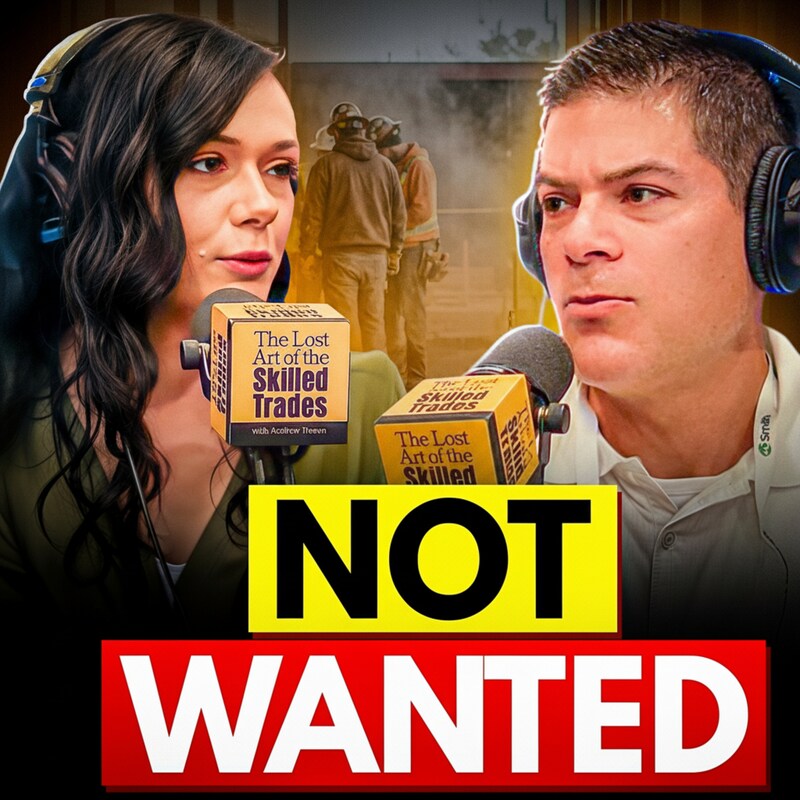
The first thing a superintendent said to Valerie Butler on a jobsite was: ‘You’re not who we want out here.’”
Host Andrew Brown sits down with Valerie Butler, a plumbing apprentice at P.I.P.E. Incorporated, to explore how to build a successful plumbing career path in today’s skilled trades industry. Valerie shares her journey from the Marine Corps to a hands-on plumbing apprenticeship, offering real insight into military to trades career transitions, job site realities, and the value of skilled trades mentorship.
This episode takes an honest look at what it’s like being one of the first women in a company’s apprenticeship program, how plumbers actually get started without industry connections, and why the trades offer long-term opportunity without college debt. If you’re exploring women in the skilled trades, considering a plumbing apprenticeship, or looking for a proven plumbing career path, this conversation delivers practical guidance from someone living it.
IN THIS EPISODE
- (00:01) – From Military to Trades Career: How Valerie transitioned from the Marine Corps into a plumbing apprenticeship
- (07:58) – Plumbing Apprenticeship 101: How to get hired, what first-year plumbers actually do
- (15:40) – Women in the Skilled Trades: Navigating job sites, skepticism, and earning respect
- (26:22) – Skilled Trades Mentorship: Why the right foreman changes everything
- (35:55) – Plumbing Career Path & Pay Progression: Apprentice wages vs journeyman income
- (47:30) – Advice for Gen Z & Career Changers: How to test trades careers without long-term risk
Key Takeaways
- A plumbing apprenticeship provides paid education and long-term career security without student loan debt.
- Women in the skilled trades are reshaping construction culture through planning, leadership, and problem-solving.
- Military to trades career transitions offer a strong advantage, especially in discipline, confidence, and adaptability.
- Skilled trades mentorship accelerates learning, builds confidence, and shortens the path to mastery.
About the Guest
Valerie Butler is a plumbing apprentice at P.I.P.E. Incorporated and a passionate advocate for women in the skilled trades. After leaving the Marine Corps due to injury, Valerie pursued a plumbing apprenticeship, proving that a military to trades career can lead to stability, growth, and fulfillment.
As one of the first women apprentices in her company, Valerie actively supports skilled trades mentorship, participates in career fairs, and uses LinkedIn to help more women explore sustainable plumbing career paths in the trades industry.
Keywords
Women in the Skilled Trades, Plumbing Apprenticeship, Military to Trades Career, Skilled Trades Mentorship, Plumbing Career Path, Skilled Trades, Trades Industry, Andrew Brown, Valerie Butler, P.I.P.E. Incorporated, Toolfetch, Plumbers, Electricians, HVAC, Carpentry, Millwrights, Construction, Trades Careers, Tradespeople, Craftsmanship, Problem-solving, Creativity, Advocacy, Contractors, Industry Experts, Education, Skilled Trades Advisory Council
RESOURCE LINKS
Website: https://pipeinc.net/
SUPPORT THE SHOW:
If you’re getting value from these episodes and want to help keep the mics on, consider tipping the show here → https://andrewbrowntrades.kit.com/products/toolbox
Every dollar helps us keep bringing unfiltered insights from the trades, straight to your ears.
Transcripts
The first thing that the guy said to me, listen, little lady, but you're
Speaker:not the one that we want out here.
Speaker:I heard him talking.
Speaker:I was like, that sounds awesome.
Speaker:Like I wanna do that.
Speaker:And my dad's like, mm, well, typically women don't do this, so I
Speaker:don't really know if that's for you.
Speaker:10 minutes later I had a job offer, and I've been there almost six years now.
Speaker:I credit the military and the Marine Corps, especially for helping me
Speaker:build the thick skin that I have now.
Speaker:To be able to be a woman in the trades and to be able to be in the field.
Speaker:Life is too short to do something that you don't love.
Speaker:It's not a bad thing to hop around and try and figure out what you want.
Speaker:Hi, I'm Andrew Brown.
Speaker:You're listening to The Lost Art of the Skilled Trades Podcast, a show that
Speaker:shines the spotlight on careers in the skilled trades that are high paying,
Speaker:honorable, rewarding, and fulfilling.
Speaker:The trades are the backbone of the economy that keep us running.
Speaker:And without them, our world would cease to exist.
Speaker:Alright, welcome to The Lost Art of the Skilled Trades.
Speaker:I'm super excited 'cause I have a special guest, Valerie
Speaker:Butler, at P.I.P.E. incorporated.
Speaker:Welcome Valerie to the show.
Speaker:Thank you.
Speaker:Happy to be here.
Speaker:It is so cool being here at PHCC.
Speaker:Tell us a little bit about, so you are an apprentice, yes.
Speaker:Plumbing apprentice.
Speaker:But you told me that your family wasn't so into you becoming a plumber.
Speaker:Tell us a little bit about that journey.
Speaker:So I had just gotten out of the military due to an injury and I was trying to find
Speaker:something to kind of do with my life.
Speaker:And I, at the time, I lived with my dad and his apartment, and my brother lived
Speaker:there as well, and my dad was trying to get my brother interested in the trades.
Speaker:He was like, Hey, you can go work for like gala, you can be an electrician, you can
Speaker:do all these different things and it'll build you a great career and a great path.
Speaker:And I was like, I heard him talking.
Speaker:I was like, that sounds awesome.
Speaker:Like I wanna do that.
Speaker:And my dad's like, mm, well, typically women don't do this.
Speaker:So I don't really know if that's for you.
Speaker:Wait, wait.
Speaker:I'm gonna stop you right there.
Speaker:Because you're a woman, he said it's not for you.
Speaker:Was he worried about your safety or it's just not?
Speaker:He was mainly concerned about me aggravating the injury that I had.
Speaker:I broke my hips a couple of times.
Speaker:And so it was about that.
Speaker:And then more about like just the safety and like women are not common
Speaker:in this industry, and so it's just one of those, you don't see that every day.
Speaker:And I think it was more just he was gearing my brother towards it
Speaker:and he is afraid if I caught the interest, then my brother would
Speaker:be, well, she's already doing it.
Speaker:I don't have to do it then.
Speaker:Wow.
Speaker:So you came back and now you're, you want to go into the trades.
Speaker:What you're being told was that both sides was your, your dad and your mom
Speaker:said that, or that was more of your dad?
Speaker:Um, I don't have a relationship with my mom, so it was just mainly my dad was
Speaker:just kind of, he's was a little bit on the fence about it, so he was more so
Speaker:like, why don't you apply at like some play houses and you go do like, like work
Speaker:in the warehouse and you pull material.
Speaker:And so that's the path that I ran with at first was I applied at a supply house and
Speaker:my dad is actually really good friends with my current boss at Pipe Incorporated
Speaker:and they were having lunch one day.
Speaker:And you know, when you're having lunch with your friends, you just kind of
Speaker:share what's going on with your kids.
Speaker:And my dad mentioned that like, Hey, she applied at Supply House.
Speaker:So my boss was like, oh, well, did she get hired?
Speaker:And my dad's like, no.
Speaker:Like she hadn't heard back yet.
Speaker:So then my boss asked if he could interview me and I showed up and
Speaker:they already had an appointment packet sitting on his desk.
Speaker:And 10 minutes later I had a job offer.
Speaker:And I've been there almost six years now.
Speaker:So growing up, were you always good with your hands?
Speaker:And let me ask you, uh, another question on top of that.
Speaker:Are you a problem solver?
Speaker:I have always enjoyed working with my hands and I've always
Speaker:loved knowing how things work.
Speaker:I used to help my dad out with a lot of like the yard work and the working on his
Speaker:vehicles and then when he got into boats and having small hands and being able
Speaker:to fit my hands in the places that he couldn't when he needed something done.
Speaker:So I like, I worked with my dad on stuff sometimes and then I've always
Speaker:enjoyed learning how things work and how they operate and I think that's
Speaker:helped a lot with being in the field and just knowing like, okay, this
Speaker:happened, so how are we gonna fix it?
Speaker:I speak to a lot of people in the trades.
Speaker:It doesn't matter what trade it's, or if it's welding or carpentry.
Speaker:They love to solve problems.
Speaker:It gets them excited.
Speaker:It does.
Speaker:It gets them like, oh my God, yeah, I wanna fix that.
Speaker:X, Y, Z. So it's understandable why you would be gravitated
Speaker:towards the trades, but why?
Speaker:I guess why plumbing?
Speaker:What was when not welding or.
Speaker:Electrical, or I ask myself that same question all the time because
Speaker:this is not a desirable train.
Speaker:But I got hired on originally, I actually wanna go into like electrical, but I got
Speaker:hired on a plumbing company and then when I got hired on, I was doing takeoffs.
Speaker:So I was like pulling like fixtures and equipment and I was going back
Speaker:and forth with some of the field guys about backflow preventers.
Speaker:And for some reason it clicked in my head.
Speaker:I was like, I wanna know how to install this.
Speaker:I wanna know what a meter tree is.
Speaker:I wanna know how to do this.
Speaker:That was my moment where it like clicked in my head of, I wanna be a plumber.
Speaker:I don't wanna just work in the office.
Speaker:I want to know how to install.
Speaker:I wanna know how to do this.
Speaker:I don't wanna have to sit here and have the guys explain to me how this works.
Speaker:I want to be able to explain it and understand it for myself.
Speaker:Got it.
Speaker:So that kinda led you to, to, to, to that path.
Speaker:And it's interesting when it comes down to, you know, what path you
Speaker:want to take and a lot of kids today.
Speaker:Um, some are interested in the trades, but some of them are
Speaker:just, they don't know what to do.
Speaker:Like, I don't, okay, a plumber.
Speaker:I kind of know what a plumber does, but I don't know the steps to get in.
Speaker:So, being, uh, a third year apprentice, for someone who is in the audience who
Speaker:is thinking about getting into plumbing, where do they, what do they start?
Speaker:Like what do they do?
Speaker:Honestly, I would say most, um, plumbing companies, they have a shop and you
Speaker:can just pick, Hey, can I just do like a summer internship where I just.
Speaker:Work in your shop.
Speaker:I pull material.
Speaker:I occasionally go out to a job site, see if this is at least something
Speaker:that has an interest for me.
Speaker:Because you don't have to dive deep into it if this isn't something
Speaker:you're set on, you don't have to immediately go to school.
Speaker:There's so many like other trades, there's so much to do.
Speaker:So it's just go to a company, be like, Hey, I wanna see if this is for me.
Speaker:Can I work here for the summer?
Speaker:Can I work here for a few weeks?
Speaker:And most companies are starving for help.
Speaker:So be like, yeah, I need someone to help pull material.
Speaker:I need someone to take stuff out to a job site.
Speaker:I need someone to do a cleanup.
Speaker:Well, how do you tell these kids?
Speaker:'cause some of them are a little afraid to go up to like show up at a. You
Speaker:know, uh, a local plumbing, you know, supply, whatever it may be and say,
Speaker:Hey, I'm looking for an internship.
Speaker:Like, how do you get that skillset or that being comfortable doing that.
Speaker:I think a lot of it is, is just knowing that like, okay, I have
Speaker:to figure out what my future is.
Speaker:And so I do a lot of high school career fairs.
Speaker:I go and visit a lot of schools and I talk to a lot of students.
Speaker:And so I pretty much, I'll give 'em my card and I'm like, Hey, I was like,
Speaker:the easiest thing to do is just ask, like, the worst they're gonna say is no.
Speaker:You're never gonna know if you don't at least ask.
Speaker:And if you decide this isn't for you, then you're not stuck in a career or in
Speaker:something you don't wanna actually do.
Speaker:Yeah, I mean that's great advice.
Speaker:'cause not everybody can do that.
Speaker:Just be a, I call it a little assertive, like show up and you know, try to
Speaker:promote yourself or ask, some people want to make money right away, right?
Speaker:As an apprentice.
Speaker:A first year apprentice.
Speaker:What, what, what are the wages roughly for entry level?
Speaker:Um, typically it depends on what you're going to do, if you're going to
Speaker:be service, residential, commercial, but typically it's anywhere from,
Speaker:I wanna say right now, 17 to 22.
Speaker:Okay.
Speaker:Just starting out.
Speaker:Starting out.
Speaker:And you're located in just I'm located in Indianapolis.
Speaker:Indianapolis.
Speaker:But if somebody was in New York, California.
Speaker:Would it be different only because of cost of living?
Speaker:Yes.
Speaker:Would be different.
Speaker:I do a lot of social media and I hang out a lot on TikTok and I do
Speaker:a lot of lives and there's always interesting, um, you know, a dynamic
Speaker:of people who always come on the lives.
Speaker:Some of them are for it and say, yeah, I can make a lot of money.
Speaker:Some of them are just, why would I take a job for 17, $18 an hour versus I can go
Speaker:work at McDonald's and make 2122 Chipotle.
Speaker:But then there's the flip side of people are like, wait, wait, wait.
Speaker:You might be stuck at 21, 20 $2 an hour after four or five years, but as an
Speaker:apprentice you keep making more money.
Speaker:So where do you top out of, just so people understand, like after four years of being
Speaker:an apprentice, it also depends on what your company does and how they pay and
Speaker:all the benefits that they come with it.
Speaker:And so like I, my biggest argument with it was then they make the
Speaker:comment, oh, I could go work for McDonald's and make the same thing.
Speaker:Is McDonald's paying for your education?
Speaker:Are they paying for you to go to school?
Speaker:Are they paying for your tools?
Speaker:Are you learning a valuable skillset that you can use for the rest of your
Speaker:life if you're just working at McDonald's versus if you're in a trade, you have a
Speaker:company that's putting their faith in you to believe that, hey, you can do this.
Speaker:They're paying for your education and they're paying for you to learn.
Speaker:Learn.
Speaker:But for most competent to top out at like a journeyman pay, typically.
Speaker:I say a first year studying apprentice, you're probably gonna make around 50,
Speaker:55 a year versus when you top out just as like an entry level journeyman.
Speaker:So just a first year you're finally licensed.
Speaker:This isn't like when you're a foreman or anything, but it's when you're finally
Speaker:licensed after your four years, you're probably pushing probably around 70,
Speaker:just at an average 40 hours a week would be right around, would you'd end up at.
Speaker:I mean, that doesn't sound so bad to me.
Speaker:No, not at all.
Speaker:And you don't have, you didn't go to college, you don't have the debt.
Speaker:Exactly.
Speaker:And you're ahead of the game.
Speaker:And that's what a lot of kids need to decide their journeys.
Speaker:'cause a four year college degree is not for everybody.
Speaker:Did you consider.
Speaker:Going to college.
Speaker:So I graduated high school at 17 years old.
Speaker:I graduated when I was a junior.
Speaker:Uh, and so I actually did a semester of college where I was
Speaker:waiting to join the Marine Corps.
Speaker:Um, just 'cause I had to go through some waivers and I had to put on
Speaker:some weight to be able to enlist.
Speaker:So I did a semester of college, but as soon as I heard that like,
Speaker:Hey, my waivers cleared and I was cleared to enlist, I dropped out
Speaker:and I went to the Marine Corps.
Speaker:So I kind of explored the options of, I did the semester of college, I did the
Speaker:military, and then I kind of went into the trades all within like two years.
Speaker:So I kind of just, that's a busy two years.
Speaker:It was, I assume that the military gave you the discipline, right?
Speaker:You know, you're, you were probably very different from when you.
Speaker:Came into when you left.
Speaker:I credit the military and the Marine Corps, especially for helping me build
Speaker:the thick skin that I have now to be able to be a woman in the trades
Speaker:and to be able to be in the field.
Speaker:But it gave me the discipline and it gave me the confidence to know
Speaker:that like, Hey, I can do this.
Speaker:Like, I went into the military.
Speaker:Granted, I, I got injured, but I still went in, I still did it all on my own.
Speaker:So I do credit a lot to the military.
Speaker:Yeah.
Speaker:Um, you had mentioned something about your hip.
Speaker:Is there any, can you share or, um, I basically just, I have bursitis
Speaker:and tendonitis and so what happened was, was I had cracked my pelvis and
Speaker:so my, I, my muscles would swell and basically they were starting to pull
Speaker:my pelvis apart by the cracks and I just wasn't healing the way that
Speaker:the Marine Corps wanted or just it.
Speaker:Wasn't beneficial to me when they told me that at 18 years old I was gonna, I
Speaker:was looking at a double hip replacement and I was like, yeah, I wanna go home.
Speaker:Uh, this isn't for me.
Speaker:So I ended up taking a, uh, condition, non disabling medical disability.
Speaker:So I'm not disabled.
Speaker:I don't.
Speaker:Not technically disabled and it doesn't affect me in the field
Speaker:as much as I would work about it.
Speaker:Oh, it doesn't?
Speaker:Okay.
Speaker:No, I was gonna ask if it does really affect you.
Speaker:Not too often.
Speaker:Like if I'm working on a hotel and I'm walking up and down flights every
Speaker:day, then the next day I feel it.
Speaker:But so does every person walking up and down flights every day takes a toll
Speaker:after time, which kind of leads me to, as you get older in the trades, right.
Speaker:And you kind of feel it, right?
Speaker:Your knees maybe are shot or like your, your legs or your hip is, is shot.
Speaker:What's the next iteration for somebody who can't really work in the field?
Speaker:Do they move into the office at that point?
Speaker:If you wanna keep going.
Speaker:The way that my company does it is if you're kind of at that stage where
Speaker:you're like, your body's kind of like, Hey, I can't fully do this anymore.
Speaker:They will put you as just my company.
Speaker:Typically, you're like a non-working foreman.
Speaker:You still work, but you don't do as much as you used to do, and you just oversee
Speaker:the crews and the bigger projects.
Speaker:Or we have some guys who have, who have transitioned outta the field.
Speaker:They've come in to be like our shop guys, where they help maintain the shop.
Speaker:They do deliveries, they do cleanups.
Speaker:We're trying to get some of them to come into the office, but most of 'em are
Speaker:kind of just, they're so used to the field and the jeans and their boots.
Speaker:They're like, I still wanna be able be out there to do it, but
Speaker:I don't want to fully do it.
Speaker:Yeah.
Speaker:What keeps you going?
Speaker:You're still sort of in the action.
Speaker:Yes.
Speaker:But I almost feel like to get to that part, you need to walk in those shoes.
Speaker:Like you need to understand, you know, the element of, you know, being in the field
Speaker:and, and working, whether residential or commercial, whatever it may be.
Speaker:It is very different to go from the office to the field.
Speaker:Uh, like I mentioned prior to this, I do both.
Speaker:I work in the office and I work in the field, and it is two very different
Speaker:environments and you have to almost be two very different personalities to be
Speaker:able to handle both sides of everything.
Speaker:So I see both sides of it, and I understand both sides of it at this point.
Speaker:I remember how, I don't know if you know Plumber, Paige, I
Speaker:don't know if you know that name.
Speaker:She's a plumber.
Speaker:Uh, social media.
Speaker:She was on the podcast.
Speaker:She said she does residential work, and she said that when I show up at
Speaker:the door of, uh, you know, in, in the local area and it's the husband
Speaker:who answers the door and they look at me, it, they see, I'm like, five one.
Speaker:How you gonna like, they look, it's that old adage of like,
Speaker:you're gonna fix my plumbing.
Speaker:And then they feel like, well, I should be able to feel that way.
Speaker:But it's interesting that she's felt that.
Speaker:Throughout the last handful of years, but she does amazing work and she
Speaker:gives back, um, to, she speaks at trade shows and she does a lot of things
Speaker:for kids, but she always felt that.
Speaker:Do you feel that at all?
Speaker:I do.
Speaker:Um.
Speaker:Because you kind of know, like when you walk into like a trailer or you
Speaker:walk on anything, the first thing they're gonna look at is like she
Speaker:has no idea what she's talking about.
Speaker:And immediately they dismiss you.
Speaker:I recently was at a job site and the first thing that the guy said to me, he
Speaker:was the superintendent, he looked at me and he goes, listen, little lady, but
Speaker:you're not the one that we want out here.
Speaker:And that immediately was just like one of those, okay, so this is how it's gonna go.
Speaker:It's one of those things that you never, it's always gonna be there, and eventually
Speaker:you just have to get used to it and know enough that like, okay, they don't
Speaker:know me, they don't know my abilities.
Speaker:But now I have to show, show up and show out.
Speaker:And like, like I said, you never, it never goes away.
Speaker:It's always gonna be there.
Speaker:But for every one of those that there are, there's at least 10 others who
Speaker:are like, oh yeah, a woman, she's here.
Speaker:She knows what she's doing.
Speaker:And so I always have to think about, okay, is the handful of the guys who
Speaker:are actually like, yes, I want her here.
Speaker:Yeah, I guess you're always gonna find that, look, you can go into
Speaker:an office in white collar work.
Speaker:There's always somebody, right?
Speaker:There's always that one person that that says something.
Speaker:But I guess it gives you a thick skin after a while, but you prove yourself.
Speaker:It does.
Speaker:And you do.
Speaker:Yeah.
Speaker:Yeah.
Speaker:And there are so many talented women in so many different trades
Speaker:that there actually, to some degree, better in, in some aspects.
Speaker:Um, in certain trades, I like to say that, um, men kind of get tunnel vision.
Speaker:They have like one set idea of how they wanna do it, and that's it, versus women.
Speaker:We look at the overall picture, we look at the start and where we want to end at,
Speaker:versus the men are like, this is how I'm starting and this is what we're doing.
Speaker:I'll figure out the end when I finish the start.
Speaker:Versus like if I'm looking at like copper that I need to run, I'm like, okay,
Speaker:it's gonna go this way to that way.
Speaker:This is how I wanna run it.
Speaker:This is where I need to put my hangers.
Speaker:This is what I need to do.
Speaker:Versus the guys are like, these are the fittings that I
Speaker:need to need to get started.
Speaker:That's just like.
Speaker:I feel like men get more of a tunnel vision versus women.
Speaker:We look at the overall picture and what we want the end goal to be as
Speaker:far as being, uh, an an apprentice.
Speaker:Who, who did you work under?
Speaker:Like who, did you immediately get mentorship from somebody who's
Speaker:been in the field for a while?
Speaker:Like, can you attribute some of your success to somebody
Speaker:that's helped you along the way?
Speaker:I a hundred percent can.
Speaker:Um, for me, going to the field, I'm the first woman in my company to be an
Speaker:apprentice, to actually make it almost all the way through the apprenticeship.
Speaker:So there was a lot of worry at first about my boss putting me into the
Speaker:field, and so he put me with my first foreman, and I worked with him for
Speaker:about a year and a half, and he put me with him to make sure like I was safe
Speaker:in the field until I could hold my own.
Speaker:And I credit so much to that man.
Speaker:He had my back with every situation.
Speaker:He did not have any fear about letting me do any plumbing.
Speaker:He immediately was like, all right, you're gonna do this.
Speaker:He didn't once question or one other form to be, you're gonna let her do that?
Speaker:He's like, yeah, I'm gonna let her do that.
Speaker:So he made sure that like I had the confidence to do it and he had the
Speaker:confidence in me, and he still does.
Speaker:I still talk to him constantly, even though I don't work under him anymore.
Speaker:He's got new apprentices.
Speaker:Um, but he, I credit a lot of me being in the field and me being as far as I
Speaker:am to just the faith that he had in me.
Speaker:How important is mentorship?
Speaker:I mean, somebody who believes in you.
Speaker:It is the biggest thing because it's like when you don't feel like you can
Speaker:keep, like, especially as a woman, sometimes you get kind of down and you
Speaker:don't think that you can keep doing it.
Speaker:Having like all the mentors that I have, I know that I can go to
Speaker:them and they're like, Hey, I.
Speaker:Why are you thinking like this?
Speaker:Like you know what you can do, you know what you've done, why
Speaker:are you letting this affect you?
Speaker:And it's one of the biggest things is getting through or just even after
Speaker:an apprenticeship, having a mentor and someone that you can go back
Speaker:to and just talk and spitball with.
Speaker:It's everything.
Speaker:Yeah.
Speaker:I hear so many of those stories that somebody can attribute their
Speaker:success to one or two people.
Speaker:And how important is, you know, mentorship And it probably can also cut the time
Speaker:in a half 'cause you have questions.
Speaker:Instead of trying to figure it out yourself.
Speaker:I mean, you need to know the fundamentals and the basics, but like your career
Speaker:path, is that person helping with your career path as well, or is there somebody
Speaker:else's kind of helping you along?
Speaker:Just to give you a little bit of guidance on top of sort of
Speaker:the fundamentals and stuff.
Speaker:So the way that my company does it is when you work with a journeyman or
Speaker:a foreman is they teach you and then after they teach you, you're pretty much
Speaker:supposed to go on your way and do it.
Speaker:So when I started with him, we were on a finished job and he showed me how to do
Speaker:a shower valve and then he watched me do one and then I knocked out 30 in a day.
Speaker:And so then the next, I think two or three days later, he
Speaker:showed me how to set a toilet.
Speaker:He wash me, set a toilet, and then I went and I set a whole floor toilets
Speaker:and it was just things like that.
Speaker:If he would show me how to do it, he would watch me do it and then I was good to go.
Speaker:So he, he taught me how to solder for the first time, and
Speaker:now I primarily run copper.
Speaker:It is probably my favorite thing to do.
Speaker:And I still run my copper, like how he does it.
Speaker:Just 'cause I spent a year and a half, year and a half with him.
Speaker:So I still plumb the way that he does just 'cause it's, it was the
Speaker:fundamentals of how I learned.
Speaker:'cause it worked for him.
Speaker:So now it works for me.
Speaker:Right.
Speaker:And he's been doing it and it's the way it's supposedly
Speaker:done and you're following Yes.
Speaker:In, in, in that path, in, in those footsteps, which is really great.
Speaker:I mean it's, I think it's extremely important to get around people
Speaker:who are want to help you but also benter you and push you.
Speaker:Right.
Speaker:At times, I'm sure you were kinda literally pushed, right?
Speaker:Like you said, like go, go do that.
Speaker:Yeah.
Speaker:And sometimes you need to think on your feet and you need to try different things.
Speaker:I just wanna pivot over to the apprentices that are working over there, but people
Speaker:obviously that can't see that there are apprentices competing against each other.
Speaker:Um, tell me about.
Speaker:The competition over there.
Speaker:Did you get a chance to, to take a peek over there?
Speaker:I did.
Speaker:Um, so some of the guys are all going at like the same pace.
Speaker:They have the same idea that like, hey, we're gonna make sure everything's
Speaker:perfect the first time around.
Speaker:And then you have a couple of your guys who are, okay, I'm gonna get
Speaker:it done today so that tomorrow I can check my measurements, I can check
Speaker:everything, I can pull everything.
Speaker:So you can see the different mentalities of how they're plumbing and how they've
Speaker:been taught and like just looking at it.
Speaker:You can, as a plumber, you can just see like, okay, they're studying it this way.
Speaker:'cause that's the way that they learned.
Speaker:And you can see the technique that they use so you can see the different ways that
Speaker:they've learned and they've been taught.
Speaker:And it's actually really cool getting to go stand over there and just watch them.
Speaker:'cause it's, they're all doing the same thing differently.
Speaker:And that is probably my favorite thing is that you can flo the same way,
Speaker:but you're gonna do it differently.
Speaker:And they're all doing it differently, but it all looks the exact same.
Speaker:Yeah.
Speaker:It is interesting to just to see them work.
Speaker:Yes.
Speaker:And that's a lot of pressure.
Speaker:Yeah, it's a ton of pressure.
Speaker:I see.
Speaker:The same thing at, are you familiar with Skills USA?
Speaker:A little bit, yes.
Speaker:Skills, USA, I mean, it's just this massive auditorium with, you know,
Speaker:thousands and thousands of kids of, you know, it's plumbing, it's carpentry,
Speaker:it's robot, it's every, every trade.
Speaker:And these are young kids.
Speaker:These are young kids, there's a lot of pressure on them
Speaker:to, to win the competition.
Speaker:So even that, you know, you have, we're staring off, you know, from the sidelines,
Speaker:but they're feeling the pressure.
Speaker:Yeah.
Speaker:'cause they're not supposed to look or talk or acknowledge
Speaker:anyone from the sidelines.
Speaker:But they can, they can feel that there's eyes on them and that.
Speaker:All of these plumbers, contractors, exhibitors, everybody is looking at
Speaker:and judging their work right now.
Speaker:So it's a It definitely is a lot.
Speaker:It is.
Speaker:It definitely is.
Speaker:But it's great to see at that age, you know how far they've
Speaker:come, that they're here.
Speaker:Yes.
Speaker:And they're doing amazing work.
Speaker:How do we get the interest level of the younger generation?
Speaker:I always like to focus on Gen Z, ages 13 to to 28.
Speaker:How do we engage with them if schools are really not sort of.
Speaker:Guidance counselor's not sitting down and say, Hey, look, Valerie, I
Speaker:think you have a mechanical ability.
Speaker:You should be a plumber.
Speaker:I don't think those conversations are typically happening.
Speaker:What do we need to do in the industry to try to reach the younger generation?
Speaker:I think a lot of it is, is personally when I go to career
Speaker:fairs is I like to bring my tools.
Speaker:So I will bring my like everyday tools where you can see that
Speaker:like, hey, they're worn down.
Speaker:They've been used.
Speaker:And so that brings a lot of interest over in general.
Speaker:So like high schoolers, I've gone to a middle school or
Speaker:two and I do the same thing.
Speaker:I'll bring the same tools, I'll just, you know, if I have my bandsaw,
Speaker:I'll pop the blade out of it.
Speaker:Or if I have my hacksaw, it just depends on the situation.
Speaker:But like I'll let them play with the tools.
Speaker:I'm like, Hey, like I use these on an everyday basis.
Speaker:I'll explain what I do and we do this little game that, um,
Speaker:Chuck Gillespie, our executive director, he kind of brought it up.
Speaker:We put a pro press with two pieces of pipe in a cake.
Speaker:You can get this part, we'll give you 20 bucks.
Speaker:Ooh.
Speaker:And the kids absolutely love it.
Speaker:And I get some interest and sometimes I'll bring just pecs and I'll let them
Speaker:build their own things with some packs and I'll let 'em take 'em home with it.
Speaker:So I think a lot about it is, is just letting the kids get their hands
Speaker:on something where they're not just sitting there watching you do something.
Speaker:They're physically getting to get their hands on and being like,
Speaker:oh, I mean, I did that in two minutes at this school career fair.
Speaker:I could do that for my future.
Speaker:And I think that's the biggest thing is just letting them get their hands a little
Speaker:dirty or get their hands on something.
Speaker:You know, that they have the ability to do it too.
Speaker:Yeah.
Speaker:And I think showing them and showing up where they are on top
Speaker:of obviously going to schools, but also showing up where they are.
Speaker:Where are they?
Speaker:They're on social media.
Speaker:They're on TikTok, right?
Speaker:They're on Instagram.
Speaker:Right.
Speaker:To engage with them on there as well.
Speaker:Yes.
Speaker:To showcase exactly, you know, what, what people are doing with their hands.
Speaker:And that's why I love different influencers are doing stuff in their
Speaker:own own way and it really piques the interest of the, the younger generation.
Speaker:I think there's a lot more work that we can do.
Speaker:There's a huge shortage.
Speaker:They say we need 550,000 plumbers by 2027.
Speaker:I mean, it doesn't feel like that when you go down to like a Skills USA and
Speaker:you see like hundreds and hundreds of kids, you know, in the plumbing field
Speaker:and like it just doesn't feel it.
Speaker:But overall, that shortage is just, just felt with different companies out there.
Speaker:It definitely is.
Speaker:Um.
Speaker:I know that pretty much all of the trades, every, every industry is just
Speaker:starving for help right now and trying to get the good help and just keep
Speaker:it and is probably about the hardest thing that's happening right now.
Speaker:I think.
Speaker:I think we're turning a corner here.
Speaker:Trade school is up, right?
Speaker:Ai, what's going on in, in the white collar world?
Speaker:You know, people are looking at the trades.
Speaker:They're not getting the same return on investment on college.
Speaker:Working with your hands, you could start making money right away and be successful.
Speaker:Valerie, before you leave the show, what would you say to the younger generation?
Speaker:If you're thinking about the trades but you're not sure which trade to go into,
Speaker:what would you suggest to that person?
Speaker:I would suggest, like I mentioned earlier, like going somewhere and just.
Speaker:If you go to high school and you have a career fair asking them like, Hey,
Speaker:do you guys do like summer internships?
Speaker:Do you know somewhere that I could do an internship at?
Speaker:Or I could just spend the summer just seeing if you wanna do it, life is too
Speaker:short to do something that you don't love, you don't wanna get set in like a trade
Speaker:that you don't love, you don't enjoy.
Speaker:So it doesn't, it's not a bad thing to hop around and try and figure out what
Speaker:you want and what makes sense to you.
Speaker:Um, I mean, like I said, it's just you have to ask, be okay.
Speaker:Do you do this?
Speaker:Can you explain this to me?
Speaker:And it just, it doesn't hurt to ask.
Speaker:And it's the best way to do it.
Speaker:You can hop around, you can do whatever you want, but at the end of
Speaker:the day, you have to find something that makes sense to you where you
Speaker:get excited every day to go to work.
Speaker:Yeah.
Speaker:You gotta find your passion.
Speaker:Exactly what lights you up.
Speaker:Look, if welding sparks light you up, if, if LEC electrical stuff
Speaker:lights you up, or even plumbing and just be, be somebody who's a sponge.
Speaker:Get somebody who's a mentor that can help you through this and just be open-minded
Speaker:to keep learning and keep growing.
Speaker:It's not going to be easy.
Speaker:The industry is not made to be easy, but at the end of the
Speaker:day, the industry provides.
Speaker:Yes, yes, it will weed out those people.
Speaker:But at the end of the day, if you, you have a passion for working
Speaker:with your hands, it's a great path.
Speaker:It is Valerie, if people wanna find out more about you social website,
Speaker:where do they, where do they go?
Speaker:Um, typically my LinkedIn or if they just call my call pipe, but typically
Speaker:my LinkedIn is where I have had a lot of high scores reach out to me and
Speaker:I'm just gonna pop this out there.
Speaker:I've helped five women get into the industry this year alone,
Speaker:just through my LinkedIn.
Speaker:I help that out and I also help a lot of other companies just get involved
Speaker:with their PhD, HC as well that way.
Speaker:Awesome.
Speaker:Valerie, keep inspiring, keep making impact.
Speaker:Thank you so much for being on the show today.
Speaker:Thank you so much for having me.
Speaker:Thank you.
Speaker:Thanks for listening to The Lost Art of the Skilled Trades.
Speaker:Visit [email protected] for more resources and tips.
Speaker:Join us next time for real stories and meaningful initiatives as we celebrate
Speaker:our men and women in the skilled trades and shape the future together.