Shownotes
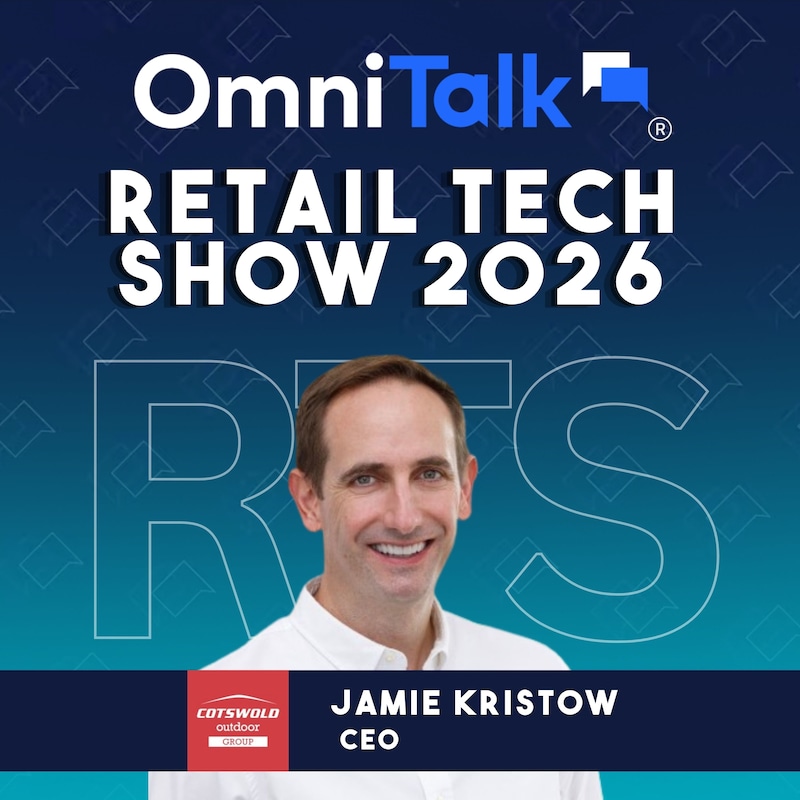
In this Omni Talk Retail episode, recorded live at Retail Technology Show 2026 in London from the Vusion podcast studio, Chris Walton sits down with Jamie Kristow, CEO of Cotswold Outdoor Group, to discuss how the company is modernizing specialty outdoor retail through service, store innovation, and retail media.
Jamie shares how Cotswold Outdoor is leveraging its expertise-led store model to help customers shop confidently for premium outdoor gear, while also transforming the in-store experience through new formats, digital screens, and smarter merchandising. He explains how the company improved performance through sharper assortments, stronger availability, and a renewed focus on value.
The conversation also explores what it really takes to launch an in-store retail media network, why stores remain essential for high-consideration purchases, and how AI is reshaping pricing, search, and the future customer journey.
Key Topics Covered:
• Why service and expert advice still matter in specialty retail
• How Cotswold Outdoor created its “store of the future” concept
• Using retail media to engage shoppers and support brand partners
• Reducing SKU complexity while increasing availability and sales
• How sharper pricing strategy improved competitiveness
• The difference between online convenience shoppers and mission-driven store shoppers
• Why outdoor retail requires confidence, fit, and trust
• How AI is changing pricing, search behavior, and customer acquisition
• What retailers must learn as consumers shift away from traditional search
Thank you to Vusion for supporting Omni Talk Retail’s live coverage from Retail Technology Show 2026, and thank you to our listeners for joining us during the event.
#RTS2026 #RetailTechnologyShow #OmniTalkRetail #CotswoldOutdoor #RetailMedia #StoreOfTheFuture #OutdoorRetail #RetailInnovation #AIinRetail #Vusion
This podcast uses the following third-party services for analysis:
Podcorn - https://podcorn.com/privacy
Transcripts
Hello, everyone.
Speaker B:I am Chris Walton, this is OmniTalk Retail.
Speaker B:And we are coming to you live from the Retail Technology show in London from the Vuzion podcast studio.
Speaker B:And joining me as our first guest of the day is Jamie Christo, the CEO of Cotswold Outdoor.
Speaker B:Jamie, how are you?
Speaker B:Welcome to omnitalk.
Speaker A:I am amazing, and it's great to be here, Chris.
Speaker B:Yeah, fair play to you for signing up to be the first one on this maiden voyage at the Retail Technology Show.
Speaker B:All right, well, tell us about yourself and also about Cotswold Outdoor, too.
Speaker A:Yeah.
Speaker A:So I'm a retailer by trade.
Speaker A:Have been since about the age of 16.
Speaker A:Foundational experience in buying and merchandising, and my career has enabled me to travel the world.
Speaker A: s in the UK and then in about: Speaker A:More department store experience.
Speaker A:Been in Australia for about 15 years, mainly department store, specialty fashion, and just rose up the ranks, really.
Speaker A:That chapter in Australia also took us to South Africa for four years, so had the benefit of working in Cape Town, which was fantastic, and then a little bit more time back in Australia, and then because I love the Commonwealth so much, we ventured to Canada.
Speaker A:So did just under a couple of years in Canada working for Hudson's Bay, and now back in the uk, where originally I'm from.
Speaker A:So Cotswold Outdoor.
Speaker B:And how long has it been at Cotswold?
Speaker A:Just over 18 months.
Speaker C:Eighteen months, okay.
Speaker A:Yeah.
Speaker C:Wow.
Speaker B:So that.
Speaker B:That is quite the very career, my friend.
Speaker B:That's very transatlantic, trans, oceanic, whatever you want to call it.
Speaker B:So I'm curious.
Speaker B:Like, the one question I want to ask you right off the bat is what perspective do you get into how retail works, having that, you know, international experience than, say, somebody that traditionally, you know, probably stays in one country?
Speaker A:I think the benefits of traveling is you just get opened up to new ideas.
Speaker A:You get opened up to new cultures, and I think that stood me in really good stead.
Speaker A:So, you know, and there's so much diversity between the uk, Australia, South Africa, and Canada.
Speaker A:So you just get a different, fresh way of doing things, or, you know, you often land in a new business or a new country and things are done slightly different.
Speaker A:You think, oh, that's great.
Speaker A:I didn't think of doing it that way or so I think you just get this sort of hybrid of different approaches and different ways of thinking which can just make you think differently.
Speaker A:And every country has its strengths and weaknesses, and you can sort of mold all those together to work out what's best.
Speaker B:I imagine it helps with the intangible.
Speaker C:Side of leading people too.
Speaker C:Right.
Speaker C:Because you're able to see how different cultures react to different leadership styles and different tactics.
Speaker C:You take as a leader, as an.
Speaker A:Executive, and you can make some mistakes as well because culturally those countries are quite different.
Speaker A:I mean, you know, UK is quite structured and, you know, quite disciplined.
Speaker A:Australia's quite laid back, but also very well structured as well and are working, but probably from a different slant.
Speaker A:And in South Africa, completely different.
Speaker A:And I think the move to South Africa was the biggest cultural difference because even in South Africa, you're dealing with a number of different subcultures in South Africa.
Speaker A:So, yeah, you have to learn to listen, you have to learn to be adaptable and flexible and you have to learn to approach different people and different cultures in different ways.
Speaker A:But there's been some mistakes along the way, trust me.
Speaker B:No doubt, no doubt.
Speaker B:And all different accents, too.
Speaker B:Same language, but different accents.
Speaker A:Yeah, I think my accent, it depends who I talk to.
Speaker A:If I go back to Australia or I talk to someone from Australia, I tend to start going up at the end of sentences and.
Speaker A:But yeah, you tend to, you know, your accent tends to mold a little bit over time, but it really depends who you're talking to.
Speaker B:Right, right.
Speaker B:All right, so now, CEO of Cotswold, as you said, just for a short period of time.
Speaker B:What was your assessment of the business when you took it over and what.
Speaker C:Is your assessment of it now?
Speaker A:So, as I said, my background's been, you know, a number of years in department stores, and one of my first sort of light bulb moments when I joined Cotswold is that we are a department store for the outdoors.
Speaker A:So we sell, you know, we specialize in running, snow sports and outdoors.
Speaker A:And we sell primarily brands, so about 70, 80% brands and, you know, some private label.
Speaker A:But we quickly sort of got my head around the business and I did that by spending my first month in stores, so traveled all around the uk really wanted to get an understanding of business from the shop floor.
Speaker A:And it's a business that's founded on service.
Speaker A:So if you're coming in for a, you know, you know, a good pair of hiking boots and you're going to be climbing a mountain or you're going skiing, you really want good advice.
Speaker A:And I think the foundation of our business is the fact that we give our store colleagues have great knowledge and they give great advice.
Speaker A:So our customers expect service.
Speaker A:So they're buying premium products, they expect service and they want things that are going to Protect them, you know, on whatever mission that they're trying to shop for.
Speaker C:And is that something you noticed when you first came in and then have tried to continue to reinforce it or have you had to develop that muscle even more over time?
Speaker A:I noticed it straight away because I worked on the shop floor and you know, I worked on shop floor since age 16.
Speaker A:And if you're selling T shirts and shorts and you know, even if you get thrown into women's wear and you're trying to sell dresses, you can sort of work it out.
Speaker A:When you're trying to sell skis or walking boots or a pair of running shoes to a marathon runner.
Speaker A:Some of our customers are very serious athletes.
Speaker A:You can't fake that.
Speaker A:So I think there's a three to six month learning period to get up to speed in terms of being knowledgeable about all of our categories.
Speaker A:So, yeah, we've doubled down on service, we've doubled down on culture.
Speaker A:One of the things that we've really tried to focus on is actually getting the knowledge or the product knowledge to the consumer for those consumers that don't necessarily have the time to or want to engage with a store colleague.
Speaker A:So one of the things I observe is all of the knowledge was in our sales associates heads.
Speaker A:But we weren't doing an amazing job of translating all the knowledge that's with the brands.
Speaker A:And I'm talking about Patagonia, Terex, North Face Rap, you know, Asics Hocker on all these like fantastic brands that have all, all of this R and D knowledge they're trying to get to the consumer.
Speaker A:And we were doing it through our sales associates, which is great if the store's busy or you get some people don't want to talk to people.
Speaker A:We weren't doing a great job of conveying that product information to the consumer.
Speaker A:So we're doing more of that now through, you know, we've opened up, opened up a retail media network.
Speaker A:So we've got more screens in stores, we're pushing content to consumers and then we're doing that via, you know, I think we're doing a better job via the website and via email and via socials.
Speaker A:We're actually trying to get that product knowledge that our associates have in different mediums to hit the customer.
Speaker B:Right.
Speaker B:Because all those brands have really great content too.
Speaker C:Right.
Speaker C:That if you can plug into and showcase to your consumer, it helps them out in their journey.
Speaker A:They have great knowledge and they don't tend to have many physical stores.
Speaker A:So the one thing we have is a lot of stores across the UK, we have 70 stores.
Speaker A:So another learning when I joined the business was our brand partners had all this information, they wanted it to get to the consumer.
Speaker A:They were frustrated because they necessarily weren't giving them the conduit.
Speaker A:And then we had a consumer who wasn't necessarily engaged in the store environment.
Speaker A:So we've tried to connect those dots up to solve the partner problem of I've got a new franchise that's launching a new shoe.
Speaker A:How do I get that to market and tell the consumer, you know, give them right information?
Speaker A:So we've tried to create that conduit for retail media to get that information from our partners into the hands of the consumer.
Speaker A:Yeah.
Speaker B:And Jamie, you seem like kind of a humble guy too.
Speaker B: You had a pretty decent: Speaker C:If I'm not mistaken, like 3% comp.
Speaker B:Sales growth, is that right?
Speaker A:Yeah, 3% lifelike growth last year, which was a great result in probably what was a flat market.
Speaker A:And then results year to date are pushing ahead of that.
Speaker A:So, yeah, we're quite happy at the moment with performance.
Speaker C:So what enabled you to do that?
Speaker B:What enabled you to stay ahead of.
Speaker C:The market, so to speak?
Speaker B:And then also what trends are you.
Speaker C: focus on to continue to make: Speaker A:It sounds like, I think one of the major things we focus.
Speaker A:There's a few major things we focus on, but one, continue to double down on service.
Speaker A:We've done a lot of work in terms of refreshing our brand, our identity, our creatives, and then we've done a lot of work on the foundations of retail.
Speaker A:And as I said, I come from a buying and merchandising background.
Speaker A:So one of the big things we focus on was availability.
Speaker A:So we were buying probably too wide in terms of SKUs and brands.
Speaker A:So we rationalized our brand matrix down.
Speaker A:We cut out the brands that we don't think were relevant for our consumer.
Speaker A:And then within the strategic brands, we've really doubled down on the SKUs and the styles that are really important and what we found there, I mean, we probably cut sku count by 35% and we drove about 40% more into volume.
Speaker A:And the outdoor industry, the products don't they, they evolve, they don't change dramatically season on season.
Speaker A:So you get this gentle evolution of product so you've got more certainty in terms of what the winners are.
Speaker A:So we really backed the truck up on volume and that really paid dividends as we went into peak trading because we didn't run out of oxygen.
Speaker A:Whereas in the years prior we were really wide on SKU camp.
Speaker A:We ran out of oxygen.
Speaker A:We just had the ability to keep that momentum going.
Speaker A:And that's worked for by stores and especially for our online business with more stock in the warehouse, better availability and then just the ability for the consumers to buy what they want through peak trading.
Speaker B:Is that a particularly important strategy when.
Speaker C:You think about the dynamics of online and the threat of online too in terms of going deeper and less wider, particularly in the stores?
Speaker A:Yeah.
Speaker A:I mean there was this counter argument that you need to be wide online, give the consumer choice.
Speaker A:We found to a degree that's true.
Speaker A:But you burn yourself really quickly on availability and cost.
Speaker A:So if you're spending a lot of money on performance marketing and putting all these SKUs on the website, but then you're running out of energy really quickly because you just get fragmented.
Speaker A:Your profitability, ecom profitability dies pretty quickly.
Speaker A:We then found that if we don't have the depth then we're replenishing from the store and then that also erodes the profitability along the way.
Speaker A:So that's been really important.
Speaker A:And then the other really important pillar that we found focus on is value and price.
Speaker A:So we were probably more expensive than we should have been in the market.
Speaker A:And you know, we're in a market where there's other outdoor retailers or other lifestyle retailers that are selling the same brands or similar or the same products.
Speaker A:So we found we don't always want to be the cheapest, but we want to make sure that customers think that we're value for money.
Speaker A:And especially from an E comm perspective, we have definitely focused on more dynamic pricing and making sure that we are aligned to the market where it's appropriate.
Speaker C:And how do you showcase that value to your consumer?
Speaker C:What is the value they get from inherently shopping with Cotswold?
Speaker A:I mean there's two things I think there's.
Speaker A:And we almost have not two different.
Speaker A:Well, there's a customer that will shop online and then we'll shop for price and they'll be very fickle in terms of where they shop.
Speaker A:And then we have a.
Speaker A:We're about a third of our businesses online and then we have a customer that really wants to go in store and get that, get that deep knowledge, have a 45 minute fit in for a pair of running shoes or hiking boots or a two hour ski boot fit.
Speaker A:And price is less of an issue because they want to, they're happy to spend the time with our colleagues to get the service because they're shopping for a really specialized product.
Speaker A:So I think the mission shopping is a little bit different and I think you definitely have a customer that shops on price, but you have a lot of our customers that just want, want the right kit because there's no point getting a pair of walking boots that might be 20 cheaper if they rub you or they hurt you and they get blisters.
Speaker A:Because I think when you're on, when you're doing some serious outdoor stuff, you want your kit to look after.
Speaker B:You want the confidence.
Speaker C:Yeah.
Speaker B:You want the confidence that comes from getting the advice in store, which is important, important in your category.
Speaker B:All right, I have to ask you because in doing my research, I saw that you have a couple what.
Speaker A:What the.
Speaker B:What someone's calling probably you guys, but the quotes, quote, unquote stores.
Speaker B:The future future, which is in my.
Speaker C:Background from my days at Target, heading up that too.
Speaker C:So talk to me about those.
Speaker B:How many stores of the future do you have and what.
Speaker B:What is particularly futuristic about them?
Speaker A:So, as per the name, we're based in the Cotswolds and we have a store literally 15 minutes away for us.
Speaker A:And we created our Sandpip.
Speaker A:So that was our store of the future, our South Surny store.
Speaker A:And we, as I said earlier, I thought our store environment could be more engaging, it could be more modern, and it needed a bit of a refresh.
Speaker A:And the store near our office is actually a great store.
Speaker A:It's a destination store, very affluent neighbourhood.
Speaker A:So we took that store and we used it as a sandpit.
Speaker C:So it's basically a lab.
Speaker A:Yes, a lab.
Speaker A:We test and learn.
Speaker A:We basically white boxed it.
Speaker A:We took down all the old slat wall fixture in, we put a more flexible shop fit in.
Speaker A:We challenged ourselves on visual merchandising.
Speaker A:For me, we were a bit of a sea of racks, you know, same, same height, very hard to distinguish in terms of different product categories.
Speaker A:And it was very much, there's clothing, there's shoes, there's equipment.
Speaker A:So we've merged a lot of those categories together to try and drive the basket up as well.
Speaker A:So done this in various businesses before and.
Speaker A:But the team have been fantastic.
Speaker A:You know, I set them a challenge.
Speaker A:We talked about the things that weren't working.
Speaker A:We talked about, you know, who looks good in the market, who looks good, good in the world.
Speaker A:And then we just played for about six months.
Speaker A:You know, we did the sort of heavy.
Speaker A:The heavy works and then we introduced the retail media technology and the screens and we worked out the dwell points in the store and what made sense.
Speaker A:And we Got that to a point where we probably annoyed the store manager enough and we thought, okay, well, we're pretty much done.
Speaker A:And then we had a couple of new stores that lease opportunities came up.
Speaker A:One in Bristol Clifton and one in Merry Hill.
Speaker A:And we took all those learnings and then we accelerated into two new stores last year in those environments.
Speaker A:And the feedback from the consumers has been great.
Speaker A:NPS scores and CSI scores have been positive.
Speaker A:And in the store that we did the sandpit in, we've had a double digit increase in conversion and a double digit increase in ATV in that store as well.
Speaker A:Really?
Speaker B:Wow.
Speaker C:Okay.
Speaker C:So I basically took away two things from this.
Speaker C:So you're using it as a sandbox for merchandising, really in terms of how you want to lay out the storage, how you want to design the store, how you want to make it more inspirational to drive a bigger basket, but also the tech side of it too.
Speaker C:So, you know, they experiment with screens and retail media.
Speaker C:I gotta imagine that's a key piece of how you're looking at things going forward.
Speaker C:We've been talking about it before we hit record here.
Speaker C:Yeah, talk to us about retail media and the strategy behind that.
Speaker A:Yeah, well, as I said, we want that two way engaging environment and we want to solve the problem for the, for the brand.
Speaker A:So we want the customers to be more engaged, the customers to get more relevant information as they're circling around the stores are in the categories.
Speaker A:And then we want to solve the brand problem of how do we get information to the consumer.
Speaker A:So they were the two problems that we were trying to solve.
Speaker A:And the output is a more engaged consumer, a more integrated brand partnership.
Speaker A:And it happens to be an economic benefit along the way, which is nice.
Speaker A:But we started with the key consumer problem is how do we make the stores more engaging.
Speaker A:So, yeah, we identified, you know, we've learned some lessons along the way, but we identified the key points where the customer enters the store, the windows, you know, the front door.
Speaker A:And then we try to identify the dwell points around the store.
Speaker A:So mainly the footwear areas where you sit down to have a gait analysis for running, or you try your running shoes on, or the, or the hiking boot area.
Speaker A:So we put screens in the walls because we knew there'd be a lot of dwell time in those points.
Speaker A:And then we also integrated screens into the apparel areas and into the, into the seasonal areas like camping and ski, where there were points where consumers were dwelling and there would be points where the consumer, we could talk to the consumer and then the Last point was at the till point in terms of obviously quite a big dwell time as well.
Speaker A:And then what we've done is not only try to drive brand messages or partner messages, but we've also driven our own messages.
Speaker A:So do we have a promotion on?
Speaker A:Let's talk about our services, let's talk about our sustainability ambition.
Speaker A:So we're using it to pulse internal narrative as well, to talk to the consumer about who we are, what we stand for and what we can offer to the customer as well.
Speaker C:Right, right.
Speaker C:Wow, that's fabulous.
Speaker C:That's exactly what I was hoping you'd say when I asked the question about stores of the future.
Speaker B:I'm curious too.
Speaker B:What is the hardest thing to activate.
Speaker C:In store retail media?
Speaker C:What's the hardest thing to get right time and time again?
Speaker A:The relatively easy bit is putting the screens in.
Speaker B:And that's the easy bit.
Speaker A:It's relatively easy.
Speaker A:It's project management.
Speaker A:The guys will get excited about building.
Speaker B:Stuff, get the electrical in the right spots.
Speaker A:There's always the tech bit.
Speaker A:I mean, our tech partners, Itcher have been fantastic, so they've been easy to work with.
Speaker A:There's two bits that are really hard.
Speaker C:Yeah.
Speaker A:One is the selling.
Speaker A:So you've got to become, you know, rather than just a buyer of brands and then, you know, selling through normal retail channels, you're now selling media.
Speaker A:So you're becoming a media house.
Speaker A:You've got to learn all the media media acronyms, you've got to train your team, you've got to build almost an agency model within your own team and a selling model.
Speaker A:And that's not something that comes inherently natural to retailers.
Speaker A:So we've had to do that, we've had to work out how to sell, we've had to work out how to connect with media agencies and we're still learning along the way.
Speaker A:So that's one bit that's evolving and you can't underestimate how much of a change that is for a retailer.
Speaker A:And the other part is, how do you integrate a retail media network in your go to market process, in your brand marketing processes, in your financial planning, in everything?
Speaker A:Because it's a new part of the business and a new muscle.
Speaker A:And that change management and that process integration and that roles and accountability piece is also harder than you think it was going to be as well?
Speaker B:Oh, yeah, no, I bet, yeah.
Speaker B:The internal understanding of how to look at the numbers and everything coming in has got to be a trip in.
Speaker C:A lot of ways.
Speaker B:All right, there's one, there's, there's an acronym that you mentioned acronyms before.
Speaker B:There's an acronym that we have not mentioned yet.
Speaker B:I'm going to lose my Punnet card.
Speaker C:If I don't ask you this final question, I think.
Speaker C:And that of course is AI.
Speaker B:How do you anticipate AI impacting the.
Speaker C:Outdoor industry particularly and Cotswold as well?
Speaker A:Yeah, I think it's going to, it's going to impact if it's not all retailers.
Speaker A:So I think there's the, you know, there's obviously the productivity gains you can make, whether it's in your finance team and you customer services team.
Speaker A:I think most people are generally starting a journey on that already.
Speaker A:AI pricing, I think is something that we are focused on at the moment.
Speaker A:I think that again, just allows you to accelerate into that space and make more informed decisions.
Speaker A:I think the search journey is the one that is worrying me probably the most in terms of where the consumer search journey is starting through various increases in the LMM models, et cetera.
Speaker A:So, yeah, so that, that performance marketing change, people moving potentially away from looking at Google and looking at ChatGPT or various other things or, you know, searching on TikTok or that's the thing that's starting to, I think we're starting to think more deeply about and when we know we're probably near where we need to be on that.
Speaker A:But that's the thing that's probably going to accelerate the most because I think what's going to, what's going to accelerate the most about AI is how the consumer's using it.
Speaker C:Yeah, right, right.
Speaker B:Which is, which is particularly important given.
Speaker C:What you said about the confidence that people get from shopping in your stores and whether they're getting that confidence in store or online or how it changes over time.
Speaker C:It's got to be something top of.
Speaker A:Mind, I think 100%.
Speaker B:Well, Jamie, thank you so much, man.
Speaker A:Pleasure.
Speaker B:This is a real pleasure.
Speaker B:Yeah, it's great getting to talk to you.
Speaker B:Jamie Christo, the CEO of Cotswold Outdoor, thank you for joining us.
Speaker B:Hope you have a great rest of the retail technology show here in London.
Speaker B:And until next time, as always, Omnitalk fans, be careful out there.