Shownotes
If your B2B podcast is “performing well,” there’s a good chance you’re measuring the wrong thing.
Download numbers feel important.
They’re easy to report.
They look reassuring on a slide.
But they rarely tell you whether your podcast is actually influencing anything.
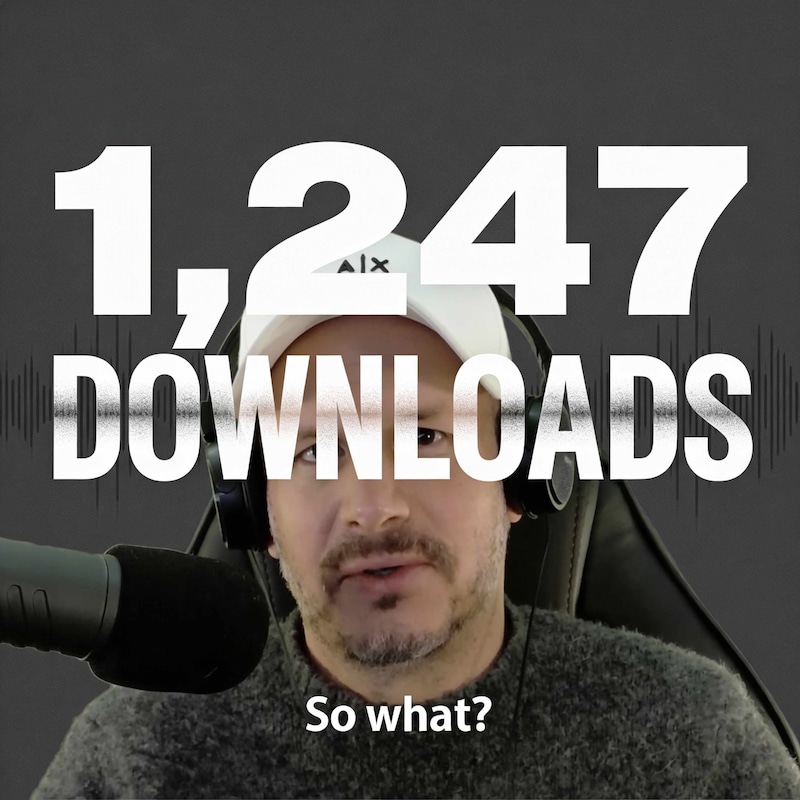
I’m Neal Veglio, and in this episode of B2B Podcasting Insights, I’m unpacking why download numbers are such a comforting distraction — and how they quietly pull B2B podcasts away from doing useful work.
I also share a simple reframe that helps teams stop obsessing over reach and start thinking about influence — including the early signs that your podcast is making sales conversations easier, even if the numbers look modest.
There’s a listener question from a managing director asking what a podcast is meant to do that a strong sales team doesn’t — and why the answer has nothing to do with audience size.
If your podcast gets downloads but still leaves prospects confused, unconvinced, or starting from zero on sales calls, this episode will help you see why — and what to pay attention to instead.
Useful links
Podknows Website
B2B Podcast Growth Diagnostic
https://podknows.co.uk/diagnostic
Podcast Audits
Timestamped summary
00:00 Why download numbers feel important
01:10 What a podcast download actually tells you
02:30 Why downloads are such a comforting lie
03:50 How numbers push podcasts into bad behaviour
05:20 Why influence beats reach every time
06:30 The metrics most B2B podcasts ignore
07:40 Listener question: what’s the podcast’s job vs sales?
09:10 Using podcasts to shape thinking before the sales call
10:00 Why downloads are a starting point, not proof
Mentioned in this episode:
Learn More About Podknows Podcasting
We're at https://podknows.co.uk/
Transcripts
At the end of the previous episode of B2B podcasting insights, I said
Speaker:I was going to ruin your perception of your download numbers.
Speaker:So fair warning, if you're emotionally
Speaker:attached to them, this episode might sting a bit.
Speaker:Welcome to B2B Podcasting Insights with Neil Velio,
Speaker:founder of PodKnows, a podcast agency helping you
Speaker:get better results from podcasting. The truth is, downloads
Speaker:are one of those metrics that feel important in the same way
Speaker:weighing yourself five times a day feels important.
Speaker:It's a number, it moves up and down
Speaker:and it gives you something to talk about, certainly in meetings,
Speaker:but it doesn't actually tell you what you think. It tells you
Speaker:downloads feel meaningful. And that's the problem.
Speaker:Lets start with why people cling to download numbers.
Speaker:The truth is, they're visible, they're easy to explain,
Speaker:and you can put them on a slide without anyone asking any follow
Speaker:up questions. You can say, the podcast got
Speaker:1200 downloads last month and everyone nods along.
Speaker:Nobody asks, okay, and what happened because of that?
Speaker:Which is quite convenient because once you ask that question,
Speaker:things get quite awkward quite quickly. Here's
Speaker:what a download actually means in podcasting, a download is a
Speaker:surface metric. It tells you someone's podcast app
Speaker:pulled a file from your feed. That's it. It
Speaker:doesn't mean that they listened for any more than the obligatory 60 seconds,
Speaker:that they paid attention, that they agreed with you, that they
Speaker:trusted you, that they or that they're any closer to buying
Speaker:from you. The truth is, a lot of people will listen once and never
Speaker:come back. And yet we talk about downloads like they're votes of
Speaker:confidence in your content. They're really not.
Speaker:They're more like someone picking up a leaflet at an event and
Speaker:immediately sticking it straight in the bin. Here's why download
Speaker:numbers are such a comforting life for B2B brands.
Speaker:Downloads are great for internal reassurance. You can
Speaker:tell stakeholders, look, people are listening. Which
Speaker:is technically true. In the same way saying people
Speaker:walked past the shop is technically true. But if you're running
Speaker:a B2B podcast, the real question shouldn't be
Speaker:how many people downloaded this? It should be,
Speaker:did this help influence a decision? Did this
Speaker:reduce confusion in our brand? Did this make the
Speaker:next sales call easier? Did this
Speaker:shorten our sales cycle? Almost nobody
Speaker:tracks those kind of metrics because it's harder. It
Speaker:requires talking to sales teams. It requires listening to
Speaker:prospects. It requires patience.
Speaker:Downloads don't you hit F5 and they're there.
Speaker:So let's talk about how downloads can actually push you into Bad
Speaker:behavior. Here's where the whole vanity
Speaker:metrics thing gets quite dangerous. The moment the downloads become
Speaker:the goal, the podcast starts changing shape.
Speaker:You start aiming for strangers, you smooth off your edges.
Speaker:You stop being decisive and intentional with your content
Speaker:because you don't want to alienate anyone. And before you
Speaker:know it, suddenly your show is fine.
Speaker:It's pleasant, it's inoffensive. It's completely
Speaker:useless as a buying accelerator. Buying decisions aren't made
Speaker:because someone vaguely enjoyed a podcast. They're made when someone
Speaker:thinks, wow, this person or these
Speaker:people understand our problem better than the
Speaker:alternatives. Downloads don't ever measure that, and they often
Speaker:reward the opposite. So what actually matters instead of
Speaker:download numbers then? If your podcast is meant to support your
Speaker:business, you need to look elsewhere, not at
Speaker:download numbers. Things like retention.
Speaker:Are people sticking around or are they bailing after two minutes
Speaker:because if they leave early, your insight never really
Speaker:lands. You need to be looking at repeat listeners.
Speaker:Are the same people coming back, or are you constantly chasing
Speaker:new ears? How do you find that out? Surveys?
Speaker:Ask them. Sales evidence. Do prospects
Speaker:ever mention the podcast on your calls? Do they reference specific
Speaker:episodes or ideas? That one alone tells you more than any
Speaker:download number ever will. Oh, and of course, inbound quality.
Speaker:Do leads sound clearer, more informed, less
Speaker:so? What do you actually do? Well, that's influence. Here's a
Speaker:refresh frame that usually helps people with figuring this out.
Speaker:I'd rather have 200 downloads a month from the right
Speaker:ideal people that would buy from me than 5,000
Speaker:downloads from people who just like podcasts. One of those
Speaker:scenarios leads to revenue. The other leads to LinkedIn posts
Speaker:celebrating numbers that don't mean anything. Harsh, maybe,
Speaker:but also true. The bottom line is that you need to use platform
Speaker:data properly. Or. Or don't bother. If you want an early signal
Speaker:before real world results show up, look at your engagement data.
Speaker:Go to Apple Podcast Connect, Spotify for creators,
Speaker:whatever platform you're interested in finding out more from. The retention
Speaker:curves matter far more than the totals. If people are sticking
Speaker:around, you're probably doing something right. If they're dropping off
Speaker:consistently, the podcast isn't doing its job yet.
Speaker:No amount of downloads will fix that. I'm not saying ignore
Speaker:your numbers. I'm saying stop
Speaker:worshipping the wrong ones. Downloads are a
Speaker:starting point at best. They are not proof of your success.
Speaker:If your podcast is meant to influence buying decisions,
Speaker:then influence is what you should measure. It's
Speaker:time for questions from listeners. Email with your question.
Speaker:Neilodnows.co.uk each
Speaker:episode I'm going endeavor to answer some of the emails that I get from
Speaker:people around the world. These are random people who have
Speaker:sent an email after listening to an episode. They usually do
Speaker:that via the contact form@podnows.co.uk, that's P
Speaker:O D K N O W s.co.uk.
Speaker:here's an email from Mark, who is a managing director at a
Speaker:business in Reading. Apparently he says, we
Speaker:already have a strong sales team. What's the podcast actually
Speaker:meant to do that our sales team isn't? That's a
Speaker:good question and quite a common one actually. Mark Sales
Speaker:handles the live conversations. The idea of the
Speaker:podcast is it handles the customer or the potential
Speaker:customers thinking that happens before anyone even
Speaker:agrees to a conversation. So it works in the messy middle of
Speaker:the buying process. Mainly the bit where customers are
Speaker:unsure, they're comparing options, they're looking at prices, and they're trying
Speaker:to make sense of your offers compared with other people that
Speaker:have similar offers. So a good B2B podcast
Speaker:doesn't replace sales. It uses the podcast to
Speaker:complement your sales talent. And the idea is that by the time
Speaker:your salespeople get on the phone, they've pretty much done 95%
Speaker:of the work. And now founder FAQs.
Speaker:Each episode of this podcast, I'm going to be sharing some of the common questions
Speaker:that are coming up from founders that I'm chatting with during my coaching
Speaker:calls and my pick my brain calls. This episode
Speaker:I wanted to share a clip of a conversation that I had with
Speaker:Andrew Backhouse. He's a website designer in Harrogate
Speaker:and he's planning a podcast to launch in Q2. So the
Speaker:next question is, what makes a solo podcast feel credible rather
Speaker:than opinion based? And I believe the answer you gave
Speaker:to that was passion. And the affiliate
Speaker:links, how they're not going to be something that I
Speaker:haven't tested. Yeah, so I mean, the affiliate links that
Speaker:that's destroyed from the start if the listener hasn't built a relationship
Speaker:with you. And this is why I sort of actually, I'm glad that you're doing
Speaker:solo because I always say to people, yet having a guest
Speaker:is fine, it's fine. But the listener
Speaker:builds a relationship with you, not with your guest. And so,
Speaker:you know, for me it's a case of they want you to turn up each
Speaker:time and talk to them and they want to sort of grow a relationship with
Speaker:you. The only time you really need a guest. Need
Speaker:is a strong word. The only time you ever really want to consider having a
Speaker:guest is if it's something where you're not necessarily so
Speaker:clued up on it, it's an aspect of what you do where, you know, we've
Speaker:all got things that we're masters of and some things that we know how to
Speaker:do it generally, but we're not experts in it. So if there's something like that,
Speaker:then having a guest come in can be useful because, number one, you're
Speaker:then learning something from it. But also your listener is
Speaker:understanding. They. They don't look at it as, oh, this guest has come in and
Speaker:they're an expert, and now my devotion should go to them. What
Speaker:they tend to do psychologically is think, oh, Andrew's brought some more
Speaker:expertise to me. That's brilliant. So you still get the credit. And I think
Speaker:that's the step that a lot of podcast as miss. They think, oh, well, I
Speaker:don't want someone else coming on my show, but if they know something
Speaker:different from you, then that's fine. I think it's when you get
Speaker:two web designers having a conversation about the same
Speaker:thing, that's where it sort of muddies the waters, and that's where it's kind of
Speaker:like, well, I'm not building a relationship with this person, I'm building a relationship with
Speaker:Andrew. And in the next
Speaker:episode, we're going to be talking about one of the biggest reasons
Speaker:B2B podcasts struggle to do that.
Speaker:Spoiler alert. It has something to do with interviews.
Speaker:I hope you found this episode useful. If you did, please feel free
Speaker:to share it with another B2B podcaster that you know.
Speaker:Definitely share it with your CMO or whoever has influence in the
Speaker:marketing department at your business. And if you haven't done
Speaker:so yet, click Follow or subscribe in the podcast app you're
Speaker:listening to this on, and I'm looking forward to speaking to you next
Speaker:time on on B2B podcasting insights.


