Shownotes
“I refuse to hate myself in any way… I hope women reclaim ageing as a gift.”
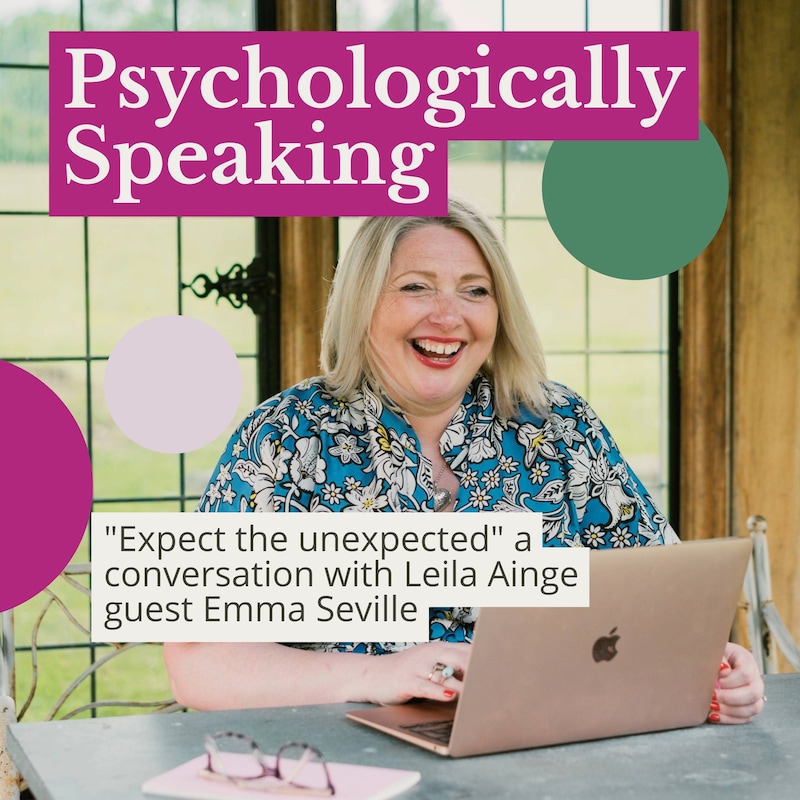
When everything shifts at once, home, body, identity, what does it take to rebuild a sense of safety and self? Leila Ainge and Emma Seville explore menopause, midlife transitions, and the psychology of starting over.
In this episode of Psychologically Speaking, psychologist Leila Ainge speaks with menopause coach Emma Seville about navigating unexpected life changes, financial precarity, ADHD, and the psychological impact of midlife transitions. Together, they explore agency, belonging, and how women can reclaim ageing as a powerful, identity-shaping experience.
Transcripts
I refuse to hate myself in any way and I think that is a massive shift because when you
start to see things like my neck went and Wrinkles and stuff and you start seeing them and
2
:it's horrific because we're told it's horrific
3
:I'm just so sick of seeing all these ironed similar faces and the oh it just breaks my
heart a bit and I just hope there's a backlash and a women reclaim their aging as a
4
:amazing gift because what's the alternative be great and be loud
5
:Welcome to Psychologically Speaking with me, Leila Ainge.
6
:I'm a psychologist and coach exploring the way our beautiful minds work.
7
:In this new season, I'm working with a phrase that I've challenged my clients to embrace
this year, expect the unexpected.
8
:And perhaps you had an event or an experience that did not go to plan.
9
:Perhaps there was something wonderful or serendipitous that came about as a result.
10
:I'm really intrigued and curious about what happens when life throws us a curve ball.
11
:But more so what happens when we let that happen?
12
:I'm delighted to introduce Emma Seville, the voice and founder behind Your Menopause
Toolkit.
13
:She's got a substack and a coaching practice, rooted in evidence-based insight, lived
experience and a generous dose of wit and feminism.
14
:Emma is a peri-to-post menopause coach, nutritional therapist, and the creator of the
Happy Healthy Menopause Framework.
15
:So she brings together feelings and food and movement and sleep.
16
:And I really like her framing that it's much more about agency and understanding what's
happening in our body rather than powering through.
17
:So Emma, before we get into it, let me just say that menopause is probably a large
constituent of my own unexpected moments of the last five years.
18
:So I was absolutely delighted when you said that you'd come on to talk about your
unexpected moments.
19
:I do feel like menopause has a lot to answer for, We probably do give it a really hard
time.
20
:Welcome Emma.
21
:Oh, thank you, Leila.
22
:What a beautiful start.
23
:Thank you.
24
:my unexpected moment was about four years ago when I had a call from my letting agent to
say that my landlady was going to sell the house.
25
:I'd been in with my daughter for 13 years, all of her life as solo mum in Bristol.
26
:And so the repercussions of that and not um realizing how difficult it was to find
anywhere else to live, to the point where we were almost planning to go to my friend's
27
:house and sleep on her sofa.
28
:Yeah, it was terrifying.
29
:I even had to go to uh homelessness prevention in Bristol city, which was the most dismal,
sad, sad place.
30
:Yeah, it was a really traumatic time.
31
:But out of it, I've ended up somewhere, living somewhere else.
32
:Somewhere that Edie could stay at the same school, because she was halfway away from it
before, and I was the other side of it.
33
:And I have a garden and a dog, and yeah,
34
:going to talk about Peanut the Dog because it is of course Emma, tell us a little bit
about, I your pre-move days Bristol and who you are and where life's taken you.
35
:Yeah, so before I was doing massage and reflexology from the back room in the house that
we lived in before, as well as building up my menopause business and nutrition therapy
36
:kind of as a wellness coach, of, you know, trying to get some one-to-one clients.
37
:then, you know, I was working on a website, it was all kind of...
38
:planning it, I loved doing the massage, felt it very calming for me as well as for the
clients, had a nice little client base.
39
:Obviously we had COVID, so that messes things a bit as well.
40
:then, yeah, Edie was very happy, she was getting the bus to school, she had lots of
friends living really close by.
41
:I had lots of friends, quite supportive friends living close by.
42
:As a solo mum, like you need those people.
43
:Yeah.
44
:Yeah, so it was all good.
45
:The next door neighbours were really probably quite close to as bad as you could wish for.
46
:So I always bring myself back to that thought.
47
:If I miss it, I'd made the house my own.
48
:I loved, you know, I decorated every room.
49
:I changed everything that I was allowed to change.
50
:It was, you know, it was a real home and it was Edie's home.
51
:We had a cat that we loved very much who
52
:owned the street, and I used to run nearby, I go to the gym nearby, to start lifting
weights.
53
:I was really, you know, I had a really solid existence.
54
:And I always had a slight feeling that one day the house, you know, we'd lose our house.
55
:And I was also becoming aware of the changes in renting and how it's now.
56
:kind of you have to earn three times the rent and the rent had doubled over the time we'd
been there.
57
:So I was always a little bit scared of it happening, but it was at the end of November.
58
:It was practically a month before Christmas Day when I had the phone call.
59
:I knew they give you a month's notice.
60
:It's not a lot for oh
61
:a shock.
62
:And also they gave the job of telling me to the youngest person in the office.
63
:And I just burst into tears and I felt so sorry for her.
64
:like, why have you told...
65
:She just didn't know what to say.
66
:She didn't really say any of right things.
67
:Yes, it was all a crashing down and, you know, the responsibility for making sure that
Edie was happy.
68
:That was massive.
69
:there was this long time.
70
:felt like, looking back, it feels like an incredibly long time where I was...
71
:just paddling.
72
:also have to say that during this time my mum was dying.
73
:My mum was at end of life, in people's home.
74
:And it was my mum's name, Mary.
75
:Yeah.
76
:Yeah.
77
:So I was kind of dealing with that as well.
78
:was just, she was just fading fast.
79
:And she actually passed away a week to the day before we
80
:literally moved into a house here.
81
:I just want to take a moment to say that's such a huge thing to have happened on top of
another big, like we say these big life events, know, grief, losing a parent, midlife,
82
:which you're in, and you know, that uprooting of home, know, home is so central to our
safety and wellbeing and part of our, you know, you talk about
83
:your connections and your community, was that identity.
84
:Yeah, it was absolutely massive.
85
:I feel, I do think sometimes it was a bit so traumatising.
86
:I wonder if I have a bit of PTSD from it because I'm now, although we are, I love where I
am and when we moved in, it wasn't finished.
87
:So we were gonna move in at the beginning of January.
88
:And I'd already said, I can't leave this house until I've found somewhere else.
89
:Mm-hmm.
90
:worked out that they can't force you out for...
91
:But it got to that kind of point of having those discussions, which I didn't want to have
to have.
92
:And then, you know, really advocating for myself in a way I hadn't ever had to do before.
93
:example of that Emma.
94
:So I mean, I was quite intrigued really how, I mean, looking back now, it's probably
easier to think about how you did actually cope, but it sounds like advocating or advocacy
95
:was a bit of a coping mechanism at the time.
96
:Yeah, I think I just found myself having discussions and going into this incredibly sad
place full of literally homeless people and security guards walking around in stab-proof
97
:vests and staff crying in the corner because they couldn't help people.
98
:And I walk in and I look so middle class and so...
99
:uh
100
:You know, I know I look like people are looking at me, what the hell are you doing in
here?
101
:And it's like, because it's happening to everybody.
102
:And the lady that helped me said, I've just had a 65 year old guy who's lived in this
house all his life, his wife died and they want to sell it.
103
:And he can't afford to rent anywhere else.
104
:He's in the same position as you.
105
:And they haven't got anywhere to send him.
106
:There aren't any, you know, that kind of tragic.
107
:So I thought, well, know, um I'm young and I've just felt like the whole system was
heartbreaking.
108
:was all heartbreaking.
109
:And then having to go into town, I went to a meetup, like one of the lovely, it was real
work actually, it was a meetup.
110
:And then I had to leave early to go to the homelessness prevention office from this lovely
world of privilege to this act.
111
:you know, what was actually happening in my life.
112
:That's such a stark contrast.
113
:you're talking about, I mean, real work is a space created by Fleur Emory.
114
:And I would characterize that space as being full of quite very privileged individuals,
know, people who have time as a resource possibly and have some money, but also have moved
115
:through life and perhaps have some financial security.
116
:Yeah, yeah, potentially, potentially, potentially, not all of them.
117
:But then it is interesting, isn't it, how we can sit on the outsites of different social
groups and we can be in two different identities at the same time.
118
:can be in opposite worlds.
119
:Yeah, it's crazy.
120
:That's kind of where I sit in life, really.
121
:From the outside view, I'd be a very middle-class, health conscious, able to sustain
healthy living, um get enough sleep.
122
:all those good things, have a garden, talk about my greenhouse, albeit third hand.
123
:And all that.
124
:And then on the other hand, it could just crumble at any minute.
125
:And I'd be back to that point, you know, sort of thing.
126
:Yeah, it was quite a mad day that I remember walking around.
127
:You've gone to the real work meet up and then off to see the officer.
128
:oh
129
:one big, great big room in an office block in the centre of Bristol.
130
:It's a council, part of the council offices.
131
:And yeah, it's just, we've been in this really nice bar that was quite new and cool.
132
:And I have my nice denim jumpsuit thing on.
133
:yeah.
134
:I remember walking around there and then trying to find my way in, not knowing where I was
going.
135
:And then I went to the wrong desk and nobody's particularly patient because they're all
overworked.
136
:yeah, was massively.
137
:And I thought no one, no one I know will ever be in this situation either.
138
:No, I hope that the people I I knew weren't probably ever going
139
:you should say that, isn't it?
140
:Part of my background, I worked with a charity where we supported people who were
experiencing homelessness.
141
:So it was over, over two days.
142
:Well, gosh, yeah, it probably was two decades ago, giving away my age.
143
:But at the time, the advocacy work that was happening there was very much going into
corporates.
144
:and saying to the people who wanted to help, do you not believe for a moment that you are
different from these people?
145
:You know, we are all three months away from homelessness by people.
146
:That was, you know, quite a while ago and I wonder now whether precariousness has changed
because cost of living is so expensive now, it's proportionally more expensive.
147
:people leaving university now leave with higher debt levels.
148
:We're hearing a lot about that in the news at the moment.
149
:So if you think maybe 15 years ago it was three months you needed to stay stable, it's
probably, you know, you could probably just have six months of stability and still find
150
:yourself really struggling with the precariousness of, you know, temporary housing.
151
:Yeah, yeah.
152
:And more houses are being made into Airbnbs and less.
153
:And then more is just all going but bananas.
154
:It just feels really strange and I think we all feel that we kind of we drive around and
you see lots of housing being built.
155
:But there are people who don't have that safety or security of a place to call home that
they know they're going to be securing for six to 12 months at a time.
156
:tell me a little bit about how you moved through then.
157
:We've met you at a point where obviously you're right in it, you've got your month's
notice, you're bargaining in your own head or even with your agents think, you know, they
158
:can't chuck me out, I need to find somewhere else to go so that bargaining stage is
happening.
159
:ah But presumably something does happen because we now know that you are in a space and
you've got a new place.
160
:So how did that unfold?
161
:Yeah, so I was asking everybody, I posted on the local Facebook groups, I was sort of
really looking locally and stuck in that idea.
162
:And then my friend, so I now live in Portysed, which is along opposite Wales.
163
:So the Bristol Channel goes past.
164
:So it's very nice to be able to walk the dog along the coast path.
165
:And my friend, well, my old friend's moved here because her mum lives quite close by.
166
:but she wanted all her children to be able to walk to school.
167
:And we'd been to see them a few times and we used to come up in the car and park up and
walk along the coast path without, before we even had the dog, Edie and I, and think,
168
:wouldn't it be amazing if we lived here?
169
:Because I do love the fresh air.
170
:I'm quite a country girl at heart.
171
:I love being outside.
172
:then my friend just said, oh.
173
:Actually, one of my neighbours has just done up a cottage attached to her house.
174
:I don't know how big it is.
175
:It's really tiny, but I'm not sure if it's two bed or one bed.
176
:So I said, OK, OK, I do think for my son to need a separate bed.
177
:think we need we can do small, but I do need my own room, basically.
178
:And I wrote to my landlady.
179
:And I got my pen out and my paper out and I wrote her a letter and I described us and I
said, I've been living in the same house for 13 years, I've always paid my rent and you
180
:know, we would love your house and look after it, blah, blah, blah, blah.
181
:And then she wrote me back and she just said, we are going through Latin agent Emma.
182
:And my heart just fell because I knew you wouldn't fulfil the criteria as in having enough
money in their eyes to rent it.
183
:because even though it's so small, it's not cheap.
184
:um But then one of my friends stepped up and said she'd be a guarantor out of the blue.
185
:So I could rent it.
186
:That's what the greatest thing ever was that she said that.
187
:And I have had a guarantor for years and my sister's been a guarantor in the past.
188
:It was kind been on low wage scraping by.
189
:But that meant we could.
190
:then I dressed up as I thought if my friend would dress, who lives in Clifton.
191
:It's like the posh part of Bristol.
192
:I was like, right, idiot, we're going into that.
193
:And I'm telling them I'm renting that place.
194
:I'm not asking them.
195
:And that's another out of body moment.
196
:I walked in and I went, we want to rent this house.
197
:What do we need to do?
198
:And I sat down.
199
:And then we talked to a lovely letting agent, a really nice letting agent actually, and he
said that my landlady is really special, she is really special, I love her to bits.
200
:And he wanted someone really nice to move in there to look after her, because she's quite
elderly.
201
:And he was asking me all these questions about what I earn, and it was all really dismal
and bad.
202
:I was so small that it wouldn't even, you know, was kind of embarrassing to have that
conversation.
203
:But then I said, but my friend will be a guarantor.
204
:So I think it, you know, and then he was like, OK, we don't need to know anything else.
205
:I just need her details.
206
:And then we could move in.
207
:And then it was I got everything ready.
208
:I rang all the utilities.
209
:I sorted everything out over like two days.
210
:I started packing.
211
:I filled the back room with boxes.
212
:And then we got a message to say the house won't be ready in time.
213
:We've got to put it back a month.
214
:And then I couldn't work for that month because I'd filled the back room.
215
:my mum was in Bristol, so I was going to visiting her all the time.
216
:So I was all going on the background and I was just packing and packing and trying to keep
everything OK at home with Edie as well.
217
:And you know, cooking.
218
:she take the move?
219
:So how old is Edie?
220
:She, when we moved, was 16 now, so she must have been 13 when we moved.
221
:my friends got a daughter her age and they were in primary school in year one together and
they absolutely loved each other and they still love each other and she just lives up the
222
:lane.
223
:We had this huge collection, so lucky, and when we came to visit this place, it was a
building site, but we came...
224
:and said you can come and have a look if you like, yes please.
225
:And we walked in and out the back there's this amazing view and we were so stressed and
there's the thing about looking at the horizon, it's hard to down, doesn't it?
226
:And we just, both of us looked out of that window and we both went, look at the view.
227
:And it was from her bedroom window, what would be her bedroom?
228
:And it was just like, you know, was just, we loved it.
229
:And she's quite a country girl at heart.
230
:when we moved in for a good few months she kept saying, I can't believe we're not going to
go home soon, it feels like we're on holiday and we're going to go home, we're going to
231
:have to go home.
232
:And I think the neighbours, as I said before, where we lived before, just made life really
difficult, they were awful.
233
:And we were always a little bit on edge and I think we moved here and all that went, we
didn't even realise how much we were on edge with them.
234
:There were loads of good things moving here, I think, for her.
235
:I think it's harder now in a way because she wants to be able to reach her school friends
and they are a good, it's a good hour away to get into Bristol.
236
:So she's missing out a bit.
237
:but she's doing sixth form here.
238
:And then I hope she will make friends locally.
239
:So that will be all right.
240
:She's got job in the, you know, they call it the village.
241
:It's a little town.
242
:So there's lots of good things.
243
:I think for me, I've really hunkered down.
244
:think when the grief and everything, I've just thrown myself into work and...
245
:making the house nice and for a long time the garden was a therapy for me because it was
just they just laid turf on top of rubble so I took out the turf thinking I'd put plants
246
:in, no.
247
:I had to out tons and tons of rubble so it was like this whole labour of love that
continues.
248
:we, often say, we, as coaches, that getting perspective on situations is such a helpful
thing for us to do.
249
:And it's seen as such a mental task, like conceptually that we should try and move our
mental perspective, but you've physically changed.
250
:perspective, you know, your perspective out of your window has literally changed.
251
:And yet you're describing the impact that made almost instantaneously of lifting spirits.
252
:it really did.
253
:And we were very overlooked because we were in a little Victorian railway rail worker
cottage kind of cottage in Bristol.
254
:And it was on a hill, so we were overlooked from behind and in front.
255
:There was no feeling of being in the garden.
256
:It feels different, even though we're not really aware of it.
257
:You can still enjoy being in your garden, but didn't feel like we could stay.
258
:I don't know, it's funny, isn't it?
259
:was here, I might see the neighbour's face pop up as she hangs out, washing out, have a
nice little chat and then, you know, there's no one else around.
260
:It's really different.
261
:Yeah, I mean, it's the real, it's absolutely what we needed after all that.
262
:This could just be a bit bigger.
263
:Want more room?
264
:Always want more.
265
:Because that thing isn't that we always fill the spaces that we occupy.
266
:So it would happen.
267
:It would happen.
268
:You mentioned that you really hunkered down and threw yourself into your work.
269
:so I think I first was introduced to you possibly through real work.
270
:That would have been during the Covid years because that was when the original community
ran.
271
:I know it's reopened recently.
272
:And so what has changed with your business since you've moved?
273
:So I am now kind of aiming myself at corporate workshops online.
274
:So I have to be able to work from home because of the dog.
275
:And I want, I don't, I've found out at the beginning of last year, that I have ADHD.
276
:And then that was a huge, huge thing to find that out and realize.
277
:I'm now on medication, a year later, trying out some different things, I think.
278
:But yeah, I did find it really, really hard to do any work to start with.
279
:I couldn't concentrate.
280
:I couldn't, I didn't know where I was going with it.
281
:didn't, I'd try, I'd sit down to do it and just do something else, know, the whole
prevaricating and not being able to.
282
:focus and now I feel like I'm getting there and with on LinkedIn I'm trying to break that
and I've got some good responses so I feel like there's a possibility there and I have to
283
:be able to earn what I feel is a huge amount of money to make things work here and be able
to pay the rent and yeah so my mum left me a bit of money and I'm basically living off
284
:that which is not ideal because it would make a good down payment for
285
:house and safety and I'm really aware of the word safety it's like I don't feel like
there's any anymore everything feels
286
:really helpful for us to think about the cost of ADHD and precariousness.
287
:There's a body of work that has been done by a brilliant psychologist who's quantified the
cost of having ADHD over the life course.
288
:Yeah.
289
:for various reasons, you know, around executive function and ability to remember to pay
subscriptions and bills.
290
:You know, all of the stuff that, you know, if you look on social media, it tells you this
is classic ADHD.
291
:That's a different conversation.
292
:But there is evidence that, you know, the precariousness that comes and the financial
instability that comes with that.
293
:And it also
294
:then makes me think of Senil Muller Nathan's work and he wrote the book Scarcity and he's
an economist but he talks about the behavioural economics that exist when we don't have as
295
:much in our pocket as the person next to us and about the cost, the cognitive cost of
having to make different decisions because it's that exhaustion or tiredness that comes
296
:with having to always make a decision based on
297
:having less.
298
:Yeah.
299
:I've never thought of that.
300
:That's so interesting.
301
:I'd love to read that.
302
:I think that's been the story of my life.
303
:At the moment, I'm going to a gym, which is a small group training gym, because I find
lifting weights is just so lovely for my nervous system.
304
:And I'm getting really strong, but it's really expensive.
305
:And every day I have a panic about spending this money on it.
306
:Really.
307
:Yeah, every day.
308
:oh And I think, how did the other people manage to go here?
309
:And I must stop going, I've got to go to Pure Gym, this is ridiculous, I need to go to the
cheap gym.
310
:But I tried the cheap gym and I found it terrifying and overwhelming and too busy and it
got me in such panic, I I couldn't cope with it.
311
:So I'm like...
312
:opposite things going on there as you're talking.
313
:So one of them is the affordability choice.
314
:the, what can I afford to do?
315
:And the other competing thing there is the, where am I safe to do what I want to do?
316
:And where do I belong?
317
:And there's never an easy answer with those things.
318
:We all have to make difficult choices, but if you're someone's having to repeatedly and
consistently make the difficult choice.
319
:that erodes the safety, belonging, community that brings you peace.
320
:And that is the definition of precariousness, I suppose.
321
:And that doesn't help when you have ADHD because you lose what you need to thrive.
322
:I want to just pick up on something you said earlier, which was, you know, I have to
charge what I think is a large amount of money.
323
:oh
324
:earn, I think, yeah.
325
:uh
326
:and again it's this, Senor would say, he would say, our, depending on where we sit in our
viewpoint, our perspective on money changes, so what feels like a lot.
327
:And that's why we find it difficult to charge as women sometimes, is because obviously
we've been used to that inequity and pay levels.
328
:you know, it's entrenched.
329
:But then if you think about the type of career that you've had, so you've done therapy,
therapy charges by hour, usually for manual, I'm guessing you charged by service.
330
:And so there's quite a lot of mindset stuff there, isn't there around valuing time versus
hour, but rather than stepping into the what knowledge and overall benefit of living.
331
:Yeah.
332
:Yeah.
333
:And it's hard because I think when I've definitely got the superpower of picking up on
other people's feelings or disappointment.
334
:I don't know if that just comes from living with it all your life or especially as a child
and being a disappointment or whatever.
335
:if I feel like that.
336
:And I know what's going through people's heads often, they're just like, oh, how can you
that much an hour?
337
:You know, and there's not much other thought going on if people haven't worked for
themselves or they haven't done that and they don't get it.
338
:Yeah, and I'm like, I'm sorry.
339
:I don't know.
340
:Yes, yes, I'll do it cheap, I'll do it cheap, but it's fine, it's fine.
341
:And I keep getting that scenario.
342
:just, I don't know how to get past that really.
343
:I don't know, because I'm also I'm 55 and I've been feeling like this all my life.
344
:It's quite difficult, I think.
345
:Maybe if you got diagnosed when you were, and I sort of hear women of 30 saying I've just
been diagnosed and fair enough, that's 30 years.
346
:I'm also like, I've been through all these life stages and all these things.
347
:And the thing I've never been any good at is earning enough money, but I'm not in any
debt.
348
:I don't owe anyone any money and I didn't but even before I got my mum's money I didn't
owe anyone anything.
349
:live, I'm very good at kind of knowing what's in the bank and not overspending it.
350
:Apart from having a credit card in my 20s when you could get the 0 % every month and then
pay it off and I did that and it was Yeah and I'm still, I have at the moment got this bit
351
:of money and
352
:I'm still not, I'm not enjoying it.
353
:I'm not having a nice time of feeling safe because it's there.
354
:I'm just scared because it's disappearing so fast.
355
:And, you know, I'm like, I saw some Sambas, you know, those shoes everyone's got with the
straw with the lights.
356
:And I was like, oh, they're so lovely.
357
:And I tried them on and I thought, I can't, I just can't buy those.
358
:This is the time in my life when actually I could buy them.
359
:But I feel very, I feel quite alone in all that in those decisions because they're new
decisions and and I'm not sure what to do for the best.
360
:And I'm buying Edie riding lessons because she's always wanted to do that.
361
:They're expensive.
362
:She does dog agility with the dog.
363
:That's quite expensive.
364
:So I bet I feel like those are positive.
365
:I want her to learn to drive.
366
:Get all these things sorted.
367
:But then the gym money, I'm like, she could have that when she's at uni and that would
make so much difference to her.
368
:I'm being really selfish.
369
:I shouldn't be spending this.
370
:Yeah, it's like a constant, my head.
371
:know, that's what scarcity talks about.
372
:It talks about this constant mental load of making decisions that are ultimately all
financially based.
373
:And, you know, people...
374
:We never know what other people are thinking and what other decisions they have to make
around their own personal circumstances.
375
:You could have two people in the room and could both be in the same financial state and
one person just might not think things through and the other person might think things
376
:through a lot.
377
:So there's so much difference in the way that we all process stuff.
378
:But the interesting thing for me is just how you've...
379
:developed and evolved your business and your approach and everything you're doing around
the menopause toolkit is so interesting to me, especially as you're looking at, you know,
380
:this kind of whole period as well of menopause.
381
:And there is so much negativity about it.
382
:You know, it's really hard to escape all the negative stuff about menopause.
383
:So I wonder if you might give us a moment to...
384
:let's put some positivity back into life transition and you you said it there, if ever
there was a time, this is now.
385
:So if this is our time, if you're listening and you are menopausal or peri or post.
386
:in the menopause transition, I like calling it the menopause transition because it doesn't
stop on the day of menopause, which is the year without period.
387
:People still get symptoms after that quite often for a little while.
388
:I think the best thing about menopause is finding your feet, finding your voice, finding
yourself.
389
:expressing yourself in a way you probably never did before.
390
:It's like an out of body experience.
391
:I stand up for the people, stand up for...
392
:And I was such a people pleaser.
393
:All of that going out of the window is just a blessing.
394
:Because you've got a lot more life left.
395
:It's like this terrible ending.
396
:And it's not an ending, it's the start of a new time.
397
:as Kate Codrington talks about it in such a beautiful way.
398
:And it really is, it's like the opportunity to figure out what doesn't serve you and what
is really annoying you because those things are telling you something.
399
:Like if somebody's taking you for granted, if somebody's continually leaving their pants
on the floor, you just won't be able to stand it anymore.
400
:And that's good.
401
:You don't want to be picking them up until you're 80.
402
:It's a bit like you've just got a crystal ball and looked into my house.
403
:The ball's leaving her pants on the floor over here.
404
:Yeah, you'll be like, right, I'm not watching them.
405
:They're going in the bin.
406
:You have no pants, how funny.
407
:Yeah, I think it's just this time of women raging up and it's great.
408
:And you know, all the activists, when you look at all the, just stop oil and those women
with grey hair up on the bridges and stuff, they're all older women having, sorry, yeah,
409
:they are like.
410
:being so active and this agent's thing.
411
:But I wonder if I could share something with you.
412
:So I've had this kind of gradual, I don't know whether it's like creeping recognition,
that there's less time left.
413
:And it sounds so weird to say it, but I don't know when I looked at myself almost like if
I'm putting my life course out on a piece of string.
414
:And I used think, God, I'm not near the middle yet.
415
:Now I sit here almost like just on the middle and I can see to the end now and it feels, I
don't know.
416
:I don't know whether this is just like the beginning of me reframing that and working
through it.
417
:But I do worry it's affecting a lot of where I make decisions at the moment because I'm
thinking, gosh, you know, I am suddenly becoming a little bit fearful that
418
:I'm not doing all the strength training that everybody else seems to be doing.
419
:And I'm going, I really need to stop that, but I know I don't enjoy it.
420
:Exactly.
421
:Yeah.
422
:But it's really weird how this creeps, it's crept.
423
:So the hormonal side really just landed overnight for me and shook me.
424
:And you know, the anxiety was absolutely crippling.
425
:Somebody who'd never had anxiety before and then...
426
:menopause made life really challenging for quite a number of years and it coincided with
having a toddler.
427
:So it was just horrific, you know?
428
:And I'm through that bit, but now I think I'm just at this place where I think it's the
identity bit of me that is catching up and going, I'm in this new place, you know, I've
429
:retrained, I'm doing a PhD and all the positive stuff happened.
430
:But now I'm kind of in this, my God, but I wish this had all happened 10 years ago.
431
:So I was younger and had more energy.
432
:isn't there?
433
:It's like a reckoning.
434
:And you do realise that you're mortal.
435
:I was thinking, I completely get where you're coming from.
436
:I was thinking about it the other day and I was just thinking about my daughter and how
she sees the future as endless and vast.
437
:And of course, you know you should, but then you do reach an age like 50 or something, or
you're like, oh, it's not.
438
:And I can see it on my face and...
439
:I think there's that whole, you know, the side of it that really intrigues me is how we're
told not to enjoy our ageing faces and it's so hard to fight that.
440
:But I am really fighting it and I'm determined to.
441
:I had a mammogram the other day.
442
:This might be too much information.
443
:I had a mammogram the other day and if you've got very firm boobs, a mammogram's quite
painful.
444
:really it's verging on painful but mine is so like not firm now it was fine I was like
look at them and I could see my boob on the the plastic the perspex perfectly clean
445
:perspex this is like matte squish like the squish of it I was like wow look at you you're
made for this and I don't mind I'm like you've lived your whole lives you little babies
446
:and you've done all that
447
:feeding and the you know, they've had their time they've fulfilled all their objectives
and I refuse to hate myself in any way and I think that is a massive shift because when
448
:you start to see things like my neck went and Wrinkles and stuff and you start seeing them
and it's horrific because we're told it's horrific by ever by from every
449
:angle of you know everything I'm just so sick of seeing all these ironed similar faces and
the oh it just breaks my heart a bit and I just hope there's a backlash and a women
450
:reclaim their aging as a
451
:amazing gift because what's the alternative be great and be loud
452
:You're not saying hello.
453
:I think one of the things that I've enjoyed over the last couple of years is, you know,
obviously Pamela Anderson doing her iconic, I'm not going to wear makeup.
454
:I'm sure she is wearing that no makeup makeup, but hats off, you know, she wears a lot
less than I do.
455
:And I think because she was such an iconic, perfect body image as well for us growing up
in nineties.
456
:yeah.
457
:so lovely to see her age.
458
:And then I love the voices of the poet, Holly McNish as well.
459
:Younger than me, but because she was written about being a mum, after I've experienced it,
I now read her poetry and think, wish I'd read that.
460
:I wish I'd read that poetry.
461
:And she's amazing.
462
:So I'm actually seeing her in Nottingham.
463
:Yes, yes.
464
:I looked on World of Books the other day for um lobster.
465
:I want lobster, but maybe I should look for slug.
466
:It's slug, isn't it?
467
:The one about bring them up.
468
:Yeah.
469
:Yeah.
470
:great.
471
:They're all great.
472
:They're good books.
473
:You can get loads of them secondhand as well, which is really nice.
474
:that's what I really I in fact my daughter wants to get me something
475
:what was it for?
476
:can't remember now.
477
:I feel like there was a date.
478
:There's Mother's Day coming up, isn't there?
479
:And I said that's what I'd like to have.
480
:And I leave books like that in the bathroom in the hopes that she'll pick them up.
481
:Because I just want her, I just can't, the thought of her going through all that, I mean,
she's starting to feel those things now, looking at her body.
482
:the aesthetic and you know we've got this whole kind of post injection world as well which
is you know it's a very personal choice and everybody's body is their own if that's your
483
:choice that's your choice but it's the objectification of it and on social media and the
positioning of it as a triumph of input and being perfect which I struggle with.
484
:yeah, quite.
485
:You've got it so well.
486
:Yeah, that's exactly right.
487
:It's heartbreaking.
488
:And it's also probably not good for us, especially as if you're an older woman, it makes
it, you you kind of eating up your own muscle because you don't want to eat any food.
489
:Oh, it just scares me as a, you know,
490
:know what the long term impacts are, do we?
491
:but they know that you're losing muscle mass and that anyway and as we age we lose muscle
mass anyway women lose quite a lot of muscle mass that's why the whole build muscle you
492
:have to work towards building muscle in whatever way.
493
:stick with gardening for that.
494
:I do love being in the garden but there's a lot of lugging stuff around and every time I'm
lugging stuff and I feel achy and jay I think, right this is good, this is good for me.
495
:definitely.
496
:You've got to eat protein and you've got to uh really test your muscles in whichever way
you want to do it.
497
:But yeah, I agree.
498
:I think that it really scares me and the whole thinness thing.
499
:Edie tried on some, bought some jeans and she didn't know about jeans.
500
:All the jeans in the world are different sizes, aren't they?
501
:It doesn't matter what's written on them.
502
:They can be from your same shop and they'll be completely different.
503
:and she just picked some up and then they were too small and she was I just hug her and
I'm just like please don't let it get to you just don't try not to let it get to you.
504
:It's so sad.
505
:All of us women wasting all this time hating ourselves.
506
:and so much we can just be doing, which is really positive stuff.
507
:I mean, you took the decision then at some point to move from reflexology to move into the
menopause space, Pajima Blasu.
508
:Was that during COVID that that transition took place?
509
:Yeah, I think I'd studied the menopause course in 2017 and it was a year long, it was the
Burrell course and then I did the nutritional therapy one.
510
:So I always did, I was a massage therapist and a re-physiologist and you have to do CPD.
511
:So I thought, okay, I'll do these and they were online and it was quite new learning
online then.
512
:Yeah, and I just slowly kind of integrated it and I'm always pivoting.
513
:I've realised there's a word for it.
514
:I'm pivoting again and I'm doing my sub stack and I'm really enjoying writing and I'm
building a kind of membership on there.
515
:I'm still seeing one-to-one clients.
516
:But yeah, I think COVID definitely brought to light the need to be able to work
self-sufficiently from home, you know.
517
:So that was the perfect time.
518
:And then moving here and losing the space to do the massage was the crux of it.
519
:But I would still do massage.
520
:I think now I know about my nervous system, ADHD and everything.
521
:And the massage is incredibly calming for me.
522
:And I really missed it.
523
:It's an incredibly physical profession, isn't it?
524
:So it's tough on your own body, yeah.
525
:Yeah.
526
:in the thumb joint.
527
:Is that something you think you'll return to?
528
:If I had the opportunity to, I'd like to do it for a day a week, you know, it's so hard,
isn't it?
529
:Because you have all these ideas and it's like everything's possible.
530
:But actually I'm trying to make a quilt and so far over the past month of trying to make a
quilt, all I've done is iron some fabric.
531
:Well done for the ironing.
532
:uh
533
:so I'm like, kind of kidding.
534
:I know it's going to be slow and I don't mind that I've come to terms with the slowness of
what we can take years because I'm going do it by hand.
535
:But yeah, I think I keep thinking maybe I could do it for one day but actually the
logistics of that.
536
:Mm.
537
:are huge because you still have to talk to clients, you have to be available to book in
clients or talk to them.
538
:They don't want to use the booking system.
539
:You'd have to add it to your website.
540
:You'd have to, you know, if it's word of mouth, people just send you messages and then
you're there in the evening back and forwarding.
541
:I used to forget to charge people because we were both, everyone was so relaxed at the end
and it was so nice and they'd leave and they go, Emma, I haven't paid you.
542
:You
543
:And then I did, I used to have vouchers and people would come and then at the end they'd
go, I lost my voucher.
544
:There's a lot of things, know, people are weird aren't they?
545
:And I'd feel sorry for them.
546
:And then someone else would come with a voucher and I'd think, that's your mate's voucher
isn't it?
547
:At some point they went have this and then either they forgot that they gave it to you.
548
:or they knew they were giving it to you and they thought it was funny because they're not
poor and they don't know what it's like or something you just feel a bit oh don't know so
549
:probably not no I don't know I'd love to do it to my friends yeah George up front I know
all those things I've learned a lot of lessons and maybe the maniples will help me be a
550
:lot more
551
:I definitely, it was really interesting because when I did consultancy work, I would
invoice, so I'd do the work and invoice.
552
:And over COVID, I had one brilliant client who pretty much paid my mortgage that year.
553
:um But
554
:It was a 90 day payment term because they were American.
555
:And so when I put my invoices in, it was over three months later when the money came
through and something inside me just thought, I can't do this.
556
:Not as a freelancer.
557
:oh Yeah.
558
:And I wasn't, you know, I've got a limited company, but I wasn't working with a lot of
people.
559
:So there was a couple of people I was working with, but not a lot.
560
:And I couldn't build my business in, into an agency at that point in time.
561
:which was the big dream at one point.
562
:So that's when I flipped and I just charge up front for everything.
563
:And it's like, yeah, you pay and then you get it.
564
:And so that has, it has made things so easy.
565
:It's not chasing people because if they don't pay, they don't get it.
566
:have some really solid TNCs, don't I?
567
:Yeah, I've got some really good ones actually.
568
:So one of the really wonderful things that happened for me was getting my T's and C's done
during Covid and yeah, through wonderful, wonderful woman called Ingrid Fernandez.
569
:Yeah, so she's been connected to doing it for the kids and also I think she was in the
real work at some point.
570
:so Ingrid did my terms and conditions and
571
:And yeah, just makes life easy.
572
:It's like, yeah.
573
:And part of that also is being comfortable with the value of what I'm selling as well.
574
:em So I'm getting better at asking people, is this worth what you would pay or am I under
charging?
575
:And interestingly, my group experience this year, I asked the question, am I charging
enough?
576
:not enough or undercharging and everyone said you're undercharging.
577
:I think getting real feedback and asking for it.
578
:And I'm a big advocate of using research in your own business, I'm researcher.
579
:It's like, when have you last asked a client, how did that feel in terms of value and in
price?
580
:And I think we need to ask the question more often because that's anti-people pleasing,
isn't it?
581
:It's more...
582
:people don't mind either.
583
:I mean, I always like being asked things like that because you're kind of helping somebody
see your people pleasing by answering.
584
:Yeah, I think also it shows that you're engaged with people because you're kind of saying,
well, I value you being a customer, but let me understand how this is sitting for you as
585
:well.
586
:And sometimes, yeah, I have had clients that have left me along the way when prices have
gone up, but then I've had new clients as a result.
587
:you know, it does help.
588
:Yeah.
589
:And do you have flat rates for things that you do?
590
:just because I am researching part-time, doing a PhD, so I've got a load of admin with
that and I don't need admin in my life.
591
:So I have got fixed rates for everything.
592
:So with my research, it's retainer rate and it's the same rate for absolutely everybody
because it just keeps things simple.
593
:When I have finished in the PhD and I've got a bit more time and I'm working with more
clients and I can afford to have admin,
594
:Yeah, I might revisit that, but for every single person who says don't charge by the hour
or don't do this, there's also somebody like me or you sitting there going, but my
595
:personal circumstances mean I just need simplicity right now.
596
:yeah.
597
:So I've got this thing with working for public sector versus private sector.
598
:So I feel like public sector is obviously not quite the same as a tax deductible expense
for a huge company.
599
:So I'd probably charge.
600
:it's different though.
601
:the way I would always say, I I worked a lot of my career in public sector, you know, they
get specific pots of money for different things.
602
:So they've usually budgeted for stuff more than a private company has.
603
:Usually trying to find money from a private company means somebody's got to go and find
the budget from somewhere.
604
:For a public sector company, then the way I would think about it differently if I wanted
to shift away from time for money is...
605
:they know they want this or they've got a budget, they've got a public budget somewhere
for it.
606
:So therefore I'm just spending what they've got.
607
:And then when it comes to charities as well, people who say, well, charities can't afford
it.
608
:Again, the whole point of charities and CICs is that they fund what they need.
609
:So they go and get the funding to do what they need.
610
:So unless you're telling, unless you're telling charities and CICs and public sector,
here's my offering, here's what it costs.
611
:How do they then forward budget for that kind of thing?
612
:So I think it's two way thing.
613
:One, they might say no this year, but unless you've told them what the price is and not
undersold yourself, how do they know next year to budget it?
614
:And I've definitely worked in a council where we have looked at budgeting something in the
year after because we haven't got enough money in the budget the year before.
615
:So again, think we think about things from our perspective rather than the business's
perspective sometimes.
616
:I'm not the expert on any of this.
617
:think the good girl economics research I did with Nikki is really interesting because we
talk about stuff that stops women from charging their worth.
618
:But Sara Dower and Paul is doing some really interesting work at the moment on visibility.
619
:And she also talks about pricing as well.
620
:And I think all these people, they're all saying similar things from different
perspectives, but.
621
:It's very much, you know, you can charge and we shouldn't do that.
622
:done something so bad based on what you're saying that I'm now having.
623
:Yeah, I feel like I need to be hypnotized or something so I can actually say what I want
to charge.
624
:It's not there, Peanut.
625
:Go and find it.
626
:I suppose my question would be, you, do you know what you need to charge?
627
:Yes, I've worked that out.
628
:But I'm not really running at capacity, so I'm still getting jobs, drips and drabs as it
were, still sort of at the start of building it all.
629
:Yeah, the due time.
630
:What I think to myself is if I was a 55-year-old man with grey suit, grey hair, grey
Mercedes,
631
:you would not be saying no to paying me that much.
632
:You'd be like, great.
633
:That's what I have to, that's what I keep in my head.
634
:And they wouldn't be feeling bad about asking for the money and everyone would be assuming
they'd be worth that much money.
635
:And that, yeah, I feel like I completely do.
636
:And also because I'm talking about women's health, it's not, you know, it's a different.
637
:I mean, we know there's huge gaps.
638
:We know there's just limited funding for research on women's health.
639
:And really interesting, know, the qualitative research is really lacking.
640
:So we've got data points that are starting to come through, like how many women are
considered to be perimenopausal and taking HRT, for example.
641
:We've got data on that.
642
:But if you start looking at...
643
:How many perimenopausal women have had unexpected moments that have brought them deep joy?
644
:We can't answer those questions.
645
:Nobody's talking about that.
646
:And yet we've had this lovely conversation today where there was this deeply kind of
traumatic probably and distressing point in time where you lost home, mum, know,
647
:community, those things.
648
:But deep joys come through there as well.
649
:You know, the garden.
650
:peanut the dog.
651
:As we're talking about the sun coming right through into your room and yet you know things
we value like these life things that bring us deep joy just they don't seem as sexy do
652
:they for the money.
653
:No, it's just holding it.
654
:I just want to keep hold of it.
655
:I just want to keep hold of it.
656
:It's a lot.
657
:It's a lot for one person with a with a lot very low grasp of what you call it the ADHD
thing, the executive function.
658
:Yes, it's a lot.
659
:been recognised for the first time, I think, in the government's send paper, where schools
executive function has been recognised as of yesterday.
660
:There's a domain in its own right.
661
:I still worry that perhaps the approach that government is taking is that we have to work
to improve children rather than improve the spaces in which we learn.
662
:when you think about your life perspective though, Emma, I think there's something really
rich about the fact that you have had this unexpected transition in your menopausal years,
663
:that your perspective
664
:that you deeply understand stand precarity and I think I would totally be stepping into
that.
665
:I think there are more women than not who reach their 40s and 50s and might not have a
partner in life or there have been changes or they lose parents, they lose stability, they
666
:lose safety.
667
:And whenever I read your work that for me is what comes through certainly through
substation.
668
:stuff, it's just your deep understanding of that and that's that empath in you I suppose.
669
:There's big, too much empathy as my daughter says.
670
:I'm crying over a hedge that's been chopped up.
671
:Yeah.
672
:thank you.
673
:my ADHD post, I wrote one called something about squirrels.
674
:and it was best performing post I've done.
675
:Because it's, you know, millions and millions of women aren't there.
676
:And then actually a health professional said to me, God, everybody, you know, it's
ridiculous.
677
:Everybody's got ADHD.
678
:And I was like, what are you saying that to me for?
679
:And I've just said it to you.
680
:And you're working as a health professional.
681
:It's not a very informed approach, is it?
682
:it's not fun, I'm not getting anything out of it.
683
:It's not, yeah, but then you do get stuff out of it, but it's like generally in this
world, it's not designed for us.
684
:It's kind of makes life a lot harder.
685
:People, make assumptions, don't we as humans?
686
:It's one of the wonderful psychological things about being human is that we can see a
behaviour and we can relate to it.
687
:And therefore we think, A plus A equals B, but it doesn't, it just equals AA.
688
:And we see correlations where there aren't correlations, but it doesn't mean that anyone's
life experience is less valid.
689
:I think the increase in diagnosis is helpful when it is transformative for people.
690
:I think the increase in public knowledge about ADHD is very helpful.
691
:think it just makes us, you know, a lot of the adaptations or support that can be put in
for ADHD benefits so many people.
692
:oh
693
:Why wouldn't we all want to have more psychological safety?
694
:be my answer to anyone who says well everybody thinks that they've now got it and I go
well doesn't everybody deserve psychological safety and not to be treated by...
695
:yeah.
696
:Yeah, yeah, quite to feel okay about saying it.
697
:That's another thing about the menopause is to be, you know, you just say it.
698
:Just say it, whatever you need to say.
699
:I don't have any qualms about those.
700
:really feel like if anyone's got a problem, is theirs.
701
:It just shocks me that people would have one still, you know, so I'd say it in.
702
:I've read that people are frightened to say it in interviews or frightened to tell work
that they do and things like that.
703
:I guess that comes from hearing people say negative things in passing.
704
:so tightly kind of bound to identity hasn't it, especially in media.
705
:And in that respect I can see why it's either a very affirming or unsettling thing to
confront or to work with.
706
:So for some people it's a badge.
707
:It's kind of saying to people, this is who I am and that's their identity I feel very
comfortable with.
708
:Likewise, same person, same age, different circumstances, who's probably, you know, could
be more precarious for them.
709
:They're thinking this is, you know, destabilizing.
710
:It could be threatening.
711
:It threatens my safety or whatever.
712
:And I think this is where, as a social scientist,
713
:the identity piece is always so much more interesting than the diagnosis.
714
:It's, you know, what's your context?
715
:Where are you living?
716
:How are you moving through life?
717
:Who else is impacting these things?
718
:And I think when we lose perspective, that is really interesting.
719
:I'm going to leave you with something.
720
:I've been reading about Donna Haraway and I'd never come across her at all, but she is a
feminist.
721
:a historian I think or something but she wrote some seminal kind of essays and I came
across her work as part of my PhD She talks about the privilege of perspective
722
:And I've been, you know, it's only really recently I've considered privilege and, you
know, entitlement and all those things really never crossed my mind before.
723
:It's just like some people worked harder than others.
724
:I have really enjoyed our talk Emma and I just want to say thank you because you've shared
some really difficult things with us and also some big life shifts and moments you've
725
:spoken about mum Mary, I'm sorry to hear that she passed and also I suppose a difficult
house move but it's
726
:Also interesting then to hear about the unexpected moments and what happens when you sit
with it or you kind of lean into it as you did and that agency you found around going, I'm
727
:going to get this house, So thank you.
728
:you, I've really enjoyed it as well.
729
:It's been very enlightening and I'm looking forward to reading, is it Donna?
730
:Donna Haraway, yeah, fascinating.
731
:Thank you, thank you very much.
732
:That's all for today.
733
:Thank you so much for listening to Psychologically Speaking.
734
:My name's Leila Ainge and I run the Reflection Room.
735
:We start next week with a series of weekly prompts and three workshops.
736
:Come and join us.
737
:The Welcome Event is available for everybody and we're doing a live workshop with a prompt
around rumination.
738
:For more details, visit www.leilaainge.co.uk See you there.


