Shownotes
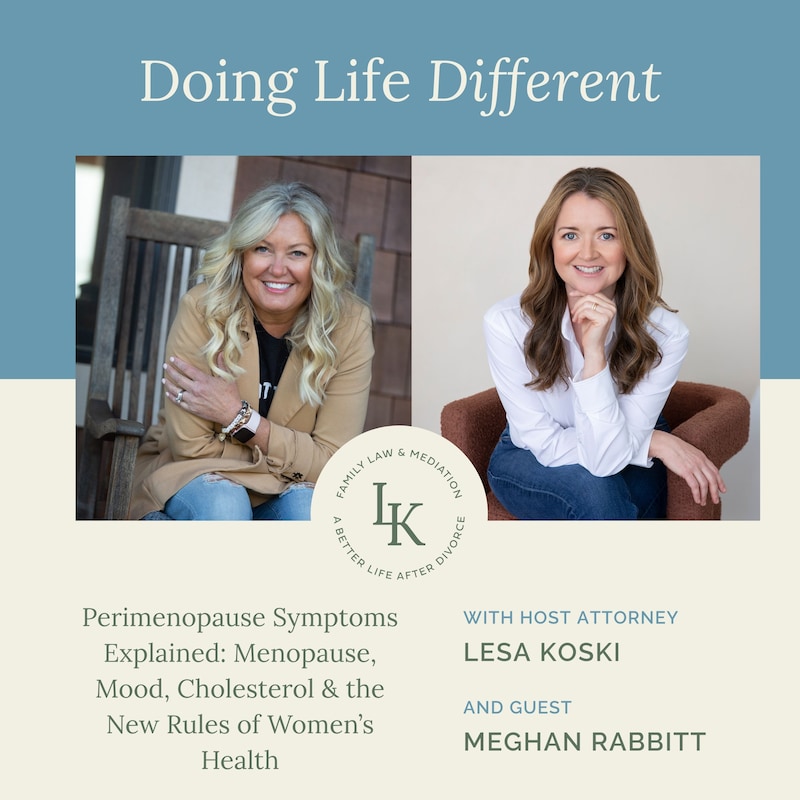
Perimenopause symptoms can feel confusing—mood swings, brain fog, weight gain, sleep issues, and even cholesterol changes. In this episode, Lesa Koski talks with women’s health journalist and author Meghan Rabbitt about perimenopause vs. menopause, the most common perimenopause symptoms, what’s “normal,” and what deserves a doctor visit. You’ll learn how to track symptoms, ask better questions, and advocate for yourself during the menopause transition. If you’re navigating perimenopause symptoms in midlife, this conversation will help you feel informed, empowered, and supported.
(Primary keyword used 3–5x: perimenopause symptoms)
Timestamps (in parentheses):
(00:00) Welcome + why women’s health needs new rules
(02:10) Meghan’s story: writing on women’s health and Maria Shriver’s invitation LinkedIn
(06:15) “We are not small men” and what that means for care
(10:05) Perimenopause vs. menopause: definitions and the 12-month rule
(14:40) Tracking cycles + when bleeding after a year matters
(18:30) Perimenopause symptoms you might not connect to hormones
(25:10) Mood changes, anxiety, rage, and brain fog
(30:55) Vaginal/urinary symptoms and why women should talk about them
(36:45) Cholesterol, heart health, and menopause-related risk shifts
(42:25) Hormone therapy: what we know now vs. what we feared
(49:10) Lifestyle tools that truly help (sleep, stress, strength training)
(56:00) The “doctor visit” strategy: list symptoms and prioritize
(59:30) Book recap + closing encouragement
Key Takeaways:
Perimenopause symptoms can include mood changes, brain fog, joint pain, skin changes, and cholesterol shifts—not just hot flashes.
You’re not in menopause until you’ve gone 12 full months without a period.
Track symptoms and cycles so you can advocate clearly at appointments.
Prioritize your top 2–3 concerns for each doctor visit to get better care.
Hormone therapy is more nuanced than many women were led to believe; ask informed questions.
Guest Bio:
Meghan Rabbitt is an award-winning journalist and editor covering women’s health, nutrition, and psychology. She’s an editor and writer at Shriver Media and the author of The New Rules of Women’s Health: Your Guide to Thriving at Every Age (foreword by Maria Shriver). PenguinRandomhouse.com+1
Resource Links:
Sign up for Lesa’s newsletter: https://enchanting-basil-714.myflodesk.com/qwzridafyj
JJ Flizanes (core wounds resource): https://jjflizanes.com/lesa
Lesa’s eBook: https://www.amazon.com/dp/B0G4B2ZY1W?ref=yb_qv_ov_kndl_dp_rw
Meghan Rabbitt’s book page: https://www.penguinrandomhouse.com/books/734289/the-new-rules-of-womens-health-by-meghan-rabbitt-foreword-by-maria-shriver/ PenguinRandomhouse.com
Tags/Keywords:
perimenopause symptoms, menopause symptoms, perimenopause vs menopause, hormone therapy, menopause mood swings, menopause brain fog, women’s health after 40, cholesterol and menopause, heart health women, women’s health book, Meghan Rabbitt, Maria Shriver women’s health
Transcripts
Welcome listeners.
2
:I am so blessed to have you here
today, and I want you to know I have.
3
:The most amazing guest, uh, I can't
even believe the people that I get to
4
:have on this lady, was commissioned
by Maria Shriver to write a book
5
:that's coming out today called
The New Rules of Women's Health.
6
:Her name is.
7
:Megan Rabbit, she's been a
journalist for over 20 years.
8
:She's written in women's health
and Oprah Daily, and we are going
9
:to talk today about perimenopause.
10
:We're gonna talk about the difference
between perimenopause and menopause
11
:and what are the actual symptoms
of menopause, and then, um.
12
:We're gonna talk a little bit
about what health conditions
13
:become more common after menopause.
14
:We're gonna get into that
controversial hormone therapy,
15
:but I've just, I feel so blessed.
16
:To have Megan with me today, you're gonna
love this conversation and go get her
17
:book, the New Rules of Women's Health.
18
:Like I said, it's just coming out today
hot off the press, so just stay tuned.
19
:I'm, I'm so thrilled to be talking
about menopause with Megan.
20
:I.
21
:Speaker 2: Here we are with
the One and only Megan Rabbit.
22
:Megan, I am so thankful
to have you here today.
23
:I kind of feel like you're a big deal.
24
:You've done some big things
and I already introduced you.
25
:You've been writing for a long time.
26
:You've been writing for some kind
of a amazing people, and you've
27
:got that book coming out today.
28
:I mean, that's exciting, the new rules
of women's health and I don't even know
29
:what could be more worthwhile on this
podcast than to talk about this subject.
30
:And you know, today we're gonna get
into talking about menopause and
31
:perimenopause and all those good things.
32
:But Megan, before we get started,
my listeners always love to get
33
:to know the guests a little bit.
34
:Better.
35
:And, you know, what led
you to do this work?
36
:What led you to be a writer and what
led you to write on women's health?
37
:Speaker 3: Yeah.
38
:You know, looking back, it all kind of
makes sense now that I have a, a bird's
39
:eye view of, of, you know, life really.
40
:I was, I always wanted to be a doctor.
41
:When I was a little kid, oh, I
thought I was gonna be a doctor
42
:and I, I was a little feminist.
43
:I'm 46 now and was like, this
is what I, girls can do anything
44
:boys can do and better, you know?
45
:Oh, and, and so, um, and then I hit
biology and chemistry and was like,
46
:Speaker 4: Hmm,
47
:Speaker 3: I don't know
that med school is my path.
48
:Um, and I always loved writing
and, um, yeah, and, and writing
49
:was always a way that I processed.
50
:Things, you know?
51
:Mm-hmm.
52
:As, as a little kiddo, I would go
to my journal and, and that's how I
53
:really tried to make sense of my world.
54
:And so it's not so surprising that
I ended up in a journalism class
55
:and fell in love with journalism, in
particular nonfiction writing, and then
56
:gravitated towards writing about health.
57
:Um, so I started my career in
magazines in New York City and always
58
:found my way onto the health Beat.
59
:I started at Parenting Magazine.
60
:Mm-hmm.
61
:Back when I was a.
62
:20 nothing year old baby writing about,
uh, babies and, and, and health topics.
63
:New moms needed to know and new parents.
64
:Mm-hmm.
65
:And yeah.
66
:And then I, I ended up freelancing for
a number of different magazines and
67
:one of the articles I wrote a few years
ago is on Women in Alzheimer's Disease.
68
:And it was really taking a look at the
differences between women's brains and
69
:men's brains and what we know and don't
know about why women disproportionately
70
:suffer from Alzheimer's.
71
:And, uh, in addition to interviewing
neuroscientists and many experts in
72
:the space, I also had the privilege
of interviewing Maria Shriver,
73
:who is the founder of the Women's
Alzheimer's Movement, which is
74
:now part of the Cleveland Clinic.
75
:And I did a profile on her, really
found out why she's so passionate
76
:about this topic and, and.
77
:What, what we need to know, and
after the piece came out, Maria.
78
:Called me and I know that.
79
:So my heart, that's so cool.
80
:My heart stopped and I, I, I sort
of went to the dark place first.
81
:I said, oh, no, did I mess something up?
82
:Did fact checking, not catch something.
83
:And she called and said she loved the
piece and thought I did a really great
84
:job and, and would I come work for her?
85
:So Maria has an amazing media company
that produces an a weekly digital
86
:news magazine called The Sunny News.
87
:Sunday paper, the Sunday paper, uh, and
I'm an editor and a writer for that.
88
:And about a year into working on that,
uh, newsletter, Maria said, I want you
89
:to write a women's health manifesto.
90
:We haven't had a really comprehensive
book on women's health for a long
91
:time, and I want you to write it.
92
:And so here I am.
93
:I spent three years, I interviewed
132 of the country's leading doctors,
94
:researchers, experts, other clinicians
about women's health and what we most need
95
:to know to take care of ourselves and our
families, and to advocate for ourselves.
96
:Speaker 2: Well, God bless you.
97
:I mean, I love that story.
98
:That's a good one.
99
:Because I mean, Maria Schreiber
has to be an idol for most of us.
100
:Yes.
101
:I can't even imagine.
102
:But I mean, I love that she is
looking into women's health because I
103
:think I read something that you, you
alluded to the fact that they kind
104
:of treat us like we're little men.
105
:Speaker 4: You
106
:Speaker 2: know, like, and I'll
look at it too and I'll be like,
107
:okay, why is my husband who's
like twice my size taking the same
108
:dosage as I am in this medication?
109
:And there are so many questions
I, I feel like I wanna have you
110
:back on to talk about Alzheimer's.
111
:'cause I could start digging there too.
112
:But I, I'm just so thankful that we're
finally starting to look at women
113
:because I'm a breast cancer survivor,
you know, there are women issues
114
:and let's start talking about 'em.
115
:Let's start looking at us as a, you
know, we're a little bit different.
116
:Speaker 3: Absolutely.
117
:And, and really this was a driving force
for me with this book, A Guiding Light,
118
:in that for a long time Women's health was
what we now refer to as Bikini Medicine.
119
:It was our breast health, our gynecologic
health, our sexual health maybe.
120
:And, and we now realize
that that's not good enough.
121
:Mm-hmm.
122
:Our hearts are different, our brains are
different, and we have a lot more research
123
:to do, a lot more ground to cover when
it comes to really understanding the
124
:intricacies of the differences to help
us really take care of women with a sex.
125
:Focused lens.
126
:Yeah.
127
:But we have made some progress and
so what I tried to do in this book
128
:is encapsulate what we do know
about what's different about us.
129
:We are not small men.
130
:We do, we do have some understanding
and at least with that baseline
131
:understanding, when we know it as women,
we can have better conversations with
132
:our doctors to, to try to get the care.
133
:Mm-hmm.
134
:We really.
135
:Deserve.
136
:Speaker 2: Amen.
137
:And I, I think as we move along in
our conversation, I am gonna want to
138
:talk a little bit about heart and, you
know, cholesterol, and I think we're
139
:gonna get there when we talk about the
health conditions that are more common.
140
:But let's talk a little bit first
about the differences between
141
:perimenopause and menopause, and
how do you know which one you're in?
142
:Speaker 3: Yeah, I think we
are collectively starting to
143
:talk about menopause a lot
more now, which is fantastic.
144
:Right?
145
:It's like my mother's generation,
they weren't really talking about
146
:menopause and now I am at age 46.
147
:I can't go anywhere where women are
gathered without talking about menopause,
148
:and I think this is a great thing, but
I also think there are still some, some.
149
:Things were not understanding about it.
150
:I, you know, the first being
perimenopause is that time
151
:leading up to your last period.
152
:And in fact, you're not technically
in menopause until you've
153
:gone a year without a period.
154
:Right.
155
:And I think that still
surprises a lot of women.
156
:We.
157
:We say, oh, another big thing that I
heard from multiple doctors I interviewed
158
:for my book is that, you know, you might
think you're in menopause because you've
159
:gone a few months with no period, but you
could go 10 months with no period and be
160
:two months away from that menopause date.
161
:And then if you, if you
bleed, the clock starts again.
162
:Speaker 2: Well, and it's crazy
because we're all like little
163
:different beings as well.
164
:And I remember at my son's wedding,
um, my daughter-in-law's mom.
165
:I was like, oh my gosh, I got my period.
166
:I haven't had it in over a year.
167
:So, you know, you just
kind of never really know.
168
:Speaker 3: For certain.
169
:No, and I think, you know, you're
bringing up a beautiful point, which
170
:is that we're all really different.
171
:Just like we got our
periods at different ages.
172
:Yeah.
173
:We're gonna go through menopause at
different ages, and it's really important
174
:to stay clued into our symptoms and
to write down when our last cycle was
175
:so that we can answer that question.
176
:If a doctor says, when was
your last menstrual cycle?
177
:And you know exactly, it was 10 months
ago, or for example if it was two years
178
:ago and then you start bleeding again.
179
:That's noteworthy and something you
should call your doctor about immediately.
180
:Speaker 2: Right.
181
:Exactly.
182
:Exactly.
183
:And you know, I think that I am
seeing my daughters do that more
184
:where they're tracking things better.
185
:Yeah.
186
:Um, I, I didn't, we didn't track it.
187
:I mean, I remember going to the
doctor, when was your last period?
188
:I don't know.
189
:Totally.
190
:Speaker 3: And now we have all
these apps that make it quite easy.
191
:And I think even for the, the woman
who's in that transition, um, and even
192
:post-menopausal, like why not keep a
diary of your symptoms and what's going
193
:on so that when you do have that annual
appointment, you can say, actually.
194
:I notice I'm feeling a little more
blue at these times of the month.
195
:Mm-hmm.
196
:Or whatever it is, you know, I think,
um, yeah, I, I think what I'm also
197
:hoping is that women, when they read
this book or can turn to this book,
198
:they walk away feeling like they can be
a health journalist in their own life.
199
:Uhhuh, you know, because as a
journalist, what I do is I, I did not
200
:go to medical school, but what I do
know is who to call to ask, and what
201
:questions to ask so that I can help.
202
:Gather information and, and translate
it into, you know, from what can sound
203
:a little medical jargony into language
we can all understand, but this is
204
:something we can all do, you know?
205
:Yes.
206
:Is understand a little bit more
about the landscape of a big hormonal
207
:transition, like menopause and then
say, okay, here's what I know and
208
:now let me bring what I know to my
doctor so that we can have just a.
209
:Better conversation about care.
210
:Speaker 2: Right.
211
:Well, and what I wanna add too, I
think your book, we're talking, we're
212
:focusing on more menopause today.
213
:Your book focuses on more than that.
214
:Speaker 3: Yeah.
215
:Speaker 2: You know, and you just
think about like puberty and all the
216
:things that we have gone through.
217
:It is going to be so helpful for mothers.
218
:To read it for their daughters.
219
:You, you know, I mean, it's
just for my granddaughters.
220
:Speaker 4: Yeah.
221
:Speaker 2: I think it's gonna be so
helpful because I feel like, and I wanna
222
:start getting into this a little bit more.
223
:I feel like I don't know a lot,
like I went through perimenopause.
224
:I had horrible, heavy periods like.
225
:Devastatingly.
226
:Like it was hard to even, you know, at
sometimes nobody did anything about it.
227
:I mean, I don't rem I just remember.
228
:Yeah.
229
:That's kind of how it is.
230
:Yeah.
231
:Speaker 3: Yeah.
232
:We, you know, I think we as women
tend to take care of everyone else.
233
:Mm-hmm.
234
:We, you know, I interviewed one doctor, a
breast specialist who said oftentimes the.
235
:The dog gets more vet appointments Yeah.
236
:Than a midlife woman.
237
:Yeah.
238
:And we tend to just chug along.
239
:We just think, ah, you know, I
can speak personally about this.
240
:I had very heavy periods, um,
when right around the time I
241
:was turning 40 and, and after.
242
:And because I think we're talking
about perimenopause and menopause
243
:so much, and I knew that heavy
periods could be a, a sign that I was
244
:entering, you know, the transition.
245
:Um, I ignored it.
246
:I was borderline anemic.
247
:Mm-hmm.
248
:I, um, was really not doing great
with, um, with heavy periods.
249
:And finally, because I was
reporting this book and I, I, I
250
:just kept saying uhoh, like, I
don't think something's right here.
251
:I brought it up with my doctor, turned
out I had a uterus full of fibroids.
252
:Um, and so it's remarkable what, even
with a baseline knowledge that I had after
253
:being a health journalist for 20 years.
254
:Still, I ignored my symptoms or
just chalked it up to like, ugh.
255
:It's just a bummer.
256
:I hemorrhage once a month, you know?
257
:Speaker 2: Well, you know,
and Megan, I find that too.
258
:Like, you go to the doctor
and you're, I was just always
259
:like, oh, I mean, I'm fine.
260
:It's kind So you never like
make it like it's a big deal.
261
:Yes, yes.
262
:And there's so many things that you,
and even I had my breast surgeon on
263
:and I had like a teeny tiny, you know,
it was stage one, but I could feel it.
264
:Like, not feel it, but I felt something
inside that was painful and I, and luckily
265
:I got my mammogram because I, I don't
think that I would have put it together.
266
:Yeah.
267
:You know, so take, listen to that
body and like you're saying, write it
268
:down and bring it into your doctor.
269
:Speaker 3: Yeah.
270
:And believe yourself, you know,
don't try to talk yourself
271
:out of, oh, I'm probably fine.
272
:Or I think for other
people it can be like.
273
:An ostrich app approach where you
just stick your head in the sand
274
:and you're like, if I don't think
about it, maybe it's not there.
275
:Speaker 4: Yeah.
276
:Speaker 3: But I, I think, you
know, these are our bodies.
277
:It's the, the one body we're, we're
gifted and the this, our stories about
278
:our bodies are, are really important.
279
:And it's important for us to
believe ourselves that if something
280
:we don't have to suffer through.
281
:You know, I interviewed Dr.
282
:Vonda Wright for this book, and she
said she's an orthopedic surgeon,
283
:tremendous physician who said,
I can't tell you the number of.
284
:Patients I have, and they're all women
who brag about their pain tolerance.
285
:Mm-hmm.
286
:They wear it like a badge of honor.
287
:But why you bragging about a high pain
tolerance means you're probably not
288
:getting the help and the treatment
that will make you feel better,
289
:that will keep you out of pain.
290
:Yeah.
291
:You know, and so, yeah, I think we.
292
:Again, with this book, what I tried to
do and hope I've done is, is help women
293
:understand sort of what's normal, what's
not, what's what questions they need to
294
:be asking so that they're not overlooking
some of these symptoms that they might
295
:be having or things they feel they really
wanna talk about with their doctors.
296
:Speaker 2: So tell me, what
are I, I can't believe I don't,
297
:I've been through menopause.
298
:I don't even, what are the symptoms?
299
:I know hot flashes.
300
:I know.
301
:Not sleeping great, but what else?
302
:Like what?
303
:Speaker 3: I don't even know.
304
:That's the thing.
305
:There are some biggies that
we talk about a lot, right?
306
:You, you're naming them hot flashes,
night sweats, which is actually
307
:just a hot flash that happens in
the middle of the night, right?
308
:Right.
309
:Um, we've got menstrual cycle changes.
310
:So it, it can be common when your hormones
start going wonky in that perimenopause
311
:period for cycles to get longer or
heavier and then lighter, or, you know,
312
:they get a little wonky, so to speak.
313
:Um, the genital urinary syndrome
of menopause, uh, formerly known as
314
:vaginal atrophy, which thankfully
got a little bit of a, um.
315
:Upgrade on the marketing term there,
but this is really, really common.
316
:And, and as women, we need to talk
about our vulvas, you know, and, and
317
:what's happening there because the,
the symptoms, the, the changes that can
318
:happen can lead to symptoms that are
really not fun and really treatable.
319
:Um, and so mood disorders
is another big one.
320
:I know my mom, who seemed, when I've asked
her about her menopause experience, she
321
:seems to have sailed through fairly well.
322
:But she said to me every so
often, I'd feel a little blue.
323
:And I think that was her way of saying I
felt a little depressed every so often.
324
:You know, uhhuh, this is really common
325
:Speaker 2: Uhhuh.
326
:Um, I did, Megan, I don't mean
to interrupt you, but I did not
327
:realize that that was something
that happened during menopause.
328
:Speaker 4: Yeah,
329
:Speaker 2: like I know that I
dealt with that, you know, through
330
:my cycles and I think I too kind
of had it easy through menopause.
331
:I really did do well through it, which
was wonderful, but I didn't know that
332
:mood swings were a part of menopause.
333
:I thought it was.
334
:That was like, you got to let go of that.
335
:Totally.
336
:Speaker 3: Yeah.
337
:And not so much, right, because as
hormones are going up and down mm-hmm.
338
:It's kind of like mimics PMS
in a different sort of way.
339
:Um, and yeah, and I think, you know,
I am in the transition at age 46
340
:and I'm not experiencing anything
sort of really big, no major hot
341
:flashes yet or things like that.
342
:But I, I just had my general.
343
:Um, wellness checkup and I said
to my doctor, every so often,
344
:I feel a little ragey and, and
for no good reason, you know?
345
:And then the next morning I might be like
crying for no good reason and like, oh,
346
:there's those mood things that are totally
workable, but like, let's talk about
347
:them rather than, you know, it's, rather
than me saying like, I am doing great,
348
:you know, like be honest about right.
349
:About some of those things, even
if they're subtle and not really.
350
:Debilitating.
351
:You know, they don't really
stop life as I know it.
352
:Um, some of the other sort of ones
that we don't, I don't think talk
353
:enough about is an inability to
concentrate a little bit of brain fog.
354
:Okay.
355
:Um.
356
:Itchy skin.
357
:Dry, itchy skin everywhere.
358
:'cause when you think about it,
the same reason your vulva might
359
:feel a little drier than usual.
360
:Mm-hmm.
361
:There are estrogen receptors
everywhere, including on our skin.
362
:And so skin changes can happen.
363
:Um, hair thinning wrinkles, uh,
weight gain, breast pain, joint pain.
364
:Constipation, some dizziness.
365
:Um, high cholesterol, we'll talk
about this with heart disease.
366
:I really wanna, yeah, I
really wanna talk about that.
367
:Cholesterol can go up.
368
:Our, uh, sensitivity to insulin can
change, which can create conditions that
369
:can lead to more likelihood of diabetes.
370
:So there, there are a lot of symptoms
and, you know, like over a hundred.
371
:Wow.
372
:And rather than knowing what they
all can be, because like, that
373
:feels a little, uh, you know, uh.
374
:Not realistic.
375
:Again, it points to keep a journal
or open up a note on your phone where
376
:you're just, you know, typing in or
writing down what you're experiencing
377
:so that you can talk to your doctor
at your next checkup and say, is this
378
:part of the menopause transition?
379
:Right?
380
:What's going on?
381
:And you can really have a better
dialogue about what you're experiencing.
382
:Speaker 2: You know, and Megan, it's so
interesting to talk to you because we,
383
:I do know like the weight gain thing is
a big deal for a lot of women and it's
384
:hard because they feel like I've been
through my whole life, but they're.
385
:You know, you, you talk about
there are things you can do
386
:to get metabolically fit.
387
:Mm-hmm.
388
:You know that.
389
:And it's so interesting how back in
the day I could do things differently.
390
:You know, like a glass of
red wine wouldn't bother me.
391
:I can't drink it now.
392
:It just makes me feel like junk.
393
:Bummer.
394
:Right.
395
:But not good to know.
396
:And so I think there are some things.
397
:That, just knowing it and knowing
that we can do something about it.
398
:And it doesn't have to be that hard.
399
:I don't have to do like a 48 hour
fast to become me metabolically fit.
400
:I can maybe hold off that first meal.
401
:I mean, there's, there's things like that.
402
:Um, I wanna know though, I was
just talking to one of my best
403
:friends who's my, exactly my age.
404
:We've been friends since grade
school and she was saying, why is it.
405
:So many women have issues with
their cholesterol when they are in
406
:menopause and you know, what is that?
407
:What is that about?
408
:Speaker 3: Yeah, again, I think we are,
we are trying to learn exact answers,
409
:but what we do know is that, and our
learning is that the female heart
410
:is different than the male heart and
estrogen and progesterone and these.
411
:Sex hormones that we talk about
when we talk about menopause also
412
:impact how our heart functions.
413
:And so, yeah, it's, it speaks to how
much more clued in we need to be.
414
:Mm-hmm.
415
:When it comes to, like uhoh, I, I was
recently diagnosed with borderline
416
:high cholesterol and I was really
resistant to taking a statin.
417
:'cause I was like, I can do
it with exercise and diet.
418
:But I interviewed a cardiologist
who said, look, women in particular
419
:tend to be the most resist.
420
:To statins because we think, as I did, I
can do it myself without recognizing that
421
:there are just some changes happening
that we can't control, which is the
422
:decline of estrogen when we hit a certain.
423
:Age, which is impacting how our
heart is working and how we lay
424
:down plaque in our arteries.
425
:And yeah, I, so I think, um,
it's, it's something to be aware
426
:of and I think particularly
when it comes to heart disease.
427
:One of the biggest ahas was I interviewed
a preventive cardiologist who said,
428
:unfortunately, women's awareness of
the fact that heart disease is our
429
:number one killer is going down.
430
:Speaker 2: Well, yeah, that's
interesting that you say that.
431
:And it's, I've been so bloody
focused on breast cancer because
432
:that was my thing, right?
433
:Yeah.
434
:Understandably so.
435
:But yeah.
436
:And then so, and here's the thing.
437
:It's just so important to be
aware because you can do so much.
438
:For it.
439
:You're in such great shape if you go in
and get your mammogram and find it, or
440
:if you pay attention to your cholesterol.
441
:And I've done some deeper dives where
I've, I've looked at some other things
442
:in my blood to see, looked at my, um,
genetics to see, you know what I mean,
443
:and really looked at it, and I too.
444
:I have to take a statin.
445
:Yeah.
446
:I'm one of the lucky ones who
gets to be on an estrogen blocker
447
:for a few more years, so yay me.
448
:So I can't, I can't do, uh, I
did do some hormone therapy.
449
:I had a functional assessment doctor
that helped me with that back in the day.
450
:But let's talk a little bit about
that, because I think that is.
451
:Maybe affecting a lot of this.
452
:I think that women can feel a
lot better with this hormone
453
:therapy, but I don't know a lot
about it Megan, so, so teach me.
454
:Speaker 3: Yeah, so we are talking about
hormone therapy in in more detailed ways
455
:because we have a better understanding
of it now, and I think a lot of
456
:doctors and researchers have thankfully
really come online on social media to.
457
:To help educate us
about what we got wrong.
458
:You know, I think even just let's say
10 years ago, certainly, maybe even five
459
:years ago, anybody in their forties, if
you mentioned hormone therapy, um, for
460
:menopause, women would be like uhuh.
461
:I don't want it, it's gonna cause cancer.
462
:That was the understanding, you know?
463
:And what we know now is that
actually that's not necessarily true.
464
:It's not to say that everybody is a
candidate for menopause hormone therapy
465
:or, or AKA hormone replacement therapy.
466
:Speaker 4: Mm-hmm.
467
:Speaker 3: But.
468
:But it, you know, I think what we
thankfully know now is that we don't
469
:have to be as scared of it as we were.
470
:What we do need to know is
what it's indicated for.
471
:And then let's have a conversation
with our doctors to understand
472
:if we are a candidate.
473
:You know, so there can be a lot of
overblown information about hormone
474
:therapy being a panacea for everything,
whereas the research shows us.
475
:Not necessarily.
476
:What we really do know is that it
helps protect our bone health, which
477
:is crucial as we get older, right?
478
:It helps with the vasomotor
symptoms of menopause, which are
479
:those hot flashes and night sweats.
480
:Mm-hmm.
481
:And a few other indications.
482
:And so, um, and I'm also grateful
that it's, we are really starting
483
:to talk about vaginal estrogen,
local vaginal estrogen, which, um.
484
:Doesn't go systemically through your body.
485
:No.
486
:And
487
:Speaker 2: that is something
that I am able to use.
488
:Fabulous.
489
:Even though I'm doing an estrogen
blocker, I am able to use that.
490
:Yeah.
491
:And
492
:Speaker 3: that's amazing that
you have been able to have those
493
:conversations with your doctors to
be able to say, look, there's, you
494
:know, you are still a candidate even
though you are breast cancer survivor.
495
:Right.
496
:So it's, these conversations
are great, but I, I would say,
497
:you know, I, I resisted, um.
498
:An IUD for years because I was just like,
I don't want any hormones in my body.
499
:Right.
500
:You know?
501
:Right.
502
:And now I'm like, huh.
503
:I actually wonder, who knows if having
an IUD inserted might have prevented
504
:my uterus full of fibroids, which I
was diagnosed with a few years ago.
505
:Oh, who knows?
506
:But I think, I think.
507
:Thankfully we are starting to realize
that hormones are in our body and
508
:really important, and when women in
particular go through the drastic
509
:drop of those hormones, once we hit
menopause, there are some supplements
510
:we can take AKA hormone therapy.
511
:Yeah.
512
:So really help us ease
some of those symptoms.
513
:Speaker 2: Well, and I think too, you
know, like I said, that's not a route that
514
:I can take, but there are, I mean, I have.
515
:Figured out some other
things that work too.
516
:You know what I mean?
517
:Like for bone density.
518
:I've been doing some osteogenic loading
through something called osteostrong.
519
:I actually reversed.
520
:My, I mean, my bones have gotten
stronger, which is amazing.
521
:So I, and is this through jump therapy?
522
:Like are you jumping?
523
:So what, this, this is something
different, which is a whole nother
524
:topic that I've had the, um,
I've had the owners of this on.
525
:It's more about weightlifting
is really important.
526
:I do a lot of weightlifting, I do a lot
of walking, tiny little bit of jogging.
527
:But this osteogenic loading is, um.
528
:Putting heavy loads on your bones through
these four machines for a really short,
529
:it doesn't feel like you got a workout
really, but it helps, um, your bones.
530
:Rejuvenate and I haven't taken
any medication, which I do love
531
:if I can't, that's amazing.
532
:Speaker 4: Now
533
:Speaker 2: I know I am my, I have a
daughter that's a doctor, so I like
534
:believe in medicine and I love to
get the natural stuff when I can too.
535
:So Totally.
536
:I kind of try to marry them together
a little bit, but I mean, and
537
:sometimes, like I said, I can't take
estrogen, so I have to find other ways.
538
:And here's the thing, if I don't
have wine, I don't get a hot flash.
539
:There are certain lotions.
540
:When I put 'em on, and
it's just being aware.
541
:I put it on and I go, why am
I getting a hot flash today?
542
:Oh, it's that junky lotion that I got,
543
:Speaker 3: you know?
544
:Well, I so hear this, and don't you
think what's so beautiful about women as
545
:we get older and as we go through this.
546
:Menopause transition, we start to be
like, oh, I'm gonna listen to that.
547
:Right?
548
:Yeah.
549
:I'm so with you on the alcohol.
550
:I used to have a glass or two of wine
the end of the night with friends.
551
:It's super social, right?
552
:Yes.
553
:Even one glass these days,
I know I'm gonna pay for it.
554
:I'm gonna wake up in the middle of the
night with like my heart racing, thinking
555
:like, why do I have heart palpitations
at two o'clock in the morning?
556
:And it's like, oh, and now
I'm really not drinking.
557
:It's a, it's a very rare
occasion that I have like.
558
:One max.
559
:Same.
560
:And now that we know, all
we know about the mm-hmm.
561
:Cancer risk that's associated with
drinking, like, man, if I could write a
562
:love letter to my younger self, it would
be like, don't drink so much, you know?
563
:Oh, no
564
:Speaker 2: kidding.
565
:Yeah, I have talked about that.
566
:I, I wish I would have known
that Megan, because I think back.
567
:Back when I was raising my kids.
568
:I mean, it was like, ha, a glass
of wine's good for your heart.
569
:And I, it never made me feel good.
570
:Speaker 4: I know.
571
:Speaker 2: I mean, I'm, but you
were, it was easier to get over it.
572
:Now I'm like, okay, I wanna get up and
work out and that's not gonna happen.
573
:So even if I just have a glass.
574
:Speaker 3: Yeah.
575
:Bingo.
576
:I'm so with you and I love
that you're bringing up.
577
:Weightbearing exercise as well, right?
578
:Yeah.
579
:That's another thing.
580
:Like women in my generation and older
and even a little younger, like we
581
:were sweating it out on the elliptical
machine while all the, all the boys
582
:were in the weight room doing great
things for their bone health, right?
583
:And so, yeah, I think, you know, now
that we know better, we do better, right?
584
:Yes.
585
:And, and knowledge is power.
586
:And once we have this information,
I think it really can inspire us to
587
:say, okay, I know that I'm gonna be at
increased risk for certain diseases.
588
:After this menopause transition.
589
:So now that I know it, what can I do?
590
:You know, because even a lot of these
doctors I talk to really do say, you know,
591
:those lifestyle habits you hear about all
the time, like eating well, exercising,
592
:not drinking, they sleeping well.
593
:They really, I was just gonna say that.
594
:Yeah, they
595
:Speaker 2: really do work.
596
:They work.
597
:And Megan, that was another thing
that I always missed out on, was
598
:taking care of my stress and my sleep.
599
:And it's the one thing that
I still have to work on.
600
:Same, I mean, just like white knuckle it.
601
:I don't know why like.
602
:High achiever, people, pleaser, you know,
I just always felt like I had to do that.
603
:I was eating well, I was working
out hard, but maybe too hard.
604
:I did this course and I started
doing these really long, fast.
605
:Everyone was losing weight
and I gained like two pounds.
606
:I was like on a 48 hour fast.
607
:I'm like, okay, something is not right.
608
:It might have been
stressing your body out.
609
:No, it was probably the cortisol
raising, and so when I finally let go.
610
:Hmm.
611
:Then it dropped off.
612
:Which is interesting,
613
:Speaker 3: isn't it?
614
:It really is and, and it speaks to
how we have to listen to our bodies.
615
:You know what works for you, may not work
for me, may not work for my best friend.
616
:Even sleep specialists who will
tell you, you know, that whole like
617
:eight hours a night ish, right?
618
:You know, my bestie functions
great on six hours, whereas I.
619
:Frankly, I feel like I'm my
best when I'm at more like nine.
620
:Yes.
621
:And so, you know, when it comes to these
things, we have to understand that, you
622
:know, this advice is a good benchmark.
623
:And then listen to yourself and trust.
624
:Amen.
625
:Trust yourself too.
626
:You know, I, I read something
recently where it's like doctors know.
627
:Bodies, but we know as
patients, we know our bodies.
628
:Mm-hmm.
629
:And so it's that blend between,
of course, I wanna work with a, a
630
:doctor or a healthcare provider who
has been through years of schooling
631
:who can help me put my symptoms into
context for my age and my health.
632
:Mm-hmm.
633
:My family and personal health history.
634
:But I also have to believe myself.
635
:I have to say, huh, this doesn't
feel right to me and I want you
636
:to know about this so that we
can talk about this, you know,
637
:Speaker 2: well, and, you
know, care for yourself.
638
:As you would care for your
best friend or your child.
639
:Yeah, because I think we miss that and
we can team up with our physicians.
640
:You know, we can take notes,
know what's going on and care for
641
:ourselves because like we have
been saying, we are all different.
642
:We all are gonna pop up with
different things and then be aware.
643
:Yeah.
644
:Know what your cholesterol
is, know what's going on.
645
:And I know I have been afraid, I have been
afraid to do things, um, but we don't need
646
:to be because the more knowledge you have.
647
:The more you're able to
heal and our bodies are able
648
:Speaker 3: to heal.
649
:Yeah.
650
:Yeah.
651
:I, I love that.
652
:And I think, you know, when you're
writing down the symptoms that you're
653
:experiencing, one of the tips that
a doctor I talked to gave me, which
654
:I really have taken on board, and
it's changed the way I, I act at
655
:every doctor's visit, she said, you
know, we don't unfortunately have.
656
:Two hours to sit with you, right?
657
:And that's what we as doctors,
as good doctors, we wish we
658
:had more time, but we don't.
659
:And so write down a list of all your
symptoms and what's happening, and then
660
:organize that in order of priority.
661
:Speaker 2: Oh, I love it.
662
:Speaker 3: And understand, you might
only be able to get through three of
663
:your top concerns, you know, but at
least you're talking to your doctor
664
:about what feels most important to you
or what's impacting your life the most.
665
:So that then if there's other things
on that list, you can say, okay.
666
:What's the best way to follow
up on the rest of this?
667
:Should I, can I do a telehealth
visit, which you can get
668
:faster than an in-person visit.
669
:Um, can I schedule another appointment?
670
:You know, and so I think, yeah,
we, we have to listen to ourselves.
671
:We have to prioritize ourselves.
672
:We have to not be racing through
life so fast and taking care of
673
:everybody else that we ignore our
own bodies and our own wellbeing.
674
:Speaker 2: Amen.
675
:I know.
676
:Take that time and that stillness
and listen to your body and take
677
:the time to write it down before you
go into the doctor what's going on,
678
:and really sit and think about it.
679
:Speaker 3: Yeah,
680
:Speaker 2: because I think we just
blow, we, I have the Rushing Women
681
:woman syndrome once in a while.
682
:I think there's a book about it.
683
:Speaker 3: Yeah.
684
:I can relate to that.
685
:And, and honestly, Lisa, I, you know.
686
:Another reason I laid my book
out the way I did is that it's a
687
:pretty, it's a pretty big book.
688
:Like I'll, I'll, um, I'll
hold this up for you.
689
:It's 700 pages.
690
:Speaker 2: Whew.
691
:I like it.
692
:I can't wait to get it.
693
:It's, yeah, it's, I'm
gonna pre-order it today.
694
:Yay.
695
:Speaker 3: Thank you.
696
:Yeah.
697
:Yeah.
698
:It's what?
699
:It's a book that I really, it's broken
out into chapters that focus on.
700
:Various aspects of our health so that,
you know, it's not a book that you're
701
:gonna cozy up with and read in one sitting
with a cup of tea on your favorite couch.
702
:Right.
703
:You know what I'm hoping?
704
:It's, it's a, it's a book you
put on your coffee table that
705
:you know you can turn to.
706
:If you have your mammogram coming up,
you might flip to the breast health.
707
:Section.
708
:Yeah.
709
:You know, the breast health chapter
and say, okay, I, you know, or
710
:for me, I have dense breast tissue
and so after every mammogram I
711
:usually have a follow-up sonogram.
712
:Yeah.
713
:Or more diagnostic just to make sure
the lumps that the mammogram turns
714
:up are just lumps and not cancer.
715
:And, and so not only did I learn a
lot while reporting that chapter,
716
:I gave it to my husband and I said.
717
:Bryan, like, you need to read this
chapter so that when I'm freaking out
718
:after I have to go for this follow
up, like you can better support me.
719
:You know?
720
:Mm-hmm.
721
:And I, I love a friend who was like,
this is totally a coffee table book.
722
:And the goal is that not only will you
turn to it or give it to your daughter,
723
:or your niece or your granddaughter,
but also the men in your life, you
724
:know, don't we want our sons and our
husbands supporting us at every stage?
725
:Speaker 2: Of course we do.
726
:I just think, yes, it's so time
for this book and I'm so grateful.
727
:I'm so grateful that you've
given your life to this.
728
:I'm so grateful that Maria had you write
the book, and I'm just in awe of it,
729
:and I feel blessed to have had you here.
730
:Today, the day that the book comes out.
731
:And Megan, I feel like I wanna have
you back on to talk about Alzheimer's.
732
:If you don't mind.
733
:Let's
734
:Speaker 3: talk about it and I
can, you know, recommend doctors
735
:who I interviewed for this book
who are dedicating their life oh.
736
:To understanding why we,
as women particularly, um,
737
:suffered disproportionately.
738
:Two thirds of cases of
Alzheimer's disease are women.
739
:Isn't that crazy?
740
:Two thirds.
741
:Yeah.
742
:Nobody wants.
743
:Speaker 2: No.
744
:Speaker 3: No one likes that.
745
:No.
746
:And, and finally we're
starting to uncover why.
747
:Some of the reasons why, you know.
748
:Well,
749
:Speaker 2: we're gonna, that's a teaser.
750
:Let's do it
751
:Speaker 3: for the next one.
752
:I will, I will see you
back here all Megan.
753
:Thank you so much.
754
:Thank you for having me.
755
:I absolutely love talking to you.
756
:You take good care.
757
:You too.