Shownotes
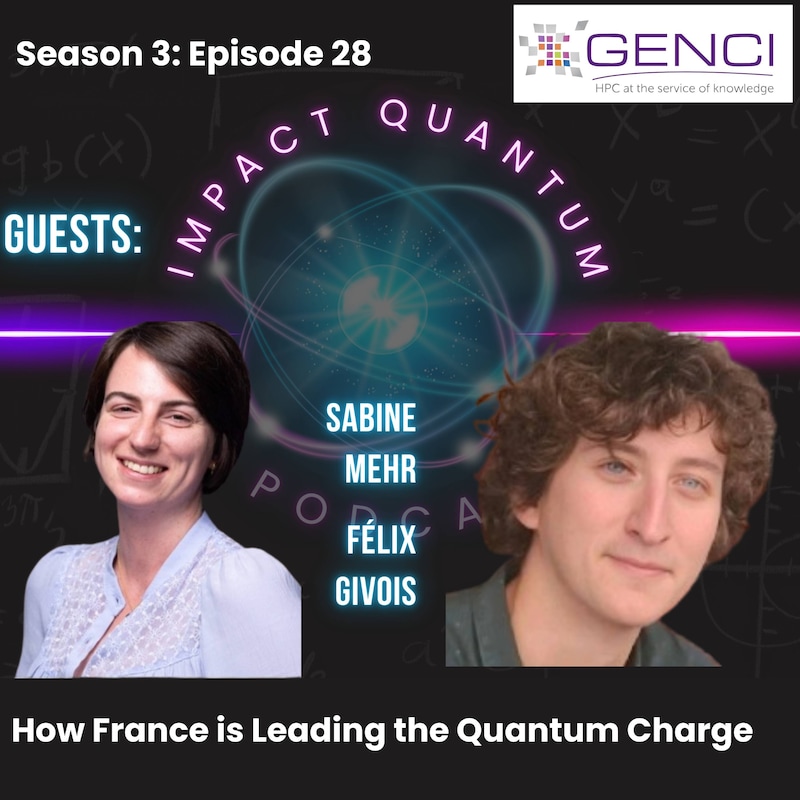
On this episode of Impact Quantum, we beam into the heart of France’s quantum revolution with special guests Sabine Mehr, Chief Quantum Projects Officer at GENCI, and Félix Givois, Quantum Computing Projects Engineer.
Join hosts Candace Gillhoolley and Frank La Vigne as they unravel how France is building a vibrant, government-backed quantum ecosystem—powering everything from photonic quantum processing units and neutral atoms to national strategies that foster collaboration across startups, academia, and industry.
Discover how public-private partnerships fuel innovation, why France is betting on a diverse range of quantum technologies, and what all this means for the future of high-performance computing and industry disruption worldwide.
Whether you’re quantum curious or deeply invested in the field, this episode is your ticket to understanding France’s bold ambitions and the collaborative energy setting Europe apart in the quantum space. Grab your virtual croissant and get ready to launch into the next wave of tech transformation!
Links
GENCI - https://www.genci.fr/en
Quantum Sales Playbook - https://amzn.to/3KJPhJY
Timestamps
00:00 French HPC Agency Overview
06:21 "Quantum Computing Initiatives Discussed"
08:46 Advancing Quantum Tech Commercialization
11:07 Diverse Tech Investment Strategy
15:35 Paris Region Quantum Initiative Progress
19:38 Thriving Software Ecosystem Expansion
23:09 Quantum Computing: Future and Speculation
24:49 Quantum-AI Challenges and Delays
28:22 European Quantum Computing Collaboration Network
30:30 Connecting Quantum and HPC Communities
33:38 "Emerging Markets in New Revolution"
39:05 "Quantum Computer Emulation Benefits"
40:45 Public-Private Quantum Collaboration Trends
46:28 Diverse Solutions in Quantum Computing
47:46 Excited About France's Startup Scene
50:39 Selling Quantum: Focus on Outcomes
Transcripts
In this episode, we beam ourselves into the French quantum
Speaker:ecosystem with two brilliant minds. GENCI,
Speaker:Sabine, Mer, chief quantum Projects officer, and
Speaker:Felix Jivois, quantum computing projects engineer.
Speaker:From supercomputers to photonic QPUs, from neutral
Speaker:atoms to national strategies, Sabine and Felix
Speaker:unpack Francis bold quantum ambitions. All with a
Speaker:healthy dose of HPC know how and continental flair.
Speaker:Grab your virtual Khwa song and prepare for liftoff. We're going
Speaker:full on quantum.
Speaker:Hello and welcome to Impact Quantum, the podcast. We explore the
Speaker:emerging industry of quantum computing. And
Speaker:you don't need to be a physicist or a PhD. You just need to be
Speaker:curious to participate in this, what's probably going to
Speaker:be the computing revolution of the 21st century. How's that for a hype
Speaker:machine? Candice, I think that is just on target. I'm telling
Speaker:you, as you say, always one of the most curious, quantum curious people.
Speaker:You know, I'm here for it. I'm here for it. I'm eating it up.
Speaker:I'm loving it. I'm loving it. So today we are going to
Speaker:be speaking with Sabine Mehr, and she is
Speaker:the Chief Quantum projects officer at
Speaker:GenC. And we are also going to be speaking with
Speaker:Felix Jervois. I
Speaker:don't know how I did on that. Oh, he's giving me a thumbs up. Excellent.
Speaker:Good job. And he is a quantum
Speaker:computer projects engineer. And if that doesn't sound like the
Speaker:coolest title ever, I'm telling you, I love it. I love it.
Speaker:So we've got some really exciting guests for today. Yeah, that's the
Speaker:coolest title of the decade for sure. So welcome to the show.
Speaker:You both work for GenC. So
Speaker:tell us a little bit about what is GenC.
Speaker:Okay, maybe I can start. And if you see anything lacking,
Speaker:Felix, don't hesitate to jump in. So GENC was
Speaker:created in 2007, so that's not very old.
Speaker:It. It stands for Grande Equipement Nationale de Calcule Intensive,
Speaker:which doesn't mean a lot in English, I guess. So
Speaker:we are the French HPC agency. HPC stands
Speaker:for High Performance Computing for those who don't know.
Speaker:So we were created to kind of neutralize the
Speaker:acquisition of public computing capabilities
Speaker:between the main research
Speaker:organizations in France. The aim is
Speaker:to equip three national supercomputing centers with
Speaker:high performance computing capabilities that
Speaker:are dedicated to open research. So
Speaker:the researchers from industry and from
Speaker:academia in France, they can do open research
Speaker:using our capabilities.
Speaker:So it's accessible for free. You just need to publish
Speaker:some results from your research. So it's nice. And
Speaker:at first we acquired supercomputers,
Speaker:then we moved on to AI also. We included AI
Speaker:also. So we have a lot of GPUs in our
Speaker:systems. And now we are also
Speaker:mandated by the French government to acquire QPUs
Speaker:in the context of the French national quantum strategy.
Speaker:So these QPUs will be installed in one
Speaker:of the national supercomputing centers in France, which is
Speaker:hosted by cea. It's south from Paris.
Speaker:And so, yeah, we have already two
Speaker:machines that are coming in and expecting new
Speaker:acquisitions. Very cool. So
Speaker:how many supercomputing labs are there in France?
Speaker:There are a lot of them, because a lot of them, we only
Speaker:equip the three main national supercomputing centers.
Speaker:Two of them are in the Paris region, and one of them is in the
Speaker:Montpellier region in the south of France. But
Speaker:you have HPC centers all throughout the territory,
Speaker:basically. Maybe, Felix, you want to add?
Speaker:No, I think. Yeah, I don't. They don't have the exact number of the. Of
Speaker:the HPC centers, but research team working on hpc.
Speaker:Like, there is, I think, thousands, like, in terms of
Speaker:projects, just counting for AI project,
Speaker:I think last year was 1400 projects in
Speaker:AI running on one of our supercomputers. So.
Speaker:So, yeah, there is a lot of people working on HPC in France.
Speaker:That's really cool. Yeah. No,
Speaker:I'm sorry. Go ahead, Candice. No, no. So I'm trying to wrap my
Speaker:mind around it. So, like, Felix, could you describe,
Speaker:like, a typical day in the role that you
Speaker:have right now? Oh, okay. So,
Speaker:actually, I don't know if there is such a thing as a
Speaker:typical day for our. For this, for this job.
Speaker:Because I think also it's related to the fact that the field
Speaker:of quantum computing is very moving. So you have a lot of things going
Speaker:on every day. And actually, part of my job is
Speaker:to conduct some technological watch.
Speaker:And so it's a lot of reading, a lot of contact
Speaker:with the different providers, different researchers.
Speaker:So that's nothing like a typical day, I would say.
Speaker:But I'm
Speaker:also in charge of writing the technical
Speaker:specification of the system that we install. So
Speaker:this is also a part of what I do every day. So when we
Speaker:install a system, I try to understand what we need it for, what
Speaker:we will use it for, and what. What specs we have to
Speaker:put in. Very cool.
Speaker:No, I was wondering because, like, I know it's probably the
Speaker:ecosystem is probably different in the U.S. like, I know that there's probably about a
Speaker:dozen official, like, supercomputing Labs here in the U.S. right. There's
Speaker:Los Alamos, there's Oak Ridge,
Speaker:there's one somewhere in the Bay Area. Right.
Speaker:Like, so that's what I was, that's what I was thinking in the context, but
Speaker:I guess, you know, so I think it's exciting
Speaker:that the French government is taking a, A,
Speaker:an active role in promoting quantum computing. Right.
Speaker:How long has that been the case? Like, you know, when did they see
Speaker:the, the quantum light, so to speak,
Speaker:not to be confused with photons. Right. I
Speaker:guess the information that we had
Speaker:a good chance in the race to quantum
Speaker:computers came to their attention quite early
Speaker:because some of the, of the companies
Speaker:that have been created in the field have been there since
Speaker:like 2017 or 2018.
Speaker:I was thinking about Kwandela and Pascal, which I think were the first
Speaker:that were created in this area. But we
Speaker:have an official national
Speaker:Quantum strategy since 2021, January
Speaker:2021. It was drafted after
Speaker:the report from, that was supported by
Speaker:Paula Forteza. That was I think published the year before
Speaker:or two years before that. I don't, I don't remember. And
Speaker:so the strategy has drafted a number of
Speaker:programs as soon as 2021, the one
Speaker:that we are supporting, which is called HQI for France hybrids,
Speaker:HPC Quantum initiative
Speaker:actually began at the end of
Speaker:2021 for the operations and beginning of
Speaker:2022 for the, I'd say administrative
Speaker:part. So that's, that's around that time.
Speaker:Oh, interesting, interesting.
Speaker:What are the main goals of
Speaker:the French initiative for quantum computing?
Speaker:Well, I think one of, well, what we have at
Speaker:the moment. So the reality in the field is
Speaker:that we are capitalizing on research
Speaker:that is quite old and in which we were very good, like research
Speaker:in photonics, for example, in lasers and so on.
Speaker:So we had these academic strengths that we are
Speaker:trying to support, strengthen,
Speaker:to push towards the creation of companies,
Speaker:the creation of technologies that can
Speaker:actually be leveraged by end users. So we are
Speaker:building this broad
Speaker:cycle. I don't know how to put that, in order
Speaker:to move from the lab where we have these ideas,
Speaker:these proofs of concepts that
Speaker:are being refined to
Speaker:make them and turn them into actual products that can be then
Speaker:installed in HPC centers for us. But
Speaker:at a broader level because the national Quantum strategy
Speaker:covers the broad spectrum of quantum technologies. So it also
Speaker:includes communications, post,
Speaker:post quantum safe,
Speaker:cybersecurity, cryptography.
Speaker:We have also the sensing part and the enabling
Speaker:technologies that are being covered. But I guess we are trying to
Speaker:build programs that cover the broad value
Speaker:chain for these technologies.
Speaker:Felix if you want to add.
Speaker:Well, you know, you've mentioned, you've mentioned photonics
Speaker:sensors. So you've mentioned different types
Speaker:of technology, like qubit types within
Speaker:quantum computing. What do you think the
Speaker:French government sees as the biggest opportunity
Speaker:that's going to happen? That's going to happen first.
Speaker:What's going to be the biggest breakthrough where they finally, you know,
Speaker:really can start everybody off from and say, look what we've accomplished and then move
Speaker:forward from there. Where do you think that would be? Maybe I can
Speaker:go on this one, Sabin. So
Speaker:I don't know if the, from what we know,
Speaker:we think that the French government doesn't see really
Speaker:one technology. I think they want to kind of finance a lot
Speaker:of them so that if one of them is going out and
Speaker:getting the next big deal, then the
Speaker:government will be part of it. And that's a bit what we are
Speaker:following in our strategy. So we are buying some machines, but we
Speaker:are not targeting in one technology specifically. We
Speaker:actually bought one machine with the neutral atoms
Speaker:technology and we also bought one from photonics technology. And I think
Speaker:in the future for the next system, we will also try to cover and to
Speaker:be a bit complementary of these two things that we bought. So,
Speaker:and I think from what I see that it's the same for all the
Speaker:other different, other programs.
Speaker:So as it stands now, you're covering multiple
Speaker:projects. You know, is there, is there one in
Speaker:particular that you would like to speak about a little bit that you can talk
Speaker:about that's super exciting?
Speaker:Well, there is one that is, that is
Speaker:being, that is currently being deployed. So of course the maturity
Speaker:of the various projects is different. So I guess
Speaker:one of the first real accomplishments that we've had
Speaker:is the deployment of the Pascal system. Because it was
Speaker:acquired in 2022. We are now
Speaker:finalizing the deployment on site within an
Speaker:HPC center. We've worked with numerous partners
Speaker:throughout Europe on the integration with
Speaker:the Julio Curie supercomputer. And we are about
Speaker:to give access to actual end users
Speaker:and not, you know, a selected number that
Speaker:already have access to the device. So it's super exciting because
Speaker:it's something that has never been done.
Speaker:This is the first time that it's happening on this technology.
Speaker:It's been an adventure like no other with Pascal,
Speaker:with the CEA that is hosting the device as
Speaker:well. It has taught us so much. And I'm also
Speaker:speaking for Felix because you were the one following the broad
Speaker:installation and so on. But yeah, execration.
Speaker:Exciting times now and exciting times ahead. Also
Speaker:with this system.
Speaker:Excellent. Very cool. What,
Speaker:what are your thoughts on how quantum computing can change
Speaker:businesses? Right? Like what business do you think will be
Speaker:disrupted first
Speaker:with the development of a quantum
Speaker:computer? From what
Speaker:we see from the project that are running on our system or that are
Speaker:supposed to be running on our future
Speaker:systems, there is different
Speaker:topics that are impacted. So the first one I
Speaker:see is mostly about chemistry. So that's the,
Speaker:I think the most
Speaker:accessible application that you can have with the current state of
Speaker:quantum computers it's finding
Speaker:ground state of molecules or of different
Speaker:chemical systems. And I think
Speaker:this could actually bring an advantage to
Speaker:HPC codes that we see already. So that's the first, I
Speaker:think that's the first thing that we can see. The second one
Speaker:that will probably have more impact would be optimization. There is a lot
Speaker:of people working to find kind of an advantage
Speaker:using quantum computer for optimization and I think this could have
Speaker:way more impact than chemistry. You can find optimization
Speaker:everywhere basically. So from what we
Speaker:see, I think optimization should be a good guess. I don't know if
Speaker:Sabine you want to complete or no. I think
Speaker:it's valid to say that
Speaker:as we didn't know that exactly and
Speaker:we have some assumptions but we also wanted to confront them with
Speaker:the perception of the market. We participated
Speaker:in an initiative that was launched as soon as 2020
Speaker:by the Paris region where they offered to
Speaker:co fund some some exploration projects that
Speaker:united industries coming from the
Speaker:Paris region that submitted a use case, a business
Speaker:problem that they have to startups from the Paris
Speaker:region. And there are numerous quantum startups in the Paris region
Speaker:and academic labs and they are. So these
Speaker:experts are being co funded by the region to
Speaker:pursue these explorations on the industrial
Speaker:use case. And so far this initiative has supported
Speaker:the creation of as many as 18
Speaker:projects in various fields.
Speaker:I mean you had projects in the energy industry with
Speaker:players like EDF and TotalEnergy that some of you may
Speaker:know. Projects in the pharmaceutical industry,
Speaker:projects in the defense and aerospace industry as well.
Speaker:Lately we've got a number of projects in finance
Speaker:and insurance, banking and insurance that were
Speaker:funded also in chemistry.
Speaker:So really the aim is to
Speaker:educate industrial players on the stakes
Speaker:and also the complexity of quantum
Speaker:computing, the requirements in terms of
Speaker:training, education that they will
Speaker:face if they want to have also in house experts in this
Speaker:field. So it's been very
Speaker:successful and also
Speaker:it taught us a lot of lessons on
Speaker:what it takes to pursue these kinds of
Speaker:explorations.
Speaker:Interesting. There are a lot of startups in
Speaker:Paris about quantum computing. That's interesting.
Speaker:So what can you tell me about the startup scene for quantum computing
Speaker:in Paris? I'm just curious. So in France,
Speaker:generally in France, okay. The whole country, there was a massive creation of
Speaker:startups in quantum computing. So some of them focused on
Speaker:hardware. And in the Paris
Speaker:region you have, for example, C12
Speaker:on spin qubits, you have Alice and
Speaker:Bob with their cat Qubits, Quandela,
Speaker:Photonic quantum computing, Pascal, Neutral
Speaker:atom, you have crystal quantum
Speaker:computing. They are pursuing the trapped ion track.
Speaker:I don't know if I missed any, Felix, on the hardware side, I think. You
Speaker:have willing, but it's not directly linked to computing, but
Speaker:it's a startup that wants to build an interconnection
Speaker:between quantum computers, a quantum link between quantum
Speaker:computers, and they base their technology
Speaker:on neutral atoms. Interesting.
Speaker:I'm sorry, go ahead. There's another one, just not to forget them in
Speaker:Grenoble. So in the south of France, near Switzerland
Speaker:and Italy, that is called Quodli and they work on spin
Speaker:qubits as well. Very cool. So this is like a pretty wide array
Speaker:of technologies, not just companies, but like, you know,
Speaker:there's a lot of companies working on different technologies. That sounds like a
Speaker:very healthy ecosystem. Yeah. And what is nice is
Speaker:that they do get along well. Well, that's cool. There's a very good
Speaker:atmosphere in this ecosystem, which I think Felix and I
Speaker:particularly enjoy. And additionally
Speaker:there have been some creations of startups in the
Speaker:software field as well. So we've got
Speaker:companies like Colibri, td, Cubitsoft.
Speaker:I'm always forgetting some. I know that we also attracted
Speaker:some companies like Multivas Computing, the Spanish company
Speaker:that are working on the software side. We have also people from
Speaker:a big group that is called, that was called Atoz and now is
Speaker:Evidem working on the software side and the HPC and
Speaker:quantum integration and they have R and D teams in the Paris
Speaker:region, which also helps make the glue between the
Speaker:various players. I
Speaker:don't know, Felix, if I forgot anyone on the software side. I see one,
Speaker:it's a quite recent one. It's a quantum signal that wants to use
Speaker:quantum computer for finance, I think. Yeah. And
Speaker:QPerfect also in the, in the East, I think they're based in
Speaker:Strasbourg and they're also working on the software side.
Speaker:Oh, interesting. That's very exciting how much you have going
Speaker:on, you know, and the fact that, you know, everyone's, everyone's
Speaker:aware of everybody else. It sounds like it's much more, you say more of a
Speaker:collaborative as opposed to, as opposed to making
Speaker:it Competition. So we ask everybody this
Speaker:question. What is the biggest misconception out there
Speaker:about quantum computing?
Speaker:I think they have one, but it's a pretty, I think it's a pretty classical
Speaker:one. To me,
Speaker:when I ask my family or my friends, for example, it seems that quantum
Speaker:computing is a thing that will basically solve every problem that
Speaker:everybody has, like global warming and so on.
Speaker:And what I tell everybody is that it's not the case. So at
Speaker:least in the short term, I
Speaker:think quantum computing is basically meant to solve very,
Speaker:very specific problems. And if you need to solve these very, very
Speaker:specific problems, then you may have an advantage using
Speaker:quantum computers. To me, it sounds like
Speaker:the biggest misconception about quantum computing that I see.
Speaker:But maybe Sabine has another opinion. Yeah, I
Speaker:guess the biggest one is that one. But
Speaker:I'm say the business side of the team. So
Speaker:for people like me, one of the biggest
Speaker:misconceptions might be related to the number of qubits.
Speaker:Like to me, when I arrived in this field, the number of qubits was
Speaker:everything. And discussing with Felix, I discovered that,
Speaker:okay, it's nice to have a lot of qubits, but then
Speaker:you need to do something with them. So they need to be good
Speaker:qubits, reliable ones. You need to be able to
Speaker:entangle them and to perform
Speaker:universal computations also. So, yeah, there are a lot of
Speaker:other requirements that are super important. And
Speaker:I'd say the tricky part is that the number of qubits is something that is
Speaker:easy to grasp from, in a conversation or in a technical
Speaker:presentation. So you can be misguided also by this
Speaker:kind of information. That's a good point.
Speaker:There's a lot of confusion, right? And the
Speaker:two things you point out, it seems to be a consistent theme
Speaker:everywhere, right? The idea that, oh, once I get a quantum computer,
Speaker:Apple will have a Q phone or something like that, right. It's
Speaker:like, well, that might happen, but that's not going to happen for another 50 years,
Speaker:I think. And this has been an interesting year in quantum computing, right?
Speaker:Because in December there was Google announced Willow,
Speaker:right. And then Cesar Jensen
Speaker:Wong said, ah, it's going to be decades before. Like, you know, and then,
Speaker:you know, and then that went back and forth. He walked back that. But if
Speaker:you look at the round of funding, Candace, what happened last week, I mean, it
Speaker:was just crazy amount. Oh, it was crazy. There was so much. There was. There
Speaker:was. I and
Speaker:Q had like over $2 billion. I know that. I think it was
Speaker:Ionq acquired Oxford Ionics. Like
Speaker:there's just a Lot of big player movement going on
Speaker:right now and a lot of investment is being thrown into
Speaker:Quantum. All of a sudden when it was really seemed to be kind of tied
Speaker:up just with AI. I think this is the shift that we're seeing now.
Speaker:Right. I'm interested to ask about,
Speaker:you know, how AI and quantum could
Speaker:be used together if that might, if that
Speaker:might relieve any of the current obstacles that,
Speaker:that you, that you're facing in your work right now. Well, especially in
Speaker:regards to optimization because a lot of AI problems are optimization
Speaker:related, so I can easily see that being a thing. And you both are
Speaker:nodding. So tell us what you've seen over in France.
Speaker:Yeah, that's actually true. There is a
Speaker:subtility, I would say. I agree with you
Speaker:that you can see AI as an optimization problem.
Speaker:Somehow I wasn't thinking about the
Speaker:same type of optimization because I think the most, the biggest problem with AI
Speaker:is basically loading the data, at least for gen AI.
Speaker:The problem that we face with quantum computing is that loading
Speaker:the data on a quantum computer is already a complete,
Speaker:completely a very complex problem.
Speaker:So from what I see, and from my position, I would say
Speaker:that this quantum for AI is not something that we will
Speaker:see in the next years or
Speaker:I don't have a date because I'm not
Speaker:a witch. But from what I see, it's not
Speaker:something that I see arriving very soon. However,
Speaker:I would say that the reverse way. So using
Speaker:AI for Quantum is something that we will see
Speaker:for sure. I know that some people
Speaker:are using artificial intelligence to help them design their own
Speaker:chips, like, like in quantum computing, but also for
Speaker:other topics or other problems. Even for learning the field,
Speaker:artificial intelligence can be useful. So I see way
Speaker:more usage of AI for Quantum than
Speaker:quantum for AI in the short term. But who knows in the next,
Speaker:in the next decades what can happen? I don't have a
Speaker:crystal ball. Predicting the future is hard.
Speaker:Yeah. And I'm excited, I'm excited to hear about the rich like,
Speaker:ecosystem just in quantum space alone. Right. Because there, you know,
Speaker:there's a lot of Silicon Valley arrogance. Right,
Speaker:where you've. Sure you've heard the memes, right? You know,
Speaker:like, you know, what is it? The US innovates, China imitates,
Speaker:Europe regulates. Right. And I don't think that's, I don't think that's fair. Right.
Speaker:And actually if you look at AI, right, Mistral is, is a
Speaker:French company. So I think that there's a lot of
Speaker:opportunity here and I'm glad to see that there's public private
Speaker:partnership and it seems like it really has
Speaker:some good results. So I
Speaker:guess we have it at the national level, but it's also
Speaker:very much strengthened at a European level
Speaker:also because for us it's critical also to
Speaker:matter. So. So playing at the European
Speaker:level is also a good way to matter to win
Speaker:in the competition. And so I wouldn't be
Speaker:able to express a lot that, but GenC
Speaker:has been selected by your HPC as the
Speaker:coordinator of one of the AI factories
Speaker:in Europe. So we have this network of services
Speaker:and platforms that are
Speaker:supporting the also competitiveness in
Speaker:AI in Europe. So Gensi is very much involved in that.
Speaker:And at the European level for Quantum
Speaker:also we are working a lot with Euro hpc.
Speaker:They actually co acquired the Pascal system
Speaker:that we are hosting and they acquired
Speaker:the Quandela system that is coming in in a few weeks now.
Speaker:So we are one of the hosting entities
Speaker:for these European quantum computers and
Speaker:we are collaborating with the other hosting entities
Speaker:in Poland, Czech Republic, Italy, Spain,
Speaker:Germany. We have two in Germany,
Speaker:the Netherlands also, and Luxembourg now.
Speaker:So we are building a galaxy of
Speaker:HPC QC platforms that will be available
Speaker:for free for open research
Speaker:for European research scientists. And we are trying to
Speaker:build also some bridges with other countries
Speaker:within Europe, but also outside Europe to
Speaker:come join us in this adventure. Also
Speaker:and at a national level we have
Speaker:strong assets and strong partners, such as for
Speaker:example Le Lab Quantic here in Paris. But also
Speaker:I'd say Paul Systematique, Terratec, which are associations
Speaker:that have identified some players in the field
Speaker:and that have brought them to the rest of the ecosystem, connected
Speaker:the dots to make sure that we leave nobody outside
Speaker:of this ecosystem and that everyone is well connected.
Speaker:So in our initiative also in France, we are building a network
Speaker:of the houses of Quantum. The translation
Speaker:in French is les Maisons du Cantique. We have one in the
Speaker:Paris region, one in the east, one in
Speaker:the Bordeaux region, one near Toulouse and Montpellier in
Speaker:the south, one in Grenoble.
Speaker:And I think I'm not missing anyone. Thank you.
Speaker:So it sounds like it's kind of like an open. Is it like an open
Speaker:source concept for within. Within Europe and
Speaker:I guess whomever else you allow to come in, it just
Speaker:seems like it's. Has it a more of an open source mentality.
Speaker:Yeah, that's an open community concept. Let's. Yeah, I really like that.
Speaker:Like that. And the aim is at a local level to make
Speaker:sure that the quantum compute that the quantum guys
Speaker:and the HPC guys talk to each other, make sure that they share
Speaker:their experience and that they
Speaker:participate in building this glue between supercomputers,
Speaker:classical computing and quantum computers, that
Speaker:we try to find a common language also and
Speaker:that they participate in this national initiative and they
Speaker:can also be seen at an international
Speaker:level, European level and international level. So
Speaker:we are collaborating with people in the Netherlands in these
Speaker:houses of Quantum in the Netherlands, with local communities in Germany like
Speaker:the Munich Quantum Valley or Quantum Beve in Baden
Speaker:Wild Merck. And so yeah, we're trying to really
Speaker:connect these ecosystems together to make sure that we are all
Speaker:moving forward together in building this infrastructure
Speaker:and the related support also.
Speaker:Very cool. No, it's good to see that cooperation.
Speaker:Right. It doesn't have to be. I think the quantum
Speaker:ecosystem, there's already a lot more, I think,
Speaker:collaboration between the major organizations than you would see in
Speaker:typical kind of
Speaker:startup world, which I think is good. Right? I think that's good for everybody.
Speaker:And I'm really encouraged at the fact that there's a lot of things
Speaker:going on in Montpellier and because I love the south of France, I, I
Speaker:mean, it was like when I lived in, I lived in Germany for about two
Speaker:years and traveled a lot and I was like, you know, when I was in
Speaker:the south of France, I'm like, this is where I want to retire. So I
Speaker:just have to get my, my child into. Out of high school and then.
Speaker:We'Ll move. But no, it's really, it's really
Speaker:good to see that because if you, I don't know if you've seen our Quantum
Speaker:world report, but France has
Speaker:a. What's the score? 4 point something.
Speaker:4.4. They're very high on the Quantum
Speaker:readiness scale. We put together all these country
Speaker:reports for Quantum to see what they were all doing. And France
Speaker:is incredibly progressive in what they're doing
Speaker:outstandingly. So that's very exciting.
Speaker:I can share my screen because we're on video. But yeah, France,
Speaker:there's the French strategy and national
Speaker:strategy around, you know, give or take $2 billion.
Speaker:I don't know what the current exchange rate is, but I used
Speaker:to know that one by heart, like followed it every day.
Speaker:4.4. Which is in the leading category. Yeah, yeah. Basically
Speaker:it's. I mean, the Highest score is 4.9 according
Speaker:to our index. That's basically the US and China
Speaker:and Canada. So, yeah, four and a half is pretty
Speaker:good. So. And you know, I noticed like, if you, if you kind of
Speaker:start visualizing this, you'll start noticing patterns. Right. You know,
Speaker:you have, you know, obviously the G7 countries are
Speaker:big players in this, but also you have emerging markets also getting involved in
Speaker:this. That all that hard work was from
Speaker:Candace. So good work, Candace.
Speaker:And. But I think it's an interesting,
Speaker:it's an interesting time to be in this industry because
Speaker:I'm too young to have lived
Speaker:through the transition to transistors and kind of the
Speaker:silicon revolution. But it seems like we're all just about
Speaker:in the right place at the right time for what is going to be at
Speaker:least as big of a revolution. Some people will say bigger. I think
Speaker:there's definitely potential for it to be bigger, even if
Speaker:it doesn't have to solve all the problems, because it can solve the
Speaker:hard problems. And that's really where you're going to see a lot of, I think,
Speaker:innovation, whether it's obviously the security. I live in D.C.
Speaker:baltimore, so obviously the national security aspect is going to
Speaker:come top of my mind. But chemistry,
Speaker:material science, medicine,
Speaker:there's just enormous
Speaker:upside potential for humanity.
Speaker:I guess for organizations like ours that
Speaker:serve HPC users, it's also nice to see which
Speaker:communities will benefit the most from these
Speaker:new technologies. So we've got more and more
Speaker:industrial end users, so it's nice to see also that they have
Speaker:some interest in these new technologies. A lot of
Speaker:our compute cycles are for chemistry.
Speaker:So as Felix said, if there is a gain,
Speaker:then for us it will be a huge change also.
Speaker:Right. So talk me a little. I'm sorry, go ahead. It doesn't
Speaker:have to be a computational advantage. For example, if it's just an
Speaker:energetic advantage, you probably know how much data
Speaker:center consumes. So if it's just reduction by
Speaker:scale, scale of magnitude, then we will be up for it,
Speaker:even if it's slower. So that's also cool to
Speaker:try to look for other types of advantage from
Speaker:quantum computing. Now that's a good point, right? Because
Speaker:I know Europe has some very aggressive greenhouse gas goals.
Speaker:And how do you reconcile that with new data center construction?
Speaker:Where I live, for instance, I live between Three
Speaker:Mile island, which Microsoft basically paid to get that started up.
Speaker:I'm not downwind. So if there's a problem, it goes the other direction. But.
Speaker:But, but just south of me, that's just north and east of me. But
Speaker:just south of me is the, what they call data center
Speaker:alley, which is by, if you ever fly into Dulles Airport,
Speaker:that they just have data centers everywhere, right. They've taken up
Speaker:farmland, they make a lot of money off of that. I think the county gets
Speaker:something. 55% of their tax revenue comes from data
Speaker:centers. Right. So you Know when they put,
Speaker:when a company petitions to add a new data center, they're probably going to say
Speaker:yes, right. I mean it's, it comes down to
Speaker:that. But a lot of the neighboring counties are, want to get in on
Speaker:that, that, that, that sweet money too. But
Speaker:one of the interesting things is they want to build a power line from Three
Speaker:Mile island over to Dulles Airport
Speaker:area. And that's going to affect, I live in kind of a farm,
Speaker:rural area, you know, that, that there's a lot of people
Speaker:upset about that because they're going to have to rip up farmland and things like
Speaker:that. So yeah, I mean the energy requirements
Speaker:for doing this computation is not trivial anymore. Right. It's a
Speaker:big deal and it's getting even a bigger deal.
Speaker:Right? Yeah, sorry, go ahead. Yeah. And also
Speaker:as we are procuring and also in the US you
Speaker:already have, but we are in the process of doing so in Europe.
Speaker:The exascale systems, yes, they are consuming
Speaker:a whole lot of power and we are in
Speaker:a phase in Europe, I'd say also where
Speaker:energy matters and the energy consumption that is
Speaker:acceptable to the community
Speaker:is being lowered. So if we
Speaker:also say that we found a way
Speaker:to compute to solve as many
Speaker:problems using the power in a more efficient way,
Speaker:then it's going to be more acceptable also to the community.
Speaker:So it's a good time for these devices
Speaker:to come into play. Yeah, no, that's a good point because now,
Speaker:you know, you're the experts on the high performance computing world or hpc,
Speaker:that's a whole world into itself as I've recently discovered over the
Speaker:last couple of years, like it's a whole different world.
Speaker:And so I imagine energy, the
Speaker:exascale and the energy consumption is a big deal. So in that, in that
Speaker:space, do you see an
Speaker:advantage? I don't want to use the word advantage, but do you see that there's
Speaker:any good reason to simulate quantum computers on
Speaker:existing high performance silicon?
Speaker:Yeah, the quick answer is yes, obviously
Speaker:because from what we see that the
Speaker:useful quantum computer, as we can call them, will not
Speaker:be in the data center for some years.
Speaker:So using the emulation of these quantum systems
Speaker:to try to begin to make the
Speaker:code, the code evolves to the quantum
Speaker:era is a thing that we have to do and
Speaker:we can only do it by using this
Speaker:emulation. But even if we had like a useful
Speaker:quantum computer using these
Speaker:emulation algorithms to track errors
Speaker:or to see how it will scale is already something that is, is nice
Speaker:to have. So, so we see, we See a benefit on that, of
Speaker:course. Very cool. I think it, it
Speaker:seems that because the French government is being so
Speaker:supportive of Quantum and
Speaker:ensuring HPC access,
Speaker:that's why there is this really rich
Speaker:and fertile group of startups that
Speaker:get to participate and not just large
Speaker:corporations. And with you talking
Speaker:about how you're trying to connect with other countries in Europe to do
Speaker:this, I just think that again, that
Speaker:whole mentality is going to really allow
Speaker:the opportunity to explode.
Speaker:Yeah, I think that's part of the dynamic
Speaker:that we are facing at the moment. And it's also nice because we
Speaker:see different scales of organizations trying to collaborate.
Speaker:I think it teaches a lot of
Speaker:lessons to one another also,
Speaker:also because of these public private partnerships, which
Speaker:is always super interesting to see. But
Speaker:I think there is also a
Speaker:good part of chance because we also invested in
Speaker:some areas of research in the past that actually
Speaker:led to the construction of actual qubits.
Speaker:And so it's really, I think we
Speaker:are lucky to have bet on these
Speaker:scientific fields because now they are,
Speaker:because they led us to building these
Speaker:qubit types that are actually very promising.
Speaker:But one of the other things that I think
Speaker:is interesting in this stage is that it's also
Speaker:disrupting a bit the HPC ecosystem
Speaker:because the Quantum guys, they're
Speaker:adjusting to the HPC guys. But, but the HPC guys, they also
Speaker:need to figure out how they will host these devices,
Speaker:how they will integrate them. They come directly from the lab
Speaker:sometimes. So these are devices that you are not used
Speaker:to seeing in HPC centers. So you
Speaker:need to adjust quite a lot to welcome
Speaker:these in compute rooms, for example.
Speaker:I imagine that's a huge opportunity for customer service,
Speaker:customer success for these companies. Somebody, as
Speaker:I said in previous shows, like somebody has to rack and stack these things.
Speaker:Yeah, sorry Candace, I'll cut you off. No, I was just thinking like what new
Speaker:skills do you think the next generation of HPC
Speaker:professionals, what are the new skills that they will need
Speaker:beyond the traditional computer science or engineering?
Speaker:That's a tough question, I would say, because I think
Speaker:being an HPC expert already means to have a lot of skills. Like,
Speaker:because you need of course to be, to
Speaker:master the computer science side and so on. But as you will
Speaker:apply high performance computing to a lot of different
Speaker:fields, a lot of different, a lot of different codes, you also need
Speaker:to have some kind of a curiosity to go beyond just computer
Speaker:science and to try to look at the physics that you try to simulate or
Speaker:the mathematics that you
Speaker:are trying to port on the
Speaker:supercomputer. So
Speaker:I don't think it really require
Speaker:new skills. I would say it require more
Speaker:curiosity, like to go in. Yeah, it
Speaker:sounds very philosophical. I'm sorry, but no,
Speaker:curiosity is a core. Human curiosity is a
Speaker:core driver of learning. So I totally get it.
Speaker:Unintelligent people are not curious. I mean, like, with all
Speaker:honesty, like if you're, if you're curious, you're intelligent,
Speaker:right? Because you want to know more and you know that you don't know everything.
Speaker:So it's kind of aligned. It's not, you know, I think it's.
Speaker:Okay, but it's also a nice, I think it's a nice time because
Speaker:we're at a phase where everyone learns from each other. So
Speaker:you, you can always be taught by experts of
Speaker:the other fields. So I was thinking about Felix. He speaks from
Speaker:experience because he arrived with his HPC
Speaker:background and you also
Speaker:did some explorations on quantum
Speaker:computing. But now when you write the technical
Speaker:specs, you also need to get a bit deep
Speaker:into the physics. And so you need to get connected with
Speaker:experts in various fields and to try to really understand
Speaker:how it works and. Yeah,
Speaker:well. And some of the smartest people I work with today
Speaker:have a background in high performance computing. Right. Like, I mean, just because you have
Speaker:to know a lot of, you have to be very deep in a lot of
Speaker:different aspects and places. Right. You know, whether that's
Speaker:infrastructure, spinning up the hardware, managing the hardware, but also
Speaker:kind of the computer science angle of it. Right. You know,
Speaker:doing, you know, plugging stuff in and networking isn't really, you know, classical computer
Speaker:science. Right. Like, you know, there's a lot that
Speaker:is you kind of have to just know, right.
Speaker:Whether. And 90% of that is you do it yourself.
Speaker:Right. There's only so much you can read about packets and, you know,
Speaker:spinning up clusters and things like that. You actually have to do it now. That's
Speaker:cool. Yeah. And also I guess if. Sorry.
Speaker:No, go on, go on. In hpc, if you want your code
Speaker:to run smoothly, you also need to understand what it runs
Speaker:on. Yes, that's true. Optimize everything that you do
Speaker:to fit the infrastructure on which you will run it. So it
Speaker:requires a very broad set of skills.
Speaker:I hate using the term full stack because that means so many things to so
Speaker:many people, but it really is a full stack skill set. Right.
Speaker:You can't just write the code and make assumptions about where it's going to
Speaker:run. You have to understand the environment and conditions and the
Speaker:hardware it's going to run under. Yeah.
Speaker:And I Think that really applies to quantum computing because we
Speaker:talked a bit about different technologies. But from
Speaker:my opinion, I would say that there is some specific problems that
Speaker:will run on specific hardware. So I don't think there will be one
Speaker:winner in the end. I think there will be some, for example, photonics
Speaker:for some specific problems, you will have natural atoms for some others
Speaker:and so on. So I think this
Speaker:type of hardware oriented skills, I
Speaker:think it will kind of replicate for quantum computing or I hope it will kind
Speaker:of replicate in quantum computing because it's what makes the field very
Speaker:interesting, all these physics going around.
Speaker:Right. I don't think it's going to collapse to one type of winning
Speaker:architecture. Probably not in our lifetimes, if at all.
Speaker:Yeah. Also it's a bit complex because you need to find
Speaker:the right mapping between the problems that you want to solve
Speaker:and the platforms on which they run best. And for that
Speaker:you need to not be tied to one of these technologies.
Speaker:So you also need to have neutral end users who will
Speaker:do this mapping. It might take a bit
Speaker:of time.
Speaker:This has been fantastic. I just have to say I've learned a lot. I'm
Speaker:so excited about what's happening in France. Like, I'm really
Speaker:excited about it and because I'm, I'm in Montreal, Quebec, you know,
Speaker:you know, we feel very connected, you know, language,
Speaker:you know, and the food and the culture. Even though you
Speaker:guys, you all pretend that what we're saying doesn't make any sense because we're not
Speaker:pronouncing it correctly, but we still have great luck. But
Speaker:I'm really excited about the whole idea of the startup culture that's going on there.
Speaker:And I think that some of the most, some of the best innovation comes from
Speaker:those hungry minds that are, that are not from
Speaker:big companies but have great ideas. And with a government that's so
Speaker:supportive, I think it's
Speaker:fantastic. I'm just really blown away. Yeah, I think France is going
Speaker:to be a quantum success story. We'll look back in 5 years, 10 years
Speaker:and will be a major player in this. Like I'm even more convinced now
Speaker:than what I was. Right. Yeah,
Speaker:everybody focuses on the US or China. But I think, you know, I think more
Speaker:people should pay attention to what's happening in, in France.
Speaker:Great. You should come. Definitely. I haven't been there in ages.
Speaker:I tell you. Some, some of the best food I've ever had was in,
Speaker:I mean even, even like the, I was in the metro and I got like
Speaker:a chocolate croissant and like it was even the one sold
Speaker:in the metro, which as a New Yorker, the idea of getting
Speaker:something in the subways, it's just. Yeah, exactly.
Speaker:But I'm like, I. It's my first trip to Paris and like I was on
Speaker:the metro and I was like, hungry and I was like, ah, you know, I'll
Speaker:get it. And I was like, oh my God, this is good. Like, you know,
Speaker:but yeah, so, no, it was good. And like I
Speaker:said, the south of France is just gorgeous, gorgeous, gorgeous.
Speaker:If you're interested to know more about our ecosystem, there
Speaker:is a conference that is being prepared, I think for the
Speaker:first week of December in the surroundings of Paris
Speaker:that is called Quest is. I think it also
Speaker:covers the broad spectrum of quantum technologies. But there will
Speaker:definitely be a day on Thursday
Speaker:on HPC and quantum integration and warning on
Speaker:Friday about community outreach in
Speaker:hybrid quantum computing that we are organizing actually
Speaker:where we are inviting some initiatives
Speaker:from all over the world to foster the
Speaker:adoption of these, of these new technologies.
Speaker:So you're welcome to come and then we could meet. Very
Speaker:cool. That sounds excellent. Yes. Yeah,
Speaker:the ones away from the Metro system were even better.
Speaker:But no, that's great. And we'll let our AI finish the show.
Speaker:And that's a wrap on this quantum rendezvous. A massive
Speaker:messi to Sabine Meir and Felix Jivois of
Speaker:Gentsy for teleporting us into France's quantum future, where
Speaker:HPC and QPUs cohabitate better than
Speaker:most flatmates. Now, if you're wondering how to actually
Speaker:sell all this quantum wizardry to people who think
Speaker:Schrodinger is a new luxury handbag brand, allow us to
Speaker:recommend a little light reading. Bluebook, the Quantum
Speaker:Sales playbook. Selling outcomes, not qubits.
Speaker:Written by your very own Impact Quantum hosts, Frank
Speaker:Lavine and Candice Gilhooly, this Kindle guide
Speaker:is your go to manual for turning deep tech into real
Speaker:revenue. Learn how to sell what buyers actually care
Speaker:about outcomes, not entanglement. It's perfect for
Speaker:founders, business devs, investors, or
Speaker:anyone who's ever tried to explain quantum computing at a dinner
Speaker:party. Find it now on Amazon and get ready to stop
Speaker:waiting for the market to catch up and start building it
Speaker:yourself. Until next time, stay curious,
Speaker:stay entangled and remember, in quantum computing
Speaker:and sales, success is all about superpositioning
Speaker:yourself in the right conversations. This has been Impact
Speaker:Quantum Abientot.