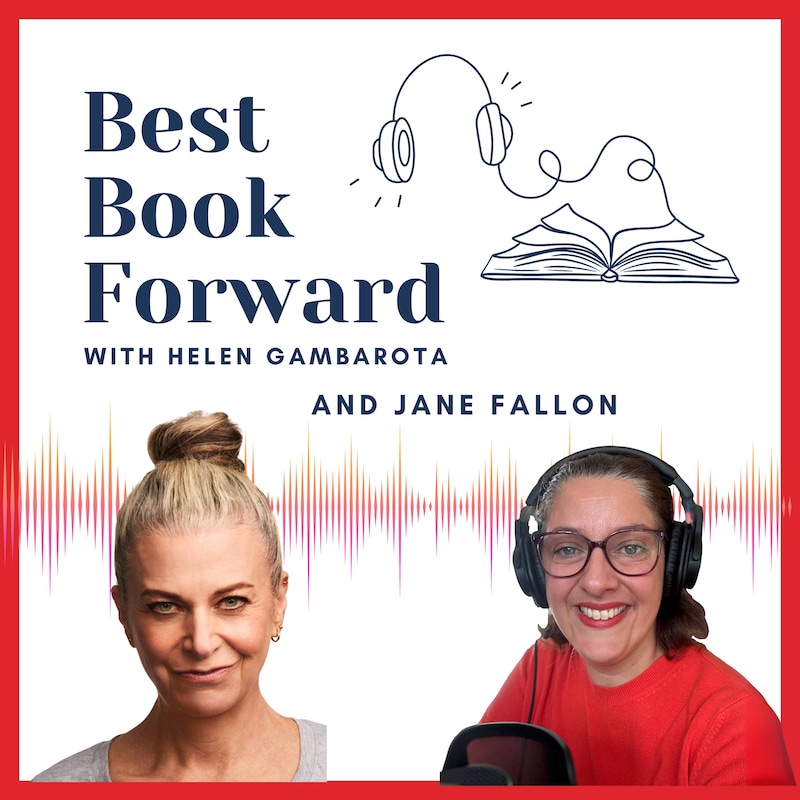
Shownotes
What a way to kick off Season 4 of Best Book Forward with the international bestselling author Jane Fallon. Jane joins me on the show today to talk about her new novel, Welcome to the Neighbourhood. We chat about the inspiration behind the novel, Jane’s approach to writing and of course the five books that have shaped her life.
As you would expect no episode of Best Book Forward would be complete without book recommendations! Here’s what we talked about.
📚 Books by Jane Fallon
✨ Books Mentioned
- Tim and Charlotte by Edward Ardizzone (currently unavailable on bookshop.org).
- Jane Eyre by Charlotte Brontë
- Love for Lydia by H.E. Bates
- Puffball by Fay Weldon (currently unavailable on bookshop.org).
- In Cold Blood by Truman Capote
This episode marks the start of a brand new seven-episode season, with fresh conversations landing every Thursday. I’d absolutely love for you to join me each week.
In the meantime, if you’ve enjoyed this episode, please subscribe, rate, and review Best Book Forward, and don’t forget to tell your friends... it really helps new listeners discover the show.
See you tomorrow, and happy listening.
Listen & Subscribe Now:
https://best-book-forward.captivate.fm/listen
To stay in touch with Best Book Forward news please follow me on Instagram @bestbookforward or visit my website: https://bestbookforward.org/
Transcripts
Welcome back to a brand new season of Best Book Forward, the podcast where I sit down with authors to explore the books that have shaped their lives.
Speaker A:Think of it as a book lover's version of Desert Island Discs.
Speaker A:We're kicking off this new season with an incredible guest.
Speaker A:I'm absolutely delighted to be welcoming international best selling author Jack Jane Fallon to the show.
Speaker A:Jane's novels have sold over 4 million copies worldwide, been translated into more than 30 languages and every book she's released since her debut, Getting Rid of Matthew, has been a bestseller.
Speaker A:Her new novel, welcome to the Neighbourhood centres on Kitty who decides to leave her old life behind and make a.
Speaker B:Fresh start in London.
Speaker A:When a glamorous couple move in next door.
Speaker A:She's convinced this is the chance chance to finally build a life she's always dreamed of.
Speaker A:But then she spots a woman slipping out of her neighbour's house and jumps to the conclusion that her new friend's husband is having an affair.
Speaker A:And that's when things really start to unravel.
Speaker A:Today, Jane and I will be chatting about the inspiration behind welcome to the Neighbourhood, what her writing life looks like these days, and of course, the five books that have shaped her life.
Speaker A:So settle in, grab, grab a cup of tea.
Speaker A:It's time to welcome Jane Fallon to the show.
Speaker A:Jane, welcome and thank you so much for joining me on Best Book Forward today.
Speaker B:Thank you.
Speaker A:It's a pleasure to be here.
Speaker A:I'm so excited to be chatting to you.
Speaker A:I absolutely love your books.
Speaker A:We're here to chat about your new book, welcome to the Neighbourhood, which comes out in January, so we're recording at the end of November.
Speaker A:So when this episode goes out, people will be able to get their hands on it, which is very exciting.
Speaker A:Do you want to start off by giving everyone a little idea of what it's all about?
Speaker B:I will.
Speaker B:So it's about our heroine, Kitty, who she's kind of in her early 40s and her life just hasn't gone as she wanted it to.
Speaker B:She's engaged to a very perfectly nice man, she's got a perfectly good job, she lives in a perfectly decent house and she has perfectly adequate friends.
Speaker B:But she is bored stupid and she feels as if there's a better, more exciting, more glamorous life out there somewhere for her.
Speaker B:And an opportunity comes up for promotion and she decides to just throw everything away, fiance for everything.
Speaker B:And then the friends kind of disown her and move to London, a new city where she knows no one, and start this new what she thinks will be a glamorous life, but obviously in your 40s, big new cities are kind of impenetrable.
Speaker B:Everyone's in their friendship groups already or they're coupled up or, you know, their social life is as full as they want it to be.
Speaker B:And she finds that she has absolutely no life really.
Speaker B:And three years on, she's got one friend who's not a friend she would have picked.
Speaker B:In an ideal world, she's certainly not the glamorous, cool friend she was imagining she would have when she moved to London.
Speaker B:She's called Grace and Kitty kind of slightly resents her and she just does just enough to keep their friendship alive.
Speaker B:But Grace is just a bit, God love her that the most exciting cultural highlight of her life will be to go and see We Will Rock youk or.
Speaker B:Michael Buble in concert or something like that.
Speaker B:And then one day Kitty is looking out the window and she sees a new really cool looking couple move in next door, completely out of place in the sort of very suburban bit of London that she's ended up in.
Speaker B:And she befriends the woman, Sian, and who is everything cool and funny and laid back.
Speaker B:And Kitty's thinking, brilliant, this is the life I've always been after.
Speaker B:Slightly leaves Grace by the wayside.
Speaker B:And then she spots a woman sneaking out of Sian and her husband Rich's house one day and she realizes that Rich is there and Sian has just come home and the woman is trying not to be seen by Sian and she thinks, oh my goodness, now what am I going to do?
Speaker B:I've met this great couple and I think the husband might be cheating on the wife, my new best friend.
Speaker B:And obviously it will turn out that nothing is what it seems.
Speaker B:And Kitty becomes embroiled in this enormous sort of web of deceit and gets used and ultimately kind of learns the real value of real friendship.
Speaker A:I love that it's such a brilliant read, Jane.
Speaker A:Listen to you talk about it there.
Speaker A:I just think I can't wait for people to read it.
Speaker A:I think everyone's going to really love this book.
Speaker A:It's.
Speaker A:It's really good.
Speaker A:I always like to start by finding out about the inspiration behind the book.
Speaker A:So I'd love if you could tell us where did the idea for welcome to the Neighbourhood come from?
Speaker B:I think a big part of the idea actually was I moved house last year and we only moved.
Speaker B:We're a five, maybe eight minute drive from where we used to live, but it's a 40 minute walk and I know no one here and it's actually quite unmooring.
Speaker B:You know, I'm used to like stepping out of my front door.
Speaker B:It's not like I want to be around my neighbor's house every five minutes but I'm used to seeing people saying hello and you know, having all my usual stuff on the doorstep.
Speaker B:And then suddenly I felt bit kind of like a fish out of water in this strange place where I knew no one and it was 40 minute walk to get to where I used to live because I don't drive so I can't do the five minute drive to get there.
Speaker A:Right.
Speaker B:And then I thought imagine if I was moving to a whole new city.
Speaker B:At, you know, in an hour.
Speaker B:I'm much older than Kitty but in an older age and how would I go about navigating that?
Speaker B:How do you find yourself a life in a strange place?
Speaker B:So it sort of came from that really like an exaggerated version of what I was going through in a way because I wasn't really going through anything.
Speaker B:But I just, you know, it was just this feeling that it is quite strange to suddenly be somewhere different and know no one.
Speaker B:So that was that sort of starting point.
Speaker B:And then the other thing that I always like to think about friendships.
Speaker B:I love writing about friendship.
Speaker B:And I was thinking about friendship fomo this idea that, you know, always, I think you can't, can't help yourself.
Speaker B:People are always thinking, oh maybe they meet someone for five minutes and they think oh, they'd be a really cool new best friend.
Speaker B:People are always looking over their shoulders and thinking could I be having a better time if I had a different group of friends?
Speaker B:And I quite like that idea of, you know what ultimately what is important in friendships?
Speaker B:Is it someone being cool and exciting and new or is it the years of loyalty that, you know, the fact that they would do anything for you.
Speaker B:So that was another big part of it.
Speaker B:And then obviously I wanted like I always do a sort of twisty revenge mystery story on top of that.
Speaker A:That's so interesting.
Speaker A:As you were talking then I was just thinking it's going to be very relatable to a lot of women in different, at different stage their life.
Speaker A:I'm thinking when.
Speaker A:So I have twins who are just about to turn 13 but we moved out of London when they were a year old and I didn't know anyone here and it was that same.
Speaker A:So it's quite hard to sort of break in and you are looking at different groups and so trying to work out where you f. So it's.
Speaker A:And it's Hot.
Speaker A:It's hard.
Speaker B:I think it is hard.
Speaker B:And I think there are stages of life when it's harder than others.
Speaker B:I think, I guess at least if you have kids, that you'll find a way to meet other mums and dads through those kids and that will probably incrementally become more frequent as they go to school and, you know, all that kind of stuff.
Speaker B:But I think if you don't have that, one of those access points like having children, you know, she's thinking, what can I.
Speaker B:How am I gonna meet people?
Speaker B:All the people she works with are sort of 20 years younger than her because she's the boss.
Speaker B:They're very nice, but they're not.
Speaker B:Her new social life.
Speaker B:What do you do?
Speaker B:Do you like, you know, do you join a choir?
Speaker B:Do you go to join a group?
Speaker B:It's like.
Speaker A:Yeah, it's, it's.
Speaker B:It is actually really hard.
Speaker B:You can't just go up to people in the street and say, do you want to be my mate?
Speaker A:Yeah.
Speaker A:And I guess like when you think if you go to sort of college or university, when you start your first job, you sort of find friends in that sort of situation because you're forced into a place.
Speaker A:It's really different, isn't it, when you're sort of moving and you're in a later stage of life, become sort of harder.
Speaker B:So, yeah, it definitely does.
Speaker B:And I think as well, when she's thrown her husband.
Speaker B:Her husband to be to the wayside, her friends very much took his side.
Speaker B:So she's sort of the friendship group that she's built in the place that she used to live with her fiance has sort of gone because they all think she's behaved appallingly by just dumping him and moving away.
Speaker B:And so she has friends, you know, from uni, those friends that we.
Speaker B:We acquire over our lives, but they're scattered all over the country because obviously we move around so much so days.
Speaker B:Yeah.
Speaker A:So I'm going off track completely.
Speaker A:But I mean, it's such a brave thing for her to do because they say it was, you know, it wasn't a horrible relationship.
Speaker A:It's just she felt like she wanted more, which is, you know, perfectly fine to sort of do.
Speaker A:And probably she would have been quite miserable, probably if she stayed in that relationship.
Speaker B:So, yeah, I think it's that idea of get out while you can.
Speaker B:And it's a very scary thing to do because from the outside, I think her relationship looked enviable to some people.
Speaker B:You know, he wasn't, as I said, A perfectly nice man.
Speaker B:They had a perfectly nice house.
Speaker B:They lived a perfectly nice life.
Speaker B:It was just sucking the life out of her.
Speaker B:And I think most of us, I think, would opt to just stay because you're so scared of the alternative.
Speaker B:So I kind of really admire her, even though she on occasion behaves in ways, you know, towards Grace, her friend, for example, that I don't particularly endorse.
Speaker B:But, you know, I admire that she did that.
Speaker A:Yeah.
Speaker A:So let's talk about Kitty a little bit more then, because I do think she is an interesting character.
Speaker A:Because I've sort of sat thinking about her a lot and, like, is she a likable character?
Speaker A:Is she not a likable character?
Speaker A:And I'm the same.
Speaker A:I still think there's things that she does, particularly with Grace, I'm like, it's a bit naughty.
Speaker A:It's not very kind.
Speaker A:But I do really admire her as well, for.
Speaker A:For taking that risk.
Speaker A:You know, as I say, she's not having to flee something.
Speaker A:That's awful.
Speaker A:She could have probably had quite a contented life.
Speaker A:So where did the idea for her come from?
Speaker A:Was she a fully formed character or did she develop for you?
Speaker B:She definitely developed.
Speaker B:I always find with my characters when I write my first draft.
Speaker B:I'm sure this is common for a lot of writers, but I obviously, I have a plan and I have an idea of who my people are, but initially that's more in terms of story than their personality.
Speaker B:I mean, for example, I knew she was the sort of person who would, you know, do something brave like that, who would feel like something was lacking in her life and all that kind of stuff.
Speaker B:But I didn't have the depth of her at that point.
Speaker B:And I like to use my first draft to find my characters.
Speaker B:So my first draft, I'm doing the finger inverted.
Speaker B:Commencing my first draft.
Speaker B:Nobody sees apart from me.
Speaker B:The thing I hand in as my first draft is really like my probably third or fourth draft.
Speaker B:Because my first draft, by the time you get to the end, you don't recognize anybody.
Speaker B:Everybody's changed completely, you know, not even just the facts of what they do and that kind of thing, but their characters have changed completely and they've developed.
Speaker B:By the time I get to the end of the first draft, I feel I know exactly who those people are.
Speaker B:I could take and put them in any situation.
Speaker B:I would know them.
Speaker B:And so then it's actually quite a joy to go back and rewrite the whole thing knowing that character.
Speaker B:But my first draft is actually a load of old nonsense.
Speaker B:In character terms, it's just a kind of.
Speaker B:It's to get me through the story and to work out who these people really are.
Speaker A:That's so interesting when you hear, like, it's so much work, isn't it as well?
Speaker A:It's like, you know, I pick it up and I read a book in two days.
Speaker A:Like really, it's taken me how long?
Speaker A:But I think that, I mean, I always say this to authors.
Speaker A:I think when you go through that process of sort of writing and rewriting and sort of just.
Speaker A:That's what makes it for us, effortless as a reader and just so enjoyable because we pick it up and just totally believe this person, this situation and just we go along for the ride.
Speaker B:Yes.
Speaker B:Yeah, it's definitely worth doing the work.
Speaker B:There's definitely a point when I get, funny enough, I'm at that point now with my one after welcome to the Neighbour.
Speaker B:There's a point halfway through the first draft and I just think, you know, when you suddenly decide you're going to clear a room out, you have a brilliant idea.
Speaker B:I'm going to get everything out of the cupboards, I'm going to throw everything.
Speaker B:And there's a point in the middle where you just think, what the hell?
Speaker B:The hell am I doing?
Speaker B:Everything is piled up around you.
Speaker B:You don't know where anything is.
Speaker B:You don't know what it is, what you want to keep and what you want to throw away.
Speaker B:And that's me in the middle of a first draft.
Speaker B:I'm in a really crowded room with a load of shit piled up around me and I don't know how to find my way out.
Speaker B:So every time I go through that, every time I think, what am I doing?
Speaker B:And then you sort of come out the other side of it and find something so much better than you had.
Speaker B:You know, it goes from being a kind of procedural thing to actually something with a bit of heart and depth.
Speaker B:And there's always a joy when you sort of stumble across that.
Speaker A:So, I mean, I'm laughing because I'm doing this at the moment.
Speaker A:My mother in law's coming in a few weeks, so I'm trying to have.
Speaker B:A sort of such a good idea, but it's such a lightweight.
Speaker A:It's the worst.
Speaker A:But you start with such gusto, don't you?
Speaker A:Like clear it all out and then it's like boring now.
Speaker B:Yeah, terrible.
Speaker A:So what do you do when you're in that point then?
Speaker A:Do you sort of try and pick a thread or, you know, how do you sort of Unravel it all.
Speaker A:Or is it, I guess, different for every book, every situation?
Speaker B:My process is always fairly similar, which is I just have to get to the end of that first draft, no matter what nonsense comes out.
Speaker B:I feel like that's such a massive.
Speaker B:I remember when I first got my first contract from Penguin and I saw that it said in it that to deliver a manuscript of 100,000 plus words, and I'd written, I think 30,000 of my first book, book when I got a deal.
Speaker B:And.
Speaker B:And I'd finished books before that I'd never shown anyone, but they were never that long.
Speaker B:And I just looked at that amount of words, I thought, no one can write.
Speaker B:And I feel like that every time I start the beginning of a first draft.
Speaker B:No one can write that many words.
Speaker B:So I just.
Speaker B:Psychologically, for me, I need to get to the end.
Speaker B:I need to have a document that's that long, and then I can maneuver.
Speaker B:I think it's because I come from being a script tester.
Speaker B:I love maneuvering material.
Speaker B:Creating the material in the first place is hard, but then once I've got something, anything, even if it's rubbish to work with, I can really get my hands stuck in.
Speaker B:So when I'm in that middle phase, I have a couple of weeks where I throw stuff around and I cry a lot and I. I call my friend, my boyfriend, oh, this is not gonna work.
Speaker B:And they're like, yeah, you say this every single time.
Speaker B:And then I sort of pull myself together and I just focus through to the end.
Speaker B:And you.
Speaker B:I find my way through to the end and it's.
Speaker B:It always starts getting better at that point.
Speaker B:I just have to go through that middle mess.
Speaker A:Do you think?
Speaker A:I mean, I speak to people quite often who say they want to write a book and they're like, oh, just, you know, I'm trying, but I'm not getting anywhere.
Speaker A:Do you think people sort of get stuck in that, trying to make it perfect?
Speaker B:Absolutely.
Speaker A:From the start rather than sort of.
Speaker B:That's.
Speaker B:Yeah, absolutely.
Speaker B:That's always my advice to people because it's what I used to do for years and years and years and years.
Speaker B:I would.
Speaker B:I'd write a couple of chapters and then I'd try and hone those chapters.
Speaker B:I'd work on this and you get stuck in a loop and you never.
Speaker B:Or.
Speaker B:It certainly is true for me.
Speaker B:It's obviously not true for everyone, but I would get stuck in a loop and I would never progress.
Speaker B:And I.
Speaker B:My advice to everyone is always.
Speaker B:If they're struggling with getting beyond a few chapters, just keep writing.
Speaker B:Don't allow yourself to go back and look at it, because you can do.
Speaker B:You've got the rest of your life to go back and make those chapters good.
Speaker B:And also, they might be irrelevant.
Speaker B:With my books, they're irrelevant by the time I get to the end of the first run.
Speaker B:So, yeah, just keep writing through.
Speaker B:You can really overthink a first draft.
Speaker B:I think now for some people that, you know, they need that.
Speaker B:They need that.
Speaker B:They know what's going to happen in every chapter.
Speaker B:And I have a framework of what's going to happen, but I don't have every beat.
Speaker B:You have to allow yourself to just because also you have to.
Speaker B:I find I can't fix my plots too much because you have to challenge your characters all the way along.
Speaker B:Once you start to get to know your characters, once they start to be like fully formed people, you'll hit a point and you'll think, oh, I thought they were going to do this yet.
Speaker B:But this person would never do that.
Speaker B:I wouldn't believe she'd do that in a second.
Speaker B:So you have to rethink your plot all the way through anyway.
Speaker B:So just get to the end, find your people, find what they care about, find what they want, and then go back and start again.
Speaker B:And starting again is not like starting a whole new book.
Speaker B:It's a joy to go back and have another go at it, I think.
Speaker A:I love that when people hearing authors there, I love your minds.
Speaker A:I wish I had an upgrade in my mind where I had that creativity, because I just don't have it at all.
Speaker A:But I just think it's so interesting how, you know, you can look at what you're saying, that this first draft, that's nothing, and then you get to know this character and sort of bring them to life so people like me can pick up and look at these words on a page and totally believe it.
Speaker A:I just think it's so incredible.
Speaker A:And I'm such a nerd on I.
Speaker A:Okay, let's move back on to talking about the characters.
Speaker A:I really want to talk about Grace, who we've mentioned a bit before.
Speaker A:I love Grace.
Speaker A:I mean, there's a line where you say, grace is somebody who sees a pause and a conversation as a challenge, which just made me really laugh because we all know those people, right?
Speaker A:But there is a surprising sort of moving backstory to Grace as well.
Speaker A:And I thought, I'd just like to know, how much fun did you have writing her and how difficult was it to sort of Balance those moments where, you know, she has had a difficult, difficult time, but you also keeping it funny and interesting and keeping us on the edge of our seat as well.
Speaker B:I feel like you're with those characters that I think could quite easily become a sort of fun addition.
Speaker B:I feel like it's always good to find.
Speaker B:You want to find the heart of them at some point.
Speaker B:You want to kind of surprise people by going, yeah, I know she's annoying and she never shuts up, but actually she's had stuff go on in her life as well, because I love her too.
Speaker B:I absolutely love her.
Speaker B:And I actually really enjoy writing those characters that on first meeting you think, oh, my goodness, will you just shut up?
Speaker B:It's always fun writing someone just wittering on in anguish.
Speaker B:But I love that idea, that sort of actual values more deep down win out.
Speaker B:You know, when she's needed, she's there.
Speaker B:She's got a heart of gold.
Speaker B:She's really loyal.
Speaker B:She will back Kitty up to the hilt.
Speaker B:That's who you want in your corner, actually.
Speaker B:And actually, when you're good enough friends with them, as Kitty comes to be, comes to sort of, you know, value that friendship more, you can say to them, can you just shut up?
Speaker B:Five minutes, you're doing my head in.
Speaker B:And they, nine times out of ten, they will go, oh, sorry, God, yeah, I do talk a lot and it'll be fine.
Speaker B:But, yeah, I did want people not to think she was just this sort of surface.
Speaker B:Person.
Speaker B:And, you know, you need to understand really why both her and Kitty are in this situation.
Speaker B:They are.
Speaker B:Why they're very much alone.
Speaker B:I don't mean in terms of, you know, having a husband or a man or whatever, but why they're both very much alone in their worlds.
Speaker B:Because otherwise, I think we don't understand anything about them, about, you know, what drives them both.
Speaker B:Kitty's driven to, you know, make these massive efforts to make friends with Sian, who moves in next door, because she's very much alone, as she sees it.
Speaker B:I mean, she's actually not.
Speaker B:She's got Grace in the background, you know, and Grace is driven to cling on to her friendship with Kitty so much because she's found someone that she generally trusts and likes, and she's not going to let that go.
Speaker B:And I think you need to understand why the characters are kind of acting like that.
Speaker A:Yeah.
Speaker A:And both of them, you know, in a sort of funny way, they're both trying to rebuild in different ways.
Speaker A:So you can see, I mean, they meet on a sort of speed dating night.
Speaker A:I just love.
Speaker A:I thought it was so.
Speaker A:Such a cute way for them to become friends.
Speaker A:So, yes, they're both trying to rebuild their life in different ways.
Speaker A:What.
Speaker A:What was it that drew you to writing?
Speaker A:Women in these sort of transitional moments, particularly like in their sort of 40s and beyond.
Speaker B:I think often for a lot of people, both men and women, those years are very transitional.
Speaker B:I mean, often people are, you know, maybe getting divorced or a lot of people seem to switch careers in those kind of years.
Speaker B:And I have always loved.
Speaker B:Historically, I've always loved stories about people reconstructing their lives for whatever reason.
Speaker B:I love.
Speaker B:Even if it's just they're doing a house up.
Speaker B:I love any story that has some elements of reconstruction in it.
Speaker B:And I just thought.
Speaker B:Thought it was quite interesting to take people doing those things, but like I said before, doing them in a strange place.
Speaker B:So you.
Speaker B:You're not doing them with, you know, your family and your friends and everybody there to support you and, you know, backing you up every day, you've sort of thrown yourself.
Speaker B:Both of them have kind of thrown themselves into strange spaces to.
Speaker B:To rebuild their lives.
Speaker B:And I thought that might be an interesting way of looking at how that makes you act.
Speaker A:And it's.
Speaker A:I think with both of them, they both have such satisfying stories to sort of follow through as yet getting to know them sort of where.
Speaker A:Understand why they are the way they are, but also the fun that comes along with their sort of, you know, trying to work out who this woman is as well.
Speaker A:I'd love to just talk about the.
Speaker A:Go a little bit more into the sort of friendships between the two.
Speaker A:So I do think friendships, as we said at the beginning, particularly as you get a bit older, are really interesting.
Speaker A:You know, sometimes the friends you think you want are very different to the friends that you need, which we really see in Kitty and Grace.
Speaker A:And I know you like writing about friendships.
Speaker A:Do your friends worry when they see you've got a new book coming out?
Speaker B:They used to.
Speaker B:They definitely used to.
Speaker B:But I learned very, very early.
Speaker B:And don't put anyone in there wholeheartedly.
Speaker B:I only ever once put someone who wasn't friend actually someone in a book wholeheartedly that was recognizable.
Speaker B:And that was because they'd done something that I thought was so outrageous, I thought, I'm just gonna put it in these days.
Speaker B:I don't think I'd even do that.
Speaker B:But they had.
Speaker B:It was someone I briefly worked with, and they'd been brought in to do a job that was meant to Be a kind of similar level to mine.
Speaker B:But she became obsessed with whether she should be higher in the hierarchy than me, whether she should be considered more important than me, whether she should be listed first, and stuff like that.
Speaker B:And then my assistant one day came back from lunch and saw this woman on her hands and knees in my office, measuring my office with a tape measure to see if it was bigger than hers.
Speaker B:So I did once put that.
Speaker B:I think I did it with a desk.
Speaker A:Oh, my God.
Speaker B:And that it was hidden foursome.
Speaker B:So that was very recognizable.
Speaker B:But generally I like to make a blend.
Speaker B:But also I think what I always say to my friends and what is actually true.
Speaker B:If you think, like, early on in my career, I was writing storylines for EastEnders.
Speaker B:I was the story editor for series, script editor, which is that story for a few years.
Speaker B:And.
Speaker B:I think you have to assume that one.
Speaker B:Any good stories I did have in my own life, I would put in there.
Speaker B:But also, I've written so many stories in my life, I long ago ran out of things that people I knew were actually doing, sadly.
Speaker B:So I don't really trade on those anymore.
Speaker B:But you always take care.
Speaker B:You take characteristics.
Speaker B:I blend characteristics of several people.
Speaker B:I know friends and, you know, acquaintances to make a character.
Speaker A:I'm just thinking about that woman and wondering if she picked up your book and went.
Speaker A:Or whether she just wouldn't even think.
Speaker A:I think sometimes people are so oblivious to their bad behavior, they wouldn't even.
Speaker B:Yeah.
Speaker B:I mean, I think she probably didn't read it.
Speaker B:She had such a bee in her bonnet and that she probably didn't even read it.
Speaker B:So that's all right.
Speaker B:Wow.
Speaker A:Because I often think as well, when people say, you know, you do write revenge really well.
Speaker A:I was like, I wonder whether the people in your life think, don't mess with James.
Speaker A:All these great ideas, got all these tools.
Speaker A:Yeah.
Speaker B:I definitely hope so.
Speaker A:Go through your library.
Speaker A:Like for you.
Speaker B:I just look at them side over them.
Speaker B:I love the idea of revenge.
Speaker B:It's one of those things that I think in our head, it's the most joyous, amazing thing.
Speaker B:I would never do it to anyone.
Speaker B:I think it's a terrible idea to actually carry out any kind of real revenge because I think you.
Speaker B:You end up the bad guy, even if it's just in your own head.
Speaker B:Yeah.
Speaker B:But the idea of it, the fantasy of it is so joyful.
Speaker B:I think so.
Speaker A:Welcome to the neighborhood.
Speaker A:Then there's this scene where Kitty sees this woman coming out of Sianna Witch's house and in her head she assumes that it's an affair.
Speaker A:I'm personally somebody who would hate to see something like that.
Speaker A:I'm a chronic overthinker, and I just know I wouldn't know what to do.
Speaker A:I would sit and think about it for ages.
Speaker A:If you were in Kitty's shoes and you saw that woman coming out of your friend's house, what would you have done?
Speaker A:Jane?
Speaker B:It's really tricky.
Speaker B:I mean, I think if they weren't.
Speaker B:So she realizes very quickly it's not a burglar, because obviously Rich is home as well, so there's no sort of obligation to call the police or whatever, because that.
Speaker B:That I would do.
Speaker A:I think.
Speaker B:I think it makes a difference how?
Speaker B:Well, you know that person, she.
Speaker B:That lives next door, she knows Sian wellish by then.
Speaker B:She's really good friends with her.
Speaker B:I don't think I could bring myself to go to someone and say, there was a woman sneaking out of your house.
Speaker B:But I think I would be then very watchful for any hints in the conversation with Sian that she might be worried about something or there might be something amiss, in which case I might go, oh, because I did see this woman.
Speaker B:Yeah.
Speaker B:Because also, I'm trying to think if it was my best friend and she lived next door, you know, who I've known for 30 years or whatever.
Speaker B:Apart from that, I would never suspect her husband of anything, ever.
Speaker B:Would I say anything?
Speaker B:I think I wouldn't, because I would actually, with her and him specifically, I would assume he's planning something lovely for her birthday.
Speaker B:I would always assume a lovely thing.
Speaker B:Obviously, Kitty doesn't know Sian and Rich.
Speaker B:She just barely knows Rich at all at that point.
Speaker B:Yeah, it's really tricky.
Speaker B:I don't think I would go straight in there with something.
Speaker B:I think I do what Kitty does, which is sort of watch the situation and try and work out what was.
Speaker A:Going on, which is what I was thinking.
Speaker A:And I was like, that's almost where the danger comes, isn't it?
Speaker A:Because you're watching, and then it's like you're looking for things.
Speaker A:I was right.
Speaker A:I was right.
Speaker A:He's no curse.
Speaker B:Yeah, absolutely.
Speaker B:Yeah.
Speaker B:You're reading stuff in Stuff.
Speaker B:Of course.
Speaker B:Yeah.
Speaker B:Yeah.
Speaker A:Was that.
Speaker A:So what I love about your books, you quite often will.
Speaker A:The sort of spark for the drama is something that could happen to anyone.
Speaker A:It's like a moment of, you know, seeing a neighbor or, you know, somebody measuring a desk or whatever.
Speaker A:Where do you find these little snippets of ideas and how do you know when you've got one that is strong enough to base a novel sort of around.
Speaker B:Oh, tricky.
Speaker B:I don't really know where I get them from.
Speaker B:I think you just.
Speaker B:I think I've always been such an introvert and such an observer that you just take stuff in.
Speaker B:I've always just like, taken stuff in.
Speaker B:So I. I'm often like, in big conversations.
Speaker B:I will always be on the periphery and just listening in.
Speaker B:So I store everything up in my head.
Speaker B:Little bits of.
Speaker B:I think, oh, that might be good.
Speaker B:That's a good idea.
Speaker B:That's a good little thing.
Speaker B:You know, I listen to stuff in cafes.
Speaker B:I. I read things in magazines.
Speaker B:I think, oh, that's an interesting little.
Speaker B:Imagine if that happened.
Speaker B:So it's.
Speaker B:There's not a conscious way that I come up with them.
Speaker B:I think.
Speaker B:And I think the process of thinking, are they good enough to like to be the kickoff for a book?
Speaker B:Usually I spend, I would say, good two to three months thinking through the idea I want to write before I start writing anything.
Speaker B:And that is thinking of all the possibilities, all the things that things could kick off, all the ways you could come at an event, all the different ways you could look at it.
Speaker B:And so then I'll throw out most of them before I then find something that sort of suits the kind of theme that I'm wanting to write about.
Speaker B:It's a bit all over the place, is the truth.
Speaker A:It's working.
Speaker A:Right.
Speaker A:That's so interesting then, because also what you always have.
Speaker A:I mean, when I pick up your book, I just get so excited because I know I'm in for a great read, but I just know there's going to be a moment where you're going to pull the rug from underneath me, and there's going to be a great twist or other twists as well.
Speaker A:So obviously, when you're planning that sort of seed, where does the twist come?
Speaker A:Or is it the twist later on?
Speaker B:Well, there'll always be.
Speaker B:I always sort of know, in terms of the rhythm of the story, where I'm gonna need a twist, or, you know, where I feel like I've exhausted one part of the story and I need something.
Speaker B:Quite often there will just be a big word in capitals that says twist, underlined many times with a lot of exclamation marks for quite a while, because it's the old first draft thing, I feel like I can have an idea what that twist is going to be.
Speaker B:But.
Speaker B:But until I get to that point and I know my characters and I know what they do, and I know what else has happened, and I know the thoughts that people have had.
Speaker B:I can't really decide what that twist is going to be.
Speaker B:I can have a vague idea.
Speaker B:You know, wouldn't it be interesting if the person who's moved in next door, there's a moment where she turns out not to be the person that's a twist, but the actual mechanics of that twist, that came to me as I was writing.
Speaker B:So I know I'm looking out for it.
Speaker B:I know there needs to be one.
Speaker B:And then suddenly you get an idea that's good.
Speaker B:And it's just the most joyful thing that can happen when you're writing.
Speaker B:You're like, yes, that's what happens.
Speaker B:So, yeah, it's a sort of organic process, really.
Speaker A:And do they ever surprise you?
Speaker A:Do you ever think you know what's going to happen and a twist comes.
Speaker B:And you're like, oh, well, they sort of do.
Speaker B:And that sounds really pretentious.
Speaker B:It's a bit like.
Speaker B:Because quite often a peripheral character.
Speaker B:Someone you thought was going to be a peripheral character, suddenly they sort of develop a little life of their own.
Speaker B:You think, oh, they could do that.
Speaker B:That would be br.
Speaker B:And it's only because you've been writing away at that character, and they've kind of become this person that you weren't expecting almost.
Speaker B:Because people, they do.
Speaker B:They kind of get a life of their own, your characters in.
Speaker B:When you're writing in the early stages.
Speaker B:So, yeah, they sort of do surprise me.
Speaker A:I love that we're all surprised.
Speaker A:Great.
Speaker B:And especially now, menopause.
Speaker B:It's a real surprise.
Speaker A:I can't remember anything I've written.
Speaker A:Oh, so.
Speaker A:But that's what I say to people.
Speaker A:People now sometimes say, what was that book?
Speaker A:I'm like, this is one of the things I'm loving about menopause.
Speaker A:I can read the same book twice.
Speaker B:Same.
Speaker A:I'm halfway through a book I've read.
Speaker B:Already and I've only just realized I'm loving it.
Speaker A:I love that.
Speaker A:I love.
Speaker A:I've been surprised by the same twist in a book twice.
Speaker A:That's really.
Speaker A:Gentlemen and Gentlemen and Players.
Speaker A:Joanne Harris.
Speaker B:Oh, yes.
Speaker A:And I actually.
Speaker A:The second time, I sort of.
Speaker A:My sister did the same.
Speaker A:I. I went back to read it because I wanted to see how I'd missed it the first time and then missed it the second time.
Speaker A:Well done, Helen.
Speaker B:I now only know if someone says, if I've read a book and I say, I say, someone, oh, this book was brilliant.
Speaker B:They're like, what's it about?
Speaker B:I couldn't even tell them.
Speaker B:I. I can only remember if I really liked the book or really didn't, but as soon as I finished it, I can't really tell you anything about the plot.
Speaker A:Yeah, I'm like, I know I loved it, but I don't know what it's about.
Speaker B:Yeah, can't remember why, but just reading some.
Speaker A:So let's have a chat about then, because there's some exciting news happening with movie adaptations and I was saying to you, I thought that welcome to the Neighborhood would be such a good TV series.
Speaker A:It'd be so fun to watch.
Speaker A:So are you able to share any news of what's.
Speaker A:What's coming with us?
Speaker B:Yeah, well, getting Me to Matthew, which was my first book.
Speaker B:Fingers Crossed, is about to be a movie.
Speaker B:It was supposed to be filming in the autumn.
Speaker B:That didn't happen, but we have Heather Graham attached, who's amazing.
Speaker B:To play the lead, Helen.
Speaker B:And Fingers Crossed, it's filming in the spring for Alloy, which is part of Warner Brothers.
Speaker B:Really excited about it.
Speaker B:I just feel with movies, until they actually start shooting, you never quite know it's going to happen.
Speaker B:So I'm pinning everything on that.
Speaker B:And then obviously Got yout Back, I don't know if you know, is currently a musical.
Speaker A:Yes.
Speaker B:In Scandinavia, which is the maddest thing that's ever happened to me in my life.
Speaker B:And it's.
Speaker B:It's basically.
Speaker B:It's with Roxette, I don't know if you remember.
Speaker A:No, I do.
Speaker B:I loved them and it's so their pair, who is Roxette, is very heavily involved and it's all their songs.
Speaker B:It's based on Got yout Back, it's called Joyride, and it's just played in at the Malmo Opera House for eight months.
Speaker B:It's now doing five months in Stockholm and then it's going back to Malmo Opera for another five or six months next year.
Speaker A:So.
Speaker B:Been insane.
Speaker B:It's so good.
Speaker B:I mean, I can say that because beyond writing the book, I can't take any credit apart from a little bit of, you know, script kind of editing work with the guy, the director who wrote the script.
Speaker B:Like, we collaborated on a few tiny things, but he basically wrote it and he's just done a brilliant job of it and it's such good fun, honestly.
Speaker B:And it's been a complete revelation.
Speaker A:It's so interesting, isn't it?
Speaker A:Because.
Speaker A:The Unlikely Pilgrimage of Harold Fry, Rachel Joyce, has just been made into a musical as well.
Speaker A:Yes.
Speaker A:It's going to be in the West End.
Speaker A:I'm like, oh, I love this.
Speaker A:This is quite exciting.
Speaker A:Is this, you know, I guess everyone sort of traditionally thinks of movies or Netflix.
Speaker A:So I'm like, oh, a musical is going to be the new thing for books.
Speaker A:It's quite exciting.
Speaker B:It's so exciting.
Speaker B:And for me, obviously, because I worked in TV for years and years and years, so it's exciting to have something potentially made into a TV or a film.
Speaker B:But there's a world I know very well, whereas this is so completely out of my wheelhouse and I love musicals.
Speaker B:Yeah, yeah, it makes it all the more exciting.
Speaker A:Oh, that's really exciting.
Speaker A:Okay, so welcome to the Neighbourhood is out on the 15th of January.
Speaker A:It is a brilliant read.
Speaker A:Do make sure you pick it up.
Speaker A:I'll pop a pre order.
Speaker A:I mean, I think this is going out the week before it comes out.
Speaker A:But do grab a copy, you are in for a treat.
Speaker A:So just before we move on to talk about the books that Jane has picked that have shaped her life, just remind all listeners that the books will be linked in the show notes.
Speaker A:They'll be easy for you to find.
Speaker A:So Jane, how did you find picking your five?
Speaker A:Was it easy for you or do you know what?
Speaker B:A few of them were easy.
Speaker B:Three of them were absolute no brainers and the other two, I had a sort of toss up.
Speaker B:There were sort of eras and genres and times in my life that I thought, oh yeah, I want.
Speaker B:There were so many books that connected with me at that point.
Speaker B:So it was just about picking the right one.
Speaker B:But yeah, the first one, my cat's appeared.
Speaker B:Sadly, you can't see her, but she may, she may stomp over something important.
Speaker B:But shall I say what the first.
Speaker A:Yes, let's, let's dive right in.
Speaker A:Let's listen to the first one then.
Speaker B:The first one which came to me immediately is a book called Tim and Charlotte by Edward R. Dizzoni.
Speaker B:And I still have the copy.
Speaker B:I will email you a picture.
Speaker B:I still have the copy.
Speaker B:Copy that I was given when I was I guess three.
Speaker B:Maybe two even actually.
Speaker B:And it's beaten up to death.
Speaker B:And I was obsessed with this book.
Speaker B:Apparently I used to.
Speaker B:It's a little.
Speaker B:It's a kind of thin hardback.
Speaker B:And I would follow my mum or one of my older sisters around all day with it in my hand like a little duck, just saying, read, read.
Speaker B:And I would make them read it to me and then as soon as they'd read it to me, they'd have to read it to me again.
Speaker B:They'd have to read it me again.
Speaker B:And I was trying to work out why did I love this book so much.
Speaker B:I think it's because it's about.
Speaker B:I don't know if you know the book.
Speaker B:It's basically Tim there.
Speaker B:There are a lot of Tim books.
Speaker A:Yeah.
Speaker B:Tim features him quite a lot with his friend Ginger.
Speaker B:But in Tim and Charlotte, Tim and Ginger find this little girl who's sort of washed up on the beach, I think, and she's very sick and they take her home and they don't know who she is.
Speaker B:And then.
Speaker B:And Ginger's a bit jealous because Tim really likes her.
Speaker B:And they think, what should we do with her?
Speaker B:And they sort of make her better and they put notices up saying, we found this little girl.
Speaker B:But gradually she becomes such a part of their life and, you know, she almost becomes part of the family.
Speaker B:And then this posh lady turns up and it turns out this little girl is from a very, very, very posh but very cold family.
Speaker B:And she wants to take her.
Speaker B:I can't remember if it's her granddaughter or her niece or something back.
Speaker B:And so she has to go back.
Speaker B:And she's been in this loving environment for this sort of short time with, you know, these two little boys.
Speaker B:They're having so much fun on the beach and Tim's mum and dad love her and everything and she has to go back and live in this incredibly horrible cold environment.
Speaker B:It's heartbreaking.
Speaker B:It's absolutely heartbreaking.
Speaker B:She gets really sick because she's broken hearted.
Speaker B:Oh, God.
Speaker A:And.
Speaker B:But she sees a really nice doctor who says she's.
Speaker B:She's really sick because she misses her friends.
Speaker B:She made.
Speaker B:So I prescribe her.
Speaker B:She has to be friends with these people so we can cry.
Speaker B:So she has to basically have a relationship.
Speaker B:I think I just love the idea of this.
Speaker B:This little girl just waking up in this lovely environment.
Speaker B:It's a bit like a little.
Speaker B:Those books were like a little princess, which is all the opposite.
Speaker B:But I love the idea of, you know, you're just someone transported completely out of your life.
Speaker B:And.
Speaker B:I just really felt for her and I really.
Speaker B:She was.
Speaker B:She's very.
Speaker B:You know, they're what.
Speaker B:I guess they're seven or something.
Speaker B:Six or seven from the pictures.
Speaker B:So, you know, they weren't like too old.
Speaker A:What are you doing?
Speaker B:Because I kept on destroying the room.
Speaker B:And.
Speaker A:Yeah.
Speaker B:And I just love the whole.
Speaker B:This whole idea of, you know, not knowing who she was and.
Speaker B:Yeah.
Speaker B:And then the friendship between them all.
Speaker B:I guess it's a friendship thing.
Speaker B:I always love I've always loved really strong heroines and stories about friendship.
Speaker B:And I guess this sort of has both of those things.
Speaker A:I just love that little image of you, like, read, read.
Speaker A:Do.
Speaker A:You know, I love that kids connect with books.
Speaker A:Like, I think it's so like, you know, my two.
Speaker A:I mean, my son used to have this book.
Speaker A:It was the most boring book in the world.
Speaker A:It's called Tip Dip Tip Tip Dig Dig.
Speaker A:And it was a picture book, but he would carry the same thing and he would just be.
Speaker A:But he knew all the words and he wanted to.
Speaker A:Or he would choose it over toys as well.
Speaker A:So.
Speaker A:Interesting, isn't it, that.
Speaker B:Yeah.
Speaker A:I think we're just.
Speaker A:There's something in us that is drawn to stories.
Speaker B:Yeah, definitely this.
Speaker B:And this copy has gone down the rounds of all of my nieces and nephews over the years and come back to me now.
Speaker B:Yeah, I love that.
Speaker B:And it's beautiful books.
Speaker A:And it's funny how sometimes when you, like, think about books you loved as a child and then you start talking about.
Speaker A:You're like, oh, it's quite dark, actually.
Speaker B:Yes, absolutely.
Speaker B:I know.
Speaker B:I mean, it actually is really traumatic traumatizing this book.
Speaker B:But it does have a happy ending.
Speaker A:Okay, let's move on to your second book choice, which I'm wondering if there's a bit of a theme.
Speaker A:Looking at this.
Speaker B:There's a sort of a theme then.
Speaker B:Then I kind of jump to.
Speaker B:For my.
Speaker B:Was it my birthday or Christmas?
Speaker B:Let me just look at the inscription.
Speaker B: Christmas: Speaker B:So I was 11, 12.
Speaker B:My brother gave me a copy of Jane Eyre.
Speaker B:And, you know, I think it's an interesting age, that age when you're kind of 11 and 12 and you're a big reader because you're trying to find things to progress.
Speaker B:Two from your kiddie books.
Speaker B:And this one.
Speaker B:So I kind of.
Speaker B:The Brontes were a good sort of little in for me.
Speaker B:Brontes and Jane Austen, I guess, were what I then hooked onto.
Speaker B:And Jane Eyre, again, strong heroine, hard.
Speaker B:I don't know why.
Speaker B:I had a really nice childhood, but for some reason, I look at these things where people have had a really horrendous childhood.
Speaker B:And I really.
Speaker B:Sort of.
Speaker B:I don't know, I feel like I identify with him somehow.
Speaker B:But, you know, then a strong female heroine emerging.
Speaker B:Always loved that.
Speaker B:So, yeah, this opened the door to the Brontes for me and they, for a good few years, were my real kind of passion.
Speaker B:After that.
Speaker B:I just.
Speaker B:I love the history of it as well.
Speaker B:I love anything sort of like Victorian Era.
Speaker B:And that sort of started that for me as well, I think.
Speaker B:But just Jane and her.
Speaker B:I guess the fact she was called Jane didn't hurt, but.
Speaker B:But her sort of inner strength and her persistence and the awful things she has to go through and her kind of moral compass really struck a note with me.
Speaker B:You know, she could have just gone off and married perfectly nice, but boring, what's his name, and been a missionary's wife.
Speaker B:But she sort of.
Speaker B:She knew in her heart that she wanted more, that her heart was someone else, somewhere else.
Speaker B:But she knew she wouldn't go there with Mr. Rochester because he was married.
Speaker B:She'd found out he was married.
Speaker B:All of that stuff.
Speaker B:It just really resonated me with me.
Speaker B:All of that stuff.
Speaker B:And I became absolutely fascinated in the Brontes themselves.
Speaker B:And I had one of my.
Speaker B:Two of my sisters lived in Leeds at that point.
Speaker B:And so we used to go up.
Speaker A:There quite a lot.
Speaker B:And my mom also was a huge Brontes fan.
Speaker B:And so we went to Haworth and I.
Speaker B:That stuck in my head so enormously.
Speaker B:The Parsonage and the tiny, tiny little books.
Speaker B:I don't know if you've ever seen the tiny little books they used to write in.
Speaker B:Literally, when I say tiny, I'm talking about an inch and a half, two inches high.
Speaker B:And they would scroll.
Speaker B:I mean, they're illegible.
Speaker B:They had.
Speaker B:They have them on display up there.
Speaker B:They would scrawl them in their little fountain pens or whatever, and they would write out of those, I guess, because they would hide them away, maybe.
Speaker B:And out of those came these incredible books.
Speaker B:And then everything they had to go through to publish them was women, the men's names.
Speaker B:They had everything about them just as fascinating.
Speaker B:So, yeah, that's why I still can read Jane Eyre and just connect with it so fully.
Speaker A:I've just been talking to somebody about Jane Eyre on this series.
Speaker A:So Emma Steele, who wrote the Love of Our Lives.
Speaker A:And I was saying to her, I've always really struggled with the classics.
Speaker A:Like I think sort of from school, where I sort of always felt like I wasn't smart enough to understand what everyone was picking up in.
Speaker A:So I sort of avoided them as a.
Speaker A:As a grown up.
Speaker A:But this year I bought myself a copy of Jane Eyre to read at Christmas.
Speaker A:I feel like it's like a really wintry read.
Speaker B:Yes, it is.
Speaker B:I always read Dickens at Christmas.
Speaker A:Yeah, I'm gonna sort of just work through it really slowly and just sort of not try and analyze the page and just enjoy.
Speaker B:No, just do it.
Speaker B:It's a great story.
Speaker B:It's just a great story.
Speaker B:I think you'll just get caught up in her character.
Speaker B:And I mean, I say that and I say how much I love the Brontes, but Wuthering Heights, I've never got to the end of.
Speaker B:I cannot get on with that book at all.
Speaker A:Isn't it funny?
Speaker A:Have you tried the audiobook?
Speaker B:I can't really do audiobooks because my brain is just a mess and I suddenly realize that I've been thinking about 85 different things and I've missed a chunk.
Speaker B:But, you know, I've tried to watch films.
Speaker B:I thought maybe I can do a film.
Speaker B:Can't do it.
Speaker B:I just can't get on with it at all.
Speaker B:So if you start January, you don't like it.
Speaker B:Don't make that.
Speaker B:Make you give up on the classic.
Speaker A:I'm just thinking it's Wuthering Heights one that's got the new movie coming out.
Speaker B:Maybe I've tried.
Speaker B:I've tried and given up on too many movies.
Speaker B:It's too hysterical for me.
Speaker A:Yeah, I mean, I. I read Pride and Prejudice beginning of this year.
Speaker A:I had sort of really worked my way through that.
Speaker A:But I think, you know, something I often sort of think is a bit of a shame, like when books are studied at school.
Speaker A:Yeah.
Speaker A:You lose.
Speaker A:That sort of takes the life out.
Speaker B:Of them, doesn't it?
Speaker A:Yeah, yeah.
Speaker A:So I'm sort of trying to sort of.
Speaker A:That's my thing.
Speaker A: This for: Speaker B:Oh, I'd love to know how you get on with Jane Eyre.
Speaker B:I think for me, I think.
Speaker B:I think it's.
Speaker B:It's never felt like when you had to work.
Speaker B:I know exactly what you mean.
Speaker B:I'm very bad generally.
Speaker B:I'm.
Speaker B:I'm bad with anything any more classical than Dickens or the Brontes or Jane Austen.
Speaker B:Yeah.
Speaker B:And I'm very bad at working hard with books.
Speaker B:Very bad.
Speaker B:Yeah.
Speaker B:But I always felt with Jane Eyre, that wasn't one.
Speaker B:Because I think she starts off, she's a kid.
Speaker B:You sort of just you.
Speaker B:It's like an easy access to the story.
Speaker B:There's nothing too onerous with the story.
Speaker B:So.
Speaker A:Yeah, yeah, I will let you know.
Speaker A:I will let you know.
Speaker A:Okay, so let's move on to book number three.
Speaker A:Three, then.
Speaker B:Right.
Speaker B:So book number three.
Speaker B:Now this I did get into through a TV series.
Speaker B:So when I was 16.
Speaker B: So it was: Speaker B:There was an adaptation, obviously.
Speaker B:Remember, I sounded like my old granny.
Speaker B:There were only three channels there and you didn't have any kind of.
Speaker B:You Know, catch up or whatever, you had watched something go out on the night or you didn't watch it at all.
Speaker B:So when there was a big new drama series that was big news and there was an adaptation of Love for Lydia by H E Bates on, I think, itv.
Speaker B:Oh my God, I was obsessed with that series.
Speaker B:I was the perfect age for it.
Speaker B:I was 16.
Speaker B:Lydia is, I think 18, 19 in the book, at the beginning of the book.
Speaker B:But she's young, young for her age.
Speaker B:And I would have to.
Speaker B:I was at that age where I'd start, you know, I would start going out with my friends, I'd go to the pub, I'd go.
Speaker B:But every whatever night it was, I think it might have been Thursday night.
Speaker B:I couldn't go out for however many weeks because I became obsessed with this show.
Speaker B:I would live for the next episode.
Speaker B:So basically the story is.
Speaker B:I don't know if you know it, but I don't know how well it stands up.
Speaker B:I haven't read it since is the truth.
Speaker B:But.
Speaker B:But it's through the art.
Speaker B:It's in a small town in somewhere like Nottinghamshire or Northamptonshire and there's a young sort of junior journalist called Richardson and he is sent, he gets to do very kind of boring stories and he is sent to do the.
Speaker B:To cover.
Speaker B:They sort of COVID the local landed gentry family quite a lot in the paper because it's not a lot else to write about.
Speaker B:And they have their niece, I think, coming to stay with them called Lydia and his editor's like, I'll go and find out something about her.
Speaker B:And he meets this girl, Lydia, who on the surface of it seems to be this very shy 16 year old and he completely falls in love with her, but so do.
Speaker B:As the story goes through every other boy in the village again, it all gets very dark.
Speaker B:One of them, I think I. I think one of them commits suicide.
Speaker B:Eventually it does get very, very dark.
Speaker B:People get really sick.
Speaker B:It's set in the 20s and 30s and.
Speaker B:And she isn't really the shy person.
Speaker B:She.
Speaker B:She kind of manipulates them all quite a lot and she sort of you.
Speaker B:She realizes the sort of power she has over them all because they've all fallen in love with her.
Speaker B:She kind of uses them a bit.
Speaker B:She uses Richardson, who's lovely.
Speaker B:All turns into this horrible mess.
Speaker B:And quite tragic and.
Speaker B:Yeah.
Speaker B:Or basically her sort of arrival kind of blows this whole village apart really.
Speaker B:I think part of it.
Speaker B:So partly I was like, I say 16, it was just, you know, the perfect age to be reading something about A girl a similar age who, you know, the romance and the machinations, I think was perfect.
Speaker B:And I also partly think she ends up in a sanatorium later on.
Speaker B:She has TV in the book again, laughing in it.
Speaker B:And you tell.
Speaker B:I like comedy.
Speaker B: I think that year,: Speaker B:Oh, wow.
Speaker B:Out of nowhere, still don't know where.
Speaker B:And I had spent something like between two and three months in bed.
Speaker B:Oh, my God.
Speaker B:In the run up to my O levels and, God, it was miserable.
Speaker B:And I'd been in bed at home.
Speaker B:I obviously hadn't been cast off to a sanatorium, but.
Speaker B:It was so miserable.
Speaker B:And I think that really kind of resonated with me as well, her sort of languishing way.
Speaker B:I would always see myself as this kind of tragic heroine languishing away in my bed for months on end and everything.
Speaker B:But it was just miserable and lonely.
Speaker B:And I think that sort of fed into it for me that, you know, something similar to that was happening in the book.
Speaker B:But I don't.
Speaker B:I really don't have a very romantic side at all.
Speaker B:But that hit my romantic.
Speaker B:I had this book because I was just the perfect age for it.
Speaker A:There's something about that age, though, I think, as well, isn't there, where you want the sort of, you know, the drama and, you know, all that as well.
Speaker A:When I look at some of the books that my daughter and her friends are reading, I'm like, okay, yeah, so.
Speaker B:I don't know how this would hold up.
Speaker B:And I also don't know, you know, how sound it would be now, really.
Speaker A:70S?
Speaker B:No, exactly, yeah, yeah, absolutely.
Speaker A:Tweak.
Speaker B:But I just remember being so caught up in the drama of it.
Speaker B:Like, it was.
Speaker B:Yeah, it was exactly that, that age.
Speaker B:You want the highs and the lows and the crying and the weeping and the wailing and the broken hearts and all that kind of thing.
Speaker B:So, yeah, it was perfect for me.
Speaker A:Must be something about the developing teen brain that needs sort of like.
Speaker B:And you're finding your way.
Speaker B:You're finding your way in terms, you know, in terms of sort of, you know, you're sort of burgeoning sexuality and relationships and all that kind of stuff.
Speaker B:So you're so fascinated and all that sort of stuff.
Speaker B:Yeah.
Speaker A:Oh, now I'm watching it go through on the other side.
Speaker A:I'm like, oh, God, I can't imagine.
Speaker A:Okay, it'd be interesting to go back and watch it as well.
Speaker B:Like, yeah, it's probably terrible.
Speaker B:You watch any of Those programs from the 70s and you.
Speaker B:Oh my God, how do we watch this?
Speaker B:Because they, whenever they adapted a book, it felt like they included every, every single word and things were so slow because no one had anything else to watch.
Speaker B:You weren't going to turn off.
Speaker B:Things were always so slow back then.
Speaker B:So, yeah, I don't know.
Speaker B:I'm not sure I could.
Speaker B:I did actually try to buy the rights when I worked in tv.
Speaker B:I tried to buy the rights to it because I thought about doing a remake and there, I remember there was some issue with the rights that maybe they'd been.
Speaker B:I can't remember now.
Speaker B:I might be.
Speaker B:I might be confused.
Speaker B:I also tried to buy the rights for Radcliffe hall book.
Speaker B:I'm not sure which one is.
Speaker B:I think it was Love for Lydia that the rights have been sold in perpetuity to itv.
Speaker B:So they.
Speaker B:You couldn't just go and buy the rights like you.
Speaker B:It was impossible.
Speaker B:Which seems like such a sad, weird thing to have happened to it.
Speaker B:So ITV would have to make a remake.
Speaker A:Yeah, that's quite smart of them though, isn't it?
Speaker A:Like buying that for future.
Speaker A:Yeah.
Speaker A:Okay, let's move on to book number four then.
Speaker B:So book number four is what sparked off.
Speaker B:I have talked about this book and it's sister book as well, many, many, many times.
Speaker B:It's Puffball by Fay Weldon.
Speaker B:And between this and Praxis, I can't actually remember which was the one that I read first.
Speaker B:I read them both in very quick succession.
Speaker B:Puffball is the one that I love the more.
Speaker B:So that's the one I'm going to talk about.
Speaker B:So I'd gone through my classics phase.
Speaker B:I'd wept and.
Speaker B:Keened at Love for Lydia.
Speaker B:And I think again you then think you go through the, you know, maybe the.
Speaker B:That the sort of tween phase in the early teens.
Speaker B:And I kind of felt like I had read a few classics, but I didn't love the classics.
Speaker B:You know, it's like you say they slightly suck the life out of them for you at school.
Speaker B:And I wanted something I could read all the time.
Speaker B:I wanted to find my niche, to find my style, to find my, my club, I guess, of what was my sort of book.
Speaker B:And I would always.
Speaker B:I'm the youngest of five and I had three older sisters so I would always like hunt through their bookshelves.
Speaker B:And I was going through this, I think I was probably 17 now and I was hunting through my older sisters bookshelves and I found either this or practice.
Speaker B:And I thought I'll Give that go.
Speaker B:Oh, my God.
Speaker B:It changed my life.
Speaker B:Changed my life.
Speaker B:I mean, really, now I read it and it's kind of crazy, but it was the, the discovery of writing that was so conversational.
Speaker B:So you're used to, you know, more classical things.
Speaker B:You're certainly used the stuff you're studying at school, you're used to being told what's kind of worthy.
Speaker B:And I was, because I did used to write at that point.
Speaker B:And I would, you know, I would work really hard at my essays, but I would do that thing or I think about my language, and you'd write it all proper and everything.
Speaker B:And then I read this and I thought, she's just telling a story.
Speaker B:Like she's telling a story.
Speaker B:It's sharp and it's funny and it's opinionated.
Speaker B:It's.
Speaker B:You can just be loose with how you write.
Speaker B:And it was such a revelation to me, not just in terms of what I wanted to read, but that changed my thinking about writing in forever.
Speaker B:And still, when I started to get more serious about, I'm going to actually start showing things to people.
Speaker B:After I'd diverted my whole career to work in TV because I thought that was a way of getting it all out of my system, but still realized it was actually novels that I wanted to write.
Speaker B:And I was trying to find my style.
Speaker B:And I remembered that thing of just tell a story.
Speaker B:Just tell a story in a way that only I could tell it.
Speaker B:I think every book you write, you've got to look at that book and think, why am I the person writing this book?
Speaker A:Book.
Speaker B:Why couldn't someone else.
Speaker B:Why couldn't AI just write it tomorrow?
Speaker B:They probably couldn't, but, you know, why couldn't someone else write it?
Speaker B:And I thought.
Speaker B:For me, it's the conversational thing.
Speaker B:And actually when I took that leap and I. I told people that I was giving up work for a year to write getting rid of Matthew.
Speaker B:First time I've ever told people, apart from my boyfriend that, you know, I was writing and stuff.
Speaker B:That was because I.
Speaker B:In the middle of an insomniac night, which are most of my nights, I was trying to think of a new TV series idea series I did called Teachers was just finishing and I thought, I need to come up with a new idea.
Speaker B:And I thought of this idea that was basically the whole plot of getting rid of Matthew somehow fell into my lap fully formed, like a miracle.
Speaker B:It's never happened since.
Speaker B:And I thought, I can't forget this.
Speaker B:And so I wrote it down really, really quickly.
Speaker B:I Just wrote it down and I read it back in the morning and I thought, I really like how I've written that.
Speaker B:And I thought, it's the conversational thing and it's the Fay Weldon thing.
Speaker B:It's just write the story.
Speaker B:So Puffball.
Speaker B:I can barely even remember what it's about.
Speaker B:It's about a couple who move to the West Country, I think, and then she becomes pregnant and it all gets quite weird and mystical.
Speaker B:And he's in London having affairs and.
Speaker B:There'S that.
Speaker B:She's got a kind of a weird Fae.
Speaker B:Weldon often did get quite sort of.
Speaker B:I don't know what the word is.
Speaker B:It's not really mystical.
Speaker B:But she often got a bit sort of.
Speaker B:What is the word?
Speaker B:It would all get a bit otherworldly.
Speaker B:And so she had a wit, a woman who was a witch living next door, basically.
Speaker B:So it's quite kind of mad story.
Speaker B:But, yeah, it's basically just the style of her writing.
Speaker B:And it was the same with Praxis, the other book of hers that I read.
Speaker B:And then I would read her Cesare.
Speaker B:I read everything she'd written up to that point and I would wait.
Speaker B:I had.
Speaker B:My Saturday job was in a bookshop, which was a job made in heaven.
Speaker B:Oh, I know.
Speaker B:It had been my sister's job for a few years before that.
Speaker B:And I just.
Speaker B:I wanted to shove her under a bus so I could have it.
Speaker B:And then the minute she left home, I was like, in there.
Speaker B:It was the best job ever.
Speaker B:Tiny little bookshop, Saturdays, holidays, everything.
Speaker B:So I would have all the catalogs and I'd be there, Play World, and got a new one coming up because she would write one a year.
Speaker B:At that point, I just get so excited.
Speaker B:So, yeah, I owe her everything, really, in terms of finding my own style.
Speaker B:And I think having a career, like, working out what worked for me.
Speaker A:I love that.
Speaker A:Jane.
Speaker B:It's.
Speaker A:So that moment of taking a book off a shelf has sparked your career.
Speaker A:And I feel like when I read your books, I can sort of.
Speaker A:It's like a friend is telling me, you're never going to believe what's just happened.
Speaker B:Thank you.
Speaker A:That's what I mean for.
Speaker A:That's what they feel like.
Speaker A:So I'm like, isn't that amazing that.
Speaker A:That.
Speaker A:What did you say you were, like, 17?
Speaker B:I'm 16 or 17.
Speaker B:So it was very, very shortly after the.
Speaker B: I think it was probably: Speaker B:So shortly after the love for Lydia.
Speaker A:That's amazing.
Speaker B:Yeah.
Speaker A: en getting rid of Matthew was: Speaker B:So it was a long gap in between.
Speaker B:But basically I read those two Fay Weldons and obviously everything, everything subsequent.
Speaker B:But then I went down that alley of finding other writers like that.
Speaker B:So I knew that was my popular fiction, commercial fiction, that was my thing, that was what I liked.
Speaker B:And then I mean the snobbery about it now.
Speaker B:But back then there was so much snobbery about commercial fiction.
Speaker B:You know people would get really.
Speaker B:And it was even before the big boom of chiclet in the 90s, which at least.
Speaker B:I hate that phrase but at least it sort of validated it a bit.
Speaker B:But then that people would be very sniffy about it.
Speaker B:But I would hunt it out and especially working in the bookshop I would just hunt out everything I could find.
Speaker A:Oh, do you know what?
Speaker A:15 year old me who was stuck in a hairdresser washing hair on a Saturday is very jealous of you.
Speaker B:It was the best job I'd ever.
Speaker B:Because before that I'd been at WHSmith which was kind of fine, but I was sat in a till and I'd worked in like various offices in the holidays and stuff like that.
Speaker B:No.
Speaker B:And I'd worked in a. I'd been to chambermaid on and off years, which I kind of loved.
Speaker A:Oh, did you?
Speaker B:I loved being.
Speaker B:I was chamber for years on and off in different places.
Speaker B:But no, the bookshop beat them all.
Speaker A:Amazing.
Speaker A:Okay, well let's move on then to your f. I'm so interested in your final choice.
Speaker B:So my final choice again is a book that I've.
Speaker B:I have talked about a lot actually.
Speaker B:But.
Speaker B:It'S a book called.
Speaker B:It's called In Cold Blood by Truman Capote.
Speaker B:And I can't remember the first time I read it but I had this beaten up copy that I'd got from a jumble sale I think.
Speaker B:Which is obviously where I used to get all my books from.
Speaker B:And it's basically for people that don't know about it.
Speaker B:It's sort of been.
Speaker B:Is now seen I guess as the first sort of non fiction fiction because it's a book that he wrote, Truman Capote.
Speaker B:He was sent I think by a newspaper he was working for at the time probably to cover a case in.
Speaker B:I'll get all the details wrong but it was somewhere like Kansas.
Speaker B:There had been a terrible murder.
Speaker B:There was his family called the Clutter family, I guess in the 60s and they had all been murdered in their house.
Speaker B:They'd all been found murdered and he was sent down there to sort of COVID it and it became this book.
Speaker B:But the way that he wrote it.
Speaker B:He inhabited the town, he inhabited the world.
Speaker B:So he starts this book by.
Speaker B:He just writes about the Clutter family.
Speaker B:And it's written like a novel.
Speaker B:And you just get to know them so well.
Speaker B:Again, it's the conversational thing.
Speaker B:It's the just, you know, telling a story like it is.
Speaker B:And you feel like you know these characters so well and you know this world so well.
Speaker B:And you know, they're this sort of idyllic American family having this, you know, life of baseball and barbecues and stuff like that.
Speaker B:And then obviously this horrendous thing happens.
Speaker B:And then subsequently he had got to know the murderers.
Speaker B:It was these two guys called Perry and something who were just random people one of them had been in prison with.
Speaker B:And someone had said to him, I know this family.
Speaker B:You have a huge house.
Speaker B:They got.
Speaker B:None of it was really true.
Speaker B:They've got loads of money, which they didn't particularly.
Speaker B:And you know, they've got a safe in and what's it.
Speaker B:And they just.
Speaker B:In their conversations in prison, they would talk about this family and then he would talk about who they were and where they lived.
Speaker B:And so when the other guy came out of prison, he thought, I'm going to travel across America and go to that place and I'm going to burgle that family.
Speaker B:Because he knew everything about the house.
Speaker B:It's really scary.
Speaker B:And subsequently, Truman Capote had kind of got to know him really well.
Speaker B:And the other guy, whose name I forget.
Speaker B:And so he writes about them a lot.
Speaker B:And it was just.
Speaker B:It's just a fascinating way of making.
Speaker B:A real life kind of horrendous crime, obviously into such.
Speaker B:A good read.
Speaker B:That sounds really awful.
Speaker B:I'm going, it's good read, but.
Speaker B:But it's just writing.
Speaker B:I had never come across writing like that before.
Speaker B:Really.
Speaker B:It reads like fiction.
Speaker B:It 100% reads like fiction.
Speaker B:It doesn't read like a schlocky real life retelling or a fictional retelling.
Speaker B:It just reads like an amazing book.
Speaker B:I just felt like I knew these people so well and just.
Speaker B:I've read it.
Speaker B:I picked this one because this is probably the book I've read more than any other.
Speaker B:I own three copies of it.
Speaker B:I've got my beaten up old jumble sale copy.
Speaker B:I've got a first edition which my boyfriend bought me for my birthday once.
Speaker B:And then I've got a lovely bound copy that I think that someone gave me.
Speaker B:Obviously the first edition is my absolute pride and joy, but it's so, just so readable it's so completely.
Speaker B:I mean, he had a great style anyway, Truman Capote, he had a great way of inveigling himself into people's lives and.
Speaker B:And, you know, he really understood the kind of human condition.
Speaker B:Well, I think so, yeah.
Speaker B:That's.
Speaker A:That.
Speaker B:I would say that is the book I've read most in my life.
Speaker B:And it's just.
Speaker B:It's just fascinating for anyone that hasn't read it, it's just a fascinating read.
Speaker A:It's so not the sort of book that I would ever read.
Speaker A:I'm quite a chicken.
Speaker A:I'm afraid of stuff.
Speaker A:Like, I remember reading it on holiday and as you say, it's like you get to know them so well.
Speaker A:But thing that.
Speaker A:I mean, I always say I'm haunted by that book because they lived on a farm, didn't they, the family?
Speaker A:And there's like sentences that he writes that just like.
Speaker A:I think like when they.
Speaker A:In the morning after.
Speaker A:There's like a horse that go.
Speaker A:It's just so many parts.
Speaker A:I was like, he just.
Speaker B:He embeds it in normal life.
Speaker B:So.
Speaker B:Well, that's the thing.
Speaker B:And you know their lives so well that the ins and outs of their lives.
Speaker B:Yeah.
Speaker A:It's so powerful.
Speaker A:It really is just.
Speaker A:Oh, my God, that book.
Speaker B:Yeah, yeah.
Speaker B:It's astonishing.
Speaker B:It's an astonishing piece, really.
Speaker A:Yeah, really.
Speaker A:And I mean, I would never read True Crime.
Speaker B:No.
Speaker A:I thought it wouldn't be my thing, but I don't know, it doesn't read like True Crime.
Speaker A:It doesn't.
Speaker A:It really does.
Speaker A:I don't know who recommended it to me or where I came because, as I say, it's the last book in the world anyone would expect me to pick up.
Speaker A:But it is.
Speaker A:It's a brilliant, brilliant read.
Speaker A:But, yeah, I do feel like it's one that haunted me from it, but.
Speaker A:But, yeah.
Speaker A:Oh, such an interesting mix of books.
Speaker B:Thank you.
Speaker A:Took me a long time to decide.
Speaker A:Oh, thank you.
Speaker A:So I'm going to be really mean now, though, and say if you could only read one of those again.
Speaker A:I mean, I wouldn't do that to you, but for the sake of this.
Speaker B:It'S a really hard one.
Speaker B:And part of me wants to say In Cold Blood because I have read it so many times and I don't like the idea of not ever being able to read it again.
Speaker B:I would probably, though, say Jane Eyre because I feel like it's such a lovely, meaty story that I could immerse myself in again for a while.
Speaker B:It would be between those two and I might just refuse to make a decision.
Speaker A:Yeah, yeah, that's fine.
Speaker A:That's fine.
Speaker A:Well, you can, buddy.
Speaker A:Read Jane Eyre with me.
Speaker A:Yes.
Speaker A:Oh, it should, because I've got Jewel read again.
Speaker A:You can hold my hand through it.
Speaker A:Oh, Jane, it has just been so lovely to chat to you.
Speaker A:Thank you so much for today.
Speaker A:I've loved.
Speaker B:Oh, thank you.
Speaker B:It's been a joy.
Speaker B:Thank you very much.
Speaker B:Thank you.
Speaker A:That was so much fun.
Speaker A:And what a great way to start the new season.
Speaker A:I love Jane's books and I would highly recommend grabbing a copy of welcome to the Neighbourhood when it publishes next week.
Speaker A:All of the books that we've talked about today are listed in the show notes where you'll find links to buy as well.
Speaker A:So this is the first episode in the new season and over the next few weeks.
Speaker A:Weeks, I'll be dropping new episodes every Thursday.
Speaker A:If you've subscribed to the podcast, you'll get a notification every time a new episode lands.
Speaker A:But if you haven't subscribed yet, I would be so grateful if you consider it.
Speaker A:And if it's not too cheeky, tell your friends about it too.
Speaker A:It makes a huge difference to the show.
Speaker A:I'll see you next Thursday when I'll be back chatting to another author.
Speaker A:And I really hope you'll join me for that episode too.
Speaker A:See you next week.



