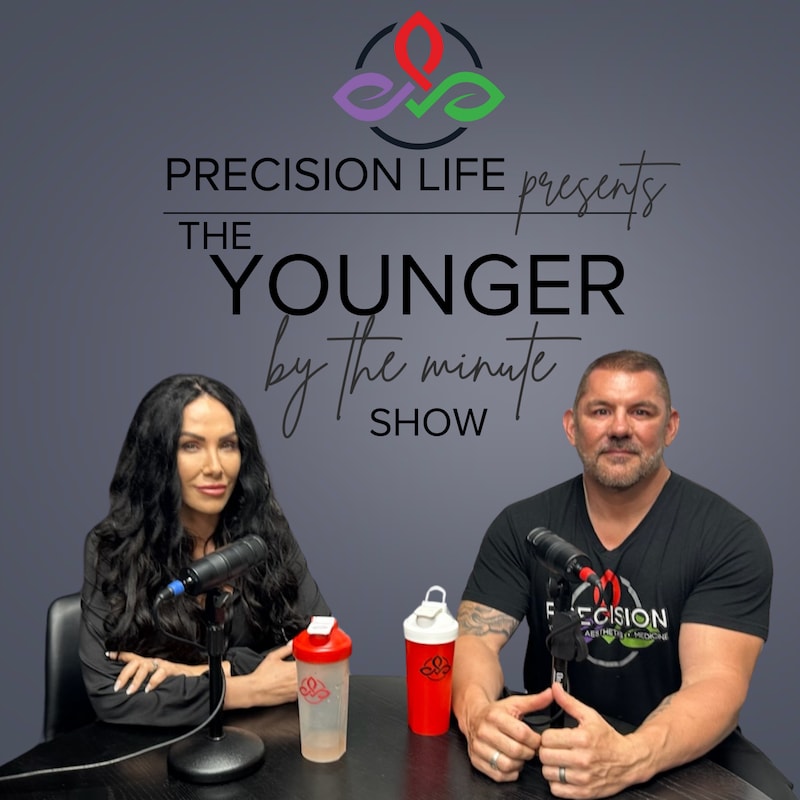
Shownotes
What if modern aesthetic medicine stopped chasing trends and returned to science, safety, and patient outcomes?
In this episode of Younger By the Minute, we sit down with Dr. Daniel Suissa, a board-certified plastic surgeon known for his evidence-based approach to body contouring and fat transfer. With advanced training in clinical epidemiology and a deep commitment to patient education, Dr. Suissa explains why aesthetic results should never come at the expense of safety.
We dive into:
- The science behind fat transfer and regenerative aesthetics
- Why lifestyle, nutrition, and movement directly impact surgical outcomes
- How his Soft Sculpt technique improves precision, comfort, and recovery
- Common aesthetic myths that need to disappear
- Why avoiding unnecessary anesthesia can dramatically improve recovery
- What patients should do before and after body procedures to maximize ROI
This is a must-watch conversation for anyone considering body contouring, injectables, or aesthetic procedures, or for providers who want to practice medicine with integrity in a noisy industry.
🎧 Topics include: fat transfer, liposuction safety, body sculpting without general anesthesia, patient education, recovery optimization, and regenerative aesthetics.
⏱️ Chapters
00:00 – Introduction
01:17 – Who is Dr. Daniel Suissa & why science matters in aesthetics
02:14 – Why he chose plastic surgery
07:18 – The role of epidemiology & evidence-based medicine
10:38 – Why safety must come before aesthetics
12:04 – What is Soft Sculpt & how it’s different
15:42 – Improving outcomes through better tools & technique
18:16 – Fat transfer vs implants & injectables
23:02 – Ethics, balance & long-term aesthetic integrity
25:15 – Who is the ideal patient for fat transfer?
28:55 – How lifestyle affects surgical results
32:47 – Post-procedure recovery & what actually works
36:57 – Aesthetic myths that need to disappear
40:03 – Training, body composition & natural results
42:43 – Final thoughts on confidence, health & longevity
Connect with Dr. Suissa on Instagram https://www.instagram.com/squlpt
Sponsors / Mentions
Precision Life • Precision Fitness • Precision Aesthetics • Precision Medicine • Trueline Media Group
If this helped, like, subscribe, and share with a friend who’s ready to design their next chapter.
About Precision Life:
We integrate training, nutrition, functional medicine, and regenerative aesthetics for results that look natural and last.
Our goal is to help you live your best life.
Find out more about Precision Life at https://precisionlife.io/
Follow us at :
Jamie:
Facebook: https://www.facebook.com/jamie.speiser.5
Instagram: https://www.instagram.com/thejamiespeiser/
Jennifer:
Facebook: https://www.facebook.com/jennifer.hollow.9
Instagram: https://www.instagram.com/thejenniferspeiser/
Precision:
Facebook: https://www.facebook.com/precisionlifestl
Instagram: https://www.instagram.com/precisionlifestl/
Trueline Media Group
https://www.truelinemediagroup.com/
Transcripts
Hey. another episode of Younger
by the minute.
2
:I'm your host, Jamie Speiser,
and I'm always here with my other half.
3
:I'm Jennifer Speiser,
and I'm super excited today
4
:because we have an incredible
special guest, a physician
5
:whose reputation is rooted in science,
safety and innovation.
6
:Doctor Daniel Suissa is a board certified
plastic surgeon.
7
:No, not only for his surgical skill,
but for his deep commitment to evidence
8
:based esthetic medicine with advanced
training and clinical epidemic
9
:epidemiology,
he brings a level of scientific
10
:rigor that is rare in our industry,
and it is rare.
11
:What truly sets Dr.
12
:Suissa apart is that he blends
data, artistry and patient education.
13
:He is an active researcher,
a peer reviewer for the top
14
:medical journals, and the mind behind
transformative approaches.
15
:His approaches to body contouring,
which includes his world
16
:renowned New technique called Soft Sculpt,
which I'll let him get into.
17
:But from how training and nutrition
can augment surgical outcomes to the rise
18
:of minimally invasive body shaping,
to how his patients
19
:can make safe, informed decisions
in a world full of noise.
20
:Doctor Sweets that brings
the kind of conversation we love.
21
:Science first
honest, transparent and patient centered.
22
:Second, welcome to the show.
23
:We are honored to have you welcome.
24
:I know I'd like you to go ahead.
25
:Well, and like I said, before we joined,
we had already heard of you.
26
:So it was funny when we got,
you know, connected.
27
:I was like, this can't be real.
28
:So yeah, I'm very excited to talk to you
and just learn more about you.
29
:Thank you.
30
:We appreciate. You.
31
:And the next time we're down in Florida,
we're going to have to come see you right?
32
:Yeah, yeah.
33
:So I guess we'll just start basic.
34
:You know, we just kind of get like how,
how and why did you get into plastic
35
:surgery?
36
:Right.
37
:Right.
38
:answered this question before
and I think this is,
39
:you know, the honest truth is that part
40
:of it was,
41
:It you.
42
:Right.
43
:too. That's been fun.
44
:And so it's,
I think it's an incredible specialty.
45
:I think medicine is a
is a it's a privilege to
46
:Yeah.
47
:You know, I love that.
48
:I know it.
49
:Like you said, it's a basic question,
but I love how you answered that because,
50
:you know, I can relate.
51
:And so many people that I've talked
to is like, I got into it because I like
52
:at first, what got me into
is I used to like fixing cars.
53
:And then I started fixing people.
54
:But, you know, you brought up TV shows
and it just brought me back to like that.
55
:The early 80s, late 80s fitness shows.
56
:And I always used to watch them, you know,
because, you know, for me, growing up,
57
:I was put into a bodybuilding gym
when I was 13, and I just always strived
58
:like I want when I get older,
that's how I want to look.
59
:And so that's
what kind of drove me into it.
60
:So kind of like you said, like,
what's my answer?
61
:So when I answer, that seems generic,
but it is raw, it's honest
62
:and it's very truthful.
So I love your answer.
63
:I think it was great.
64
:And thank you for bringing me down
memory lane with old 80s fitness.
65
:Show as. Well. And I. Guess.
66
:I think
it also speaks volumes to your passion
67
:because as you mentioned in the beginning,
say you wanted to be a plastic surgeon.
68
:That doesn't mean that
that's where you're going to end up,
69
:because it is very competitive.
70
:And I don't know if everybody knows that.
71
:Right?
72
:Like, you have your path,
73
:but it depends on where you're going
to get your fellowship.
74
:And residency
and what they're going to let you do.
75
:So it's hard and you know it.
76
:You have to be passionate about something
that's hard because I believe
77
:that you have the longest fellowship
in residency besides neurology.
78
:Correct?
79
:Yeah, it's.
80
:Right, right.
81
:Like who's cut out?
82
:100%.
83
:Because that is something like we talked
about the noise in the esthetic industry.
84
:And I've been in it now since 2004.
85
:And there's so much noise
and there needs to be a change.
86
:And this is not
what this podcast is about,
87
:but in how, you know, the mid-levels
and the other providers do their work.
88
:So I, I hear you there because we need
we need more of that from everybody else.
89
:That's in doing different types
of esthetic medicine in general.
90
:How how do you think also having clinical
91
:training and epidemiology
plays into you as a plastic surgeon?
92
:right?
93
:That's what my father does, is
94
:the world renowned epidemiologist, teaches
all over, gives talks all over.
95
:He's been on boards of huge pharmaceutical
companies, you know, for expertise.
96
:And so I, I mean,
I realize the value of that very early.
97
:And the other thing I realized is
98
:it wasn't as common,
especially when I was doing it.
99
:And I decided to, to pursue that.
100
:It wasn't as common in surgery.
101
:I think now there's more
102
:and more of that trend
to kind of understand research better.
103
:There's there's a bit more of that,
which is great, which is so important,
104
:because ultimately there
105
:Yeah.
106
:the pressure
107
:to publish, if you don't publish,
you'll never get tenure.
108
:If you don't publish, you'll you won't be
able to be a professor in this universe.
109
:You don't publish,
you're not going to get grants and funds.
110
:So there's a lot of pressure to publish.
111
:And unfortunately,
that leads to sometimes,
112
:you know,
I'm not saying this intentional, right.
113
:It's not intentional,
but it leads to more mistakes.
114
:And when you get a lot of different types
of studies, some good,
115
:some average, some bad,
you need to know how to differentiate.
116
:You need to know how to read them
to understand, okay, this is high
117
:Right.
118
:Well and I think it also speaks volumes
to how you were able
119
:to create your soft scalp
because you have been taught with
120
:in a way that makes you want to analyze
so you can discern things.
121
:So it's all about how you can even make
a micro adjustment
122
:to bring in a better result,
to yield, yield a better patient outcome.
123
:And that is also something
that's very much
124
:needed in the world of esthetic medicine.
125
:Because you said it very well.
126
:Like now we have more people doing
injectables, more people doing surgeries,
127
:more people doing liposuction
that aren't even plastic surgeons.
128
:And they
129
:they really don't have the good basis
or the good foundation underneath them.
130
:And it is creating some issues.
131
:And I think that's
where people don't always know
132
:what they're getting
when they go into an office.
133
:So I think it really helps to augment
what you already do very well.
134
:And I think that's
probably what sets you apart.
135
:we do, and
136
:it always starts with
I mean, esthetic result is a given.
137
:You have to and you have to do your best
138
:and you have to prepare people
mentally in terms of expectations.
139
:Never overpromise. Right.
140
:It's more like under-promise overdeliver.
141
:But safety comes number one.
142
:Safety is an obsession.
143
:In fact, honestly, like
144
:people who know me
well would be saying, yeah, it's
145
:they've the everything
146
:I'm guilty.
147
:Yeah.
148
:Well.
149
:Now, yeah.
150
:Not even applies to life.
151
:And I just think that some of us are wired
a little bit differently.
152
:And, you know, I always say that
153
:for every you know, personality trait,
that is a benefit.
154
:So like, being a perfectionist
is, is good.
155
:You're going to be very detail oriented,
but it's also
156
:really it in on the other side
to make sure
157
:you know where you where it bleeds into
who doesn't end up biting us.
158
:Yeah.
159
:All right. I get that.
160
:So I would love to hear more
about the soft soft sculpt technique
161
:and what that is and how you came
to, you know,
162
:start to do it.
163
:Tesla
didn't invent the car, you know, I mean,
164
:you know, they didn't invent the car,
but they didn't even
165
:Right.
166
:and at least believing that we're having
167
:a huge impact on the world, I think that's
what it's that's what it's about, right?
168
:I mean, no, you're right.
169
:Are we wrong?
170
:The batteries.
171
:Yeah.
172
:others, which sounds cliche,
but it's the truth.
173
:You know, it takes years to realize that.
174
:Because we don't know
that when we're teenagers, you know?
175
:So, I, I, I think I,
176
:I do the,
you know, you do the absolute best you can
177
:and you always push it forwards and you,
178
:it always has to be with your heart
in the right place, I think.
179
:And I think that's the key, you know,
it can't be about money.
180
:It can't be about success.
181
:It can't be about visibility or fame.
182
:It can't be, can't be.
183
:Those things
need to be out of the picture.
184
:It needs to be
about, you know, the patient.
185
:Yeah.
186
:Well, no, I actually loved it because it,
187
:it did veer off, but it's actually what
I think everybody needs to hear
188
:because I don't think
that a lot of people do take that oath.
189
:You know, some people
do have the wrong intention in mind.
190
:And you're right.
191
:If you if you do things with a good
with a good outlook
192
:and your moral compass
aligned with whatever faith you believe in
193
:and just do it and you just keep pushing,
you will end up getting there.
194
:And sometimes it can be hard,
and that's what has to keep you going.
195
:In regards to the treatment,
196
:you know how. Yes.
197
:How do you do it?
198
:what I was trying to say.
199
:Maybe I'll just go a little more precise
here, but basically we
200
:makes it more comfortable, also safer
because you can get nerve damage
201
:from those vibrations,
if it's safer and more comfortable
202
:where he's
203
:Right.
204
:stainless steel and all materials
that don't leach
205
:microplastics into the patient's fat,
because those are going to be re injected.
206
:So everything is thought out.
207
:Little details
did we reinvent the wheel. No.
208
:But we try to improve it.
209
:You know one little advancement at a time
and make the patient
210
:the patient, you know, more comfortable
make it safer for the patient.
211
:Make it better for the surgeon,
212
:and just try to,
you know, bring the specialty forward.
213
:And, you know, if everybody does
a little, little contribution
214
:like this here and there,
I think we get there.
215
:In terms of the techniques,
it's the same thing.
216
:So that was the technology.
217
:The you.
218
:That.
219
:Yeah. Well
220
:as someone who has had liposuction
and it has a less than desirable outcome
221
:from all the things
222
:that you mentioned that you got away from
cannula was too large, you know
223
:placement of you know the incision sites
were a little bit too big.
224
:All those things
I feel like a lot of patients
225
:or listeners might not understand, like,
you are able to really sculpt
226
:the body without needles or stitches
and you can really,
227
:really contour someone's figure
and they don't even have to go under.
228
:General anesthesia
because it's comfortable.
229
:And then you're taking all these steps
to make sure that they're not getting any
230
:infection as well.
231
:And that's it's huge. It's huge.
232
:Can even get away from the plastics,
233
:get away from the plastics
and everything else like that,
234
:because that's going to cause
inflammation, which is going to impact
235
:recovery time,
which is going to impact desired outcome.
236
:Yeah. Those are, as you say,
they're little steps.
237
:But just like in the surgery,
you know, just a two millimeter incision
238
:or just like anything like Tony
Robbins talked about,
239
:just a two millimeter
shift can create generate a big outcome.
240
:Yeah.
241
:And make
242
:you just have less downtime
and more come for it.
243
:And like you said,
244
:you're actually giving yourself
and those that do this more precision.
245
:And I think that's also a very big thing
because some of that equipment's
246
:really heavy.
247
:You know.
248
:Ahead, it may.
249
:Yeah.
250
:it is.
251
:Something meant you need it.
You have no choice.
252
:It's it's it's important.
It has changed medicine.
253
:I am not anti anesthesia at all.
254
:Thank God for anesthesia.
255
:But if you can avoid it,
256
:like in our case, well,
then the patient gets to move around.
257
:They're more active.
258
:They avoid those blood clots
that you get from not moving around.
259
:And the recovery is better because you
were not knocked out for several hours.
260
:You're breathing on your own and people
just feel less down than they do.
261
:Those meds have a tendency
to put people down
262
:for sometimes a few days,
sometimes a week,
263
:and that's a critical period
where you want to be moving.
264
:Our patients are walking around,
265
:so these are all little things
that kind of play in.
266
:And then we take that fat,
267
:we process it like we were saying
with those glass canisters, a bunch of,
268
:you know, patented technology
to make it clean and safe.
269
:And we use that fat and
270
:You said
271
:well and I love
that and I love your morals and ethics
272
:because there's a lot of fads out there
and you're
273
:keeping true to what the integrity
of what esthetics means.
274
:Esthetics is balance.
Esthetics is symmetry.
275
:Esthetics is as much as we can.
276
:And so I really, really do like that
because you can get caught into the trap
277
:where people are a little bit
proportionately distorted,
278
:and it's just not the best for the patient
long term.
279
:Because look at even the Kardashians,
they're, they're I think they're,
280
:they're even smaller now, you know.
281
:So like they had this. Yeah.
They're I think. They're under six.
282
:Look I know but it's it's really true.
283
:And you're since Covid for me
as an injector.
284
:And I have stopped
using a lot of injectables,
285
:I try to keep it extremely regenerative.
286
:What whether it's using PRF,
obviously I can't harvest and re inject
287
:fat in my practice,
but I've thought about that
288
:because the long term, you know,
risk versus benefit with patients
289
:as mast cell activation
syndrome has become prevalent, as you know
290
:all these all my patients hormones change
and they're mostly women
291
:and they're more prone
to autoimmune issues.
292
:You have to think about whatever you did.
293
:And injectables are an implantable thing.
294
:And so you have to think about what you're
putting in your patients.
295
:And fat is your fat.
296
:And it's it's
what you're doing is very ethically sound.
297
:And I love it.
298
:I like I said,
I'm going to have to come down, but.
299
:Well, thank you.
300
:And a key point to like,
you know, you keeping things natural.
301
:Because I at one point in
time was used to prep
302
:a lot of people
for bodybuilding shows, mainly women.
303
:And so you could definitely tell
when you pull women
304
:down to that low of a body fat percentage,
you can literally see
305
:the implant lining,
especially as they start to move.
306
:So, you know, for some women that can be,
307
:you know, cause,
insecurity and stuff like that.
308
:But, you know, when you're coming at it
from a more natural state,
309
:obviously
you're not going to see that part.
310
:So I think it's it's I think
it's a pretty, pretty cool procedure.
311
:And I think it's definitely one
people should definitely be looking into
312
:when they're looking into augmentation
of either bras or glute.
313
:Well, and that brings me up to a question
I wanted to ask you.
314
:So what is your ideal patient?
315
:Do you want them to be at the stable
weight that they would generally be at?
316
:Like,
I don't know if a competitor going up
317
:and down would be the best
once they start to invest into this.
318
:But like somebody
that's at their goal weight,
319
:you know, they're not too overweight,
but they're at that perfect body
320
:fat percentage.
321
:What's your ideal patient body
fat percentage or just patient in general?
322
:Yeah.
323
:See that's what I do.
324
:Yeah.
325
:That's.
326
:I'm there with you.
327
:Yeah.
328
:Right.
329
:I think it depends on the body shape.
330
:It depends on what the person
is trying to achieve.
331
:Are we just removing a bit?
332
:Are we trying to augment the breast.
And you're very thin.
333
:And then I need to kind of figure out
where I'm going
334
:to get the fat that I need,
335
:which surprisingly, even in very petite,
thin women, it's
336
:incredible how much they're always like
that came out of me.
337
:You know, it's it's always impressive.
338
:You know, the first times I would do it,
339
:What?
340
:It's full of stem cells.
341
:So take it, put it back,
put it in your face.
342
:At least.
343
:Back.
344
:You can do.
345
:But it's full of stem cells, too.
346
:It's just so good for you.
347
:And what do what do you wish
patients would understand
348
:before surgery about the role that
their lifestyle plays in their results?
349
:enough fiber or, you know, like it's.
350
:Did you put sunscreen like, the list of,
like, you can't do anything and it's stuff
351
:you know, you believe in as a physician,
you balance.
352
:You have to balance life in there.
353
:And it's it's not always easy.
354
:I can tell you what's optimal.
355
:And so what I try to do with my patients
is and what we try to do is, look,
356
:give me six weeks,
you know, give me six weeks of your life.
357
:I'm not going to never drink again.
358
:Never smoke, never nothing.
359
:But give me six weeks, you know, stop
before you put good stuff in your body.
360
:Be healthy, exercise, sleep early.
361
:Live a healthy lifestyle
which the truth is, almost every
362
:everybody knows what it is, right? Today.
363
:Everybody has access to information.
364
:Hey healthy lifestyle.
365
:What didn't burn it comes out.
366
:It's it's it's almost so accessible
that the point is,
367
:the reason we're not all doing
it perfectly is because it's tough.
368
:But if you ask somebody,
hey, can you do this for me?
369
:For six weeks?
370
:Maybe they won't be perfect,
but they're going to do way better
371
:than if you say,
I need you to do this forever.
372
:You know, I have a buddy of mine.
373
:We might.
374
:We're at the age where you start
getting tested for cholesterol.
375
:You know, like,
thank God everything's good over here.
376
:But, but, like, my buddy tells me,
he's like, I have my cholesterol.
377
:You know, they're taking my blood
in, like, two weeks.
378
:So I stopped eating cheese.
379
:I started this,
I've been on the treadmill every day.
380
:I'm like, but,
381
:Right.
382
:Yeah. I.
383
:It will have an impact on your experience.
384
:It will have an impact
on how nervous you are.
385
:The morning of
it will have an impact on on, you know how
386
:you feel after the procedure,
how you recover from it,
387
:how mobile you are, how well you sleep
the first few nights,
388
:all of those things will and probably
even the final result, to be honest.
389
:And, you know, things
that are sometimes hard to prove.
390
:But you kind of have to wonder
if I do everything right just during
391
:that time of pre-op and healing,
you're going to get better results.
392
:You're going to have a better
experience. You're going
393
:Yeah.
394
:I think, you know, you nailed that there.
395
:You know,
396
:six weeks is a good enough window of time
for them to establish some good habits
397
:that if they start to fall off the wagon
398
:a little bit,
they're going to start feeling worse.
399
:And hopefully that's the catalyst
to keep them going.
400
:But also kind of reinforcing
the fact of like,
401
:you're getting ready to spend
quite a bit of money on this.
402
:You might as well maximize your ROI
on this by taking care of yourself
403
:the way you need to
to get the desired outcome.
404
:I mean, that's
405
:that's exactly what we preach,
which is just even with our nutritionists.
406
:You know, if you're going to do six month
of nutrition with us,
407
:our goal is to maximize it
and get the most ROI of this.
408
:But also establish
good patterns and habits.
409
:So you continue this long, long term
and you don't lose the ROI in any year.
410
:And you know,
you spent the money for nothing.
411
:There we go.
412
:Love to.
413
:Yeah.
414
:Right.
415
:That's true. Yep.
416
:Correct.
417
:Get you great traction.
418
:What is your favorite thing
or what's in your protocol post procedure?
419
:Do you guys incorporate lymphatic drainage
or anything like that?
420
:Peptides.
421
:approved.
422
:But they sound like at least
423
:some of them have a lot of, potential.
424
:And, you know, I think research is going
to start trickling in
425
:and it's going to start supporting this.
426
:And, you know, the FDA is always behind.
427
:Sometimes the FDA ends up being right.
428
:Hey, no, no, no, it was a good thing
we didn't happen. Sometimes they're wrong.
429
:And that's medicine.
430
:Medicine
431
:Yeah. Yep.
432
:Yeah.
433
:Yeah.
434
:Right.
435
:But eight as put 0.8 kilograms.
436
:Yeah.
437
:Point eight per kilogram of body weight.
438
:Yeah.
439
:Yeah.
440
:Yeah.
441
:that I
can support with good medical research.
442
:And, that
443
:That's.
444
:Yep. Yeah.
445
:And when you're ready like we,
we can definitely all help each other
446
:with a variety of things
because peptides are they are.
447
:But it is a gray area. And I get that.
448
:You know I understand
where you're coming from because
449
:I often thought that the less
than desirable outcome that I had one
450
:I know it was provider
it whenever I'll have you do an assessment
451
:and we can even share it
with the listeners.
452
:But I thought, okay, maybe
lymphatic drainage would be the answer.
453
:And then I had another surgeon assessed me
and he was like, no, it wouldn't have.
454
:So it's just very interesting
because those are the things that you see
455
:on social media.
456
:And then the consumer,
even when they come into my practice,
457
:has this idea of what's right
and what's wrong.
458
:And, you know,
so I'm glad that you're debunking this
459
:and really talking about those trends.
460
:Speaking of that, what is one esthetic
myth you wish would disappear
461
:that.
462
:it melts away
463
:that a lot of people still to
464
:yourself and bleed
465
:and after it stops bleeding,
you get that liquid serum that comes out.
466
:That's clear, right?
467
:That's fluid lives in our tissues
468
:Yeah.
469
:I'm really glad you brought that up,
because again, with me prepping people
470
:for shows and the fact
I've been a personal trainer for 25 years,
471
:that's a really common thing.
472
:I get asked a lot
473
:when I'm still training clients,
you know, is what is my thoughts on that?
474
:And it's like, well, that that's not
my area of expertise and stuff like that.
475
:My goals squat more, lunge more like,
you know, build the muscle.
476
:But it is good to know because now,
now I have, you know, answers.
477
:I can go back to them with and reassure
them that is something they seek out.
478
:At least I can give them some information
to kind of debug something
479
:they might be hearing well.
480
:And genetically some people's like glutes
just won't grow or,
481
:you know, they I mean literally
you can put the fat anywhere.
482
:So that's the even the face.
483
:It's got to go somewhere.
484
:But you know, for somebody
485
:that has a smaller glute,
like I've been wanting a BBL forever. So,
486
:but it's
487
:just I do think that
it is definitely still, I even hear peers
488
:that say that, you know, and it is a myth.
489
:What is one thing every patient should do
before a body procedure?
490
:And before you answer that,
do you believe in augmenting
491
:what you do with things
like personal training?
492
:Because that's your health
493
:and your exercise I.
494
:Awesome I love it.
495
:So if somebody wanted to find you
you have an Instagram page
496
:I believe it's soft sculpt. Correct.
497
:Squlpt. That's it.
498
:S-q-u-l-p-t .
499
:Sculpt with a Q. That's awesome.
500
:And is there anything
that we didn't touch on that
501
:you would like the listeners
to know about?
502
:you have all these roles in life,
503
:and we love
504
:I just
505
:yeah,
506
:I say.
507
:I say it all the time.
508
:We have to be selfish to be selfless
509
:and, you know, taking an hour or so hour
out of the day
510
:just to be selfish so you can be selfless
for the rest of the day.
511
:It's just an hour. Yeah.
512
:So. Well.
513
:And even feeling like doing something
to make it to boost your confidence,
514
:that's the one thing I love about
our industry is there are things.
515
:And God bless all these things that we now
516
:have, or surgeons like you
that are even modifying and improving
517
:upon procedures that can help
people feel good in their own skin.
518
:Because when you feel good
and you look good, you do good.
519
:You're just better.
520
:You're a better,
you have better impact on the world.
521
:And nobody should feel that way.
522
:Like he got a hair transplant
this summer and,
523
:you know, it's just you just
everybody deserves that.
524
:And we have the resources, so why not?
525
:Right.
526
:Well, thank you.
527
:Thank you so much. Yeah.
528
:Thank you for your time today.
529
:We know you're a busy individual.
530
:We really appreciate the getting to know
what you do more and to get to know
531
:you more.
532
:So and like we said,
533
:the next time we're down in that Florida
area will be looking you up.
534
:Next.
535
:I'll get you taken care of.
536
:We'd be honored to have you.
537
:And yes, maybe we'll be able to come down
and I'll be a patient as well.
538
:So thank you.
539
:Have a great day.
540
:much. You guys are
Thank you. You too. Take care.
541
:Bye. Hey.
