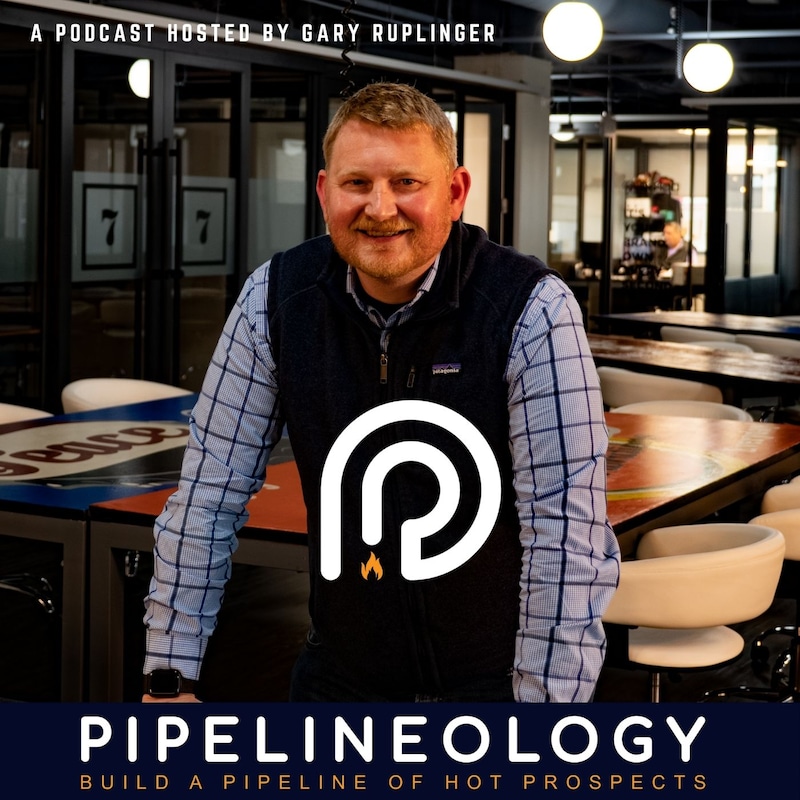
Shownotes
In this episode, Gary welcomes Kris Rudeegraap, co-CEO and co-founder of Sendoso. Kris shares his decade-long entrepreneurial journey, from working in sales roles at various software startups to founding Sendoso in response to the saturation of email marketing. Throughout the conversation, Kris delves into the innovative solution Sendoso offers: a platform for automated, personalized direct mail and gifting aimed at improving sales engagement and building better relationships. Key topics include the evolution of sales enablement, the decreasing effectiveness of email as a sole channel, the benefits and methods of personalized gifting, and how Sendoso utilizes AI and data to optimize gift selection and delivery. Kris also discusses effective strategies for integrating gifting into various stages of the sales funnel and provides practical advice for businesses looking to adopt this approach. For those interested in exploring new ways to engage prospects and customers, Kris offers insights and resources available through Sendoso's platform.
00:00 Introduction and Special Guest Announcement
00:26 Kris Rudeegraap's Entrepreneurial Journey
03:26 Challenges and Evolution in Sales Strategies
04:47 Effective Marketing Channels and Tactics
08:32 Personalized Gifting Strategies
13:12 Addressing Common Concerns and Misconceptions
20:12 Implementing and Scaling Gifting Solutions
24:02 Conclusion and Contact Information
Sendoso.com
https://www.linkedin.com/in/rudeegraap/
Kris@sendoso.com
Transcripts
[00:00:17] Kris Rudeegraap: Yeah. Thanks for having me on. Gary. Excited to chat.
[:[00:00:22] Kris Rudeegraap: You did it, yeah. Good job.
[:[00:00:36] Kris Rudeegraap: Of course. So, I started Sendoso almost 10 years ago. Prior to that, it spent about a decade previously at various software startups in San Francisco, mostly in sales related roles. And it was at my last company, company called Talkdesk, where I was in a, in a sales role. And I had seen the, the kind of the oncoming of all of these new sales enablement tools.
This was the, when Outreach and SalesLoft and ToutApp and Yesware and, and some of the early ones came on board and I thought hey, there's gonna be way too much email and email's gonna saturate the market, which is ironic 10 years ago, to think that. But I thought hey, what else, what else is there to do, if email's the lifeblood, to grab the attention of prospects and build better relationships?
And so I manually was testing out writing handwritten notes out, hearing a dog bark on a call and going on Amazon, finding a dog toy or sneaking into a marketing closet and grabbing swag and shipping it out to prospects. And it all worked really well. It was just a manual nightmare to like track it, pack boxes, get tracking links, expense report things, and
so I just dreamed up of a solution that I wanted. Which was a platform that allowed me to like click a button in Salesforce on a contact, and voila, something was boxed, packed up, note was written, shipped out, and then tracked all for me in one on easy solution. And so at the time, there really wasn't anything out there for me for this kind of automated software driven direct mail and gifting.
So I started it and invented it and here we are 10 years later, Sendoso has raised 150 million in funding, hundreds and hundreds of millions of in revenue and, and gifts and direct mailers spent on our platform. And it's just been really cool to see the evolution of the company, the platform, this, the go to market space in general over the last decade, and learned a lot along the way.
[:[00:02:48] Kris Rudeegraap: Mm-hmm. Yeah.
[:[00:02:55] Kris Rudeegraap: Yeah, or unfortunately, it sits like 10th on your to-do list and then you never get to it. And that's the worst case scenario because then you're missing out on all the opportunity or pipeline created or influence that you could be getting if you had more resources.
[:[00:03:26] Kris Rudeegraap: And I think, I think a decade ago or even five years ago, you could still get away with just like spray and pray email and just go, go, go. Email, email, email. And it worked so well. But I think over the last handful of years, from what I'm hearing with our customers, even from internal, is that email as a sole channel by itself is no longer effective to just build a hundred percent of your pipeline and you need to use other channels.
All by direct mail, gifting is one of them, but social and events and the whole gambit in order to grab someone's attention in this kind of noisy world we live in today.
[:[00:04:06] Kris Rudeegraap: Yeah.
[:[00:04:20] Kris Rudeegraap: Mm-hmm.
[:[00:04:28] Kris Rudeegraap: Yeah.
[:[00:04:40] Kris Rudeegraap: Yeah.
[:[00:04:55] Kris Rudeegraap: Yeah, so you know, it's we, we are in a fun space because we market to marketers, sell to sellers. So it's like we have to be on our toes and we have to be one step ahead. Because our buyers can sniff out, you know, spam easy. So we like to have fun with the creative aspects of, of go to market. Some of the channels have been working really well for us lately.
Field events, both intimate dinners, experiential events like, you know, golfing, golf outings, or other unique, you know, happy hour type events have been working really well for us. We drink our own champagne, I like to say that, versus eating our own dog food. Because no one wants to eat dog food.
[:[00:05:37] Kris Rudeegraap: Well, I mean, drinking champagne's much better. And so we do a ton of Sendoso usage across the entire funnel. Whether that's top of funnel, mid funnel, bottom funnel, even into the customer life cycle. So that works really well for us. We've gotten good at cold calling and using LinkedIn, so again, I'm a believer in, you know, leveraging more channels to, to grab people's attention where they are.
LinkedIn for me has been really effective as a channel. We've doubled down on AI for outbound, which, you know, I think some people have said oh, these AI SDRs suck, you know, and that's gonna be a problem. We kind of took another approach where we do have AI SDRs on the inbound side. They work tremendously well for scheduling, for quick question answering,
and that has been super effective on the outbound side. We've gone to more of a heavy, like Clay, AI automation focus where AI is doing some of the list, building some of the messaging writing, some of the orchestration, but there's still humans in the loop. And a lot of humans are still responding to, to outbound emails there.
And we still do email, but it's, it's just not as effective as it used to be, which is why we've integrated in many other channels too.
[:I was sending it to chiropractors in the area where I lived and it was like, send out 15 messages and somebody's gonna reply.
[:[00:07:29] Gary Ruplinger: It was,
[:because you're just getting so much more of it.
[:I don't even want to talk to. I don't even call my mother, I FaceTime with my mother.
[:[00:08:32] Gary Ruplinger: Let's, so I, I would love to get kind of some, some ideas from you or things that you're seeing kind of working. I know you said you're kind of using it from top to bottom in the funnel. I was wondering if you, if you could kind of give us some examples of things that have been working well for top, top of funnel, mid funnel, kind of bottom of funnel.
You know, ideas where, where gifting has been effective.
[:For example, you know, we've seen someone send out like this combo code locked bottle of wine and it's like hey, do you want to unlock your IT spend? Take a call and we'll give you the code. And so it's typically the, the message and the gift resonate with the solution the seller or marketer is, is pushing.
I think that works really well. We also see top of funnel where we have this AI Smart Suite tool, and then, and SDR could go do this on their own, but they're gonna go out and research and say hey Kris, you know, likes golfing. Kris has a dog. Kris lives in California. Hey, I think I'm gonna send him a box of golf balls.
And maybe a little note around like hey, take a swing on this new solution, you know, and have some fun message associated with it. So, having a personalized gift to the individual works really well. And we can get into how our AI does that, but that's one tactic that works really well, that a human can still spend 15 minutes researching it or you can use technology.
Then I think it goes down to okay, you booked a meeting, or what's next? And you know, some customers use it for meeting show rates. You know, if you've spent all the time getting someone to say they're gonna take a demo, but you're only getting like 50, 60, 70% show rates, what next? So he is even sending like a, a Starbucks gift card or a DoorDash gift card the morning of
a, a demo can increase show rates by like 30%. And so doing something like that, you know, builds rapport. Then if it's a longer sales cycle, maybe it's sending a, a mailer out, grabbing their attention for an upcoming event and inviting them to like a nice exec dinner, or some kind of experiential marketing.
Then, you know, instead of the hey, it's Friday checking in on that contract, where is it? You add value instead and saying hey, it's Friday let me, you know, buy you lunch today. And send out a, you know, a, a DoorDash gift card for that. Or you see that they had some life event during the sales cycle.
Maybe you saw them getting a promotion. You send them a bottle of champagne and congratulate them. And so all these like little things build better rapport and create a buying experience that differentiates yourself. And I think in today's like, pretty commoditized, hyper competitive world, you know, a buyer might be looking at the buying experience and saying hey, these solutions seem semi similar.
Pricing is similar. But I like Kris. Kris, you know, is someone that stood out to me as a better person during the sales process. And I think that more sellers need to realize that as a, you know, a differentiator.
[:[00:12:01] Kris Rudeegraap: Totally.
[:I tell them every single, every single time. I haven't had to update the picture in months because I just tell them my mailbox is empty. The, I, I don't get anything interesting. Nobody sends me anything in the mail. At the one time I got one, it was six months ago and it wasn't even a very good piece, but I showed it to everybody.
Because like, this is the only things people are, are, are trying to send.
[:You know, you could already have their attention and you're just trying to build that longer term relationship.
[:[00:13:12] Kris Rudeegraap: And I think there's some misconceptions that like hey, I don't know what to send. And I think we've brought technology that can help with that or where to send that. We have got data technology there. Or even the misconception that it's expensive. I think some people will be listening and be like oh, I can send another email tomorrow for free.
But, you know, there's the, the, the opportunity cost where it's like, oh, well what if you sent a gift and booked a meeting tomorrow? But you sent like an email and it took you six months to book that meeting. Like, what's that opportunity cost or even the cost of gifts. It's like, sure, I earlier said a bottle of wine with a combo code lock that could be $70 to send.
We've even seen some companies send like an, an empty pizza box with a smart little message inside that looked like a slice of pizza, saying like, hungry for a new solution, try X, Y, Z. Which was like, you know, five bucks to send. So you don't have to get, you don't have to spend a lot. You can get creative and the creative creativity can differentiate yourself.
[:[00:14:16] Kris Rudeegraap: Yeah. So, there's a couple different ways. One is we have partner solutions that our customers use the, you know, ZoomInfos and Clays, and the, the list goes on and on. We then, have our own smart delivery feature, which, uses AI and data automations, and it'll actually look at a couple different areas. And it will look at
one, where is the recip- the recipient located through LinkedIn and other data sources. So, hey, Kris says he is in San Francisco, but Kris's nearest office is in Phoenix, so it doesn't look like he's in the office. But with that information we can then say hey, send to Kris's home address and we can use data sets to suggest his home mailing address.
So it's been a, a long term project where we can optimize where to send. Or we have a fallback option or even an option that some customers prefer, which is an address confirmation saying hey, I want to send you something. Hey Gary, can you confirm this is your address? And you're like, oh no, this is our old office.
Like, let me put in the new one because like, I, I don't want to miss this.
[:every once in a while somebody's using like a, a bank account transfer and I don't actually have it, but that's one out of 20 anymore, so.
[:[00:15:53] Gary Ruplinger: Gotcha. So I would love to get a little, kind of a little bit more about how you're actually doing the personalized individual gifting. Becuase that, that sounded really interesting. Because any, anything I've ever done in the past has always been like one, one to, you know, here's the thing, here's the, the hook.
And like, that's, that's what I'm going with. And I'm now you're gonna send it out to a hundred people or, or, or 50 people. I don't have a, well, Kris is into golf, but then, you know, Barry, he's, he's actually into bowling, you know, so I gotta find. That's, bowling balls are probably expensive to send, so maybe not, maybe not that, but.
[:[00:16:31] Gary Ruplinger: You know. So I'm kind of curious how you guys are, are approaching that because it sounded like you've got an AI solution that's actually effective at helping pick up some of those, those signals there for what
[:And we actually saw this a lot where, on our platform, it, we give the ability to let sellers have their own flexibility with their own balance and their own ability to go and send gifts. We also have a really unique Amazon integration where sellers can go into Amazon, find what they want, and then use our account balance as well as they can then ship it, it ships to our warehouse behind the scenes.
We unbox it, rebox it, ship it out with a handwritten note so it looks super personal. But over the years from learning that in the early days, we found that there was, you know, really one-off things like sending a New York Yankees fan a baby onesie that, that, they, you know, were gonna be happy about for a, an upcoming baby they were expecting.
And that's something that just super unique and you can't, you know, send that out to the masses. And so what we did is we, you know, really spent a lot of time looking with our customers on where were those gaps. And we really found that one, it was searching for the gift was gonna take a lot of time and searching for information about the recipient was taking a lot of time.
And so we built this massive database of information, of interests. We built these agents that crawl different social media and other sites. We even are releasing like a, a call recording intelligence. So even if a seller just got off a call and someone said they just got back from a skiing trip, that information is gonna be collected and used in the gifting algorithm and in the smart send engine.
And so all those combined gives us a really unique data set to say like Kris likes golf and Barry likes bowling. And then on top of that, we then have this global marketplace of items that can be drop shipped with notes. And so I think you have to piece that together. Because even if I know Kris likes golf, by the time I actually manually go buy something of golf and then write a note and pack it up and box it, it's a nightmare.
So we just make it a click of a button, with the gift suggestion to complete that send. And that really helps. We also couple that though with a smart message feature, which will craft the note, either hand, handwritten or printed that goes along with the gift too, so that you can even reference, you know, the golf gift with your solution, what you're trying to accomplish.
The call to action all in one, so it doesn't come across as cheesy or, or even sometimes sellers kind of have paralysis there. They're like, okay, I figured out what to send, but now I don't know what to say with the send. And then lastly was like the address. Because then it's like, okay, I figured out what to send and I figured out what to say, but now I don't know where to send it to.
And so we've figured all those things out, with the help of, of AI and data.
[:[00:19:39] Kris Rudeegraap: Correct. Yeah. We have fulfillment centers around the world, which was quite, the unique thing to scale, especially during COVID. Where we have, one of our largest facilities in Phoenix is like bigger than multiple Costcos. It's massive. It's like Amazon style facility. So we do that because we can help our customers with kitting.
We can really make sure they're, we keep their brand first and really think about ways that we can also save them money through economies of scale and, and kitting in bulk.
[:From there, I would love to kind of hear how, how you're, you're kind of thinking about that. If somebody says, I'm, I'm interested in adding this to our, you know, our, you know, business development pipeline. How, how do, how do we incorporate this?
[:So maybe it's less about top of funnel pipeline and it's more about how do we convert a part of the inbounds. So whatever it is, you know, most companies know where they need to optimize, and then from there, you know, we like to think about it as, hey, rather than putting in the effort to say, how do we do like a one-off test campaign?
We think about, hey, what does that, what's the buyer's journey look like if this was always on and evergreen? And that, that exercise actually takes about the same time as preparing a one-time campaign. And there's lots of proof, you know, and, and someone might listen and be like, ah, well what if I don't believe in this?
Well, it's like you gotta kind of believe in the fact that email inboxes are, you know, crazy that digital ads are too expensive or oversaturated. So what else are you gonna do? You gotta kind of believe in this or look at the data from, you know, the, the tens of millions of data points we have. And, and think about hey, let's, let's not put all the effort into just one time doing this.
Let's think about this as an evergreen. And then from there it's like hey, we know, you know, in our outbound example, for example, we might, we have a 12 step outbound sequence that is filled right now with cold calls, social, and email. Well, let's pick out two steps and, and put in a, you know, a mailer gift.
And then now that's as easy as, you know, whether it's one, it's an always, you know, one to many mailer, or it's a personalized gift, one-to-one. I think maybe pick between those two and then just go and turn it on and let it run. And you could do this yourself. You know, nothing that we're doing, aside from some of the data and AI layer is very proprietary.
You know, packing a box and shipping it out has been done for decades and decades. But, you know, if you want to automate this and not get stuck with the, the headaches of doing it yourself, that's where we come in.
[:[00:22:56] Kris Rudeegraap: Exactly, yeah, you definitely could run into the scenario where you start to do it in-house and then you start to do more and more and you're like, oh, maybe I can get the, the label printer. Ooh, maybe I can schedule FedEx to come pick this up. Ooh, maybe we could start doing, you know, moving these down to the other floor of the building.
Yeah. So, that's kind of how it a little bit started for me, which was, I mean, I was doing it myself, and then I kept doing more and more and more, got my teammates to do it, and then it became like a little mini mail room. And then really the costs were, you know, astronomical when you think about my labor costs of myself at the time, packing boxes versus outsourcing that too, so,
[:[00:23:45] Kris Rudeegraap: getting on calls and talking to prospects or
[:[00:23:58] Kris Rudeegraap: Exactly.
[:[00:24:17] Kris Rudeegraap: No, this was really fun. I think we covered a lot of interesting areas on like how to do it, how to get started, how to be different, misconceptions. So yeah, I think this was a wonderful conversation. If listeners want to dive in deeper, we've got a lot of interesting content on our website, or even personally I'm happy to jump on one-on-one with folks. So maybe we can include my LinkedIn URL in the show notes and happy to connect with people and chat one-on-one too.
[:[00:24:52] Kris Rudeegraap: That's it. You nailed it. And my email, Kris, K-R-I- S@sendoso.com too. So shoot me a note if you want to connect more on it.
[:[00:25:13] Kris Rudeegraap: Yeah. Thanks for having me on, Gary.