Shownotes
How does an independent band stay true to its roots, resist industry pressure, and survive for over three decades?
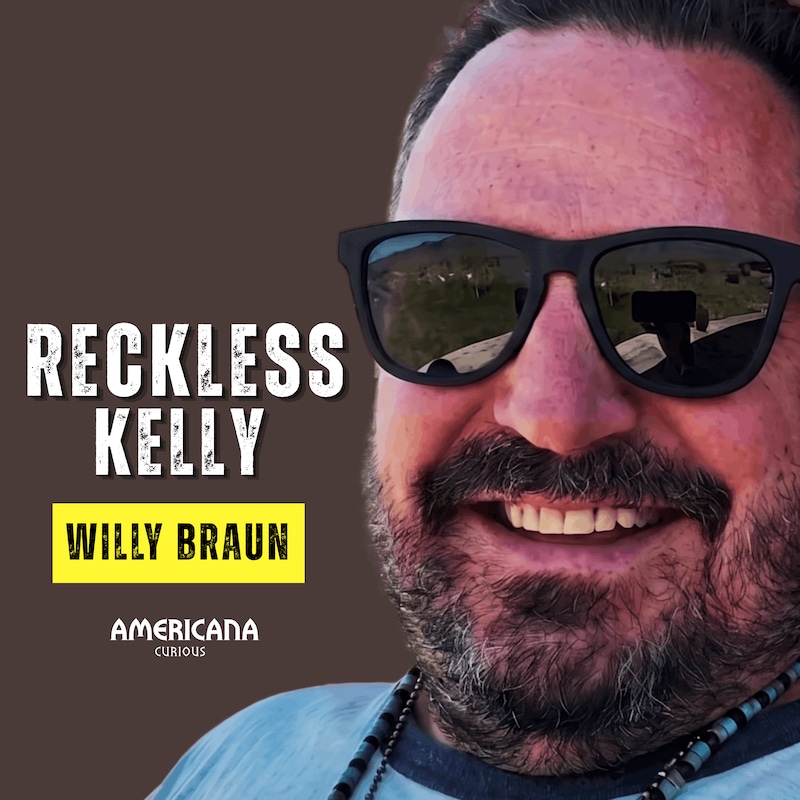
In this episode of Americana Curious, hosts Ben Fanning and Zach Schultz sit down with Willy Braun, frontman and lead singer of the legendary country-rock band Reckless Kelly.
Long before sold-out shows and a devoted following, the band survived by pooling "Band Bucks," sleeping on bar floors, and driving a banged-up $1,500 Suburban.
Willie opens up about their early days playing seven nights a week in Austin, getting a stamp of approval from icons like Joe Ely and Robert Earl Keen, and why they famously walked away from major Nashville labels who wanted them to "smooth out" their sound.
In this episode, we dive into:
- The "Band Bucks" Days: Surviving poverty and keeping a band together when you have no money to fight over.
- The TikTok Trap: Willie’s brutally honest advice to young musicians on why mastering your craft matters more than chasing viral moments.
- Alternate Roots: The story behind their new album and why they decided to re-record their classic crowd-pleasers.
- On Stage with Heroes: What it's really like to transition from a childhood fan to becoming the official backing band for Steve Earle and Joe Ely.
Grab a cold one and get ready to get Americana curious!
Connect with Reckless Kelly:
- Check out the new album Alternate Roots
- Grab tickets to the Braun Brothers Reunion Festival
Support the Show: If you enjoyed this episode, please take 30 seconds to follow the show on Spotify, rate us, and leave a review on Apple Podcasts to help more music lovers discover the power of Americana!
Transcripts
Reckless Kelly has spent more than 30 years doing something that most bands never pull off.
Speaker A:Staying together, staying independent, and building a fan base that never left.
Speaker A:Most artists eventually change trends, change their sounds, or burn out trying to survive.
Speaker A:So how does a band stay true to itself for three decades and still matter?
Speaker B:We started this 31 years ago, found a bunch of guys that were willing to be dirt poor for as long as it took and made the band the top priority.
Speaker A:That's Willy Braun from frontman of Reckless Kelly.
Speaker A:Long before sold out shows and a devoted following, the band survived by pooling money, sleeping on floors and betting everything on the music.
Speaker B:We all pooled our money.
Speaker B:We called them band bucks.
Speaker B:Somebody had 100 bucks, they threw it in the pile.
Speaker B:Somebody had 50 bucks, they threw it in.
Speaker B:That's how we paid rent and bought gas and basically we all just.
Speaker B:We were all in.
Speaker A:In this conversation, you'll hear how Reckless Kelly resisted industry pressure, built a career on their own terms, and created one of the most loyal fan bases and and Americana music.
Speaker B:If you guys want us, we'll do what we do, but we're.
Speaker B:We're not going to dumb it down to anybody.
Speaker A:You'll hear stories about growing up in a musical family, arriving in Austin with almost nothing, surviving the hard years on the road, and the decisions that help Reckless Kelly thrive while so many fans disappeared.
Speaker B:Once you got them, they're in.
Speaker B:It takes a long time to build up a following that way, but once you get them, they're yours forever.
Speaker A:I'm your host Ben Fanning and my co host is Zach Schultz.
Speaker A:And it's time to get Americana curious.
Speaker C:There's a road I'm on It's black top and gravel It's a faded blue line this road I travel and it's a wheel wall path It's a cobalt ditch It's a brave man sleeping on a dead and switch I'm rolling faster than locomotive Tougher than the edge of the rafters Hotter than a smoking gun Ragged as a road I'm on.
Speaker A:Raw, real road worn the artists we feature Art Chasing fame, they're chasing truth.
Speaker A:I'm Ben Fanning with my co host Zach Schultz and this is Americana Curious where we spotlight the unsung heroes of Americana music.
Speaker A:You'll get new songs, hard earned lessons, stories behind the music, and a big shot of inspiration.
Speaker A:Follow the show and rate us on Spotify and Apple and leave a review on Apple to help more people discover the power of Americana.
Speaker A:Let's get Americana curious.
Speaker D:Willie Braun, lead singer, welcome to the show.
Speaker D:So glad to have you, Mr. Reckless Kelly.
Speaker B:Well, thanks, man.
Speaker B:Sounds cool when you say it like that.
Speaker D:Oh, man.
Speaker D:Yeah, we're gonna.
Speaker D:You are cool.
Speaker D:You are cool, sir.
Speaker D:So most bands don't survive long enough to become legendary live bands, but Reckless Kelly certainly did.
Speaker D:What did you guys figure out that other bands never do?
Speaker B:Well, Cody always says we never had any money to fight over, so that was one of the secrets.
Speaker B:No, I think it really comes down to, like, we.
Speaker B:We started the band back when you could still do that.
Speaker B:Like, I don't know, it's kind of.
Speaker B:I can't imagine trying to start a band now with the current climate in the music industry.
Speaker B:You know, it's always been a little tough, but, you know, with nobody buying records and how Expensive Gases and all that other stuff that changes, you know, all the time, it'd be a really tough time to start a band now.
Speaker B:But we started this 31 years ago and basically just found a bunch of guys that were willing to, you know, be dirt poor for as long as it took and, you know, dedicated, you know, their time and, you know, made the band the top priority back when we were starting out.
Speaker B:And, you know, we've found guys that we wanted to hang out with and, you know, believe it or not, we all still really get along really well and we still like each other and, you know, we play the kind of music that we want to play.
Speaker B:You know, we always wanted to be able to, you know, be.
Speaker B:Look back and be proud of the records we made and.
Speaker B:And, you know, the music always came first for us, and we didn't really ever want to compromise.
Speaker B:And so we're not going out there playing, know, a bunch of stuff that we don't want to do and hanging out with guys we don't like.
Speaker B:And so it's.
Speaker B:Yeah, that's what we've done is just kind of set it up to where we're still having fun with it.
Speaker D:What.
Speaker E:Well, you mentioned Cody, and that's.
Speaker E:It must have helped to have your brother alongside from the beginning.
Speaker B:Yeah, you know, the brothers in the band thing could go either way, but we've always managed to make it work.
Speaker B:And, you know, you got the.
Speaker B:The.
Speaker B:The brother thing.
Speaker B:Sometimes you have your arguments, but for the most part, you always got somebody that, you know, has your back.
Speaker B:So it's great having a brother in the band.
Speaker D:So what was it like when business.
Speaker D:Whenever business started to enter the whole conversation, you met you.
Speaker D:I love your comment about, hey, we got together making music, and we had something like we Agreed to be like, we were able to be together without making money and be poor.
Speaker B:Yeah, how did that.
Speaker D:I mean, didn't money come up at some point?
Speaker D:You're like, okay, how are we gonna.
Speaker B:Well, we eventually started making enough money to pay the bills, but it was like we all just would take whatever side gigs we could get, and that didn't last too, too long.
Speaker B:We ended up quitting all of our, you know, day jobs pretty early on.
Speaker B:And what we did back in the day is we all pooled our money.
Speaker B:We called them band bucks, you know, so, okay, somebody had 100 bucks, they threw it in the pile.
Speaker B:Somebody had 50 bucks, they threw it in.
Speaker B:And that's how we paid rent and bought gas and, you know, if we needed to or buy some guitar strings and stuff, as basically we all just were.
Speaker B:We were all in, you know, back in the day.
Speaker B:And again, it was always just, you know, guys that were willing to do that.
Speaker B: was one that cody bought for: Speaker B:It was a 78 suburban in baby brown.
Speaker B:And it was great.
Speaker B:We called it the burb.
Speaker B:And we, like.
Speaker B:It was so banged up that there was only one window roller inside, but you could pop it off and you'd pass it around.
Speaker B:So if somebody wanted to roll down the window, you had to ask the other guy to pop it off and pass it around.
Speaker B:And so, yeah, we just kind of all were willing to do that.
Speaker B:And it was a lot of fun.
Speaker B:You know, like, it's a young man's game to.
Speaker B:To travel like that.
Speaker B:But, you know, were there some.
Speaker D:Were the relationships more important between you two to.
Speaker D:To keep that thing going, or was it the music?
Speaker B:Kind of both.
Speaker B:You know, we.
Speaker B:We had a lot of fun, you know, hanging out together, and we still do.
Speaker B:And, you know, all a bunch of jokers and, you know, everything.
Speaker B:Nothing.
Speaker B:We don't take anything too seriously, you know, really, except the music.
Speaker B:That's.
Speaker B:I think somebody said that when we did a steamboat.
Speaker B:Colorado has a music festival every year up there, and they.
Speaker B:They always have a band that is a tribute band.
Speaker B:You know, they do a tribute to them, and we got.
Speaker B:We got to be that band a couple years ago, and I think might have been Max Stalling, but somebody said these guys are the most unserious guys I've ever met about everything except their music.
Speaker B:And I was like, that's a pretty good description.
Speaker E:Well, while you're survival in survival mode back in those Days.
Speaker E:Did you just all know that you were building something stronger?
Speaker B:Yeah, we had that sense, you know, like, we.
Speaker B:We've kind of knew we would.
Speaker B:Were a pretty good band, you know, without any ego.
Speaker B:And we played so much that, you know, we.
Speaker B:We'd pretty much take any gig that came down the pipe, and we wanted to just get this sound tightened up.
Speaker B:And so when we first got to Austin especially, we were playing five or six, sometimes seven nights a week and doing double gigs and just playing as much as we could to get the sound together.
Speaker B:And, you know, I think when you play that much, it'd be almost impossible to not get pretty tight, you know, so that's kind of been another secret over the years is we just played a ton back in the day and, you know, got everything together.
Speaker B:So we.
Speaker B:We did have, like, a sense that we were, you know, gonna be a pretty good band at some point.
Speaker B:And.
Speaker B:I don't know, when I was younger, I thought we were going to be bigger than the Beatles, but, you know,.
Speaker D:It ain't over yet, baby.
Speaker B:Yeah, you never know.
Speaker B:You never know.
Speaker D:So a lot of people may not know that.
Speaker D:You and your family have a very deep musical lore.
Speaker D:You grew up inside real touring life as a kid.
Speaker D:How did that give you a healthier relationship with the music and where potentially.
Speaker D:Was it unhealthy?
Speaker B:It was mostly healthy, I think, because we.
Speaker B:Our dad, you know, he started his own record label back in the late 70s, you know, before many, if any, guys were doing that.
Speaker B:There's a really good music scene up here in Idaho.
Speaker B:In fact, we just.
Speaker B:Cody and I were just over in Boise all weekend at the famous Motel Cowboy reunion.
Speaker C:Trail.
Speaker C:A road to the Motel Cowboy show Where the park to be in line Right under that cold bear sign this is a long, long way to ride without your whiskey and your wine Something strong would be fine Something stronger would.
Speaker B:Be fine they do that every year, and it's three days and a bunch of our old heroes and buddies were hanging out, playing there from Pino Bennett's band, the famous Motel Cowboys.
Speaker B:They still get together every year and.
Speaker B:And, wow, just jam, basically.
Speaker B:And so we just did that.
Speaker B:And, like, those guys were making their own records and a couple other bands out here kind of before anybody was doing that.
Speaker B:So dad was doing that, and then he managed himself and he booked his own gigs and, you know, serviced his own record accounts.
Speaker B:You know, he had, like, records in gas stations and stores and music stores here in Idaho and around the region.
Speaker B:And he did it all himself.
Speaker B:So we learned how to do all that stuff when we were just kids.
Speaker B:And, and it showed us that we could make a living doing this, you know, and, and not on a huge scale, but that was kind of always our goal is we just wanted to be able to, you know, make a living doing it.
Speaker B:We didn't, weren't really concerned with being super rich or anything.
Speaker B:It was just.
Speaker B:And we knew that could happen.
Speaker B:So we got to travel around and just kind of learn how to do that when we were kids.
Speaker B:So we had a little bit of a heads up or, you know, head start on a lot of guys our age.
Speaker B:And when we started the bandit, I was 17 when we started Reckless Kelly Cody was 18 and we'd already been on the road for like nine or 10 years.
Speaker B:So.
Speaker E:Yeah, tell me.
Speaker B:Kind of knew how to do it.
Speaker D:I read a story.
Speaker E:I don't know if this is true, but.
Speaker E:Were you on Johnny Carson twice?
Speaker B:Yeah, we, we, we did the first time we played with or we.
Speaker B:Jay Leno was guest hosting, so we did it with Jay and then Johnny, I guess, saw the show and he wanted us to come back.
Speaker B:So we got to go do it again and wow.
Speaker B:You know, I think I was 10, nine or 10 when we did that the first time.
Speaker B:And we didn't really realize it was a big deal because, you know, we were kids, we didn't watch the Johnny Carson show.
Speaker B:But then after we did it the first time, everybody talked about it so much that we were like, oh, that was a big deal.
Speaker B:So I remember like being nervous the second time.
Speaker B:Like the first time we didn't really.
Speaker B:Yeah, didn't really give a shit.
Speaker B:The second time we knew it was kind of a big deal.
Speaker B:So that was pretty cool.
Speaker E:Wow, that's amazing, man.
Speaker B:Yeah, it's pretty, pretty wild.
Speaker D:Well, that's, I mean a lot of people see what their parents do and, and they think they don't want to do it.
Speaker D:Yeah, they don't want to do what their parents do or it might be eternal.
Speaker D:Yeah, I don't know what about it.
Speaker D:Early on you're like, yeah, I can see myself doing this.
Speaker B:We just really liked music.
Speaker B:I always, you know, always loved music when I was a kid.
Speaker B:Mom said I was always singing, like kind of started singing before I could talk.
Speaker B:And you know, we always had.
Speaker B:Dad had a shed, it was like out his music room basically just like this little old shed with a wood stove and he had a bunch of different instruments out there.
Speaker B:He had.
Speaker B:My Uncle Gary gave me a drum set when I was six and so they were set up out there, and there was, you know, vase and fiddles, and there was a banjo that nobody was allowed to touch.
Speaker B:And why is that?
Speaker E:Why can't we touch the banjo?
Speaker B:No, I'm just joking.
Speaker B:We.
Speaker B:Nobody wanted to play the banjo.
Speaker D:Oh, gotcha.
Speaker E:Yeah.
Speaker B:Yeah.
Speaker B:That's the definition of a gentleman, as somebody that can play the banjo, but doesn't.
Speaker B:But no, but dad, like, all of his friends were musicians, you know, and we hung out with all their kids, and there was just this scene of, you know, musicians, and we just thought it was fun.
Speaker B:And they would always.
Speaker B:We'd have Christmas parties or things like that, and they'd always stay up all night jamming.
Speaker B:And when we got a little older, we got, you know, stay up for a while and play music with them.
Speaker B:And it just seemed like a lot of fun.
Speaker B:And it was like a bunch of cool people that we got to hang out with.
Speaker E:And it seems like it was ingrained in you from the start.
Speaker E:Yes.
Speaker B:Yeah.
Speaker B:And we started playing with dad real early.
Speaker B:I would jump up and start singing with him, you know, with his band, and I get up and do a song or two.
Speaker B:And then Cody started playing fiddle on a couple songs.
Speaker B:And then eventually we all were getting up and.
Speaker B:And then he found out that we were way cheaper than his as other guys.
Speaker B:So eventually we became the band.
Speaker B:Yeah.
Speaker D:What songs were you guys playing?
Speaker D:Were you playing his songs or were we.
Speaker B:Yeah, I'd get up and sing some of his tunes.
Speaker B:And he did.
Speaker B:He wrote a lot of stuff and then he did.
Speaker B:Any covers he did, which was quite a few, were like a bunch of western swing and old cowboy music.
Speaker B:He'd do like Bob Wills and like Roy Rogers and Gene Autry and Jimmy Rogers and Lefty Frizzell and all that kind of old school country and a lot of.
Speaker B:A lot of real western stuff.
Speaker B:Guys like Don Edwards and Michael Martin Murphy, when he was doing that real western stuff, that kind of.
Speaker B:That kind of vibe.
Speaker E:Was there a competition between the brothers to learn something quicker or faster so dad would be more impressed?
Speaker B:I don't think so.
Speaker B:The only one who ever really got good at the instruments was Cody.
Speaker B:And the rest of us were all pretty good singers and just played barely just enough to pass off whatever we were playing.
Speaker D:Yeah.
Speaker E:So we got.
Speaker B:We got.
Speaker B:All right.
Speaker B:We got to be pretty good.
Speaker B:But Cody's the only one that really knows how to play his instrument worth of.
Speaker D:So I want to go back to your banjo joke is this is why there's no banjo.
Speaker B:Well, Cody's played banjo on a couple things.
Speaker B:Just kind of messing around.
Speaker B:But yeah, there's.
Speaker D:You guys don't like banjo?
Speaker B:Banjo, actually, if.
Speaker B:No, but banjo j.
Speaker B:It just looks fun, you know?
Speaker B:So you gotta.
Speaker B:You gotta tell some banjo jokes.
Speaker E:And.
Speaker B:That's like the guy that wanted.
Speaker B:He was a banjo player.
Speaker B:He wanted to find out how many banjo jokes there were.
Speaker B:So he traveled the world, went everywhere and heard every banjo joke there was.
Speaker B:And he came back and his buddy said, well, did you find out?
Speaker B:And he goes, yeah.
Speaker B:So how many are there?
Speaker B:He goes, there's two.
Speaker B:The other ones are true.
Speaker E:I kind of knew where that was going there.
Speaker D:Oh, man.
Speaker D:Banjo's taking a beating today.
Speaker D:Of all of our episodes, this is the most.
Speaker D:This is the biggest banjo beatdown we've ever had.
Speaker B:Oh, man, the bluegrass guys are gonna.
Speaker D:They're gonna be on you, man.
Speaker D:They're gonna be on you.
Speaker D:So fast forward.
Speaker D:So you guys, like, are with your family, like you're with your dad.
Speaker D:Then you arrive in Austin, and there's a lot of lore about that.
Speaker D:And it sounds like during that time, music was really.
Speaker D:Maybe Austin was in a different place than it is today.
Speaker D:Maybe a very raw time as we hear.
Speaker D:What did Austin have back then that made Reckless Kelly possible?
Speaker B:Well, for the most part, I think the most important thing was that you could play literally every single night if you wanted to.
Speaker B:You know, once we got our foot in the door, took us a couple months to get.
Speaker B:Get a few gigs.
Speaker B:And then once you got a couple gigs, people would hear about you and they'd let you come play.
Speaker B:But, I mean, you could literally play every band or not every band, but every bar in town had, like three or four bands a night, you know, like every single one.
Speaker B:There was a couple hundred clubs that had live music every night, and there's still a ton of clubs that do.
Speaker B:But there was.
Speaker B:Seems like there was more back then.
Speaker B:And we also grew up listening to a ton of Texas stuff, like dad's record collection.
Speaker B:He had, like, Robert Earl Keane and Rodney Crowell and Guy Clark and Billy Joe and Townes and, yeah, all of those guys.
Speaker B:And so a lot of our favorite music and our favorite songwriters were from Austin, you know, and so we'd never been there when we moved there, but we just knew that there was a lot of great music that came from there that we already liked.
Speaker B:And we figured we could play a lot and tighten up the sound, and we moved down there.
Speaker B:We weren't expecting to stay there for 30 years, but we did, you know, it was just a great town and, you know, there wasn't as much traffic and it was a lot smaller town.
Speaker B:And this is kind of a city with a small town feel when we got there.
Speaker B:And it's still a great town, but it's definitely changed a lot.
Speaker B:You know, it's grown up and, you know, the technology has changed the music industry a lot and all that, but when we got there, it was really the perfect place for us.
Speaker E:Now, if I mentioned the name Joe Ellie, what did he mean to you during that period of time?
Speaker B:Man, we met him real early on.
Speaker D:We got.
Speaker B:I can't remember exactly the first time we met him, but I think it might have been we got to open up for him at Green hall, and he was just a legend down there.
Speaker B:Everybody just loved him.
Speaker B:And I had actually heard some of his stuff.
Speaker B:Not very much, but we were kind of like, yeah, I don't know, this guy seems like all right, but, you know, wasn't really sold on it.
Speaker B:And then I watched about maybe two minutes of his show that night and was just one of the greatest entertainers we've ever seen and had such a great band.
Speaker B:And so we were like, two minutes into the show, we're just huge, enormous fans.
Speaker B:And he kind of took us under his wing.
Speaker D:Like, we.
Speaker B:He'd let us.
Speaker B:He take us on the road with the Flatlanders and got to open up for him a bunch, and he'd sing on our records, and he was just really cool to us.
Speaker B:And guys like him and.
Speaker B:And Robert Earl Keane did kind of the same thing, like, really early on in the career, and it kind of gave us their stamp of approval.
Speaker B:And, you know, when you get guys like that talking about your band and saying that you're cool, it goes a long way.
Speaker B:You know, people kind of think, well, man, if these guys like these guys, then, you know, it lent us some.
Speaker B:Some street cred, right.
Speaker B:Right off the bat, kind of.
Speaker E:Did it.
Speaker D:Did Austin during that time feel more competitive or collaborative?
Speaker B:Definitely more collaborative, especially within our circle.
Speaker B:You know, there was not a lot of bands doing the country rock thing when we got down there.
Speaker B:Like, there had always been those guys like, you know, Willie and Whan and.
Speaker B:And there was some guys like, you know, Robert Earl and Billy Joe and Steve Earl and.
Speaker B:But those guys were, you know, a few years earlier.
Speaker B:You know, that was before we got there.
Speaker B:So we were kind of the.
Speaker B:One of the first bands in the younger generation to start doing this stuff again.
Speaker B:And then it seems like there's quite a few Guys that started doing it right around the same time we did.
Speaker B:But guys like Jack Ingram and Cody Canada and the Ragweed guys all came down from Oklahoma and Stoney and Boland and there was.
Speaker B:There's just a ton of guys that started doing it right around the same time.
Speaker B:Wade Bowen and Randy Rogers and it was a movement.
Speaker D:What did you notice in the crowds, Willie, when you started, really started honing your sound down in Austin and they hadn't heard that kind of music in a while.
Speaker B:The first thing we had to do was like, I had to write a bunch more songs because we were doing a lot of covers when we, we started the band in Oregon and we were there for about a year and we didn't have a ton of gigs, but we'd play like, you know, the road goes on forever and the party never ends and songs like that.
Speaker B:And.
Speaker B:But nobody up here in the Northwest had ever heard any of that stuff and didn't know who any of those guys were.
Speaker B:So they kind of just thought that they were originals or, or whatever.
Speaker B:And.
Speaker B:And as soon as we got to Austin we were playing those and like all of a sudden we were a cover band.
Speaker E:And.
Speaker B:And so Cody and I, like really early on we talked about it and I was like, I got to start writing some songs because otherwise we're going to be known as, as a cover band, you know, which nothing wrong with that, but we wanted to be known as, you know, a band that knew their.
Speaker B:Or wrote their own stuff and, and had our own music.
Speaker B:So I had to really kind of buckle down and, and start writing.
Speaker B:And we also, we would cover.
Speaker B:We started covering a lot of stuff that was, you know, saying we'd do Robert Ear songs and Steve Earl stuff, but it was always the deeper cuts, you know, we wouldn't do the.
Speaker B:So you could fool people.
Speaker B:Yeah, yeah.
Speaker B:Well, we had to cover, you know, four hour gigs back then too, so I couldn't ride that fast.
Speaker E:Right.
Speaker D:So when your originals started coming together and you started putting them live before a studio audience.
Speaker D:Well, not a studio audience, but a bar audience.
Speaker D:What was the bar scene?
Speaker D:What was their response that you remember?
Speaker B:It's pretty rowdy.
Speaker B:I mean, we started playing at this place called Lucy's because a few of us were like working there.
Speaker B:We were bus boys and waiters and bar backs and stuff.
Speaker B:And they weren't going to have live music at this bar and they bar had just opened and so we were from the first guys that were working there and we kept just, you know, giving the managers or Demo tape and trying to talk them into letting us play.
Speaker B:And one night, they.
Speaker B:They weren't doing real well.
Speaker B:Like, the.
Speaker B:They weren't drawing a very good crowd to the bar, so they decided to let us play one night.
Speaker B:So we played on Monday night, and they called it service industry night.
Speaker B:And they had some drink specials, and we set up windows.
Speaker B:That's a marketing.
Speaker B:Yeah, that's.
Speaker B:Back in the day.
Speaker B:That was a thing down in Austin.
Speaker B:Like, all the.
Speaker B:They'd give all the other bartenders and service industry people would get discounts on drinks.
Speaker B:And that's one of the things that all the bars did to try to get people to come in.
Speaker B:And so on Mondays, they decided to try that, and they let us play.
Speaker B:And like, about halfway through our first set, the manager came up and asked us if we wanted to do it every Monday.
Speaker B:And we set up in front of the windows, and we're just on stools playing acoustic as our drummer wasn't there yet.
Speaker B:Jay was still in Connecticut trying to finish school, which he never did, but so he came down a few months later.
Speaker B:But so we started out doing this acoustic set, and the windows would be open, so people walking down 6th street, which was just this huge party scene and just, you know, the most famous street in Austin.
Speaker B:So people here's playing, and they would.
Speaker B:They would pop into the bar.
Speaker B:Like, we kind of got people off the street to come into here because it was really different.
Speaker B:A lot of the other bars were still playing, like, a lot of blues, and so it was just a unique sound, and I think that drew some people in.
Speaker B:And then we ended up with this really great little following at Lucy's on Mondays and wound up getting on the radio morning show on klbj because somebody knew somebody that had brought one of the DJs down, and they liked us, so they let us get on there, and they had us back a bunch.
Speaker B:And we kind of.
Speaker B:I wouldn't say blew up, but we.
Speaker B:We got a really good little following.
Speaker B:Way faster than we should have, somehow.
Speaker B:And I think it had a lot to do with those windows at Lucy's.
Speaker B:And then it kind of snowballed from there, and so we had this little.
Speaker B:This thing.
Speaker B:It kind of became the place to be on Mondays for a while.
Speaker E:Oh, man.
Speaker E:Yeah.
Speaker D:So do you have a.
Speaker E:Because you guys are known for your.
Speaker E:I mean, amazing live shows, is there an unforgettable moment maybe, that you always.
Speaker B:Go back to, man, in Austin, like those.
Speaker B:There was a bunch of those early shows where I just remember, like, looking out and being like, wow, this is really happening fast, you know, and all the college kids and just everybody having a really great time.
Speaker B:So that happened a lot in Austin.
Speaker B:Almost all those shows back then were kind of like that.
Speaker B:But one show I remember before we even got to Austin was like, the last show we played before we moved to Austin was out in California.
Speaker B:We played a fair there in Yreka for a couple, two or three days.
Speaker B:And we were playing on the stages right by the rodeo arena.
Speaker B:And the rodeo got out right when we started, and all these people came out.
Speaker B:It was like half cowboys and half hippies in Oregon.
Speaker B:And we had this all of a sudden, just this massive crowd, and we had people, like, swing dancing.
Speaker B:There was like a.
Speaker B:Almost like a mosh pit going on and like all just this very different, diverse crowd that you'd see at a fair in Oregon, slash rodeo.
Speaker B:And so we were playing, you know, swing music for the cowboys and doing some, you know, rock and roll covers, are playing Led Zeppelin and all that AC DC stuff for the.
Speaker B:For the hippie kids.
Speaker B:And we just had this great show.
Speaker B:And like, the crowd was like.
Speaker B:It was just the best crowd we ever had.
Speaker B:And, like, that was one moment where we all walked away feeling kind of like rock stars.
Speaker B:And we're like, wow, that was.
Speaker B:That was cool.
Speaker B:And this.
Speaker B:This might work.
Speaker B:You know, it was really, really early in the band and.
Speaker B:Oh, and then, yeah, our drummer went after that gig.
Speaker B:He went back to Connecticut to finish school, and we moved down to Austin, and he got there a couple months later.
Speaker B:But that.
Speaker B:That show for sure was one that we all kind of realized that we had something.
Speaker E:He was really going to try to get that degree, wasn't he, that guy?
Speaker C:Yeah.
Speaker B:He was really too scared that his parents had paid for six years of college and he had to.
Speaker B:He had like three credits left or something, so he was going to go finish it.
Speaker B:And then he thought.
Speaker B:He honestly thought that we were going to find another drummer and move on.
Speaker B:So he had to sit his folks down and be like, all right.
Speaker B:He got scared.
Speaker B:Yeah.
Speaker C:My first love is a wicked twisted road I hit the million mile mark at 17 years old I never saw the rainbow Much less a pot of gold My first love was a wicked twisted road My first love was a castle in the sky I never thought I'd make it Till I had the guts to try Sat up in my tower While the whole world passed me by My first love was a castle in the sky.
Speaker B:They didn't.
Speaker B:They didn't love the idea at the time.
Speaker B:But they didn't take.
Speaker B:They didn't take too long to come around because his dad was a musician and his brother's a really great musician, and so they understood the music end of things.
Speaker B:But they were also like, really?
Speaker B:You're gonna quit college with, like, two months to go with Willie?
Speaker B:Yeah.
Speaker B:With these two kids that are 17 and 18 that you met in Oregon,.
Speaker D:It probably didn't help.
Speaker D:The name of band was Reckless Kelly.
Speaker B:Yeah, exactly.
Speaker D:Yeah.
Speaker D:You're gonna quit college and join a band that's reckless.
Speaker D:Where did the name Reckless Kelly have its inspiration?
Speaker C:Oh, we.
Speaker B:We named it.
Speaker E:We.
Speaker B:The original name of the band in Oregon was the Prairie Mutts.
Speaker B:And our original drummer and one of the guitar players, they left the band and they took the name with them.
Speaker B:Thank God we're taking this.
Speaker B:We had some.
Speaker D:It's gonna be huge.
Speaker B:We had some gigs lined up that we had, like, maybe a week or so to.
Speaker B:To think of a name, and Reckless Kelly popped up on our list.
Speaker B:And I think I thought it was a.
Speaker B:A gangster.
Speaker B:I think I had him confused for Machine Gun Kelly.
Speaker B:So we named the band that, and we were like, this is.
Speaker B:This will be good for now.
Speaker B:We'll think of something cooler later.
Speaker B:And then people seem to like the name.
Speaker B:And we found out that was Reckless Code was actually an Australian outlaw, like a Robin Hood type.
Speaker B: Okay, that's in the: Speaker B:And he wore this, like, homemade suit of armor when he would rob banks.
Speaker B:And it was kind of just a real.
Speaker B:A real honest outlaw.
Speaker B:Tough, tough guy in Australia.
Speaker B:So we stuck with the name.
Speaker E:Was there a moment when Reckless Kelly almost broke at one time?
Speaker B:Oh, there's been quite a few times.
Speaker B:You know, there's pretty tough being on the road when you're that broke and hitting it as hard as we did.
Speaker B:You know, we.
Speaker B:We would travel and drive all night to get to gigs and not making a ton of dough.
Speaker B:And, you know, it wasn't all.
Speaker B:All fun and games and, you know, we had a few different personnel changes.
Speaker B:So, I mean, there was definitely a few times that we were all, like, you know, not thrilled with each other or, you know, not thrilled with the situation or playing shitty gigs and bad sound and, you know, show up, drive all night to get somewhere, and five people show up, you know, but that's all part of it, you know, it's.
Speaker B:It makes you appreciate the good nights, and you got to pay your dues.
Speaker B:You know, you got to get out there and slug it out like that in the trenches for a while.
Speaker B:When you're kids and it makes you.
Speaker B:Makes you a better band and it makes you appreciate it when you're later on playing places like the Ryman and Red Rocks.
Speaker E:And.
Speaker B:Yes, it wasn't always like that, you know.
Speaker E:You mean you don't.
Speaker E:Didn't always have to get popular on TikTok and then you play the Ryman?
Speaker B:Yeah, that whole TikTok thing is just TikTok crazy.
Speaker B:Like, I'm not.
Speaker B:Yeah, it's a.
Speaker B:It's such a foreign thing to us, you know, And I same.
Speaker B:Every once in a while somebody will ask.
Speaker B:Ask us for advice or something.
Speaker B:And my advice to kids is learn your craft and practice and get good and build up a catalog and write a bunch of songs and do everything you can to become good.
Speaker B:Because I think that Tick Tock thing is only going to last so long.
Speaker B:And at some point people are going to want like some real old school music and they're going to want somebody that can go out there and do what we did and what, you know, every band on the.
Speaker B:In history has ever had to do before.
Speaker B:Tick Tock.
Speaker B:And that'll be the thing.
Speaker B:And so the guys that are able to do that will.
Speaker B:Will rise to the top, I think.
Speaker B:Because there's going to be a time when somebody, some kid's going to think he invented the electric guitar solo and he'll be, oh, my God, you hear that?
Speaker B:They put a guitar solo in the middle of the song.
Speaker B:Like, they're not doing that right now, but at some point somebody's going to do it and they're gonna be like, o God, this band is amazing.
Speaker B:They actually have electric guitar solos.
Speaker D:Yeah.
Speaker D:Or a banjo solo and Reckless Color.
Speaker B:Yeah.
Speaker B:Or any number of things that have been happening since the dawn of time.
Speaker B:But they're going to think that so and so invented it.
Speaker D:Well, so thinking about your sound, I mean, people, our listeners, like, if they haven't heard you, they're going to love hearing you here.
Speaker D:But there is a certain rawness to your music that I think stirs the soul and I just love the authenticity there.
Speaker D:I'm curious, from your standpoint, was there ever pressure to smooth out those edges and go into like, commercial country zones, seeing.
Speaker B:Oh, yeah.
Speaker D:What the opportunities were there.
Speaker D:Could you talk a little bit about what that pressure was like and how close you got to the brink of.
Speaker D:Of going that direction?
Speaker C:Well, we.
Speaker B:We had a bunch of labels and publishers and Nashville industry people found out about us.
Speaker B:It was like maybe a year or two after we've been in Austin and our first record, Milliken, did pretty well on real underground label or underground level.
Speaker B:And so we had.
Speaker B:We had all these Nashville cats, like, courting us, and.
Speaker B:But they were pretty honest about it, like, yeah, you guys will be on this major label, but you got to smooth out your sound.
Speaker B:You got to kind of play ball, and, you know, we want to change some stuff.
Speaker B:And we were just like, no.
Speaker B:Like, we never even considered it.
Speaker B:And we were almost a little bit maybe too arrogant about it.
Speaker B:You know, we maybe could have, you know, made a few compromises, but we just didn't want to.
Speaker B:We're just like, no, we wanted.
Speaker B:We don't want anything to do with that Nashville sound.
Speaker B:Like, we never liked anything that was coming out of Nashville on a commercial level at that point.
Speaker B:And to this day, like, I can't believe it still continues to get worse.
Speaker B:Like, I don't know how they.
Speaker B:You know, there's a few, you know, bands and guys that come out with some stuff that I.
Speaker B:That I like is rises to the top.
Speaker B:But, like, for the most part, that Nashville, you know, we call it Truck nuts Country.
Speaker B:It's just like, I can't believe it hasn't gone back to the traditional side at all.
Speaker B:You know, it's just continued to be more like, you know, soft rock or whatever it is, but it doesn't really have anything to do with country music, you know?
Speaker E:Yeah.
Speaker B:So we didn't want anything to do with that then, and we still don't, but we never really got too close to it.
Speaker B:When we never sat down and discussed it even, it was just like, no, if you guys want us, we'll do what we do, but we're.
Speaker B:We're not going to.
Speaker D:So you weren't doing a pros and cons list?
Speaker D:You were just like, yeah, no, we're not chasing that.
Speaker D:I mean, do you believe there would have been more money associated with that, or was it sort of like a mirage in general because you guys charter a path and.
Speaker B:No, I bet you we could have probably played ball and.
Speaker B:And had some pretty good success with it, you know, But I didn't want to write those kind of songs and have to sing them for the rest of my life.
Speaker B:You know, the.
Speaker B:She thinks My tractor is sexy or.
Speaker B:I don't know, any number of those.
Speaker B:Those songs are just so.
Speaker B:I don't know, so dumbed down, you know, for, I guess, the.
Speaker B:The fan base.
Speaker B:But it's just there's.
Speaker B:There's not a lot of.
Speaker B:I don't know.
Speaker B:I guess integrity is Maybe not the right word, but it's just.
Speaker B:It's not our bag.
Speaker B:And all our heroes were all guys like Steve Earl and Robert Keane and Billy Joe Shaver, guys that wrote really great country songs and stuff with a lot of, you know, intellectual content, you know, and it was just like, that's what we wanted to do.
Speaker B:So we.
Speaker B:Yeah, we didn't really ever consider doing the.
Speaker B:The dumbed down version of it, since.
Speaker D:You've played so many live gigs and that's where you really cut your teeth and you've seen a lot of shows.
Speaker D:Can audiences tell when artists stop telling the truth from the stage?
Speaker B:Oh, I'm sure they can, but, I mean, if you never started to begin with, then.
Speaker E:Right.
Speaker B:You know, it'd be tough.
Speaker B:And I don't know, I think either you go down that road or you don't.
Speaker B:Like I was talking to Jack Ingram about it, and we had the same conversation, and I said, yeah, we probably could have played ball a little bit.
Speaker E:And.
Speaker B:And he said, no, in my experience, you don't play ball little.
Speaker B:He's like, you either do it or you don't, as far as that's concerned, you know?
Speaker E:Yeah, we had Catch sicor on, who has sort of a lovehate relationship with Nashville.
Speaker E:I mean, there are beautiful things about it, like the Ryman, but that street, what's that?
Speaker E:Broadway.
Speaker B:Lower Broadway.
Speaker B:Oh, God.
Speaker B:Well, now, it used to be a blast like when we went there when we were like 16, 17 years old, and there was some like Roberts and Tootsies and they had.
Speaker B:It was a great time.
Speaker E:The only one left, I think.
Speaker B:Yeah, Roberts is still doing the great playing great music, and there's so many ridiculously talented musicians in town that most people have never heard of, you know, so, like a street level in Austin or Nashville, there's still a bunch of great players and songwriters and stuff, but there's not a lot of those guys that get to be on the radio and, you know, selling out stadiums.
Speaker B:But there's a million great players, so you can go see really good music in town, but now you gotta, you know, elbow your way through the bachelorette parties to get to get to the stage.
Speaker B:It's.
Speaker B:It's kind of.
Speaker B:It's pretty wild how much that particular Deca town has changed.
Speaker B:It's a lot like Disneyland, you know.
Speaker E:It really is.
Speaker D:What's the towel where the music's heading to?
Speaker D:That's your end, too, Willie.
Speaker B:I don't know.
Speaker B:Like, I. I think just in general, the whole scene is.
Speaker B:Well, the way people Stream music instead of buying it.
Speaker E:And.
Speaker B:It's just.
Speaker B:It's changed so much that I have a hard time finding new music that I really dig.
Speaker B:You know, I'll hear a couple songs every now and then, but like, it's pretty rare for me to like hear a whole record that I just get attached to.
Speaker B:And when I do, I'll listen to it for six months, you know.
Speaker B:But I don't really seek out a ton of new music at this point.
Speaker B:But sometimes people send me some stuff that I dig and there's a lot of good stuff out there, but I really don't know where to look, you know, because everybody tells you, oh, this is great.
Speaker B:And then you know how that goes.
Speaker B:You know, if somebody turns you on to something about half the time it's like, yeah, it's not really my bag and it's, it's good stuff, but it's not really anything that's going to, you know, blow your skirt up.
Speaker B:But yeah, so I don't know, it's.
Speaker B:It's.
Speaker B:I find new music kind of just randomly these days.
Speaker E:So let's talk about why.
Speaker E:One of the reasons you're here.
Speaker E:We have alternate roots coming up, roots coming out, recorded, re recorded songs, greatest hits, I would say.
Speaker E:Why now?
Speaker E:Why, why redo these songs, by the way.
Speaker E:Me and Ben have been listening to it.
Speaker E:It is fantastic.
Speaker E:I've loved your songs before and I love them now too, even more so.
Speaker C:Thanks.
Speaker B:Yeah, we kind of.
Speaker B:It's basically our Taylor's version, you know, because we've had a three or four albums that we didn't own.
Speaker B:The masters too.
Speaker B:And those happen to be the ones with some of our biggest, you know, we've never had any hits really, but they're the most popular ones, the crowd pleasers.
Speaker B:And so we tried to buy the masters back from a couple different labels and they wouldn't sell them.
Speaker B:So we, we didn't want to re record the whole records, you know, for say like Taylor did.
Speaker B:But we just thought like, let's pick, you know, 10 or 12 or so songs and, and re record them.
Speaker B:Because they also have evolved a lot, you know, from the original versions and a bunch of those.
Speaker B:You know, we were really, really young when we recorded them and some of the original versions weren't as great sonically, you know.
Speaker B:And so over the years there's these little nuances that have just happened on stage and different arrangements and different instrumentation and stuff like that.
Speaker B:So I think they'd all changed enough to where we could re record them.
Speaker B:And we did those versions.
Speaker B:We didn't try to go back and duplicate the original versions.
Speaker B:For the most part.
Speaker B:Some of them are real similar, but a lot of them have changed a bunch.
Speaker B:So we kind of wanted to document that too.
Speaker B:And it was really easy record to make.
Speaker B:I mean, we went and wasn't very many takes on a lot of them because we've been playing these songs for 25, 30 years in some cases.
Speaker B:So we didn't have to hammer much.
Speaker E:That any of the.
Speaker E:Maybe the meanings of them changed over the years when you originally wrote them.
Speaker C:Yeah.
Speaker B:You know, sometimes you don't really know what a song's about until later on.
Speaker B:You're like, oh, this.
Speaker B:This is about that.
Speaker B:You know, it's.
Speaker B:Especially with my songs, a lot of metaphors.
Speaker B:And so I. I think at one point I knew what they were all about.
Speaker B:But you kind of forget.
Speaker B:You know, you write all these songs over the years and you're like, no, I don't even remember what I was thinking when I wrote that one.
Speaker E:You know, a lot of them could spark up a.
Speaker D:A bad memory, a good memory, but also a bad memory.
Speaker D:An example.
Speaker B:Oh, that's about that one Gal will remain nameless.
Speaker D:Willie, could you give us an example that.
Speaker D:Of one that you did and then you came back to this time around, you're like, man, this really.
Speaker D:This really hits different.
Speaker B:Differently, man.
Speaker B:I don't.
Speaker B:It's not on this record, but one that comes to mind is this song I wrote called May peace find you tonight.
Speaker C:You tonight.
Speaker C:Like a breeze through a window Sit by your light and let it war by your fire Laugh with delight Like a heavenly choir May peace find you.
Speaker C:Now,.
Speaker B:I wrote that for my girlfriend at the time because she was, like, all bummed out and just in a kind of a.
Speaker B:She all stressed out.
Speaker B:I think I was kind of the reason she was all stressed out.
Speaker B:But you were working seven nights a week.
Speaker B:Yeah, it wasn't fun and games for everybody.
Speaker B:Yeah, but.
Speaker B:So I wrote that song for her and.
Speaker B:But over the years, like, we've ended up playing it at several McFunerals and we'll play it live when there's like a.
Speaker B:A tragedy, you know, like a mass shooting or something, or some crazy horrible goes down, we'll play that one live and do it for the people that, you know, kind of need a.
Speaker B:A song like that.
Speaker B:And so that one.
Speaker B:That one comes to mind for sure, because it was always about trying to make somebody feel better.
Speaker B:But it's.
Speaker B:It's.
Speaker B:It's become this song that we only play when the shit hits the fan, you know, so it's, it's kind of strange in that respect, but, you know, a couple funerals, we played it at our services and people kind of really catch that meaning in a whole different way.
Speaker B:And it's, it's kind of cool to, to be able to have a song like that, that, that people can kind of latch on to when they need it.
Speaker B:And we've had a bunch of tunes that like veterans and soldiers will have written this or they'll grab me after the show and, and real seriously, like, tell me that our music got them through some tough times like when they're overseas or, you know, in the combat and stuff.
Speaker B:And like, I used to think it was kind of like something they would just say, but after a few guys said it and like, you really understand and realize that they, they mean it.
Speaker B:They're like, yeah, you guys got us through some tough over there.
Speaker B:And, and that is really cool to hear.
Speaker B:You know that, to know that, you know that that little piece of home or their favorite song or whatever got them through some, some rough time.
Speaker B:So that's kind of cool.
Speaker D:You guys stepped away from full time touring and it, it, I think it probably shocked a lot of people when it happened because you guys were such touring beasts before.
Speaker D:What changed in that?
Speaker B:Well, nobody told us there was any other way to do it.
Speaker B:You know, we, we just always played a ton.
Speaker B:And in the last five or six years, we, we had started like scaling it back a little bit, you know, a little at a time.
Speaker B:You know, instead of going out and playing 160 or 170 shows, we cut that back to like 120.
Speaker B:And whatever number it is you come up with, it's going to be about 15 or 20 shows more.
Speaker B:But.
Speaker B:And then really, I think the big game changer was the pandemic where we had a year and a half off and I was up here for a year.
Speaker B:We didn't play a gig for 430 days or something.
Speaker B:And that's, you know, by far the longest we'd ever gone without playing.
Speaker B:And I was up here and everybody, we just kind of realized that we didn't have to go beat ourselves up as hard as we had for, for so long.
Speaker B:And we just decided to try.
Speaker D:Just.
Speaker B:Playing more selective dates and try to play gigs that were more fun.
Speaker B:And the theory was that we, if we didn't play so much, maybe we could make a little more money, you know, per show because the demand would be higher.
Speaker B:And we had no idea if it would work or not.
Speaker B:And so we did it.
Speaker B:And it turned out that it was.
Speaker B:We could do it, you know, so.
Speaker B:And we did like 35 shows or so for a couple years.
Speaker B:And then we basically are.
Speaker B:We didn't really brand it very well because we get the messaging out too well because everybody thought we were like, straight up retiring, but we tried to let everybody know that we're like, no, we're retiring from touring because we just don't want to go out and do these long, grueling tours anymore.
Speaker B:It's kind of a young man's game.
Speaker B:And, you know, the industry's changed so much that it's.
Speaker B:It's really tough to do that anymore at our level, you know, and have it make sense.
Speaker B:So now we're just kind of doing, you know, gigs that are fun or, you know, every time, every once in a while there's an offer we can't turn down, you know, and just plain enough to.
Speaker B:To keep everybody in the band happy.
Speaker B:And.
Speaker B:And we're just trying to concentrate on writing and making records.
Speaker B:We're still going to do everything pretty much like we always did it, except we're just not playing live nearly as much.
Speaker B:And so if you want to see us, you got to maybe travel a little farther.
Speaker B:And yeah, we're just.
Speaker B:We're just not hitting it as hard as we used to.
Speaker E:But you also are busy with your Braun Brother reunion.
Speaker E:And, you know, Reckless Kelly will always be booked at least one.
Speaker E:One spot a year.
Speaker E:You can guarantee that.
Speaker B:Yeah, we'll always do the bbr and that's coming right up.
Speaker B:That's in August in Chalice, just over the hill that way.
Speaker B:And there's a couple other things we'll always do.
Speaker B:Like there's the Steamboat Music Fest.
Speaker B:We've been doing that for 20 some years, and we'll probably always do that.
Speaker B:And gigs that are like, those are just really fun, you know, and so we're always going to want to do that.
Speaker B:And so, yeah, those are two easy ones if you ever want to plan in advance.
Speaker D:Willie, what's your.
Speaker D:What's your advice?
Speaker D:So we.
Speaker D:Zach, I have had probably about 50 or 60 musicians who are early in their career, and they keep saying, hey, we're not making anything on Spotify downloads.
Speaker D:Our only chance to make any money is through just hitting the road and doing as many live shows as possible.
Speaker D:What's your advice to them?
Speaker B:Yeah, that's.
Speaker B:I don't know.
Speaker B:There's really nothing to.
Speaker B:I don't you can't make any more money on like making records is like.
Speaker B:It's not a money making thing anymore.
Speaker B:Yeah, because you don't get.
Speaker B:You don't make enough money on streaming.
Speaker B:We make a little bit of dough on streaming, but we have, you know, I don't know, 13 or 14 records in the bank, you know, still a lot out there.
Speaker B:That's the only way to see it add up is if you have a couple hundred songs getting spun.
Speaker B:And so that does add up a little bit, but it's also, it kind of.
Speaker B:It's discouraging because like, you, you know what those numbers would have meant back when people were paying for it.
Speaker E:Yeah.
Speaker B:And it's like, man, if that many people were listening to this and giving us a few bucks, and it'd be a game changer even at our level.
Speaker B:But so I guess, yeah, look, you.
Speaker B:You sell merch.
Speaker B:You know, everybody's got 19 T shirts and 10 hats and all these different specialty items.
Speaker B:And, you know, the merch table looks like no Disneyland again, you know, the gift shop.
Speaker B:Because that's one of the only ways for bands to make money on the road.
Speaker B:And, and yeah, you gotta play.
Speaker B:That's.
Speaker B:You can still make money playing music live.
Speaker B:So I guess that's it.
Speaker B:I don't know.
Speaker B:There's certain streaming platforms that pop up.
Speaker B:There's a new thing called Playola that's really cool that we're kind of heavily involved with where it's a streaming platform, but the artists have their own stations or their own channel.
Speaker B:And a lot of I will go and introduce the songs and tell stories and stuff, and they'll, they'll play those along with the songs and then.
Speaker B:And they split the.
Speaker B:The money a lot more fairly.
Speaker B:And so hopefully that, that and maybe have some other stuff like that will kind of pop up that, that'll put the fans that they can kind of know where to go, where the artist will make a little more dough.
Speaker B:And you know, if things like that started happening a little more often, that would help out a lot, you know, just because, you know, nobody pays for music anymore and music's everywhere.
Speaker B:Yeah, I know, we appreciate that.
Speaker B:But it's, you know, on the grand scheme of things, it's like used to be when we were kids, like, you guys know, go down and you, you'd spend 10 or 15 bucks on a tape or a CD.
Speaker B:Oh yeah, you'd listen to that record.
Speaker B:You were invested in it.
Speaker B:And now for, for either zero dollars or nine bucks a month, you can listen to Every single song that's ever been recorded ever.
Speaker B:And that's cool on one hand, but on the other hand, it's like musicians can't make a living on that.
Speaker D:Yeah.
Speaker B:Thanks a lot.
Speaker B:The Internet.
Speaker D:Yeah.
Speaker D:Part of our.
Speaker D:I mean, we, we are at the same story over and over and you know, we're.
Speaker D:Part of our thing is we want to help artists get known so they can come to your festival.
Speaker D:They can't appreciate the music in any way.
Speaker D:And if they've heard, I mean, we would.
Speaker D:I'll be curious on your.
Speaker D:Because I haven't checked out Playola yet, but I believe that when people hear Willie Braun the interview guest, it helps them put a new face behind the music.
Speaker D:And they'll be more likely to buy your merch to go to your shows when you guys tour to seek you out, versus just having another, you know, song.
Speaker D:I mean, your songs are great.
Speaker D:They do kind of speak for themselves.
Speaker D:But what's been your.
Speaker D:Like, how do you relate to artists and what have you seen when people hear from you directly?
Speaker D:Or maybe you've had an artist that you've gotten to know personally and you appreciate their music at a deeper level?
Speaker B:Oh, well, I mean, some of our biggest influences have become like friends of ours.
Speaker B:We've been Steve Earl's band for the last couple years.
Speaker B:When he goes out and plays.
Speaker B:He does a ton of acoustic shows just solo, but maybe a half a dozen or ten or so times a year for the last few years, we've gotten to go out and be his band, which is like, somebody told me that when I was 10 years old, when I was just absolutely obsessed with Steve Earl music.
Speaker B:I wouldn't have believed it, you know, and.
Speaker E:Right.
Speaker B:And like you mentioned Joe Ely earlier.
Speaker B:We got to be Joe's band, you know, before he passed away, like for, I don't know, about 10 or 15 years.
Speaker B:Every once in a while we'd get to be Joe's band and like getting to be playing with those guys and you know, go out on the road and run into.
Speaker B:To your heroes that have just become like over the years, your.
Speaker B:Your buddies.
Speaker B:And there's still always going to be that, oh my God, I'm on stage with.
Speaker B:With Robert Earl Keane or, you know, those kind of things.
Speaker B:But that'll always be there.
Speaker B:But at the same time, then you sit up and drink beer with them all night, you know, like it's, it's.
Speaker B:That's pretty awesome.
Speaker B:And you know, that's to all another thing, you know, that is way more valuable to Us than, you know, making a shitload of money in this.
Speaker B:This industry is, like.
Speaker B:It sounds a little cliche, and nobody probably would believe it, but, you know, if you offered me a million bucks or being in Steve's band, like, I'll be in Steve's band, you know, because that's just something cool, you know?
Speaker E:Awesome.
Speaker D:Yeah.
Speaker D:Yeah.
Speaker D:Steve Earl has got.
Speaker D:Has an open invitation to.
Speaker D:To come on Americana Curious whenever he wants.
Speaker B:I'll tell him.
Speaker B:Yeah, yeah.
Speaker E:Oh, I was just gonna say, if you could go back now and tell a younger Willie Braun any advice, what would you give him?
Speaker B:Oh, say, take two weeks off and then quit.
Speaker B:No, I really don't know.
Speaker B:I think, honestly, for the most part, we've kind of done it.
Speaker B:I wouldn't change a lot.
Speaker B:You know, there's a way to figure out how to make a little more dough doing it, maybe, but I. I don't think there is.
Speaker B:The way we did it in the way we just wanted to set it up, and it's worked out really well for us because the way we've gotten our fans has been one at a time, you know, like this grassroots thing.
Speaker B:And so we have this really fiercely loyal following, you know, because when you discover a band the way people discover us, whether it's, like, randomly coming across this podcast or hearing a song, you know, on the radio or just seeing us open for somebody or whatever, when you discover bands like that, on that level, I think you just have this sense of ownership, you know, like, they're.
Speaker B:They're like, we're their band, you know, because they didn't discover us at the same time as 10 million other people did with a huge radio hit, you know, so they have this real sense of ownership and loyalty that.
Speaker B:That goes a long way.
Speaker B:Like, we've got fans that once you got them, they're in, you know, like, it takes a long time to build up a following that way, but once you get them, they're.
Speaker B:They're yours forever.
Speaker E:Agree.
Speaker D:Willie.
Speaker D:Thanks for joining us on the show today, sir.
Speaker D:It was a fun one.
Speaker D:Y' all go check out Reckless Kelly.
Speaker B:Yeah, check it out.
Speaker B:Thanks, guys.
Speaker D:Stay curious.
Speaker B:Nice talking to you.
Speaker B:Thanks for having me.
Speaker A:Thanks for joining Zach and I, for this episode of Americana Curious.
Speaker A:Subscribe where you listen to your podcast so you are notified when a new episode is released.
Speaker A:I'm Ben Fanning, and it's been great sharing these artists and music with you.
Speaker A:Until next time, stay Americana Curious.


