Shownotes
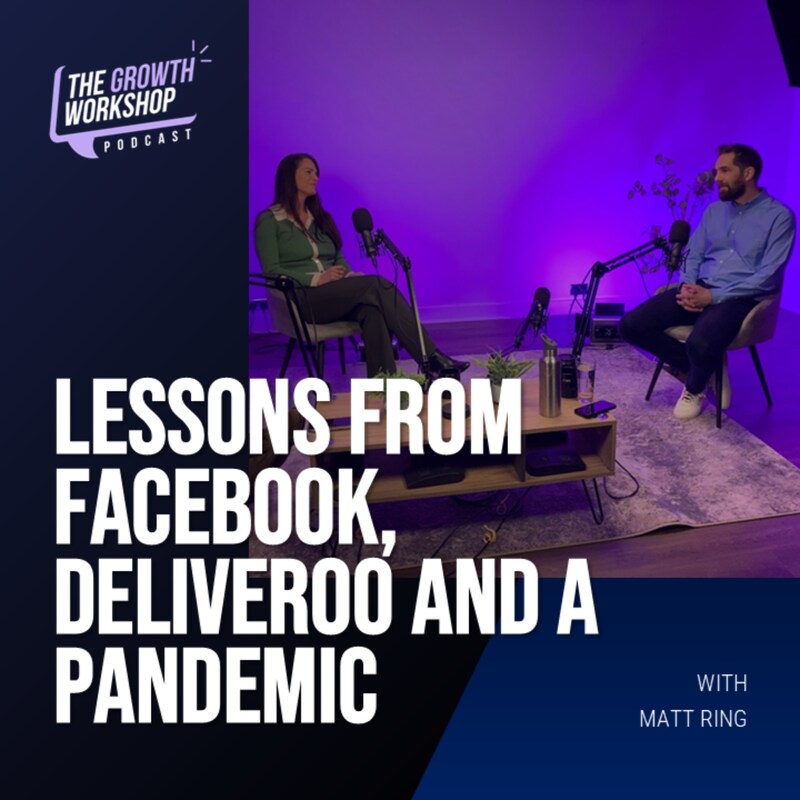
In Part 3 of our episode, Matt Ring argues that ‘sales enablement’ is too narrow – the real job is revenue enablement across the full customer lifecycle. He shares practical segmentation frameworks for focusing on strategic, future‑potential and volume accounts, and debates how AI and signal data can support rather than replace human judgment. Matt then opens up about two major crises – Facebook’s missing mobile ad product and Deliveroo’s COVID lockdown shock – before closing with clear, 2026‑ready advice for commercial leaders on propositions, processes, people, and scaling the basics with AI.
Transcripts
Hello and welcome to the Growth Workshop Podcast.
Matt Best:In this podcast, we'll be sharing insights and hearing from other industry leaders
Matt Best:to get their thoughts and perspectives on what growth looks like in modern business.
Matt Best:Welcome to part three of three.
Jonny Adams:And if we think about sales enablement, it's a passion of yours.
Jonny Adams:What does sales enablement mean to you and where do you sit as an individual in sales
Jonny Adams:enablement and how would you describe it?
Matt Ring:I think sales enablement does, it does the industry and the
Matt Ring:experts at disservice actually, I think it's revenue enablement.
Matt Ring:And the reason I think that is because an awful lot of focus is put on the
Matt Ring:top of the funnel and the sales teams.
Matt Ring:Hence the name Sales Enablement.
Matt Ring:And I think often what can happen is that the account teams who manage existing
Matt Ring:relationships sometimes get forgotten.
Matt Ring:And so for me, revenue enablement is all about, giving teams on the ground the
Matt Ring:tools and the skills and the capabilities to be able to generate more revenue,
Matt Ring:and to grow in capability over time.
Jonny Adams:Nice.
Jonny Adams:Alright, let's get into some frameworks.
Jonny Adams:I think this is the key.
Jonny Adams:So what, Let's think and we're gonna isolate towards like account based, right?
Jonny Adams:Because that's your, that, that's, your focus as an individual, isn't that?
Jonny Adams:So what, are some like revenue enablement frameworks that you've
Jonny Adams:seen the team you have been leading or even yourself adopt and use and,
Jonny Adams:anything that's worked for you in the past that the audience might grab onto?
Matt Ring:Yeah, so a big thing for me has always been to, whether I'm doing
Matt Ring:this on my own as an individual with my portfolio, or whether I'm thinking about
Matt Ring:the team, or the whole organization is, who are our clients and how do we segment
Matt Ring:them into a group, into different groups?
Matt Ring:To then be able to adjust our go-to market.
Matt Ring:You can use all sorts of, you can categorize them in all sort
Matt Ring:sorts of different ways, but effectively I think you have to
Matt Ring:identify the commonalities in there.
Matt Ring:So who are the ones that are, strategically important, but naturally
Matt Ring:gonna grow slower and require a much more white glove, hands-on approach to
Matt Ring:everything from marketing, insights, commercials, all that good stuff.
Matt Ring:Who are the screwed with clients that are the kind of the future potential?
Matt Ring:And how do you spot those, knowing that they're gonna be the future potential?
Matt Ring:How do you support them enough to help 'em grow but not too much to
Matt Ring:take your eye off the big ones.
Matt Ring:And then who are those other clients who are providing the kind of the, volume,
Matt Ring:who need to be managed in more of a, a kind of, consistent, process led way?
Matt Ring:And this is, so that, that's one, one key thing I always, start with, which is that
Matt Ring:is the segmentation and understanding who they really are and what they really need.
Jonny Adams:Amazing.
Jonny Adams:Dannii gonna come to you, what's your sort of customer success or account
Jonny Adams:development framework of choice.
Dannii Mathers:I would say, again, very similar things to you when you
Dannii Mathers:were talking, I was just wondering whether you use any level of data
Dannii Mathers:intelligence now to do that segmentation.
Dannii Mathers:'Cause as you were talking, I was like I remember doing that I remember how
Dannii Mathers:long it used to take 'cause back in the day, you used to have to do it manually.
Dannii Mathers:But it's a really great way, especially, when, working with
Dannii Mathers:reps for them to visually see where they should be spending the most
Dannii Mathers:time, what they should prioritize.
Matt Ring:Yeah.
Dannii Mathers:And what that looked like from a revenue proportion.
Dannii Mathers:So again, they're like, wow, I've got all this revenue, this quadrant,
Dannii Mathers:what is my strategy around or account-based marketing, whatever
Dannii Mathers:it might be, to then, acquire this.
Jonny Adams:Yeah.
Dannii Mathers:But now there's so much great data intelligence that
Dannii Mathers:can do this segmentation for us.
Dannii Mathers:I just wondered if you are using anything, to make that easier.
Matt Ring:So I'm not using anything to make that easier right now.
Matt Ring:I think the challenge with all, with that, even if you have all of that data,
Matt Ring:is deciding which are the signals that you wanna focus on and which are the ones
Matt Ring:that actually, aren't really additive.
Matt Ring:And I think that's actually the real trick to it because it's easy for systems
Matt Ring:and algorithms to tell you something, but if you haven't considered what are
Matt Ring:the kind of business priorities and boil that down into three or four key
Matt Ring:things and you don't know that upfront and do that work upfront, I think you
Matt Ring:run the risk of following something which might not necessarily be accurate.
Matt Ring:So maybe revenue growth is the key thing, the key lever that's been
Matt Ring:identified, but that might not actually be the key lever to unlocking growth.
Matt Ring:When I was at Deliveroo, a big focus as I mentioned previously,
Matt Ring:it was on operational excellence.
Matt Ring:And actually, if you can get your customer experiences and customer
Matt Ring:outcomes really the high top 10%, that drives a huge amount of growth.
Matt Ring:So if you've miss those signals, then you are not gonna be able
Matt Ring:to identify the tactics that you need to deploy to grow them.
Matt Ring:So I think you have to be cautious.
Matt Ring:and decide what are your kind of key signals upfront
Dannii Mathers:Yeah.
Matt Ring:for then using a lot of data.
Dannii Mathers:I think this is the evolution that many revenue
Dannii Mathers:leaders, sellers are on now.
Dannii Mathers:It's trusting the signals.
Dannii Mathers:So I think we're still at there.
Dannii Mathers:Yes again, there are some great technology processes, AI that
Dannii Mathers:helps, create these signals.
Dannii Mathers:But I think we're, at that stage now of, we now gotta learn to trust it because
Dannii Mathers:it's that fear of, say, if we miss something out, miss some important data.
Dannii Mathers:So I see organizations trying to adopt this like signal
Dannii Mathers:data intelligence approach.
Dannii Mathers:But yeah, back to what you said, it's that trust in the data at the moment, isn't it?
Matt Ring:Then?
Matt Ring:Do you think that's because they haven't got a really well defined
Matt Ring:what their actual customer is they might have their ideal customer,
Matt Ring:but they maybe don't have it really defined who their real customers are.
Matt Ring:Do you think that causes problems, for them in that situation?
Dannii Mathers:I think it's, probably a number of things.
Dannii Mathers:I imagine, a lot of it is down to having the right
Dannii Mathers:customer interactions in place in the first in, in the, first instance.
Dannii Mathers:When we think about account planning, in some cases it might not be a great
Dannii Mathers:account plan in the first place.
Dannii Mathers:So then how can you trust a process that is already quite broken?
Dannii Mathers:And I think this is where we're seeing a lot of gaps in AI right now, we wanna
Dannii Mathers:get to that end solution or outcome really quickly, but what we're beginning
Dannii Mathers:to uncover is, ah, we've got those for holes in our current processes
Dannii Mathers:because people are skipping steps.
Jonny Adams:Yeah.
Dannii Mathers:So I think when you've got a lot of gaps in your current
Dannii Mathers:processes, you're not gonna get to that north star easily because you have
Dannii Mathers:to go back to doing things properly.
Matt Ring:Yeah.
Matt Ring:It's interesting.
Matt Ring:I think as well, you have to consider the kind of the, human element of it.
Matt Ring:So as you say, if you've got your account plan, how you articulate either the
Matt Ring:will or the skill of that client, is, difficult and obviously, and the humans
Matt Ring:do it and they're probably naturally, overweight, the ones that they like
Matt Ring:working with versus the ones that they don't, which is a common thing I think
Matt Ring:we've all done in our careers, but I think that's also a difficult element.
Matt Ring:How do you articulate is this person, someone who's gonna actually partner with
Matt Ring:me and go on the journey, which I think always will require human interaction.
Dannii Mathers:Yeah and I think that the part where AI serves is the triaging.
Matt Ring:Yeah.
Dannii Mathers:So whether it's triaging from, intent from contents when they're,
Dannii Mathers:being served content, whether it's from calls I think if you can just
Dannii Mathers:triage a lot of that insight and then let the human deal with it, I think
Dannii Mathers:that's the, blended approach, isn't it?
Jonny Adams:I'm thinking about your career and I'm thinking Sky, and I'm
Jonny Adams:like connecting Facebook and Deliveroo, they're fast moving hypergrowth,
Jonny Adams:I could just imagine all about the margin, as you say, how do you take
Jonny Adams:what you've learned in those sort of years of your formative career and take
Jonny Adams:that to organizations in the future?
Jonny Adams:What are you gonna do, what lessons learned to...
Matt Ring:Yeah, so lessons learned, I think, we've talked a lot about
Matt Ring:communication, and I think that is a, really, key principle.
Matt Ring:I think it's quite hard to package up and, and say, this is
Matt Ring:how you should do communication.
Matt Ring:So I think you have to go back to some of the frameworks we've talked about.
Matt Ring:And I think for me it's really about understanding who are your, clients
Matt Ring:that you are interacting with today?
Matt Ring:What do we know about them?
Matt Ring:What are the signals that we can take, and how are our teams interacting with them?
Matt Ring:So that's where the enablement side of it comes in.
Matt Ring:So if you've got, a good, really good proposition, but maybe the processes
Matt Ring:behind it aren't on working towards that proposition that it's gonna fall down.
Matt Ring:If you've got really good processes, but you're not clear on your proposition,
Matt Ring:then that's gonna be very difficult, to actually deliver and if your people,
Matt Ring:who are behind the scenes running, all of this, aren't aligned on either
Matt Ring:the processes or the proposition then you're really in trouble.
Matt Ring:So they're the kind of three things that I always come back to.
Matt Ring:I think they're the things that, for me, ultimately are what a successful
Matt Ring:revenue team needs to be focused on.
Jonny Adams:It all sounds great, Matt, it sounds very rosy.
Jonny Adams:But let's, look at the other side of the coin maybe if we think about your
Jonny Adams:career, you've done some amazing things.
Jonny Adams:Has there ever been a time of some adversity or any challenges
Jonny Adams:you've had over the last years?
Matt Ring:I think I'd be lying if I said no.
Matt Ring:Yeah, of course.
Matt Ring:I worked in number of high growth businesses that have had numerous
Matt Ring:challenges, internal external pressure.
Matt Ring:Maybe if I give two examples, one from my time at Facebook as it was then called,
Matt Ring:and one from my time at Deliveroo.
Matt Ring:So at
Matt Ring:Facebook, the business had recently become gone public and a month or so
Matt Ring:after that, we realized that whilst 75% of our traffic was on mobile, we didn't
Matt Ring:have a mobile advertising product.
Matt Ring:And this is a well known, well-known story, wellknown fact,
Matt Ring:my job was advertising sales, as was the entirety of the team.
Matt Ring:And so that threw the whole team and, to be honest, the whole company
Matt Ring:into kind of quite a lot of chaos.
Matt Ring:And our partners and our clients were coming to us and asking, what's going on?
Matt Ring:What's happening here?
Matt Ring:You've publicly announced that three quarters of your consumers are on
Matt Ring:mobile and you haven't got anything for us, and we've been spending all
Matt Ring:of this money and time and effort.
Matt Ring:What are we gonna do about it?
Matt Ring:And in those days we didn't have an answer, so we had to go back to good
Matt Ring:relationships, understanding their business, demonstrate what we've done
Matt Ring:before, trust in the company, the technology prowess, all that kinda stuff.
Matt Ring:And that it would become it and we had been told that Zuck had take
Matt Ring:in all engineers, put 'em through a bootcamp to learn to build on mobile,
Matt Ring:and that we would figure it out.
Matt Ring:Telling a large enterprise client, we will figure it out in some
Matt Ring:months is quite challenging.
Matt Ring:So that was a very stressful period of time for me, just as I was,
Matt Ring:getting married and moving house.
Matt Ring:And then if we fast forward to my time at Deliveroo, I joined there in September
Matt Ring:2019, which was six months prior to when the world shut down for lockdown.
Matt Ring:And so the time over that kind of couple of years was incredibly challenging,
Matt Ring:both personally and for the business.
Matt Ring:And so this was, I was relatively new into role at the time I was running the,
Matt Ring:the account enterprise accounts team, so managing the relationships with all
Matt Ring:of the largest restaurant partners.
Matt Ring:At the same time, we were waiting for the Amazon investment to come through.
Matt Ring:and so the business already running pretty lean, was worried
Matt Ring:about, running out of cash.
Matt Ring:and then all of a sudden, we heard that the country was going into lockdown.
Matt Ring:And so naturally all of our restaurants and all of our grocers started
Matt Ring:calling us and saying, what do we do?
Matt Ring:Can we still do delivery?
Matt Ring:And we were said, we have no idea.
Matt Ring:Do you feel safe?
Matt Ring:They said, not really.
Matt Ring:And we said, okay, we need to figure this out.
Matt Ring:It was a really difficult time.
Matt Ring:the business was under an awful lot of pressure financially, we didn't
Matt Ring:know like everyone what was happening.
Matt Ring:And we just decided that we were gonna have to, get a collection of people
Matt Ring:together across all of the key functions.
Matt Ring:we met twice a day, morning and evening like I'm sure many businesses did really
Matt Ring:just taking the information that we could get from the government, from our
Matt Ring:partners, and building that into a kind of a playbook that said, okay, now we
Matt Ring:realize, now we don't understand that you can open how we're gonna operate
Matt Ring:this industry safely, effectively.
Matt Ring:And so those first sort of three or four weeks were very, difficult.
Matt Ring:it was everyone suddenly at home, we're all, locked in, our little
Matt Ring:rooms, for 12, 13 hours a day.
Matt Ring:And then what started to happen was that people started to realize
Matt Ring:that food delivery was really valuable during a pandemic.
Matt Ring:And so the business absolutely took off.
Matt Ring:and we were still like, really not sure about how we could optimize the
Matt Ring:system in such short space of time.
Matt Ring:So we were coming up with, new ways to do things we'd never done before.
Matt Ring:Restaurants were still looking to us for guidance and advice and we
Matt Ring:got to a point where, one of our large restaurant partners actually
Matt Ring:said to us, if you can give us more grills, we can cook more food.
Matt Ring:And we were seriously considering buying grills.
Matt Ring:That didn't happen, obviously.
Matt Ring:But it was a, it was something which collectively we actually
Matt Ring:thought, you know what?
Matt Ring:This might be a good idea.
Matt Ring:and the other thing that started to happen was that there were loads of restaurants
Matt Ring:who hadn't done delivery previously, but realized they wanted to do delivery.
Matt Ring:But then we started to run out of the tablets that the restaurants
Matt Ring:used to power their, power Deliveroo.
Matt Ring:At the time you had to have just a tablet, because they were stuck in an
Matt Ring:airport on the other side of the world.
Matt Ring:And so the tech team had to figure out how can we give you something,
Matt Ring:to operate your, operate on delivery to help you out and, facilitate,
Matt Ring:you getting onto the platform and actually keeping your business alive.
Matt Ring:Without these tablets, they're all stuck in a warehouse somewhere.
Matt Ring:So that was the kind of early iteration of the tools that, that
Matt Ring:Deliveroo now has today, to allow people to, to operate, online.
Jonny Adams:And then, and that growth, did it just hockey stick...
Matt Ring:yeah, absolutely, the business basically doubled overnight.
Matt Ring:It was crazy and just continued to continue to, increase and that puts a
Matt Ring:huge amount of pressure on the riders.
Matt Ring:The operational side of the business gets really difficult.
Matt Ring:it puts a, lot of pressure on the, people who are running delivery in the
Matt Ring:restaurants because their restaurant managers are not only deliver, now
Matt Ring:dealing with loads and loads of riders, but loads and loads of orders, which,
Matt Ring:they haven't been used to preparing in such a short space of time.
Dannii Mathers:Yeah, so unprecedented scale, isn't it?
Matt Ring:Yes, absolutely.
Matt Ring:Absolutely.
Matt Ring:Like many businesses, we just had to figure it out as we went along.
Dannii Mathers:Yeah.
Dannii Mathers:Excellent.
Dannii Mathers:Let's try and end this on some even more positive news.
Dannii Mathers:Everyone likes a scaling business, but if you are, if you were to give a commercial
Dannii Mathers:leader, commercial contributor, some advice for 2026 for them to have success.
Dannii Mathers:Yeah.
Dannii Mathers:What, would your advice be?
Dannii Mathers:Send us home with some great advice, Matt.
Matt Ring:I think, given the current economic climate, everyone
Matt Ring:is under more pressure than ever to deliver more revenue, faster,
Matt Ring:from their existing clients.
Matt Ring:So I think it's about making sure that you are doing the basics really well.
Matt Ring:As we've talked about before, have you really narrowed your proposition?
Matt Ring:Do you have the right processes in place to enable your team to unlock that and do
Matt Ring:your people have the right capabilities to be able to deliver on that?
Matt Ring:And I think that's like absolutely core and will always remain core.
Matt Ring:But I think there's some really exciting, new tools and AI capabilities which allow
Matt Ring:you to scale some of those processes once, and you're really confident in them.
Matt Ring:So for example, I've recently come across a company, that does a really
Matt Ring:cool, a practice scenario, for frontline teams, just by a phone call.
Matt Ring:So the tech behind it is fantastic.
Matt Ring:But you get a phone call on your mobile phone, and you can prepare the objection
Matt Ring:handling or the piece of the proposition that you want to land really well or
Matt Ring:anything and the phone call is an agent, which basically takes you and pretends to
Matt Ring:be, the customer that you are talking to, and obviously on the back end of that,
Matt Ring:you get so many rich insights that you know, you just previously wouldn't have
Matt Ring:had and if you think about the, kind of the applications, a lot of technology in
Matt Ring:my experience focuses on those kind of seat based enterprise sellers it's during
Matt Ring:the call, notes next to me talking about, helping me, guiding me, or retrospectively
Matt Ring:not many people think about practice.
Matt Ring:And I think that's really, key.
Matt Ring:'Cause we would practice for a race or a sport or whatever.
Matt Ring:So that's a, an really interesting technology that I think, things like
Matt Ring:that will just, really help accelerate the basics, that you do it well.
Jonny Adams:Awesome.
Jonny Adams:Matt, just to say thank you so much for joining us on the Growth Workshop podcast.
Jonny Adams:It's been amazing.
Matt Ring:Thank you so much for having me.
Matt Ring:I've really enjoyed the conversation.
Matt Best:For more insights, make sure you subscribe, and
Matt Best:if you enjoy the journey, don't forget to leave us a review.
Matt Best:Your feedback fuels our growth.
Matt Best:Until next time, keep up that forward thinking mindset.
Matt Best:Goodbye.



