Shownotes
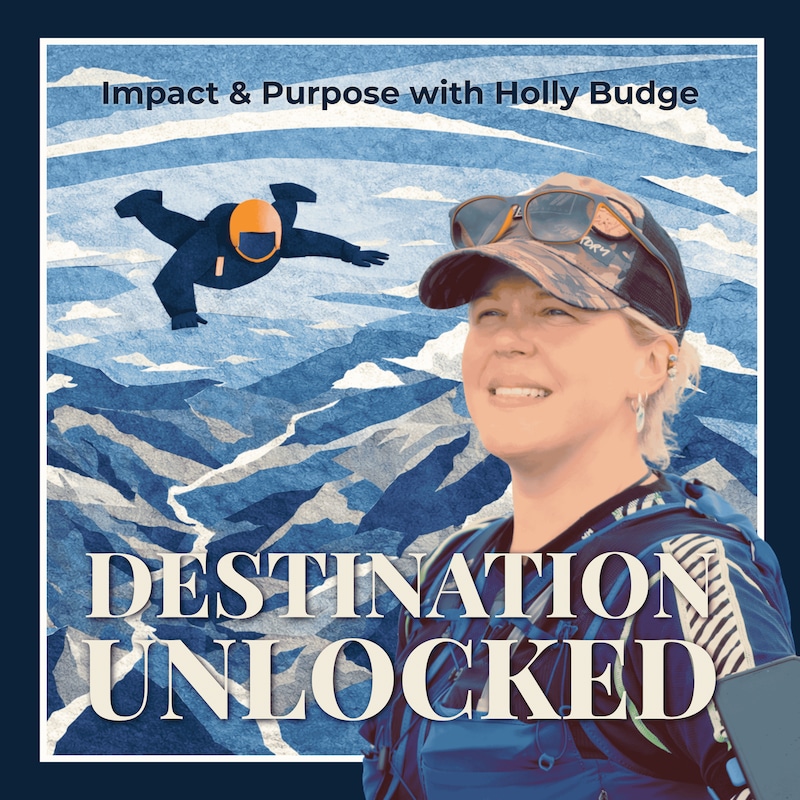
World Record-holding adventurer Holly Budge joins Daniel on the Destination Unlocked podcast to share her inspirational story of turning the thrill of adventure into a force for good in the world. Holly is inspired by female empowerment and animal conservation - she's worked out a neat way of tying all of her interests and skills together... and says you have everything it takes to do it too.
Links referenced in this episode:
Transcripts
This is Destination Unlocked with me, Daniel Edward.
Daniel Edward:Well, welcome back to Destination Unlocked.
Daniel Edward:Great to have you here with us today for a very interesting conversation.
Daniel Edward:This is a conversation that starts with adventure, but really lands so squarely on
Daniel Edward:making a positive impact with your travel.
Daniel Edward:So much of our travels, especially in this very Instagrammable
Daniel Edward:world that we are living in right now, look very self-indulgent.
Daniel Edward:We travel for our own benefit.
Daniel Edward:We travel for our own experiences, our own stories, our own 'Gram, whatever it is.
Daniel Edward:But underneath that self-indulgence, we do all have those personal passions
Daniel Edward:that we feel so strongly about.
Daniel Edward:And if we can combine our travel experiences, our own adventures
Daniel Edward:with doing good for the causes that mean something for us, then
Daniel Edward:I think we've really nailed it.
Daniel Edward:And today's guest, Holly Budge, has done exactly that.
Daniel Edward:Enjoy.
Daniel Edward:Welcome, Holly.
Daniel Edward:It's great to have you here.
Daniel Edward:Tell us, what are you unlocking for us today?
Holly Budge:Hey Daniel.
Holly Budge:Thank you for having me.
Holly Budge:I'm unlocking travel with purpose and impact.
Daniel Edward:Which is so you, because you have turned your travel
Daniel Edward:into something which has great purpose and makes a huge impact.
Daniel Edward:We're gonna get into some of the charitable side of your travel within
Daniel Edward:this conversation, but to set the scene.
Daniel Edward:Let's go back a little bit and work out how you even got into this place where you
Daniel Edward:were able to use travel with such impact.
Daniel Edward:I wanna go to a particular moment when you did something upside down,
Daniel Edward:you did something totally opposite from how most people would do it.
Daniel Edward:When most people think about Mount Everest, they go from the
Daniel Edward:base camp up, but you decided to do it the other way round.
Holly Budge:I love the way you just described that!
Holly Budge:Upside down Everest.
Holly Budge:I became the first woman to skydive Everest, that wasn't my first skydive.
Holly Budge:I'm pleased to tell you,
Holly Budge:the lead up to that happened quite a few years before that jump took place.
Holly Budge:I went travelling in New Zealand and I did a tandem skydive, and I
Holly Budge:was blown away by the experience.
Holly Budge:I fell in love with this idea of moving to New Zealand and
Holly Budge:becoming a skydiving camera woman.
Holly Budge:A little bit ridiculous 'cause I really knew nothing about skydiving
Holly Budge:or filming, but that didn't matter 'cause I knew I could have a go.
Holly Budge:I could learn those skills, do my best.
Holly Budge:So I came back to the UK, and then I saved enough money to go back to New Zealand and
Holly Budge:do my skydiving AFF course and then figure out how to get employed as a camera woman.
Holly Budge:I eventually landed my dream job and was getting paid to jump out
Holly Budge:of aeroplanes up to 12 times a day every day, and it only took three
Holly Budge:skydives a month to pay my rent.
Holly Budge:So it was a pretty good setup in my early twenties.
Holly Budge:But what it did, Daniel, was it gave me this massive confidence
Holly Budge:and this self-belief that I could do whatever I put my mind to
Holly Budge:when I'd achieved this big goal.
Holly Budge:I call this hanging onto my 21-year-old mindset.
Holly Budge:When people ask me what would you say to your younger self, now
Holly Budge:that I'm 47, I say, what would my younger self say to me right now?
Holly Budge:You know, I didn't overthink things.
Holly Budge:I didn't procrastinate too much.
Holly Budge:I thought, this is what I'm gonna do and I'm, I'm just gonna
Holly Budge:give it everything I've got.
Holly Budge:And it, it panned out.
Holly Budge:It was an amazing lifestyle, but it taught me so much.
Holly Budge:The people that I was hanging around with, that I was working with
Holly Budge:were just so incredibly positive.
Holly Budge:I think that really helped pave the way for me, in the
Holly Budge:adventures that were to come.
Holly Budge:Another thing that it did was it taught me about normalising fear.
Holly Budge:When I first started skydiving, it was really terrifying, plummeting to earth
Holly Budge:at 180 if you are on your head 120 miles per hour, if you are on your belly.
Holly Budge:Is an assault?
Holly Budge:On all of your senses.
Holly Budge:It's really terrifying.
Holly Budge:And I remember sitting in the aeroplane watching experienced skydivers, cameramen,
Holly Budge:tandem masters, just looking totally relaxed, laughing and joking in the plane.
Holly Budge:And I was really scared thinking I wanna be like them.
Holly Budge:And that planted that seed I could be like them.
Holly Budge:And eventually I was like them; skydiving became as normal as
Holly Budge:getting up and cleaning my teeth.
Holly Budge:Many of us really push ourselves, and really maximise
Holly Budge:our potential as human beings.
Holly Budge:I think we can do so much more.
Holly Budge:The more extreme the adventures got, the more I just leaned into
Holly Budge:them and tried to normalise.
Daniel Edward:So jumping outta planes strapped to a
Daniel Edward:parachute became second nature.
Daniel Edward:And then you saw an expedition to Everest advertised.
Daniel Edward:The first ever skydiving adventure on the mountain.
Holly Budge:With a few thousand jumps under my belt, I just thought, you know,
Holly Budge:I've already got the skills to be able to say yes immediately to this adventure.
Holly Budge:I rang up the organiser, it, it became apparent there were
Holly Budge:no other women signed up.
Holly Budge:I knew that that was my hook for getting sponsors on board.
Holly Budge:So I said, yes.
Holly Budge:He said That will be 24,000 pounds.
Holly Budge:I said, no problem.
Holly Budge:didn't have 24,000 pounds, but that didn't matter.
Holly Budge:that just set that bar really high for me to go out there and find
Holly Budge:sponsors, people to buy into my vision.
Holly Budge:And that's never an easy thing.
Holly Budge:Finding sponsors.
Holly Budge:You have to be quite creative.
Holly Budge:But, I did manage to get the expedition sponsored.
Holly Budge:And then it entailed jumping out of a small aircraft at 29 and half thousand
Holly Budge:feet, just higher than the summit of Everest and then I pulled my parachute
Holly Budge:18,000 feet and I landed at 12 and a half thousand feet, which was the highest
Holly Budge:civilian landing area at that time.
Holly Budge:And it was a pretty interesting experience.
Holly Budge:I, um, fell out of the plane accidentally.
Holly Budge:You put in all of this training, all this preparation, visualisation,
Holly Budge:getting sponsors on board, keeping sponsors on board, and nothing
Holly Budge:prepared me for what actually unfolded.
Holly Budge:Door opened, first person to skydive Everest.
Holly Budge:Jumped out, was about three or four seconds behind them.
Holly Budge:My camera flyer climbed out onto the camera step.
Holly Budge:I'm giving my count ready, set, and next thing, my camera flyer's
Holly Budge:hand is on my shoulder, pushing me back into the aeroplane.
Holly Budge:And unbeknown to me, the pilot had held up the stop sign.
Holly Budge:Don't let the jumpers out, was too late.
Holly Budge:I had too much momentum on my ready, set, go backpedalling in the door, and
Holly Budge:I actually fell out of the aeroplane.
Holly Budge:So when people say, was it an incredible experience, it was pretty
Holly Budge:terrifying at that point in time.
Daniel Edward:Why did the pilot try to stop the jump?
Holly Budge:clouds rolled in so quickly.
Holly Budge:You know, one minute is blue sky.
Holly Budge:Next minute you're completely engulfed in cloud.
Holly Budge:so I had no visuals on the ground below and when you're skydiving, you don't have
Holly Budge:fancy equipment telling you where you are in relation to your landing area.
Holly Budge:So for me, it was imperative to get myself through the clouds,
Holly Budge:pull my parachute at 18,000 feet.
Holly Budge:then luckily I did make it back to the landing area, ' cause there
Holly Budge:were very few other places where I could have made a safe landing.
Holly Budge:had to make it back there.
Holly Budge:And then about three minutes after I landed complete white out.
Holly Budge:So I felt really fortunate to walk away safely from that jump.
Holly Budge:when I landed, there was Reuters, the Global News Agency there.
Holly Budge:Then I was on the front of the Kathmandu times when I flew home
Holly Budge:the following day... i got upgraded and my cameraman stayed in economy.
Holly Budge:I said, I'll see you in London.
Holly Budge:And then I got put in a hotel room courtesy of the BBC, and I did six
Holly Budge:live TV interviews in 24 hours and a load of other like radio, and media.
Holly Budge:That was more scary than the expedition.
Holly Budge:Being put in a room with a camera saying, don't look anywhere , but at the camera
Holly Budge:you're just going out live to America.
Holly Budge:With a lady in my ear asking me how did I acclimate?
Holly Budge:was like, oh, I dunno what she means.
Holly Budge:So I said, very well, thank you.
Holly Budge:And you, But that sowed that seed for me.
Holly Budge:How can I harness the power of global media for a greater good
Holly Budge:than me jumping out of an aeroplane?
Holly Budge:We'll come back to that point when we talk about World Female Ranger week.
Holly Budge:That was where that seed was sewn for me.
Daniel Edward:So off the back of the Mount Everest Adventure, that seed for
Daniel Edward:headline seizing adventures had been sown, and you were contacted about
Daniel Edward:another first of its kind expedition, which actually resulted in you being
Daniel Edward:awarded a Guinness World Record.
Daniel Edward:What did you get involved in after Everest?
Holly Budge:So it was the world's longest horse race, 1000 kilometres
Holly Budge:across Mongolia on semi wild horses, to which I asked, what is a semi wild horse?
Holly Budge:So in Mongolia, the horses fend for themselves in the winter months.
Holly Budge:So the semi wild is, literally a small child will go off into the mountains and
Holly Budge:come back with a string of 30 horses.
Holly Budge:They are actually ponies, but they don't like you calling them ponies, so
Holly Budge:it's respect thing to call 'em horses.
Holly Budge:They're pretty feisty these animals.
Holly Budge:So they're rebroken so that someone can jump on their
Holly Budge:back and ride them every year.
Holly Budge:When I got back from skydiving Everest, I got a phone call two weeks later because
Holly Budge:you put everything into these great big goals and then you think, well, what now?
Holly Budge:What next?
Holly Budge:And everyone else is asking you What next?
Holly Budge:And I got this phone call and they said, hi Holly, would you like to take
Holly Budge:part in another World first adventure?
Holly Budge:And I said, yes.
Holly Budge:What is it?
Holly Budge:They said it's a thousand kilometre horse race across Mongolia on semi wild horses.
Holly Budge:to which I asked, what is a semi wild horse?
Holly Budge:And I said, yes.
Daniel Edward:So what is a semi wild horse?
Holly Budge:So in Mongolia, the horses fend for themselves in the winter months.
Holly Budge:Literally a small child will go off into the mountains and come
Holly Budge:back with a string of 30 horses.
Holly Budge:They are actually ponies, but they don't like you calling them ponies, so
Holly Budge:it's respect thing to call 'em horses.
Holly Budge:They're pretty feisty these animals.
Holly Budge:So they're rebroken so that someone can jump on their
Holly Budge:back and ride them every year.
Daniel Edward:And became a world record.
Holly Budge:yeah, it was pretty intense.
Holly Budge:So I rode a total of 25 horses.
Holly Budge:We only had two rules to the race.
Holly Budge:We couldn't ride at night and we couldn't ride one horse more than 40 kilometres.
Holly Budge:We had no topographical information.
Holly Budge:So it was just a GPS race.
Holly Budge:We had set checkpoints and it was just insane.
Holly Budge:Like I had a night where I got stuck in the mountains, lost my horse.
Holly Budge:Temperatures, go from 30 degrees to minus two.
Holly Budge:We had no water.
Holly Budge:I had another horse sink in a bog.
Holly Budge:This was 13 hours a day in the saddle crossing rivers where
Holly Budge:the horses were swimming.
Holly Budge:The rivers were high and fast.
Holly Budge:On one river local guy on his horse, had to help us across, so he was leading
Holly Budge:his horse and his horse was swimming.
Holly Budge:My horse was swimming, water all over the saddle, everything and you're
Holly Budge:just thinking, what am I doing?
Holly Budge:It just, it was raw and it was real,
Holly Budge:All sorts of things happened in this nine days , but what an
Holly Budge:incredible way to see one of the world's last great wildernesses.
Holly Budge:It's not often you explore a country with such freedom.
Holly Budge:but it was incredible.
Holly Budge:And it raised a lot of money for a charity as well.
Holly Budge:So it was a massive selfish indulgence, but it had impact
Holly Budge:associated with the adventure.
Daniel Edward:And it does show that right from the get go of
Daniel Edward:doing this in a career sense.
Daniel Edward:You were very good at connecting up the different elements of how do
Daniel Edward:you turn travel into inspiration.
Daniel Edward:You have to have people to share it with.
Daniel Edward:You have to have an audience to talk to.
Daniel Edward:You have to have people who have funding that ability to get out there
Daniel Edward:and do these things that are very unusual and most people might talk
Daniel Edward:about it and never do anything with it.
Daniel Edward:Those skills, way that you've used them, you are able to take people to places that
Daniel Edward:most people realise they will never go.
Holly Budge:It is interesting what you say about skills because I think
Holly Budge:there's no better time to be alive learning new skills than now right.
Holly Budge:For me now with my charity work, my charity work is all design led.
Holly Budge:I came up with the idea and my whole travelling exhibition for
Holly Budge:How Many Elephants came about 13 years ago when I was doing a
Holly Budge:Master's in sustainable design.
Holly Budge:I just couldn't have done what I've achieved with the charity with my
Holly Budge:tour operator, without having those design skills, without being able
Holly Budge:to speak . I say when I go into schools and they say, you know.
Holly Budge:How Can I get into conservation or how can I get into this?
Holly Budge:And it's like, it doesn't matter what you're trying to get into.
Holly Budge:Learn the peripheral skills, figure out how to use Canva.
Holly Budge:Never been an easier time to be a graphic designer than right now.
Holly Budge:figure out how to speak to an audience, figure out how to write a really
Holly Budge:good article, not, just using AI.
Holly Budge:Using AI as a tool to help you.
Holly Budge:Figuring out all of those peripheral skills so that it doesn't matter
Holly Budge:whether you are trying to get a sponsor on board or whatever you're
Holly Budge:trying to do, you can present yourself in a really professional manner.
Holly Budge:I think in this day and age especially, be able to cut through
Holly Budge:the noise, I think you gotta be polished, you gotta look professional.
Holly Budge:It is all about joining the dots with different skill sets.
Daniel Edward:And I get the sense, obviously from the outside that those
Daniel Edward:earlier days of the jumps were a little bit about proving to yourself
Daniel Edward:what you could do, but then also It was about female empowerment.
Daniel Edward:That then has grown as a project to a much more global level These projects
Daniel Edward:and the reach just grow and grow, on the heels of previous successes.
Holly Budge:Yeah, I realised adventure.
Holly Budge:Was just a great platform to get global media coverage and to raise
Holly Budge:funds, and I think it's a tool.
Holly Budge:For some people climbing Everest might be the end goal.
Holly Budge:For me, it's just a stepping stone in taking the flag of my charity to the
Holly Budge:highest point on the earth to talk about elephants and talk about female rangers.
Holly Budge:Everest gets me through that front door.
Holly Budge:But once I'm in and I'm chatting and it becomes, part of the story,
Holly Budge:I'm talking about my charity work.
Holly Budge:I'm talking about elephants, I'm talking about female rangers, female empowerment,
Holly Budge:I just think, how brilliant is that?
Holly Budge:That I'm using adventure just as that stepping stone.
Holly Budge:I don't think adventure's my true passion and purpose.
Holly Budge:I think my true purpose is, my conservation work, my
Holly Budge:charity, How Many Elephants?
Daniel Edward:But the hook is the adventure and that opens the door.
Daniel Edward:That gets people thinking.
Holly Budge:Yeah and it's great, I'm getting.
Holly Budge:Paid to talk about elephants.
Holly Budge:If I pitched elephants and pitched female rangers, I don't think I'd get
Holly Budge:into the events that I am, but actually people come up to me at the end and say.
Holly Budge:You know, we're so glad you weren't just another mountaineer talking about, I
Holly Budge:did this, I did this, I climbed to the summit, and that's the end of the talk.
Holly Budge:It's about making impact way bigger than myself.
Daniel Edward:It's a shame that that's unusual, but that is quite unusual.
Holly Budge:Yeah.
Holly Budge:But to me, i'd feel a bit empty if that was my achievement for achievement's sake.
Holly Budge:I've spent so much time on the frontline patrolling with all female and mixed
Holly Budge:anti-poaching ranger teams in Africa.
Holly Budge:And I say this a lot: when I went to the front line for the first
Holly Budge:time, and it's such a, volatile, changeable, unpredictable place to be.
Holly Budge:It really did make climbing Everest look like child's play.
Holly Budge:When you're climbing Everest, it's entirely voluntary.
Holly Budge:You've put yourself there and you've assumed that risk.
Holly Budge:But when you're on the front line with these rangers that's their everyday jobs.
Holly Budge:They are the last line of defence protecting endangered
Holly Budge:wildlife and wild spaces.
Holly Budge:And it is an incredibly challenging, dangerous place to be.
Holly Budge:And yet they're doing that day in, day out.
Holly Budge:So it is about zooming out, looking at the bigger picture,
Holly Budge:getting some perspective on it.
Daniel Edward:How did you fall in love with wildlife?
Holly Budge:I've always loved animals.
Holly Budge:I remember like the jungle book and drawing out all the animals and just.
Holly Budge:I've always been a big fan, but for me it all came about, my
Holly Budge:elephant charity, 13 years ago.
Holly Budge:I was studying a material called Vegetable Ivory, which is a nut
Holly Budge:from a palm tree from South America, and it's almost identical in colour
Holly Budge:and texture to Elephant Ivory.
Holly Budge:So I was designing stuff using this material, and then I wanted to go
Holly Budge:and really explore the material and its capabilities by doing a master's.
Holly Budge:And my tutor said to me, Holly, if you want to do really well on
Holly Budge:this master's, you can't ignore the material similarity to elephant Ivory.
Holly Budge:And I went down this rabbit hole of researching the African elephant
Holly Budge:crisis, and I was so horrified by the statistics of 96 elephants being
Holly Budge:poached each day for their ivory in Africa, that I wanted to use my skills
Holly Budge:as a graphic designer to come up with an innovative awareness campaign.
Holly Budge:So I built this necklace.
Holly Budge:It's, it's 96 elephants.
Holly Budge:It's quite a piece.
Holly Budge:It's won six design awards so far.
Holly Budge:So it's 96 elephants cut in vegetable ivory to show the daily poaching rate.
Holly Budge:And I've weaved a narrative into the necklace.
Holly Budge:One elephant is facing the other way to say that this crisis
Holly Budge:can still be turned around.
Daniel Edward:I love your necklace, I can see why that has won awards.
Daniel Edward:It's a fantastic piece.
Holly Budge:Thank you.
Holly Budge:There's less than 400,000 elephants left in the wild in Africa and
Holly Budge:somewhere between 20 to 30,000 elephants each year are still being poached.
Holly Budge:So I came up with this necklace and this exhibition.
Holly Budge:So my exhibition showcases 35,000 elephants on a wall to
Holly Budge:show the annual poaching rate.
Holly Budge:And when you see and connect with this data in a purely visual
Holly Budge:way, it really hits home hard.
Holly Budge:Monochrome, elephants, just black and white, repeated 35,000 times.
Holly Budge:And the campaign is non gruesome.
Holly Budge:It's non gory.
Holly Budge:It's nonpolitical.
Holly Budge:But it really hits home.
Holly Budge:And because it's non gory, it's allowed me to connect with many different
Holly Budge:audiences, including schools and people that don't wanna see gruesome imagery.
Holly Budge:You can't unsee something.
Holly Budge:And I'm one of these people that if I see a image that will stay with
Holly Budge:me for days, if I see something really gruesome and and graphic.
Holly Budge:So it's become a bit of a USP of my charity that any newsletter, any film,
Holly Budge:anything that you open from How Many Elephants will won't have gruesome,
Holly Budge:gory content . 'cause I think we've become desensitised to that approach.
Daniel Edward:That's something that I really like about what you do.
Daniel Edward:It's always leading on the positive.
Daniel Edward:You can shock and scare people.
Daniel Edward:That's done by countless people, and, with some effect there's a reason they do
Daniel Edward:it, but it doesn't make people feel good about what they're doing necessarily.
Holly Budge:Generally if people don't feel good, they don't act on it.
Holly Budge:So I think by focusing on the positives and the stories of hope.
Holly Budge:for me, I have to focus on those positive stories or I wouldn't
Holly Budge:be able to work in this space.
Daniel Edward:The thing massively surprised me, and I'm gonna ask
Daniel Edward:this question in, I suppose in a controversial way, but I think
Daniel Edward:it's an important one to ask still.
Daniel Edward:The ivory trade is still worth $23 billion a year.
Daniel Edward:That's massive.
Daniel Edward:The controversial part of the question is, the other part of Africa's current story
Daniel Edward:that a lot of people are talking about is, how do we help people out of poverty?
Daniel Edward:$23 billion a year sounds like a good way of getting people out of poverty.
Daniel Edward:Clearly it's not going towards that.
Daniel Edward:So where is it going and apart from supporting the elephants, why else
Daniel Edward:is it so important to stop that?
Holly Budge:Yeah, I mean there's, there's definitely a big gap when
Holly Budge:you see such poverty on the ground.
Holly Budge:I think it's the same story, the world over, the kingpins, the rich getting
Holly Budge:richer, and the poor getting poorer.
Holly Budge:And I think it's a really valid point to a lot of people.
Holly Budge:Especially with the work I've done in schools, I've worked with thousands
Holly Budge:of school children, and the poacher is always painted as the bad guy, And I've
Holly Budge:stood there in countless classrooms and said to children, I'm gonna give
Holly Budge:you a new perspective that really could change the way you think about this.
Holly Budge:And I just say, I don't think the poachers are the bad guys.
Holly Budge:Then I explain why I don't think that.
Holly Budge:They're just right at the end of the scale.
Holly Budge:They're the puppets.
Holly Budge:Doing the hard work, doing the dangerous work.
Holly Budge:To be a poacher, you've gotta be pretty hardy to survive out in those
Holly Budge:environments, for days or, or weeks.
Holly Budge:It's no easy task.
Holly Budge:And then you've gotta consider a lot of the poachers.
Holly Budge:They're opportunists.
Holly Budge:And they're just trying to put food on their tables, you know,
Holly Budge:they're trying to feed the kids.
Holly Budge:a lot of the work we do with the kids , especially in Africa, is
Holly Budge:about saying, don't look at the poachers as something aspirational.
Holly Budge:'cause a lot of the poachers are driving around in the big cars and they
Holly Budge:look like they got disposable income.
Holly Budge:So you can imagine the children growing up in those communities
Holly Budge:could think , I wanna be like that.
Holly Budge:And you couldn't blame them because there's no one else necessarily showing
Holly Budge:them a different or a better way.
Holly Budge:So I think it's really powerful when I work with the Rangers.
Holly Budge:I'm now working with 6,000 female wildlife rangers around the world.
Holly Budge:I work across 18 African countries and when we go into these schools with
Holly Budge:high energy, last year, World Female Ranger Week, now in its sixth year.
Holly Budge:We were live in Zambia.
Holly Budge:We had 90 female rangers, in the Kafue National Park.
Holly Budge:And we went to these schools and the energy, it was like a travelling
Holly Budge:road show, with a, girl band.
Holly Budge:And they were like rock stars, these women.
Holly Budge:On the final day of this week, we had a thousand people come from the communities.
Holly Budge:We were on national tv.
Holly Budge:We had politicians there saying about the importance of
Holly Budge:women working in these roles.
Holly Budge:And you just think those children that were there that day and the children that
Holly Budge:were at those schools that we visited.
Holly Budge:They'll remember that energy.
Holly Budge:They will remember that as a really positive, energetic day.
Holly Budge:That's a huge part of what I do: awareness and education.
Holly Budge:And I think that is so key because.
Holly Budge:What I've seen, especially with the more opportunist poachers as opposed
Holly Budge:to the very well equipped, you know, night vision goggles, helicopters,
Holly Budge:silencers, you know, all of the gear I'm talking about the opportunist poachers.
Holly Budge:What I've seen with them is, you could say, and I'm making these
Holly Budge:numbers up, but you could say, here's a hundred dollars to go and poach an
Holly Budge:elephant, which is illegal and it's really hard work and here's $200 to do
Holly Budge:something that's legal and way easier.
Holly Budge:And what we've seen is they'll do both.
Daniel Edward:Ah.
Holly Budge:That's a really big problem right there.
Holly Budge:So in answer to your question, yes, it is a massive funding gap and certainly none
Holly Budge:of that money is making it back on the ground to the people that really need it.
Holly Budge:But that's where I think working with the rangers, especially the women, but men and
Holly Budge:women, they're out there day in, day out, working in very challenging conditions.
Holly Budge:Often not with the right equipment, often with no insurance, in
Holly Budge:really hostile working conditions without the correct support and yet.
Holly Budge:They're so influential in their communities, so who better to
Holly Budge:educate than them from within?
Daniel Edward:A lot of people understand what a poacher does, that's fairly
Daniel Edward:obvious, what does a Ranger actually do?
Holly Budge:Great question.
Holly Budge:So the frontline rangers, will patrol day and night.
Holly Budge:So for example, the Black the first all female anti-poaching team
Holly Budge:possibly in the world, and they'll walk a different beat day and night.
Holly Budge:So they're unarmed, they have pepper spray and handcuffs, and
Holly Budge:they have an armed response.
Holly Budge:If and when they need it.
Holly Budge:So the idea with them is they're like the Bobbys on the beat.
Holly Budge:They're like the policemen that we used to have that patrolled
Holly Budge:the streets without guns.
Holly Budge:Okay.
Holly Budge:So they will check fence lines for incursions, they're monitoring the
Holly Budge:wildlife and they'll go into communities and work with the schools, the children,
Holly Budge:and do all of these kind of jobs.
Holly Budge:The armed rangers that have sprung up, are fully armed.
Holly Budge:And that's pretty scary going out with a fully armed 'cause
Holly Budge:I'm always unarmed and you know, there's no arm response behind them.
Holly Budge:They are the armed response.
Holly Budge:So when we are doing an ambush, sitting out, waiting for poacher's torch lights
Holly Budge:all night in the pitch darkness, you know that when we find the poacher's
Holly Budge:torch lights, we are moving in.
Holly Budge:It's a pretty full on reality that.
Holly Budge:And a lot of these women now are the breadwinners of their families.
Holly Budge:With that, they've now built houses.
Holly Budge:They've bought land.
Holly Budge:The kids are in school.
Holly Budge:They're in school.
Holly Budge:They've got access to better healthcare.
Holly Budge:They're the frontline rangers, but the term ranger is incredibly broad.
Holly Budge:So through World Female Ranger Week, I'm now working with supporting
Holly Budge:roles to frontline rangers.
Holly Budge:So that might be helicopter pilots, that might be scientists, biologists,
Holly Budge:veterinarians, that might be travel guides, working with a tremendous
Holly Budge:amount of female travel guides.
Holly Budge:Ranger is, is just an umbrella term now.
Holly Budge:It's just, there's just a huge amount of variation.
Holly Budge:But most people do think of frontline rangers when they think of that term.
Daniel Edward:And those armed rangers, are armed because poachers
Daniel Edward:would turn their guns on the Rangers.
Holly Budge:Yep.
Holly Budge:There's an element of that.
Holly Budge:They're definitely law enforcement officers, but to be honest.
Holly Budge:Most of the rangers that I've spent time with, they haven't
Holly Budge:used that gun to shoot anyone.
Holly Budge:They've got that gun for protection.
Holly Budge:So you know, if they've gotta let off a shot, if animals are coming too near.
Holly Budge:But it really sends out a very strong signal as well to poachers
Holly Budge:and people aspiring to be poachers that there are armed rangers out
Holly Budge:there protecting the wild spaces.
Holly Budge:So I think that sends a very clear message as well.
Daniel Edward:I think it's so clever, what you've learned and, been able to
Daniel Edward:action through what you've learned.
Daniel Edward:One of the things that massively surprised me when you go to the How
Daniel Edward:Many Elephants website, you don't see an elephant, you see a bee.
Daniel Edward:And It fascinated me both to find out that elephants are scared of bees,
Daniel Edward:but then to see the logical steps that you are making to actually prevent
Daniel Edward:these interactions between elephants and humans ever needing to happen.
Holly Budge:I guess the bees are like nature's own rangers, Elephants are scared
Holly Budge:of bees, so I'm working with an amazing NGO in Tanzania called Wild Survivors.
Holly Budge:So in the hotspot areas, they're lining beehives along
Holly Budge:the boundaries of subsistence farmland and elephant corridors.
Holly Budge:So the bees keep the elephants out of the farmer's crops.
Holly Budge:The bees pollinate the crops.
Holly Budge:The local women who often are the wives of the farmers are processing
Holly Budge:the honey, selling it to local safari lodges, and then with the proceeds
Holly Budge:setting up organic vegetable gardens and selling the vegetables to the community.
Holly Budge:So it really is win-win, win, win.
Holly Budge:And through How Many Elephants?
Holly Budge:We've now got about five and a half kilometres of beehive fencing.
Holly Budge:Working with Wild Survivors and in this one area in the Ngorogoro, Serengeti
Holly Budge:ecosystem, we've seen a decline of human elephant conflict incidences
Holly Budge:by 91%, which is just phenomenal.
Holly Budge:So.
Holly Budge:The biggest threat to African elephants these days is not poaching anymore.
Holly Budge:It's human elephant conflict.
Holly Budge:Populations are getting bigger and bigger, expanding into wild spaces.
Holly Budge:Elephant habitats are shrinking.
Holly Budge:Shrinking.
Holly Budge:So it's sadly inevitable that there will be conflict.
Daniel Edward:I think it's a real.
Daniel Edward:blessing and a privilege to have been able to get out there and seal this
Daniel Edward:stuff, and I love the fact that now you're also making it possible for other
Daniel Edward:people to follow in your footsteps and get that firsthand experience themselves.
Daniel Edward:Tell us more about that side of things.
Holly Budge:Over the last 13 years that I've been working with female
Holly Budge:rangers, I've just built some incredible relationships with them, built on
Holly Budge:trust, and because of that, they've allowed me to bring small groups where
Holly Budge:I'm leading the trip where you can.
Holly Budge:Come to the front line and get fully immersed with an anti-poaching team.
Holly Budge:So you'll go on patrol, you'll go on day patrol, you'll go on night patrol.
Holly Budge:We go to communities, we go to schools, and you really do get
Holly Budge:this firsthand glimpse into their world, which is, is very unique.
Holly Budge:I believe I'm the only tour operator running a week long immersion with
Holly Budge:the Black Mambas in South Africa.
Holly Budge:I've got a trip with the Mara Elephant Project in Kenya where you actually
Holly Budge:get helicoptered into a forest and then patrol with the Rangers in there.
Holly Budge:I've got a trip in Slovenia for meeting European female Rangers and I'm hoping
Holly Budge:I'm gonna have a trip where you can visit the beehive fence as well.
Holly Budge:I set up my own tour operator Wildlife Positive Travel, and the
Holly Budge:reason I did that is because I want to maximise the money that's going
Holly Budge:back on the ground to the Rangers to support their conservation efforts.
Holly Budge:And when I tried to partner with other, bigger, tour operators, just
Holly Budge:too much of the money, the profits were being lost in the middle.
Holly Budge:So I guess I, I made myself the middle woman and I made able to pass on almost
Holly Budge:all of those profits back to the Rangers.
Holly Budge:So it's a brilliant way to raise funds for my charity.
Holly Budge:But it's also a brilliant way to connect donors with
Holly Budge:firsthand direct action impact.
Holly Budge:I call it experiential philanthropy,
Daniel Edward:I love that term
Holly Budge:isn't it?
Holly Budge:It's a good one.
Daniel Edward:I'm, a big believer that experience leads to.
Daniel Edward:Philanthropic deeds because the more you feel something, the more you're
Daniel Edward:doing it and you're embedded, the more you understand why it's important,
Daniel Edward:you've invested your time into it.
Daniel Edward:Now the next thing is you might invest either money, if you've got the money, or
Daniel Edward:you might go out and talk to other people.
Daniel Edward:Share that message, spread it further, and the more people that are talking
Daniel Edward:about these things and then doing a little deed, the more it grows.
Holly Budge:Yeah, so if it floats your boat, you're listening to this.
Holly Budge:I have two trips running in November this year.
Holly Budge:One in South Africa, one to Kenya, um, and then a Slovenia trip in September.
Holly Budge:I'm just really excited about it.
Holly Budge:It just feels such a natural next step from working with all these incredible
Holly Budge:women to be able to take people out there, and, see what they're doing.
Daniel Edward:Where's the best place for people to find more information?
Holly Budge:wildlifepositivettravel.com.
Holly Budge:elephants.org is the charity and the impact.
Holly Budge:And I want to come back to the point quickly, Daniel, of how do I harness
Holly Budge:the power of the global media for a greater good than me jumping out of an
Holly Budge:aeroplane is now World Female Ranger Week, which I set up six years ago, and
Holly Budge:it's all about amplifying the voices of female rangers in the global media.
Holly Budge:We've now had over 500 million views.
Holly Budge:Which
Holly Budge:is phenomenal.
Holly Budge:And a lot of that is about connecting donors with direct action projects.
Holly Budge:One of my favourite expressions, which I didn't come up with, but I
Holly Budge:use it all the time, is conservation without funding is just conversation.
Holly Budge:So it's about advocacy, but it's about getting the money on the ground as well.
Daniel Edward:what would you say is the top thing that you can
Daniel Edward:see or do on your travels that's gonna make a positive impact?
Holly Budge:Oh, there we go.
Holly Budge:I would say, . Due diligence before you go on the trip.
Holly Budge:So really figuring out that you're going with a good company
Holly Budge:is a good starter for 10.
Holly Budge:, And I think, trying to support local, but that's the world over, isn't it?
Holly Budge:It is like trying to support local, smaller businesses rather
Holly Budge:than just your bigger businesses.
Holly Budge:I think that really helps.
Holly Budge:And coming on trips like mine, I know that's a, a bit of a plug, but , if you
Holly Budge:come on trips like mine and you've done that due diligence and then you know so
Holly Budge:much of that money is going back and you know, it's exactly where it's being spent.
Daniel Edward:What would you say is a tourist trap to avoid?
Holly Budge:just flocking to the same places that everyone else does.
Holly Budge:Recently I saw a picture that I just found deeply alarming of the great migration,
Holly Budge:the wildebeest migration, and people were outside of the Safari vehicles,
Holly Budge:with deck chairs, you know, and you just think, what, what is going on here?
Holly Budge:You don't get out of your safari vehicle in, in any safari I've ever
Holly Budge:been on, you don't break that shape.
Holly Budge:what, What are the guides thinking in the first place?
Holly Budge:Letting people get out, but just the amount of safari vehicles
Holly Budge:when you see them crowding the wildlife just breaks my heart.
Holly Budge:So it is all about trying to find, where are the quieter places, where are
Holly Budge:the less visited places that are just as beautiful, but without the crowds.
Daniel Edward:With going to Africa for conservation trips in mind, particularly,
Daniel Edward:what would you say is the best time of year to go out and do that sort of stuff?
Holly Budge:Completely depends where you're going and what you're doing.
Holly Budge:I really like November , that's why I'm running my trips out in November.
Holly Budge:I just love the, the shoulder seasons.
Holly Budge:I just try and avoid peak seasons.
Holly Budge:I really like rainy season, fantastic wildlife viewings.
Holly Budge:And I like it when it's really green and lush, but I get that
Holly Budge:some people don't want to go on holiday and, have it raining,
Holly Budge:especially if you come from the UK.
Holly Budge:But again, it's about looking beyond just peak season, peak season.
Holly Budge:And you can get some brilliant deals as well, in shoulder
Holly Budge:seasons and off season as well.
Daniel Edward:would you have a top book or film recommendation for people who
Daniel Edward:are interested in doing good through their travel; making a positive impact.
Holly Budge:You know, there's so much brilliant content out there.
Holly Budge:Oh, what, that would be a hard one to, to pinpoint one in particular.
Holly Budge:But I think there's, there's some, really amazing organisations out there working
Holly Budge:with really reputable tour operators.
Holly Budge:Like I'm a member of ATTA Africa Travel Trade Association, and a lot of the
Holly Budge:members are fantastic, so if you start looking at the content they're putting
Holly Budge:out, you find some really good stuff.
Daniel Edward:Something that we haven't spoken about at any point
Daniel Edward:in today's conversation, which is very unusual for an episode of
Daniel Edward:the Destination Unlocked Podcast.
Daniel Edward:Is food.
Daniel Edward:We haven't mentioned it at all, but, given that you've gone to some quite
Daniel Edward:exciting places, , what would you say has been your top food or drink experience?
Holly Budge:I love.
Holly Budge:When I was in Zambia for the World Female ranger week, I had the pleasure of
Holly Budge:staying in Lolebezi, African Bush camps.
Holly Budge:I've stayed at a few of their camps.
Holly Budge:Really, really love the feel of it, but the food was phenomenal.
Holly Budge:So we are right next to the mighty Zambezi with the elephants crossing.
Holly Budge:And we are on this boat having this most spectacular lunch, and the elephants cross
Holly Budge:the, like, they're swimming past you, like it's super deep and fast flowing water.
Holly Budge:And you literally, you could.
Holly Budge:Practically, not that I'd ever would, but you could practically touch 'em.
Holly Budge:And I remember this isn't a food thing, but I remember, the hippos
Holly Budge:were coming one way and the elephants were coming the other.
Holly Budge:And we are eating our lunch in a boat in the middle.
Holly Budge:At a safe distance, but in the middle of them.
Holly Budge:And the hippos went under and the elephants, I don't think had quite figured
Holly Budge:out that, that, and then there was this big, ah, and it was, it was spectacular.
Holly Budge:So it was an amazing lunch, beautiful food, but the, the wildlife interaction
Holly Budge:and there was no one else out there.
Holly Budge:It was just us.
Holly Budge:So, not quite an answer to your foodie question, but, 'cause I
Holly Budge:don't think I'm really a foodie.
Holly Budge:When you're out with the Rangers on the front line, you, you have their
Holly Budge:local maze meal and, and stew and, you know, it's, it is all very basic food.
Holly Budge:I get excited when the food is brilliant, but I don't seek destinations
Holly Budge:or, or places based on the food.
Holly Budge:It is almost a bonus if the food is amazing.
Holly Budge:But the food did stand out to me at Lolebeze.
Holly Budge:It was amazing.
Holly Budge:And the ginger shot they put in in the morning at 5:00 AM so you have
Holly Budge:this shot of ginger when you wake up.
Holly Budge:Little touches like that is what sets some places apart from others, you know,
Holly Budge:just the detail that's gone into it.
Daniel Edward:That certainly would wake you up.
Holly Budge:Oh my gosh.
Daniel Edward:Final question.
Daniel Edward:And perhaps a very important question, given that we were touching on ivory
Daniel Edward:earlier and there is still a huge illegal trade of ivory, but if you are going
Daniel Edward:out to these areas, whether you're going to do good or just to experience it
Daniel Edward:for yourself, what would you recommend as a top authentic but legal souvenir?
Holly Budge:Definitely don't be buying ivory and it's really hard
Holly Budge:'cause then there's legal ivory that's vintage ivory, but often that's
Holly Budge:new ivory disguised as old ivory.
Holly Budge:So probably best just don't buy ivory period.
Holly Budge:Legal souvenirs.
Holly Budge:I always try and buy, crafts where you meet the maker.
Holly Budge:I love it when I've bought something and I've had a chat and you've
Holly Budge:asked all about that person and their inspirations for that.
Holly Budge:That's my favourite way to buy souvenirs, and that might be on the side of a road.
Holly Budge:We might pull over and meet a lady like weaving or, you know, making pots or
Holly Budge:doing screen printing or whatever it is.
Holly Budge:I think it's, it's really great to support local artisans, and meet the makers.
Holly Budge:But I try and stay away from any animal product.
Daniel Edward:Holly Budge, founder of How Many Elephants
Daniel Edward:and Wildlife Positive Travel.
Daniel Edward:Thank you so much for unlocking purposeful travel with Impact.
Holly Budge:Thank you for having me.
Daniel Edward:Well, what a fascinating conversation.
Daniel Edward:Thank you so much again to Holly Budge.
Daniel Edward:How Many elephants.org and wildlife positive travel.
Daniel Edward:My goodness, it just goes to show a bit of adventure from what we see on the
Daniel Edward:outside can have so much underneath it.
Daniel Edward:And it can go so far to do so much good.
Daniel Edward:So if you've been inspired to do good with your own adventures, fantastic.
Daniel Edward:And if you want to join Holly on one of hers, well, Wildlife Positive
Daniel Edward:Travel is the way to do exactly that.
Daniel Edward:I hope you enjoyed this episode of the Destination Unlocked Podcast.
Daniel Edward:If you did, share it around with your friends, and I look forward to seeing
Daniel Edward:you back here next time you want to go armchair travelling somewhere
Daniel Edward:inspirational around the world.
Daniel Edward:I'll see you then.
Daniel Edward:Bye-bye.




