Shownotes
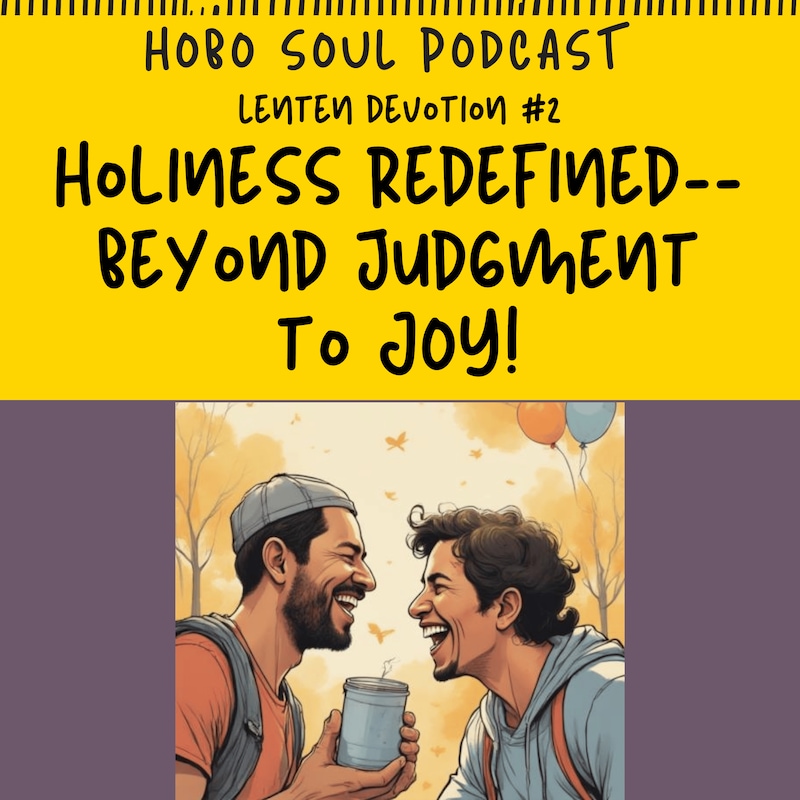
Today's discussion centers on the concept of holiness, specifically how it relates to our daily lives and our relationship with God. We explore the idea that being holy means being set apart, which can manifest in attitudes and actions that differ from those around us. It's important to understand that holiness is not about judgment or being "holier than thou," but rather about embodying characteristics such as love, joy, and generosity. I challenge listeners to consider how their lives might change if they embraced a more joyful and compassionate approach, reflecting the true essence of holiness as exemplified by Jesus.
Takeaways:
- The podcast emphasizes that personal holiness is vital to God and is a key theme throughout the Bible.
- Holiness is often misunderstood; it doesn't mean judgmental attitudes but rather being set apart for God's service.
- Being holy can be joyful and freeing, reflecting God's nature of love and mercy rather than fear.
- Listeners are encouraged to consider how their lives might change if they view themselves as set apart for God.
- The discussion offers a fresh perspective on holiness, highlighting its beauty and the joy it can bring to our relationships.
- The podcast concludes with a call to action for listeners to deepen their relationship with God during Lent.
Transcripts
Hi, welcome to the Hobo Soul podcast of road advice from the Bible and from me, Yvon Prehn, someone who's a little further down the road of life. I'll talk to you every weekday for about five to 10 minutes, with periodic longer talks on serious Saturdays. Let's get started with our topic today. ***NOTE from Yvon--I have no idea why the software I use split this up into different speakers--I've contacted the hosting company and they can't figure it out. The content is all there--please ignore the distractions.
Speaker B:Which is Lenten devotion number two.
"But as he who called you is holy, you also be holy in all your conduct, because it's written to be holy, for I am Holy"
That's what first Peter 1, 15 and 16 says.
And then AW Tozer comments on this when he says, "You cannot study the Bible diligently and earnestly without being struck by an obvious fact.
The whole matter of personal holiness is highly important to God. And then here's the challenge that I had in the little devotional booklet. To be holy means to be set apart.
Today, that might mean some very different attitudes and actions than the people around you. Consider the ways your life might be different if you considered yourself set apart for God's service.
Now, don't be intimidated on this topic of holiness, because I want to totally change your idea of what it means to be holy in the next few minutes of this podcast. And I think the end result will not only be much more encouraging, but it will be a much more biblical idea of what it really means.
What it really means to be holy and not the false one most of us have. Well, first of all, what do most of us think about when we think about being holy? I think it's a rather intimidating word.
It's kind of scary and dark and off putting.
We know it's one of the characteristics of God, but it's one that I know in the past I really associated with him judging us, kind of looking down on us because we're not as holy as he is and one that we don't really like as much as his characteristics of love and mercy. And then it says we're supposed to be holy. That to me always meant well. We're supposed to be judgmental.
And when you think about it, that derogatory term of being holier than thou comes to mind. You know, I don't like people like that. I don't want to be that. But I got to thinking, is this what holiness is really about now?
The whole idea, the whole definition, the whole outworking of it really bothered me. Not just because it's unpleasant, but because something didn't seem to ring true about it.
So what I do when things like this really bother me and I. I truly believe it's of the Lord. I pray about it, I research it, I look closely at what the Bible.
Speaker C:Actually says, not what people say it says.
Speaker B:I pray, I listen. And I am so excited to share with you what I found. Now first of all, a little disclaimer.
This is not a comprehensive, exhaustive treatment of holiness. It's more of focus on an exploration of part of it.
But I think it's a really critical part of holiness that we've overlooked in both how we view God and how we ought to reflect his holiness to our world. First, let's review the definition of holy. In both the Old and New Testaments, the word holy is defined in similar ways.
It means separate, sacred, without sin. But then a key term too in the definitions is always set apart. Now we understand the sacred and without sin and all that.
But how does this set apart thing work?
this way, where in Leviticus:Now then, the term holy is also used constantly in describing the tabernacle, the place of worship that the Jews had as they were going through the wilderness. All the pieces of the furniture and the tabernacle itself are consistently described as being holy.
Speaker C:Now think about this, okay?
Speaker B:If they're holy and the tabernacle is holy and all the furnishings are holy.
Speaker C:What were they really like?
Speaker B:In tangible, real terms, what were they like?
Speaker B:First of all, the people, because they were holy, did that mean they were miserable slaves? That they were serving a God of fear and darkness who demanded children as sacrifices?
Speaker C:No. They were a freed people. They were totally cared for. Food arrived each day without them having To work for it.
Speaker C:They had a day off from work each seven days, which they had never experienced in Egypt. They were on their way to a land of incredible blessings. Their holiness, their being set apart, made them a blessed people.
Now, what about the tabernacle, the holiness of it?
Speaker B:Was it a dark and dreary place?
Speaker C:Reflecting a God of anger and retribution? No. It was where atonement was made for forgiveness of sins. It was a place of incredible beauty. Multicolored hangings interwoven with golden thread.
All the furnish were solid gold. The priest was gloriously adorned and had this breastplate with jewels on it. How did the people respond to this holiness?
In Psalm 33 it says our hearts rejoice because we trust in his holy name. And in Psalm 97 it says, Be glad in the Lord, you righteous ones, and give thanks to His Holy Name.
And then in the New Testament, Mary responds in a very similar way when she says, for the Mighty One has done great things for me, and holy is his name.
When we look at the tangible outworking, the tangible expression of God's holiness, we see incredible beauty, freedom, rejoicing and thankfulness.
This is true holiness. But the more I studied it, it gets even more exciting. Obviously, a primary expression of the holiness of God is in the person of the Holy Spirit.
I mean, he is a "Holy" Spirit.
Speaker B:He's not the grouchy Spirit, he's not the avenging Spirit, he's not the mean Spirit, he's not the Lord it over you and make you feel miserable spirit. No.
Speaker C:What does holiness mean when we talk about the Holy Spirit?
Now to determine that, I think one of the best clarifications is just the illustration that when you think about a tree and the fruit that's on it, a tree can only bear fruit of what's the type of tree that it is. We see an apple, we know it came from an apple tree. We don't say, oh well, that apple tree is going to produce oranges or rotten fruit or whatever.
You know, beautiful fruit is what it's going to produce. So when we look at the fruits of the Spirit, we can see what the tree, the Holy Spirit is like that produces these fruits. And what are the fruits?
The spirit, Galatians 5: 22 and 23 says, but the fruit of the Spirit, this is what wells up from who he is, is love, joy, peace, patience, kindness, goodness, faithfulness, gentleness and self control. Now we're supposed to get these things into our life, but whether we do or not, these are the characteristics of the Holy Spirit.
I love how The Message translation puts it. It says, "but what happens when we live God's way? He brings gifts into our lives much the same way that fruit appears in an orchard.
Things like affection for others, exuberance about life, serenity. We develop a willingness to stick with things, a sense of compassion in the heart, and a conviction that basic holiness permeates things and people."
Now, based on what the Bible says, just these things we've gone over, and I could share many, many more verses and stories that underlie this whole idea that I'm talking about. Did you ever consider that being holy, being filled with the spirit, might mean to be a really joyful person, to Be a fun, a kind, a patient person.
Remember, Jesus was filled with the Spirit like no one else. He was holy. He was set apart. But what kind of a person was he? He loved parties. He was always attending them. The parties ruined his reputation.
He got into all sorts of trouble for them. The people who hosted them and what they did didn't seem to upset him at all. Just think about it.
This one instance where this woman comes in and just is pouring all this perfume over his feet and wiping it with her hair. Now that'd be kind of surprising today, and it certainly was then.
But not only did he not rebuke her because he realized it was an offering of extravagant love, but gave her an eternal commendation for it.
On his last night with his disciples, he could have held some major teaching session. He could have been all serious and all that kind of stuff.
But he had a dinner party.
We forget that the Last Supper wasn't intended as a setup for future chapel paintings, but it was a final celebration with those he loved when he rose from the dead. And he could have berated the disciples, which, by the way, he had to go looking for them when he found them. He could have abandoned them.
Or he could have yelled at them for abandoning him and talked about the horrors of the cross and, you know, he could have laid a major guilt trip on them, but he didn't. He found them and he surprises them with breakfast at the beach.
I think that is the kind of holy, the kind of set apart difference Jesus wants us to be. He wants us to be a person.
Speaker B:Set apart by generosity when others are stingy, set apart by love when others are mean, set apart by encouragement when others are sad, set apart by peace when others are in a panic and set apart for joy and fun and celebration of life. Throwing parties, giving gifts, showing love when it isn't expected. I started this podcast with the challenge.
Consider the ways your life might be different if you considered yourself set apart for God's service. Be set apart in the ways I just talked about.
Be different, surprising, joyful, and in your ability to love in all situations with all sorts of people. This is the kind of holiness that I pray we will all put into practice this Lenten season. And always.
Speaker A:In closing, for this Lenten devotional, which is a special hobo soul series that I'm doing for Lent. I'd encourage you to pause, take time to share with Jesus your response, thoughts and prayers to what you just heard.
You can do this quietly in your heart or you can write it out.
I have a free journal with the quotes, challenges and space for you to write in that you can download at www.Bible805.com.
Let me close in prayer for you that as Jesus went into the wilderness to solidify his calling, that you, during this time, retreat to a place spiritually where God can significantly deepen your relationship with him, where he can speak to you regardless of the temptations and distractions in your life, and that you'll come out of it with a clear sense of his calling for you and a commitment to follow it. Nothing more, nothing less, nothing else. Amen.

