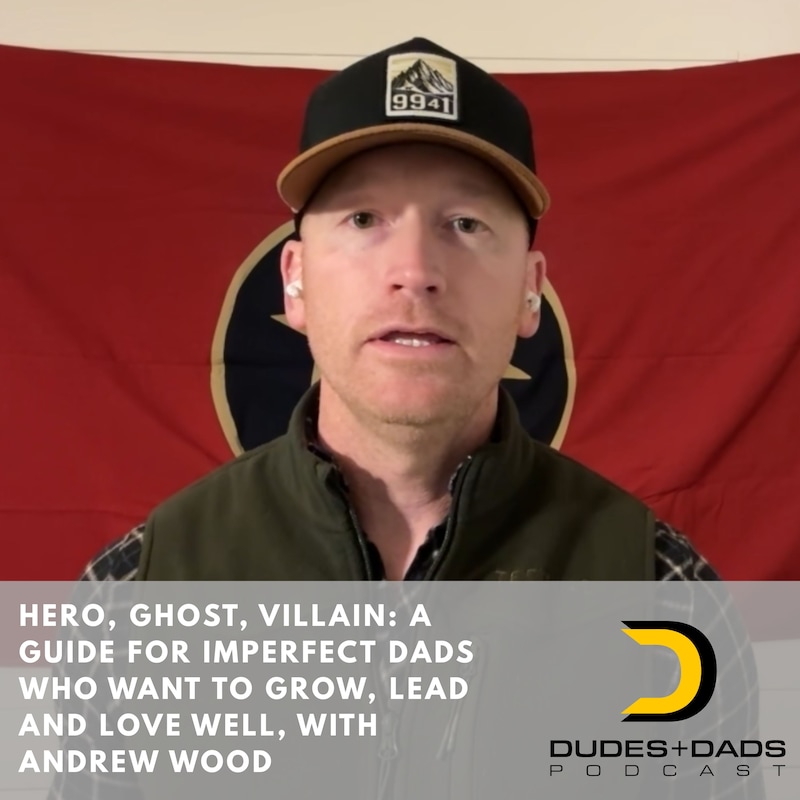
Shownotes
Author Andrew Wood joins the show to discuss his book, Hero Ghost Villain, breaking down three fatherhood archetypes—the engaged Hero, the disengaged Ghost, and the destructive Villain. The group explores fighting passivity, the benefits of marrying young, and how to model a strong family legacy.
Transcripts
Podcasts are cool.
Speaker:Welcome to Podcast Answers, the show where I help you start and grow your podcast, answering
Speaker:any podcasting questions along the way. That's right. Today, we are going to be doing that
Speaker:same thing. We are answering your podcast questions. And today we are going to be talking
Speaker:a little bit about improving your podcast audio quality all on a budget.
Speaker:Well, hey, guys, welcome back. If you've not been here for a little while, I've not been
Speaker:here for a little while. I took a break off at Christmas time, but it is so, so, so good
Speaker:to be back. It is, you know, in fact, one of those things that I just yeah, I'm actually
Speaker:really loving being back and being yeah, just being being here and being with you because
Speaker:it's been like I said, a while I've missed hanging out with you. I've missed being a
Speaker:part of your life, but I am back doing a few things now. I've got lots of content planned
Speaker:for this next year, so I can't wait to get into that and some really cool things coming
Speaker:up in the next few few weeks. Some things that I'm doing to improve my content and improve
Speaker:my scalability with you as well as my communication with you. So I can't wait to share more about
Speaker:that later. But first, today we are going to be talking just a little bit about how
Speaker:to improve your audio quality all well on a budget because I know not everybody does
Speaker:this for money. Lots of people do podcasting just because they love doing podcasting. And
Speaker:podcasting too. So that means that you can't always count on the fact that you have lots
Speaker:of money that is disposable to you for this. So what are we talking about today? There's
Speaker:a few things that we can do to improve our audio quality all on a budget.
Speaker:First thing is, is you can change your recording environment. So if you're recording in your
Speaker:kitchen, if you're recording anywhere where there's lots and lots of noise, it's a big
Speaker:room, it's maybe got hardwood, you're going to have a lot of audio reflections and refractions
Speaker:and you're going to hear that in your show. So what can you do to actually improve that
Speaker:quality of your of your audio quality? What you can do is you can record in a small carpeted
Speaker:room or closet to reduce the echo.
Speaker:I've heard a lot of people going into their closet that's in the room.
Speaker:And the reason for that is because there's a lot of clothes
Speaker:that are in there that that will take those sound waves
Speaker:and will actually make them so that they're not going to bounce
Speaker:back and forth and back and forth on on.
Speaker:And you're going to hear that in your recording.
Speaker:So, again, recording a small room, carpeted room or even a closet,
Speaker:because it has lots of clothes in there.
Speaker:And then you can use also use blankets and pillows and foam panels
Speaker:to dampen your sound reflections also.
Speaker:So if you're let's say you're maybe not going to record in a closet,
Speaker:but you can get pillows that are next to you on your bed
Speaker:if you're recording on your bed or somewhere, just that the audio
Speaker:is not going to go away from you as you talk
Speaker:and then bounce off of something hard and come back.
Speaker:That you can hear that a lot of times if you're listening into it,
Speaker:a podcast that is recorded in a larger room, you can tell that it's recorded
Speaker:in a larger room because you're going to have all of those sound refractions.
Speaker:So then avoid also rooms with hard surfaces like tiles or hardwood.
Speaker:You know, my my my living room is is a large room.
Speaker:It's carpeted, but the kitchen is is hardwood.
Speaker:And so what that's going to do is that's going to make it
Speaker:so that your sound bounces back and it's not going to be great.
Speaker:The next thing that you can do is make sure that you are using great microphone technique.
Speaker:If you're watching me on Instagram or YouTube right now, you will see one of the things
Speaker:that I am doing is I am really close to my microphone.
Speaker:In fact, I am like almost on top of it.
Speaker:I like to say if you could lick it like an ice cream cone, you're probably close enough.
Speaker:And so stay six to eight inches from your microphone for a consistent sound, because
Speaker:if you come back and you're back here and then you come forward like this,
Speaker:you're going to have a different sound to your voice.
Speaker:So say six to eight inches from your microphone for a consistent sound.
Speaker:Again, now, if you're on video, that is going to make it a little bit harder
Speaker:because your mic, your mouth is going to be
Speaker:in the way.
Speaker:And so you probably not going to want to to do that.
Speaker:But that also is comes.
Speaker:My next point is speak across the microphone rather than directly into it.
Speaker:So again, if you're watching me on YouTube or Instagram or whatever right now,
Speaker:you can see that I am moving.
Speaker:I'm talking.
Speaker:I have it placed just to the right of my mouth and I'm talking kind of across it,
Speaker:not right into it, because that also does a couple of things
Speaker:that helps get rid of the plosives that pop pop pop pop sound
Speaker:that you're going to hear as well as a pop filter.
Speaker:So pop filters also also help.
Speaker:But speaking across to your mic as opposed to directly in it
Speaker:is also going to help that to be able to keep that from sounding
Speaker:bad and harsh audio.
Speaker:But again, use a pop filter, speak across the mic
Speaker:rather than right directly on it.
Speaker:Those things are going to help make your you have consistent sound
Speaker:and just an overall better, better sound for your podcast.
Speaker:The next thing is just to use of affordable equipment that you can use.
Speaker:You can upgrade your your your your stuff pretty affordably.
Speaker:You can get a USB microphone like an audio Technica ATR 2100 X or a Samsung Q2U.
Speaker:Those are great off.
Speaker:Those are great mics for a relatively cheap price.
Speaker:And because they are USB, you can just use them,
Speaker:especially if you're just a solo podcaster where you're just recording your own audio.
Speaker:Now, it gets more complicated again.
Speaker:If you're going to be talking with somebody, if you're going to have
Speaker:guests on your show that are in person, the USB microphones
Speaker:are going to make it a little bit harder to to use.
Speaker:You can on some mics kind of do some more than just one.
Speaker:But most of the time, you're going to have some more problems
Speaker:when you are using a USB mic,
Speaker:if you're going to do that for more than just the solo shows.
Speaker:So that's one of the things that you're going to want to take into consideration.
Speaker:So if you are a solo podcaster, you can use
Speaker:USB microphones, and that's really easy.
Speaker:Now, for just a little bit more than the Samsung
Speaker:Q2 you or the ATR 2100 X, you can get a road pod mic USB.
Speaker:And the thing I like about that is because with those mics,
Speaker:you have the ability to have a USB.
Speaker:So if you're going to be just plugging into your USB on your computer,
Speaker:then that works great.
Speaker:Or you can also have that and plug that into an XLR
Speaker:if you have a bigger something else like a road, a roadcaster
Speaker:or some other audio mixer, you can use that in in those.
Speaker:And then you can you can use those.
Speaker:So for just a little bit more, you can get the road pod mic,
Speaker:and that's a great mic to use.
Speaker:Another thing to help get your audio quality better and your gear
Speaker:to be affordable, you can use affordable things.
Speaker:Use your headphones while recording to to monitor your audio quality.
Speaker:Now that gets a little bit hard if you're trying to plug it into your laptop
Speaker:and listen to your own sound on that, just because there's going to be
Speaker:some latency coming back from your headphones
Speaker:and it's going to sound a little bit weird.
Speaker:But if you if you have something like the Rode Pod mic,
Speaker:it has a headphone jack right in the back and you can directly hardware
Speaker:monitor that audio.
Speaker:And that's a great thing because you can you can listen to your own audio quality,
Speaker:your own audio sound.
Speaker:And now, again, people a lot of times say, Hey, Andy, do I have to wear headphones?
Speaker:Well, well, podcasting.
Speaker:I would say yes, because and you can get something like I have right now,
Speaker:I have a headphone and I don't have the in this setup in this studio.
Speaker:I don't have the big canned headphones.
Speaker:I just have a simple
Speaker:little simple headphone.
Speaker:It's why it is wired.
Speaker:You can't see it's coming down the back of my neck, but I am listening to myself
Speaker:as well as the audio that I'm playing in the background,
Speaker:because the way that I record, I do record having what I call live to tape.
Speaker:In other words, I am playing all of the audio sounds.
Speaker:I am playing all of the the mics, anything that I'm doing live.
Speaker:I play as I record and then I'm done when I'm done.
Speaker:I don't have to add those tracks in later.
Speaker:So for me, I do wear headphones.
Speaker:And again, you get used to the sound of your voice.
Speaker:So the reason you do that is because that way you can hear yourself
Speaker:in your headphones to know if if you are the same volume
Speaker:as maybe if you do have a guest or your sound or whatever.
Speaker:So that is one of the reasons that you do wear headphones.
Speaker:Now, some other things that you can do for upgrades and make your sound better
Speaker:is you can use some free software solutions to like Audacity or GarageBand.
Speaker:Those are great for editing and also noise reduction.
Speaker:Those both of those tools have some some tools in them for for reducing noise,
Speaker:as well as just, you know, plain simple editing.
Speaker:But what you can do is put a compressor and a normalizer on your audio levels,
Speaker:especially if you're having multiple guests, but even even on your own,
Speaker:you want to have some compression and some normalization to your audio.
Speaker:What that does is the compression takes the high sound
Speaker:and the low sound and kind of squishes them.
Speaker:So it makes a more consistent sound.
Speaker:So that way, when you're talking low,
Speaker:it's the same as if you're talking really loud.
Speaker:And so it doesn't it doesn't have like it's not hard on your listeners ears
Speaker:to when you're when you have some compression on your audio.
Speaker:So that's one of the things that you're going to want to do for your audio
Speaker:is use something like GarageBand or Audacity.
Speaker:Those are both free options.
Speaker:I use Adobe Audition, but I like it
Speaker:because it has some more advanced features in it.
Speaker:But if you're on a budget, you can use something like Audacity
Speaker:or like GarageBand because both of those things are free.
Speaker:They come. You can get them really easily for your computers.
Speaker:GarageBand is going to be for your Mac.
Speaker:Audacity is for either.
Speaker:And then again, you do some compression to that
Speaker:and it makes the sound sound a whole lot better.
Speaker:You're going to also want to reduce your background noise
Speaker:with some built in filters.
Speaker:You'll want to play with those.
Speaker:There's not really a good hard, fast setting that I like to use.
Speaker:Every time that I start editing somebody,
Speaker:a client of mine's podcast, I use a different.
Speaker:I try to get that sound better, so I use some different tools in that
Speaker:to make that sound good.
Speaker:So you just have to play around with that.
Speaker:But there are definitely some tools in your and filters in your your
Speaker:your digital audio workstation that you're going to have
Speaker:be able to make your sound sound better.
Speaker:Another thing that I like to use is a is a noise gate on my on my phone
Speaker:or not my phone, my microphone.
Speaker:There you go, because what that does is if you listen,
Speaker:I'm going to stop talking for a second, but I'm going to make some noise
Speaker:with my sound with my mouth.
Speaker:I rubbed my hands together and you only heard that very last little bit as it got too loud.
Speaker:And the reason for that is it's a noise gate.
Speaker:And what that does is it closes the mic off once the input gets so low.
Speaker:So if I stop talking, my mic is essentially muted until that noise level gets loud enough
Speaker:that it opens that gate.
Speaker:And the reason you want to do that is because what that does is that allows your your any
Speaker:background noise to be kind of cut out.
Speaker:Now, if you are in a loud, noisy environment where there's an air conditioning, the noise
Speaker:gate is going to sound weird because it's going to cut off and maybe open a little bit
Speaker:or you'll still hear that.
Speaker:And as you stop talking, that sound is going to go away.
Speaker:So you want to do some simple fixes for your audio, like turning off fans and AC and appliances
Speaker:while recording, just because even with the noise gate, that is going to sound a little
Speaker:bit weird in the background.
Speaker:So again, you're going to want to probably not be doing those to have those sounds on
Speaker:when you're recording.
Speaker:But again, it's really super simple.
Speaker:I mean, if you're recording for, let's say, 30 minutes, having the air conditioner off
Speaker:for 30 minutes or the fan off for 30 minutes, it may get hot in your room, but it's going
Speaker:to make your audio sound a lot better.
Speaker:The other thing you can do to help reduce noise is record during quieter times of the
Speaker:day.
Speaker:If you know that your family, say you have a family of four little kids.
Speaker:I love kids. I love having my kids.
Speaker:I've got kids that range from 20 all the way down to 10.
Speaker:And so when they're home, the house is rambunctious.
Speaker:There is lots of things going on during the house, in the house,
Speaker:when when the kids are home.
Speaker:So if I'm going to be recording at home, I'm going to want to take that time
Speaker:when they're at school or away or in bed
Speaker:because that allows the house to be quieter.
Speaker:and less likely that those random noises are going to make it into my podcast.
Speaker:You want to make your podcast sound professional.
Speaker:You're going to want to make it sound like there's not people in the next room
Speaker:to get into a quiet place, get into a small room with lots of carpet and
Speaker:clothes or things that are going to absorb your sound and also make sure you
Speaker:turn off your fans, your AC, record during quiet times.
Speaker:And then the last thing that's going to be tip for you is.
Speaker:Put your phone on airplane mode to avoid interference.
Speaker:So that's not only.
Speaker:For for dings and buzzes and things like that, because, you know,
Speaker:even if I have my phone and my phone is sitting next to me right now, but.
Speaker:If my if somebody texts me.
Speaker:My phone is going to vibrate on the table,
Speaker:and you're probably going to hear that because it's sitting close
Speaker:still my microphone arm and it's going to take that that. Buzz.
Speaker:And it's going to get into my microphone.
Speaker:But the other thing, too, is that the radio interference, too.
Speaker:So it's not doesn't happen nearly as much as it used to.
Speaker:But back in the day, I can remember you could almost anticipate
Speaker:when a phone call was going to come in if you were using your computer
Speaker:because the speakers would get like a buzz on them right before the phone rang.
Speaker:And so there's that radio interference also.
Speaker:So put your phone in airplane mode to avoid your distractions,
Speaker:to avoid also any radio interference that may come in,
Speaker:as well as just getting distracted, because I know that for me,
Speaker:if my phone buzzes, I'm going to try and look down on it.
Speaker:I'm going to lose my train of thought and it's not going to work well.
Speaker:So those are some simple things that you can do right now
Speaker:to help improve your audio quality.
Speaker:all on a budget. You don't need lots of expensive equipment.
Speaker:Yes. As you move up in quality in your podcast,
Speaker:you're going to probably want to get better equipment,
Speaker:but you can start with what you have right now.
Speaker:And improve your audio quality right now.
Speaker:So, guys, thank you so much for joining me. Welcome back.
Speaker:It's a new year. Twenty twenty six.
Speaker:I'm happy to help you provide content for your show
Speaker:to help you improve your podcasting. But you know what, guys, if you need help, if you have questions
Speaker:from me, I am available for one on one consulting. You just go to podcastanswers.com/contact
Speaker:and fill out that form and you will get directly in my inbox and we can work one on one. I can help
Speaker:you start your show. I can help you grow your show. I can edit your show for you.
Speaker:We can do it. We can make you a master of podcasts.
Speaker:Have a great week, guys, and keep podcasting.