Shownotes
📺 Watch the Video on Spotify, YouTube & Rumble
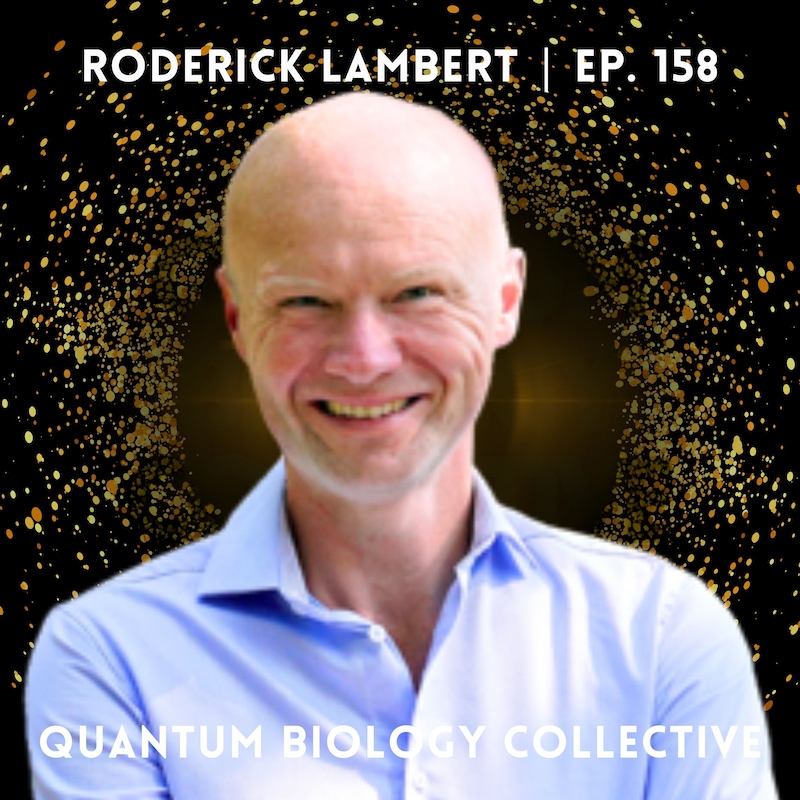
“It’s not too late—never too late to start,” says Roderick Lambert, midlife men’s weight loss coach and quantum biology enthusiast, who joins the Quantum Biology Collective Podcast to unpack why the classic advice to “move more, eat less” fails most men in their 40s and 50s—and what really works instead. The key, Roderick Lambert explains, isn’t calorie counting or punishing gym routines, but restoring health at the cellular level: supporting mitochondria through light, water, magnetism, and honoring our ancient circadian rhythms.
In today’s episode, Roderick reveals how accelerated aging is the hidden epidemic behind stubborn weight gain, poor sleep, and brain fog in midlife, and shares the practical protocol he uses to help clients reclaim energy and cognitive clarity—often more quickly than they expect. He recounts his own transformation, the science of biophoton emissions, and what measuring the actual light coming off his own body taught him about aging and resilience. He also offers simple, actionable adjustments for anyone stuck in a modern, screen-filled lifestyle who wants to optimize their health even without drastic life changes.
Tune in to learn why our bodies are wired to respond to sunlight, local food, and daily movement—and why understanding your mitochondria could be the most powerful shift you ever make for lifelong vitality.
5 Key Takeaways
- Light is everything—start every day outdoors. Morning sunlight sets your brain and metabolism for real resilience and energy.
- Rethink food—ditch factory-made, embrace local and seasonal. Prioritize protein, eat mindfully, and let natural satiety guide your portions.
- Own your sleep—stay consistent with bedtime and wake up routines. Make your bedroom pitch black and track how quality sleep transforms your mood, body, and focus.
- Protect your circadian rhythm—limit screens at night and use blue blockers. Swap out harsh indoor lights for full spectrum bulbs whenever you can.
- Progress is personal—focus on building systems, not chasing perfection. Every small shift—from a walk outside to a better meal—can reset your trajectory for lifelong health.
Memorable Quotes
"When you look at what brings health, it all goes down to light, water, magnetism, the mitochondria. You have to hack the modern environment because it's pretty detrimental in the way we've set it up in a standard way of life."
"It's logical—we were wandering around outdoors all year round. The only water we had to drink was in the natural sources of springs and rivers, and the food we had was what grew locally and seasonally. That's how our physiology has adapted itself to work."
"As we age, our cells start to get less functional, producing more light. More and more of the mitochondria in our cells are starting to function less efficiently, and when they do, it creates a chain reaction of oxidative stress. This is why we start to see things like cognitive decline and chronic disease at younger ages—the rate that humans are aging is accelerating."
Connect with Roderick
Website - https://mmh.midlifemetabolichealth.com/links-page
LinkedIn - https://www.linkedin.com/in/rodericklambert/
Facebook - https://www.facebook.com/MidlifeMetabolicHealth
Instagram - https://www.instagram.com/midlifemetabolichealth/
Resources Mentioned
Joe Dispenza Meditations - https://drjoedispenza.com/
Guy Foundation - https://www.theguyfoundation.org/
Solite Photonutrition Panel by Ken Seder - https://solite.eu/
Midlife Metabolic Health - https://midlifemetabolichealth.com/
Connect with The Reverse Aging Club:
On Substack: reverseagingclub.substack.com
Visit The Reverse Aging Club: reverseaging.club
Join us for a weekly live hang out, Thursdays at 12noon ET https://zoom.us/meeting/register/j_07VPOWRbWYtZWbimO9bg
Institute of Applied Quantum Biology
RAC is a proud supporter of the non profit Institute of Applied Quantum Biology, a 501c3 dedicated to integrating quantum and circadian biology into health and wellness practice. Without ipublic support this science will take decades to become widely adopted.
Donate to launch JAQB: https://givebutter.com/AQBjournallaunch
You can join the FREE QBC online community here: https://qbcpod.com/freecommunity
The Institute of Applied Quantum Biology, a non profit organization translating the new science into practical application: https://www.iaqb.foundation/certification
Podcast website: reverseaging.club
Tools we use: https://qbcpod.com/products/
Recommended Products:
Lifewave phototherapy patches. Highly recommended for women 45+ or anyone with a condition or symptom they'd like to see shift. Start with x39.
Purchase retail: https://lifewave.com/qbcpodcast/store/products/40825027-6466-4cb8-92d3-dfc318d34a65
For more info from Meredith, fill out this form: https://qbcpod.com/patches/
Join Us On Social
Instagram: https://instagram.com/reverseagingclub
Facebook: https://www.facebook.com/QuantumHealthTV
Rumble: https://rumble.com/c/TheReverseAgingClubwithMeredithOke
X/Twitter: https://x.com/QBCPOD
IAQB Resources
Instagram: https://www.instagram.com/iaqb.ce
🎙️🎙️🎙️
This podcast uses the following third-party services for analysis:
Podscribe - https://podscribe.com/privacy
Transcripts
Roderick Lambert, welcome to the QVC podcast. Hello,
Speaker:Meredith. It's a privilege and an honor to be here. I've been listening to
Speaker:so many of them, and now I'm actually appearing on one. It's like, oh, my
Speaker:God, here you are. Well, thank you so
Speaker:much. I really appreciate that. And I'm excited
Speaker:to talk to you and hear about your journey. You've done
Speaker:such good work spreading the light wellness
Speaker:message to the world and especially, as I was just saying,
Speaker:especially to the men, because
Speaker:I talk a lot about women's health and I'm like, oh,
Speaker:I've kind of been ignoring the boys. So. Roderick, I know
Speaker:you work with lots of people, but you do have a strong focus on men
Speaker:of a certain age. So tell me what you're seeing out there in
Speaker:the world with your clients who are
Speaker:probably just out there living their lives and not overly
Speaker:focused on biohacking or anything like that. Yeah, well, I'm
Speaker:not really a biohacker, but when you look at what
Speaker:it is that brings health, it all goes down to light,
Speaker:water, magnetism, the mitochondria. And thus you have to
Speaker:hack the modern environment because it's pretty detrimental
Speaker:in the way we've set it up in a standard way of
Speaker:life. But yeah. So men,
Speaker:midlife, so whatever that means to you, I call it 40 to 60
Speaker:years old. Typically they're working in high pressure
Speaker:jobs. Have a family achieved something in their career,
Speaker:and Those sort of 20 or 30 years of
Speaker:intense hard work and achievement
Speaker:have led them to accelerate their
Speaker:mitochondrial aging or accelerated aging. And
Speaker:the ones that come to me generally are at a stage where they've realized,
Speaker:okay, I'm 50, I'm 30, 40 kilograms
Speaker:overweight. Starting to feel that kind of not thinking as
Speaker:clearly as previous as I used to.
Speaker:Stamina is failing. I can't do this stuff. I used to. And
Speaker:all the things that worked in my 20s and early 30s, like going
Speaker:on a health drive and dieting and running and going to the
Speaker:gym, they're not working anymore.
Speaker:So that's. That's kind of the sort of typical client.
Speaker:That is a really good point. And I think that that is a
Speaker:turning point for a lot of people. It's like we developed at a
Speaker:certain stage in life, we kind of developed ideas of what it means to be
Speaker:healthy. And when we're off track, we're like, oh, I got to get back
Speaker:to those things. Like, I got to start running again and, and, you know,
Speaker:not eat so many donuts or whatever. And then you
Speaker:finally gather the willpower to do that, you get back on track
Speaker:and it's not having this at all. The same effects
Speaker:that it had when we were in our 20s. And it's like,
Speaker:what's going on? How do you, how do you explain that
Speaker:to them? Well,
Speaker:that's a good question. It's something I'm still working on, trying to get that
Speaker:message across. But I very, very clearly,
Speaker:all my messaging and I talk to clients and the first thing I do with
Speaker:a new client is we just go briefly over what, you know, what
Speaker:is the mitochondria, what are the mitochondria? Rather, what is a
Speaker:mitochondria? And what. And, you know, let's
Speaker:ditch this idea of calories in, calories out. It literally
Speaker:doesn't obey the 21st century understanding
Speaker:of physics as we know it. So now when
Speaker:you consider this little organelle, all the things that impact and affect
Speaker:it, then that's where we're going to do the work. So, yes, it is
Speaker:movement, yes, it is food composition, but it's also timing
Speaker:of food. It's the light diet, it's your circadian rhythms getting back on
Speaker:track and some sort of. We do a bit of
Speaker:fasting work as well for better accelerating fat adoption and the
Speaker:benefits of fasting. So I try and frame it round. Let's
Speaker:get your cells humming, your mitochondria purring back
Speaker:at least as well as they should be at the age of 50, let's say,
Speaker:because that's the key to, first of all,
Speaker:getting rid of all the excess body fat and improving
Speaker:your stamina and brain function.
Speaker:But also when you've done that and you've done it in the way we're going
Speaker:to do together and built those habits, then you'll be able to maintain it then
Speaker:for the rest of your life and you will get the
Speaker:maximum health span for your lifespan.
Speaker:Nice. Yeah. Because I think it's. It is,
Speaker:you know, I mean, for you and I, we've been talking about
Speaker:mitochondrial health for a long time and it's like, yes, of course, but
Speaker:it's not well understood out in the, in
Speaker:the general mainstream at all. And it,
Speaker:and the implications of thinking of health
Speaker:as beginning at the level of mitochondria
Speaker:are very wide ranging and really, as you said,
Speaker:go much beyond what the traditional understanding
Speaker:would be. So could you
Speaker:explain a little bit sort of in your words, for a general audience,
Speaker:how you see it all fitting together?
Speaker:Well, I think it mirrors my own kind of
Speaker:journey into this, this world, this subcellular
Speaker:world, even veering on the subatomic but
Speaker:I start. All my life I didn't know what a mitochondria was. I worked
Speaker:30 years in HR, Human Resources.
Speaker:I don't remember learning about mitochondria at school. I always feel a bit
Speaker:embarrassed when people say, oh, at school you learned it was the powerhouse of the
Speaker:cell. I don't even remember learning about mitochondria. Neither do I.
Speaker:It was not mentioned at all.
Speaker:So yeah, and I thought it was calories in, calories out,
Speaker:eat less, move more. And I sort of maintained till
Speaker:the early 30s, slightly increased weight from my teenage
Speaker:years, but nothing unreasonable. But as you get
Speaker:older, you get more and more mitochondrial
Speaker:damage. They stop functioning as smoothly as well as they
Speaker:should and the problems start to pile up slowly. And
Speaker:of course I did the usual thing, getting up extra early to go for that
Speaker:morning jog, trying all sorts of
Speaker:diets and things and generally sort of starving myself. It worked for
Speaker:a bit and then you give up because something happens or life happens and it
Speaker:all comes back again with interest. And I got to the
Speaker:point I turned 40, become a father
Speaker:and got a new position in my corporate career.
Speaker:And after a few years, three years of that, I realized
Speaker:first of all, this corporate God that we all worship, I wasn't happy to,
Speaker:didn't find it fulfilling to still worship. But
Speaker:also I'd ballooned after a year or two of like
Speaker:intense jogging and eating pasta and vegetables five times a
Speaker:day and losing 5kg, I
Speaker:obviously couldn't keep that up and got balloons to the
Speaker:heaviest and biggest I'd ever been. So I quit the
Speaker:job, my corporate career, trained as a coach. But at
Speaker:the same time I had started to go down this sort of rabbit hole, peeled
Speaker:off the first onion skin of. Okay, so it's
Speaker:not just calories in, calories out, it's this whole thing about what you eat,
Speaker:the macronutrients. So that was, you know, I started discovering that the low
Speaker:carb, high fat world. And it was
Speaker:like someone had taken a blinkers off my eyes. My God.
Speaker:It's actually, the thing actually makes a difference what you eat in
Speaker:terms of what happens to it when it goes inside you. And I just kept
Speaker:digging and digging and digging and digging. And while I'd started out as a
Speaker:life and business coach, I was still fascinated
Speaker:by this whole world of actually what is human
Speaker:health, Having applied it to myself and
Speaker:dropped all the extra weight, 25kg in seven months.
Speaker:And then eventually I just switched to being midlife
Speaker:men's weight loss coach. By the way, I have successfully coached Some
Speaker:women too, but generally it is.
Speaker:And, yeah, and I just kept going down and I was getting this idea, okay,
Speaker:so it's the organs, it's the Insulin, the Resistance, etc.
Speaker:And then I realized. But hang on. But there's something more there. There's, you know,
Speaker:these sort of. Then slowly, you know, when you start thinking about things, that the
Speaker:universe starts putting things your way. And. And there was a
Speaker:point, I think, three years ago where I was. Yeah,
Speaker:someone had told me about this.
Speaker:It was a money meditation thing. Joe Dispenza.
Speaker:I'm not sure who. It was someone like that
Speaker:to play this six times a day and get into a kind of a
Speaker:meditative state and read this book. It was
Speaker:called the Quantum Warrior, I think.
Speaker:But it really resonated with me. And
Speaker:funnily enough, my business started, you know, it was going in a bit of a
Speaker:fallow period at that time. It started going well
Speaker:and. But even. Interesting. Yeah, well.
Speaker:And then I bumped into. Well, well, well, well, well, that's
Speaker:what we're supposed to think anyway. And now these days, I
Speaker:believe that there's a lot, a lot to say for
Speaker:that. But I bumped into the
Speaker:seven and a half hour interview between
Speaker:Jack Cruz, Rick Rubin and. Who was it?
Speaker:Huberman, wasn't it? Yes. And that was like. That was
Speaker:like, wow, about another five layers of.
Speaker:That'll take you all the way to the middle of the onion. And, you
Speaker:know, I was floundering like I was in a
Speaker:tsunami of, you know, tidal waves. I was completely lost, but
Speaker:it just fascinated me, so. And that's when I started really looking down,
Speaker:getting below the organs, the endocrine
Speaker:system, down into. Into how cells work. And that took me to the.
Speaker:The mitochondria. And since then it's just been digging deeper and deeper
Speaker:and learning more about it.
Speaker:Fantastic. I love that. I love that journey.
Speaker:It's quite similar to my own, actually. It's like.
Speaker:It's like, okay, I'll try this. Okay, I'll try this. And then it's like, wait,
Speaker:what? Well, try, but also read and
Speaker:study and listen. I mean, on this browser I have something like
Speaker:50 tabs open with various different papers I still haven't got around to reading,
Speaker:but just too much. So, okay,
Speaker:so tell us. Because, yes, the research
Speaker:journey is intense. And then there's. And there's so much of it,
Speaker:Right. It's not like, oh, there's, you know, one or two papers floating out there
Speaker:that we can extrapolate from. It's, you know, there are, I think
Speaker:in PubMed. Last I checked, there were more than
Speaker:90,000 papers on circadian rhythm slash
Speaker:regulation. And then the last time I
Speaker:checked the papers on quantum biology, you know, they were
Speaker:much lower, but they're building and building. So
Speaker:when you started to look at all of this,
Speaker:which is incredibly overwhelming. So good for you,
Speaker:what were some of the key insights that you started to have?
Speaker:And how did you start to sort of make sense of
Speaker:this world of mitochondria and light?
Speaker:And apparently we have little
Speaker:organisms in our body reading frequency all day long. Like how did you
Speaker:sort of, how did that kind of. How'd you land the
Speaker:plane on that? I don't know if I've landed yet, but
Speaker:yeah, I was gonna say we're never landing. We're gonna be
Speaker:circling for decades. Yeah. But you know what's strange?
Speaker:It's like it just makes sense. It's. For me it just
Speaker:kind of fits it. It's like, yes, that
Speaker:simply makes sense that you know, when you're barefoot on the
Speaker:ground, your, your autonomous nervous system
Speaker:resets to, you know, the parasympathetic and, or why
Speaker:it's so great here. You know, the forest circadian retreat
Speaker:in the forests. Why? It's just, you come back from a weekend here and you
Speaker:feel like a different person. You know, is it
Speaker:the ions and anti of the air? Is it
Speaker:the green of the green color of
Speaker:the foliage? Is it
Speaker:the infrared reflecting down off the leaves? Is it the
Speaker:being, you know, lack of electro smog that you have in
Speaker:a large natural national park? Is it just the fact
Speaker:you're moving or the fresh air or whatever? I mean there are all sorts of
Speaker:things that could be, but you can actually sort
Speaker:of trace little lines of evidence to all these things.
Speaker:Some lines are longer, some are less, some are more speculative, some
Speaker:are more factual, but you can still do it and it just makes sense. So
Speaker:I think for me, and also the first principles, I'd say, you know, we,
Speaker:I mean not just Homo sapiens, what is it, 300,000 years homo sapiens, but just
Speaker:the whole our ancestry in fact. Then you get, then you get down to things
Speaker:like how life started on the planet, which is just, you know,
Speaker:you get into life, the creation of life on planet and you get into
Speaker:consciousness and that's just really mind blowing. But
Speaker:let's not go there right now. Anyway, so you
Speaker:think, you know, it's logical we were wandering around with
Speaker:maybe some skins on us, doing
Speaker:whatever we did, hunting, gathering, reproducing,
Speaker:maybe starting to make some tools and Stuff outdoors
Speaker:all year round. The only water we
Speaker:had to drink was in the natural sources of springs and rivers.
Speaker:And the food we had was what grew locally and seasonally.
Speaker:And we spend a lot of time not eating, we spend a lot of time
Speaker:moving. We spent a lot of time in the direct sun,
Speaker:also in the shade. And it just makes
Speaker:sense. That is how we adapted. That's how our physiology
Speaker:has adapted itself to work. So when you take away all these
Speaker:inputs, then suddenly your physiology doesn't have
Speaker:that comfortable, comfortable, familiar surrounding
Speaker:environment that it spent hundreds of thousands and hundreds of thousands, even
Speaker:millions of years developing around. So I think it just
Speaker:makes sense from that kind of first principles point of view.
Speaker:Yeah, absolutely. And I really relate to that. It's like on the
Speaker:one hand it's like why didn't. It's like what? And on the other hand it's
Speaker:like, oh yeah, of course we're supposed to
Speaker:get natural light. Of course there's a difference between
Speaker:real light and fake light. Like actually. Yes. Why haven't
Speaker:we been thinking about that? Of course we wake up at sunrise and
Speaker:you know, and went to rest at sunset. Yeah.
Speaker:So yeah, it just makes sense like that. I mean we are
Speaker:still have the physiology of cavemen.
Speaker:You know, we haven't adapted as quickly, that quickly to.
Speaker:It's been impossible to adapt so quickly to the rate of change
Speaker:that has been going on the last, well, definitely the last 300 years. But in
Speaker:particular the last hundred and fifty and the last
Speaker:ten, you know, it's just going mad, the exponential
Speaker:technological advancement. I mean it's wonderful but at the same time it's
Speaker:almost entirely detrimental to what ourselves
Speaker:require and are expected and have adapted to do so. They are
Speaker:adapting and well, they're reacting to this new environment
Speaker:in a way that is meant to make, you know, keep you
Speaker:alive to survive the natural selection.
Speaker:But it's, it's, it's an uphill. These reactions
Speaker:may manifest as what we call
Speaker:disease. Yeah.
Speaker:And for people like your clients, you know,
Speaker:people who are in middle age and work a
Speaker:traditional career, those careers have
Speaker:become basically a full time screen job. I mean
Speaker:my husband has a job like that and he's, he's on zooms today
Speaker:from 8 till 6.
Speaker:You know, he's got a window cracked and he goes out, runs outside every,
Speaker:every hour. But that's, you know, that's his
Speaker:life. And it used to be like you, you could still burn
Speaker:out from stress, but you weren't in front of a
Speaker:screen that much. So. And then I want
Speaker:to get into, I want to get into your, your experiment that you did recently.
Speaker:But before we get into that. So the blue light, right? So we're in
Speaker:front of all these screens just by virtue of our
Speaker:careers. A lot of, for a lot of people. So
Speaker:just walk, walk us through how you
Speaker:recommend that somebody in that situation
Speaker:makes adjustments and why. Because I, I want this
Speaker:episode, this episode is to be shared with the men in
Speaker:your life. That's what this is
Speaker:for. So I want them to understand, like, okay, what are, what should I be
Speaker:doing then? Right. And,
Speaker:you know, what can I do? We can't go back to living as we did
Speaker:only, you know, 5,000 years ago. That's
Speaker:literally impossible in this day and age. So what can we do? And
Speaker:this, you know, so I'll take you through actually what I do with clients because
Speaker:that's the easiest way. The Mitre Regen protocol, as I
Speaker:call it. And so basically we start
Speaker:with, we start with four pillars. So one is food composition.
Speaker:So the
Speaker:only rule you need to remember about what you eat is that it should be
Speaker:local and seasonal. That's the easiest rule to remember.
Speaker:And of course it should be thus. Hopefully, logically,
Speaker:it's also therefore whole food. Foods that
Speaker:grow in the ground or run around on the land, fly in the air or
Speaker:swim in the water, but not coming out of a factory in a
Speaker:been. Yeah. So slow, clean, seasonal. And because I'm
Speaker:Here at the 50th degree north
Speaker:latitude Czechia, just like most of my clients, you know, Germany,
Speaker:France, uk, then
Speaker:that means in the winter, naturally, basically
Speaker:eating primarily animal based. And then in
Speaker:the spring and summer, you're going to be adding in all the stuff that grows
Speaker:around you. And is it the flower farmers market? That's like. So that's the
Speaker:food thing. And here's
Speaker:a quick tip for all you gents, but also the ladies. I must say,
Speaker:they tend to actually underestimate
Speaker:the power of protein even more. But
Speaker:the first thing to do is a protein challenge. So basically I
Speaker:tell them to supersize their protein portions in their meals. Eat
Speaker:it first, chew it slowly, don't watch TV and
Speaker:scroll on your device while you're eating, and monitor your satiety.
Speaker:When you get to 8 out of 10, you stop eating.
Speaker:And I get messages back because I'm in constant contact with my clients on
Speaker:WhatsApp. It's like one client called it witchcraft. A lady, by the
Speaker:way, this is some sort of witchcraft because she suddenly didn't have any, she didn't
Speaker:want any chocolates she hadn't eaten for, I don't know, five hours or
Speaker:something. And crazy. Another guy,
Speaker:three in the afternoon. So I had breakfast this morning and it's absolutely
Speaker:weird, I'm still not hungry. He was a
Speaker:CEO of a bank. So it was like
Speaker:amazing what happens when you just start to actually give
Speaker:your cells the substrate that they need
Speaker:to actually then make energy more efficiently,
Speaker:less messily then the second
Speaker:prong. So look at your diet. I mean, look at not how much
Speaker:you eat volume, but look at the content of what
Speaker:you're eating, the composition and relearn your natural hunger
Speaker:and satiety signals. And generally
Speaker:that switches within a matter of days once they start. That
Speaker:second boot camp, as I call it, is based on
Speaker:sleep and circadian rhythms. I don't normally
Speaker:give it the title and the light diet because that can scare people
Speaker:off. And in general we do the sleep and
Speaker:circadian rhythms and the light diet I kind of put in
Speaker:here and there, et cetera. So you get start getting the idea that the
Speaker:light we are exposed to has fundamental
Speaker:physiological or we react fundamentally at the
Speaker:level of cells and hormones to the
Speaker:different types of light we expose ourselves to. But circadian
Speaker:rhythms again, I mean, for the gents and the
Speaker:ladies, the phases of dark and night,
Speaker:sorry, dark and light, absolutely key to
Speaker:all biological systems
Speaker:and all the things that go on within them and the things they do
Speaker:are hooked up to this central clock that is the
Speaker:main, the main signal is the phase
Speaker:of light and then dark and then light and then dark. Yes,
Speaker:different biological systems do different things at different times, but
Speaker:that is the, that's the pendulum that just ticks day in, day
Speaker:out. And yeah, so
Speaker:there's a sort of education, but I mean, I focus on sleep because that's what
Speaker:a lot of people suffer from. And when they fix the circadian rhythm, then
Speaker:suddenly they're sleeping better, not just sleep onset that the sleep
Speaker:biologists seem to get so obsessed about. That's important
Speaker:how quickly you fall asleep, but it's actually what's going on during
Speaker:the sleep. You know, you've got your architecture, sleep architecture. You want
Speaker:to have no disruptions. Ideally, yes, there's a certain amount
Speaker:of length, but you need certain things to happen. Leptin,
Speaker:reset the glymphatic system, clearing up
Speaker:your brain, you know, the brainwash at night
Speaker:and all these other things. So to do that though, you have to get the
Speaker:internal cascade of hormones and that sort of constant
Speaker:interplay of cells and organs in
Speaker:the right synchronicity with so they work in the right
Speaker:order and do the right thing at the right time. So that's really key as
Speaker:well. And because I primarily my message is
Speaker:about weight loss, your metabolism is
Speaker:almost entirely controlled by this circadian rhythm.
Speaker:And if you're not getting the right quality sleep, then you're going to really
Speaker:struggle to lose weight long term
Speaker:for sure. Third boot camp then we go into like
Speaker:a bit deeper into fat adaption and fasting. So we talk about the timing of
Speaker:food. I mean you and I would probably talk about chrono nutrition
Speaker:actually eating when you're supposed to eat in the day. Depending on the season, you're
Speaker:ideally going to eat during daylight, not at night,
Speaker:after dark. But that's pretty hard for most people
Speaker:who are working. So it's about, you know,
Speaker:perhaps narrowing that eating window down to let's say 12 hours or
Speaker:10 or whatever kind of works for them. But also
Speaker:starting to exercise what I call the fasting muscle.
Speaker:So going to 24 hour fast, trying that a few times.
Speaker:Some people, one recent client said to me, no, I
Speaker:can't do 24 hours. I've been without food for
Speaker:18 hours before. And I got the shakes and felt disinfectant. That's okay, it's cool.
Speaker:And after a month of being on the, you know, this is. Anyway a month's
Speaker:gone by then. I think his fat adaption had improved his ability to
Speaker:switch between burning glucose, burning fat.
Speaker:And so he did it and it was like, wow, that was
Speaker:so easy. And now he's gone, he's, he's mad about fasting. It's like for him,
Speaker:that is the biggest mind blowing thing that
Speaker:he's learned from me is that he can actually go two days now
Speaker:without, oh,
Speaker:there's someone going down the stairs.
Speaker:Yeah. So anyway, so he's like absolutely
Speaker:off his mind that he can go two days without eating anything at all
Speaker:and just be extra focused on all the stuff he has to
Speaker:do. And the final bit is movement. Yes,
Speaker:movement's important, but it's not about burning calories, it's about everything from, you know,
Speaker:the piezoelectric effect, about
Speaker:mitochondrial regeneration, etc,
Speaker:etc, so you know, deuterium depletion. So
Speaker:those are the four pillars and that's how I explain it. But I explained in
Speaker:the concept of their daily. That's why it's one on one because, you
Speaker:know, this lady I'm working with,
Speaker:I'm getting a lot, I'm not sure if it's on the recording, but I'm getting
Speaker:a lot of banging in my ears
Speaker:it's the. So yeah, one lady I'm working with, for her she's
Speaker:rediscovered her enjoyment of swimming. So she's now going
Speaker:four times a week to the local swimming pool. Another guy's got his own little
Speaker:sort of mini home gym and a treadmill. So for him it's
Speaker:just tweaking the way he does his weights but also how he does his
Speaker:cardio. Because I'm a big fan of
Speaker:Philip Maffatone or Maffatoni. I'm not sure how you pronounce his surname.
Speaker:American sports scientist and his math method.
Speaker:So it's different for everybody how you.
Speaker:In the details but the broad concepts are the same. And then we go
Speaker:for two months where I'm actually putting on the coach's hat, where
Speaker:I'm helping them to learn through their own experience
Speaker:and build these habits into what I call
Speaker:systems. So actually they're building a system for
Speaker:continued success. There's no kind of end
Speaker:date or goal to achieve specific. Well there is one. There are
Speaker:a couple but it's more about. It's starting to become
Speaker:then standard way of living. Right. And then we might bring in
Speaker:things like cold thermogenesis and grounding. But I. That's based on the
Speaker:temperature of the client and how they do.
Speaker:That's. That's a very thorough and robust approach. I love it.
Speaker:There was. So there's. There was one. There's one piece that I wanted
Speaker:to expand on a little because I do find this really
Speaker:trips people up. And when I say things like this
Speaker:people just stare at me like what is. You are
Speaker:so crazy. You know the idea that circadian rhythm
Speaker:is connected to our metabolism and
Speaker:I mean we know it's connected to every biological function but I think
Speaker:that that one in particular people are like, what. How
Speaker:does like circadian rhythm is like when I get jet
Speaker:lagged how. What does that have to do with my metabolism? Could you
Speaker:expand on that piece a little bit? I will
Speaker:try to. And yeah. And the first thing I'd say is that
Speaker:unless they're paying me, I don't talk about this stuff at all. Not even at
Speaker:home because you just get looked at like you're mad
Speaker:or I'm on a podcast, I'm happy to divulge.
Speaker:So how does circadian rhythm impact
Speaker:your metabolism? The broader
Speaker:picture is I use Swiss railways. So
Speaker:it's basically the Swiss railway system is renowned for being on time. I don't know
Speaker:if it's still true, but it used to be. Or Japanese bullet trains. They run
Speaker:on they literally to the second on time.
Speaker:And so there's a central controller
Speaker:there that is ensuring that all the trains and all the junctions,
Speaker:all the stations and all the drivers are getting the right information at the right
Speaker:time. So, so the trains can go speedily, without delay,
Speaker:safely along their routes to the destinations.
Speaker:As soon as that controller starts to
Speaker:misread his script or press the wrong buttons, then you're going to start
Speaker:getting accidents on the track, trains are going to get
Speaker:delayed, et cetera, et cetera. So including the train,
Speaker:that is your metabolism, because that is
Speaker:site that is linked to again the
Speaker:phases of dark and light and also dark and light, and also
Speaker:when you eat that time of that moment that you eat during the day,
Speaker:once, twice, maybe three times during the day, then
Speaker:that also helps, that's feedback for the circadian system
Speaker:about food consumption. So
Speaker:consistency is one thing and regularity. But
Speaker:concerning the actual idea of,
Speaker:well, so one of these trains I talked about is the
Speaker:metabolism train. And at night,
Speaker:while a lot of people I think just kind of think sleep is just something
Speaker:you do, you switch off and then in the morning you switch on again and
Speaker:nothing's happened. And if you're lucky, you feel refreshed.
Speaker:Actually I provocatively say
Speaker:you actually do more in your sleep than you do during the day. In the
Speaker:day your body's just keeping you alive, but at
Speaker:night it's doing everything that helps you stay alive the next
Speaker:day, fixing all the damage. I use the supermarket as an
Speaker:allergy, the 24 hour supermarket that during the day there's no time to
Speaker:clean up all the stocks coming off the shelves, people are buying, they are
Speaker:dropping stuff, making a mess, etc. But at night the supermarket
Speaker:closes, the cleaning crew comes out and they clean up the stock,
Speaker:they restock the shelves, etc. If it didn't happen that,
Speaker:if that didn't happen or it wasn't long enough, or it wasn't done good enough
Speaker:quality, then the next day when the supermarket opens, there won't be enough
Speaker:supplies, there'll still be a mess, etc. So
Speaker:I don't get, don't often have to go
Speaker:so deep down into details like you know, leptin signaling
Speaker:and being
Speaker:in a certain phase of sleep, you know, certain period after you've gone to
Speaker:sleep, which is actually not so much after you go to sleep. It's like since
Speaker:you saw the first light that previous morning, that then
Speaker:this sort of whole leptin signaling, the main, I call
Speaker:him the main or it the chief
Speaker:accountant, inventory Stock taking, that takes place at night. But if
Speaker:you're not getting to bed
Speaker:at a certain time, after you've got up and seen the morning light
Speaker:in a certain stage of sleep, then that inventory won't take place. And your
Speaker:body simply says, your body gives the brain, or brain gives the
Speaker:message. Okay, tomorrow, there's scarcity.
Speaker:There's scarcity in the environment. Everything we
Speaker:consume, we're going to have to store. That's the default,
Speaker:default mode that your
Speaker:metabolism is in store because there isn't enough. But if the brain
Speaker:is getting the signal inventory and can take stock
Speaker:of what the food environment's like, how much fat there is
Speaker:in the body, et cetera, et cetera, then the brain gives permission.
Speaker:Yep, tomorrow you don't have to store. You can burn and
Speaker:that will affect your appetite as well as how you
Speaker:actually use what you're taking in. That was a long answer. Sorry.
Speaker:No, I love it. That's great. This is what we're here
Speaker:for, is to, to hear how this works.
Speaker:And I think metaphors are the perfect way to do it
Speaker:because I feel like once we can wrap our minds around
Speaker:it, then what you were saying about creating those systems and
Speaker:creating a relationship with food and
Speaker:light that's different from the one we had before, it becomes more possible
Speaker:because the intellectual part of us does
Speaker:want to be satisfied. I always say my, my intellect needs
Speaker:like a bone to chew on so I can go and change my habits
Speaker:without it interfering too much.
Speaker:Doubtless you've heard the phrase, when you know better, you do better.
Speaker:Yeah. And to have enough to understand why.
Speaker:And because at the end of the day that changing our
Speaker:light is not that hard. I mean, when
Speaker:you think about all the other things people think they have to do to lose
Speaker:weight, you know,
Speaker:mitigating bright light at night and going outside in the morning is
Speaker:like actually just thinking about like, compared to
Speaker:gastric bypass surgery or liposuction or
Speaker:marathons or whatever people think they have to do.
Speaker:Yeah, it's actually pretty straightforward.
Speaker:And sometimes I think that's the issue. Like it's too simple, but like, no, it
Speaker:should be more like, should be more complicated, but
Speaker:not really. Yeah, yeah, I agree.
Speaker:I have nothing to say. Well, it can be complicated because right
Speaker:now, you know, it's dark at 5:30 in the evening and
Speaker:only gets light at 7 or something in the morning over here. So.
Speaker:So the social clock, unfortunately is the same all year round. The solar
Speaker:clock changes as we progress through the
Speaker:seasons. And that has to, you know, you have to sort of think about that
Speaker:a little bit. So. And it is quite. I mean, I struggle with it
Speaker:myself a little bit. What to do in the morning. I get up at 6,
Speaker:make my son breakfast and it's dark. So what am I gonna do about
Speaker:my light environment? So what do you do?
Speaker:Well, currently. Well, last year, last winter I was
Speaker:being very, very
Speaker:diligent about wearing my blue blockers and
Speaker:using just this, for instance, this little beacon here. It's a no blue
Speaker:beacon from your friends.
Speaker:Friends at block blue light. But it's really handy this
Speaker:and sort of not quite
Speaker:finding my way in the dark but under these dim circles and then once the
Speaker:sun comes up, getting outside
Speaker:this winter, I'm not being as consistent or diligent, I have to say.
Speaker:So I'm using one of those bulbs that emits at least a full
Speaker:spectrum of visible light to kind of
Speaker:replicate that light. Although I'm fully aware that
Speaker:it's maybe not even a tenth as strong as
Speaker:the sun's daylight, so it
Speaker:won't have the same effect. But yeah,
Speaker:I know of a great panel that I think you've had
Speaker:him, Ken Seeder on the podcast. Yeah. So his
Speaker:Solite photonutrition panel, I'm a big
Speaker:fan because it's 13,000 lux,
Speaker:powerful, full range, not just visible
Speaker:balanced visible light, but also into the near infrared.
Speaker:So, you know, almost as close to as about as close
Speaker:to the sun as you can get from a tech device perhaps.
Speaker:And then you can switch it into a red and infrared lamp
Speaker:panel for therapy later
Speaker:on. So I want to get myself one of them, but I haven't got around
Speaker:to it. That would be the perfect for winter. That'd be perfect. Yeah,
Speaker:those are great. And yeah, Ken Seder's lights are
Speaker:great. It's a non profit organization and
Speaker:he worked alongside John Ott back in the day. So
Speaker:yeah, great product. I'm happy to support, support him. And, and I agree and
Speaker:I love you explaining that because yes, you know, we, we, we have life,
Speaker:we, our children go to school, we. There are certain things that,
Speaker:I mean, I know people who have opted out completely and, and
Speaker:run their own schedules and I have deep respect for that. But
Speaker:not all of us have chosen to do that. But what I'm hearing you
Speaker:say is that there are ways to make choices that are at least
Speaker:keeping in mind the circadian aspects.
Speaker:And so even if we can't at this
Speaker:moment rearrange our schedule, we can not
Speaker:look at our phone first, we can at least have a full spectrum bulb or
Speaker:something. Approximating. Approximating
Speaker:what we could be getting outside and.
Speaker:Yeah, and I think it's. I really do encourage people to, you know, work with
Speaker:a practitioner who understands this because. Cause there are nuances to it
Speaker:and it's just so important. So that's the message. It
Speaker:matters. It doesn't have to be perfect, and
Speaker:it could be the best you can do. We don't have any purity
Speaker:tests here. Whatever. Every small step counts.
Speaker:Cracking your car window on the morning drive.
Speaker:Putting on the blue blockers like you're wearing when you watch TV at
Speaker:night. Like all these little things. All right, cool.
Speaker:So thank you so much for that. I think you have given, like, a really
Speaker:solid overview. I hope that all of the
Speaker:husbands and boyfriends who are. And dads who are having this episode
Speaker:shared with them feel seen. Okay.
Speaker:You're. It's, you know, life is life and things happen.
Speaker:So if you're not feeling or looking how you'd like to
Speaker:be, there's lots of, lots of possibilities in the world
Speaker:to do things differently and feel good.
Speaker:And Rodrick's a great guide for that.
Speaker:So. Okay, so tell me, you've been
Speaker:waiting, haven't you? Yeah, I've been waiting. I'm like, okay, I've got to
Speaker:cover them. We got to do the foundational pieces.
Speaker:So you're just casually mentioning that you had your
Speaker:biophoton emissions measured. Yeah. I
Speaker:didn't know you could do that. Yeah, well, you can't just do it anywhere. I
Speaker:was gonna say, what's going on in Prague?
Speaker:Well, yeah, so
Speaker:there I was watching a lecture in the Light
Speaker:right now, the Guy Foundation. If you know anybody who wants to get into
Speaker:this, it's. Maybe you're like
Speaker:several levels advanced. Well, doesn't matter. Guy Foundation. The Guy
Speaker:foundation is amazing. That. That is deep science, friends. So if.
Speaker:If that's what you need, go there. If you need the deep science, go to
Speaker:see. Go see the Guy Foundation. But, you know, you had
Speaker:Bob Fosbury on. On recently. I just listened to his.
Speaker:To the. You know, he's. I could listen to him hundreds of times. There's always
Speaker:something you. But anyway, he was giving a lecture in the spring sort of
Speaker:autumn series currently ongoing, on Light.
Speaker:And introducing the talk was this
Speaker:Czech researcher scientist called Dr.
Speaker:Michael Tiffre. And I thought, bloody hell, he's here in Prague.
Speaker:I should just reach out and contact him. And in that quantum
Speaker:way, as it happened, well, I reached out to him on LinkedIn. Just say, hello,
Speaker:are we connected, etc. And as it happened,
Speaker:a Few weeks later, the Czech Academy of Sciences had its week
Speaker:of open house for the Czech Academy of Sciences,
Speaker:various locations. And the
Speaker:Institute of Photonics and electronics, where Dr.
Speaker:Sifra has his lab, had
Speaker:also excursions and lectures there. So I
Speaker:signed up free of charge. It was great. Let him know that I was coming,
Speaker:that I'd say hello, you know, poor guy. And. Yeah, and so
Speaker:I went to see, you know, what was put on for the public and I
Speaker:knocked on his door and we got talking and I said, yeah, be really
Speaker:cool actually, because his research is around
Speaker:ultra weak photon emissions. That means the light that is
Speaker:created in your body all the time,
Speaker:what it's for, how to measure it, what it's good for, etc. And
Speaker:trying to understand it. So that is a large part of his work. The rest
Speaker:of his lab also is looking at how to use microwave
Speaker:EMF to modulate. They're looking
Speaker:particularly at microtube tubules in the cells. So that's very
Speaker:interesting too. But anyway, he's
Speaker:real expert on
Speaker:ultra weak photonic emissions. Your own
Speaker:biophotons. Right. So for people just joining
Speaker:the party, our body actually emits light.
Speaker:So that does tie back into how light is so important. I mean, we are.
Speaker:It has been shown with. You can't see it with the naked eye, but
Speaker:it has been shown that we are giving off
Speaker:what is called ultra weak biophoton emissions. And
Speaker:so this guy has a lab where he studies those. Exactly.
Speaker:And yeah, and he's done some interesting papers and posters and research on the topic.
Speaker:And I said, it'd be really cool, you know, at some point if I, if
Speaker:I would be able to like measure my own biophotons. So he
Speaker:said, well, yeah, okay, let's. Let's go and do it. So
Speaker:I went into this. Yeah, it's absolutely cool. The guy is really nice as well.
Speaker:So. Yeah, and
Speaker:one of his research team took me into this dark room.
Speaker:There was a big black box with a cuff, a sleeve,
Speaker:black sleeve. She said, you know, put your hand in there. Then there's a
Speaker:sensor, there's a place to rest your hand. And. Yeah, and so
Speaker:they switched it on. And on the laptop next to me in some software, there
Speaker:was literally this graph that was demonstrating how many
Speaker:photons per second was coming off the skin of my hand.
Speaker:It was about 30 to 40 photons per second. Wow,
Speaker:it was so cool. That's so cool. We are
Speaker:so cool. Humans are so amazing. Like what?
Speaker:Well, I don't think it's just humans. I mean, mammals at Least do the same,
Speaker:I'm sure. Biology in general, living
Speaker:systems. So, so what are they
Speaker:studying in terms of biophotons and do they have any
Speaker:theories? Have they. You know, are there ranges
Speaker:where they, like, oh, you have, you have lots of biophotons
Speaker:emitting or less. Right. It's, it's. I don't think,
Speaker:you know, the various work or the
Speaker:labs around the world that are looking at this have got
Speaker:as far as that. But Michal did say that
Speaker:he's a few months away from developing a product where it
Speaker:could be in a clinical setting at least, used to measure
Speaker:biophotons. And because there's a correlation between the
Speaker:amount of photons being released and
Speaker:oxidative stress that it could be,
Speaker:at least it would be one way of gathering data
Speaker:to then see. Can measuring your biophotons
Speaker:tell you anything about the level of oxidative stress
Speaker:in the subject by way of explanation?
Speaker:It's generally thought that the more photon emissions
Speaker:that are cap. More photons you're emitting, the higher the
Speaker:oxidative stress at that point in time,
Speaker:at least. Because, of course, oxidative stress is present all the time and
Speaker:it goes up and down. So potentially, and
Speaker:I'm working with a longevity clinic here in Prague that,
Speaker:so we'll be talking about this soon, is, you know, how could
Speaker:this possibly be used as another advanced,
Speaker:another advanced way of, you know, potentially
Speaker:measuring via the chronic or the
Speaker:oxidative stress in someone their biological
Speaker:age as well? Because there are lots of different ohmics
Speaker:and telomeres and that sort of thing. Perhaps measuring
Speaker:your biophotonic emissions would have something would be
Speaker:able to tell us something about that. So, you know, maybe Michael would
Speaker:be something we could have on your, on your, on your podcast, actually. Yeah, no,
Speaker:I'd love to. I was going to say, I got his contact info. Yeah.
Speaker:Because. Yeah, the way I've heard it described is that as we
Speaker:age, our cells leak light at a
Speaker:higher rate and when we're young and healthy, we keep
Speaker:it more, keep it inside of us and it's a little
Speaker:tighter. Is that related? That's a very useful
Speaker:shortcut for people who don't know about
Speaker:what's going on at this level. Because I would say from
Speaker:what I know, that is essentially true, but we're going back to the
Speaker:mitochondria. That's why we start to get fat and irritable, sorry,
Speaker:having cognitive decline and autoimmune and
Speaker:cosmetic skin rashes and this sort of thing as we get older, because
Speaker:more and more of the mitochondria in our cells are starting to
Speaker:function less efficiently. And when they start to function as efficiently because they're
Speaker:somehow damaged or the electron transport plane is blocked, then you get all
Speaker:these electrons spinning, falling off and
Speaker:reacting. Because oxygen is highly reactive. You know, if you've set fire to something with,
Speaker:with a match, you know, oxygen is reactive, that is starting
Speaker:to react with the molecules and proteins
Speaker:and things that are around in the cell and in the mitochondria itself. So
Speaker:there's. And this of course, damages the mitochondria and the cell and all the other
Speaker:organelles and things inside the cell, which creates a chain reaction of more
Speaker:and more of this happening, like fireworks. You can imagine it. So the more of
Speaker:these start to do this, then you can reach a
Speaker:threshold within the cell where the cell will actually then collapse. The
Speaker:cell membrane will collapse and it'll spill out and start it all over again somewhere
Speaker:else. And therefore it's like an avalanche of this oxidative
Speaker:stress, as it's called. This. This.
Speaker:Yeah, the oxidize oxidation of molecules in the cell.
Speaker:And at some point, of course, cells make up tissues,
Speaker:tissues make up organs, so it'll start affecting
Speaker:the organs in which this is going on. So whether it could be a pancreas,
Speaker:be it could a kidney, a brain, heart, et cetera.
Speaker:So yes, so as we age, this happens naturally at a certain
Speaker:speed. But as we've discussed, the
Speaker:modern lifestyle actually has so many insults to our cellular
Speaker:biology that actually we are. Now we talk about the
Speaker:pandemic of obesity, of heart disease, etc. It's a pandemic of
Speaker:accelerated aging simply. And it's, you know, you can see
Speaker:this now that people are being diagnosed with cancers, unfortunately, at a younger
Speaker:age, with all sorts of these chronic diseases
Speaker:of lifestyle at younger and
Speaker:ages, simply the way the rate that humans are
Speaker:aging is accelerating. So instead of getting it at 60 or 70,
Speaker:you're getting at 40 or 50, et cetera, or even younger.
Speaker:And as this cellular, basically
Speaker:fireworks build up inside you. One of
Speaker:the ways we make this light is
Speaker:when this oxidation process happens, you excite the electron into
Speaker:a higher energy state and when it comes back to the lower energy
Speaker:state, it releases a photon. So that's how they're made.
Speaker:Most of them are absorbed within the body. But of course, if you're measuring the
Speaker:skin, then you've got a chance of actually picking them up on a
Speaker:specific special
Speaker:thing, measuring device. But I don't know anything about the
Speaker:engineering behind this, but which is What I did.
Speaker:So that was a long answer. But yes, as we age, our
Speaker:cells start to get less functional as well,
Speaker:producing more, more light.
Speaker:Incredible. Yeah, it's going to be, I think, very
Speaker:interesting as our capacity to measure that
Speaker:increases and understand the links between,
Speaker:between all of this. That's, that's a practical,
Speaker:real world use. But whatever, you know, for me the intellectual
Speaker:challenge is not for me but for others to do. But I want to
Speaker:understand it, thanks to their work, is what
Speaker:is going on? Why are we producing this light? You know, what is it doing?
Speaker:And you can hypothesize that because
Speaker:we know that there are very many
Speaker:molecules in our body that react to different spectra of light.
Speaker:Then is this light
Speaker:signaling to these other molecules in the near vicinity
Speaker:at certain frequencies of light to do things? Is this
Speaker:actually. The micro tubules actually
Speaker:can channel the light so from one part of the cell to the other, from
Speaker:one part of the cell to the other to the next cell through the body.
Speaker:So it's doing something. It's not just there by accident.
Speaker:So that's what I would really like to know, but hopefully I'll live
Speaker:for this science to have been,
Speaker:what's the word? Diligently and rigorously studied, maybe.
Speaker:Yes, well, I think it's happening. I mean, I'm
Speaker:been getting emails and finding new quantum biology
Speaker:labs popping up all over the place. And this
Speaker:lab, it probably doesn't use the term quantum biology, but that is what
Speaker:they're doing. And I think that
Speaker:investors are starting to see the potential in it
Speaker:for technological innovations and
Speaker:healing devices and so forth. So I have, I feel pretty
Speaker:good, we're going to learn some really cool stuff in the next decade.
Speaker:Yeah, yeah. And just by meeting
Speaker:Michal, apart from measuring my photons, you know, he's just based on
Speaker:a post I was doing about this experience, he sent me about eight or nine
Speaker:really interesting papers to read about it. So, you know, and
Speaker:then, you know, his lab runs monthly, I think,
Speaker:lecture with other researchers in different parts of the world. So I've just, I'm
Speaker:halfway through this amazing lecture by this, I can't remember his name.
Speaker:I'm very sorry, sorry, sorry, sir, from Canada,
Speaker:who's now research, you know, the first 20 minutes is all about,
Speaker:you know, the quantum supposed and
Speaker:already elicited discovered
Speaker:quantum effects, you know, in biological systems. So you know, this
Speaker:quantum effect of how, you know, elect light tunnels
Speaker:within the, the, the, I can't
Speaker:really call it now, but anyway, the leaf of a plant before it finds, you
Speaker:know, that the to then attach to a
Speaker:chloroplast. I don't know much about plants, but
Speaker:anyway, so that. That seems to be. To demonstrate quantum
Speaker:effects in that. It's just. It's
Speaker:wonderful. Beautiful. That's amazing. Yeah, I'd love.
Speaker:We'll track down that. We'll track down that video and put it in the
Speaker:show notes because that sounds really cool.
Speaker:Yeah, it is. We've reached a point, it
Speaker:feels like, where we have just started to develop the
Speaker:technology to measure these things. So it could have been
Speaker:said theoretically, of course, there are quantum effects
Speaker:running living organisms, running living systems. But
Speaker:now we can actually. I mean, to my. What. From
Speaker:what I understand, we can actually see it. It's been imaged
Speaker:and it's. There is imaging of quantum tunneling that I
Speaker:think was around 2019 or something. I don't know
Speaker:if it was in a leaf, but the actual act of it. Okay,
Speaker:I don't know about that. I thought the problem with quantum
Speaker:effects is that the. The observer is part of the
Speaker:quantum universe. So the observer impacts and
Speaker:influences the thing that he's trying or she's trying to measure. So that's
Speaker:a slight problem. Yeah, I don't really know how
Speaker:we get around that, because the quantum universe seems to know. Even if
Speaker:it's just a machine and there is no consciousness around, it still
Speaker:knows it's getting measured, doesn't it?
Speaker:Yeah, exactly. That's part of the problem. But. Yeah, well, Michal
Speaker:himself, you know, the thing I used was quite an expensive bit
Speaker:of kit, but he said there's another piece of
Speaker:technology that they use for. To measure actually the
Speaker:whole body. You have to sit there for five hours. But I've seen
Speaker:images of it, and this is
Speaker:even more expensive and complicated technology, but it exists.
Speaker:If you need someone to sit there for five hours and measure photons,
Speaker:I will do it. I'll be your guinea pig. You know, happy to. So.
Speaker:Oh, that'd be great. Oh, I'm very excited to
Speaker:know that we've got technology where we can start
Speaker:gathering a lot of biophoton emission data.
Speaker:So fun. Yeah. Yeah. Well, I should. I'll definitely
Speaker:tell him, you know, about today's podcast and I'll
Speaker:ask him if I can pass on his contact to you because he's. He would
Speaker:be an interesting person to talk. Yeah, I'd
Speaker:love to talk about him. What. Where the technology and
Speaker:level of understanding is today. Yes.
Speaker:Yeah. No, this has been so super fun. Is there anything you'd like to
Speaker:add, Roderick, or any. Any last thoughts? We've
Speaker:covered a lot of ground today. I feel like.
Speaker:Well, what would I add? I mean, to the.
Speaker:The male partners of your female audience, but also to the ladies who
Speaker:are watching and to the gentlemen who are watching, I would say
Speaker:that you don't have to understand all this in great detail.
Speaker:You do need to have an interest a
Speaker:little bit to a certain degree, to be open and receptive to
Speaker:the things that, you know, you hear Meredith's
Speaker:guests talking about week in, week out, because
Speaker:what we have been, and I was for almost my entire life, you
Speaker:know, trained to think that it's all about calories in, calories out,
Speaker:move more, eat less. Whether it be weight loss or health or whatever it
Speaker:might be you're striving to achieve in your health. It's not the whole
Speaker:picture, and it's only when you actually change your perspective.
Speaker:We're not steam engines. We have these trillions of
Speaker:little things in us that actually
Speaker:are far more complex and sophisticated than any kind of steam engine,
Speaker:and they require certain things. And then when you start to. But again, the things
Speaker:you do are actually quite reasonable. You know, it's getting out in the
Speaker:morning sun, it's making sure you're getting some sunlight during
Speaker:the day. It's about keeping a
Speaker:steady bedtime, a consistent bedtime.
Speaker:It's about, you know, making sure it's pitch black in your eye. They're not
Speaker:crazy, crazy things. While they may well
Speaker:be having quantum effects within you, you don't have to understand them
Speaker:and you will see the difference. And, yeah,
Speaker:so it's not too late. Never too late
Speaker:to start. I love that
Speaker:it is never too late and it makes a difference for most
Speaker:people quite quickly. So thank you so much,
Speaker:Roderick. And how can, how can people find
Speaker:you? So, yeah, I post
Speaker:pretty much daily on LinkedIn.
Speaker:I spend a lot of time preparing posts and it's. Yeah, but I just
Speaker:really enjoy it and I'm always learning new, fascinating stuff. I just feel I have
Speaker:to share. And it's difficult for my audience because it's not always about what they
Speaker:want, you know, losing fat or having more energy.
Speaker:So that's my challenge. I have a lot of
Speaker:nerds on. LinkedIn who love reading all your random stuff.
Speaker:Yeah, well. Yeah, well,
Speaker:yeah. Roderick Lambert on LinkedIn. I have a
Speaker:links page, midlifemetabolichealth.com where they have
Speaker:got a bunch of free resources you can get or sign up. There's
Speaker:even a slightly oddball health quiz you might want to
Speaker:try, see where you're at. It doesn't ask you most of the questions there.
Speaker:You won't be asked at your GP or your doctor.
Speaker:And I'm on Facebook and Instagram as well. Midlife Metabolic
Speaker:Health. Roderick Lambert as well. And otherwise, you can
Speaker:DM me through any of these platforms and I'll be very happy to have
Speaker:a chat with you about anything at all, actually.
Speaker:Fantastic. Well, thank you so much for coming on.
Speaker:I very much enjoy your posts on LinkedIn, so thank you
Speaker:for taking the time to do that and reading all this research and then
Speaker:being able to talk about it in a way that those of us
Speaker:who majored in English can understand.
Speaker:If it's any consolation, I have a bachelor's degree in
Speaker:music, so. And if I can understand it,
Speaker:then anybody else can. Right? Yes. And that's.
Speaker:And that's a great message. You know, this stuff is,
Speaker:you know, getting right down into the weeds
Speaker:can be a bit much, but there are some great takeaways that anybody can
Speaker:understand if they choose to pay a little bit of
Speaker:attention and listen to people like Roderick. All right, thank
Speaker:you so much. We'll do it again. Thank you, Meredith. Yep.
Speaker:Take care. Bye. Bye.




