Transcripts
Welcome to Live With The Pricing Lady.
Speaker:I'm Janene, your hostess.
Speaker:This show is all about helping you build a sustainably profitable
Speaker:business while making an unbelievable impact on your world.
Speaker:Learn from my 20 years of experience and from my guests as we discuss their pricing
Speaker:challenges, failures, and successes.
Speaker:Pricing is a way of being or behaving in your business.
Speaker:My mission is to help you confidently charge for the value you deliver.
Speaker:Pricing is either hurting or helping your business.
Speaker:Let's make sure it's helping you reach your dreams.
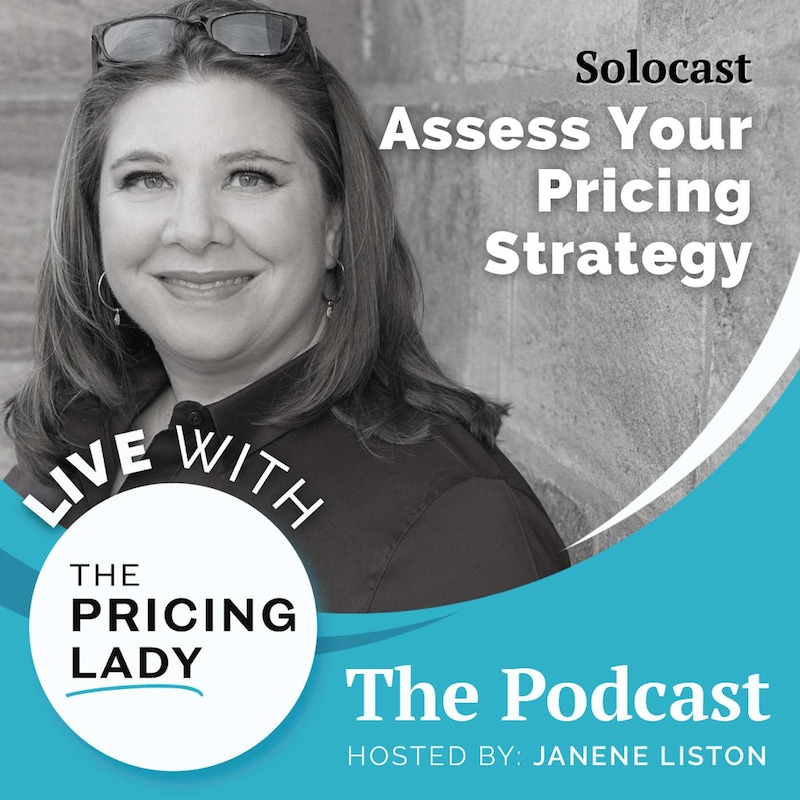
Speaker:In this episode of Live with The Pricing Lady, we talk
Speaker:about starting strong in 2025.
Speaker:I'll give you seven key questions to help you assess your pricing
Speaker:strategy to make sure you're getting off to the right start this year.
Speaker:Sit back, relax and enjoy the episode.
Speaker:Welcome to Live with The Pricing Lady.
Speaker:I'm Janine Liston your hostess.
Speaker:Super happy to have you here with me today.
Speaker:In this episode, we are going to be taking a look at how to
Speaker:start off strong in a new year.
Speaker:Like this 1 20 25.
Speaker:We're already well into January.
Speaker:And for some of you, you may not have taken the time to take a
Speaker:step back and take a look at your pricing strategy and decide whether
Speaker:or not changes need to be made.
Speaker:This is a really important step because of your business has moved
Speaker:forward and your pricing has stayed the same chances are you're not
Speaker:charging the right prices anymore.
Speaker:I've got seven quick key questions that will help you to
Speaker:assess your pricing strategy.
Speaker:So you can make a more informed decision about what, if any changes are needed.
Speaker:Let's dig right into the first question.
Speaker:So the first question you're going to ask yourself is what is changing
Speaker:or has changed in my business.
Speaker:Now, if we're talking about this chain in the context of the last
Speaker:time you looked at your prices.
Speaker:So that could be just a year ago, a few months ago, or it could be many
Speaker:years ago, depending on your situation.
Speaker:And here's the catch.
Speaker:Almost every business decision you make will have an impact on your
Speaker:profitability and pretty much always have an impact on your pricing as well.
Speaker:Or maybe it should.
Speaker:The important thing is that you stop for a moment think about that change.
Speaker:Ask yourself.
Speaker:Should that have an impact on my pricing and then do something if needed.
Speaker:For example, if you're going to go with a new go-to market strategy, so maybe you
Speaker:decided working with private clients isn't as where you want to be, that you actually
Speaker:want to work with business clients.
Speaker:And therefore that's a different go to market strategy.
Speaker:You're going to go get those customers in a different way, and that could impact
Speaker:something like your customer acquisition costs and therefore change your prices.
Speaker:Or it could be that they have a higher willingness to pay.
Speaker:Then maybe you could also change your prices there.
Speaker:So these are the types of things that you want to be thinking about.
Speaker:If your costs have been rising, that's another change in your business
Speaker:that definitely could affect your pricing, or you could just let affect
Speaker:profitability depending on the case.
Speaker:But if you're right, if your costs are rising, you're definitely going to want
Speaker:to take a look at your pricing strategy.
Speaker:So there are many different decisions that you make in your business.
Speaker:Let's say you hire a new employee.
Speaker:Do you need to adjust your prices or do you need a new pricing category
Speaker:for, you know, that type of employee, if you're in a service-based business
Speaker:or if you're in a product based business and you change where you're
Speaker:manufacturing is going to be done, that can also affect your pricing strategy.
Speaker:So think about the changes that are happening in your business, or that have
Speaker:happened recently in your business and how that might affect your strategy.
Speaker:Let's take a look at question number two.
Speaker:Have my target customers changed.
Speaker:Yep.
Speaker:This is a real big one.
Speaker:Now I use that in the example before, but it's relevant here because customers
Speaker:can change for many different reasons.
Speaker:You decide to broaden your market.
Speaker:You decide to shrink.
Speaker:You know, reduce the number of target clients you have, you decide
Speaker:to shift from one to the other.
Speaker:So there's lots of different ways in which your customers can change.
Speaker:As a group, but then there's also what's changed in terms of how they
Speaker:value your offer or what they're looking for in terms of a solution.
Speaker:So if we think back to COVID right, so many people.
Speaker:Started ordering more food for delivery.
Speaker:And that changed for a lot of people in the gastronomy industry, how they were
Speaker:delivering food to their customers.
Speaker:Right.
Speaker:And of course that also may have changed who their customers were.
Speaker:So originally there were customers who were people who, you know, usually just
Speaker:ordered in for convenience, but now their customer base grew significantly
Speaker:to include a lot more people who probably have different preferences and
Speaker:needs than their previous customers.
Speaker:And they had to think about how to adjust the pricing strategy for that as well.
Speaker:So think about, have your customer.
Speaker:Targets change or have their wants and needs and desires changed as well.
Speaker:And take a look at that in the context of your pricing strategy.
Speaker:Question number three.
Speaker:Is my offer changing.
Speaker:So whether you have a product, a software or a service.
Speaker:Your offering.
Speaker:Yeah, I put all of those in the offering.
Speaker:Will.
Speaker:Undoubtedly evolve and change over time.
Speaker:And sometimes you decide to add more value sometimes.
Speaker:You will decide to take value away.
Speaker:Sometimes you'll decide, Ooh, I need something in the middle of
Speaker:the two offers that I already have.
Speaker:And those sorts of changes mean not only will the prices of your existing
Speaker:portfolio change, but that you may, let's say you put, add something in there.
Speaker:Well, that may impact.
Speaker:What you charged for the other things around it.
Speaker:So you want to look at your offering on an individual basis, but then
Speaker:not look at it all together to make sure that it still makes sense.
Speaker:Sometimes when we add a new offer into one place, all of a sudden
Speaker:the price or something else doesn't look correct anymore.
Speaker:And you need to decide whether or not you're going to make an adjustment there.
Speaker:Question number four, does my value proposition align with my prices?
Speaker:Now again, you want to make sure that over time as the value of what you're offering.
Speaker:Evolves and is what's.
Speaker:Your customers are looking for evolves as well.
Speaker:That your prices are aligned for that.
Speaker:So it may be at one point in time, your customer base didn't value.
Speaker:Speed.
Speaker:But something shifted in the market and now all of a sudden they want
Speaker:to get whatever they're getting from you as fast as possible.
Speaker:And so if your value proposition.
Speaker:Shifts.
Speaker:If you choose to ship it or shift it, or if your customers shift in their
Speaker:thinking, then you're going to want to adjust your pricing strategy to keep
Speaker:those things aligned with each other.
Speaker:So your value proposition and your pricing strategy should always
Speaker:be working in harmony together.
Speaker:Course.
Speaker:Oftentimes, what happens is when people don't change their prices
Speaker:or at least review their pricing strategies to look for when there are
Speaker:opportunities or needs to make changes.
Speaker:Then this gap arises between their value proposition and their pricing.
Speaker:And as time goes by and no changes are made, that gap
Speaker:just increases and increases.
Speaker:And then there comes a point where it's so mismatched.
Speaker:That you have to make big changes and that's when changing
Speaker:your prices and adjusting your strategy can get really scary.
Speaker:So you want to avoid going down that path.
Speaker:Question number five are my prices aligned with what my customers are willing to pay.
Speaker:Again, Customers change.
Speaker:The people themselves, or it could be their wants, needs,
Speaker:and desires change too.
Speaker:And you need to keep saying one ear to the ground, if you will, to understand
Speaker:what they are willing to pay and to make sure that you're aligned with it.
Speaker:Now in my free web class or on demand web class called getting to a fair price.
Speaker:I talk about the three elements of a fair price.
Speaker:And they are one that the price has to be reasonable enough that
Speaker:enough people will pay for it.
Speaker:Two that has to reflect the value of your offer.
Speaker:And three, it has to be profitable enough that you can earn a living from it.
Speaker:Right?
Speaker:And so those are sort of the three requirements for what a fair price is.
Speaker:But often times when people aren't aware of what their customers are willing to
Speaker:pay or not paying attention to that.
Speaker:That deviates once again.
Speaker:So we're trying to find sort of this sweet spot where between those
Speaker:things, where the value is recognized, the willingness to pay is aligned
Speaker:with being profitable as well.
Speaker:Let me say one thing about aligned with what my customers are willing to pay.
Speaker:Part of understanding that is regularly talking with and
Speaker:listening to your customers.
Speaker:Have conversations with them and uncover what they value most, what
Speaker:they're willing to pay more for and what they see as unique in your offer.
Speaker:Because those three things will help you be able to fine tune your pricing
Speaker:with insights straight from the.
Speaker:The customer's mouth, if you will.
Speaker:Question.
Speaker:how do my prices fit in the marketplace?
Speaker:You want to make sure that you have prices that are appropriate for the marketplace.
Speaker:Let me be clear here.
Speaker:I didn't use the word competitive for a reason because when we use the word
Speaker:competitive, most people see that as, you know, having a price that's
Speaker:cheaper than everybody else or about the same, so that I'm not too far out
Speaker:of the market, but here's the kicker.
Speaker:That may not be the target group you're after that may not be the
Speaker:value that you're trying to deliver.
Speaker:So if the main.
Speaker:Thing that your customers are looking for is the cheapest price in the market.
Speaker:Then being competitive is being at a position lower than everybody else.
Speaker:If you want to , deliver medium value for a medium price, then
Speaker:that means you're going to be matching some of your competitors.
Speaker:If you want to position yourself delivering other types of value,
Speaker:say speedy delivery, or it could be a very customized experience.
Speaker:Then your pricing and where you fit in the marketplace is probably going
Speaker:to be above many of your competitors.
Speaker:So that's why I am very cautious about using the word "having a competitive
Speaker:price" and instead "focus on having a price that is positioned properly
Speaker:or well in the marketplace", because those are two very different things.
Speaker:So ask yourself, am I positioned as a premium, as a
Speaker:value or as a niche offering?
Speaker:And how does that fit into the marketplace?
Speaker:Does my price positioning reflect those things?
Speaker:Question number seven.
Speaker:What pricing habits or policies need to change.
Speaker:This is a big one.
Speaker:And here's why.
Speaker:So most businesses when they set, price increases for the following year.
Speaker:For example.
Speaker:If you go to year after they've made the increase and you look at the actual
Speaker:increases that they've taken on or kept over that year period that usually end up
Speaker:almost always end up being significantly lower than the increase they plan.
Speaker:And why is that?
Speaker:Bad habits and poor policies.
Speaker:And if you're in a, so if you're a solo entrepreneur, then it's poor boundaries
Speaker:would be a good interpretation.
Speaker:What I just said there.
Speaker:Old habits can undermine even the best pricing strategies.
Speaker:And so it's really important for you to take a step back and look at what you've
Speaker:done over the past year and be like, okay.
Speaker:Where were my weaknesses?
Speaker:When did I cave?
Speaker:And did it really make sense or could I have handled that better?
Speaker:Do you feel compelled to offer discount when the first objection arises?
Speaker:Or do you even find yourself offering discounts before
Speaker:you're presenting the price?
Speaker:Or maybe you're constantly trying to find creative ways to lower your price?
Speaker:So that it feels better.
Speaker:When you're making that offer to customers.
Speaker:Now, those are behaviors that are going to be undermining your pricing strategy.
Speaker:And so it will behoove you to take a seat, sit down and have a look at this and
Speaker:make sure that any habits or boundaries or policies that you have that are not
Speaker:being handled in the right way that you have a plan for improving upon them.
Speaker:Or changing them could even be that you change it outright.
Speaker:Instead of saying, okay, I only give five discounts a year.
Speaker:You say I'm giving none full stop this year.
Speaker:We're discount free.
Speaker:Right.
Speaker:There's lots of ways to handle it, but you need to figure out where things
Speaker:aren't working and then adjust from there.
Speaker:So those, my friend are the seven key questions you can ask yourself.
Speaker:To help you assess your pricing strategy and if any changes are needed.
Speaker:I hope you enjoyed this episode before you go, let me bring up one more thing.
Speaker:So the next cohort of the customer compass is starting on February 10th.
Speaker:This program is all about helping you become the expert in your customer by
Speaker:conducting customer insight interviews.
Speaker:I help you understand who to target with those interviews, how to
Speaker:approach and ask for the interview.
Speaker:What to ask during the interview, how to conduct it in the most successful way, and
Speaker:then how to start using the information you get from those customer interviews in
Speaker:order to help pricing in your business.
Speaker:And let me be clear.
Speaker:It's not just going to help your pricing.
Speaker:It will help so many other aspects of your business.
Speaker:When you get crystal clear on who your customers are and what they really want.
Speaker:So head on over to The Pricing Lady dot com backslash the customer compass
Speaker:and get yourself registered today.
Speaker:Thank you for listening to this episode of Live with The Pricing Lady, the podcast.
Speaker:If you enjoyed the episode, rate, review, and subscribe to it, then share
Speaker:it with your friends and colleagues.
Speaker:I love hearing back from you listeners.
Speaker:If you've got comments, questions, or topic ideas, go on over to thepricinglady.
Speaker:com and contact me there.
Speaker:Not sure where to start when it comes to improving pricing and profits?
Speaker:At ThePricingLady.
Speaker:com you can download a copy of my Self Assessment Pricing Scorecard.
Speaker:Find out where it's going well and where you can begin improving.
Speaker:Or just simply book a discovery call with me.
Speaker:There we can discuss what's up with pricing in your business and
Speaker:how I might be able to help you.
Speaker:Thanks once again for joining.
Speaker:Remember, pricing can hurt or help your business.
Speaker:Let's make sure it's helping you reach your dreams.
Speaker:See you next time and as always, enjoy pricing.