Shownotes
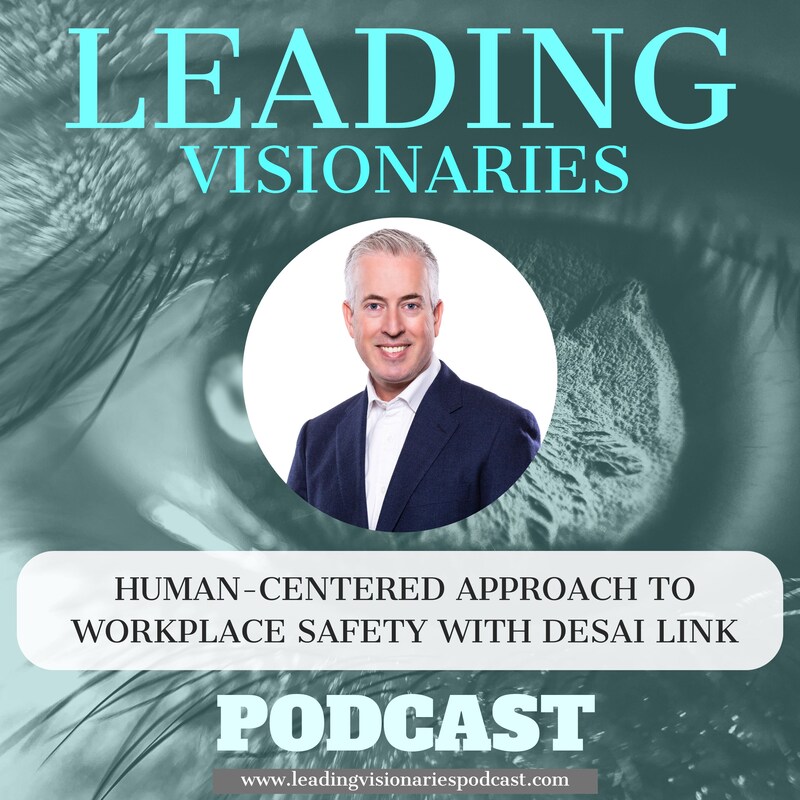
What if the biggest opportunity for learning in your organization is hiding inside your worst day? In this episode of the Leading Visionaries, host Anjel B. Hartwell sits down with Desai Link, safety leader, former lawyer, and author of Beyond the Incident. As the General Manager of Health and Safety for a commercial construction company in New Zealand and co-host of the Circus of Safety Podcast, Desai is reshaping how organizations approach workplace investigations.
Whether you lead a team or manage operations, this episode will challenge you to rethink how your organization learns from failure.
What You Will Learn:
Why settling on “human error” is one of the most unsatisfying and incomplete conclusions in an investigation.
How legal principles of evidence can dramatically improve workplace incident investigations.
What it means to truly understand and test evidence rather than just collect documents.
Why every incident is a learning opportunity rather than simply a compliance exercise.
How interrogation, in its healthiest form, simply means asking better questions.
The difference between finding fault and uncovering causation.
How empathy and rigor can coexist in leadership.
Why understanding storytelling and narrative is essential to meaningful investigations.
How Desai’s transition from law to safety illustrates the power of cross-pollinating skills across industries.
What leaders must recognize about the moral imperative to make work safer for people.
Sparkling Insight Quote:
“Don’t be satisfied with finding fault with someone’s behavior. There’s always more to learn.”
“Work is hard. Life is hard. I’m not there to make life harder for those people because it’s already a struggle. I’m there to help us along the way.”
Resource:
Desai Link
Join the Leading Visionaries Community
Transcripts
LVP 121 Desai
===
Ad: [:Now, here's your host Anjel. Be Hardwell.
Anjel: Welcome to another episode of the Leading Visionaries Podcast, where we celebrate the ingenious. Insightful, innovative, and inspired leading visionaries of our time, and provide our listeners with world class examples of the kind of courage, clarity, and confidence it takes to bring visions into reality.
k. Desai is a safety leader, [:With a background in law and organizational leadership, decide blends practical insight with ethical depth to help leaders navigate accountability, culture, and learning after incidents. I'm excited to have you here today. Welcome to the show, Desai.
Desai: Thanks, Anjel. It's a very kind introduction. I'm grateful to be here.
Thank you.
acity kind of come online as [:Maybe?
Desai: That's a good question. I think on reflection, it's probably developed over time. I've seen some gaps in the way things are done in the workplace, and maybe I've, I've got a bit of a creative streak, but I, I seek to fill that gap and if, if we call that vision, then that's, I like that's a nice way to phrase it.
Anjel: Yeah, well you used the word, see, I see gaps. So that's definitely, yeah, definitely vision. And most visionaries do see gaps and that's what gets them started down whatever road they go on, whether it's, um, innovating something new or, you know, bringing new concepts or new experiences or new products or anything into the marketplace.
So let's talk about leadership next. Let's talk about your own leadership journey. Were you always a leader as a child or was that again something that developed over time?
Desai: Again, [:And I always appreciated having a good leader. And I think over time when I. Reflect on the way work is done, the way that I've been compelled or required to do work and that, like I said, there's some gaps in the way that's done that I could see, I felt compelled to lead people sort of into those gaps and give them something to do to address.
to have you give us a little [:Desai: Sure. So I drove forklifts to get myself through law school, and once that was done and, and kind of, I was ready to graduate, I got a job at a law firm and very quickly realized that law was not for me. I didn't really have that fire to to be an advocate and wanna burn the other side for my clients.
I really just wanted to help people. So while I, I left law and while I was trying to figure out what it was I was going to do, I went back to driving forklifts. And when Word got around that I was a lawyer on a forklift, uh, they came to me and said you know, we've, we've got a job that we think you might like.
That's quite a change. Well, [:And now it's for the purpose, which aligns really well with me for of helping people.
Anjel: Hmm. Well, you know what's funny here and what I hear that I want our listeners to hear, because many of them are considering founding something or, you know, stepping into a new realm, maybe adjacent to a realm that they're presently in.
t before you got into safety?[:Let's talk about incidents and why being in this position that you're in around safety. Is such an important role to play.
Desai: I've definitely witnessed plenty of incidents and been involved in many, nothing really jumps out to my mind from when I was on a forklift. Things I wish I had like a topographical view of how the forklifts operated because it was like a ballet, it was so precise.
Everyone knew their machines. And when things did go wrong, it was typically because there was some sort of outside interference that interrupted that. Now there was one instance, and I'm probably jumping ahead a little bit here, but I was tasked with undertaking an investigation into an incident where someone had was, it was a carpenter and they were ripping a piece of timber with a handheld circular.
is cutting out length waste. [:They were holding the piece of timber, performing the cut and then changing their grip and performing the next part of the cut. So I hope that makes sense for listeners. It's a bit hard to illustrate something like that.
Anjel: Mm-hmm.
Desai: They hit a knot in the timber. The saw kicked back and cut into their thumb.
ct. In this instance, we dug [:So their resume had certain dates for when they performed jobs, and they had reference letters from those jobs, and the dates didn't match. And what we found was that these documents were fraudulent. They, they weren't, they weren't real. And what we were actually dealing with was a person that was recruited from overseas who wasn't actually a carpenter, but they were presented as a carpenter.
And so we really hit at the cause of that incident was that we had someone doing something that wasn't trained or qualified to do so, and the reason for that was because their recruitment documents were fraudulent.
Anjel: Wow. Well, that's an interesting story and it's also interesting that you were able to think about digging deeper.
you as a safety officer and [:Was it intuitive? Was it, you know, based on some other things that you saw, pattern recognition, what made you go deeper?
Desai: Up until that point, I've been involved in investigations where things had settled on someone doing something wrong, and it was a really unsatisfying outcome. Because naturally you wanna ask, well, why, why did they do the wrong thing?
at could come from that, but [:I, I wanted to learn more. And when I took the structured approach from law. And applied it to a safety investigation, I found very easily that I was able to dig deeper and learn a lot more and, and get these significant findings like the one I shared.
Anjel: Hmm. Beautiful. Well, and here's the other example of, of cross, you know, cross-pollinating your skills from one.
Industry or field or form of study into another and how important it is to not leave those skills on the table over here when you're in whatever it is that you're creating as a founder or a visionary. So let's talk about you know, when you say you're the GM of health and Safety, where are you the GM of Health and Safety?
ercial construction company. [:Anjel: Okay, great. And do you feel like you're going to be doing that for a long time or do you have a new vision for yourself?
Desai: I think I've found my niche. I think if there was only if, if there was a change that I was going to make, it would be that either I work for myself in the same capacity or that I actually reintroduce law into the picture and and explore that in some respect in relation to health and safety.
I'm quite satisfied with where I am right now.
Anjel: Alright, beautiful. Well, let's talk next about what your what you're doing with this book. The book is called Beyond the Incident, and it's a book about reshaping how organizations approach workplace investigations. What's your intention? What's the vision there?
can pick this up and take it [:And the book is really a, a set of tools and it's a set of tools that can be used to supplement. An existing investigation, you know, whatever processes a company might have in place currently, this is designed to supplement and enhance those. It's not designed necessarily to replace them.
Anjel: Okay, beautiful.
We're gonna take a quick break. When we come back, we're gonna talk a little bit more about the book and let people know where they can find out more about you. But right now, listeners, are you a leading visionary or in the role of leading other visionaries? Consider joining our community and sharing your feedback and takeaways from each episode.
the best support is found in [:Discover more about this [email protected]. Forward slash Creative Age Leader Lab or click the Connect with Anjel button on the website to apply and qualify for a consultation for more personalized access and support. Please be sure to share this show in your own spirals of influence with the people who you think might benefit from our content.
I wanna say a huge thank you to all of our listeners who are downloading, rating and reviewing. We're welcoming thousands and thousands of downloads from all over the world. I wanna shout out this week to our listeners in New Zealand where Desai is, as well as the Netherlands. And let's see, do we have another N?
e right back with Desai Link.[:Ad: The Leading Visionaries Podcast is brought to you by the Creative Age Consulting Group. Are you the one who thinks differently, who is called to create a significant conscious change in the world? Who is seeing and dreaming of a better way for your industry? Your community? Humanity Creative Age consulting group is hired to guide leading visionaries just like you who want to break through the static.
In order to clearly express and confidently enroll support for their vision in a way that makes it inevitable that it will come to pass. Your word is your wand, and as the leader, your ability to articulate and communicate your vision is essential to its materialization and monetization. Please enjoy with our compliments, a free copy of the book, be Heard By Millions, and Live Your Destiny, which was a number one new release in three categories.
ding visionaries podcast.com.[:Anjel: And we are back with Desai Link. You can find out more about Desai. You can connect with him through his website at dynamic HSE dot c. Do nz. That's dynamic hs e. Co nz, we will have that for you in the show notes. And from that website you can reach out to him on LinkedIn or go to Amazon to get the book beyond the incident.
So before we went to the break, we were talking a little bit about the book, decide. Let's kind of take a step back. What inspired you? Like where did the vision come from for you to write a book?
big gaps in the way incident [:One example is evidence law has a really good understanding of evidence, what good evidence looks like, how to treat it, how to validate it, how to weigh it. And none of that seemed to appear very well in safety investigations. We would have, uh, I undertook some safety investigation training, and it was very simplistic.
You collect the documents. You take some photos, you ask the witnesses, some, some open-ended questions and that was it. That was your evidence. There's so much more to it than that. Uh, legal causation was another thing. There's a whole bunch of legal causation principles that have been refined over hundreds of years, uh, with each novel case that comes up.
tical gaps in the way safety [:Anjel: And so if there's a leader in an organization that's listening to this right now. That maybe has a safety investigation team or maybe doesn't what would you want them to take away from this conversation? What would you want them to be thinking about?
Desai: Probably two things that that jump to mind there.
One is, don't be satisfied with finding fault with someone's behavior. There's always more to learn. And the second thing, and probably the most important thing, is understand evidence. What it is, how to test it, how to validate it, and weigh it and interpret it appropriately. And that applies not just to investigations.
ave. And what I mean by that [:It's evidence that someone's marked a piece of paper with a pen and nothing more. The only thing that gives that signature meaning is someone orally attesting to that signature saying, yes, that's my signature. Or, yes, I saw Anjel sign the piece of paper. That's what gives that evidence meaning. So evidence in that sense is coming from the person, it's oral.
seek from interrogating that.[:And you can learn a lot.
Anjel: Mm, beautiful. So what I'm hearing in this conversation is I am actually now hearing the fusion, we'll call it fusion, the fusion cooking of law and safety. The existing structures are very simplistic. There's constantly novel incidents and most of them are focused on finding fault, and what you bring to the table with the law piece of it is taking and depersonalizing and being more rigorous with the investigation, using the law principles of evidence, causation, and interrogation.
So, am I hearing that correctly?
ate, when I use that word, I [:Anjel: and ask questions.
I'm sure absolutely asking questions is part of that. Right. Okay. So what would you like your work like, what's the vision, the long-term vision for this work that you're doing? Do you wanna see more of your principles being applied by other safety officers? Like what? What's the big reason for you, Desai?
You know right now you're pretty comfortable in your existing position, but you are out here writing a blog and promoting it. So I'm curious, like do you have a long-term intention or calling or vision with this material?
Desai: Yeah, absolutely. So I think you're right. I would like to see people using these tools and and techniques in their investigations.
s the board. I would like to [:And ultimately, I'd like to see the supplied across all workplaces.
Anjel: Yeah. Beautiful. Well, and what I'm also hearing is not just safer, but more, um, maybe even the word I'm gonna use is compassionate. That may be too strong of a word, but, you know, instead of looking for finding fault, we're looking for what actually is going on here and what can we do as a corporation or an organization to prevent it from happening in the future.
going to be fallible. Right? [:Desai: Absolutely. I I would say it's a more of a human approach. You're, you're understanding evidence from a human perspective and you are trying to detach yourself from that clinical approach of just examining documents forensically and, and all of that.
Let's bring it back to storytelling and narrative. 'cause that's where real learnings can come from.
Anjel: Yeah. Beautiful. Tell me now about the vision for the C Circus of Safety podcast. Tell me about that. What is the Circus of Safety podcast? Where did that vision come from? You know, what's the intention behind that body of work and who do you hope is going to be listening and tuning into that?
t are topical for health and [:And it's very informal. Bit of fun, something nice to listen to in the car on your way to work. But we try to have some thought provoking discussions as well.
Anjel: Where did the vision come from? Was it you or somebody else who, you know, brought you in?
Desai: It's, it was really by accident, which sounds like a pun when I'm talking about health and safety.
But what it was, was we, we were having these conversations anyway. We would regularly meet up at a cafe or a bar and really get into these conversations about topical things. And one of us suggested, Hey, I've got this software and I've got a microphone. How about we. We switch on a recording and, and see what happens.
resonate with that and it's [:Anjel: Beautiful. So if you were to bring, to kind of proselytize your.
Tools and techniques into more specific industries right now. Like who, what leaders that might be listening to this show would you want to initially be impacting and you're in construction, but you know, safety stuff is happening across the board and a whole bunch of other industries as well. So I would imagine construction's top of your list, but.
After that. What else, you know, what other industries do you think would really benefit from, from what you're offering here?
Desai: Uh, really any industry could benefit from this. Um, every industry has accidents and incidents in some way, shape or form. And there's a, there's a moral imperative, I think, to understand why those happen and try and prevent them from happening.
legal imperative to do that, [:Anjel: Beautiful. Well, what came to my mind was the hospitality industry. The first thing that came to my mind after construction was kitchen knives.
So, yeah, maybe it's because it's close to dinner here, but kitchen knives just came to mind as maybe an industry. If, uh, you're listening and you're in the restaurant or hospitality industry, you might wanna get ahold of this book as well. So in the last couple of minutes that we have Desai. What I'd love to have you share now is you know, what is, like, what is, you said, moral imperative.
ou want to serve and support [:Desai: That's a really deep question. I. I have spent some time thinking about this, and to be honest with you, there's not many people I've shared it with, but there's a lot of uncertainty in the world, and life is, is hard.
Work is hard. Life is hard, and it's a, it's a struggle. It's a challenge, and I think it's important that we recognize that both in ourselves and in other people. And when we recognize that. The empathy naturally follows from that, and that empathy really informs the way I approach my job in the sense that I've been doing that frontline work.
h that, and I'm not there to [:Anjel: Beautiful. I love it. Well, thank you so much for being with me today, Desai. I'm really glad I asked that last question. And, uh, listeners, I hope you are glad I asked that last question as well. Listeners, we do love feedback. Please let us know what you thought of today's show by joining our community, sharing your takeaways, asking questions, or submitting guest suggestions.
You can weave your visionary thread into our fabric by opting in on our website at Leading Visionaries podcast dot. Or by interacting with us on social, look for the handle at Leading Visionaries podcast across all the major platforms. Thanks so much for tuning in. Keep your eyes, ears, and hearts open.
e to create conscious change.[:Ad: Thanks for tuning in, downloading and listening. Be sure to rate and review leading visionaries on Apple Podcasts and share with other people you know who can benefit from today's episode. Leading Visionaries is the premier podcast series for informing, activating, and inspiring the leading visionaries who are called to create conscious change and know that now is the best time.
To welcome wealth and cultivate a web of collaborative support to bring their vision to life. We invite your feedback and guest suggestions and invite you to subscribe to our mailing list to be notified of new [email protected].
