Shownotes
Most accountants have been told to build partnerships. Almost none of them know what to actually do on a Monday morning.
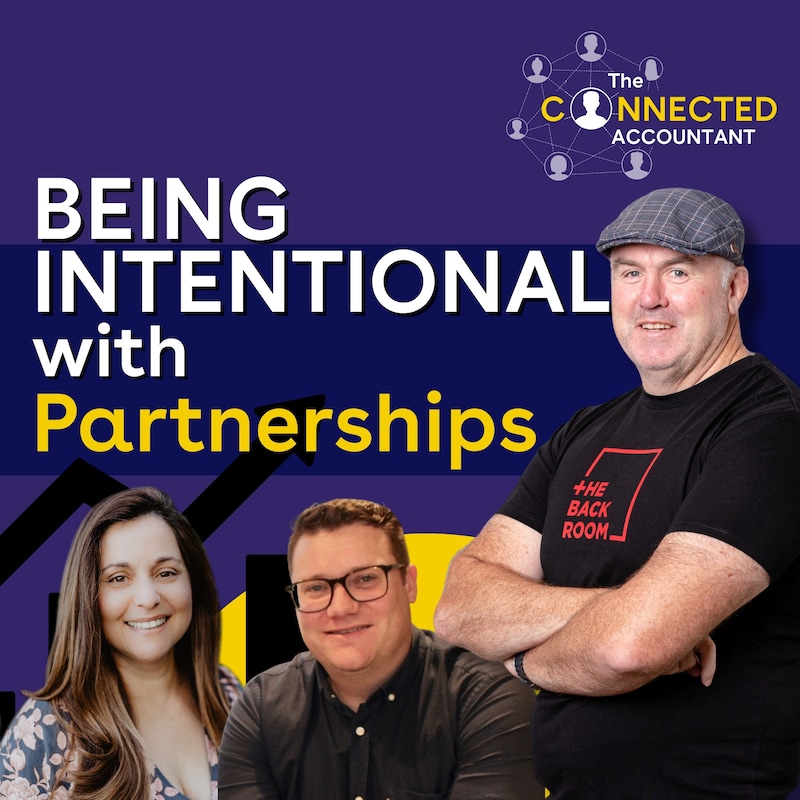
The advice is everywhere — partnerships are your big rock, partnerships are the growth lever, go and build some partnerships. But when the room empties and the week starts, what does that actually look like? Talila Kroy, Wayne Findlay, and Ian Aldridge have all built their businesses through intentional, systemised partnerships — and the gap between what they're doing and what most accountants are doing is significant.
There's a reason referral clients convert at 80% while cold leads sit at 20%. There's a reason some firms attract clients who pay on time, respect their staff, and act on advice — while others are stuck managing difficult relationships that drain morale and headspace. It starts with one thing, and it's not networking harder.
The panel also gets into two new tools that are about to remove every excuse accountants have ever had for not doing this properly — and why, as AI takes over the transactional work, the one thing it still can't do may be the most valuable thing an accountant has left.
KEY LEARNINGS
- The Monday morning problem — why every business coach says "build partnerships" but almost no-one tells you what that actually means when the week starts
- The 80/20 reality — the conversion rate gap between referral clients and cold leads is not a small difference, and Ian's experience reveals why it exists
- The Partner Suitcase — Talila's systemised approach takes partnerships from vague intention to a structured process, but the starting point isn't what most people expect
- Jerry — Wayne's new white-label software tool is designed to be offered through accounting partnerships, and the reason it could change how accountants position themselves is worth understanding
- InPartner — Talila's platform is being described as the HubSpot for partnerships, and what it does to the bottlenecks most firms quietly struggle with is worth a closer look
- The accountant-lawyer problem — Ian explains why 200 years of friction between accountants and lawyers has been doing real damage to clients, and what it takes to actually change it
- What AI still can't do — the lateral thinking and proactive relationship-building that distinguishes great accountants from replaceable ones isn't a soft skill anymore
KEY QUOTES
"Almost every business coach I've ever met has on their thing, 'You should build partnerships.' But what do you actually do on a Monday morning? How do you do that?" — Talila Kroy
"The clients that came from referral partners were just so much higher quality — easier to work with, pay our bills on time, respectful to our staff, listen to our advice, take our advice, and act on it. The conversion rate was sort of 80% as we worked out instead of 20%." — Ian Aldridge
Roundtable Events
Information, including registration details, for Roundtable events for Accountants: https://thebackroomop.com/thepartnershipeffect
Panelist Information:
Talila Kroy - Emple
- Website: emple.com.au
- LinkedIn: linkedin.com/in/talila-kroy
- Specialisation: Building partner ecosystems for fast-growing businesses
Wayne Findlay - The Back Room
- Website: thebackroomop.com
- LinkedIn: linkedin.com/in/waynenz
- Specialisation: Offshoring solutions for accounting firms
Ian Aldridge - Progressive Legal
- Website: progressivelegal.com.au
- LinkedIn: linkedin.com/in/ianaldridge1
- Specialisation: NewLaw firm for growing Australian businesses
Production:
Co-host - Anthony Perl - Podcasts Done For You
- Website: podcastsdoneforyou.com.au
- LinkedIn: linkedin.com/in/adperl/
Transcripts
Being intentional with partnerships.
2
:Welcome to the Connected Accountant,
the podcast where we explore
3
:how strategic partnerships can
transform your accounting practice.
4
:I'm your co-host Anthony Pearl,
and today we are discussing the
5
:importance of being intentional
with how you build partnerships.
6
:Moving beyond random networking
to systemize sales engines
7
:and strategic partner plans.
8
:Talila Kroy: You go out, you get the
tree, you dig the hole, you plant
9
:the tree, you nurture it, you water
it, you grow it, you got fruit.
10
:Simple, straightforward.
11
:It's all relationships.
12
:Nowadays, marketing the old
fashioned way, let's say it was like
13
:three or four years ago, is gone.
14
:It's all relationship based now.
15
:People will need to trust
who they're working with.
16
:Ian Aldridge: Both the accountant
and the lawyer can get together
17
:and then present that advice to the
client together to say, Hey, don't
18
:worry, we've worked this out for you.
19
:Anthony Perl: Joining me today are
our three regular panelists who
20
:bring their incredible expertise
to the Connected Accountant.
21
:We have Tal LaCroix from ple, Wayne
Finley from the backroom, and Ed
22
:Aldridge from Progressive Legal.
23
:Let's get into what will make
you the connected accountant,
24
:so Wayne and Tila.
25
:We've gotta talk about a topic that
I think is a really important one,
26
:which is being very intentional with
how you are building partnerships,
27
:particularly for accountants.
28
:Tole.
29
:I know this is a topic that's
incredibly dear to you because of
30
:the partner suitcase that you are
doing at the moment with accountants.
31
:So tell me how that whole idea of being
intentional is so intrinsic to this.
32
:Talila Kroy: Well, firstly, the whole idea
of doing it with accountants and lawyers
33
:came from, lastly from Wayne and Ian.
34
:'cause they were both did, did
our partner suitcase in:
35
:And of all of the businesses that
did benefit from it, those who were
36
:professional services and who are
seen to gain immediate traction
37
:and the most traction, and that's
obviously because they all rely on
38
:one another and their things overlap.
39
:But the point about being intentional is
almost every business coach I've ever met.
40
:Has on their thing.
41
:You should build partnerships.
42
:Partnerships are your big rock.
43
:Go and build some partnership.
44
:Partnerships are great and then, but what
do you actually do on a Monday morning?
45
:How do you do that?
46
:And so people blunder around with
these networking conversations
47
:or they go to, you know, BNI.
48
:And BNI is not right because it just
forces people to refer people they
49
:don't even know that aren't even in
their ecosystem, that aren't even a
50
:natural fit for their clients sometimes.
51
:So even though it's a good idea, a
lot of times it causes more grief
52
:than, in my view, than it should.
53
:So how do people do it?
54
:So our approach was simple and
it's how we built PLE was because
55
:we systemize sales engines.
56
:This is what we do.
57
:We built systemized sales process.
58
:We systemize partnerships in exactly
the same way, which means that you have
59
:very clear on your ideal client, very
clear on who you need as a partner, and
60
:you go out and have structured strategic
conversations with them that end up in
61
:a partner plan in ideally embedding.
62
:It takes them from beginning to end,
and then it's like you, you go out,
63
:you get the tree, you dig the hole, you
plant the tree, you, you nurture it, you
64
:water it, you grow it, you got fruit.
65
:Simple, straightforward.
66
:Anthony Perl: Wayne, if I can bring
you in here as well, because when you
67
:talk about building with intention,
there is also what value can you
68
:offer your partners and ultimately.
69
:You know, what value can
that offer to clients?
70
:And I think you are been doing something
in terms of building intentionally
71
:to benefit accountants as well.
72
:Wayne Findlay: Yeah.
73
:We've been busy on the, the
software front, building a
74
:tool that accountants can use.
75
:And every accountant will need this
tool as far as, it's just part of
76
:what we call the review process.
77
:So we call it Jerry, and so probably
be released in a week or so.
78
:So you'll see it out there.
79
:But what we've done is we've gone
to our groups of accountants that
80
:we deal with and given them the
opportunity to, to white label.
81
:Under their brand.
82
:So it's something that they can then
use within their client bases and
83
:offer it to all the firms and to all
their clients, and that way they can
84
:position themselves, you know, with
something that they're offering.
85
:To their clients as well.
86
:So it's just the way that we've
used software and used it through
87
:our partnership network, and
it's proven really popular.
88
:Talila Kroy: It's very clever.
89
:I feel like today's top is software
because of course we've built the
90
:in partner platform, which is like
the HubSpot for partnerships, which
91
:takes clients all the way through
partners, you know, users, all the
92
:way through to having a partner
ecosystem and managing it strategy.
93
:Process and then value and assets.
94
:And one of the things that we do
is identify what's the exclusive
95
:value that we can offer to partners.
96
:And the thing that Wayne said with that
incredible AI tool that can be white
97
:labeled, is one of those things that one
would identify and offer and lead with.
98
:So we can't underestimate the power of
systems and the capability that they have.
99
:And I think that any excuses that people
have that they can't do partnerships
100
:because they don't have time or they're
too disorganized, so they dunno where to
101
:start, are now over the systems and the
tools are there and people can do it.
102
:Ian Aldridge: Yeah.
103
:That end partner software that
you're building, that integrates
104
:with a LinkedIn as well, right.
105
:Talila Kroy: Yes.
106
:It's also got a tool that
integrates with LinkedIn to call
107
:on the networks through the white
label of the My Most Trusted app.
108
:It's just one of the little things that
it does, but the overall software is
109
:basically like a HubSpot for partnerships.
110
:I think both of your teams have now had
a view because both of you did Partner
111
:Suitcase with me in 2025 while I was.
112
:Conceiving this and some of your feedbacks
and the things that you got stuck on or
113
:that were problems for you, like, oh,
now we have to duplicate the partner cac.
114
:Okay, we have to prepare the deck.
115
:Oh, we have to.
116
:Who should we go for?
117
:Should we go for them or
should we go for them?
118
:Who's most important to focus on?
119
:It's all gone.
120
:It's all part of the system.
121
:It's all systemized.
122
:It's effortless.
123
:So I'm very excited about it.
124
:And of course, we've got seven
businesses working through it.
125
:Six in financial services, one in
professional services, and they're
126
:battering it so that by the end
of May it will be more on wide
127
:release and, uh, very exciting.
128
:Wayne Findlay: That's awesome.
129
:Great till we, congrats on that.
130
:I think we're waiting for
bated breath and to use it.
131
:'cause I, I love having something
that simplifies the process.
132
:I know Angie, who deals with
their partnerships, we have a de
133
:dedicated person, um, to do that.
134
:She's, she's gonna be.
135
:Loving it.
136
:Talila Kroy: She's actually coming
in next week at start learning how
137
:to use it and we're, and she's,
she'll be adopting it That's right.
138
:Wayne Findlay: For the back room.
139
:It should sit, streamline stuff for you.
140
:And Ian will grab Sarah as well if
she's available and do the same thing.
141
:So yeah, it'll be great.
142
:Anthony Perl: I think it's one of
the incredible things that's happened
143
:with the, you know, particularly with
AI coming and becoming so much more
144
:accessible, is that the ability to
create things that improve relationships,
145
:that improve your ability to deliver
work, improve life for clients,
146
:improve life for partnerships, is huge.
147
:And it's actually, there's more time that
needs to be spent on that creativity.
148
:Because that's the way forward, isn't it?
149
:To, or, I mean, you, you have to
focus on some of those things.
150
:Talila Kroy: You do.
151
:I mean, it's a very intense thing to build
a software, and I'm sure Wayne found the
152
:same thing, but it's never been easier.
153
:It hasn't
154
:than it is now.
155
:No.
156
:Yeah, so the tools are there.
157
:If you've got the methodology and
you already know exactly what you
158
:want to achieve, you can make it
a lot easier for the people that,
159
:for everyone to follow, essentially.
160
:Which is I think what both Wayne
still and mine does, so yeah.
161
:Anthony Perl: And Ian, I might go back
to a comment that I know that you made
162
:in a previous episode, but I think
it's worth raising again here is that
163
:building things is great when you've
got software and things, but it doesn't
164
:necessarily replace the core thing.
165
:You don't want to be building or using
a chat GPT, for example, to answer
166
:your legal questions, but it is how
it enables you to function better.
167
:There's a difference
between those two, right?
168
:Yeah.
169
:Ian Aldridge: Absolutely.
170
:And there's actually a case law from
the US and I'm sure it's probably
171
:gonna be just a matter of time here
as well too, with people using chat,
172
:DT and other software for legal advice
or sending that legal advice to chat
173
:DT or Brock or whatever, Gemini, and
that legal privilege being lost, so
174
:discoverable in legal proceedings.
175
:Because it's not come
from a lawyer anyway.
176
:It's something that will definitely
be coming out in Australia, but the
177
:US courts are, are now upholding
that What we all as lawyers would've
178
:suspected that that that was gonna
happen, which is really unfortunate.
179
:Anthony Perl: It's the hard thing, right?
180
:I mean, it's like it's been happening
for years in terms of Google, right?
181
:People go to a doctor and they've already
Googled it and said, well, I think I'm
182
:pretty sure I've got this, this, and this.
183
:And the doctor has to spend some
time kind of dismissing those
184
:things and talking around it.
185
:And I know I was at an
A GM at the end of last.
186
:Year and someone walked in and they'd
done their chat GPT and said, you
187
:need to change the Constitution
and do all of these things.
188
:And we sort of went, well, we, we
might just sit down and talk to our
189
:lawyers about that rather than just
acting on that in one foul swoop.
190
:But I think putting that stuff
aside, and I mean, I think there's a
191
:value in developing things that are
going to help your client doing it
192
:with the intention of helping them.
193
:And if you can do it with
a partner, even better.
194
:Ian Aldridge: Yeah, we found that
in Tom, Dick and Harry and Stacy,
195
:and Karen and Richard off the net.
196
:We really have to vet them very, very
hard to make sure that they're gonna
197
:be the right fit for us and make sure
that they're gonna be a, a good client
198
:because we just value our morale
and the team so heavily now and we
199
:know what horrible clients do to the
team, to morale, to accounts, to us.
200
:Management just takes up so much
head space 'cause they're more
201
:likely to have issues, more likely
to complain or act inappropriately.
202
:And that they're like little mini black
holes that you know, you have to like
203
:just deal with and it sucks everyone
in for a little bit and then move on.
204
:And it's hard for us to some, as
I'm sure it is, for accountants
205
:to terminate retainers of clients.
206
:You know, we sort of
give them three strikes.
207
:Because we know that everyone can have a
bad day, but obviously depending on the
208
:conduct, but we just found the clients
that came from referral partners, were
209
:just a, so much higher quality of client.
210
:Easier to work with, pay our
bills on time, respectful to
211
:our staff, listen to our advice,
take our advice, and act on it.
212
:And it's chalk and cheese really,
when you're looking at the broader
213
:community from those that, and there's
the trust, obviously, that's being
214
:referred from a referral partner.
215
:And also too, there's some
accountability for them too, that
216
:they can't act like a, you know what?
217
:Without that getting back, there's
some reputational risk there.
218
:It's not just with us, it's
also with their accountant.
219
:And so they know they need to be
not on their best behavior, but at
220
:least, you know, be respectful and
respect that relationship as well too.
221
:'cause they know that that feedback
will happen if they behave really poorly
222
:and we dunno what people like, but at
least with a referred clients from great
223
:referral partners, you're more likely to
have a really better quality of client.
224
:You still have to do all the rest of it.
225
:And the conversion rate was sort of
80% as we worked out instead of 20%.
226
:Funny about that.
227
:The Pareto, Pareto we're all end.
228
:Talila Kroy: It's a little bit like
those internet trolls, isn't it?
229
:Like when you haven't got a
personal connection to someone,
230
:you can get really unpleasant.
231
:People can be very unpleasant.
232
:Ian Aldridge: We just got a one star
review from someone from Thailand who
233
:tried to engage us and we weren't able
to help them and then left a one star.
234
:We didn't even, we didn't even
give 'em any advice and they
235
:left us a one star review.
236
:It's just horrible.
237
:Talila Kroy: Yeah, it's not fair.
238
:It's totally unfair.
239
:And Google reviews are an interesting
one because I have a Google review
240
:from a client that I've worked with
for five years and probably made $5
241
:million for, and another one from a
client that's just like a team member
242
:that I worked with for three months.
243
:And in Google reviews, you just
don't know what's behind that review
244
:and they all give you five stars.
245
:Some of them should be worth this
much, some of them should be worth that
246
:much, and there's no way to do that.
247
:So.
248
:Anthony Perl: It's an accountability
when it comes to, to those things, which
249
:is why the trust factor in building.
250
:You know, we go back to this whole idea
of building with intention and building
251
:trust to gain clients by building
relationships with partners is a much
252
:better way to go because if you're
reliant completely on Google reviews.
253
:You really are quite vulnerable unless
you've got lots of people giving
254
:you lots of reviews all the time.
255
:So the one bad review that you
get doesn't really have an impact.
256
:But I wanna come back to you, Wayne,
as well, when you built this piece of
257
:software and how intentional it was in
terms of listening to partners and what
258
:they needed because you're delivering a
tool for them, but how intentional did
259
:you have to be in the build process?
260
:Wayne Findlay: What's the build
process with what we're building?
261
:It's adaptable.
262
:You know, the software nowadays is,
you know, it's so easy, you know,
263
:to build stuff compared to what it
was like, you know, five years ago.
264
:So, you know, with white
labeling, et cetera, it's
265
:quite easy to do for us anyway.
266
:You know, we, I must admit, we do have a
team about four or five developers there.
267
:We're not your typical accounting
firm that probably hasn't got
268
:one, but it was an opportunity for
us to create something and then.
269
:Build it out.
270
:And we had that in mind when we built
the product as well, that we could
271
:build it so it could be white labeled
and bought across all these accounting
272
:partnerships that we deal with.
273
:So I think the proof in the pudding
that released in a week or so.
274
:So I'm a bit like Tila.
275
:It's in beta mode now.
276
:And.
277
:And that software game is a
lot different to the accounting
278
:game, I've gotta tell you.
279
:It's a lot more scarier with all
your security and everything.
280
:You just have to be on top of things.
281
:So yeah, it's gonna be interesting.
282
:Ian Aldridge: I would imagine
Wayne, as well too, just to ask
283
:a quick question, having that, I
presume that that software's gonna.
284
:Obviously it's been automated and
then suits out a report, it's gonna
285
:spit out a report to the accountant
for them to then stick their logo
286
:on it and send it to the client.
287
:Talila Kroy: Yeah.
288
:Ian Aldridge: It's almost invariably
gonna lead to more work, right?
289
:Talila Kroy: It will.
290
:The, the biggest thing that will create
is, you know, better quality of state
291
:financial reports, and it's gonna speed
up a big bottleneck in accounting, which
292
:is the review process of draft financials.
293
:So it means the accountants.
294
:They're gonna have more capacity
to spend more time with their
295
:clients doing business advisory.
296
:You know, estate planning is, uh,
there's so much that a client needs
297
:nowadays compared to what it was,
you know, five, six years ago.
298
:So I think creating that capacity,
which is what we're all about, is
299
:with our offshoring or with our
software, is creating time and.
300
:So I think when you utilize that time,
it could be bringing in new clients or it
301
:could be working with your existing ones.
302
:And I think too, that time is the
thing that we're all looking to create.
303
:That's the number one thing.
304
:And the one advantage that
we can use AI for is figuring
305
:out how to do that software.
306
:And then the other thing is
the software is not lateral.
307
:Where we as humans come in is our ability
to think laterally and proactively.
308
:Like you've probably asked
A-G-P-T-A question and it's given
309
:you a bunch of answers and then
you figure out yourself that you
310
:could have done it a different way.
311
:So why didn't you tell me that?
312
:Well, you didn't ask me that.
313
:So we are much more creative and lateral.
314
:We've got this right back
brain capability that.
315
:We can see different parts of things and
where that comes into partner ecosystem
316
:is going and the relationships is going,
oh, I think you need this help here.
317
:I, I think this will support you.
318
:I think we can work
together on that thing.
319
:And that's, that's not
something that AI can do.
320
:So the more we move into that space
and become proactive rather than
321
:reactive, it's better for everyone.
322
:I think you're right.
323
:It's all relationships nowadays.
324
:It it, the marketing, the old way of
having ads and placements and marketing
325
:the old fashioned way, let's say it was
like three or four years ago, is gone.
326
:It's all relationship based now.
327
:People would need to trust
who they're working with.
328
:If you've got a new client that's
new to town, they're gonna go and
329
:ask someone who's their accountant,
you know, who do they like them?
330
:Who do they deal with?
331
:So it's always about relationships and
trust, and so marketing is just is now.
332
:I think it has to be positioned that way
and you need to be able to build these
333
:networks, so you need to create time.
334
:So that's the biggest thing,
is create this time and then
335
:you can go out and build these
relationships with your partners.
336
:People still, still may ask chat
GPT, who's a good what bookkeeper.
337
:Yeah.
338
:And they won't value that as much
as someone they trust telling them
339
:who's a good, good bookkeeper.
340
:You won't get the conversion will you?
341
:Like the conversion rates are a lot lower.
342
:I sent someone to Anthony's bookkeeper the
other day and they asked, they were in a
343
:networking group who's a good bookkeeper.
344
:So I, I recommended mine and Anthony's,
'cause I know they're both really good and
345
:I think Anthony's bookkeeper now has that.
346
:You couldn't.
347
:So the point is they
could have asked Chat GPT.
348
:They're very, very savvy people,
but they know that it's better to
349
:ask people that have experienced the
bookkeeper than to ask a machine.
350
:So.
351
:Ian Aldridge: Who has the most content
online and who appears to be we, we get
352
:some referrals from gr We got a, we got
a, um, referral from them the other day.
353
:Um, it's fi it's really
weird, you know, that Oh yeah.
354
:I've asked, you know, who was this,
this, this, and this, and, and, and
355
:you came up in the top five and I
called all five and you were the only
356
:one that actually called me back.
357
:All
358
:Talila Kroy: done is now your
partner, crock, is now one of
359
:your, uh, referral partners.
360
:Ian,
361
:Ian Aldridge: I should, I
should, uh, I should send, um,
362
:Elon a, um, Christmas card.
363
:Talila Kroy: Yeah, should.
364
:Ian Aldridge: Thank you.
365
:Thank you.
366
:A voucher, a voucher
367
:Talila Kroy: person.
368
:Probably didn't have any humans to ask.
369
:That's all I'm gonna say.
370
:It's still good
371
:Anthony Perl: and tila when it comes
to being intentional about all of these
372
:things, it's a probably in a fancy way of,
of saying that s word that people like to
373
:avoid more these days, which is strategy.
374
:But you do have to be strategic, right?
375
:In business and you, you have to
look at where you want to be and what
376
:is going to get you there, and how
intentional you are with the kind of
377
:relationships that you are building,
particularly around partnerships.
378
:Talila Kroy: You can choose your
s word pretty much, Anthony.
379
:You can either have strategy or you can
have the other one that I'm probably not
380
:allowed to say on this podcast, but that's
what's gonna, that's the difference.
381
:Like you don't go out and build
a house just with a drawing
382
:on the back of an outcome.
383
:You actually architect it,
and that's the strategy.
384
:Perhaps you don't do anything
without having clarity on the
385
:outcome and, and, and what has
gotta be the same as sales process.
386
:Absolutely even more so.
387
:The same with partnerships.
388
:Partnerships, clarity ends
up with partnership success.
389
:It's actually a fast lever.
390
:It's in a very impactful lever, and
as long as you're good at what you
391
:do, like Ian is fantastic law firm.
392
:Wayne is an incredible company to deal
with, makes all their accountants sappy.
393
:As long as you're good at
what you do, partnerships will
394
:serve you better than anything.
395
:Simple.
396
:Just gotta have the right strategy.
397
:Anthony Perl: Ian, in your case,
you deal quite directly with a lot
398
:of accounting firms all the time.
399
:How intentional have you found them
and how do you actually change that
400
:so that they are more intentional
if they're not that way inclined?
401
:Ian Aldridge: Yeah, I think it definitely
starts with a conversation breaking
402
:down that barrier as fast as you can.
403
:Emails are fine, but like just
get in front of them however you
404
:can and, and show that you're a
person and that you're relatable.
405
:You're there to work with them for
the client and having that, trying
406
:to just form that relationship
and bond as soon as you can.
407
:And we obviously have this like horrible
thing with accountants and lawyers
408
:that, um, that I keep banging on about
over, you know, it's obviously been
409
:rotten over the last 200 years and
hopefully our generation can change this
410
:'cause it really needs to change where
ultimately we, we, we wanna serve the
411
:client, we wanna make sure the client
is happy and, and we wanna make sure
412
:the client's getting the best advice.
413
:And the only way that really can happen is
if both the accountant and the lawyer can
414
:get together, stick their heads together,
and then, and then present that advice
415
:to the client together to say, Hey, don't
worry, we've, we've had a chat between
416
:us and we've worked this out for you.
417
:So the client's like, oh, great.
418
:Awesome accountant and a lawyer
can get along with each other.
419
:Fantastic.
420
:The more and more I practice, the more
I realize how fundamental that is for
421
:a business success and getting the
right advice from the right people
422
:at the right time as Tolia was.
423
:Talking about before, like that's been
a key to pretty much all of my client
424
:success, and that's advice from many
different aspects, business success,
425
:so, but yeah, just having that intention
of like making that relationship really
426
:solid right from the start, getting off
on the right foot is really important too.
427
:That first impression.
428
:You only get one chance at a
first impression, you might
429
:be able to make up for it.
430
:But yeah, you really need that
first impression to go well and make
431
:sure you get off on the right foot.
432
:'cause being professional services and
advising, advising the client about the
433
:same thing, coming from two different
angles, that's always led to a rub.
434
:And I think historically, you know,
it's just because the lawyer and the
435
:accountant don't talk to each other.
436
:That's created so much friction
and annoyance for clients.
437
:That's for sure.
438
:And then no one wins.
439
:Everyone's unhappy, especially if
there's a difference in the advice.
440
:Talila Kroy: Yes, but I do think, Ian,
that both your account managers, BBMs
441
:and, and Wayne, you know, your dedicated
partnership person are quite structured
442
:in the discovery pool that they hold
now in terms of talking to new partners
443
:and finding out exactly, you know,
who their clients are, what they need,
444
:what value they can offer one another.
445
:It's all very structured and I feel
like that structure helps a lot as
446
:well as being a human because you end
up knowing so much about those people.
447
:That you can then take to the
next step and be relevant to them.
448
:And that's, I think, a big
part of the whole thing.
449
:Ian Aldridge: The partnership presentation
really wows potential referral partners.
450
:It really does.
451
:Like, they really see this like, oh
wow, this is really professional.
452
:This is really structured, and
we all crave structure, right?
453
:As humans, we're, we're,
we're just animals.
454
:You know?
455
:We love structure, we love routine.
456
:Just like you've dog and your cat.
457
:They love the routine, they love,
you know, and kids as well too.
458
:They need routine.
459
:We all do.
460
:And, and when we don't, when the routines.
461
:Whack them.
462
:You know, we, you know, some of us just
discombobulated, but, so this routine and
463
:this structure and this, you know, very
consistent process and a follow up booked
464
:and having that consistency and that
cadence and rhythm as speaks about, it's
465
:very, very important to keep that going so
that don't just up and vanish in the wind.
466
:Talila Kroy: That's too
Why, why you, Wayne?
467
:The big accounting groups like you is that
structure that you bring, that everything,
468
:the structures and systems protect them.
469
:Every of the areas that are a
risk ai, you've got that covered
470
:security, you've got that cover.
471
:All the different structure elements are
there for those big accounting firms that
472
:you partner with to make it easy for them.
473
:And like Ian said, we like structure,
we humans, we like structure.
474
:Well, maybe we think we don't.
475
:We wanna not have it, but it
actually, we thrive in it.
476
:So, yes.
477
:Anthony Perl: Wayne, can I just bring
you in because I think what's really
478
:interesting here as well is do accountants
actually realize how much that other
479
:businesses want to partner with them and
that they have such a huge opportunity?
480
:Because you know, there's a lot
of intention, and Ian's a good
481
:example, being very intentional and
wanting to partner with accountants,
482
:but do accountants realize.
483
:That opportunity that exists there.
484
:Talila Kroy: I think by
and large they don't.
485
:And these are an opportunity within itself
is just to create those partnerships and
486
:to, and also remember in your accounting
firm, you go from your partners through
487
:to your senior managers and your
accountants and your junior accountants,
488
:though, there's an opportunity to
partner right through those roles.
489
:So I think leveraging
your accounting firm.
490
:Everybody in your firm
to form partnerships.
491
:There's a big opportunity.
492
:So don't just think partners think
they're different layers because they
493
:all bring in different types of clients.
494
:You junior, your accountants, bring
in the young up and coming businesses.
495
:You know, you want those type of,
you don't wanna be a accounting
496
:practice that it is, has all your
clients the same age as your partners,
497
:which may be, you know, 55 plus.
498
:Then you haven't got longevity.
499
:So you need to be able to
mix and match a little bit.
500
:Ian Aldridge: And your focus
goes, your clients flow, right?
501
:Talila Kroy: Yeah.
502
:You get different tools, you know,
your, your young business people are
503
:more open probably to the different
tools that you can bring through.
504
:Now with AI and older clients, they need
help with planning and exit strategies,
505
:you know, so there's different needs
for different types of clients.
506
:Different partners you need for different.
507
:Ages, appliance or skills.
508
:Perfectly true.
509
:Perfectly true.
510
:Actually, one of the clients that we have
in the Partner Suitcase Accounting and
511
:Advisory and Partner Suitcase specifically
loves the fact that this software makes it
512
:possible for them to have multiple people
using the same process, because otherwise,
513
:it's often on the principle or the senior
person to just do it by themselves.
514
:And this means that anyone
can, anyone in the team who's
515
:well spoken and well connected.
516
:But sure enough can also build
partnerships, not just the lead person.
517
:Anthony Perl: I think Wagner, we talk
518
:Talila Kroy: about a
519
:Anthony Perl: lot of partnerships.
520
:I mean, people might forget the fact
that partnering with a business like
521
:yours is incredibly powerful because
the partnership enables them to grow
522
:at a much faster rate because you can
bring extra resources and people in.
523
:Wayne Findlay: Yeah, we talked
about the time factor, so creating
524
:that time is what we're about, is
creating capacity, and that goes.
525
:Right throughout your firm, your, your
onshore firm, you know, compared to what
526
:we are the offshore firm, so having more
time available onshore means everybody
527
:can go out and create partnerships
and create the scale, you know.
528
:Create, you can grow your business.
529
:I think it's important to recognize that.
530
:Very
531
:true.
532
:Anthony Perl: Well, that's all we have
time for in this conversation, but there's
533
:plenty more coming up in the connected
accountants, so you definitely wanna
534
:make sure you never miss an episode to
help you implement what we've discussed.
535
:You can download a workbook from
this episode via the show notes.
536
:It includes specific questions for
you to answer the quotes from the
537
:conversation and action steps you can
take right now a reminder about some
538
:of our exclusive round table events.
539
:For accountants, visit the show notes
for dates and registration details
540
:or contact information for Tah.
541
:Wayne and Ian are also there as well.
542
:This is a Partner Alchemy podcast
for thought leaders, a joint
543
:venture between Pel and my team
at Podcast done For you.com
544
:au.
545
:I'm Anthony Pearl reminding you
like, share, comment, and subscribe
546
:so you never miss an episode.
547
:See you next time on the
Connected Accountants.
