Shownotes
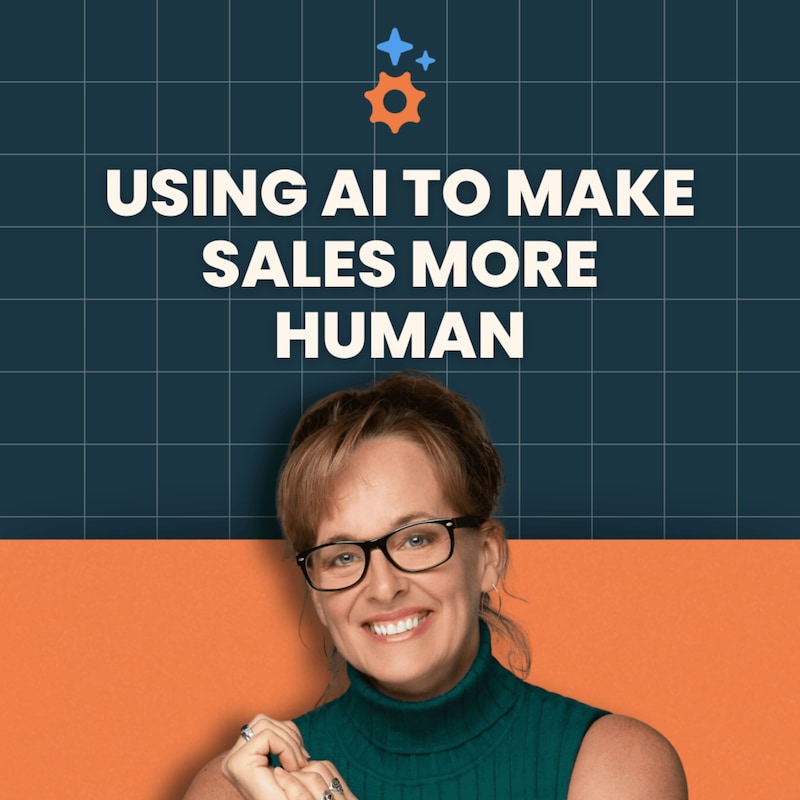
Join us on Builder Stories as we dive into the transformative journey of Carole Mahoney, a former sales skeptic turned passionate advocate. Discover how Carole's unique approach to sales, rooted in empathy and problem-solving, is revolutionizing the industry. Her insights into AI and its potential to enhance human connection make this episode a must-listen for builders and AI enthusiasts alike.
Carole Mahoney's story is one of resilience and innovation. During the Great Recession, she transitioned from a marketing professional to a sales expert, driven by necessity and a desire to help others. Her realization that "sales skills are life skills" reshaped her career and personal life. Carole founded Unbound Growth to train salespeople with a customer-centric approach, emphasizing genuine connections over mere transactions. Her venture into AI led to the creation of an agent that assists salespeople in preparing for conversations by generating tailored questions and strategies. This tool exemplifies her belief that technology should enhance, not replace, human interaction. Carole's journey offers valuable lessons in adaptability, empathy, and continuous learning, inspiring builders to create meaningful impacts in their industries. As she envisions a future where AI empowers human connection, Carole's mission is to elevate the perception of sales as a respected and valued profession. "Nothing comes into the world, nothing happens into the world until someone makes a sale," she asserts, highlighting the fundamental role of sales in driving progress.
Learn more and connect with Carole Mahoney:
- Carole on LinkedIn - https://www.linkedin.com/in/carolemahoney/
- Unbound Growth Website - https://www.unboundgrowth.com/
- Buyer First Book - https://www.carolemahoney.com/books
- Carole’s LinkTree - https://linktr.ee/unboundgrowth
Subscribe for more Prompted: Builder Stories and visit agent.ai to start building your own agents.
Transcripts
**Carole Mahoney:** The way that I got to the place of creating my own AI is really in the work that I do in training and coaching is how can I make this easier for people? How can I make this stickier for people? A lot of my clients who are managers, one of the things that they were saying to me is that, you know, we spend so much of our time just figuring out what they need to do. That's one of the reasons why I created this. It wasn't just to make it easier for myself, but to also make it easier for managers and for leaders. I want to be able to help as many people as possible. So this is a way for me to do that.
**Kyle James:** In this episode, I'm joined by Carole Mahoney. Carole is the founder of Unbound Growth, a Harvard sales coach, and the author of *Buyer First: Grow Your Business with Collaborative Selling*. Carole has spent nearly 20 years studying what makes great salespeople tick, and that's backed by data from over 2.4 million sellers. And she's turned that knowledge into an AI agent designed to teach the art of buyer-first selling. Buckle up, because we're going to dive into how she's using AI to humanize sales, what it means to build trust in the age of automation, and why she believes sales skills are life skills. Let's get to the conversation.
**Kyle James:** Well, Carole, thank you so much for joining me on this this new episode of Prompted: Builder Stories by Agent AI. I'm super excited to have this conversation with you. You know, your background, what you've done, kind of the sales experience, and and a book author now. Congratulations.
**Carole Mahoney:** Thank you.
**Kyle James:** Um, and like, what does any of that have to do with building agents? But we're going to get to that, I promise. Um, I I think it's super cool that you've taken this sales methodology that you built and teach upon, um, to like, like how do we scale this up? So, tell your story. What's your origin story? Tell who you are. Don't let me botch it all up here, but like, um, tell us who you are and and what you do and kind of, um, you know, how you go about helping salespeople be successful.
great recession that we had,:**Carole Mahoney:** And so when I got laid off, I had always planned on opening my own business. As I'm driving home in tears down the highway, I decided, "Screw it. I'm just going to do it now." Like, my five-year plan just became a six-month plan, 'cause that's how long I have an unemployment. And I figured if I can replace my own salary by doing, you know, gigs here and consulting and and marketing for other people, then I can do this. And because nobody really knew how to do SEO these those days or pay-per-click, a lot of marketing agencies hired me to work with their clients, and then I started getting my own clients.
**Carole Mahoney:** The thing of it was is I believed marketing would replace sales. I hated the idea of sales. I have a whole history of why I hate sales, but let's just say I am the last person I would would want to be a salesperson. When I graduated college as an adult and the career counselor said, "You know what? You should go into sales." I'm like, "If it has sales in the title, don't even send it to me. I don't want anything to do with it."
**Carole Mahoney:** And as I was developing my marketing agency, I started hitting this wall relatively quickly where referrals started to dry up because people wanted to keep budget for themselves because the economy was getting worse and worse. But people were still trying to figure out, how can I do more with less? Not that much different today. Right. And I I realized that I had to like actually go out and network and and I was going to have to figure out how to sell in order to pay the bills and feed my kids and pay my mortgage and, you know, kicking and screaming, you know, hired a a coach, you know, did cold calling, did networking, did all of the things.
**Carole Mahoney:** And it wasn't until I started getting sort of realizing what sales was really about, that it's actually about helping people, not about just pitching your stuff. And that when I started to take that approach to it and and actually put others first, I realized that this is what sales needs to be all about. And I realized that at a moment in my my marketing agency where things were at rock bottom. I was going to have to go out and get a job, which was like a swear word to me. Like I I like it was like I had somehow failed. My sister introduced me to her boss. And as we were going through the interview, he's like, "You know, I'm having a really hard time making this decision. It's between you and this other person." And I knew the other person.
**Carole Mahoney:** I'm like, okay, I really need this job. Whatever you need, I'll do. And then I thought, "But you're my sister's boss. So if this doesn't go well, she's not going to be happy with me. You're not going to be happy with her." And so instead of trying to pitch him on why he should hire me, I asked him, "What's the most important thing for you about this role?" And when he told me what it was, and I realized it wasn't what I could do and that the other person was better suited for it, I said, "You should hire him." I hated saying it, but it was if I was going to do right by him, then I needed to give him that advice. He said, "Thank you so much for that. I I know some people who could use your services and I'm going to refer them to you." And he did.
**Carole Mahoney:** And that kind of saved my business. But also it was at that point I realized when I went home to my husband, I told him what happened, he's like, "Well, maybe you just need to stop trying to sell people in order to sell them." And it was kind of like this light bulb went off in my head. And that's when I realized what selling was really all about. It's not about what I want or what I need or the products that I want to push on you. It's about how do I help you solve a problem? And if I'm not the right fit, then I refer you to someone else who I know can.
**Carole Mahoney:** And then I started getting into sales training, and I realized that as much marketing as we did, that the the salespeople who were trying to sell to the internet-educated buyer were crashing and burning. Like, there there was no way we could create enough leads for them because they were just burning through them. And I realized if I'm going to help small businesses grow, I've got to like teach them how to sell to today's buyer. And so I merged my marketing agency, I started Unbound Growth, and since then, I haven't looked back. So, 11 years later, we've trained and coached hundreds of companies, thousands of sales people. And success stories like, you know, a company who was, everything was going, you know, down and into the wrong direction. And after we got done working with them, that they started seeing double-digit growth quarter after quarter until they finally got acquired.
**Carole Mahoney:** And like this is this was my mission and what I wanted to be able to do was to help companies to grow so that they could create more jobs, because I started when there were no jobs. I knew what that was like. I didn't want anyone else to have to go through that. And so, here we are. I ended up writing *Buyer First* is really the journey, all everything I just described, how I crashed and burned and how I learned and and what the research and science and data says about how people want to make decisions today, and the psychology and neuroscience behind that, as well as how do we change our behaviors.
**Carole Mahoney:** Because I think sales ultimately is about helping people change behaviors. Both as salespeople, you have to put other people first, but even as buyers, anything they're trying to do right now is because they're trying to make some kind of a change. And change is hard and change is scary. So if you can understand behavior change for yourself, you can help your buyers to do the same thing.
**Kyle James:** I love all that. It's at some point, I'll have to tell you my background story because I spent some time in sales and went through a lot of that, too. But I've always joked, more of the product guy here, of like, no one cares what you do, they care about their problem. Can you solve their problem? And you do that by asking questions. And I'm hearing a lot of that same methodology, mentality, like in that. Like, and and we hear it all the time, right? Salespeople should shut up and ask, spend 75% of the time asking questions.
**Carole Mahoney:** Yeah. Right? Which is so hard to do. Why is it so, like we, like losing weight. We know if we want to lose weight and be healthy, it's very simple: stop eating so much junk food and exercise more. If you want to do sales, active listen and asking good questions. Yet when we need to do it in the moment when we're hungry or when we're stressed about money or finances or whatever it is, our quota, suddenly everything that we know to do and can do, right out the window.
**Kyle James:** 100%. And and I've heard you say something else related to this, too, which I'm 100% behind, too, is like, the world revolves around sales. Doesn't matter how good your product is or your business is. If you cannot sell, you fail. Period.
**Carole Mahoney:** Yeah. And this is one of the things that I've I've just started learning in the last couple of years, really since the the book came out. As I started doing this work with individual sellers and managers and leaders and and leaders of companies, I started having them come back to me months and years later after working with them and saying, "You know what? Yes, we did all these great things. We we grew sales, we grew our team, we reached all of the goals that we had. But what we didn't expect was how it would impact our personal lives and our personal relationships. How becoming a better salesperson and a better manager and a better leader made us better parents, wives, husbands, you know, siblings, friends, employees, employers." Like, it actually impacted how they talk to themselves, how they treat themselves, and then also how they treat other people. And so, I've started thinking that sales skills are life skills. Sales is life. Like, if you can't be a good salesperson today, I believe, without being also a good person. You will quickly get found out.
**Kyle James:** Especially in this age where everything's online and and like, there's no secrets here, privacy on anything, right?
**Carole Mahoney:** Yeah. And our BS meter is very, very highly tuned.
**Kyle James:** Well, all right, now I'm going to ask you this totally off script here, but one thing I do, um, not not the sales guy here. I could tell you like, I I do sell. I've sold millions of dollars worth of stuff, but I hate selling. But I take my kids to yard sales and local flea markets with like, "Here's your budget. Go buy, barter." And like, they're seven and nine, but I force that on them now to like learn the art of having conversations with other people about money.
**Carole Mahoney:** Yep.
**Kyle James:** And and because, like, I don't know what they'll end up doing, but to your point, like, I I I see it oozing out of you, like, everybody does sales, so learn a little bit of it.
**Carole Mahoney:** I get into these philosophical conversations sometimes about why sales is so different. Why is it hiring salespeople different? Why is having sales conversations different from our everyday conversations? There's so many parallels, but the one difference is that when you're in sales, the definition of sales and selling is the exchange of value. Value, money. You bring money into the conversation, the whole conversation changes.
**Carole Mahoney:** Did you know that the number one cause of divorce—44% of marriages end in divorce because they can't have conversations about money?
**Kyle James:** I believe that.
**Carole Mahoney:** It's amazing. And and the thing of it is is that, yes, the money thing is what causes the emotions in us. It causes the, you know, the identities and personalities that we have. We we we place our value based on money, how much money we have, how much money we're making, how much money we can make. And how much money I have versus someone else. And because of that, that's one of the things that makes sales so difficult for some people. And like you, same thing with my kids, is they had an allowance, they had to understand how to use money. We had financial conversations at the dinner table to the horror of my husband, because he was raised in a family just like I was, is that it's rude to talk about money. You're a you're a not a nice person if you ask people how much things cost or how much they make or how they invest their money. But these are things that we need to have conversations around. Money is just a tool to accomplish the things that we want to accomplish that really matter to us.
**Kyle James:** Yes. It it's interesting you tie that together because, like, personal finance is like one of the biggest things that we suck at as a nation, United States. Like, we don't teach that, and we should. But like, you're you're right. Like, that is something that indirectly you're going to learn in sales.
**Carole Mahoney:** Yeah.
**Kyle James:** Um, because it does come back to that bottom line aspect of everything.
**Carole Mahoney:** And again, back to that, if you're comfortable with it, it's easier for you to help other people become comfortable with it. When you can have the financial conversation, how much does this cost you? How much is the impact of this? What's the consequences if you don't fix this? And then, what would it mean if you did and you reached these particular numbers? And is it worth this much just to to spend this much in order to get this much? If you can't have that kind of a conversation, you're not going to move anything.
**Kyle James:** 100%. 100%. All right, let's tie some of this back to AI. Why why we're on this conversation? Because I think it's interesting, um, but it's also really cool what you've built. You've built a tool that kind of helps people, you know, have these conversations literally, like what we're talking about. How do you have these tough conversations? Yes, about money, but also about what are your problems and can I help you or or not, which is totally fine. So, talk to me. Like, how how did you come into like, all right, you know what? I I've got this methodology. I've wrote this book. I want to build an I want to build an agent around it. I want to build a tool to help me scale it or, you know, like this this thing. Like, I don't know, what, tell the story there.
**Carole Mahoney:** I mean, since the book came out, I've had every AI role-playing, coaching platform reach out to me and say, "Hey, let's take your methodology and put it into our platform." I'm like, "Hell no."
**Kyle James:** [Laughs]
**Carole Mahoney:** I'm like, are you going to give me like an unlimited uh piece of equity and content, pay me for content licensing to train your AI? No, of course you're not, because that doesn't exist yet. And so, no, I'm not going to give you my IP for it. I'll put it to you this way. My husband asked me when I wrote the book, he's like, "Why are you giving away all of your secrets?" And I said, "If they could read a book and do it without me, they don't need me." I said, "And second of all, if I get hit by a bus tomorrow, at least someone will be able to learn from the mistakes that I made so that they don't have to make those same mistakes." And in my mind, if I'm going to take that and give that to someone else and they don't exactly represent it correctly or use it in a way that it wasn't intended to, then that's not cool with me.
**Carole Mahoney:** But also because I still think that we need to have the human involved. And so just putting someone on a platform, it's just it's not going to have the same impact that it would. And then that's not good either. And so the way that I got to the place of creating my own AI is really in the work that I do in training and coaching is how can I make this easier for people? How can I make this stickier for people so that they can absorb it quickly? Because it is a lot of work, because we're dealing with a lot of psychological things that happen and and thinking differently about how they have their conversations.
**Carole Mahoney:** And so I looked at, where do I spend the majority of my time that's repetitive? And in one of the places that it's repetitive is, you know, teaching people how to do research. There's tools out there to help you with that. And then also, how do you start thinking about and creating questions that are completely different to how you've done it before? And so I wanted to create something that took the research of the buyer, their role, their company, their industry, past conversations that they've had, and then your own profile, and have the AI then create some type of a strategy plan for you of, "Okay, here's what we know about this buyer and the industry, and here's the kinds of questions that you should be asking this person in this role in this industry at this stage of where they are given their background."
**Carole Mahoney:** And so then it comes out with different layers of questions that you need to ask throughout the call that line back up to a buying process and a sales process, so that I don't have to spend—and managers don't have to spend—the majority of their time helping them to figure out what to say, and then they can practice on the what can they do it part.
**Carole Mahoney:** So when I'm doing coaching and training, those are the three questions I'm trying to answer. Do they know what to do? Can they do it? And then will they do it in the moment? And having this AI agent, which I use for clients, once they've understood the the process behind the methodology, then it's like, "Okay, how can I start implementing this quickly? How can I start, how can the managers help them to do that?" And so if I can give them the "do they know what to do" part, I've given them that with the AI agent. And then we can focus on the "can they do it?" Another place that I'm building out to have AI agents to helpfully role-play people with that when they have this particular, you know, set of questions. Now we're going to practice it together. So now you know you can do it.
**Carole Mahoney:** But then there's that "will they do it" part. And that's when we start needing the human being to come in to to practice and role-play to how are they going to act in the moment with a human being who's going to push back at them in a different way, or when there's more pressure on them and it's not just an AI bot. But at least if they're getting the "what to do" and they're getting the practice reps in, so that we can spend our time on that human-to-human connection that they need to try and make with their buyer. And that's why I initially built out the bot, because I wanted to test and see, will it work the way that I want it to? And you've used it, so we can talk about that. But then, you know, will it actually help them save time in their day?
**Carole Mahoney:** And the great thing about it is that we also have the ability to take it and clone it to make it specific to someone's uh industry and platform and tie it into their HubSpot CRM so that when they get the research and they get the questions, that it loads it in the notes section of their HubSpot CRM, so that on that deal or on that contact, like the contact, that the manager can go in and say, "Okay, so here's what we know. Let's brainstorm this conversation. Let's role-play this human-to-human." And then when they have the call recording, they can upload that and see, "All right, what did we miss? What do we need to do in our next conversation?"
**Kyle James:** I I love that. And and I can tell you just playing with it, it's it's very similar to a process that I do on these calls. Like you saw my list of questions. Like, we're not going to necessarily use them all, but what you're giving people is like confidence and and a playbook that they can go by. If they don't need to go by it, that's fine. But at least they know what they need to do. And I think that's really where AI is super powerful. It's not, it's not, it's not always doing exactly the right thing because we've seen where you you try to instruct it, it kind of goes off rails there. But when it can kind of be your co-pilot and kind of have guidance and training and and suggestions and recommendations, that's super powerful. And and I heard you say it, I'm going to make sure we come back to it, of like, "All right, what's happening next here?" But But you're right, too. It's like people have to go out and do the reps. Like, knowing what to say, but then actually getting the confidence to be able to like say that thing on a call and then shut up. You know, that that's part of it, too. Just just shut up there. Let them talk.
**Carole Mahoney:** I don't know if any of you all follow Dr. Stephanie Boyer at Bryant University, but she's done some research about how many reps does it actually take for someone to start to master a skill. And I believe it's like between 40 and 60,000 reps or some crazy number of how many repetitions it takes for us to really develop a skill. And so if we can use an AI agent to to kind of to scale that, you know, getting enough reps in so that it starts to feel natural to them, that they could do it without having to think about it too much. And then getting that fine-tuning of being able to adapt on the fly and improvise as you need to. And that's all I really wanted the AI agent to do, is like, how can I help them save some steps and some reps to get to that place where they understand quicker? Because, you know, nothing's more frustrating that you keep trying and trying and it's like, how much longer do I have to keep practicing this before I'm going to get it?
**Kyle James:** Do you want to demo it? Are you ready to do that?
**Carole Mahoney:** Yeah, let's check it out.
**Kyle James:** And and we should say here, you know, while we're pulling this up, anybody that wants access to this, you will not find it in the directory. Message Carole. I'll make sure you have all her contact information. You can get it through her. So we're trying to keep some of our IP still protected and private here, but, um, she will absolutely give you access to it. Just give just go through her.
**Carole Mahoney:** Yeah. And so right now I'm using it, we're we're testing it. Right now it's for clients only. Um, and and the reason is because I know that they understand it and they meaning that they'll know how to edit it. As you said before, I don't want anyone to take this and just follow it verbatim. Like anything with AI, you have to give it the human review and and make sure that this is going to apply and actually practice it.
**Carole Mahoney:** Um, and so what you're doing, it's doing is asking you for some basic information of like, who is the end user? We'll put my profile there and my email address here. This is one of my clients. Jason, thanks for helping us out.
**Kyle James:** Thanks, Jason.
**Carole Mahoney:** And I'm going to put this uh as a, you know, where we are in the stages. Now, it's going to, you can upload your call transcript here if you can just copy and paste that. Any other details that you already know. Um, they are growing their sales team and work with education. And so it will take a little while. It is, I would say, I want to say about a minute to a minute and a half is typically been it was.
**Kyle James:** Well, and and while it's loading, too, like I let's talk a little bit about the build process because you you told me, and I think there's no reason not to be transparent about it. You had some help building it. Um, but once you kind of had it built, you saw how easy it was to go and edit the workflow, right?
**Carole Mahoney:** Yeah. When I came up with the idea to do this, I wanted to launch it for speaking at Inbound in San Francisco in the beginning of September. And so it was around July where I came up with this. Uh, you know, Agent AI said, "Hey, we're going to help you to do that." And so I reached out to my friend Chris Battis. Chris, thanks for helping build this. Because I know I didn't have the time to figure. And I, to be honest, was a little daunted by the idea of having to go in and code my own AI, even though they said it was easy. I haven't done coding since my marketing days with HTML. So...
**Kyle James:** Yeah.
**Carole Mahoney:** I I was like, "All right, I just I need to get this done quickly and fast. I know exactly how I want to do it." I had all of the, you know, what the outputs were and laid it out for him so that it was really easy for him to build it. And then I just went in there to make some edits to it, which was really really simple to do. And I'm like, "Okay, yeah, I totally could have done this, but I didn't have the time and and I didn't realize how easy it actually was."
**Kyle James:** Yeah. It it's once you have it set up and you got the right flow, workflow. I mean, if you can build a workflow in name your CRM, you could build one of these things. It's just a matter of like how you write your prompts.
**Carole Mahoney:** Right. And so then what you're getting here, uh actions here. So you can save it, you can um share another agent run, you can copy it, you can save it to your Google Drive, uh you can play it as an audio so that you can listen to it. So, like, if you, you know, have visual impairments.
**Carole Mahoney:** Um, so this gives you the context, the industry context, um you know, what's going on with them, what might the leadership challenges be based on their roles. And so then it just gives you, you know, identifying what the problem is, phase one. And this is for a discovery call. These are different styles of questions of of what you can ask. And then gives you what a transition might be. So, based on what you shared about these things so far and knowing that, you know, 73% of nonprofit leaders feel unprepared for strategic demands, let's explore how we might, you know, go about covering some of these gaps.
**Carole Mahoney:** But then I also give them, what are some of the behaviors that you need to be looking for in your buyer? A lot of times we analyze calls for what we did. Again, what we said. You see, I don't know if you can see, but there's a t-shirt over here in the corner that says, "Not about me." It's a reminder to make it not about ourselves. And so even as we're having these conversations and reviewing them, how are they behaving and reacting to what we're doing and saying? Are they sharing information? Do they mention measurable impacts? Are they making the connections between leadership gaps and mission outcomes? Um, does he talk about and reference his experience in certain areas? What are they doing that tells you one, that you are hitting the mark or not hitting the mark? But then also, how open are they to moving things to the next stage?
**Carole Mahoney:** And so I often will look at, you know, when we have milestones that move from one part of the CRM to the next deal stage, I'm looking for the buyer behaviors. Did they agree to this? Did they share this information with you? Because if they didn't, you're not where you think you are.
**Carole Mahoney:** And so then we get into the next phases of questions. Um, and we ask about impacts and consequences of those particular things. What are the things that they've already tried before? And again, another transition and context for them as a leader. And again, this is where you want to test that against your own knowledge and also what you already know has been said in other conversations or with other people.
**Carole Mahoney:** And then understanding, okay, you know, will they do something about this now? Is this actually something that's urgent? Is it a priority? Again, some of the questions that you can ask here, and they're grouped as to what is the cost of inaction. And again, the transition, indicators that they're actually engaged with this. Are they bringing other decision makers into this? Um, have they given you a what kind of results they need to see and by when? That you can use these for your again, CRM milestones. All the way through to understanding what their decision-making process is, how do they move forward on these particular things, and how do we actually close. And so, you know, these are just, you know, thinking back to some of the things that you could say in that closing statement.
**Carole Mahoney:** So, this is really to help you do like the research and the prep. Because even as I'm working with a lot of my clients who are managers, one of the things that they were saying to me is that, "You know, we spend so much of our time just figuring out what they need to do or what they need to say." And so, that's one of the reasons why I created this. It wasn't just to make it easier for myself, but to also make it easier for managers and for leaders and then to be able to start tying that back into their CRM.
**Kyle James:** I love it. And and like you said, like, you don't have to... no one's going to ask every single one of those questions on a call. And that's okay. That's intended. Knowing the kind of person that you're talking to and how the conversation is going, you can kind of pick and choose. And I think that's what's super valuable. It it's it's like a study guide to go and do homework ahead of time, but also like a cheat sheet, you know, in one.
**Carole Mahoney:** It's an interactive CliffsNotes to my book. Or at least one section of the book, I should say, because there's a lot in there. But but for me, I'm I'm building out this AI agent because I'm testing out how usable is it and, you know, ultimately, I'm creating my own platform which is using AI and leveraging AI to replace myself. Because I want to be able to help as many people as possible. So this is a way for me to do that. And ultimately, my mission is to change the perception of sales by helping people to become more buyer-first. Because if we change the perception of sales, we'll have more people in sales who actually feel that way about it, that we'll we'll change the idea of buyer remorse and, you know, that "Oh, you're a salesperson?" conversation to the, "Oh my god, you're a salesperson, thank god." You know, so that we can actually enjoy and be proud of the work that we do. Because sales, I mean, for me, sales is about connecting dots and problems together. Those are the things that make the world a better place. Like, nothing comes into the world, nothing happens into the world until someone makes a sale. And if you don't believe me, just ask your, you know, imagine where you would be if your father hadn't sold your mother on the idea.
**Kyle James:** Boom. [Laughs] Right. So, a couple of things I want to kind of follow up. What what has been the response to to kind of the people you've shown this to and the people that work with? And and secondly, you kind of alluded to it earlier, it sounds like you've got a way that you can customize this with companies that you're working with and tie it directly in to HubSpot and maybe other CRMs so that it's kind of auto-doing this and auto-prepping it instead of somebody needing to go run it on Agent AI. Is that, is that, are both those correct?
**Carole Mahoney:** That's ultimately the vision for it. So ultimately, like someone can run this, they would go to Agent AI to run it, and then the results of that would then get imported into the note section of their CRM, for example.
**Kyle James:** Got it.
**Carole Mahoney:** And we could create something where it does that automatically, but that's going to take a little bit more customization. So this is just version one of it. Like, you know, does it actually render the outputs that we're looking for? And then looking at different ways that we can take those outputs and share them out to other different platforms.
**Kyle James:** That's cool.
**Carole Mahoney:** But ultimately, I'm I want to be able to use this, or the concept of this, to create my own training and coaching platform that is leveraging AI, that is helping you, you know, to come up with the questions, to kind of coach you on that, you know, as as we're interacting with another bot that's doing a role-play, and another bot that's assessing your skills as you're doing the role-play, and then upping the level of the training program as your skills develop, so it gets harder with you and learns from you. That's ultimately where we're trying to go. This is just, this is just version one.
**Kyle James:** I love it. I love it. No, and and you can already see how valuable version one is, but you've even got me, product guy here, product hat, like, yeah, you you could do all of this inside of the CRM. Um, you know, just have embedded window or whatever that kicks off the job, runs it, pull, you you have all that data that you need to to run it, and then like take the next steps going in and and and like you said, getting to the point of even like running, um, demo calls like with an AI that's like grading you and scoring you and how you're doing on these things.
**Carole Mahoney:** Yeah. So just just think about for a second, how much time it takes to research them, research their industry, review the call that you had, you know, figure out what questions it is that you need to ask, you know, brainstorm those with your your your manager or buyer. And how much time does that average take for you? Like like that's at least an hour for every call that you have, easily.
**Kyle James:** Yeah.
**Carole Mahoney:** And that's if you know what you're doing. Now that took like what, three minutes?
**Kyle James:** Yeah, it's so huge. So, you you're kind of alluding to it, but let's ask the bigger question here, right? Like, where do you see all of this AI stuff going in the next 18 months? Can we even go out three years? Is 18 months too long? Um, it's changing so fast, but like, you you told me I got how you see this, but like, paint the bigger picture of how you see all this stuff kind of playing into companies and and helping and supporting people.
**Carole Mahoney:** I'm going to tell you how I think I want, I'm how I how I hope that it goes. Okay. Um, and how I want it to go, and how I even personally want to use it myself. Because I think the idea of us typing in information, the idea of us selecting things on a screen, you know, answering those kinds of questions, that's going to go away.
**Kyle James:** Sure.
**Carole Mahoney:** And it's going to become an AI bot that you interact with. It's a voice that the AI, it's, you know, like in in all of the sci-fi movies where you have the AI that you just talk to and, "Go run this for me." That's exactly where I think it's headed. Because the thing that takes the, none of us want to sit in front of a computer and start typing away. We want to go about and do our things and just be able to tell the invisible entity that follows us around everywhere on our phone, on our whatevers, to go do this thing for me and show me this. And now tell me what the results say. Okay, now go try this this part of it again. In fact, I'm working on part of that now. That's that's why I know that.
**Carole Mahoney:** Um, and I think inside of companies that we're going to see that as well, because again, I I think that there's going to be this merging of self-care and mental health with technology in a way that it allows us to free ourselves from sitting in the chair all day, from looking at a screen all day, so that we can have all of that done for us so that when we're face-to-face with people, or yes, okay, on a Zoom virtually, that we have the information we need to have a powerful connection, instead of being stressed and frazzled about how long we have to do to get all of these things there and and and instead be able to focus on that connection and truly be present and truly understand.
**Carole Mahoney:** I was given some slack a few years ago. I I want to say it was about 10 years ago. I wrote a blog article that salespeople should stop taking notes during their sales meetings. And a very well-known sales expert put it out on, it was still Twitter then, put it out on Twitter and said, "This is the worst sales advice that I've ever seen in my entire life." And then proceeded to like go back and forth in the blog post. And my whole premise for saying that was is that when you're taking notes, when you're typing things in your screen, you're distracted. You're not in the present moment. You're not actively listening. You're not able to respond with the next natural question that comes to you because you're still in your head figuring out what to say next or writing the note down so that you don't forget it later. And I want people to be fully present in their conversations. That's why I wrote that. And that is what I think AI will allow us to do. We don't have to take notes anymore. AI takes notes for us. We don't have to send follow-up emails with the summary of the meeting, because AI does that for us. So, what are we going to do with our time? Let's have that human connection.
**Kyle James:** So, let me paint picture of what I'm hearing you say to kind of like re- like, for the whole audience here is like, you know, there's always been a conception that salespeople suck at putting stuff into a CRM, right? They just, they never, they're not going to use it.
**Carole Mahoney:** So they don't have to anymore.
**Kyle James:** Guess what? Right. That's what you're, that's what I'm hearing you say is they're not going to need to use that anymore. Yeah. And their superpower being relationship-building individuals become all the more important and all the more useful because that's what they're spending 80 to 90% of their time on. The other spent reading and and getting up to speed on stuff, and not like 50/50 of like all the, "I got to write the contract, and I got to go put my notes in, and I got to filter and see who I'm going to reach out and contact." That's just all going to be fed to them and they just go.
**Carole Mahoney:** There's a, I was doing a workshop this uh this morning about hiring. And one of the stats in that was that there was a study that was done by the American uh Association for Talent Development that said that top-performing managers were spending more time in coaching, one-to-one, that personal connection with their team, than they were spending in administrative tasks. Um, the challenge is is that as a sales manager, if you've been a sales manager or anyone who manages people, having that one-to-one with your people is so difficult because of all of the crap that you get buried in, and the admin, and the reports. And the same thing for salespeople. 32% of their time is spent in actually having the conversation, which is what they should be doing. We're only limited by the commodity of time and how much connection we can make. And so, if I can tell the AI on my phone, "Hey," you know, don't even have to tell it, because it's recorded the conversation, it updates the CRM for me.
**Carole Mahoney:** And so all of that administrative and stupid stuff gets taken care of by A... The one thing that I hope doesn't happen is that we get AI start to make phone calls to people and cold calling, because nobody's going to answer the phone anymore. They already don't. I have a screen on my phone that doesn't answer it, that screens everything. So now the robots are going to talk to the robots. Like, there was another uh survey that came out from Factor 8 today that said 50, I think it was 51% of AI usage is in in call scripts and in emails.
**Carole Mahoney:** So we're, you know, right now we're using AI to create more crap. And I think that it's going to get to the point where the data center say, "Okay, enough of the crap. Like, let's just un- like undo that." Because like the robots answering emails for the robots makes no sense.
**Kyle James:** Yes, yes.
**Carole Mahoney:** And and instead having, you know, having my robot say, "Okay, here are the things that I want you to pay attention to me and show me that come to me from my email." And so it's going to be even more filtered and customized that way.
**Kyle James:** Yeah, it's that whole concept of human in the loop. I mean, that that's what I'm hearing you talk about. Like, that has to be a, not a consideration, a requirement on all these things. Like, yes, maybe the AI does write your call script or or write your email. But you still go edit it. You still go like customize it and tweak it. And sure, it saves you 75% of the time, but you still have to put the 25% of the time on to make sure that it actually is going to hit home. From here on out, like, I don't know that we... I hope we don't get to a point where we start pulling us out of the loop because that's where Skynet starts falling in, right?
**Carole Mahoney:** Yeah, exactly. I look at AI as the the, I'm I'm training it to be my personal assistant. Like, I've always wanted like just someone to follow me around and like, "Okay, hey, can you go make sure you put this on the grocery list or go do this or go do that?" Like the the stupid things that I don't need to do. If someone could just follow me around for that, and that's what I'm using my AI for.
**Kyle James:** Love it. So, you kind of alluded into it, what else... what else have you learned about yourself or has it kind of taught you about this new world that's coming, like building this thing and and playing with these AIs? Like, how has it changed how you, you know, you've been doing this for over a decade now. How has that changed your day-to-day operations and and and how you go about doing things?
**Carole Mahoney:** I mean, I've been doing this for two decades now, but I've been doing this version of it for the last decade, in case you were wondering how old I actually am. I would say that the thing that's changed for me, and this is again what I hear from my clients as well, is that the the emphasis in being put on how we speak to ourselves, how we take care of ourselves, because how we speak and take care of ourselves is how we show up for other people. And so if AI is going to take care of all of the stupid administrative tasks that any AI monkey can do, then our job is to then, how do we work on ourselves to show up fully for the people that we need to help and serve?
**Carole Mahoney:** And it sounds wishy-washy and woo-wooey, and I've never been that person. Like I am, you know, pretty blunt and to the point and let's get stuff done. But what I've started to realize is that the best thing that I can do for myself and others is to make sure that I'm eating right, that I'm exercising, that I'm getting good sleep, that I'm I'm, you know, doing meditation and yoga and all of the things that I need to do to to be the best person that I can be and show up and be healthy and mentally healthy and strong, that's going to become even more important. Emotional intelligence is going to become even more important, which I know seems a little bit ironic right now in the day and age that we live in, but that's going to become something that are not just soft skills that are nice to have, they are going to be must-haves.
**Kyle James:** I love that. Like, you're right. Like, mental health is low, physical health is low, and we... everybody complains they don't have time for stuff. Well, if if if these things can give us time to like spend on ourselves, um, you know, spend time with our family, re- recharging batteries like that, things like that, that's a good future. That's a good future.
**Carole Mahoney:** And a healthier future. Yeah. And the thing is is that we react the way that we react sometimes because of stress, stress and over being overwhelmed. And so if we're going towards a an a future where we have less stress and overwhelm because the bots and the AI are taking care of those things for us, that we can actually slow down and spend the time with our family and our friends and ourselves. And for me, you know, being in nature. Anytime I can be outside is a good day.
**Kyle James:** Gardener right here. Yes, I'm right there with you.
**Carole Mahoney:** [Laughs] Gardener. I have my... I was actually just in my garden. My garden is bigger than the footprint of my house.
**Kyle James:** Nice. Nice.
**Carole Mahoney:** And actually we're building a greenhouse attached to it so that I can now garden all year long.
**Kyle James:** Very cool. Jealous.
**Carole Mahoney:** And and that was one of the goals that I had for myself. But I think that's that is the future that I envision. Not that AI is making decisions for us, but that we are... AI is allowing us to really go back to our roots of of what made humanity humanity.
**Kyle James:** Well, as we start to wrap up here, Carole, like, what is the best way for people to connect with you and how can they help and support kind of what you're doing and and get access to this? Kind of share all that.
**Carole Mahoney:** LinkedIn is probably the one social network that you'll find me on pretty regularly. Um, and so, you know, direct message me there, send me a connection request, you know, say, "Hey, I I saw you on the on the Prompted uh podcast." And then, uh, I, you know, I have my website, which will be in the link in the show notes at unboundgrowth.com. Um, my personal website at carolemahoney.com is where you can get the book. And if you do want access to the agents, it is for clients only, but here's some good news is that in the next couple of weeks, we're going to be launching our online platform for training, which everyone who signs up for will get access to the agent.
**Kyle James:** Very cool. Make sure when that happens, you let me know so we can kind of get some sharing out there, too. Carole, what have I not asked you? What what have we not talked about that we should or kind of final words of wisdom that you kind of want to leave everybody with?
**Carole Mahoney:** I would say the the kind of the legacy that I want to be able to leave, um, in in regards to sales, and we hinted at it a little bit before, where I believe that sales is life. Sales skills are life skills. And, you know, the reason that I want to scale this message and make this a movement and teach more people how to sell is I believe that when you know how to sell, that you can create for yourself the financial confidence and independence to design the life that you want, not the life that you have to settle for.
**Carole Mahoney:** And so one of the things that I'm looking to do as a legacy project for myself is to actually work with women and individuals who are coming out of abusive situations and are going into shelters and and really, you know, they have to figure out how to support themselves and their families. And I have a story like that. I have a lot of friends who have stories like that, that we were able to change our lives because we learned how to sell. And so I want to bring that into the world so that I can teach women anywhere how to sell. And even if you don't ever go into sales, but the skills of being able to sell and to sell yourself, to have collaborative conversations with people, will serve you no matter what kind of a career direction that you choose to take.
**Carole Mahoney:** Actually, um, I do coaching at Harvard Business School, and one of the things that I loved is that when the dean came in the first year that we did it, he said to students, "You know, sales skills are important for you to learn because no matter what direction your career takes you, whether it's consulting or investing or entrepreneurship, sales skills is what will allow you to succeed and exceed in those careers." And I want to bring that to everyone, not just people at Harvard Business School.
**Kyle James:** I think that's so powerful. That's a great way to end it for everybody. Carole, thank you so much for joining me for this conversation.
**Carole Mahoney:** Thanks.
**Kyle James:** And everybody out there that made it this far, make sure you like, review, give us a five star, all the good stuff. But most importantly, go get some life skills, go get some sales skills, and and go get Carole's book, *Buyer First*, if you need some help start where to start. Thank you so much for joining me on this conversation today, Carole, and it's been a pleasure and I look forward to everybody getting to see, see our conversation and and take some tips away from it.
