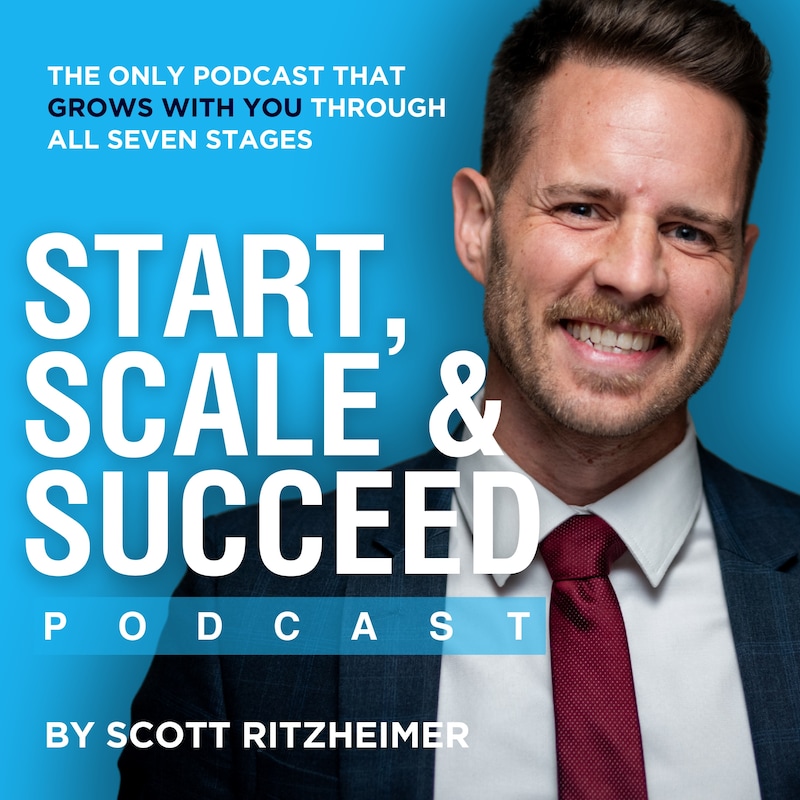
Shownotes
In this powerful episode, Scott Ritzheimer, Founder of Scale Architects, shares why hiring a professional CEO is rarely the answer in stage 4-5. If you're disillusioned in level 4 wondering whether to scale with an executive team or if you're ready to become the CEO yourself, you won't want to miss it.
You will discover:
- Why a professional CEO cannot replace you stepping into the chief executive role.
- How to decide if your vision truly requires an executive team in level 5
- What it takes to mature from disillusioned leader to effective chief executive
Scott helped start nearly 20,000 new businesses and nonprofits and with his business partner started led their multimillion-dollar business through an exceptional and extended growth phase (over 10 years of double-digit growth) all before he turned 35. He founded Scale Architects to help founders and CEOs identify and implement the one essential strategy they need right now to get them on the fast track to Predictable Success.
Want to learn more about Scott Ritzheimer's work at Scale Architects? Check out his website at https://www.scalearchitects.com/
Connect with Scott through his LinkedIn at https://www.linkedin.com/in/scottritzheimer/
Transcripts
Hello, hello, and welcome, welcome once again
Scott Ritzheimer:to the Start Scale and Succeed podcast, the only podcast that
Scott Ritzheimer:grows with you through all seven levels of your journey as a
Scott Ritzheimer:founder. I'm your host, Scott Ritzheimer, and today we are
Scott Ritzheimer:talking about the hardest level there is, and we're actually
Scott Ritzheimer:going to talk about the worst escape route that founders reach
Scott Ritzheimer:for. If you're just joining us, we are about halfway through a
Scott Ritzheimer:series. We are also halfway through the journey that we all
Scott Ritzheimer:go along as founders, and that means we are in the belly of the
Scott Ritzheimer:beast. If you missed episode one in this Should You Really
Scott Ritzheimer:series, you're probably going to want to check that out. It's in
Scott Ritzheimer:the show notes below. Just a few episodes ago, don't worry, you
Scott Ritzheimer:don't have to watch all the episodes between here and there.
Scott Ritzheimer:Just go back and catch that one before you come here, because
Scott Ritzheimer:it's going to help set a lot of context for what we're talking
Scott Ritzheimer:about. When we say things like level four and level five and
Scott Ritzheimer:level nine or niner, we won't say that. Just level four and
Scott Ritzheimer:level five is what we're talking about here, so check that out if
Scott Ritzheimer:you haven't already, or if it's been a minute, because we're
Scott Ritzheimer:doing these little ways apart until you might have forgotten,
Scott Ritzheimer:but what we're talking about here is yes, level four, and I
Scott Ritzheimer:call this the disillusioned leader level, now that doesn't
Scott Ritzheimer:mean you have to stay a disillusioned leader. In fact,
Scott Ritzheimer:nobody wants to stay a disillusioned leader. So, if
Scott Ritzheimer:you're in that mode again, this is full-time founder, you have
Scott Ritzheimer:usually at this stage more than 15, more than 2020-five,
Scott Ritzheimer:employees, but not quite 50 or more, so we're again in that
Scott Ritzheimer:kind of messy middle. Technically, you're a small
Scott Ritzheimer:business, but you don't feel like one anymore, and but you're
Scott Ritzheimer:still not technically a big business, and so in so many ways
Scott Ritzheimer:we're just kind of stuck right in the middle. You have a bunch
Scott Ritzheimer:of leaders, and you can't do it all yourself anymore, but you
Scott Ritzheimer:can't quite trust them to do it all, because there's some
Scott Ritzheimer:fundamental flaws there, even though you love them to pieces,
Scott Ritzheimer:things just aren't working quite the way that you want them to.
Scott Ritzheimer:This disillusioned leader moments really hard, but again,
Scott Ritzheimer:we don't have to stay there, so we have two paths forward, and
Scott Ritzheimer:the topic of this episode is going to be the third path that
Scott Ritzheimer:most people reach for that isn't actually a path at all. What are
Scott Ritzheimer:the two valid paths? Let's hit this first. The two valid paths
Scott Ritzheimer:are one, you learn to thrive in this leadership level, and this
Scott Ritzheimer:is where we go from being a disillusioned leader to being
Scott Ritzheimer:what I call a contented leader, and we'll talk a little bit
Scott Ritzheimer:about what that is here in a moment. The other one is you
Scott Ritzheimer:still have to become a contented leader, you still have to do
Scott Ritzheimer:some of the work of that, however, the other option is to
Scott Ritzheimer:keep going from there, so you're going to tackle this level with
Scott Ritzheimer:the express purpose of getting to level five, and level five is
Scott Ritzheimer:the chief executive level, and for the vast majority of those
Scott Ritzheimer:that I know that are in level four, that's the way to go, and
Scott Ritzheimer:that's really interesting, because most founders actually
Scott Ritzheimer:tried to do the opposite. Most founders at this stage are
Scott Ritzheimer:disillusioned leaders, and so they, they used to think that
Scott Ritzheimer:they had the golden gut, they just knew how to smell out
Scott Ritzheimer:profit, they used to think that they could make whatever
Scott Ritzheimer:decision they needed to make and find a way to make it happen.
Scott Ritzheimer:They used to think that their business would keep growing when
Scott Ritzheimer:they kept adding people. They, they used to be under the
Scott Ritzheimer:illusion that somehow they had figured it out. And while we
Scott Ritzheimer:might sit here and think, well, shame on you. Of course, it's
Scott Ritzheimer:not all of those things. That's not the truth at all. It's
Scott Ritzheimer:actually, it was exactly all of those things, or those
Scott Ritzheimer:illusions, as we talked about in an earlier episode, are all a
Scott Ritzheimer:necessary part of getting to this point. And so, whether
Scott Ritzheimer:they're proper beliefs or not, they were necessary beliefs to
Scott Ritzheimer:get to where we are today, or necessary lessons that we
Scott Ritzheimer:learned along the way.
Scott Ritzheimer:However, you try and apply all of those, and it doesn't work
Scott Ritzheimer:now in four, and it's, it's brutal, it's not pleasant. I
Scott Ritzheimer:mean, the, you're, you're probably experiencing that, like
Scott Ritzheimer:you, you walk in to work, and the only reason you're there is
Scott Ritzheimer:because you own the place, like you would have quit a long time
Scott Ritzheimer:ago if it wasn't your name on the sign out front, and and it's
Scott Ritzheimer:not because everything's broken, it's not because everything's
Scott Ritzheimer:bad, you probably have more revenue than ever, you. Might
Scott Ritzheimer:especially at the beginning of this level have more profit than
Scott Ritzheimer:ever, you have more people to help than ever, you have more
Scott Ritzheimer:things to brag about with your, you know, CEO peer group, but
Scott Ritzheimer:but you're dying inside, you're you find yourself trapped in a
Scott Ritzheimer:prison that you start to realize you made, and as these
Scott Ritzheimer:realizations are coming in, it's not uncommon. It's actually
Scott Ritzheimer:quite normal for them to build to a point that they start to
Scott Ritzheimer:make us wonder, wait a second, have I been the problem all
Scott Ritzheimer:along? I've gone through all these different levels and
Scott Ritzheimer:solved all these different problems, and none of that's it.
Scott Ritzheimer:I'm here, and maybe it's me. Maybe I've taken this
Scott Ritzheimer:organization as far as it can go. Maybe I need to hire a
Scott Ritzheimer:professional CEO or executive director or another senior
Scott Ritzheimer:pastor, if you're in a church, maybe we need a grown-up to run
Scott Ritzheimer:this thing, is what it feels like, and in some sense you do.
Scott Ritzheimer:There's a piece of that intuition that's true. The
Scott Ritzheimer:problem is the chances of it working with anybody but you are
Scott Ritzheimer:almost none, and there's lots of reasons for that. A professional
Scott Ritzheimer:CEO won't save you, one, because even if you bring them in,
Scott Ritzheimer:you'll probably hold so much control that they won't actually
Scott Ritzheimer:be able to make the differences that need to be made. You have
Scott Ritzheimer:to have the conviction to make those yourself, and if you do,
Scott Ritzheimer:you might as well just do it, because founders figure stuff
Scott Ritzheimer:out. Number two, any professional CEO that would be
Scott Ritzheimer:willing to come in under those terms, would either have you
Scott Ritzheimer:feel like they've been lied to because they thought they were
Scott Ritzheimer:going to be in charge and they aren't, or they're not really a
Scott Ritzheimer:CEO, they're really more like a COO, which would actually be
Scott Ritzheimer:kind of the better outcome, because that's easier to fix,
Scott Ritzheimer:but they're not the answer. Another possibility is you bring
Scott Ritzheimer:just the wrong person in altogether, like if you don't
Scott Ritzheimer:know how to be CEO of your company, how do you know how to
Scott Ritzheimer:pick a CEO of the company? That's real. Like, how do you
Scott Ritzheimer:interview them? Do you interview for someone that you like? Do
Scott Ritzheimer:you interview for someone that's like you? Do you interview with
Scott Ritzheimer:for someone who's not like you? What is the standard? Do you pay
Scott Ritzheimer:someone else who's never been CEO of your company to tell you
Scott Ritzheimer:what you need from CEO of your company, and again, or
Scott Ritzheimer:nonprofit, or church, or whatever organization, the
Scott Ritzheimer:chances that can work, don't get me wrong, but this, what this
Scott Ritzheimer:is, there's this whole idea that you'll just step back, that
Scott Ritzheimer:you'll step out of the way, and that some hero will come in and
Scott Ritzheimer:save the day, is it's a false narrative, it's not true, and
Scott Ritzheimer:folks in my line of work have breathed into this, because we
Scott Ritzheimer:have this whole, like, if you're a founder, you're not a CEO. We
Scott Ritzheimer:make it out like it's a wiring thing, like you, like piddly
Scott Ritzheimer:entrepreneur, you're just, you're just flawed, and you
Scott Ritzheimer:could never be CEO, and so you shouldn't be. I just don't buy
Scott Ritzheimer:it. I haven't seen it. I'm yet to, I've worked with 20,000
Scott Ritzheimer:founders. I'm yet to see one who genuinely desired to get to
Scott Ritzheimer:level five and be CEO, who, with a little bit of help and enough
Scott Ritzheimer:hard work, couldn't do it. It's not, it's not a wiring thing,
Scott Ritzheimer:it's a skills gap, and even more than being a skills gap, it's a
Scott Ritzheimer:desire gap, and that's the heart of this episode, because what we
Scott Ritzheimer:really have to get to is, do you really want to be in a company
Scott Ritzheimer:run by a CEO? Because if you do, you should be the CEO in way
Scott Ritzheimer:more ways than we can discuss in this.
Scott Ritzheimer:You're the ideal person to become CEO if it's even needed
Scott Ritzheimer:in the first place, and that's what we're getting at, is does
Scott Ritzheimer:this thing have to grow, does it actually have to scale. We've
Scott Ritzheimer:got this whole kind of scale or die ethos in a lot of
Scott Ritzheimer:entrepreneurial founder circles, and one, we mean all kinds of
Scott Ritzheimer:things by scale, but when I'm talking about scaling, I'm
Scott Ritzheimer:talking about going from 50 to 500 people, or I'm talking about
Scott Ritzheimer:going from, you know, 45 people in one office to 250 people
Scott Ritzheimer:across seven states. That's what scaling looks like. It's not
Scott Ritzheimer:just growing, but it's, it's, it's increasing to whatever size
Scott Ritzheimer:the market will allow, or you desire. It's being able to go
Scott Ritzheimer:when it's time to go. It's being able to slow when it's time to
Scott Ritzheimer:slow, and being in control of that, being CEO is about leading
Scott Ritzheimer:through an executive team, and you know, whatever you call
Scott Ritzheimer:them, you don't actually need an executive team with less than 40
Scott Ritzheimer:people on your staff, it's like pouring jet fuel into an old
Scott Ritzheimer:Volkswagen rabbit, like it runs on diesel. It doesn't, you can
Scott Ritzheimer:put more powerful stuff in it, but it's not going to work. And,
Scott Ritzheimer:and so, what we've really got to wrestle is, like, how big does
Scott Ritzheimer:this organization need to be to fulfill your vision? If it needs
Scott Ritzheimer:to be significantly bigger than it is right now, then yes, it
Scott Ritzheimer:needs to be led by a CEO, and until you've been that CEO, it's
Scott Ritzheimer:you, you're the guy, you're the girl. It's time for you to
Scott Ritzheimer:submit to your own vision and get it done. And when you do,
Scott Ritzheimer:you'll be awesome at it, you know. It'll be a little awkward,
Scott Ritzheimer:little pig on roller skates action to start with, but you
Scott Ritzheimer:can learn the skills of being a CEO, and the thing that you're
Scott Ritzheimer:terrified of being CEO and being in meetings and being bored out
Scott Ritzheimer:of your mind and reading PNLs, you got to do that for a time,
Scott Ritzheimer:but when you get to level five, you actually get to graduate in
Scott Ritzheimer:level five from being CEO, chief executive to being CVO, chief
Scott Ritzheimer:visionary, and it's amazing, it's a brilliant fit for the
Scott Ritzheimer:natural wiring of most founders, but you've got to go through a
Scott Ritzheimer:process to get there, and, and that's where this whole
Scott Ritzheimer:professional CEO thing undermines the whole process,
Scott Ritzheimer:because it disallows you the opportunity to learn the skills
Scott Ritzheimer:that you need to be an effective executive, and if you're not
Scott Ritzheimer:going to be an effective executive, then who really is,
Scott Ritzheimer:if you're not going to walk away altogether, which is generally a
Scott Ritzheimer:mistake at this stage, because the organization is not ready
Scott Ritzheimer:for you to walk away without taking a huge hit in its value
Scott Ritzheimer:and your ability to cash out, and so what we've got to figure
Scott Ritzheimer:out here is not, are you fundamentally flawed, can you be
Scott Ritzheimer:a CEO? Should you go hire a professional? That's not the
Scott Ritzheimer:question. The question is, does the vision demand a bigger
Scott Ritzheimer:organization to achieve it? Do you have to scale your staff? If
Scott Ritzheimer:you do, then yes, someone needs to be a CEO, and you don't need
Scott Ritzheimer:to hire a professional CEO. What you need is to start hiring
Scott Ritzheimer:executives. You don't need to put somebody in the top seat in
Scott Ritzheimer:the organization, or let's be honest, pretend they're in the
Scott Ritzheimer:top seat of the organization. You need to actually own that
Scott Ritzheimer:position, and you need to hire your team of executives to work
Scott Ritzheimer:with you. You cannot be chief executive if you have no other
Scott Ritzheimer:executives, you're not chief of anything, and so to really be
Scott Ritzheimer:CEO, regardless of what your business card has said since the
Scott Ritzheimer:day that you started to be CEO, you've got to step into that
Scott Ritzheimer:role yourself, you've got to have other executives, and so
Scott Ritzheimer:that's really what's on offer here is it's not about hiring a
Scott Ritzheimer:professional CEO to come in and save the day. It's about you
Scott Ritzheimer:recognizing what your vision demands, and then stepping in to
Scott Ritzheimer:fulfill the need of the organization to fill that
Scott Ritzheimer:vision. Now, that leaves us again with two options, and
Scott Ritzheimer:there's a third, in that you could go back and make the
Scott Ritzheimer:business smaller. Sometimes that happens, but we're not going to
Scott Ritzheimer:talk about that in this conversation.
Scott Ritzheimer:You can, you can push forward and become that CEO, or you
Scott Ritzheimer:might find that's not necessary. You don't need a professional
Scott Ritzheimer:CEO, and you don't need to be CEO. You just need to learn to
Scott Ritzheimer:thrive where you are right now. So, what are some reasons that
Scott Ritzheimer:that you could do that, some of the circumstances that might fit
Scott Ritzheimer:some of the the the things that you might want to do. Well,
Scott Ritzheimer:here's how you can get a sense of whether or not level four is
Scott Ritzheimer:right for you, whether whether you even have to figure out all
Scott Ritzheimer:this stuff of getting to level five in the first place. First
Scott Ritzheimer:one's obvious. You can hit your vision with an organization
Scott Ritzheimer:that's somewhere in the 25 to 50 people range. It's not, you
Scott Ritzheimer:know, and those are flexible, but it's not massive. There's
Scott Ritzheimer:not like seven layers of middle management. It's just you and a
Scott Ritzheimer:handful of leaders rocking and rolling with a closely knit
Scott Ritzheimer:group of people. And what's cool about this level is that you can
Scott Ritzheimer:know everybody on your team, now you won't have the same degree
Scott Ritzheimer:of relationship with everybody, but when you get past this and
Scott Ritzheimer:you're walking through the halls of your company and someone has
Scott Ritzheimer:been hired that you've not even met before and they've already
Scott Ritzheimer:started and worked for you for months and you've never met them
Scott Ritzheimer:because they're part of a different part of the
Scott Ritzheimer:organization, that's a weird feeling, and you know, level
Scott Ritzheimer:five, that's fine. You don't have to deal with that weird
Scott Ritzheimer:stuff here in level four. If the market that you're competing in
Scott Ritzheimer:fits a team of that size, that's great. It's real difficult to
Scott Ritzheimer:dominate a national or global market with a. With 40 or 50
Scott Ritzheimer:people, that's a real challenge, possible in some really niche
Scott Ritzheimer:domains, but not in most. If your revenue and margins can
Scott Ritzheimer:sustain a leadership team and your frontline staff, so this
Scott Ritzheimer:one you got to solve one way or the other, because it's only
Scott Ritzheimer:going to get more expensive if you go to level five and need an
Scott Ritzheimer:executive team, but sometimes we can get stuck, depending on the
Scott Ritzheimer:industry, in this kind of middle ground where you haven't quite
Scott Ritzheimer:reached economies of scale, but you have experienced some
Scott Ritzheimer:diseconomies of scale. You're just kind of in between. It's
Scott Ritzheimer:pretty efficient to run a small group in level three, where
Scott Ritzheimer:you're driving it and you're out there doing it. It's pretty
Scott Ritzheimer:efficient to run an enterprise in level five, but there's this
Scott Ritzheimer:middle spot that just doesn't work in the industry. I see this
Scott Ritzheimer:somewhat frequently in construction and in related
Scott Ritzheimer:industries, where it's just, you can't work on projects that are
Scott Ritzheimer:big enough to keep you busy, but you can't stay with projects
Scott Ritzheimer:that are small enough and available, and it's a little bit
Scott Ritzheimer:of a no man's land. So, there's just the market reality of,
Scott Ritzheimer:like, can you actually run an organization on that size in
Scott Ritzheimer:your industry sustainably? Otherwise, you have to just
Scott Ritzheimer:muscle through it. The the other part of this is that you're
Scott Ritzheimer:willing to continue to shoulder the decision making burden,
Scott Ritzheimer:you'd be more comfortable making the call yourself at this level.
Scott Ritzheimer:We have a leadership team, at least that's what we call it,
Scott Ritzheimer:and again, you can call it whatever, but it's really a
Scott Ritzheimer:group of people who are there to support us as we make the
Scott Ritzheimer:important decisions, and, and that's great, if that's a fit
Scott Ritzheimer:for you, you like them, you trust them to do what you've
Scott Ritzheimer:decided, that can be a great, a great deal. It can also be
Scott Ritzheimer:really hard to carry that weight by yourself for a really long
Scott Ritzheimer:time, whereas with an executive team, you're actually creating a
Scott Ritzheimer:team that's capable of making decisions without you, and in
Scott Ritzheimer:fact probably makes most of the decisions either with or for
Scott Ritzheimer:you, and and leaves you with just a few that you actually
Scott Ritzheimer:need to make yourself. You can let go of daily execution while
Scott Ritzheimer:still maintaining being in charge, and, and sometimes that
Scott Ritzheimer:can be really tricky. Sometimes we'll be tempted to jump in when
Scott Ritzheimer:we're that close to the execution, and, and for some
Scott Ritzheimer:folks, they just can't resist, and so they have to get further
Scott Ritzheimer:away from the front line.
Scott Ritzheimer:I talk about the move of level five to be, you know, moving
Scott Ritzheimer:from level four coach on the sideline to GM in the box.
Scott Ritzheimer:There's a reason why the GM is not at the sideline, and a big
Scott Ritzheimer:part of that is because they'd be tempted to interfere with or
Scott Ritzheimer:make decisions that are not actually their job, and it would
Scott Ritzheimer:change their perspective in a way that's not actually helpful.
Scott Ritzheimer:So you're able to lead from the field level and not jump back in
Scott Ritzheimer:and save the day more than you should. You don't need to scale
Scott Ritzheimer:just for scale sake, like you can say no to even some good
Scott Ritzheimer:opportunities if they're not the best one. And again, you're
Scott Ritzheimer:willing to do that all under around something like 50 people
Scott Ritzheimer:on your team, or the equivalent, and those are all like, if that
Scott Ritzheimer:matches for you, then honestly, the best decision that you can
Scott Ritzheimer:make is probably to stay in level four. If you were to try
Scott Ritzheimer:and get to level five, you'd introduce more complexity than
Scott Ritzheimer:that was necessary, you'd introduce more overhead than you
Scott Ritzheimer:could get a return out of from an economies of scale
Scott Ritzheimer:perspective, you'd add more risk, particularly financial
Scott Ritzheimer:risk, to the equation than then you probably are willing to
Scott Ritzheimer:handle, and the intensity of the game would go up in a way that's
Scott Ritzheimer:just not pleasant. Now, How do you know if if it's time to move
Scott Ritzheimer:forward, what are some signs that it's time to go to level
Scott Ritzheimer:five? First one, obvious one, already said it, gonna say it
Scott Ritzheimer:again. Your vision demands it. Your vision demands a more
Scott Ritzheimer:complex organization than you can lead alone, and you've got
Scott Ritzheimer:the energy to lead a team toward it, so the two requirements that
Scott Ritzheimer:I have for level five CEOs really are this. If you're
Scott Ritzheimer:saying, 'Hey, can I be that? Two criteria, you ready? First one,
Scott Ritzheimer:do you have a vision for a better future for your
Scott Ritzheimer:organization? If you do, that's that's number one, not the skill
Scott Ritzheimer:to do it, not all the answers on how it's going to happen, but
Scott Ritzheimer:just a clear vision on what you believe the organization can and
Scott Ritzheimer:should become. Two, the energy to lead a team to figure it out,
Scott Ritzheimer:not the energy to do it, not the energy to. Or the team on your
Scott Ritzheimer:back and carry them all across the line, not even the energy to
Scott Ritzheimer:coach from the sideline, but the energy to lead an executive team
Scott Ritzheimer:toward it. If you have those two things, you are the ideal CEO
Scott Ritzheimer:for your organization. You just are. And so, if you have those
Scott Ritzheimer:two things, and your vision demands that, that better vision
Scott Ritzheimer:demands that you scale beyond the current operation. Level
Scott Ritzheimer:five is probably going to be great for you to get there. It's
Scott Ritzheimer:going to cost you. You're going to have to throw out the founder
Scott Ritzheimer:card. You're going to have to throw out the owner card,
Scott Ritzheimer:because in level four we kind of walk around and everyone knows
Scott Ritzheimer:we're in charge and everyone does what we say, for better or
Scott Ritzheimer:worse, when you have an executive team, they're actually
Scott Ritzheimer:paid to tell you no. Now they're paid for more than that, and
Scott Ritzheimer:they need to accomplish more than that. But one of the
Scott Ritzheimer:biggest things that an executive team brings to the table, that's
Scott Ritzheimer:different from a leadership team, is that they make these
Scott Ritzheimer:big decisions with you, and the only time that would be relevant
Scott Ritzheimer:is if they're capable of disagreeing with you, because if
Scott Ritzheimer:they would always agree with you, then there's no point in
Scott Ritzheimer:having them with you, they're just redundant, and so if you're
Scott Ritzheimer:okay with building an executive team that tells you no, and you
Scott Ritzheimer:trust them to do that wisely, you might be suited for level
Scott Ritzheimer:five. Now, what else we have here, we have the you We've got
Scott Ritzheimer:the executive team. What else we have, the willingness to mature
Scott Ritzheimer:personally, skillfully into the leader, the executive, and
Scott Ritzheimer:visionary that your executives need you to be great executives.
Scott Ritzheimer:Need a great leader. They need someone to inspire them to make
Scott Ritzheimer:the right decisions and move in the right direction, and give
Scott Ritzheimer:their discretionary effort, and come up with great ideas.
Scott Ritzheimer:And so the limiting factor here is oftentimes whether or not you
Scott Ritzheimer:have developed and matured as the leader that you need to be
Scott Ritzheimer:in the way that you communicate, in how clear the vision is, in
Scott Ritzheimer:how trusting you are with material decisions. All of those
Scott Ritzheimer:are necessary requirements for executives to do their best work
Scott Ritzheimer:for you, and so again I want to bring us back that the principal
Scott Ritzheimer:question in this episode was, do you need to hire a professional
Scott Ritzheimer:CEO, and if you're in level four, not level five, the answer
Scott Ritzheimer:is no. The answer is no. Now you'll see in the next episode
Scott Ritzheimer:that that changes completely in level five, because half of your
Scott Ritzheimer:job in level five is actually find your successor, but that's
Scott Ritzheimer:not a professional CEO, that's a, that's a replacement
Scott Ritzheimer:visionary leader for your organization. So, we'll talk
Scott Ritzheimer:about that in the next episode as we build on how to navigate
Scott Ritzheimer:level five, but right here, when we're navigating level four,
Scott Ritzheimer:you, you don't hire a professional CEO so that you
Scott Ritzheimer:don't have to become an executive, that's not going to
Scott Ritzheimer:work for you. You, you don't hire a professional CEO, but
Scott Ritzheimer:then what you do is decide, does your organization need a CEO?
Scott Ritzheimer:Does it need a chief executive? And the answer to that is, does
Scott Ritzheimer:it need an executive team? Because an executive team needs
Scott Ritzheimer:a chief executive, and and it needs an executive team if it's
Scott Ritzheimer:going to scale any to any significant degree beyond 50
Scott Ritzheimer:people, because the complexity and intensity of leading an
Scott Ritzheimer:organization at that size is just so much greater than the
Scott Ritzheimer:traditional leadership team or team of leaders can handle, and
Scott Ritzheimer:so I'd be remiss if I didn't say level four is a hard level, it
Scott Ritzheimer:really is. And if you're there and you're feeling beat up and
Scott Ritzheimer:you're questioning yourself, you're not alone, and you
Scott Ritzheimer:probably have some things that you need to work on, but that
Scott Ritzheimer:doesn't mean that you can't do it. It's not a fatalistic thing.
Scott Ritzheimer:You haven't reached your limit, you haven't reached the end,
Scott Ritzheimer:you've just reached the limit and end of level four, and at
Scott Ritzheimer:least the way that you're engaging with level four right
Scott Ritzheimer:now, and so you've got to decide what you want to do about that,
Scott Ritzheimer:so if you're willing to stay in the game, stay close to the
Scott Ritzheimer:game, I should say, and own the hard decisions, and keep pulling
Scott Ritzheimer:the organization forward toward your vision for it, then that's
Scott Ritzheimer:great. Level four might be fantastic for you, and you can
Scott Ritzheimer:really be a contented leader and lead that for a long time, if
Scott Ritzheimer:you need to step forward, if you need to get to the next level. A
Scott Ritzheimer:professional CEO is not going to do it. Learning the skills of a
Scott Ritzheimer:CEO are going to be exactly what makes that happen for you, so
Scott Ritzheimer:the. What it takes to get from level four to level five.
Scott Ritzheimer:Hopefully, you've got some sense of which level is right for you.
Scott Ritzheimer:If you are already beyond this question, you've already moved
Scott Ritzheimer:into level five, or if you want to know what's coming next, then
Scott Ritzheimer:the next episode is going to be fantastic for you, because we
Scott Ritzheimer:are going to actually talk about and zoom all the way forward to
Scott Ritzheimer:whether or not it's time for you to step down, and it's gonna be
Scott Ritzheimer:a great exercise. It's gonna be a great conversation where we
Scott Ritzheimer:talk about should you really step down. So that's all about
Scott Ritzheimer:the transition from level five to level six. Hope to see you
Scott Ritzheimer:there, and with that, you know your time and attention mean the
Scott Ritzheimer:world to us. I hope you got just a little bit more clarity than
Scott Ritzheimer:you had before this conversation, and I cannot wait
Scott Ritzheimer:to see you next time. Take care. Hey everyone, Scott Retheimer
Scott Ritzheimer:here. Thank you so much for listening to the Start Scale and
Scott Ritzheimer:Succeed podcast. I hope this episode gave you exactly what
Scott Ritzheimer:you need for the level you're in right now.
Scott Ritzheimer:If you want to discover what level you're in, take our 10
Scott Ritzheimer:question founders evolution quiz for [email protected] That's
Scott Ritzheimer:Founders quiz.com it'll pinpoint exactly where you are and give
Scott Ritzheimer:you tailored tips to move forward and reach that next
Scott Ritzheimer:level in your journey as a founder. If you got something
Scott Ritzheimer:out of today's episode, don't forget to subscribe, rate, or
Scott Ritzheimer:review. It helps us reach more founders like you, and let's be
Scott Ritzheimer:honest, it means a ton to me, my team, and all our incredible
Scott Ritzheimer:guests. So, keep starting scaling and succeeding, and I'll
Scott Ritzheimer:see you in the next episode.