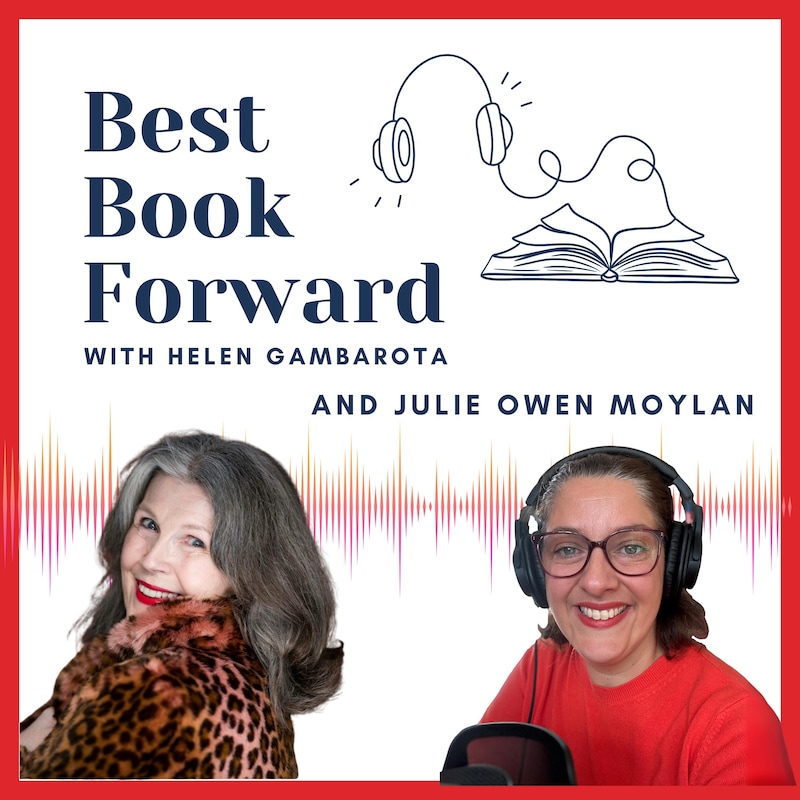
Shownotes
Julie Owen Moylan on Elizabeth & Marilyn | Best Book Forward Podcast
What an incredible way to kick off a brand new season of Best Book Forward.
In this episode, I’m joined by novelist Julie Owen Moylan to talk about her stunning new historical novel, Elizabeth & Marilyn. Set in the summer of 1956, the book reimagines the extraordinary moment when two of the most famous women in the world, Marilyn Monroe and Queen Elizabeth II, were, incredibly, neighbours in Windsor.
We explore:
- The real historical backdrop behind Elizabeth & Marilyn
- Writing historical fiction about real-life figures
- Balancing emotional truth with historical accuracy
- The pressures of fame and life in the public eye
- The shared vulnerabilities of two 20th-century icons
Julie shares how she approached portraying Marilyn and Elizabeth as complex, human women rather than untouchable symbols, and how themes of autonomy, identity, ambition, and resilience run through the novel.
If you love historical fiction, stories about iconic women, or thoughtful conversations about the writing process, this episode is for you.
📚 By Julie Owen Moylan
✨ Books Mentioned
Wide Sargasso Sea by Jean Rhys
I Know Why The Caged Bird Sings by Maya Angelou
Finding Your Own North Star by Martha Beck
I’ll be back next week with another author conversation, and I’d love for you to join me for that too.
In the meantime, if you’ve enjoyed this episode, please subscribe, rate, and review Best Book Forward, and don’t forget to tell your friends... it really helps new listeners discover the show.
See you tomorrow, and happy listening.
Listen & Subscribe Now:
https://best-book-forward.captivate.fm/listen
To stay in touch with Best Book Forward news please follow me on Instagram @bestbookforward or visit my website: https://bestbookforward.org/
Transcripts
Welcome back to the very first episode of a brand new season of Best Book Forward.
Speaker A:I'm Helen and this is a podcast where I chat to authors about the books that have shaped their lives.
Speaker A:It's basically a bookish take on Desert Island Discs, just with fewer coconuts and a lot more paper bags.
Speaker A:And to kick off the season, I'm delighted to be joined by Julie Owen Moylan, author of that Green Eyed Girl sat 73 Dove Street Circus of Mirrors, and her gorgeous new novel, Elizabeth and Marilyn, which is out today.
Speaker A:And trust me, it is a brilliant read.
Speaker A:You do not want to miss this one.
Speaker A: akes us back to the summer of: Speaker A:The novel is a vibrant imagining of their lives seen through Julie's warm, perceptive and deeply human lens.
Speaker A:I can't wait to talk to Julie about the books that have shaped her, what it was like writing real life figures, especially icons like Marilyn Monroe and Queen Elizabeth, and of course, the stories that have stayed with her over the years.
Speaker A:So let's not waste any time, let's get straight into it and give Julie a warm welcome to the show.
Speaker A:Julie, welcome.
Speaker A:And thank you so much for joining me on Best Foot Forward today.
Speaker B:Hi.
Speaker B:Thank you for having me.
Speaker A:Helen, I've just been saying to you how excited I am to be able to talk to you about Elizabeth and Marilyn, which is your new book.
Speaker A:It's your fourth book.
Speaker A:So we're recording this at the beginning of March and this is coming out on your publication day.
Speaker A:So hopefully by the end of this episode everyone will be rushing out to grab a copy because you do not want to miss this book.
Speaker A:So, Julie, do you want to start off by telling listeners what they can expect from Elizabeth and Marilyn?
Speaker B:Yes.
Speaker B: ve is a very defining summer,: Speaker B:Now, at that time, Marilyn was one of the biggest movie stars in the world, but she wanted more control over her work, so she'd set up her own production company.
Speaker B:She was newly married to Arthur Miller, she was absolutely gorgeous and she had bought the rights to a Terence Ratigan play, recruited Lawrence Olivier to direct and star, and she was on her way to England for the very first time to film this movie.
Speaker B:And they rented her a house in Windsor, the back garden of which opens on to the kind of Queen's Back garden, really.
Speaker B:Although that's quite an enormous back garden in winter.
Speaker B:So it's the story of that summer, Marilyn Summer in England, and leading up to the meeting with Elizabeth that they had during October that year and possibly, as we may see without any spoilers, some interaction before then.
Speaker A:Such a great idea.
Speaker A:And I just, I mean, I'm obsessed with it.
Speaker A:I just said to you, I cannot wait for everyone to read this.
Speaker A:It is brilliant.
Speaker A:And just learning more about these women in that summer, it's so clever.
Speaker A:We're going to dive more into it.
Speaker A:So.
Speaker A:But before we do, I always like to find out where the spark came from, because obviously this is such a huge idea.
Speaker A:These two iconic women.
Speaker A:Where did the idea for it come from?
Speaker A:When did you first think there's a novel here between these two?
Speaker B:It was a couple of years ago and I was actually working on my third book, Circus of Mirrors, and I was researching that, just beginning to write that, and one day I was kind of doom scrolling through social media, as one does, and I saw a post that just said, oh, did you know Marilyn Monroe and Queen Elizabeth shared a birthday?
Speaker B:And I thought, no, I did not.
Speaker B:And I googled it and it wasn't true.
Speaker B:But what was true was that they were exactly the same age.
Speaker B:And sometimes as an author, little things just kind of lodge in your mind.
Speaker B:And I found over the next couple of days, I kept thinking about, oh, that's kind of strange, I guess, because we always think about Marilyn Monroe as being forever young and we think of the Queen as being really forever elderly, you know, this very grand kind of elderly lady.
Speaker B:And, and so I started thinking about, well, I wonder what their lives were like.
Speaker B:They wouldn't have had anything in common.
Speaker B:And I wonder what they were like when they were 10 years old or 20 years old, and I wonder if they ever met.
Speaker B:And so I looked that up and when I found that Marilyn had in fact spent a summer living in Windsor, I thought, oh, my God, I need to write this book.
Speaker B:This is just the weirdest thing.
Speaker B:And, and I have no idea where this is going to go, but I know there's something there.
Speaker A:It's so.
Speaker A:And it's actually interesting because when you do think of the two women, right when I first saw it, I was like, oh, that's a strange combo.
Speaker A:But then you sort of, when you start looking into it, it's like, oh, it is actually really interesting.
Speaker A:And then when you find out again about this summer, it's like, oh, so we have this summer and this one brief meeting that they have between them.
Speaker B:We.
Speaker A:Once you decided to focus in on that, how difficult was it for the rest of the story to come for you?
Speaker B:It was quite tricky to.
Speaker B:I am a bit of a pantser sometimes with writing, so I don't always plot everything out straight away.
Speaker B:But I did try to plan this because I had a very tight deadline.
Speaker B:But initially, my job was really to try and get to know these women because I really wanted to write them as women and not as these icons, these kind of stereotypical, kind of cliched cardboard cutouts that we sometimes see.
Speaker B:And the more I started to research them, the more this story started to come together, because I was kind of looking at what had happened to them before, because this summer they'd both kind of turned 30 years old.
Speaker B:And I was kind of thinking, well, what were their lives like before that?
Speaker B:What were the defining parts of that?
Speaker B:And then from there on, did anything happen this summer that I should know about?
Speaker B:And once I started digging into it, I thought, oh, actually, this turns out to be quite a momentous summer.
Speaker B:Sometimes the universe is quite good to you.
Speaker B:The one that gives you a idea.
Speaker B:It actually says, oh, yes, and this happened, and this happened, and this happened.
Speaker B:Not always, but sometimes.
Speaker A:Oh, well, it's worked perfectly here.
Speaker A:So I was thinking about your research, because I was like, there's so much that has been written about these women.
Speaker A:There's movies, there's whatever.
Speaker A:But there's also then the real sort of news clips and newspapers and everything.
Speaker A:I guess that could have become quite overwhelming, sort of, you know, diving into them too much.
Speaker A:So I was wondering, how did you go about that and how did you decide?
Speaker A:Because I loved going back and seeing parts of them.
Speaker A:I felt I learned quite a lot about them, actually.
Speaker A:How did you decide what to put in?
Speaker A:And.
Speaker A:Because, I mean, you could have ended up with a huge, huge novel, couldn't you?
Speaker B:Yeah, I mean, this is chunky enough as it is, to be fair.
Speaker B:I had two separate problems, really.
Speaker B:Kind of contrast, contradictory problems, really, with both women.
Speaker B:One with Marilyn.
Speaker B:There is barely anyone in the world that doesn't have an idea what she was like.
Speaker B:There have been so much books written about, so many books written about her, so many interviews, so many people that said they knew her well, were friends with her, had stories to tell about her.
Speaker B:And I read a lot of the books and I looked at the interviews and the kind of documentaries, and I watched all of her movies.
Speaker B:And then I had to kind of sweep all that off the table and say, well, what do I think really matters here?
Speaker B:What's the emotional truth of this?
Speaker B:And where's the woman that I want to write about or I feel I can write about?
Speaker B:And with the Queen, I had completely the opposite problem, because although there have been a lot of books written, it's actually about her as the Queen, rather than her as Lilibet, as I have them in the book, Lilibet and Norma Jean, because that's who they were.
Speaker B:And Marilyn and Elizabeth were the kind of the suit of armor they put on when they got up in the morning to do their job.
Speaker B:So with the Queen, I had to really go through so much stuff from interviews with people who'd worked in the royal household, people, chefs showing little royal recipes or things, and all kinds of books, and just take little tiny nuggets out and put it together like a little jigsaw to try and find the woman underneath this kind of iconic character of Queen Elizabeth.
Speaker B:But once I got my little table full with my jigsaws, then from there I could really say, okay, I think this is an important moment.
Speaker B:I think this one for Elizabeth is an important moment.
Speaker B:I want to talk to that.
Speaker B:And I was quite surprised at the magic of.
Speaker B:Of the alchemy of writing sometimes, how often there were echoes of those stories in the other woman's story.
Speaker B:And that I love to see, because I'm just like, thank you.
Speaker B:Yes, this is great.
Speaker A:And it is.
Speaker A:It's amazing as you're reading it from that sort of point of view, because you do start.
Speaker A:I mean, I started thinking, I don't really understand how these two women are going to link.
Speaker A:But then, as you say, there are these moments and you can sort of see, See, you know, their vulnerabilities and struggles and things throughout their lives.
Speaker A:Very different lives, but same sort of struggles for.
Speaker A:For them both.
Speaker A:It's so.
Speaker A:It's so interesting.
Speaker A:We're going to talk about you stepping into their roles in a minute because I just.
Speaker A:I'm desperate to.
Speaker A:To know more about that.
Speaker A:I saw on Instagram, I'm going off track a little bit.
Speaker A:Sorry, Julie, I saw on Instagram you posted a picture of your office and you had, like, a photo of Marilyn, a beautiful picture of Queen Elizabeth on her wedding day, sort of taken from above.
Speaker A:So when you had all your research then, are you quite visual like that?
Speaker A:Do you have it all sort of laid out or is it more?
Speaker A:Yeah, yeah.
Speaker B:I mean, I have, you know, various notes and whatever that I often write things down, and then I find that I don't usually need to look at it after that, because the act of writing it down kind of makes me remember it if it's important.
Speaker B:Not always, but mostly.
Speaker B:But I am very visual and I've always used photographs for my work.
Speaker B:And there's something particularly about candid photography.
Speaker B:These two women were so photographed in very professional and full armor on, you know, kind of, hi, I'm Marilyn.
Speaker B:Here am I, I'm the Queen.
Speaker B:And you can't really glean very much for that, but if you go behind the scenes and you look at more candid photography of them, you can tell a lot from that.
Speaker B:Actually.
Speaker B:I love to look at those and think, oh, yes, yeah, now.
Speaker B:Now I can begin to see the out the woman I think you were.
Speaker B:And that is just gold dust for me, because then I can start to imagine myself in that character, to get inside that woman and try and find how she would speak and how she would view the world and what she would say to people and what she would be feeling.
Speaker A:Interesting.
Speaker A:This is.
Speaker A:I'm so interested in.
Speaker A:So this is your fourth novel and in your previous books, they've been fictional characters, so this is the first time you've stepped into real shoes and you picked some big shoes.
Speaker A:Two of the most iconic women.
Speaker A:I feel like you stepped into their shoes very comfortably.
Speaker A:Julie, like I said to you before we came on, when I was reading it, I felt like I was sort of hidden away in their lives and watching it, it felt very real, both of them, to me.
Speaker A:So first of all, how daunting was that?
Speaker A:And how did you capture their voices so perfectly?
Speaker B:It was very daunting.
Speaker B:And it.
Speaker B:It still is a bit.
Speaker B:I mean, when I have written my previous novels, readers could say, I don't like this character, or I love this character, or I hate that character, but they couldn't actually say to me, that character wouldn't do that.
Speaker B:That character wouldn't behave that way because they're mine.
Speaker B:I made.
Speaker B:So I'm the kind of expert in my imaginary friends, really.
Speaker B:And nobody can argue with you or not successfully anyway.
Speaker B:But before I even wrote a word of this book, I was very well aware that everybody would have some idea what the Queen might have been like, what Marilyn Monroe might have been like, and that there would be a lot of people who might read that and go, no, I. I don't think you've captured that, really.
Speaker B:So, yeah, that.
Speaker B:That.
Speaker B:I couldn't think about that too much, otherwise I wouldn't have started.
Speaker B:I think I would have been so terrified that I. I just couldn't have put a word down.
Speaker B:So I had to kind of get over that and think, okay, I, I just want to do these women justice.
Speaker B:I want to present these women in their full humanity, not as caricatures.
Speaker B:And that I didn't want it to turn into a kind of gossip sheet about them.
Speaker B:I didn't want to humiliate these women on the page.
Speaker B:And once I got into that mode where I felt, I think I know enough about these women to try and find a voice here for them and try and move this story forward for them, I was always on their side.
Speaker B:From thereon, I was kind of like, yeah, I am treat them tenderly, you know, because I wanted to.
Speaker B:I wanted the reader to understand.
Speaker B:Yes, they lived incredibly privileged lives.
Speaker B:They had lots of money, they were married, very, you know, handsome, successful men.
Speaker B:But behind the scenes, they had very similar struggles to all of us.
Speaker B:Their insecurities and vulnerabilities both quite different, but equally kind of important.
Speaker B:And it's sometimes overwhelming to them.
Speaker B:So, you know, I was deeply daunted by the prospect, but I also was more impressed by them as I got to know these women better and thought, oh, goodness me, that's so brave.
Speaker B:You know, just the idea that the things that Marilyn overcame in her life and how brave she was.
Speaker B:And so much of what we think about Marilyn is about her being some kind of victim or plaything of wealthy men.
Speaker B:And Marilyn really wasn't like that.
Speaker B:She had a very vulnerable side, but that's not her entire story.
Speaker B:And I was very tired of seeing that portrayal, really.
Speaker B:I wanted to give Marilyn her flowers.
Speaker B:She deserved them.
Speaker B:She was a really hard working, talented, curious about the world, interesting woman.
Speaker B:And with the Queen, I was kind of putting her in that position of, you know, she was 25 when her father died, which was a terrible shock to her.
Speaker B:And I think when you're in that position, with that shock, to not have a moment to grieve, to suddenly find yourself in this overwhelming position, and of course with the monarchy, because it's such a weird institution that everybody reshuffles once the monarch changes, that their importance goes up or down, depending on who they are, is terribly dislocated into a family.
Speaker B:And so once I can see that, how hard that would be for a.
Speaker B:A young woman to deal with all of these things.
Speaker B:So, yeah, then, then I was just kind of really into it and the fear subsided slightly.
Speaker B:It's building back up again now, obviously, because we're about to release it.
Speaker A:It's going to be brilliant.
Speaker A:Everyone's going to Love it.
Speaker A:I think it's absolutely brilliant.
Speaker A:And I love how you have done that with.
Speaker A:And there's a few things that you've just said that I wanted to sort of just go back over.
Speaker A:Like when you were talking about Marilyn and the sort of victim, something I was thinking when I was reading, if she were around today, it would have been so.
Speaker A:So you think of like, I was thinking of actress like Kate Winslet.
Speaker A:When they're asked a question that's maybe a bit sexist or whatever, how they are able to sort of now put that person in their place and say she.
Speaker A:She was stuck in her time and she was very much sort of portrayed as that.
Speaker A:But you think today, I think she would have had a slightly.
Speaker A:Well, not as easy for famous women, which we'll go on to talk about.
Speaker A:But I do wonder whether it would have been easier because I didn't realize even about her buying the rights to the play and things.
Speaker A:I had no idea that she.
Speaker A:Which is such a brave thing to have done, and she really wanted to be taken seriously.
Speaker B:So, yeah, I think for Marilyn, I mean, when I did all the research into Marilyn, one of the things that I came to the conclusion was that she probably had what we would recognize today as post traumatic stress disorder.
Speaker B:I think that informed her insomnia.
Speaker B:And if you can't sleep at night, she had terrible, terrible traumatic nightmares.
Speaker B:All of which went back to a period of abuse in her childhood, I believe.
Speaker B:And I think that then informs the kind of taking the sleeping pills and struggling.
Speaker B:Anybody who's got some kind of traumatic wound, I think struggles to deal with it sometimes when they get triggered.
Speaker B:But the rest of the time, Marilyn was incredibly determined.
Speaker B:Even before she was an enormous style, she actually wrote a book, a piece for a newspaper, a kind of Me Too piece saying, wolves, I have known kind of, you know, talking about these powerful men in the studio that wouldn't leave, you know, girls alone.
Speaker B:She was very determined.
Speaker B:She worked incredibly hard.
Speaker B:And she walked out on the studio and she said, I'm done doing kind of dumb blonde roles.
Speaker B:You're trying to give me the same part over and over again.
Speaker B:I don't want to do that.
Speaker B:And she went to New York and she enrolled at the Actors Studio Studio alongside, you know, really great actors there at the time.
Speaker B:The kind of, you know, Brando and Paul Newman and, you know, all of these Shelley Winters, all of these great, great actors.
Speaker B:She was desperate to become better and she wanted to do these.
Speaker B:These great parts.
Speaker B:And so then she set up her own production company and bought the rights to this play because she wanted control of it.
Speaker B:And, you know, I. I do believe.
Speaker B:I believe two things at the end of this book.
Speaker B:One, I think possibly if she hadn't come to London, she might have lived longer because I think this pressure and stress led to an incremental use in pills.
Speaker B:And that ultimately, with the end of her marriage to.
Speaker B:To Arthur, eventually led to kind of untimely death.
Speaker B: Jane Fonda type woman in the: Speaker B:She was quite a political activist too.
Speaker B:You know, she defended Ella Fitzgerald because Ella Fitzgerald, the jazz singer, couldn't get booking because she didn't look a certain way and because she was a black woman.
Speaker B:And Marilyn said, you know, if you book her to this club, I will come and sit in the front row every night.
Speaker B:And she did so, you know, she was very feisty and willing to stand up for the things that she believed in.
Speaker B:So I think if she could have hung on into the 60s, that gave women just a little bit more leeway, that maybe things could have.
Speaker B:Could have changed and turned around.
Speaker A:Yeah.
Speaker A:And we were saying earlier, like, there are things not changing.
Speaker A:I was thinking I hadn't realized that she had endometriosis, which I do, and it's still a struggle now.
Speaker A:But I was like, when you think about it then, like, if they weren't aware of it and things, and she was trying to work and she was labeled as being difficult, wasn't she?
Speaker A:Because she couldn't get.
Speaker A:And I was like, oh, if things had been different for her, she would have just been so much more than just the face that's remembered and the movies.
Speaker A:And I love that about the book, that you have shown that side to her.
Speaker A:You've given her so much what she deserves, I think.
Speaker B:Yeah.
Speaker B:And.
Speaker B:And, you know, yes, you have to say to it when.
Speaker B:Because a lot of the time, a lot of her co stars were interviewed over the years and they were like, oh, she wouldn't turn up, she would be late.
Speaker B:She did so many takes.
Speaker B:And yes, she was a method actress and she needed to feel that she was absolutely inhabiting the character.
Speaker B:She was trying to overcome some of her own childhood triggers and trauma.
Speaker B:If she didn't feel safe on set, if she didn't feel like she was amongst friends, if she was, you know, if everyone's standing there with their arms folded, mostly men kind of looking at her and being horrible to her, it did, you know, have an effect on, on her.
Speaker B:And she did struggle badly with endometriosis.
Speaker B:And we can, you know, imagine the, the pain of that.
Speaker B:And particularly this summer in this movie.
Speaker B:She's standing there all day long in this white mermaid shaped dress, you know, often in a great deal of pain or, you know, with a great deal, you know, bleeding copiously sort of thing.
Speaker B:She had a lot of struggle to overcome.
Speaker B:And of course, at the time, you can't say this publicly, she couldn't say this.
Speaker B:And because she's supposed to be this, this goddess with no problems at all, you just smile and put your lipstick on and your life is fabulous because you're rich and you're beautiful and you're married to this handsome man.
Speaker B:So how can you have problems?
Speaker B:And the very similar things with the queen actually, that you look at her and say, well, how could you possibly have problems?
Speaker B:It's.
Speaker B:Well, imagine what it's like to lose your father at age 25 and then have your mother been absolutely grief stricken and upset with you that your sister has not been able to marry the man that she loves or not without a great deal of sacrifice and is furious with you.
Speaker B:Your husband, who had a great career of his own in the Navy that he loved doing.
Speaker B:And I think they had this plan where they would have this.
Speaker B:He would have his naval career, they would raise their children, and then her father would die at this ripe old age and in their 50s, maybe then they would come to the throne and they would be ready because Philip would have had his naval career, their children would all be older, and everybody would live happily ever after.
Speaker B:And of course, life is what happens to you when you're busy making other plans.
Speaker B:So it was dislocating and devastating for her on a personal level because she was very close to her father.
Speaker B:But it was also extremely dislocating and devastating for Philip, who had no job, that if you're a king, there was a job for a queen.
Speaker B:You would do all the kind of household kind of things, menu checking and, you know, all of that kind of kind of stuff.
Speaker B:There was nothing for Philip to do, really, so he had to kind of make his own role.
Speaker B:And it took him a long time to come to grips with it.
Speaker B:I think they were all grieving and devastated, not just grieving the loss of her father, but grieving the life that they lost.
Speaker B:So you're suddenly tipped out of your quite nice life.
Speaker B:Thank you.
Speaker B:Into this glare of publicity.
Speaker B:And of course, during that time, a lot of people are looking at her as this young woman and saying, well, she's just a girl.
Speaker B:What is she?
Speaker B:How.
Speaker B:You know, how on earth can she.
Speaker B:She know anything about anything, you know?
Speaker B:And it was incredibly difficult.
Speaker B:So behind the scenes, I think, for both of these women had probably much more in common than we think that they did.
Speaker A:Yeah.
Speaker A:I love the way you did that.
Speaker A:She's.
Speaker A:I love it when you stop and think, because I hadn't sort of really sat and thought about the Queen in that way of, like, how difficult and actually how lonely it was as well.
Speaker A:Like, I think for both of them in separate ways.
Speaker A:But it was very lonely.
Speaker B:Yeah.
Speaker A:I just think it was your writing that.
Speaker A:So obviously it's told from different points of views.
Speaker A:When you were writing, say, a Marilyn section, then you were sort of moving into.
Speaker A:I mean, did you write Marilyn at once and then Lilibet?
Speaker A:So you did.
Speaker A:So you weren't sort of chopping and change.
Speaker A:I was like, how did you sort of switch the headspace between the two?
Speaker B:Yeah, I started off because usually I like to write in a kind of linear fashion, really, so that if it's going to be a split narrative, usually in all of my previous books, I think I've done this character, then that character, this character.
Speaker B:So I move it all along together.
Speaker B:But because I had planned out what the story was going to be and what the plot points were going to be, so I knew where I was kind of going with it, I found that I couldn't switch back and forth.
Speaker B:I wanted to immerse myself in Marilyn.
Speaker B:When I thought that I had her voice on the page, I wanted to stay in it.
Speaker B:I was terrified to leave, I think, in case she wandered off and left me halfway through, turned into somebody else, you know.
Speaker B:So, yes, I wrote all of Marilyn initially in the first draft, and then all of Elizabeth in the first draft.
Speaker B:And then after that, I could go back and I could work in a more linear fashion to kind of edit my way through it.
Speaker A:Wow.
Speaker B:So is.
Speaker A:It must have been much more complicated than your other books, then sort of marry those two.
Speaker B:And so, yeah, in some respects, although the planning helped with that.
Speaker B:Yeah.
Speaker B:And when I found, you know, some.
Speaker B:A lot of the things that they did have in common and some of the.
Speaker B:The things that resonate across both women's kind of timeline and things.
Speaker B:I also did work very structured way with their timeline.
Speaker B:I had kind of Marilyn schedule from the Prince and the Showgirl filming, so I knew what she was doing on particular days.
Speaker B:And I went through the Times archive to see what The Queen was doing.
Speaker A:Oh, my goodness.
Speaker B:And then I could marry it up and say, oh, these are the weekends.
Speaker B:They were all in Windsor time together.
Speaker B:This was the weekend where the Queen was here or Marilyn was here.
Speaker B:And so I knew when she was off sick and I knew when she was in work, and I knew where the Queen was and where everybody was and what they were doing.
Speaker B:So that is real in.
Speaker B:In the book, that is based on research.
Speaker B:So I. I married together with the timeline as best I could, and then went from that.
Speaker B:And then I found Pisani, that I had this kind of voice in my head as I'm writing it, and it's like Marilyn's voice in my head.
Speaker B:And then when I would switch to the next one, it was like the Queen.
Speaker B:And when I sat back to read it back, because often I like to read things out loud because you get a good sense of the rhythm of your syntax and you often find mistakes much better quickly that way.
Speaker B:So.
Speaker B:But when I was reading, I couldn't stop myself doing the voices, and not as a kind of impersonation, just because that voice was there in my head.
Speaker B:So every time, you know, for months on it, I was writing this, my poor husband would hear me.
Speaker B:You know, I'd be sitting in the house and I'd be like, oh, hello, you.
Speaker B:How are you?
Speaker B:That's what I think, anyway.
Speaker B:Really?
Speaker A:I wondered whether you could.
Speaker A:I was thinking, I wonder whether you hear them.
Speaker A:Yeah, like, in your head.
Speaker A:Because actually, when I was reading it, I felt like I could hear them.
Speaker B:Yeah.
Speaker A:As well.
Speaker A:I could imagine their voices coming through.
Speaker A:That's so interesting.
Speaker A:Did you find either of them either more challenging or one that you stepped into more easily than the other?
Speaker B:Apart from the research where it was quite challenging finding who the Queen was as a woman, Once I got into the.
Speaker B:The role where I. I thought, yeah, no, I think I've got the measure of this woman, or at least enough of her to move forward with it.
Speaker B:Then.
Speaker B:No, I could.
Speaker B:I could drift into them quite easily then.
Speaker B:And then I was all them.
Speaker B:I could see their life and I. I could imagine what that.
Speaker B:That was like and the challenges of it.
Speaker B:So, yeah, then.
Speaker B:Then it just came, you know, reasonably easily, thankfully.
Speaker A:I was like, did you have to have, like, a tiara when you're writing Elizabeth and maybe, like, red lipstick when you're doing Marilyn?
Speaker B:I wish the white dress.
Speaker A:No, no, sadly not.
Speaker B:It was just me often in my.
Speaker B:In my pajamas or something, you know, in bed, in.
Speaker B:With toast crumbs all over me and a Cup of tea.
Speaker B:And you know, in a very unglamorous way going, you're the most annoying man.
Speaker A:I love that.
Speaker A:That's brilliant.
Speaker A:So I love how you allow us to see their vulnerabilities and their struggles.
Speaker A:And as I said, I've learned so much about them.
Speaker A:How important was it for you, Julie, to strike that balance between, like, emotional truth and respect for these women?
Speaker B:It was very important that I write them from an.
Speaker B:A truthful way.
Speaker B:And, and because I'm not writing biography, I'm writing fiction, I needed to find the emotional truth that was the critical part of this book.
Speaker B:Because I felt without that emotional truth for each of these women, I couldn't write inside them and I couldn't see their point of view.
Speaker B:So that was really important to me.
Speaker B:And it was also really important to me that I did not take liberties.
Speaker B:I mean, you take some artistic license with the story, of course, but I didn't want to take liberties and kind of demean these women in any way I wanted.
Speaker B:I. I've always prided myself on kind of writing about complicated women.
Speaker B:All of my books have been about complicated women, usually the complications of ordinary working class women.
Speaker B:And so this was a challenge to go beyond that, as we've discussed.
Speaker B:But it was very important to me that it felt truthful that a reader would read that and go, well, I don't know if this actually happened, but it feels to me like it could have.
Speaker B:It kind of resonates for me.
Speaker B:Yeah, I think that's Marilyn.
Speaker B:Yeah, I think that's, that's Elizabeth.
Speaker B:And, and that was very important.
Speaker A:I was just thinking, as you're saying that obviously both have now sort of passed away, but they are really iconic women.
Speaker A:Is there anything about.
Speaker A:Are you allowed to.
Speaker A:I think when somebody's living, you have to be more careful, don't you, about using them?
Speaker A:But you can have sort of free reign, I think.
Speaker A:Is it for.
Speaker B:Yeah, yeah.
Speaker B:Yes.
Speaker B:I mean, you can't libel the dead, so, no, they can't sue you.
Speaker B:The only issues we had is we weren't allowed to use their images on the COVID their actual images, because we're writing fiction and not non fiction.
Speaker B:So we don't.
Speaker B:In this country.
Speaker B:We can in the us but in this country we're not allowed to use their actual images.
Speaker B:So my brilliant cover designer found some, some photographs of people that look quite similar and, and put a finish, pop art finish on that.
Speaker A:Oh, I love, I have to say, I love the COVID I think it's brilliant.
Speaker A:It's really Great.
Speaker A:So, obviously we're exploring the public Persona and their sort of private lives, and I loved how it never felt gossipy or voyeuristic, as I said.
Speaker A:Yeah.
Speaker A:I felt it was really what I believed to be like.
Speaker A:What it would be like to see these two women living this summer with them in close quarters, which I loved.
Speaker B:Yeah.
Speaker B:I mean, that.
Speaker B:And that was my intention.
Speaker B:I wanted to lift the veil back, but not in a kind of prurient way.
Speaker B:I didn't want this to be like a tabloid version of Elizabeth and Marilyn.
Speaker B:So you have to love your characters, and I love all of my characters.
Speaker B:And dealing with real women was a.
Speaker B:A different challenge.
Speaker B:But I grew to love them the more I researched them.
Speaker B:And I just thought, oh, how brave, you know, Yes, I can imagine sitting down for a cup of tea with you and.
Speaker B:And this would be okay, you know, you'd be all right.
Speaker B:And yes, they lived lives far removed from our normal lives, you know, but also, we shared a lot of the same.
Speaker B:Same issues.
Speaker B:I mean, Marilyn had a mother who was institutionalized, and my mother was institutionalized for a while.
Speaker B:So that gave me some insight into some of the trauma that Marilyn went through.
Speaker B:I mean, obviously she had a period of sexual abuse, but outside of that, living with somebody who's not stable, whose love is not constant, whose family setup is kind of conditional all the time, I. I had some.
Speaker B:Not to the same extent, but some ins into that, I could understand that vulnerability.
Speaker B:And more importantly, what triggers it.
Speaker B:That lack of safety, sometimes that triggers it.
Speaker B:And on the other hand, this sounds like I'm a, you know, very traumatic.
Speaker B:My father died when I was quite young, younger than the queen.
Speaker B:So I had some insight to that as well, of how dislocating that is, how it smashes open the entire family, and all of the fault lines that were there before become laid bare because this person is suddenly left and, you know, it.
Speaker B:It's devastating.
Speaker B:So I. I thought that gave me some insight into these women, and I. I did not want to expose them in any way that opened them up to ridicule.
Speaker B:I was completely on their side, and I.
Speaker B:To draw the veil back and just invite the reader to say, well, maybe this is a Marilyn Monroe that you don't really know, actually.
Speaker B:Maybe this is Queen Elizabeth that you don't really know.
Speaker B:Maybe you've never thought about them.
Speaker B:It's just been living, breathing women just like the rest of us, you know, doing their best, making mistakes, often being vulnerable, being nervous, being afraid, being stoic, being brave, and dealing with relationships.
Speaker B:And family and all the rest of it and all of the wealth and all of the privilege and all of the beauty does not protect you from the real human things that can happen to you in life.
Speaker A:Sadly, I feel quite moved by what you've just said, Julie.
Speaker A:Like, sometimes when I'm interviewing authors, I will ask them, you know, is there any of them in the characters?
Speaker B:Which.
Speaker A:It just didn't occur to me to ask you, because I was like, it's Queen Elizabeth.
Speaker A:It's Marilyn Monroe.
Speaker B:Yeah.
Speaker A:I always say, I think when an author has really put their heart into a character, that's what pays off for the reader, because we can feel it.
Speaker A:So you sort of having your understanding of the difficult times you've been through and seeing that in somebody else.
Speaker A:I think now that you've said that, and looking back at what I've read, I think that's what's made this exactly what you wanted it to be.
Speaker A:Because, you know, I felt I admired these women more for reading it.
Speaker A:And I felt like, you know, I saw that they were brave and things I didn't.
Speaker A:So I think I want to thank you for taking that and putting that.
Speaker A:I hadn't even occurred to me that that might have been something from your life that had gone in.
Speaker A:I think that's what's made this.
Speaker A:That's really quite special.
Speaker B:Oh, I'm emotional.
Speaker A:Hang on.
Speaker A:We'll move on before we have everyone sobbing into their tea.
Speaker B:That's lovely to hear.
Speaker B:And I think sometimes you don't consciously know that you do this stuff.
Speaker B:I mean, I knew that I had those things in common with those women, but I guess when you're in the process of working those seams, those memories come back to you because you're trying to put yourself in this position of, oh, well, what must it be like to be a young woman and lose your father?
Speaker B:Well, I know what that's like.
Speaker B:So I could inhabit that and say, oh, my.
Speaker B:Yeah.
Speaker B:Oh, and imagine then having to go on and be queen and have all these people looking at you and resenting you or expecting you to fulfill their.
Speaker B:Their needs, and you're just devastated.
Speaker B:And the same with Marilyn, it was kind of like, Yeah, I can.
Speaker B:I can understand what.
Speaker B:What triggers some of that behavior when you don't feel safe, because that.
Speaker B:She's had that since she was a tiny girl.
Speaker B:I could understand that.
Speaker B:Yeah.
Speaker A:That's really interesting.
Speaker A:So something I just wanted to talk before we move on was we talked about this before we came on how both women were scrutinized and sometimes really quite unkind reporting of them.
Speaker A:I think we still have a culture of wanting to tear women down.
Speaker A:It's.
Speaker A:I wouldn't want to be famous for anything because, as you say, we all make mistakes.
Speaker A:Something's going to come, people are going to judge you.
Speaker A:Was part of writing this book sort of wanting you wanting to explore that sort of commentary of way women are treated in the public eye?
Speaker B:Yeah, very much so.
Speaker B:Because, you know, I write predominantly about women for women.
Speaker B:That's kind of my sweet spot.
Speaker B:I'd like to kind of explain us back to ourselves, really, so we can go, oh, yeah, I'd never really thought of that.
Speaker B:And so, yes, I was very much aware of, you know, the kind of equivalent of Marilyn Monroe in our.
Speaker B:In our world, you know, and the equivalent of the young queen.
Speaker B:And at the time when I was kind of writing this, there was a lot of stuff in the media about, you know, the Catherine, the Princess of Wales, that because she was ill and then she had disappeared from view and all of these stupid rumors were people just went crazy just because they didn't see somebody for a while and she'd already announced that she was going to have this operation anyway.
Speaker B:And then as it turned out, obviously when she did come back and said that she had cancer and she hadn't told anybody because they were waiting for school to finish, they didn't want their children to have to go to school and have their school friends say, oh, your mum's got cancer.
Speaker B:And again, it's that human versus the royal kind of position.
Speaker B:So it was very timely.
Speaker B:And yet I am, you know, always deeply sympathetic with the plight of women in the public eye or just in our private lives of the things you have to try and overcome.
Speaker B:And a lot of women get a very bad rap in the media.
Speaker B:It's so easy to be critical and, you know, vaguely misogynistic about, you know, attacking women for the way they look or their weight or their.
Speaker B:Whether they're aging and you can't win, it's exhausting.
Speaker B:So the best thing is not to play the game, really.
Speaker B:But if you're in the entertainment business or you're set up in this.
Speaker B:This position where people are going to view you, then you kind of do have to play the game a bit.
Speaker B:And I can only be sympathetic with it.
Speaker B:It must be exhausting having people criticizing you every minute of the day because, you know, there's nothing I hate more than we're in award season at the moment, seeing those kind of like, you know, oh, who Was the worst dressed.
Speaker B:Ah, yeah.
Speaker B:There's so many more important things in the world to talk about.
Speaker B:Yeah.
Speaker B:And then some woman who looks perfectly nice.
Speaker B:But you promised your editor that you'd have 10 worst dress.
Speaker B:So she's getting it this time.
Speaker A:It's awful not finding something to celebrate anything like Pamela Anderson when she's like, decided to sort of embrace her aging and things.
Speaker A:It's like tear her down.
Speaker A:When you said that just then about Princess Catherine, I was thinking about Marilyn.
Speaker A:It's like if that were today, she would have had all the social media because, I mean, it was on social media for Princess as Catherine, wasn't it?
Speaker A:Where it was just went wild with speculation and it was.
Speaker A:I'm sure she's not sitting down reading it, but she would have been aware that, you know, the country of the world was talking about it.
Speaker A:Very, very different.
Speaker A:Just cruel, actually.
Speaker B:Well, we've taken a world where people could say mean things to a couple of mates in the pub or over coffee and we've given them an audience of thousands.
Speaker B:And then we wonder why our world's become a little bit meaner and a little bit more critical, you know, as people have lost their perspective, I think.
Speaker B:And it's one of the, the other reasons why I, I kind of love the idea of writing these book and writing these, them as real people because I think people forget behind that, that this glamorous surface that, that people have real feelings, they've real problems and, and that you hurt their feelings when you say like, you know, oh, I don't like that, or you're fat or you're ugly or, you know, I, you know, I, I don't like the fact you're not dating the guy I wanted you to be dating anymore.
Speaker A:It's amazing.
Speaker A:We all have opinions on things that we don't need to have opinions on and other people like just.
Speaker A:I see things online all the time that I don't like and I just move past it.
Speaker B:We have too much information.
Speaker B:I was with my editor the other day, actually, I was saying that for some reason I know because I saw in a news story, story, Charlotte Church doesn't wear deodorant anymore.
Speaker B:I shouldn't know the Charlotte Church doesn't wear deodorant anymore.
Speaker B:It's none of my business.
Speaker B:We live in the same city.
Speaker B:But I don't think we're ever going to stand close enough to Charlotte to really.
Speaker B:And I don't care.
Speaker B:She does.
Speaker B:But there is so much about our life that, you know, we have this Trivia all around us and, and we kind of.
Speaker B:And, you know, if my brain's full of that, then I. I have to lose something important to keep that in there.
Speaker B:So.
Speaker A:Yeah, no, it's true.
Speaker A:Okay, so Elizabeth and Marilyn is.
Speaker A:Will it be out today when this episode comes out?
Speaker A:It is a spectacular read and Julie mentioned at the beginning it is a big book, but I found myself rationing it because I did not want to tear through.
Speaker A:So do go and grab a copy.
Speaker A:You're in for such a treat.
Speaker A:I absolutely loved it.
Speaker A:Okay, so we're going to talk about the five books that you've picked.
Speaker A:But just before we do, just, just so listeners know, all of the books that we talk about will be linked in the show notes, so it'll be nice and easy for you to find.
Speaker A:So how did you find choosing your five, Julie?
Speaker A:Was it easy?
Speaker A:No.
Speaker B:Tell from the face what a mean woman you are.
Speaker B:I mean, an author choose five books.
Speaker B:I mean, this is just not fun at all.
Speaker B:But I chose them.
Speaker A:Hang on a minute, though.
Speaker A:One, two, three, four, five.
Speaker A:You gave six.
Speaker B:I did not.
Speaker B:I chose five.
Speaker A:Okay.
Speaker A:Oh, no, sorry.
Speaker A:Yes, you're right.
Speaker A:Sorry.
Speaker A:I've written another one.
Speaker A:I was like, oh, there's six here.
Speaker A:I'm so used to authors sneaking them in.
Speaker A:It's somebody else who's picked a book by that author that I've written.
Speaker A:Sorry, my mistake.
Speaker A:Do you want to start?
Speaker A:You know, how rude.
Speaker A:Would you like to start and tell us about your first book?
Speaker B:Yeah, I think.
Speaker B:And these, I, I feel, have kind of genuinely shaped my life.
Speaker B:They're not just books I really loved, otherwise the list would be much longer.
Speaker B:Jane Eyre is probably the book I've read most often in my life.
Speaker B:I read it as a child, actually.
Speaker B:I was probably about 9, 8, 9 years old.
Speaker B:We, for some reason, we had always had a copy in the, in the house.
Speaker B:And I loved, when I was a kid, I still love this story.
Speaker B:I only really read the first bit at first because I loved the bit about this little child that was standing up for herself and.
Speaker B:And I hated the bit about her being, you know, locked up in the red room and I couldn't get the school out of my head and that burnt porridge and the cruelty.
Speaker B:And then obviously, as I got older, I started to get more engaged in the adult story and the love story and whatever.
Speaker B:But I've read it over and over and I am Team Jane Eyre all the way.
Speaker B:I just love this book.
Speaker B:And I think as a child, particularly when we were going through Some kind of difficult times.
Speaker B:That resilience of that child.
Speaker B:I found something in that for me that went, yes, it's okay to tell the grown ups off.
Speaker B:It's okay to, to carry that resilience through with you into adult life, you know.
Speaker B:And so I, I found that in a book that really shaped me when I was young.
Speaker B:And I go back to it over and over and over again.
Speaker B:I just love it.
Speaker A:It's having a moment on this season.
Speaker A:It hadn't been picked before and then it was just picked in the last season twice by Jane Fallon and Emma Steele.
Speaker A:I started reading it again at Christmas and I got really into it and then Christmas madness came and I put it to one side and kind of forgot about it.
Speaker A:Then when your list came through, I was like, oh, I can get back here.
Speaker A:So really looking forward to picking up.
Speaker A:And actually I remember reading it as a child.
Speaker A:I have to say I think I'm enjoying it more as an adult revisiting it.
Speaker B:Yeah, I think you can read it at kind of any age and get something out of it.
Speaker B:But yeah, it's just a very good piece of work, you know, and it, it does so much and speaks to people on so many different levels.
Speaker B:So I.
Speaker B:It's a really interesting book.
Speaker B:And, and for Charlotte Bronte, with the life that she'd had up to that point, to write something like that, I think is, is also a really interesting thing.
Speaker B:So, yeah, I am team Jane Eyre and Jane Eyre is number one on my list.
Speaker A:Okay, perfect.
Speaker A:And then so we're gonna move on to book number two.
Speaker B:Well, White Sargasso Sea by Jean Reese.
Speaker B:This, I mean, not only is it a brilliant book and Jean Reese is a great writer and she writes kind of complicated women and quite shabby complicated women really, really well, which I love.
Speaker B:But I thought this is the best idea I've ever come across to take the mad woman from the attic in Jane Eyre and to give her a complete life before.
Speaker B:And Jean Rees was perfectly qualified to do this because she was part Welsh and she was part Creole and there is an intimation in Jane Eyre that indeed Bertha in the attic is, is Creole.
Speaker B:So she writes this beautiful book and it is just exquisite and I recommend it to everybody.
Speaker B:And I think, you know, you just should read that and then read Jane Eyre and you have a very different view of Bertha in the Attic, I think when you see her full humanity before.
Speaker B:So.
Speaker B:But I just, as somebody who at the time was really wanted to write, I was kind of thinking, oh, you can do that you're allowed.
Speaker B:You can take something that somebody else has created, and you can take a little part of it and open it up like a little parcel.
Speaker B:And I thought, oh, that is great.
Speaker A:I love that.
Speaker A:This is such an interesting book to me because I hadn't seen it before.
Speaker A:And then again, Ruth Ware picked it it on the last season.
Speaker A:And then just before your list came through, I was reading Matt Haig's new book, the Midnight Train, and it's in there.
Speaker A:And then it came through, and I was like, that's three times it's been mentioned to me.
Speaker A:So I feel like somebody is telling me this book needs to be in my.
Speaker B:Exactly.
Speaker A:I went to the bookshop yesterday, and I didn't have it, so I'm gonna have to grab a copy and pick it up.
Speaker B:Absolutely recommend it.
Speaker B:And all of Jean Reese's books are just great reads if you love complicated women.
Speaker B:I think she's just magnificent.
Speaker A:Okay, have to add that one.
Speaker B:Number three, one of my favorite storytellers of all time, Ann Patchett.
Speaker B:I think she's wonderful.
Speaker B:Genius can do no wrong for me.
Speaker B:Commonwealth is my favorite Ann Patchett book.
Speaker B:And what I love about this is it's so episodic.
Speaker B:And it just starts with somebody turning up a casual invitee to a christening party.
Speaker B:And he brings a bottle of gin, I believe it is with him, which is completely inappropriate for a christening party, and ends up in the kitchen squeezing oranges into orange juice with the wife and mother of this child of the christening party.
Speaker B:And this ends up changing this family, changes everybody's lives.
Speaker B:And you drop in and out because it's written so episodically.
Speaker B:You just drop in and out.
Speaker B:You see that critical moment, and then you drop into another moment, you know, a little while later, where that those consequences are kind of permeated through.
Speaker B:And it's just so beautifully done that you really feel these characters are so real.
Speaker B:And you're like a little fly on the wall.
Speaker B:And you just get to visit from time to time.
Speaker B:You go, there they are.
Speaker B:They're still alive and this is still happening.
Speaker B:Oh, so, you know, he did leave, or she left or this happened, and.
Speaker B:Amazing.
Speaker B:It's just a brilliant piece of work.
Speaker B:And I mean, I love all of Ann Patchett's work, but for me, Commonwealth is just the icing on the.
Speaker B:On the cake.
Speaker A:Well, I'm very excited because it's on my list.
Speaker A:I'm working my way through her books, so that's one that's on my list.
Speaker A:She has Been picked before for the Dutch House, which Virginia Evans picked, and State of Wonder.
Speaker B:Yeah.
Speaker A:Which Susan Fletcher picked as well.
Speaker A:So.
Speaker A:Yeah, I've got Commonwealth on my shelf, so.
Speaker A:And obviously she's got her new book coming.
Speaker B:Yes.
Speaker B:Super excited about.
Speaker B:I. I absolutely love her.
Speaker A:Oh, I can't wait.
Speaker A:It sounds brilliant as well.
Speaker A:That one, her new one.
Speaker A:And the cover's gorgeous.
Speaker A:I love the COVID Okay, so that's one for me to.
Speaker A:To add as well.
Speaker A:So let's move on to book number four, then.
Speaker B:Yeah.
Speaker B:Book number four is memoir.
Speaker B:And it's I Know why the Caged Bird Sings by Maya Angelou.
Speaker B:And I read this when I was a kind of teenager, slightly older teenager.
Speaker B:It was one of the first books to come out on Virago, I believe.
Speaker B:Shows you how old I am.
Speaker B:But that was a huge thing back in the kind of late 70s.
Speaker B:And when I came across this book, I think it was probably the first time that I had read a book by a black female author.
Speaker B:And, I mean, her voice is so elegant and it's so dignified, and she's a great storyteller, and her life is so very interesting.
Speaker B:I went on and read all of her memoirs, but because that world was so very different from the world that I had been traditionally reading about and inhabited in that, that really shaped me because from there I went on and discovered the work of Toni Morrison and discovered the work of Alice Walker and discovered, you know, the work of a lot of great authors of color and people who lived experience was far outside of my lived experience.
Speaker B:And I thought, oh, wow, it was like finding another room in the library.
Speaker B:You suddenly go, oh, I thought this was all this.
Speaker B:This there was.
Speaker B:And this is not all there is.
Speaker B:Apparently there is, like, just rooms of this stuff.
Speaker B:And I was so excited to read people who had such fantastic craft, but also had a completely different existence and world from the one that I knew.
Speaker B:So it was just a. Yeah.
Speaker B:A real find that.
Speaker B:And it's a book that I still go back to and read very regularly because it's just a beautiful piece of work.
Speaker B:It's such a good work book.
Speaker A:I love that when you say that when you find one book and it opens doors to others.
Speaker A:It's like when you read an author and then you look and you realize they've got others.
Speaker A:It's like, oh, I love it.
Speaker A:It's so good.
Speaker B:Yes.
Speaker B:We love a blacklist.
Speaker B:We have a backlist.
Speaker A:We really do.
Speaker A:I read this with my book book club, I think, last year, maybe the year before, and it Was one.
Speaker A:We sort of build it as a book that you feel you should have read that you haven't read and lots of hadn't.
Speaker A:And I think it was one of the best discussions we've had in book club for people sitting around and talking about it.
Speaker A:Yeah, it's special to me for that.
Speaker A:I love like when a book sort of.
Speaker A:Lots of people can talk about it as well, so.
Speaker A:And it's never been picked on this show before.
Speaker B:Really?
Speaker A:Yeah.
Speaker B:First.
Speaker A:You're the first.
Speaker A:Well done.
Speaker A:Okay, so we're going to move on to your final choice then.
Speaker B:My final choice is a non fiction book by a life coach called Martha Beck.
Speaker B:And it's called Finding your own North Star.
Speaker B:And I don't even know how I got hold of a copy of this book.
Speaker B:I don't know if somebody bought it for me or it just kind of, you know, arrived, fell into my lap one day and it was before I had taken any steps to become a writer.
Speaker B:And I started reading this book and I thought it's quite interesting and it's kind of, you know, asking people to look at their lives and go, well, is this really who you are?
Speaker B:Is this all there is?
Speaker B:Is this what you wanted to do?
Speaker B:And it occurred to me then after a bit that there was a little girl called Julie who wanted to really write books and used to read all the time and was a very arty kid and due to a lot of, you know, quite difficult family circumstances, had to leave school and get a job.
Speaker B:And that took me in a different path.
Speaker B:So this book really shaped my life because it was one of those ways in which I kind of reclaimed that part of me that I'd left behind.
Speaker B:And from there it took me a while, but I did in fact then buy myself a kind of creative writing course for my 50th birthday.
Speaker B:And I thought, oh, I'm just gonna dip my toe in here and see where we go.
Speaker B:And here's where we went.
Speaker B:Here's where we went with four novels later.
Speaker A:So how amazing, how amazing is that?
Speaker A:I love hearing.
Speaker A:I mean, I do think that books shape.
Speaker A:Can shape your lives and change a life as well.
Speaker A:And I think that is amazing.
Speaker A:I feel like we should thank Martha Beck for landing in your lap at the right time to bring us four incredible novels as well.
Speaker A:That's amazing.
Speaker A:And amazing when you're 50 that you sort of took that step because I think some people would be like, oh, you know, I'm doing this settled or whatever.
Speaker A:It's quite hard to sort of Make a change like that.
Speaker A:But thank goodness you did.
Speaker B:It was.
Speaker B:And it, you know, has not been straightforward and it took a long time and it was a lot of rejection.
Speaker B:And, you know, publishing is not the easiest business.
Speaker B:Still not the easiest business.
Speaker B:You know, it can be very heartbreaking on a daily basis.
Speaker B:But I think there's something about the work.
Speaker B:If the work brings you joy and it's kind of, that's where you're meant to be, that's what you're meant to be doing, I think then it's hard to resist it.
Speaker B:I think the price of not doing it can be higher than, you know, actually going ahead and taking the chance on that.
Speaker B:But I have to be honest, because I come from quite a, you know, a workingclass background, so I'm very well aware that I was also in a position of privilege that my husband could help to pay the bills there and so I could give this a go and not have to rely on publishing money to kind of pay the gas bill.
Speaker B:So that's important to say, I think, because we often have a dreamy kind of, oh, yeah, I'll be a writer.
Speaker B:That would be lovely.
Speaker B:You know, you'd make more money probably if you went to work in McDonald's, to be honest.
Speaker B:But having that position of privilege for which I'm incredibly grateful for, you know, there are ways out there, obviously, if anybody is listening to this and is a working class writer, there are, there are grants, there are kind of scholarships, there are things that you can do and help that you can, you can apply for.
Speaker B:But yeah, it was a book that really found me at the right time.
Speaker B:And I think like most of us, when we get to kind of middle age where particularly women, I think often we're kind of like, what am I going to do with the rest of my life here?
Speaker B:You know, because there seems to be hopefully quite a lot of it left.
Speaker B:And.
Speaker B:Yeah, and what I'm doing is maybe not taking all my boxes and.
Speaker B:Yeah, so there we go.
Speaker A:It's not an uncommon.
Speaker A:I was out with a group of ladies last week, or I'm in my late 40s and that was a conversation that was sort of coming up a lot.
Speaker A:You know, my kids are teens now as well.
Speaker A:You sort of do start to sort of think maybe we should all get this then and see.
Speaker A:See what it unearths for us.
Speaker B:Yeah, I mean, you know, it's.
Speaker B:I, I think self examination sometimes can be a really positive thing if you don't get tangled in the weeds.
Speaker B:I think just look at your life sometimes and go well.
Speaker B:Okay.
Speaker B:There are lots of choices, I think, that you can make when you're a younger woman, that maybe as you get older, you think, yeah, actually, I'd rather choose again, to be honest.
Speaker B:Maybe I don't like the house where I live now, or that this is not my style anymore, or this is not what I'd want to do for work.
Speaker B:Work or, you know, or I'm in the wrong relationship now.
Speaker B:You know, a lot of women, I think, have those conversations with themselves often.
Speaker A:Yeah.
Speaker B:This was a conversation I had with myself, and this is where it led me.
Speaker A:So that's amazing.
Speaker B:I might have a different conversation tomorrow.
Speaker B:You never know what's gonna happen.
Speaker A:You don't.
Speaker A:So I know you're not happy with me for this, but I've got to, Julie.
Speaker A:So if you are only allowed to read one of those again and don't panic, I'm not gonna make you.
Speaker A:Which one would you pick?
Speaker B:I would pick Jane Eyre, I think, because it's a book that I've just kept close to me for so many years, and.
Speaker B:And I rereading it brings me joy, it brings me comfort.
Speaker B:And also I've got a kind of vague idea which I'm not going to talk about for possibly a new book.
Speaker A:Oh, well, that is a very exciting note to end on.
Speaker A:Julie, it has been wonderful.
Speaker A:I've absolutely loved this.
Speaker A:I can't wait to see what you'll do next.
Speaker A:And I've just loved chatting to you.
Speaker A:Thank you.
Speaker B:Oh, it's been great fun.
Speaker B:Thank you.
Speaker B:And quite emotional, actually.
Speaker A:Helen.
Speaker B:Yeah, yeah, you set me off there.
Speaker A:I wasn't expecting it either.
Speaker B:Sometimes the best conversations throw up little, you know, jewels of things, and, you know, that's fine.
Speaker B:And I hope that, you know, readers enjoy the book and I hope they get that sense of, you know, the deep care that I tried to give these women in the deep understanding.
Speaker B:But, no, it's been lovely.
Speaker B:Thank you very much.
Speaker A:I'm sure they will.
Speaker A:Thank you, Julie.
Speaker A:Thank you.
Speaker B:Thank you.
Speaker A:I absolutely loved chatting to Julie about Elizabeth and Marilyn.
Speaker A:It is out today.
Speaker A:It's one I would highly recommend.
Speaker A:It is such a brilliant read.
Speaker A:And, yeah, we got a little bit emotional back there, didn't we?
Speaker A:But I hope that you enjoyed that conversation as much as I did.
Speaker A:As always.
Speaker A:All of the books that we've talked about are linked in the show notes with links to buy as well.
Speaker A:So do go and check those out.
Speaker A:And I'll be back next Thursday chatting to another author.
Speaker A:And I really hope that you'll join me for that episode too.
Speaker A:If you are enjoying the show, I'd be so grateful if you could take the time to rate, review, subscribe and and most importantly, tell your friends all about it.
Speaker A:It makes a huge difference to the show.
Speaker A:Thanks for listening and I'll see you next.



