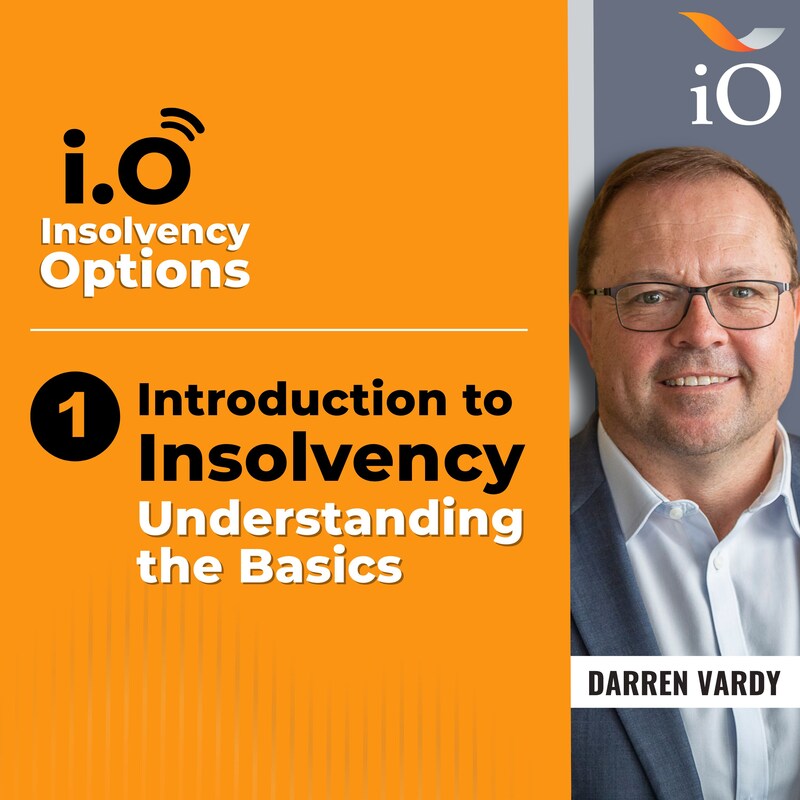
Shownotes
What is insolvency and how do you know when your business is in trouble? In this foundational episode, Darren Vardy shares his 30+ year journey in insolvency and breaks down the warning signs every business owner needs to recognise. Learn the difference between corporate and personal insolvency, and discover why acting early gives you the most options for recovery.
Key Topics Covered: • What insolvency actually means in practical terms • Early warning signs of business financial distress • The difference between corporate and personal insolvency • When to seek professional insolvency advice • Why businesses fail and how to recognise the patterns • The importance of acting before it's too late
Key Takeaways: ✓ Insolvency = inability to pay debts when they fall due ✓ Warning signs include tightening cashflow and delayed creditor payments ✓ Early intervention provides the most recovery options ✓ Professional advice should be sought at the first signs of trouble
Who Should Listen: Business owners, company directors, lawyers, accountants, and anyone wanting to understand financial distress warning signs.
About the Host:
Darren Vardy - Managing Director of Insolvency Options and Registered Liquidator with over 30 years of experience in business recovery and debt solutions. Darren has helped thousands of businesses and individuals navigate financial distress and find practical solutions to complex problems.
Connect With Us:
• Website: insolvencyoptions.com.au • Phone: 1800 463 328 • LinkedIn: https://www.linkedin.com/in/darrenvardy/
Subscribe & Follow:
Don't miss future episodes! Subscribe to i.O. - Insolvency Options
Like this episode? Please leave a review and share with colleagues who might benefit from these insights.
Co-host: Anthony Perl
Produced by: Podcasts Done For You
Hashtags:
#Insolvency #BusinessRecovery #DebtSolutions #SmallBusiness #BusinessAdvice #FinancialDistress #Liquidation #Bankruptcy #CashFlow #DirectorDuties #BusinessTurnaround #ProfessionalServices #LegalAdvice #AccountingProfessional #BusinessOwners #FinancialPlanning #CorporateInsolvency #PersonalBankruptcy #BusinessRestructuring #InsolvencyOptions
Transcripts
Introduction to Insolvency,
understanding the basics.
2
:Welcome to our first episode of io
Insolvency Options with Darren Vadi,
3
:the managing Director of Insolvency
Options, and a registered liquidator.
4
:With over 30 years of experience
helping businesses and individuals
5
:navigate financial challenges.
6
:In today's episode, Darren shares
his journey into insolvency explains
7
:what insolvency actually means.
8
:And reveals the warning signs every
business owner needs to recognize.
9
:We'll explore when to seek
help and the difference between
10
:corporate and personal insolvency.
11
:You'll understand the
fundamentals of insolvency.
12
:Know when to seek professional
advice and learn why acting
13
:early gives you the most options.
14
:I'm your co-host, Anthony Pearl.
15
:Let's dive into unlocking
more about insolvency options.
16
:Well, first of all, Darren,
welcome to your podcast.
17
:Thank you.
18
:Thank you very much.
19
:I think we need to kick things off
really by introducing yourself properly
20
:to the audience, and why don't you
tell everyone a little bit about
21
:who you are and where it all began.
22
:Yeah, sure.
23
:So it all began a bit over 35 years ago,
having come straight out of high school.
24
:I.
25
:Applied for many accounting roles with
various firms throughout Sydney and
26
:was fortunate enough to be accepted
to a one of the largest firms at
27
:that time, which was Ferer Hodson.
28
:And so from there I worked through
the nineties in smaller firms
29
:and then went out on my own in
:
30
:called Business Recovery Solution.
31
:That was for most of the naughties.
32
:And then in 2008, I was invited to
become a partner of RNG Partners,
33
:which was Small four partner firm.
34
:In 2013, we merged with SV Partners,
which was again another national firm.
35
:And then in October of 22, I recreated
insolvency options and started
36
:with my small team in our offices
down in the uh, Sutherland s Shire.
37
:When you started the new business was
the riding on the wall as as such,
38
:like, you know, there we were kind
of in the midst of COVID around that
39
:time and when the landscape kind of
changed, when all of a sudden there
40
:was an influx of people starting
businesses as well as some artificial,
41
:I guess, boosts from the government.
42
:Was it obvious at the time to you
that this was gonna be an opportunity?
43
:Traditionally we get busy during
a recovery 'cause there are a
44
:lot of businesses that don't have
the right capital, if they've got
45
:capital at all to continue and or
survive through a, uh, downturn.
46
:And COVID wasn't anything
different to an economic downturn.
47
:So what we've found that with my
history, with my referrers, the people
48
:that I work with, it just made sense
to pivot and adjust my business.
49
:To move forward to cater for all the work
that I was getting and continue to get.
50
:And before we get into all of the details
that we're gonna do in the podcast
51
:series, but I'm just intrigued about you.
52
:Tell everyone a little bit about why did
you get into this area, why insolvency?
53
:I mean, you know, most people start
out wanting to just be accountants.
54
:Uh, uh, typical kind of accountants
of individuals and small businesses.
55
:Why get into this specific niche?
56
:I pretty much fell into it.
57
:Having come outta school and
applied for many jobs, I received
58
:two offers in the accounting field.
59
:Another one was more of an accounts
type, department type role, and this
60
:one was straight into insolvency.
61
:So from there I saw the opportunity to
be able to gain knowledge, help people
62
:in financial distress, and really that's
what sort of drives me, is to try and
63
:put a bit of calm in a what can be a very
stressful situation for people and help.
64
:Navigate the, uh, the waters, so to
speak, of the particular financial
65
:circumstances that businesses
or individuals find themselves.
66
:Must be a challenge at times to not
take that home with you if you like.
67
:You know, you're dealing with other
people's stresses and you're trying
68
:to create opportunities, but at the
end of the day, it is always going to
69
:be a stressful situation for someone
who finds themselves in that area.
70
:So how do you kind of separate that?
71
:Look, it can be very emotional
because you are dealing with
72
:people's livelihoods that is granted.
73
:But the beauty about what I think I
bring to the table is just the clear
74
:thought process and really identifying
the true issues that need to be dealt
75
:with without, from want of a better
term, the white noise that's going on
76
:around, around the individuals involved.
77
:So I suppose we better start off as
well by telling people why we've come
78
:about doing the podcast together.
79
:What's the real driver here for you?
80
:I think the real driver for me is
getting information and education
81
:to the marketplace, making sure that
business owners who are struggling
82
:or do have some financial stress are
able to get the right information
83
:in a timely manner to help them.
84
:Determine what's best for them
to help fix their situation.
85
:Yeah, and it's interesting, isn't it?
86
:Because on one hand
it's about the numbers.
87
:On the other hand, it's very
much about the human element.
88
:The human element's a big thing,
particularly where business owners
89
:have invested in most instances, their
whole adult life into their business.
90
:So then to have a, an event which
can be a financially crippling
91
:event in the twilight of their life.
92
:It can.
93
:It is a major burden and it
does impact the household.
94
:So it's all about, in my view,
trying to help these business
95
:owners through the tough times.
96
:So let's probably start at the beginning
then, in terms of, for people wanting
97
:to understand this space a little
bit more, because I guess typically
98
:they start seeing there's an issue.
99
:And people throw terms
like insolvency around.
100
:Why don't we define it for
people as a starting point?
101
:Sure.
102
:So insolvency is a situation where
businesses or individuals simply cannot
103
:pay their debt as and when they fault you.
104
:That's the technical term for insolvency.
105
:And you know, practically you'll
see that in your business where
106
:there isn't enough money coming in.
107
:To the bank account to enable
you to pay your debts that are
108
:there, that are due to be paid.
109
:And what you end up finding is that these
business owners will just start delaying
110
:the payment of their creditors and then
the whole circular dynamic moves on.
111
:And it sort of steamrolls, doesn't it?
112
:Because the problem is, is in
delaying things, you're often then
113
:paying more on credit cards and other
areas where you might be borrowing.
114
:So the debt just increases
when you're doing that.
115
:Yes it does.
116
:And you know, interest is a big thing.
117
:We have certain creditors may
be able to apply interest to,
118
:to their debts outstanding.
119
:Uh, certainly the tax office
applies a interest charge to
120
:any monies overdue to them.
121
:Banks, you know, if you're relying on your
bank or your mortgages working capital,
122
:there's an interest component there.
123
:So what comes with a cashflow shortage
also comes with additional cost.
124
:Yeah.
125
:I mean, that's a big thing, isn't
it, for people and, and do you find
126
:that people have got their head
around what this actually means?
127
:I mean, what is the state of mind
when people are coming to you?
128
:Generally, when people come to
me quite often, it's too late.
129
:I often say if business owners have
approached me 6, 9, 12 months earlier,
130
:there may have been a business to salvage.
131
:There may have been an opportunity
to turn around the business.
132
:But unfortunately what we find is that
by the time business owners recognize or
133
:really admit that they have a problem,
they are really at the 11th hour and
134
:they've exhausted all resources that they
have that they could have used earlier to
135
:actually properly address the situation
and affect a, a successful turnaround.
136
:I mean, it's bringing in the experts at
the right time, which is important for
137
:business in, in all aspects, isn't it?
138
:I mean, that's the, that's one of the key
lessons I think for business owners that
139
:whether your business is thriving or you
know, barely surviving or going backwards,
140
:it's when to call in the experts
in different areas is so important.
141
:This is very true.
142
:You look at, you look at a lot of the
successful businesses, they will have
143
:advisors, albeit accounting, albeit.
144
:Legal, albeit specialized technical
advisors to ensure that the business
145
:continues in a positive, uh, manner.
146
:Yeah, and, and I think the question
of timing, I mean, it's easy to
147
:look back in hindsight, right?
148
:It's easy to go back and say,
well, they should have contacted
149
:me six or nine months earlier.
150
:But if you're a business owner,
you're listening into this, how do
151
:you know when it's the right time?
152
:Well, the right time in my
view is when you may see that.
153
:For at minimum, you have gone through two
quarters of trading, IE two BA returns
154
:have been launched, and you're finding
that your cashflow is becoming tighter
155
:and tighter, and where you are having
to negotiate repayment arrangements
156
:with the tax office, for instance, or
your age payables, your creditors have
157
:moved out from say 30 days to 60 days.
158
:When you notice a few of those
little telltale sign, that's when
159
:business owners really need to put
their hand up and seek some advice.
160
:And you know, the ability to pay
your creditors comes from the
161
:receipt of funds from your debtors.
162
:So, you know, if you find that
your debtors are outside terms and
163
:they're in turn starting to drag and
pay 60 days as opposed to 30 days.
164
:There's a few little signs that can prompt
you to say, Hey, do I have a real issue?
165
:Is it an industry issue, or
is it just a customer specific
166
:issue that I need to address?
167
:Yeah.
168
:And I guess, is it scary for people to
recognize, firstly, that there are some
169
:issues there, but secondly, to go to
someone in the insolvency space, is that
170
:a mental barrier for a lot of people?
171
:Oh, look, I don't doubt that
that is a mental barrier because.
172
:The term insolvency is not
endearing to many people, right?
173
:Everybody would like to think that they
trading well and business is going well,
174
:but ultimately an insolvency professional
that you've probably best equipped to look
175
:at your financial position and actually
provide you with some ideas on what needs
176
:to be done and what needs to be looked at
instead of being there as the last resort.
177
:Insolvency professional can
actually assist you even if as a
178
:second set of ears, so to speak,
to just review and, uh, provide an
179
:opinion on how you were trading.
180
:I think to your point earlier about
leaving things too late and not
181
:being able to rescue them, and we
see it all the time, the headlines
182
:of major brands that we are familiar
with, and we see that no buyers.
183
:For them and that they are
just gonna shut the doors.
184
:And that happens quite
regularly at a big brand level.
185
:So I imagine it doesn't get any
easier in the smaller size business.
186
:Certainly doesn't.
187
:No.
188
:No.
189
:And what you often find is that the
smallest size business, because they
190
:are so key person dependent, dependent
upon the owners key director and the
191
:like, the ability to sell those types
of businesses are going in concern.
192
:Far more reduced than a larger business,
which operates autonomously that with
193
:a few small changes, the profitability
can be returned to that business.
194
:So let's just establish a bit of a
framework from the beginning then,
195
:and say, okay, I'm in a situation
where maybe I need some assistance.
196
:What happens when they come
and knock on your door?
197
:What are the kinds of things, what are the
levers that you can pull at the early sta?
198
:Those sort of early stages?
199
:I think the early stage for me is
having an updated set of financial
200
:accounts to enable us to sit down
and just review the historical trade.
201
:Because at the end of the day,
it all does come down to what the
202
:cost of doing business is and are
you achieving sufficient income?
203
:To cover that cost.
204
:That's the first thing you know.
205
:There may be some businesses where they've
had a significant bad debt, which is
206
:an isolated event that has adversely
and financially impacted the business.
207
:Then that's a really simple
solutions to then address that
208
:short term cashflow issue.
209
:However, if there are some systemic issues
within the business where profitability
210
:has not been there over a period of time.
211
:It is certainly then harder to find a
solution to help fix the underlying issue.
212
:So it's coming back to it.
213
:It's all about having the financials
available to identify what the issues are.
214
:Then once we've identified what the issues
are, we can then look at the solutions
215
:available to address those issues.
216
:I think the important thing here as
well is that I imagine someone who's
217
:got the expertise that you do, there
are things that you can see in the
218
:financials that other people may not see.
219
:Well, having done this for 35
years and most in soy practitioners
220
:would not be dissimilar to myself.
221
:You see a lot having investigated
the reasons for failure.
222
:So having identified the reasons
for failure in businesses that have.
223
:Previously gone into liquidation, we sort
of have the, an idea of what we should
224
:be looking for to identify what the rule
issues are, and that's effectively what
225
:an insolvency practitioner can bring to
the table is to, you know, readily and
226
:expediently identify what the issues
are, to then work out and determine
227
:what solutions, uh, are available.
228
:So just to wrap up this part of the
discussion, talk to me about the
229
:difference between the types of insolvency
that there are, 'cause there personal
230
:and there's corporate, so, and there's an
important differentiation between those.
231
:Yes, there are, you know,
personal insolvency relates to
232
:individuals, an individual who
is unable to pay their debts.
233
:The real generally, the only
option for a person who's unable
234
:to pay their debts is bankruptcy.
235
:There are.
236
:Two alternatives to bankruptcy, one
being a personal insolvency agreement,
237
:the other being a debt agreement,
and they are alternatives which
238
:can enable an individual to avoid
bankruptcy and based on their asset
239
:and liability position, it provides
for the repayment of their creditors.
240
:Not in full, but certainly provides
for a better return than what a
241
:bankruptcy scenario would provide for.
242
:Corporate insolvency.
243
:The liquidation is the main
type of insolvency where the
244
:business is ultimately wound up.
245
:The appointment can be either voluntary
or via a one a company's creditor
246
:pursuing a debt and appointing
a liquidator through the court.
247
:Alternatives to liquidation again.
248
:To provide a better return to
creditors, uh, either a small business
249
:restructure, which is limited by the
size of the liability owing, and a few
250
:other criteria, such as total debts
being less than a million dollars,
251
:superannuation being paid up to date,
and all the statutory lodgements
252
:tax, lodgements bas, income tax, and
the like are all up to date as well.
253
:The other alternative to liquidation
is a voluntary administration.
254
:One of the outcomes of a voluntary
administration is a deed of company
255
:arrangement where an offer is made
to the creditors, which provides
256
:for a greater return to creditors.
257
:Thus allowing the business to
continue to trade into the future.
258
:So they're the really, the two differences
between corporate and personal insolvency.
259
:Well, that's it for this episode of
the IO Insolvency Options Podcast.
260
:I hope you've got plenty of valuable
knowledge and practical steps for whatever
261
:your situation is from Darren today.
262
:And if you need guidance
on insolvency matters.
263
:Contact Darren Vadi
264
:au or call 1804 6 3 3 2 8.
265
:Or of course, you could connect
with Darren on LinkedIn details
266
:in the show notes below.
267
:With over 30 years of experience,
Darren and his team provide personalized
268
:solutions for both personal and
corporate insolvency challenges.
269
:This episode was produced by my
team at podcast done for you.com
270
:au helping professionals
share their expertise.
271
:Through powerful podcast content.
272
:If you found value in today's episode,
please like, comment and subscribe
273
:to the IO Insolvency Options podcast.
274
:Wherever you are listening to this, your
engagement helps us reach more business
275
:owners who need these crucial insights.
276
:Until next time, remember, there's always
a way forward when you know your options.

