Shownotes
Season 26, Episode 12 - Shaun Boyce, Bobby Schindler
Summary
In this episode, Juan Garcia, the director of brackets at San Deguito Tennis Club, shares his journey from a baseball player to a tennis coach. He discusses the importance of leadership, building trust with clients, and the need for mentorship in the tennis industry. Juan emphasizes the significance of making tennis accessible and enjoyable for newcomers, advocating for a lower barrier of entry to attract more players. He also reflects on his unique background and how it shapes his coaching philosophy, aiming to inspire the next generation of tennis professionals.
Takeaways
Juan Garcia transitioned from baseball to tennis coaching.
He emphasizes the importance of leadership in tennis.
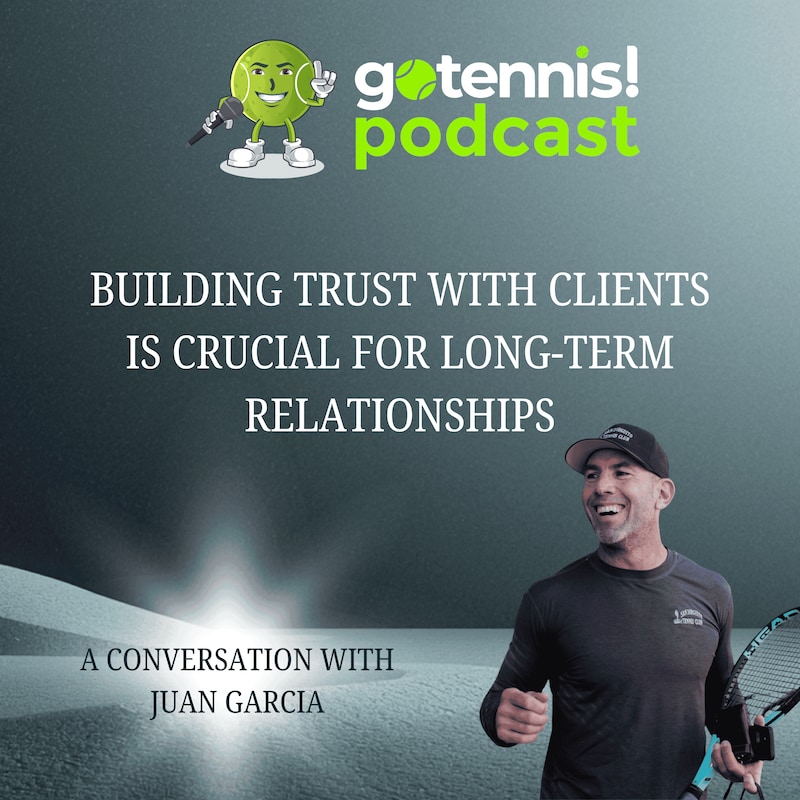
Building trust with clients is crucial for long-term relationships.
Juan believes in making tennis accessible to newcomers.
He advocates for lowering the barrier of entry in tennis.
Mentorship is key to developing future tennis leaders.
Juan's military background influences his coaching discipline.
He encourages coaches to connect with their clients personally.
Juan's motto is to get better every day.
He aims to inspire the next generation of tennis professionals.
sound bites
"Get better every day."
"You are a leader."
"Let them have fun."
Chapters
00:00 Introduction to Juan Garcia
04:34 Juan's Journey in Tennis and Baseball
09:17 The Evolution of Roles in Racket Sports
13:58 Unique Background and Military Experience
18:53 Building Trust and Relationships in Coaching
23:56 Building Trust in Coaching Relationships
25:43 Creating a Positive Club Culture
28:00 Empowering the Next Generation of Leaders
31:53 The Importance of Mentorship in Coaching
41:56 Lowering Barriers to Tennis Participation
Full YouTube Video: https://youtu.be/_lM66ownpMo
Short Clip: https://youtube.com/shorts/IoTBpoh6-Tc
Juan's King of Tennis Answer: https://youtube.com/shorts/bk4f7miclvA
Learn more about Juan: https://www.linkedin.com/in/juan-garcia-tennis/
Download Juan's books
- The Modern Tennis Coach: Leadership Beyond The Court
- The Courts: How Tennis, Pickleball, and Padel Reshaped Sport, Business, and Community
Keywords
Juan Garcia, tennis coaching, leadership, mentorship, tennis industry, trust, client relationships, coaching philosophy, tennis culture, sports management
Contact Our Hosts
- Shaun Boyce, RSPA: [email protected] | https://americanracketsportsassociation.com/
- Bobby Schindler, RSPA: [email protected] | https://letsgotennis.com/windermere
- Geovanna Boyce: [email protected] | https://regeovinate.com/
- GoTennis Website: https://letsgotennis.com/
Learn more about the Marc Kaplan Media Excellence Award we (the GoTennis! Podcast) won from USTA Georgia: https://letsgotennis.com/captivate-podcast/gotennis-podcast-wins-the-marc-kaplan-media-excellence-award/
Join Our Community
Check out the GoTennis! Atlanta Facebook page for deals, updates, events, podcasts, news, stories, coach profiles, club information, and more.
Support the Show
- Donate Directly: https://gotennispodcast.captivate.fm/support
- Crypto Donations: Get into crypto with https://coinbase.com/join/PEWRLWK?src=referral-link
Start Your Own Podcast
Considering your own podcast? We recommend Captivate: This podcast is hosted by Captivate, try it yourself for free.
Transcripts
Hey, this is Shaun with the award-winning GoTennis! Podcast, powered by Signature Tennis.
Speaker:Check us out at LetsGoTennis.com, and we invite you to learn more about the award
Speaker:by following the link in the show notes.
Speaker:And as you're listening to this, please look in your podcast app where to leave a review
Speaker:and do that for us.
Speaker:We would love to earn your five-star reviews.
Speaker:And now let's get into our recent conversation with Juan Garcia.
Speaker:Juan is Director of Racket Sports at the San Dieguito Club in, you guessed it, San Diego.
Speaker:Juan has recently published two books which you can find links for in the show notes and
Speaker:has a strong grasp on how to help the industry build leaders and better professionals.
Speaker:Have a listen and let us know what you think.
Speaker:Who are you and why do we care?
Speaker:Hey guys, thank you for having me.
Speaker:First, thank you for the invitation.
Speaker:My name is Juan Garcia.
Speaker:I am the Director of Rackets at San Dieguito Tennis Club in Ancennitas.
Speaker:Ancennitas is a little surf town north of San Diego, California.
Speaker:San Diego is a nine-quart, hardcore tennis club, member-owned.
Speaker:We have a couple pickable records.
Speaker:One of them used to be a pool and we've made that transition and that made me the Director
Speaker:of Rackets.
Speaker:It used to be Director of Tennis.
Speaker:So I came from another local club, head professional there at the Bay Club.
Speaker:It's a California-based franchise.
Speaker:So you guys from Georgia get a little information on these clubs.
Speaker:It's about 14, 17 clubs.
Speaker:I'm not sure how many they bought it out, but it's a pretty good athletic club.
Speaker:One of the clubs that has a gym and a pretty big facility, pools, all the whole shabang
Speaker:is a pretty nice club.
Speaker:I am originally from Mexico, California, a border.
Speaker:So it's Baja, Mexico, and then on the other side, it's Mexico.
Speaker:They were very original when they thought about names there.
Speaker:They made it easy on everybody.
Speaker:Mexico and Mexico and Mexico.
Speaker:So I grew up in the Mexican side and I started going to US school in a,
Speaker:a, a, a, electrical on seventh grade and on and my, my, my parents, this plan was to get
Speaker:me the tools to get to a place where I could go and get a scholarship of playing tennis.
Speaker:And my idea about that was like, well, I want to play baseball, so I played both growing
Speaker:up and playing high school.
Speaker:I actually went back to Mexico to a university and I played a year of baseball there, you
Speaker:know, being the rebellious me.
Speaker:I wanted to do my thing and I came back to tennis through, you know, a passion and I loved
Speaker:competing individually and also playing in a team environment for a college was also
Speaker:a pretty fun experience.
Speaker:So that said, that took me, you know, a few years out of tennis and I explored different
Speaker:jobs, different opportunities, which I noticed that I really missed tennis.
Speaker:So I came back to the sport.
Speaker:I started doing a few lessons.
Speaker:I wanted to share, you know, the beginning was someone suggested that I should do an ad
Speaker:on Craigslist.
Speaker:Is everybody know the Craigslist?
Speaker:So I posted an ad for tennis lessons and my first client called me and I'm like, oh, you
Speaker:want a lesson?
Speaker:No, I want to let you know that you missed the last number.
Speaker:You didn't put the right information.
Speaker:So I had only, you know, area code and then six numbers.
Speaker:So he was letting you know, but he was actually interested in lessons.
Speaker:So he became a client and I corrected that.
Speaker:I was kind of notorious.
Speaker:I did that once before and I only gave to the last digit.
Speaker:They had to figure it out.
Speaker:So then I started teaching a little bit at the complex where I was living and there was
Speaker:a guy that had the kind of like the lease or the access to the courts and he said, you
Speaker:got to teach under insurance and you got to get certified and you got to do the due diligence
Speaker:of getting, you know, all these things in line.
Speaker:And another confession is I asked around what's going on and well, the USPTA and I show up
Speaker:to the certification and I'm like, hey, I'm here to get certified.
Speaker:We don't have you on the list.
Speaker:It was like, well, what do you do?
Speaker:We got to sign up and I was like another, another obstacle of something that kind of like
Speaker:flumbled around and it set me up to get to another city to get certified and then from
Speaker:there on, you know, I started getting my client base and I started building up from there.
Speaker:So been certified for 18 years now and really enjoying teaching and really enjoying the aspects
Speaker:of what I learned throughout these years.
Speaker:And this is where I am today.
Speaker:You know, I'm sitting here doing some exploring, getting out and getting a little out of my
Speaker:comfort zone to talk to you guys and see what ideas we can, what insights we can share
Speaker:and we can try to make things better for tennis.
Speaker:And Bobby, he said baseball.
Speaker:So this is where I take a step back and I let Bobby start going because he's going to want
Speaker:to ask baseball questions here.
Speaker:Got to know right away what position did you play?
Speaker:I love playing the outfield.
Speaker:So I played center field in high school.
Speaker:I pitched a little bit and I was always very curious about other positions.
Speaker:I was in the kind of like a leadership position with the team where I was one of the, you
Speaker:know, better athletes and the coach had, he was a former triple A player in the minors
Speaker:and he played a team that my grandfathers, well, my grandmother's brother owned.
Speaker:So I kind of had a little way to get to get him to, you know, do what I asked.
Speaker:Well, I tried catching.
Speaker:I was a catcher for a little bit and I really liked the way that the catching worked because
Speaker:I could set up.
Speaker:I could see things that you couldn't see from the other side and I could move the players
Speaker:around and I played right field in college that one year that I played and I bet anywhere
Speaker:from, you know, probably third through seventh depending on my hot streaks.
Speaker:And you proved my point early on because when I get that question, I played as well and
Speaker:I always ask the people what position and if they tell me they love to play like first
Speaker:base, I'm like, you're a baseball player because you're a hitter.
Speaker:But when you tell me you pitched, you played center field and you caught, you tell me you're
Speaker:a tennis player because you need to be involved in everything.
Speaker:With me, it told me I was a D.D.
Speaker:If I was not constantly involved, then I could drift off.
Speaker:But yes, you fit my profile.
Speaker:Thank you for that.
Speaker:Yeah, you're welcome.
Speaker:So I always enjoy the baseball connection because Bobby was also a baseball player and I
Speaker:appreciate the advice that Bobby was given if I can steal your story a little bit about,
Speaker:you know, baseball is your sport, but I think it was your master's program and they said,
Speaker:right, go into anything but baseball in business.
Speaker:Don't do your passion.
Speaker:Make sure you remember it's a business.
Speaker:Yes.
Speaker:Right.
Speaker:And I think that's one of the things one and I, we agree on a little bit is we want to bring
Speaker:in that outside view into the tennis world.
Speaker:We want to start sharing more business acumen rather than just tennis has done it this way
Speaker:for thousands of years.
Speaker:Well, now we are racquet sports.
Speaker:Bobby, by the way, we need to change your title at some point, right?
Speaker:You got pickleball courts now.
Speaker:So you're now, you could be director of racquet.
Speaker:I am director of racquet sport.
Speaker:I just need to update the profile.
Speaker:Yes.
Speaker:Okay.
Speaker:I am just not part of racquet sports now where you are now.
Speaker:Okay.
Speaker:All right.
Speaker:Congratulations.
Speaker:I'll be there.
Speaker:Thank you.
Speaker:I almost gave it up.
Speaker:Give it that on my resume.
Speaker:I almost gave it up.
Speaker:I almost gave it up because I were like, well, now you got to get new business cards and
Speaker:now you got to do the update.
Speaker:You know, social media and all the platforms and I'm like, can I take it back?
Speaker:Can I be there all the time for that?
Speaker:And I have to go in and order new cards and everything.
Speaker:But it was, you know, it's an evolution of arts that we got to keep moving forward and
Speaker:if that's something that, you know, retroactively we were already director of racquet, it's the
Speaker:time that we got to make that adjustment.
Speaker:So it's pretty interesting that, you know, sometimes you're like, well, I was doing it
Speaker:already, but now it's official, right?
Speaker:When you change everything.
Speaker:Yeah.
Speaker:I look for changes.
Speaker:I look for changes.
Speaker:Take time.
Speaker:The day when one of us gets hired as a general manager, you know, that's when we'll really
Speaker:take that next when they realize that we might be able to have a brain.
Speaker:Just don't go to the golf director for the next level.
Speaker:We could do it as well.
Speaker:We're managing people.
Speaker:We understand.
Speaker:100%.
Speaker:And that's more for the brains, less for the brawn.
Speaker:That's when you start getting exposed to you going to lead in a different way than some
Speaker:lessons and some admin and manage the pros.
Speaker:You're now really, really taking over the facility and everybody has a report and you're
Speaker:really in charge.
Speaker:So that's a, I mean, almost scary responsibility, right?
Speaker:But that's why we start early on and we keep getting educated because you got to be prepared.
Speaker:When the opportunity knocks, you got to open the door and say, hey, I'm ready.
Speaker:So I would encourage you guys to, you know, start thinking of yourselves as also a prospective
Speaker:GM somewhere at your club or taking those opportunities as they come.
Speaker:And I'll bet not enough tennis coach types, rackets, professionals, I'll say put in their
Speaker:resume for things like that.
Speaker:Just historically, it hasn't really been available to the tennis side.
Speaker:Usually your, your golf pro, if there's a promotion or they're going to bring in some
Speaker:one with some GM experience because there aren't a lot of clubs that want to take a shot at
Speaker:a someone who's never been a GM before, but there's also limited people with your experience.
Speaker:So I agree with one.
Speaker:I think suggesting if you're out there and you're thinking, hey, you know what, what's my next
Speaker:gig?
Speaker:It doesn't mean just because tennis pros don't typically get that interview.
Speaker:Go ahead and put your hat in the ring.
Speaker:I think that's great.
Speaker:So one, the next question we have is about uniqueness.
Speaker:And I don't know how a Mexican born former baseball player, tennis coach in San Diego is extremely
Speaker:unique, but what do you have?
Speaker:You also said you've got some military experience.
Speaker:So what's the uniqueness about the brand that is Juan Garcia in California?
Speaker:Yeah, the military part.
Speaker:A lot of people don't really know about it.
Speaker:I'm not someone that's going back in time and trying to bring back like, oh, you know what
Speaker:I've done and you know where I've been.
Speaker:It actually shows in actions and discipline and everybody knows or that knows me.
Speaker:Now that I spent at least four or five days a week at the gym and I go to the early class
Speaker:because I would never make it later on.
Speaker:I get pulled in every direction and I couldn't make it.
Speaker:So I'm in a 615 class at the gym four or five days a week.
Speaker:I try to encourage all my clients and friends and people that surround me and my community
Speaker:to get some fitness and get some nutrition and get some, all the things that are going to
Speaker:get the body and the mind and line to keep getting better.
Speaker:So my models get better every day.
Speaker:I think that we were done at 9 a.m. we'd already done more than a lot of people have done or
Speaker:they were doing in the whole day when I was in the military.
Speaker:And you guys are from Georgia.
Speaker:I actually have a little story to tell.
Speaker:I've been there at a paratrooper school in Fort Benning, Georgia.
Speaker:And I don't know if I'm going to hurt anybody's feelings here, but when the drop zone, they
Speaker:were going to, they were teaching us how to jump out of airplanes.
Speaker:And there was a drop zone that they were like, if you end up drifting a little too far west,
Speaker:you're going to end up in Alabama.
Speaker:And don't let Billy Bob drag you out with them.
Speaker:You better run back to us.
Speaker:And they would tell us that this is a joke, but we were like, "Where is Alabama?"
Speaker:I wasn't familiar with the area.
Speaker:So that was just a cool experience that I had.
Speaker:It was in August, late August, early September.
Speaker:So you know that I know what your guys is.
Speaker:Summer weather is all about.
Speaker:I keep talking about this every now and then.
Speaker:I'm like, I've experienced real, real humid conditions.
Speaker:I was there for three weeks and the categories of the heat were super high.
Speaker:They didn't really let us run everywhere as we should.
Speaker:But one of the jumps I ended up taking a little bit of wind and I ended up my first jump.
Speaker:I think it was maybe the second one.
Speaker:I ended up hanging on a tree.
Speaker:So I got some stories to tell of my experience in Georgia for banning.
Speaker:That was a fun, long, long time.
Speaker:I go 25 years ago, I want to say.
Speaker:Fantastic.
Speaker:Bobby, have you jumped out of an airplane?
Speaker:I have not.
Speaker:I cannot recommend it enough.
Speaker:Really?
Speaker:I cannot.
Speaker:It is an amazing experience.
Speaker:Now I haven't done it.
Speaker:Military different thing.
Speaker:Like practicing to be able to do it for that purpose is one thing.
Speaker:Me just doing it for fun is probably just considered reckless.
Speaker:But it is absolutely phenomenal.
Speaker:And I very much enjoyed it.
Speaker:Thankfully did not get caught in a tree that was not part of my experience.
Speaker:But we've also worked with one of our other American Raga sports association members,
Speaker:Warren Robinson, is Navy.
Speaker:So he's got military as well in his blood.
Speaker:And there's a, you talk about the discipline, there's something about that that changes
Speaker:of purking.
Speaker:Definitely agree.
Speaker:It ing rains in something that you can never really get rid of it.
Speaker:It's like something that you're going to take on forever and ever.
Speaker:You've endured some really harsh conditions that it's almost like a marathon runner.
Speaker:What are you going to tell a marathon runner about hard conditions when they put themselves
Speaker:through 26 miles non-stop?
Speaker:So we got up super early in the morning and went running.
Speaker:It wasn't a decision.
Speaker:It was like we had no choice.
Speaker:I signed up.
Speaker:I actually volunteered.
Speaker:Both my parents are American born.
Speaker:And they were encouraging me to take a make a decision.
Speaker:I was back and forth.
Speaker:I went to college.
Speaker:I came back to the university in Mexico and I was living back at home.
Speaker:And they were like, why don't you take a year or a summer or you could also follow.
Speaker:There was a cousin of mine that was also a paratrooper.
Speaker:He was doing really well in Ford Ragnarth Carolina where I ended up getting my duty station.
Speaker:And I said, I'll go on the military.
Speaker:I thought it was like, I'm 20, you know, I want to do that.
Speaker:And they were shocked.
Speaker:They were like, no, but if you want it, then I'm like, no, no.
Speaker:I like that idea.
Speaker:And they kind of took a moment and they're like, oh, I think he's decided.
Speaker:He's determined to do it.
Speaker:And I went in the recruiters office and it was just from there, you know?
Speaker:Ford Jackson Ford.
Speaker:I went to somewhere for Lee Virginia.
Speaker:I was all over the pretty much on the south.
Speaker:I was in the station in North Carolina.
Speaker:We did forkpork Louisiana.
Speaker:So I got to find a lot of unique things about that area.
Speaker:They were talking about eating deer and I'm like, what does it taste like?
Speaker:And they were talking about things that I grew up in an area where it was different.
Speaker:So what makes me unique is that little background, you know, that background that I have.
Speaker:As far as my coaching, I empathize.
Speaker:I try to connect with my clients in hindsight.
Speaker:I learned I heard about this story not too long ago and they said, it's easier to make your
Speaker:clients friends than to make friends your clients.
Speaker:So I've been making my clients friends.
Speaker:So I have long, long term.
Speaker:I mean, I'm 48 right now and I have clients that I've been coaching for a little on and off.
Speaker:They've had time off.
Speaker:But we're on 13 years.
Speaker:We kind of measure on my dog's age because he's 13 and it was like, you didn't have your dog
Speaker:back then and I'm like, well, it's more than 13 years.
Speaker:So a lot of that, we go through, you know, some kind of a gauge and oh, you didn't have your
Speaker:son.
Speaker:I'm like, well, we've been working for longer than 10 years.
Speaker:You just had your son.
Speaker:So less than, you know, nine years.
Speaker:So there's a lot of those we've built connections.
Speaker:Most of my clients, we've been going for years and years and some would say, well, they probably
Speaker:pretty good.
Speaker:I like, well, they haven't gotten worse.
Speaker:So that's a, that's a measuring stick, right?
Speaker:A lot of us are getting older.
Speaker:I don't know anybody that's not.
Speaker:So if you're staying at the same level, it's an advantage.
Speaker:I empathize with them.
Speaker:I try to connect, I try to relate, you know, through stories and look, this is happening
Speaker:with someone else that I'm coaching.
Speaker:A lot of my higher level for five guys, maybe five of those.
Speaker:I try to relate to the times that I went through some type of a challenge that I can help
Speaker:them through what they're feeling, right?
Speaker:It's like, oh, I feel like this changed, you know, changing of a grip or a stance or moving
Speaker:through the ball or something that they have to change in their game.
Speaker:I said, look, you know, I had that challenge, you know, 15 years ago.
Speaker:I remember exactly where I was in my life and it took me about six months, maybe a year.
Speaker:And they realized that I'm talking about experience.
Speaker:You know, I've been there and I've done that.
Speaker:And it's easy for them to tackle long and say, okay, I'm going to give it a shot.
Speaker:I'm going to, you know, I say, look, I've done it.
Speaker:Now I tell you the shortcut is there, but now you got to do the work and nothing different
Speaker:than, you know, I did it.
Speaker:You can do it.
Speaker:So a lot of these stories lead to, I feel that makes me somewhat unique.
Speaker:Maybe some other coaches, good for them that are trying to connect with their clients, trying
Speaker:to motivate them through, you know, past experiences or some type of a story that would
Speaker:help them realize their potential easier.
Speaker:Bobby, it makes me think of ASOPs Fables.
Speaker:Now I've got a three year old and Bobby's got a grandson, a similar age.
Speaker:Being able to share that kind of information without saying, well, here's what you should
Speaker:do.
Speaker:Being able to say a quick story that says, here's what a little chicken did in a similar
Speaker:situation.
Speaker:Somehow, maybe that's the kid version, right?
Speaker:What's the way because RSPA and our certifying body say we shouldn't talk too much, but we
Speaker:do need to get these things imparted.
Speaker:You most definitely do because that's how you build trust.
Speaker:I mean, it always amazes me when you see a player go through five coaches in five years.
Speaker:Well, we have a big problem there because a relationship is based on trust.
Speaker:And if you're not putting the hours in, then how are you ever going to develop the trust?
Speaker:It's unfortunate, it's society that we've gone in that direction where there's something
Speaker:better.
Speaker:So let's drop it.
Speaker:But the bad part is you never, if you don't go through the bad with somebody, you can
Speaker:never fully understand the good and the great.
Speaker:And I think that's, we see that on every level in society right now.
Speaker:And I'm not going to say Port Coco who's going to go through another coach here pretty soon.
Speaker:But this is the type of thing.
Speaker:At some point, either you grab the person by the neck and say, hey, you're blowing a kid.
Speaker:You guys are all way too old.
Speaker:But Sugar Ray Leonard, his trainer was Muhammad Ali's trainer, Angelo Dundee.
Speaker:And he was fighting Thomas Harnes.
Speaker:And literally in the 13th round, he looked at Sugar Ray Leonard and said, you're blowing
Speaker:it son.
Speaker:And Sugar Ray Leonard went out there in the next three rounds and knocked out Tommy Harnes.
Speaker:But you know, that you can't do that unless you have somebody's utmost trust in faith.
Speaker:And you know, that's what makes a relationship great.
Speaker:And that's what made Sugar Ray and Angelo so good together.
Speaker:Like that.
Speaker:And one, you mentioned having kids or at least a son.
Speaker:There's a, there's a familial trust.
Speaker:My stepdaughter said the other day on the, she was sitting here and she says, well, I want you
Speaker:in the room, mom, because I can be mean to you.
Speaker:And you still have to love me.
Speaker:But it was just an interesting statement.
Speaker:She wasn't saying that she likes being mean to her mother, but she's about to have a child.
Speaker:And we're going to be grandparents and we're talking through all those things.
Speaker:It's that trust that says, I'd rather my mom in the room with me than my mother-in-law.
Speaker:It's like, well, no, because I have to treat her in a different way.
Speaker:Maybe there's a connection here that says, yeah, we can't always, like a parent, to be able
Speaker:to say you're blowing it kid.
Speaker:When that kid is my boss and she's 20 years old and she's going to fire me because she
Speaker:didn't make the quarters.
Speaker:Like, there's a strange way to do it within the collection that is client, athlete and
Speaker:coach relationship.
Speaker:One, how do you play through those in your world?
Speaker:I actually have a daughter too.
Speaker:And a lot of the things this, you know, as parents, it's a little different, but you get
Speaker:to tell them, hey, look, I've done that, you know, if you're trying to discipline a child,
Speaker:but what are you going to tell them that you've done the same things, right?
Speaker:But you give them the authority or the obligation that they have to self correct.
Speaker:And there's the same thing when you're in the court, you have to establish this connection
Speaker:with your client first before you start correcting and changing and doing these things that you're
Speaker:trying to get them to trust you first.
Speaker:And I've actually worked on, I'm finishing a book, the Modern Tennis Coach.
Speaker:And it's about these ideas that you have to first cultivate a connection so that the client
Speaker:can trust you so that then they open up and they're really dropping that guard and being
Speaker:open to all the suggestions and all the ideas that you're going to give them about how to
Speaker:improve, right?
Speaker:And it's about being relatable.
Speaker:A lot of the times when you tell them, I used to be when we were growing up and when, now
Speaker:it's like, hey, when I was in up and coming pro, there was one of my mentors here in town,
Speaker:he told me these things.
Speaker:He was like, when I was in up and coming pro, I used to go to the conferences and, you know,
Speaker:this other coach mentored me into joining the district board and getting on the diversity
Speaker:and inclusion committee and you kind of draw them a vision or that path that they can also
Speaker:go through.
Speaker:Instead of telling them, you got to do this, you know, when I used to be, how many times
Speaker:were we heard that?
Speaker:When I was your age, when we were younger, right?
Speaker:I walked five miles round trip to get to the grocery store.
Speaker:How many of this people don't, they can't see themselves doing that, not lived in that
Speaker:situation and the situation is different, but how can you make them visualize like based
Speaker:on my situation, how can I improve, right?
Speaker:So it's dropping these seeds and planting, you know, water it every day and let them figure
Speaker:it out without really pushing that envelope.
Speaker:Yeah, and I don't envy the coaches these days in that world because it really is tough
Speaker:to tell somebody else's kid what they need to be doing and be able to cultivate those relationships.
Speaker:Some people are lucky they have a club and they get to be there and that's where the members
Speaker:come to them.
Speaker:Bobby has an inherent trust, even with a new member, where they come in and they go, "Okay,
Speaker:you're my coach."
Speaker:Because he's been there, we went 13 years now, something like that now, Bobby.
Speaker:And he's built the trust around others at some level and you won in the same way of being
Speaker:at your club for a while, but not everybody has that, where maybe it's just my first day
Speaker:and I've got to get to know somebody, but you want to make changes fast.
Speaker:It's difficult from a coaching perspective.
Speaker:We all know how to coach.
Speaker:We all have our ideas on the best ways to do it.
Speaker:And the question here is, "Are we doing it to the best of our ability, but can we also
Speaker:be better?"
Speaker:I like your phrase, "Want trying to be a little bit better every day?"
Speaker:I think that makes me think of one of the gentsans who always said, "Moving the needle," and
Speaker:he was Luke always talked about just moving the needle a little bit piece by piece and hearing
Speaker:the different coaching styles.
Speaker:We all have all the information that's out there, whether it's RSPA, PTR, whoever we're
Speaker:learning from, whoever trained us to be a coach, whoever's now helping us run a good
Speaker:business.
Speaker:We want to then be the mentor to the next up and coming without saying too much of, "My
Speaker:life was hard, kid.
Speaker:You got it easy."
Speaker:You're right.
Speaker:That doesn't create any connection.
Speaker:That's actually generating separation and to create how different things are.
Speaker:That's got to be tough.
Speaker:One, what else is on your mind?
Speaker:You and I have been talking a lot recently about what's going on in California and changes
Speaker:and how things are.
Speaker:Your view of the industry these days, you got anything big and exciting on your mind that
Speaker:you want to talk about?
Speaker:Yeah, definitely.
Speaker:I want to close that last question with kind of opening the next one with the idea
Speaker:that you've got to make a change that's enough significance with enough significance that
Speaker:it'll improve everything.
Speaker:What change am I going to do at my club or what am I going to build that would make the
Speaker:biggest impact?
Speaker:Building a good culture, I feel like I've developed the connection and the trust with the
Speaker:members that they kind of opened the door for me to try to make some changes that they
Speaker:really enjoy or they really see a difference or they really the trust that it brings, right?
Speaker:When I make a decision or when I ask for the board to do something, they know it comes from
Speaker:a place that I'm meaning the best for the club, that I've, you know, through the experience.
Speaker:It was my first time as a director there and I've learned a lot throughout the seven
Speaker:years that I've been there.
Speaker:So now when we sit in the meeting, I'm kind of leading my way in shaping the future
Speaker:of the club with the trust that they've seen, the changes and they've seen the culture
Speaker:go through these evolutions and transitions, right?
Speaker:When they feel that everybody's feedback, a lot of the times, how many times have you
Speaker:bought an appliance for an example, a little out of sorts, but and how many bad reviews
Speaker:that that appliance have?
Speaker:You know, it's like you buy a refrigerator and everybody goes online and post that feedback,
Speaker:right?
Speaker:The refrigerator, but nobody really goes and tells the good stories.
Speaker:By refrigerator, it's an expectation, right?
Speaker:It's an expectation that people have that everything is going to work well.
Speaker:So if the feedback, negative feedback is minimal and they open up and they say, well, you
Speaker:know, there is very positive feedback.
Speaker:It really, you know, tells the story, right?
Speaker:So what I wanted to talk about today was about the leadership in our industry and I'm
Speaker:not talking about pointing fingers upwards, but I'm talking about pointing a hand, extending
Speaker:a hand to the up and coming generation and enabling them to understand that they are leaders.
Speaker:They don't need a title.
Speaker:They don't need, you know, to go through a course.
Speaker:They don't need to be a head pro.
Speaker:They don't need, they're leading a club.
Speaker:They're, I mean, a clinic or they're leading a junior program.
Speaker:They're leading, but whether it's one lesson at a time, they're a leader.
Speaker:They're already people following them.
Speaker:So this is where I really wanted to get out and start sharing these insights and ideas
Speaker:because I did a workshop at the club not too long ago last week or two and I said, hey,
Speaker:let me get a show of hands of who's a leader in this group.
Speaker:And I had mine up, you know, I'm the director of brackets and they're working in the junior
Speaker:program and I wanted to say, you know, I'm honest.
Speaker:I am a good leader here.
Speaker:And nobody raised their hand and I kind of started exploring like, what's going on?
Speaker:And one of them raised their hand.
Speaker:He was a little older of the group and I'm like, you want to share what makes you a leader.
Speaker:And he said, well, I have a group of juniors that I lead and then I saw the other hand start.
Speaker:I'm next.
Speaker:I want to share my perspective of why I'm a leader.
Speaker:I'm like, everybody wants to raise their hand now.
Speaker:I'm like, yeah.
Speaker:Why are you a leader?
Speaker:I don't like these problems and I like to be organized and I like your leader.
Speaker:And I'm like, next, you're raising your hand now, right?
Speaker:Yeah.
Speaker:And I'm like, guys, as soon as you park, as soon as you get out of the car, you're a leader
Speaker:and you're going to treat this employment or this situation everywhere you go, you are
Speaker:going to handle and lead yourself as a leader.
Speaker:So I think that this is like, oh, you got to do, you know, your part.
Speaker:It's we all have to do, but we got to tell these guys how.
Speaker:So it's not like we were going back on that story is not don't tell them what to do.
Speaker:It's enabled them to understand that they are a leader, that they are already some in a
Speaker:place of some authority that they are in a leading position, right?
Speaker:Whatever it is.
Speaker:And then they can start exploring well, how can I be a better leader?
Speaker:So get a little education, do some specialty course, take the routes, they're already certified
Speaker:or they're trying to get certified.
Speaker:And I just, you know, point them in the right direction.
Speaker:Whatever it is, you mentioned RSPA, PTR, I think USDA is coming up with some type of a coaching
Speaker:pathway.
Speaker:I personally went the RSPA US, US PTA and it was an eight, everybody that I asked was already
Speaker:there.
Speaker:So it was a natural gravitation to that organization.
Speaker:I'm very, very, you know, thankful that I took that I could have gone PTR and I would have
Speaker:been probably in the same place.
Speaker:I'm naturally like, I'm wanting to open up a little more of my story and let people know,
Speaker:you know, where I've been through or what I've been through and what I want to see in the industry
Speaker:is that more people take these initiatives to become a better everyday guy, you know, or
Speaker:woman.
Speaker:And that's what's going to make the industry better.
Speaker:So this is kind of like my time that I wanted to when I go to a conference and I go to the
Speaker:lesson and I'm like, so what did you think about?
Speaker:And they have some story that they were so, you know, moved and they got and I'm like,
Speaker:oh, I wish I had a camera here so that everybody could hear about this.
Speaker:But it ends in that one lesson.
Speaker:So now it's like, how do I get these stories and how do I motivate more coaches or more
Speaker:people to step up to these leading positions and make themselves better everyday?
Speaker:It makes me think of, be the change, right, Bobby?
Speaker:So, but in this case, it's be the leader.
Speaker:If we, we often look up and say, oh, they're doing it wrong.
Speaker:Well, who are they?
Speaker:And in this case, at some point, it sounds like one wants us, whoever we don't picture ourselves
Speaker:as they that are the leaders to be the leaders that we want to see in the world.
Speaker:You picture it that way like I do, Bobby.
Speaker:I do hold up, you know, a little bit of responsibility because unfortunately they set the culture.
Speaker:And we're coming in to the culture.
Speaker:Yes, we can change it, but change takes time.
Speaker:And my thing is with every other industry, it's, I think where we need to spend a lot more
Speaker:time as mentoring.
Speaker:You get somebody young in like, well, I don't want to tell anybody.
Speaker:I want them to be next to me.
Speaker:It's like my child.
Speaker:I want my child with me every day because I don't want to tell her.
Speaker:I want her to see it.
Speaker:I want her to see me say, please, I want her to see me say, thank you.
Speaker:I want her to understand humility without me having to say that's not proper behavior.
Speaker:I want her to see it constantly.
Speaker:And unfortunately, I just think we don't have enough of that.
Speaker:The other side and I even laughed, you know, going back to what I was talking about, you
Speaker:know, as coaches, and I started thinking about it as a baseball coach.
Speaker:You know, one of the things I pride it myself on when I was coaching baseball is that I
Speaker:always got my kids, whether they were good, bad or indifferent, on game day, they always
Speaker:played their best because they were relaxed.
Speaker:Because they knew I had their back.
Speaker:And I think about my dad and what I say about my dad being my best coach in every sport that
Speaker:I was better than him at because his job was to protect me and to make my life easy.
Speaker:So inside the baseball field, inside the tennis court, that was my domain.
Speaker:He had everything else covered it.
Speaker:You know, I don't know, you know, the nature of our sport does it because we're not sitting
Speaker:next to even with boxing.
Speaker:It's an individual sport, but the trainer still gets in the ring with him every three minutes.
Speaker:We don't have that contact during the fight, during the battle.
Speaker:So we can't sit there and instill our passion in what we would do or just say, hey, you're
Speaker:giving it everything else.
Speaker:Keep going, you know, keep going.
Speaker:And then interject where, you know, you're close, but you got to step it up a little bit.
Speaker:It's hard.
Speaker:And I think it's obvious in our sport because so few people actually win.
Speaker:You know, you get the same four or five people who figured it out, which is the same as hitting
Speaker:a forehand.
Speaker:You have to figure out how to win.
Speaker:And that's an invaluable lesson, obviously, and not a lot of people can get that, get that
Speaker:far.
Speaker:And yeah, I mean, these are the things that we started the podcast about is to just see
Speaker:change, get enough voices.
Speaker:And I'll leave it at this.
Speaker:But I would love to see it goes back to let's get 10,000, 20,000, 100,000 people, a million
Speaker:more people playing tennis because that means we diversified.
Speaker:And that means we have a lot of different backgrounds coming to the table to discuss different
Speaker:ways to get there.
Speaker:And I think that's the other problem too with tennis.
Speaker:It's not everybody doesn't have access to it.
Speaker:I mean, George is unique as it comes, right?
Speaker:Because we have league tennis that is so dominated by adults, they try to get their kids into
Speaker:it.
Speaker:But their idea of success, unfortunately, is different because they started at 30 and they
Speaker:made it to an A level or a B level.
Speaker:Hey, I did great.
Speaker:You know, as a kid, if you're starting, you know, there's that urgency because I got to
Speaker:get a scholarship or I want to be a ranked player.
Speaker:I want to, you know, we don't necessarily do it for enjoyment or passion.
Speaker:We do it for an outcome.
Speaker:So there's so many things that come into it.
Speaker:I love the conversations.
Speaker:I think it's great.
Speaker:I wish we would do that.
Speaker:You know, it's Sean will tell you I'm a big for I hate that all the conferences were all
Speaker:we talk about is tennis.
Speaker:I think we're all pretty good at tennis.
Speaker:We all have a pretty good, let's talk about life.
Speaker:Let's talk about it.
Speaker:You said, you know, what do you do?
Speaker:I'm notorious for playing music.
Speaker:And I always laugh that you can tell somebody when they went to high school because that's
Speaker:going to be their point of reference for what they play.
Speaker:So you come to my drill, you're going to get 70s and 80s.
Speaker:You know, my kids that graduated year, well, then you're getting the 90s.
Speaker:And you know, thankfully, I don't let my high school kids pick the music because I don't
Speaker:consider what they have as music.
Speaker:So, you know, it's kind of stopped.
Speaker:But, you know, and they understand that perspective of me and you know, in perspective and then
Speaker:they deal with it.
Speaker:But I said, I love the idea because it's the passion in that search for knowledge.
Speaker:And Murphy Luke and all ourselves decide we're coding Dr. King, his line was keep moving.
Speaker:If you can't run, walk, if you can't walk, crawl, but by God, just keep moving.
Speaker:And that's what we need to do.
Speaker:I love it.
Speaker:Maybe that heads us on toward mentorship programs.
Speaker:Maybe the leaders are not necessarily the ones that everybody's looking to.
Speaker:Maybe the leaders are the rest of us that can help mentor the next generation or even
Speaker:those around us that are our peers to make us better leaders.
Speaker:Well, 100%.
Speaker:That's another one of my, you know, I want to say that one of the chapters, one of the things
Speaker:I talked about in the, I wrote a book in the book and it's about mentorship.
Speaker:Instead of micromanaging and telling people, you know, oh, you got to do this better.
Speaker:You got to do, it's, it's what do you show them that they're probably uncertain what to
Speaker:do or how to do it because you haven't shown people.
Speaker:And another from a book I like to kind of quote on books that I've read along the lines
Speaker:and it was shoe dog from Phil Knight, the Nike story.
Speaker:It's telling what to do and let him rug with it.
Speaker:Let him run with it, right?
Speaker:Let them figure it out.
Speaker:And we were at a GPTCA conference or just workshop this past weekend.
Speaker:Tony Nadal was talking about coaching Brafa and he was like, Brafa, you have four shots to
Speaker:finish at the net.
Speaker:You have five shots to finish with a drop shot.
Speaker:You tell him what to do and let him run with it, right?
Speaker:So then you can make some suggestions, but you really, you really got to tell, you know,
Speaker:draw the mentor line.
Speaker:And one, you got to lead and coach like Bobby was talking about, by example, actions,
Speaker:coach louder, speak louder, teach louder than the words.
Speaker:So sometimes you just got to go in and, you know, do the do because, you know, I don't have
Speaker:all these certifications or I haven't done all these things to collect in a trophy room.
Speaker:I wanted for alignment.
Speaker:I want when I tell them, hey, why don't you go get pickleball certified?
Speaker:And they look at me like, weird.
Speaker:I'm like, I got pickleball.
Speaker:I don't teach because I want you to teach.
Speaker:I want you to make that money at whatever battle.
Speaker:Why don't you go get certified for paddle?
Speaker:We don't have a court.
Speaker:Well, maybe I can get you a job at a club part time that you can go teach.
Speaker:Well, they look at me weird.
Speaker:I got certified already.
Speaker:You know what I mean?
Speaker:And I don't have a paddle court at the club, but I've put myself through these through these
Speaker:certifications or, you know, learning tools so that when anybody asks, hey, what do you,
Speaker:what do you think of a paddle?
Speaker:I'm not stuck.
Speaker:I don't, I know what I think because I went through the curriculum of Marko Zelpilar and
Speaker:I think it's amazing that your RSPA put a really good program to teach paddle for the RSPA
Speaker:instructors or bring new instructors.
Speaker:We're kind of running low on coaches in the future, right?
Speaker:And they put together these certifications that nobody wants to take advantage of or they
Speaker:don't know about.
Speaker:So what do we do?
Speaker:What do we do to make them independent of the direction?
Speaker:Well, again, I got to say I've already done it.
Speaker:I drew that, you know, line to now it's your turn.
Speaker:So if I've done it, I don't, I'm not telling them you got to do it.
Speaker:I don't want to do it.
Speaker:I'm not going to teach.
Speaker:I want you to.
Speaker:I did it.
Speaker:So what about an executive course?
Speaker:I could probably get you ahead propositions somewhere else.
Speaker:No, I don't know.
Speaker:Let's go, go do CRSC.
Speaker:Like my career score also position you're somewhere in the industry, right?
Speaker:Well, have you done it?
Speaker:I did it.
Speaker:I did it in 2021.
Speaker:You know, so you tell me I don't, I haven't done all the certifications.
Speaker:But I've done the ones that I feel have improved my coaching, my executive decisions, my way
Speaker:of leading the club, the members, the mentorship, you know, the mentoring of up and coming
Speaker:pros.
Speaker:And in the division, I think that they know I used to be, you know, more of a, the technical
Speaker:guy because I was so focused on learning about the techniques and the evolution of movement
Speaker:and the evolution of footwork and the evolution of the forehand and the mechanics.
Speaker:And then all of a sudden they're like, what happened?
Speaker:And I'm like, I realized that that took me to a place where, you know, I can teach you
Speaker:a four hand, five different ways.
Speaker:But then I have to lead, you know, now I got to teach the coaches how to beat better coaches.
Speaker:And now I got to, you know, help the board how to run the club better.
Speaker:So I've taken these steps in a direction that I feel have taken me to a place where I'm
Speaker:comfortable and I'm confident of mentoring or leading or being a guide of sorts for
Speaker:this up and coming generation.
Speaker:Here we go, Bobby.
Speaker:We got our first mentor offer right there.
Speaker:We'll add them to the list.
Speaker:Bobby, you got anything else for Juan before I hit him with King of tennis?
Speaker:No, I've enjoyed it.
Speaker:Thank you.
Speaker:Juan.
Speaker:All right.
Speaker:So Juan, hopefully you put some thought into this and you know it's coming, but you may
Speaker:not know the scope.
Speaker:So when I asked the question, if you were King of tennis, whether it's the entire world,
Speaker:whether it's professional country clubs, social play, juniors, anything, if you were King
Speaker:of tennis, is there anything you would do or change?
Speaker:I would lower the barrier.
Speaker:I think that everybody has come up with something similar, but I would lower the barrier of entry
Speaker:for players to come in and have fun right away.
Speaker:I think other sports have done it and I think that in all honesty, we have a pilot program
Speaker:in San Diego for red color pathway for adults.
Speaker:A lot of the adults that already play tennis, they think it's almost like taking them backwards.
Speaker:Well, we're not going to take them backwards.
Speaker:We're going to bring new people.
Speaker:We're going to bring new players into our sport by showing them that it's easy to play.
Speaker:It's easy to have fun.
Speaker:It's, you know, it's like other sports that we know out there.
Speaker:And I'm going to mention straight up pickleball is a lower barrier of entry.
Speaker:I think Paddle is also a lower barrier of entry.
Speaker:And why not copy that?
Speaker:I don't think that copying or using those other sports as it doesn't make us any less or
Speaker:them any better.
Speaker:We're going to use these tools to bring new players and have fun right away.
Speaker:Throw music in there.
Speaker:Whatever it is that they want to do to have fun and they want to come back tomorrow.
Speaker:So that's if I was King of tennis, you know, I'd probably go through a list of things.
Speaker:Like the barrier of entry that I think that we can bring, we want growth and we want continuity
Speaker:of these players.
Speaker:They need to have fun and they need to feel accomplished on day one.
Speaker:And I think that lowering that protocol of being so rigid and you have to play with
Speaker:this ball and you have to play with this rag and you have to play with it.
Speaker:It's like lower that be flexible.
Speaker:They want to hit the forehand with what it's like, let them do it.
Speaker:Let them figure it out.
Speaker:And then you start the connection that we talked about.
Speaker:I think we're going to go full circle with a lot of things that we talked about earlier.
Speaker:Once they're hooked, once they're connected to the sport, you can start shaping them a little
Speaker:bit, right?
Speaker:Don't let them get all these bad habits, but let them have fun.
Speaker:Let them love the sport and let them come to you and ask for, hey, how can I get better?
Speaker:Well, there's this next step, right?
Speaker:But I would do that.
Speaker:A lot of the coaching needs to be certified.
Speaker:I think that everybody's talked about, I really like how Seth put it in, you know, when you
Speaker:go to a financial advisor, they have to be a certified financial planner.
Speaker:I think if it was the US, I think USDA has taken that initiative to do the pathway for coaching.
Speaker:My friend and my, we were hitting one of my five, five, oh teammates.
Speaker:We were talking about, he's from the UK and he's like, this is the conversation we were
Speaker:having about being certified and having everybody certified.
Speaker:And he's like, oh, the LTA has a really, really strong program and a strong protocol that
Speaker:everybody has to be certified.
Speaker:So then we can put the tools in play and we can make this entry a lot easier and a lot
Speaker:better for players to come in and enjoy from day one.
Speaker:But yeah, I think you'll appreciate this.
Speaker:My thought was the complaints, where of course the adult says, well, you're going to stick
Speaker:me over there with a little red ball like the kids, right?
Speaker:But are these not the same people that are willing to play cornhole?
Speaker:You'd think we could talk them in to switch into a red ball.
Speaker:But I think that's the, that's the, why pickleball became so popular.
Speaker:It was an e-dria entry.
Speaker:But, you know, there's so many things that I said, I always judge a good conversation by
Speaker:how many layers that we've unwrapped here and there's just thousands.
Speaker:And it's another idea that just popped in my head is, you know, in a gratuitous way, tennis
Speaker:should position itself as an entry level because the kids are not the same anymore.
Speaker:They don't have gym class.
Speaker:There is nothing that they're doing.
Speaker:So everything they do is specialized.
Speaker:So when you get the six year old kid who's taking tennis lessons, that doesn't mean the
Speaker:kid can walk into gum.
Speaker:And unfortunately, especially in America, they are usually the kids that can't walk into
Speaker:gum or not as well that you would see on a soccer field, a baseball field, a basketball
Speaker:court.
Speaker:So tennis is, you know, that's something.
Speaker:So why don't we take the initiative and say, you know what, we're going to take all the
Speaker:kids because I used to do this when I would coach five and six year olds.
Speaker:They knew for the first 25 minutes, they were not picking up a racket.
Speaker:They were going to do footwork.
Speaker:They were going to dance.
Speaker:We were going to catch.
Speaker:We were going to throw because one year at your coach and I don't know the answer this.
Speaker:What is your judge of a good athlete?
Speaker:What is the first thing that you usually look to and say, okay, this person can do something?
Speaker:What, what, what is something, what does somebody do that catches your eye?
Speaker:I think the movement, natural movement, the way they can start, run, stop, change direction.
Speaker:To look at it, even I'm simpler, throw throwing.
Speaker:I knew Bobby was going to throw it.
Speaker:Throw a ball.
Speaker:I'm interested right away in its movement because you're right.
Speaker:I mean, it is natural for us to throw underhand.
Speaker:So if somebody can unbalance, throw a ball, I'm excited.
Speaker:That immediately gives me, okay, we have something here.
Speaker:We can just help here.
Speaker:So I mean, I think that's something that, and again, I think the way we judge another great
Speaker:thing you said was, and somebody asked me, what do you do better than other coaches?
Speaker:My players come back.
Speaker:That's all.
Speaker:They have enough fun where they come back.
Speaker:Whether it be the music, they'll all complain about my stories.
Speaker:They'll all complain about my warehouse of worthless information.
Speaker:They still ask me questions to hear the worthless information.
Speaker:So, and that's kind of my brand.
Speaker:Okay, you're going to get a history lesson.
Speaker:You're going to learn about music.
Speaker:I am the MTV generation.
Speaker:So yes, I know everything about every video from 1981 to 1985.
Speaker:But that's part of my brand.
Speaker:And I sell that brand as this is something that brings us together.
Speaker:Now let's expand upon it.
Speaker:Because I think that's the hard part too.
Speaker:As you get older, unfortunately, the commonality is why there are no atheists and foxholes, or
Speaker:your best friends are from your school days.
Speaker:Because there was commonality.
Speaker:As you grow older, you find out there were things, you know, that you weren't exactly alike,
Speaker:but you did have commonality.
Speaker:As we get older, we lose that commonality.
Speaker:Again, I think look at the tennis culture of Atlanta that provided an adult population
Speaker:of commonality and look what it is done for tennis in Atlanta because it gave people something
Speaker:that they could talk about.
Speaker:And I think it's great.
Speaker:And you know, it's not all about rankings.
Speaker:Very few of us are going to win prize money.
Speaker:Let's have some fun.
Speaker:Let's get more people playing.
Speaker:If nothing else, we got the proof.
Speaker:You're going to live nine years longer.
Speaker:You know, let's dangle that key.
Speaker:And whether it's because of the physical or the mental acuity that tennis requires, let's
Speaker:sell it.
Speaker:Everybody knows we're going to die, but I don't want to do it tomorrow.
Speaker:So I want to hang out as long as I can.
Speaker:Juan appears you struck a chord with Bobby.
Speaker:That's good.
Speaker:But guys, we are hitting the end here.
Speaker:We're up against it.
Speaker:I really appreciate the time.
Speaker:Bobby is always with me.
Speaker:I appreciate it.
Speaker:Juan, wonderful to see you again, at least on camera and hear your voice.
Speaker:And maybe one day we'll get to meet in person.
Speaker:But we appreciate your time as well.
Speaker:Thank you so much for being here.
Speaker:I appreciate you guys.
Speaker:Thank you so much.
Speaker:And look forward to connecting again soon.
Speaker:Well, there you have it.
Speaker:We want to thank reGeovinate.com for use of the studio and signature tennis for their support.
Speaker:And be sure to hit that follow button.
Speaker:For more racket sports content, you can go to LetsGoTennis.com.
Speaker:And while you're there, check out our calendar of events, great deals on racket sports products,
Speaker:apparel, and more.
Speaker:If you're a coach, director of any racket sports, or just someone who wants to utilize
Speaker:our online shop, contact us about setting up your own
Speaker:shop collection to offer your branded merchandise to the racket sports world.
Speaker:And with that, we're out.
Speaker:See you next time.
Speaker:[MUSIC PLAYING]
Speaker:[BLANK_AUDIO]






