Shownotes
Welcome to the Health Marketing Collective, where strong leadership meets marketing excellence.
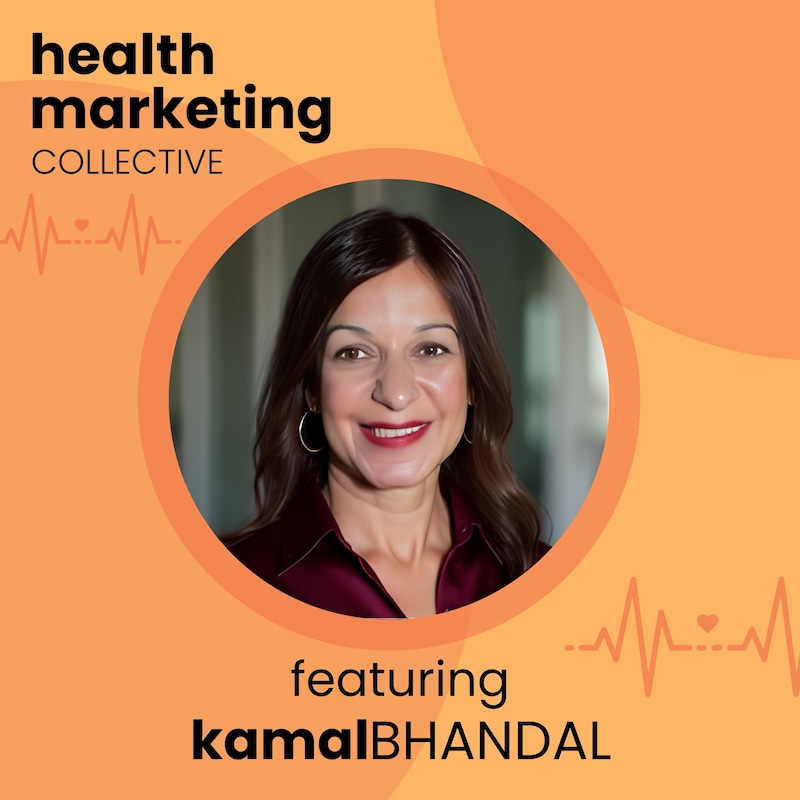
In today’s episode, Sara Payne sits down with Kamal Bhandal, Senior Vice President of Invisalign Global Brand at Align Technology, to discuss how healthcare brands can earn true cultural relevance and become part of the everyday conversations, communities, and lifestyles of their audiences.
With deep experience at the intersection of healthcare, technology, and consumer marketing, Kamal Bhandal has played a crucial role in establishing Invisalign as one of the most recognizable names in healthcare. She’s led marketing transformations spanning everything from AI-powered systems to brand strategy, and in this episode, she shares her approach to building lifestyle-driven relevance, making social media a force multiplier, and learning directly from the consumers, especially younger generations like Gen Z who are shaping brand expectations for the future.
We break down what it really means for a healthcare brand to be relevant in people’s lives, why it’s essential to embed authenticity into your marketing practices, and what other healthcare leaders can take away from the next generation’s playbook for engagement, inclusivity, and community building.
Thank you for joining us at the Health Marketing Collective, where strong leadership meets marketing excellence because the future of healthcare depends on it.
Key Takeaways:
- Relevance Is Earned, Not Assumed
- Kamal emphasizes that brand relevance means earning the right to become part of people’s lives. It’s about understanding your audience on a deep level—not just through data, but by sitting “knee to knee” with customers, embracing their worldviews, language, and daily challenges, in order to craft resonant and meaningful brand experiences (02:01–06:03).
- Investing in Consumer Understanding Is Non-Negotiable
- Carving out time and budget for ongoing consumer immersion isn’t a “nice-to-have”; it’s foundational. Kamal stresses that gathering insights from both current and potential customers (from providers to end users) is the necessary first step for unlocking true relevance and building impactful marketing strategies and communication plans (06:46–08:21).
- Social Media as a Force Multiplier
- Rather than viewing social media as a mere channel, Kamal advocates treating it as an arena for discovery, community, and co-creation. Social platforms enable healthcare brands to both “edutain” audiences (educate + entertain) and foster true connection not only direct-to-consumer, but through providers and wider communities. Social listening and active engagement also drive real-time insights that can reshape marketing and product decisions (15:12–19:57).
- Let the Next Generation Lead
- To be relevant to Gen Z and beyond, brands must co-create with these consumers, not just market to them. Kamal shares how involving Gen Z voices “at the table” from the very beginning accelerates relevance and helps avoid misaligned assumptions. This collaborative approach is now essential as culture and expectations move at unprecedented speed (20:32–22:34).
- Marketing’s Role in Fostering Team Culture & Embracing Change
- Strong marketing leadership mirrors the principles of consumer relevance within teams by understanding individuals’ goals, fostering a culture of learning, and celebrating experimentation (including failures). Kamal underscores the importance of team chemistry, delegated voice, and supporting risk-taking as integral to ongoing organizational transformation and innovation (25:50–29:45).
Thank you for being part of the Health Marketing Collective, where strong leadership meets marketing excellence. The future of healthcare depends on it.
Mentioned in this episode:
Health Marketing Collective is Powered by Inprela
The Health Marketing Collective is powered by Inprela: a communications firm built for health brands determined to lead, not follow. We partner with marketing innovators who aren't just chasing attention—they're building movements. Connect with the audiences shaping the future of care and lead the conversations that move your market. Ready to rise above the noise? Visit inprela.com. Let's create something that moves the market.
Transcripts
Welcome back to the Health Marketing Collective, where strong leadership meets marketing excellence. Today we're talking about how you build a brand that people choose to engage with. The brands that break through aren't always the ones with the biggest budgets. They're the ones that earn relevance in people's lives and become part of the conversations, the communities and the experiences that matter to them. They've figured out how to be culturally relevant. How does a healthcare brand do that? Joining me to dig into this topic is Kamal Bandal, Senior Vice president of Invisalign Global brand at Align Technology. Kamal has spent her career at the intersection of healthcare technology and consumer marketing and has helped build one of the most recognizable healthcare brands in the world.
Sara Payne [:She specializes in building high performing marketing organizations and has led transformations spanning brand strategy, creator ecosystems, digital acquisitions and AI powered marketing systems. We'll talk about how healthcare brands earn relevance in consumer culture, why social media has become a force multiplier for brands today, and what healthcare leaders can learn from the next generation of consumers. Kamal, welcome to the show.
Kamal Bhandal. [:Hi Sarah, thanks so much for having me.
Sara Payne [:Yeah, thanks for being here. Off the bat, let's talk about relevance. Health marketers have always focused on building awareness, educating their target audiences, building trust. But increasingly it feels like relevance is becoming, very much so, a competitive advantage. How do you define relevance and what does it look like when a brand has truly earned it?
Kamal Bhandal. [:So it's so interesting to reflect on how things have changed. Right. When I think about relevance, at the end of the day, all of us as brands, we are trying to earn the right to be a part of people's lives. As consumers, as people, we have so many different choices in terms of where we spend our time, what brands we choose to invite into our lives. And so it's, it's a time when relevance couldn't be more important. In a world where we are in a attention economy, it's harder and harder and harder to gain anyone's attention these days as we all have so much thrown at us. And the way that I think about relevance, particularly from a brand standpoint, is through the lens of earning the right to be a part of people's lives. And so when we think about how does that earn in actually happen? It happens if we are relevant to their life as opposed to us trying to speak at people, we've got to find a way to invite participation in and particularly for ourselves to be invited into those conversations.
Kamal Bhandal. [:So it's flipping the script. Rather than looking at the world through our lens, it's looking at the world through our consumer, our buyer, our customers lens.
Sara Payne [:Yeah, absolutely. I love how you framed that. I really do think that what you're talking about is it is a privilege to be, to be chosen for someone to, you know, to spend their time with, with a brand, right? To choose, to follow a brand, to engage with a brand, that's a privilege. And as you stated it, or as you've framed it, it's, it's a privilege that we have to earn as brand leaders.
Kamal Bhandal. [:That's absolutely right. And I think it's, it's finding what is that intersection between what is important and relevant to our customer, whoever that customer is. Whether it's the doctor, in the case of many healthcare marketers, whether it's the, the end consumer who's using the product, but what is important to them. And then how does our brand fit into their lives? And then that's where the, the relevancy equation really starts to come to life.
Sara Payne [:And how do you look at relevance in terms of measuring that? Is that something that, that you guys choose to measure? Can it be measured or is it something that you just sort of simply feel when it's happening?
Kamal Bhandal. [:Well, I think, I think there's a little bit of both. Right, in terms of you definitely feel it when it's happening because you can see the magic coming to life. I think it starts with some of the basics of marketing, which is understanding who your customer is, what is their world like, what is the language that they use to describe their world, their, their joys, their obstacles, the pain that they're living with. If it's a chronic illness in a, in a world of healthcare where chronic illness is on the rise, but it's really figuring out what does your customer's world look like, and then determining what is their language, what is their daily routine like, then you can figure out as a brand, how is it that we can earn relevance into their lives? But I think there's never been a time more important for marketers to truly spend time with their customers. And this isn't an academic exercise only, right? This isn't conference room confidence where you look at academic information and lots of data that you analyze. And certainly that's important, but I think it's sitting knee to knee with your customers. It's truly getting to know them on a personal level so that we can truly understand their day to day. Almost like a anthropological deep dive.
Sara Payne [:I totally agree with you on that. I think it's really, really smart. I'm curious if you have a way to sort of quantify either in terms of time or money, budget, right. That you spend doing that work because it does take time. And I think for many brands the reason it gets overlooked is not because they don't view that it's important, it's that they maybe just don't have time to slow down for it. Maybe they don't have a team large enough, a budget large enough to do so. So I just wonder how you think about that in terms of a carve out and I. Because I think it would be helpful for other leaders how you think about that.
Kamal Bhandal. [:I mean, what, what a great question. So the, the way that I think about it is if, if at the end of the day, back to where we started, we're trying to earn relevance in the lives of our customers. So for me it's the starting point. You have to carve out the time, right? Because if you don't carve out the time, everything else that you craft, you can have the best plans possible that you can craft in a vacuum. But if it's not relevant to your customer, then we haven't accomplished anything in terms of the overall business goals, the communication objectives, the marketing objectives, the overall revenue goals that we all have. Right. So I think it's a must have. It's the very first place marketers have to start in order to have any chance of becoming relevant.
Kamal Bhandal. [:So we spend time with our, our customers, both doctors who are thinking about using Invisalign in their practice or who are currently using the Align platform in their practice. Then also the people who are choosing Invisalign to transform their smiles. We want to know what was their why behind it. We also want to speak to individuals who aren't using Invisalign yet, but are considering it so that we understand what their lives look like. What are they thinking about? What's the hesitation? Only then can we figure out how do you actually become relevant?
Sara Payne [:Sorry, go ahead.
Kamal Bhandal. [:One thing that I'd love to share is just an example of that in real time. And we're talking about health marketing. We're in a time when health couldn't be more important to all of us as people, as individuals. And we're seeing today that people are demanding more information about their health. People are feeling much more agency over their health. And you see this interest in overall connected health and understanding how do you achieve overall health. So for us, what's really exciting is the opportunity then to be relevant in that conversation through the lens of experiential and through that experiential educating the audiences, educating the public about how does oral health fit into your overall health, and then showcasing products that we have, such as the Invisalign oral health scan, that helps give you a window into what your oral health baseline is so that you can have a broader understanding of your oral health in the context of you wanting to understand your overall health. So it's a great way to think about relevancy is learning first about what's important to your audience and then figuring out how do you actually dive in?
Sara Payne [:Yeah. And so it sounds like this is just something that is absolutely prioritized for your organization as an ongoing initiative to make sure you understand and spend time with your customers. And it sounds like there's some combination of maybe folks that you kind of have on a bench that you have ongoing relationships with, that you can sort of more, as needed, casually reach out to them and get feedback, as well as some net new recruitment of new voices and people who maybe haven't yet been exposed to the brand or the technology to get again, sort of fresh new perspectives from different demographic groups, etc.
Kamal Bhandal. [:That's right. And we're, we're bringing together these groups of people across the country all the time on the regulars, so that we do have a pulse on what are the trends, how are people's opinions changing, where, where are they placing prioritization for their lives, what's no longer relevant for them? And I think being a part of culture and moving at the speed of culture is so important for brands in order to actually create that relevancy or earn that relevancy rather. Because the brands who are moving at the speed of culture are the brands who win in the marketplace. The brands who create culture win even faster.
Sara Payne [:Love that, love that phrase, moving at the speed of culture. One of the things that I'm fascinated about with Invisalign is that many of us might think of it as a consumer brand, but it's really not a direct to consumer product. It is a medical device that's offered through orthodontists, and yet it feels like a lifestyle brand. What made you all successful in establishing that?
Kamal Bhandal. [:Well, first of all, I love that you are calling out the fact that we are a B2B brand right at the end of the day, and we're at B2B to C in that regard. So in the, in the, the way that we think about it is, first and foremost, the provider is the utmost important person, individual team, at the center of it all. Right. Because without the provider, nobody actually gets Invisalign and This is health care. We do want it to be overseen by an expert in. And one of the things that we try to do is in partnership with the providers. Our goal is to really help ensure that we are educating the public, we are educating consumers, whether it's adults, whether it's parents thinking about orthodontics for their kids, that we are educating them on the fact that Invisalign exists, it's an option for them. Here's how it works.
Kamal Bhandal. [:Here's where you can. You can find a provider near you to actually get a consultation and learn if Invisalign can work in your instance, which more often than not, it actually can. And so, so for us, what's been really exciting and back to the relevance is, is in order for us to gain that relevance, we had to become a part of culture and we had to ensure that consumers would actually stop and listen. And at the end of the day, you know, if our promise to the consumer is, is that we transform smiles and change lives, and then to the provider, it's really ensuring that we are driving consumers who are educated about Invisalign into their practices to help them, to help them get matched with people in their communities. We had to find a way in to become relevant to the consumer. And lifestyle was the way in which we did that. And it goes back to exactly what you were talking about at the very top, Sarah, in that the relevancy is earned by becoming a lifestyle brand. Helping people understand that whether you're an athlete, which is.
Kamal Bhandal. [:Which is a lifestyle, whether you are a parent, whether you are health oriented, whatever your Persona is, is that Invisalign has a role to play in improving your life through that angle. And becoming a lifestyle brand has been a journey, but it was really the unlock, I would say, and that pivot was. Was the unlock to help consumers truly understand, wow, this could be a product for me and could fit into my life without. Without any sort of interruption, if you will.
Sara Payne [:I'd like to pivot a little bit here and talk a little bit about social media, because social media is such an important part of culture today. I've heard you talk about social media being a force multiplier for the Invisalign brand. And I love that framing because I think a lot of organizations still think of social media as a channel. But. So when would you talk about it being a force multiplier? What does that mean for you?
Kamal Bhandal. [:I think it starts first with going back to understanding the lives of your customers. And for us, really, when I think about who our end customer is, our end user is. You think about that person using Invisalign, they are on social media. Right. They are utilizing social not as a channel like you said. They are utilizing social as a disco, as a discovery arena. They are utilizing social as a way to share their joys, as a way to share their pains as well. Right.
Kamal Bhandal. [:And so the reason why I really think about social as a force multiplier is it's an opportunity for brands to edutain, if you will, both educate and entertain in an arena that they are. That their end customer, their end user is already on. Right. What we also think about as a false multiplier is as I think about all of the providers who are in communities all across the country, all across the world, and they are looking for ways to connect in with the potential patients, if you will, in their communities. And social becomes again that arena where those individuals within those communities, whether they're looking for adults or they're thinking about connecting with parents, they are in those social communities. And so it really does become not so much a channel, but an opportunity to build, build a community between the brand, the providers, as well as the individuals that we are looking to connect in with those adults and those parents themselves.
Sara Payne [:Yeah, it's really interesting to hear you talk about it that way because really what you're kind of describing is almost this universal platform that is a community that is, you know, from, from you to the provider to the, to the consumer and the provider's ability to, to continue and feed off of that community as well for their own business purposes and business growth purposes as well. Do you have any examples where you've learned something through social media that directly influenced maybe a broader business decision or a marketing decision?
Kamal Bhandal. [:I think there's a couple of things that come to mind on that. Sarah, I love this question. First and foremost, the whole aspect of health coming to the forefront is a pulse that you start to pick up on through social. Right. And I think more and more so over the last year, we've seen consumers talk about health through the lens of whole body health. And that was a aha moment for us as we thought about, okay, what are the ways in which we need to engage with consumers? How do we bring forward conversations around the Invisalign oral health scan to their communities? Right. That was one. The other thing that I would say that we've really learned is you have a lot of moms who are utilizing social as a way to connect in with their friends, with their communities, and through that one of the things we really learned about is what are the key questions that mom has when it's time for her to take her child to an orthodontist? What are the key questions that she thinks about when she hears about Invisalign from one of her mom friends? And what that does is it gives us real time consumer insight to help us reorient and pivot if we need to and or also discover mega fans of the brand.
Kamal Bhandal. [:And I think that that's one of the most underutilized applications of social from a brand standpoint is really thinking about social as a discovery platform and not just passive social listening because I think we all talk about social listening, but I really think about it more in the active sense. How do you use the insights, the comment sections, the Reddit threads as discovery tools for a way for you to discover who your fans are? Discover real time insights, real time pain points that you need to improve on and opportunity areas that you can really address?
Sara Payne [:Such great advice and perspective. I love that one of your key target audiences is Gen Z consumers. And you know, while every brand is, you know, wants to understand Gen Z, I'm curious about the bigger lesson to be learned in all of this. What are they teaching us about what the consumer expectations are going to be in the future and sort of where all of that is headed and what other brands should be thinking about of sort of like the future of consumer expectations.
Kamal Bhandal. [:So one of the things I would say about Gen Z, right, is they're really pushing all of us brands to be better, I think. And in order to be a brand for Gen Z, I think you have to be a brand by Gen Z. And that was one of the key insights that we started with so many years ago as we were trying to find ways to become relevant to this generation. And, and we identified really early on that we didn't know Gen Z and therefore we invited Gen Z to the table and we worked directly with Gen Z voices so that their perspectives were at the table from the get go. What that helped us do was it helped us shorten that time span of becoming relevant to Gen Z and really establishing the Invisalign brand as a brand that was preferred by Gen Z. So, so that's one, one thing. I think that if you are a brand that is trying to become relevant to Gen Z, bring Gen Z to the table. Their voices shouldn't be an afterthought.
Kamal Bhandal. [:They should really be the very first thought that you have in order to design your strategy. And it's not just an episodic moment. It's gotta be threaded into the DNA of how you behave, how you go to market. Because Gen Z culture changes at the speed of light. Gen Alpha culture as well, right? Who's another target audience that is becoming equally important for us, having a pulse on what's relevant to them. What's important to them is the way in which your brand and our brand became relevant and earned the respect and preference of Gen Z. I think the second thing that marketers can truly take away is that the entire experience is the product. The product isn't just the device.
Kamal Bhandal. [:The entire experience is the product. And Gen Z is the generation that really pushed, I think all of us into that direction. And now more and more generations, you know, whether it's millennials, whether it's Gen Xers, they are also defining the product as the experience. But I really do credit Gen Z for being the one to push that to the forefront. So from a marketing standpoint, I always say that the job isn't done yet until we think about the entire experience. And especially in a world of, of social being the epicenter of where Gen Z is spending their time. Everything from the unboxing experience to, to celebrating joy and moments with friends and the product and the brand becoming a character in their story. But it is not the entire story.
Sara Payne [:I'm glad you went there because I really do believe that consumer experience, customer experience, is such a critical part of what marketing needs to, to oversee, whether that's directly or indirectly because it is such a huge part of that brand experience. And so really thinking about it from an end to end perspective, I think is just so smart for brands to be doing. Was there anything that you, any assumptions that you and your team had to unlearn as it pertains to Gen Z?
Kamal Bhandal. [:I think, I think one of the things that we had to unlearn was reminding ourselves that we are not the customer. And that was so important because I think marketers shoot from the gut all the time and, and in many cases developing that gut. I'm a big believer in developing that gut. It's important, but you have to go in ego checked at the door and remind yourself that you are a student in this instance. You're not the expert and you're not the customer. So their points of views, their opinions, their suggestions on how to improve all have to be taken with the utmost importance and really ensuring that you don't fall back into those moments where you discount their points of views because at the end of the day they are either going to want to invite your brand into their life or they're not. And I think it was really important for us to always remember we're not the end user here. We're not the teenager.
Kamal Bhandal. [:As much as we may know kind of what we want, we don't know what the teenager wants. And it's important for us to listen to them.
Sara Payne [:Yeah, absolutely. That's such great advice and probably hard for some of us to hear, but you know, it's advice that we really need to tune into for sure. I want to talk about a couple of other sort of leadership oriented topics. I know you've led a number of marketing transformations throughout your career. What have you learned about getting organizations and teams to embrace change?
Kamal Bhandal. [:So I, I think it starts first with some of the principles that we already talked about about around similarly to understanding your customer and really understanding what their lives are like, I think it starts first with understanding the people on your team as people first. What's important to them, what is their life like, what are their career goals, where, where are they interested in learning and what is that intersection between all of those elements and, and where the business is really headed. So some of the principles that I always think about are one, you know, teams win and really ensuring that you've got chemistry on the team that is unmatched. Much like a sports team where everybody brings a very specific skill set, a very specific specialty to, to the team. And it's the culmination and the combination of the whole that really makes that team special. And then to that point around driving change and embracing change, it's thinking about how do you cultivate an environment of learning and fostering that learning environment in a way that you have the team participating in driving the change from the get go so that people feel that they are involved, they have a voice, they have an opportunity to shape and learn along the way. And I think that without those elements, that's where driving change management becomes very difficult because we are trying to earn the right to be a part of people's lives again. And I think we've got to think about our teams equally in the same way that we think about earning relevance in the lives of our customers.
Kamal Bhandal. [:Our team members should be thought about in the same regard.
Sara Payne [:Yeah. And I mean strong leaders get that right. And clearly you're one of them. And it's. What you're talking about is the culture of a team, the culture of a team. You're talking about chemistry, you're talking about getting them invested in helping to be involved when change happens, having their voices be heard, all really important things. And I think, you know, a lot of us have read books on this and, and gone to leadership seminars on this and, and understand it and its importance. But actually making it happen, I think is hard, particularly when you have a large team.
Sara Payne [:And I understand yours is quite large. I, I think I heard the number like 60, 60, some person marketing team. I don't know if I got that right. But how do you. Let's talk about how, how you get your, encourage your team to, to take risks. How do you create an environment where experimentation feels safe while still maintaining accountability?
Kamal Bhandal. [:So first and foremost, I think it does go back to what type of culture are you fostering? Right. I'm a big believer in fostering a learning culture. And two aspects to that learning culture. One, we learn together as a team. So there's team learning that occurs in areas that we are focused on collectively because we're all equals in that learning journey. And then when it comes to individuals, everybody having an individual learning plan, but to foster that, that ethos of experimentation, it is truly celebrating not just the, the successes, but also celebrating the experiments that didn't work as a success because it's only when you're iterating rapidly, when you are measuring what is working and equally what is not working and giving that stage time as well. So that the celebration is in the experimentation, not only in the outcome itself.
Sara Payne [:Love that. And I'd love to end on a couple of kind of quick fire questions here. What's one healthcare or consumer brand that you admire right now? And why? Oh, what a.
Kamal Bhandal. [:What a great question. I have lots of admiration for the Evo brand. They are a small brand, yvo, and they are a brand that was started by a woman. It's a weighted vest and it's one of the very first weighted vests that is designed for women. And so what I love about them is that they very much understood how a woman's body is different than a man's body and designed their product to be so focused and oriented around the woman's body to fit her really well. And they are very much building community as that force multiplier, so that you feel that you are a part of the brand as opposed to it just being transactional.
Sara Payne [:Love that. Yeah, I'll definitely have to check that out. Last question. What's one piece of career advice you would give your younger self?
Kamal Bhandal. [:Wow. I'd say trust that gut. Trust that gut early on, but don't let it be the only thing that leads you and have the courage and the conviction to build that personal advisory board early.
Sara Payne [:Great advice, Kamal. This has been a fantastic conversation. One of my biggest takeaways is that relevance comes from really deeply understanding consumers and creating those experiences that connect with them in meaningful ways and building that community. Thank you so much for joining me in this conversation today.
Kamal Bhandal. [:Sarah, Such a pleasure to connect. Thanks so much for having me.
Sara Payne [:And to our listeners, if you enjoyed today's episode, please subscribe to the show. Thank you for joining the Health Marketing Collective, where strong leadership meets marketing excellence, because the future of healthcare depends on it. We'll see you next time.
