Shownotes
About the Show:
"I want to change people's lives. My legacy is for people to look at me as a good person, a good teacher, and to say, ‘He transformed my life through Jiu Jitsu.’
– Ismael Santos
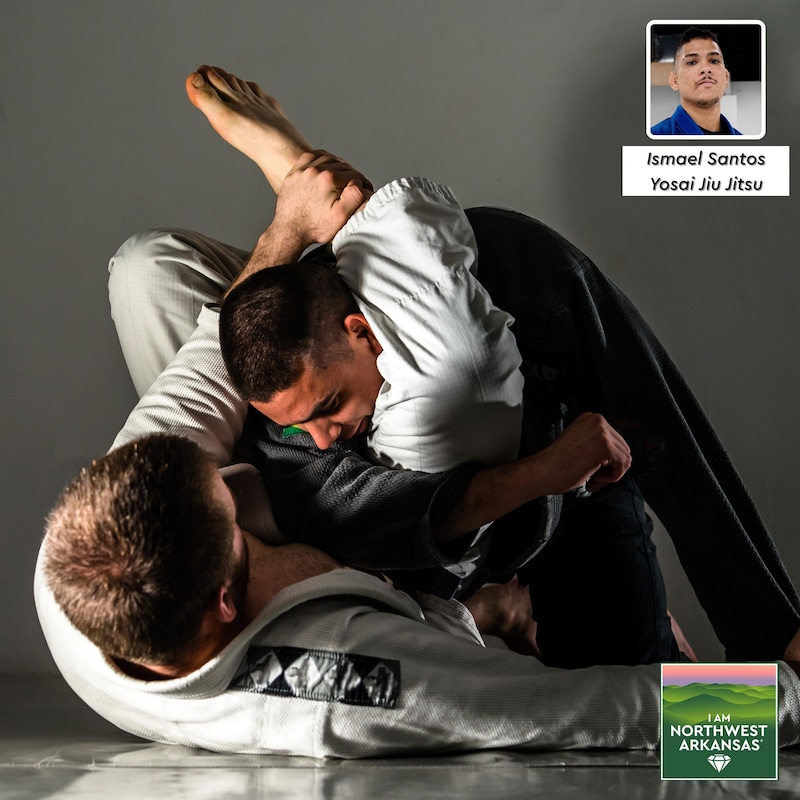
In this episode of I Am Northwest Arkansas®, host Randy Wilburn sits down with world-class Brazilian Jiu Jitsu athlete and teacher Ismael Santos, founder of the brand-new Yosai Jiu Jitsu academy in Springdale. Born and raised in Fortaleza, Brazil, Ismael shares his journey through Jiu Jitsu—from early days as a competitive teenager to teaching and mentoring students of all ages in Northwest Arkansas.
Randy and Ismael discuss the origins of Brazilian Jiu Jitsu, the importance of discipline, and how martial arts can transform lives. Ismael opens up about his philosophy of asking the right questions to spark personal growth, his teaching approach for beginners and advanced students, and the vibrant Brazilian culture he brings into his academy. Listeners will hear how Jiu Jitsu can benefit anyone—no matter their age, fitness level, or experience—and how this dynamic martial art builds confidence, community, and self-defense skills.
If you’re curious about martial arts, want a healthy and fun way to stay active, or simply want to find out what makes Ismael Santos and Yosai Jiu Jitsu special, this episode is a must-listen!
Key Takeaways:
- Brazilian Jiu Jitsu is not just a sport: It’s a practice that develops discipline, builds character, and teaches self-defense.
- Asking questions leads to growth: Ismael encourages students to ask “How do I defend?” or “What should I do in this situation?” to enhance learning.
- Jiu Jitsu is for everyone: You can start as a child or an older adult—classes adapt to your goals, body, and experience.
- Community and culture matter: Step into Yosai Jiu Jitsu and experience Brazilian warmth, music, language, and a supportive team.
- MMA fighters use Jiu Jitsu: Strong ground techniques are key in mixed martial arts—most champions have a Jiu Jitsu foundation.
- Springdale’s new home for authentic Jiu Jitsu: Ismael brings his expertise and vibrant approach to make Jiu Jitsu accessible in Northwest Arkansas.
- Special deals for new members: Founders pricing and discounts for students, first responders, and healthcare professionals.
All this and more on this episode of the I Am Northwest Arkansas® podcast.
Important Links and Mentions on the Show*
- Yosai Jiu Jitsu Website: YosaiJiuJitsu.com
- Location: 1110 Matthias Drive, Suite E, Springdale, AR (Across from Sam’s Club, off US-412) Phone: 479-249-4437
- Instagram: @YosaiJiuJitsu
- Limited Time Special Offer: For the first 50 members – Unlimited classes for $139/month. After that, regular price is $149/month. Additional 10% discount for first responders, healthcare workers with ID, university professors, and students!
- FindItNWA.com NWA’s Hyperlocal Business Directory
This episode is sponsored by*
*Note: some of the resources mentioned may be affiliate links. This means we get paid a commission (at no extra cost to you) if you use that link to make a purchase.
Connect more with I am Northwest Arkansas:
- Grab our Newsletter
- Email Us at hello@iamnorthwestarkansas.com
- Connect With Our Facebook Page
- Connect With Us on Threads
- Connect With Our Instagram
- Connect With Our LinkedIn Page
- Join The Facebook Group
- Connect with our Fearless Host, Randy Wilburn on LinkedIn
Thank you for listening to this I am Northwest Arkansas podcast episode. We showcase businesses, culture, entrepreneurship, and life in the Ozarks.
Consider donating to our production team to keep this podcast running smoothly. Donate to I Am Northwest Arkansas
Mentioned in this episode:
FindItNWA.com
🎧 This episode is brought to you by FindItNWA.com – the hyper-local business directory made for Northwest Arkansas. From local eats to trusted pros, it’s the go-to spot for discovering what’s great nearby. 📣 Are you a business owner? Get listed today and connect with thousands of locals looking for what you offer. 👉 Visit FindItNWA.com to explore or join now.
Transcripts
Hey folks, and welcome back to another episode of I Am Northwest
Speaker:Arkansas. I'm your host, Randy Wilburn, and I'm excited to be with you today, as
Speaker:always. Listen, I've got a really special episode for you
Speaker:today and I'm going to preface this by saying that I have
Speaker:been wanting to do the grapple
Speaker:arts for a while and I took judo in college
Speaker:with a world renowned judo teacher instructor who was actually an
Speaker:Olympian. And shout out to Mr. Kim. But
Speaker:the long story short is I've just not gotten back into
Speaker:the to the gym to take any more lessons. But that's gonna
Speaker:change after today's episode and once you hear who my guest is, you
Speaker:will understand why I'm so excited to
Speaker:that today's guest. They've traveled a long way
Speaker:to bring something special to Northwest Arkansas. From the
Speaker:vibrant streets of Fortaleza, Brazil to the heart
Speaker:of Springdale, Ishmael Santos has lived and
Speaker:breathed Brazilian Jiu Jitsu since he was a teenager.
Speaker:He's not only one of the top ranked featherweight athletes in the world,
Speaker:he's also a teacher, mentor and founder
Speaker:of Yosai Jiu Jitsu, a brand new
Speaker:academy built around the idea that asking the right
Speaker:questions can transform your life. So without further
Speaker:ado, I want to welcome Ismail Santos to the I Am Northwest
Speaker:Arkansas podcast. How are you doing today? I'm great, thank you. Thank you for
Speaker:having me, man. Absolutely. When I heard from and shout out to,
Speaker:to Mary Mickle and, and
Speaker:Andrea and the rest of the team over there at A and M that those
Speaker:guys are amazing. And when they reached out to me to tell me
Speaker:about you and I said definitely want to have
Speaker:Ismail on the podcast to, to learn more about him and,
Speaker:and to find out what he's up to because it, I think
Speaker:I'm big into health and I wellness and we
Speaker:have so many bike trails here in Northwest Arkansas. But there not
Speaker:everybody likes riding a bike, right. And there are other options. There are other ways
Speaker:for you to stay healthy. And one of those ways is to practice the
Speaker:martial arts, is to learn from that. And so I would love for you
Speaker:maybe to talk just a little bit about your origin story. Like basically
Speaker:what inspired you to bring your journey to Northwest
Speaker:Arkansas and open your side Jiu jitsu in Springdale.
Speaker:I'm, I'm from Brazil like you said. I'm from
Speaker:a big city for Toledo. It's kind of like Miami vibes
Speaker:and everything. So I started as a teenager like you said. And
Speaker:what bring, what brought me here to Northwest circumstance actually was my Friends.
Speaker:So I had my. My best friend here in northwest Arkansas, so
Speaker:he brought me here to train with him. That way that we can travel around
Speaker:us to compete and all that. And by the time
Speaker:I was just an athlete, I was full athlete. I was helping him with the
Speaker:class and all that. I was learning how to teach and. And everything else,
Speaker:how to speak English, of course.
Speaker:And I end up here in our fourth circumstance.
Speaker:And then I think was a great decision that I
Speaker:had in before, and that. That's
Speaker:what make me. How can I say this? Happy
Speaker:to be here, open up a school in Springdale and then
Speaker:making the Northwest our community, Jiu Jitsu community grow
Speaker:and help people through Jiu Jitsu. Right?
Speaker:Yeah. My. My goal right here. Okay.
Speaker:Okay. I don't know. I answer your question. No, it's fine. Yo,
Speaker:just, hey, man, you're good to go, and it is fine. And I'm
Speaker:gonna kind of connect the dots for people listening. But.
Speaker:But I specifically really just want to learn about
Speaker:you and also about Jiu Jitsu, because I think a lot of people have
Speaker:questions about the martial arts specifically, but Jiu
Speaker:Jitsu directly. And so I think the. That's fine.
Speaker:But you said. I. I was reading some of the documents about
Speaker:you and some articles online. You said Jiu Jitsu
Speaker:transformed your life. Can you share maybe a
Speaker:defining moment from your early training in Brazil
Speaker:where you were like, where it all clicked for you and you were like, man,
Speaker:this is something that I want to do for a long time.
Speaker:Yeah. So I started, like, when I was 13 years old.
Speaker:By the time I was, like, into sports. Right. So I
Speaker:was on the high school playing, we call indoor soccer. Sure.
Speaker:So I was competing and all that. So I always was like, I had
Speaker:a competitor mentality. And since I started
Speaker:Jiu Jitsu, I started, like, competing right away. I think my first competition
Speaker:was with one month of training.
Speaker:And what I believe trans, like,
Speaker:making the change in my mind was like, whenever I was like,
Speaker:I'm not gonna say like a bad kid, I would say I was like,
Speaker:getting to a fight in streets and all that. And then I become
Speaker:a better person. I would say, yeah, since I
Speaker:started Jiu Jitsu, I never get into a fight in my whole life.
Speaker:But before I would say pretty much
Speaker:everywhere, I was, like, getting suspended or something like that.
Speaker:And also because of bullying, too. So I
Speaker:was to defend myself. And
Speaker:so that's how it started, basically. So I had my friend that he
Speaker:was trained on his garage with one of his friends, and then in
Speaker:Fortaleza we all play at the street, we play soccer at
Speaker:the street, we play hide and seek and all that kind of stuff.
Speaker:And he invited me to the. To do jujitsu. He's like, hey, do you want
Speaker:to do this? And I was like, yeah, sure. So. And then
Speaker:since I started, I fell in love and
Speaker:that's how get me here, to be honest. Yeah, you. So you never
Speaker:looked back once you did that. And I don't. It's funny now that you say
Speaker:that. I don't know that anybody would mess with you from a bullying perspective
Speaker:or anything like that with your skill set and background in Jiu
Speaker:Jitsu. So. So tell me real quickly for
Speaker:the uninitiated here that are listening to this
Speaker:now. I remember growing up, I had heard about Jiu
Speaker:Jitsu. Then later on I heard about Brazilian
Speaker:Jiu Jitsu. Can you maybe articulate the difference between the
Speaker:two, if any? Or is it just more of a style?
Speaker:So Jiu Jitsu originally is from kind of like Japan,
Speaker:Right. A guy brought into Belay
Speaker:Dupara, which is in Brazil, and are developing more
Speaker:techniques, and then they start like the Gracie family and all
Speaker:that. The two. Two types of
Speaker:lineage. Lineage, yeah, that's perfect. Lineage. Yeah. And
Speaker:that's how he started. And then they start developing Jiu Jitsu in a
Speaker:better techniques, better way that the small guy can beat the
Speaker:bigger guy in that stuff. So
Speaker:I. That's how I would say the difference between those,
Speaker:of course, the style and for who. The.
Speaker:For who don't know what Jiu Jitsu is. I would say
Speaker:kind of like wrestling, Judo mix. Yeah.
Speaker:With submission, which is basic based on
Speaker:function. Right. So I gotta get to this side or I can. I have to
Speaker:go to the back. I have to control the person before I submit them. Does
Speaker:that make. Yeah, yeah. Because I mean, it's. And it's part of.
Speaker:It's what's known as part of the grappling arts, right? Yeah,
Speaker:yeah. So and judo, I think judo is also a grappling art as well.
Speaker:Yes. But it's more about throws though. Yeah, those.
Speaker:We take people down as well. But like for
Speaker:example, whenever you put the persons back on the mat, whenever you throw it,
Speaker:the match is over, right? Yes, yes. You still
Speaker:can fight. Okay. Don't tap. Right. So if the person. Now
Speaker:you keep going. If the person get to your side, you keep going. If the
Speaker:persons go to your back, you keep going until the person make you
Speaker:tap. If the person make you tap, it's over. It's over. Base it
Speaker:on Tournaments, Right. So let's say me and you is fighting, and
Speaker:then I took. I take you there. Hey, man, I don't know if I'm fighting
Speaker:you anytime soon. So that's fine. I'm just messing with you. Yeah.
Speaker:If I throw you, and then I got two points for the takedown, right. And
Speaker:then I. I got three more. So let's say I end up
Speaker:doing 20 points on you, and
Speaker:for some reason, you start, like, pushing, and then you get your guard back and
Speaker:get a triangle, for example, which is a choke. Yep. And then you start squeezing
Speaker:your legs. And then I start, like, feeling out of breath, and then I tap.
Speaker:It's over. You win the match even if I only points over.
Speaker:That makes sense. I got you. Yeah, it does make sense. It too is a
Speaker:little bit different of judo and wrestling. Mm. So
Speaker:it's based on control until submit.
Speaker:Okay. Control until submit. Yeah, no, that does make sense. So that's
Speaker:how I gonna explain, I think the easiest way to people understand.
Speaker:Yeah. Control until submit.
Speaker:You say that the philosophy
Speaker:of asking questions. I mean, I'm curious to know, like,
Speaker:asking the right questions is always important in life. Right. But you. One of
Speaker:the things that you've talked about, and it's on your website, you
Speaker:talk about how. How does the philosophy of asking questions
Speaker:apply to learning and growth in Jiu Jitsu?
Speaker:So what is that? I mean, explain that to me a little bit. And how
Speaker:would you. If I was coming in as a young person into your Jiu Jitsu
Speaker:studio, what kind of questions would you be talking to me about
Speaker:asking in terms of having a better understanding of what
Speaker:I need to do to learn more about this martial
Speaker:art? So Jiu jitsu is a. It's kind of like
Speaker:a funny martial arts. I would say it's not easy. I
Speaker:always. That. It'S a
Speaker:martial arts that you have to be on the mats. If that
Speaker:makes sense. Yeah. At time. In the mad time doesn't
Speaker:lie. That makes sense. Yeah, no, it does. In the.
Speaker:About the right question that I mentioned is
Speaker:how I gonna go through Jiu Jitsu? If that makes sense.
Speaker:Yeah. Okay, professor. How.
Speaker:How I get to the top position or like, how I can. How I defend
Speaker:myself. It's more about concepts around
Speaker:than a specific technique. If that makes sense. Yeah, it does. Yeah.
Speaker:Because like, if I. If you started Jiu jitsu today, and then I
Speaker:tell you, for example, a spider guard, what do you do? What do you imagine?
Speaker:Imagine what is. Would you say a spider guard? Yeah,
Speaker:it's a guard that you Use. But you never trained before, so you're not going
Speaker:to understand. Yeah, I would just think of a spider coming down on a
Speaker:web. But if I say you this,
Speaker:so you're going to be on top, on bottom, I want you to keep your
Speaker:legs up to protect yourself. What are you gonna do? Keep your
Speaker:legs up to protect yourself. Right, right. So that's kind of
Speaker:like questions that I try to make it
Speaker:easier for the person, if that makes sense. Whenever they come through, choose
Speaker:me and then ask about those like what should I do when I'm on
Speaker:bottom? What should I do when I'm on top? So I cannot
Speaker:specifically tell them what to do. I have to explain that
Speaker:way that person is gonna understand. Yeah, that makes sense. Or
Speaker:it does. And it sounds like what you're saying is that
Speaker:as the evolution of learning Jiu Jitsu happen
Speaker:takes place that the participant. If
Speaker:I'm learning Jiu jitsu and practicing on a regular basis,
Speaker:as a practicing student, I need to constantly be asking questions
Speaker:about what I need to do in certain situations
Speaker:when I'm confronted with something that I'm not sure how, how to deal
Speaker:with. Like you said, being on the ground, if I am on the ground and
Speaker:I've got two guys coming after me, how do I protect myself? You know,
Speaker:like key can run, right? Yeah. So, yeah, well, I
Speaker:mean, and I think that's important, right? Because I mean, you're opening up a
Speaker:studio where you're going to have a lot of people that are going to come
Speaker:through those doors and not really maybe have no
Speaker:familiarity with martial arts whatsoever. How are you
Speaker:going to and how have you helped beginners
Speaker:overcome maybe fear or self doubt,
Speaker:like when they first step on the mat? Can you repeat one more
Speaker:time the. Question, sorry, how do you help beginners, like new
Speaker:people into the sport of Jiu jitsu overcome fear
Speaker:or self doubt when they first step on the mat? So like your new students,
Speaker:how do you help them overcome the fear that. Well, I can't do anything with
Speaker:this Ismail guy because he's a world class athlete.
Speaker:I'm just Joe Blowers, sue whoever and
Speaker:I don't know anything. How do you help those individuals?
Speaker:I usually, whenever I'm talking with someone that started Jiu
Speaker:jitsu and then they asked me like why I cannot do this with you.
Speaker:So I always use an example. For example,
Speaker:so if you go to the university, right? So you are a
Speaker:student, right. So whenever you go
Speaker:there, so the professor will be the person, this higher
Speaker:person. Right. In terms of knowledge,
Speaker:how can I Say.
Speaker:How can I say this? Studying a subject. Yes, a subject.
Speaker:Yeah. Okay. So if you are,
Speaker:if you have more knowledge than the professor,
Speaker:it's something wrong with their university. Right, right.
Speaker:Yeah, yeah. So that's how I understand. And then I always,
Speaker:I put a mat thing. So I have been
Speaker:doing this for like almost 13 years. Okay. And
Speaker:then I would say probably I'm training three, four times a
Speaker:day those 13 years.
Speaker:That makes sense. Yeah. That's a lot of training. Bottom at time is a lot
Speaker:of sacrifice. And then also I'm a fully athlete. Right. Yeah.
Speaker:So the person that comes into a gym to do Jiu Jitsu as a
Speaker:beginner, so they have family, they have jobs, so
Speaker:they are there to. This is stressful, I would
Speaker:say. Yeah. So it's completely different in terms of
Speaker:skill and level, if that makes sense. Also like
Speaker:I can be like training someone that is like very old, not
Speaker:very old, 72 years old. I have a student with 72
Speaker:years old. Wow. The same thing that I have to
Speaker:teach him, I cannot teach somebody is like 80, for
Speaker:example, or 20, for example. So the body
Speaker:is different, like the flexibility is different, the mentality
Speaker:is different, the injuries is different. That
Speaker:makes sense. Yeah. So you probably,
Speaker:your teaching is dependent on the student.
Speaker:So whether you have a 15 year old young lady come into
Speaker:your class or a 72 year old man, like you said, you currently have a
Speaker:student, you're going to give them an individualized program
Speaker:to learn Jiu Jitsu. So we're gonna use the same
Speaker:techniques but different ways to do it. So that's the
Speaker:good thing about Jiu Jitsu is for everyone. Yeah, that makes,
Speaker:yeah, it makes perfect sense. Years old, you're gonna still do Jiu Jitsu. You can
Speaker:be five years old, you're still gonna be doing Jiu Jitsu. Yeah.
Speaker:So like really depends how your body is, how injurious is
Speaker:what is your goal and then all that. Right. So like for example, if
Speaker:someone come to me, hey, I want to be a professional athlete.
Speaker:Yep. So I'm gonna guide him to be a professional, which means I'm gonna go
Speaker:a little harder on him. That makes sense. Yeah. So
Speaker:that's how I usually do with beginners. So I always
Speaker:look at them, look her, the person's goals and gonna
Speaker:walking through it, if that makes sense. Yeah, it does.
Speaker:It makes a lot of sense. So, so okay, so we get. I understand
Speaker:that now. And so you really are
Speaker:holistically focused on the
Speaker:beginning student, regardless of age, that
Speaker:walks through the doors of your Gym. And is it called a
Speaker:gym or. It's not a dojo, Right. It's. It. You can call Jim. Okay. You
Speaker:call it gym. Okay. So why have you
Speaker:chosen? Or why do you believe Springdale is the
Speaker:perfect home for Yosai Jiu Jitsu? So, like I
Speaker:said, I have two. Two. Two good friends here in
Speaker:Arkansas. So one is in Fayetteville, and then another one is in
Speaker:Bentonville. Okay. So in my mind was like, no of you
Speaker:already have. Is in good hands. Yeah. Yeah.
Speaker:So now it's my time. So spring, there has to be in a good hint.
Speaker:Yeah, yeah. Are you. Wait, are you the first Brazilian Jiu Jitsu
Speaker:spot in Springdale? No, they have
Speaker:two. Two jeans before that. They currently have one, but
Speaker:it's martial arts in general. Okay. In general, play Jiu
Speaker:Jitsu. I got you. I got. Yeah, I think I'm the only one in
Speaker:Springdale. Beer Jiu Jitsu. Yeah. Okay.
Speaker:So. So. And I'm curious to know again, I mean. I mean, the Brazilian
Speaker:people, and Brazil is a beautiful country. It's a huge country. I had
Speaker:a chance to visit over a year and a half ago. How
Speaker:are you incorporating your community
Speaker:project roots? Right. Just taking back your sensibilities from
Speaker:Brazil into your academy here. What will people
Speaker:feel. How will they feel Brazil when they walk
Speaker:into your gym here in Springdale? First
Speaker:of all, my accent. Right. I can hear it. So,
Speaker:you know, because I said bo bongia to you the first thing. First thing when
Speaker:we got on the call. But whenever I'm teaching, I, like, always like to put
Speaker:some songs in Brazilian Portuguese. Whenever I'm, like,
Speaker:teaching kids, I'm kind of like, encourage
Speaker:them to count one to ten in Portuguese. Yeah. So. And
Speaker:then sometimes I teach them, for example, Rio naked joke is the joke
Speaker:that we do. I always say mataleo. That's the way that we say
Speaker:in Portuguese. So it's kind of like that. But I would say my
Speaker:accent will be the first thing that they're gonna notice. And
Speaker:of course, the music that I put on the gym, too. Yeah.
Speaker:Yeah. Portuguese is a beautiful language. And I certainly
Speaker:do like the way that I. That we Brazilians
Speaker:treat people, if that makes sense. Like, always shake hands,
Speaker:hugging. And how can sharing
Speaker:the love, I would say spread. Yes. Spreading the love. Yeah, it was.
Speaker:You're right. Because that's how it was when I was there. I mean, everybody hugged
Speaker:me. It just. Yeah. It was very
Speaker:personable space. And I know sometimes
Speaker:Americans don't like people invading their space. And every country
Speaker:is different. Yeah. But That I think that's kind of welcomed in this day
Speaker:and age where people are always kind of keeping their
Speaker:distance from folks. It's nice to be able to come into settings where,
Speaker:you know, you feel. Feel warmth. Right.
Speaker:And so even though you might get beat up on the mat, you still feel
Speaker:warm at the same time. So. Yeah,
Speaker:I really like that. So. So listen, uh, I'm
Speaker:curious to know what lessons from Jiu Jitsu
Speaker:translate most directly into everyday life. If I'm coming in
Speaker:there and I'm training with you, what are some of the
Speaker:takeaways that you think I will derive from the training that
Speaker:I do with you that I can apply to everyday life?
Speaker:First of all, I think the most important one,
Speaker:and then that one that you can take more. Most from Jiu
Speaker:Jitsu is disciplined. Yeah.
Speaker:My life changed like this. Whenever I started, like, training Jiu Jitsu,
Speaker:I was more disciplined. I would say, like, a
Speaker:better person. Like, sometimes, like, as an athlete.
Speaker:I'm saying as an athlete, right. Sometimes I don't want to go
Speaker:lift. Lifting weight, but I have to
Speaker:do it. Like, sometimes I don't want to be on diet, but I have to
Speaker:do it. You have to do it. Yeah. I think the most one
Speaker:that you can. How can I say? Poacher yourself.
Speaker:Grab it. I would say.
Speaker:Yeah. What did you say? What was that last thing you just said? That one
Speaker:that you just. You can poach yourself. No, that is my
Speaker:discipline, you know? Yeah, no, I totally understand that.
Speaker:And I think that's one of the things that anybody could take away from
Speaker:practicing martial arts. And again, it's the operative. The key
Speaker:operative word there is practice. Right.
Speaker:You never fully master it. You are continually
Speaker:learning new aspects to martial arts. Right. So
Speaker:that's why it's like there's never. I mean, of course, there are belts and things
Speaker:of that nature. Are there belts in Jiu Jitsu? Yes. Okay. All right.
Speaker:So. But it's funny because I'm a black belt. I'm kind of
Speaker:like, on the last one. Okay. Okay. We still have Coral
Speaker:Bell in a red belt. Okay. You get those. You, like,
Speaker:pretty old. Yeah. So that's cool.
Speaker:Like the same thing that I teach to my students, I still drilling every
Speaker:single day, is that you are constantly like,
Speaker:the good thing about Jiu Jitsu is a martial arts. The average stop.
Speaker:If you get someone that trained Jiu Jitsu 10 years ago, and then you
Speaker:grab someone that trained Jiu Jitsu ten years after that. That.
Speaker:That time, you're gonna see a lot of different like in terms of
Speaker:game techniques, the way that they do. For
Speaker:example, let's say if you grab a blue bell from
Speaker:2008, I would say, and then you put him to
Speaker:fight with a blue bell that, that trained jiu jitsu nowadays,
Speaker:probably the blue belt nowadays gonna beat the guy that was
Speaker:training 2008. Does that make sense? Oh, yeah, yeah. Because. Because
Speaker:like the way that it do techniques, so the way that they.
Speaker:How can I say, level up the techniques if that makes.
Speaker:Yeah, no, I would imagine it's changed a lot over the years. Yeah.
Speaker:So even how you were learning Jiu jitsu back in Brazil is different than how
Speaker:you're doing? Oh, yeah, totally. Yeah.
Speaker:How are you. This is a. I mean, I don't know how you're doing it,
Speaker:but how do you balance running an academy with
Speaker:maintaining your own competitive edge? You as an athlete, as
Speaker:somebody that's out there participating in events on
Speaker:a regular basis. Right, because you practice what you preach. You not only teach it,
Speaker:but you go out and do it. How are you gonna. How are you gonna.
Speaker:How are you balancing doing both running an academy and
Speaker:being an athlete? To be honest, it's a little bit hot as a little bit
Speaker:harder than was like I would say four years ago, whenever I was.
Speaker:But we, I had like I said, I have two best friends here and, and
Speaker:we have a pre group training. Pre group.
Speaker:Usually we meet all day every day on the
Speaker:week. In the morning, I
Speaker:would say one hour and a half, two hours. Yeah. And
Speaker:plus that we. I lift your weights too. And then also
Speaker:my diet. And then also I trainers the students. So it's.
Speaker:How can I say? I help them. They help me too. Yeah.
Speaker:Yeah. Well, I would guess there's. We have an
Speaker:expression. Iron sharpens iron. Exactly. Yeah. So I think
Speaker:that's really, really important and I think that can help.
Speaker:We train in them. I. I use my. All morning to train.
Speaker:Yeah. I can use my afternoon just to teach and help people through jiu
Speaker:jitsu. Yeah. And then sometimes I train with them. Most of the
Speaker:times I train with them, which help them
Speaker:to like. Right, so like training with a high level athlete makes you better
Speaker:too. Sure, sure. That's my kind
Speaker:of like balance between those. Well, and I always learned. I
Speaker:mean, I remember growing up, we used to. I grew up right outside of New
Speaker:York City and of course the best basketball players
Speaker:when I was growing up in the 70s and 80s were in New York
Speaker:City. And so as a kid in the suburbs, we wanted
Speaker:to go over there and play basketball with the Better players, because that's the
Speaker:only way you're going to get better. I used to play with adults,
Speaker:basketball and a lot of the sports that I participated in, I would play
Speaker:with older people that were older. That's the only way you get better.
Speaker:It was kind of like that, too. Yeah. So Brazil, like, actually
Speaker:in my hometown, my gym didn't have many
Speaker:kids to train, so I was trained as the adults. Pretty much
Speaker:13 till 15, I would say. Whenever I started growing
Speaker:up, I was like, no, that's time to go to adults class. But. But I
Speaker:was already doing it. Yeah. Did you feel like that it
Speaker:helped accelerate your knowledge and understanding of the
Speaker:martial art? Yes and no. So I
Speaker:think helped me to get, like, tougher, I would say. Yeah.
Speaker:And also to develop a little bit more strength. And
Speaker:I would say body conditions. I would. Sure. Because I was,
Speaker:like, doing a lot of strength because of the adults and all that. But also
Speaker:I think it's super important. Kids, trainers, kids. That makes
Speaker:sense. Like, if I check. Yeah, it does, it does. They're not gonna go 100
Speaker:on me, so they're gonna let me do stuff, right? Yeah. But if
Speaker:I go with another kid my size, so they're not gonna let me do it.
Speaker:Yeah. All right. So I think it's, I think,
Speaker:should be a balance between those things. Like, of course, if
Speaker:you have to train with adults and always kids, for sure.
Speaker:But if you can train with a little bit of adults, the people that are,
Speaker:like close to your size and that they can give a little bit more strength
Speaker:and all that, I think help both. Right, but you gotta do
Speaker:a balance not just with adults or not just with kids.
Speaker:Does that make sense? Yeah. Especially does a teenager, like 15 years
Speaker:old and whenever you like, taller and big. I'm not saying about,
Speaker:like kids 8 years old or 9 years old or 10 years old,
Speaker:but whenever you're like a teenager, like, I was 13
Speaker:and then I was. No, I was 14, waiting, almost
Speaker:145. So I was like, I had
Speaker:some adults close to my weight, so that way that
Speaker:I could train with them. So I think that's important, training somebody
Speaker:your size and a little bit bigger. Yeah. Okay, well,
Speaker:that makes sense. I'm curious to know when
Speaker:we see, like, mixed martial arts on tv, like we watch the
Speaker:MMA fighters and what have you, what percentage of those
Speaker:mixed martial artists utilize Brazilian jiu
Speaker:jitsu in their repertoire of
Speaker:different martial arts that they know? So
Speaker:I had a couple friends that do mma
Speaker:and then they always told me, like, the Ground
Speaker:Potter Is one of the most important things. Yeah. Because usually
Speaker:most of the fights end up on bottom. Sure.
Speaker:So, of course, if you get two, two people that do strike, they're gonna
Speaker:be on feet all the time. Right. A knockout happen.
Speaker:Right. But if, for example, a knockout happened
Speaker:or if I just throw a punch and then I drop the
Speaker:guy down. So if I'm on bottom, if I don't know what to
Speaker:do, probably I'm gonna get beat up. Yeah. So all my friends that
Speaker:do mma, they always told me that, like Jiu jitsu, grappling,
Speaker:general is one of the most important things. Even if you don't know how
Speaker:to attack, at least has to know how to defend yourself. That makes sense. Yeah,
Speaker:you know it does. It does make sense. So right now, like for example,
Speaker:from UFC fighters, right. We have Charlize the Bronx.
Speaker:He had the belt on the ufc. And then he's
Speaker:like a black belt, jujitsu black belt. Okay. We had.
Speaker:Who else? So now we have Kate and Tyrotolo. There was a
Speaker:high level Jiu jitsu athlete. So now they are in one championship, doing
Speaker:MMA2. And then they had the belt as well. So
Speaker:that's what I think. Like I would say,
Speaker:I think most of the champions, they have trained before Jiu jitsu.
Speaker:Yeah. So but what you're saying is it's a
Speaker:foundational martial arts for mix martial arts. Yeah, that's why
Speaker:I would. If you have a good ground, you're gonna be fine. Yeah. Of course,
Speaker:you got to know how to strike, how to punch, how to kick, how to
Speaker:defend. But most of the time, if you don't know anything about
Speaker:ground, you're gonna be in trouble. Yeah. Right. Because
Speaker:everybody ends up on the ground at some point in time. So. Yeah, yeah, no,
Speaker:that, that makes perfect sense. And I think the thing that's important
Speaker:to remember, and again, it's what I said earlier for people listening to this, if
Speaker:you start in the martial arts, any martial arts, but whether it's
Speaker:Brazilian Jiu jitsu or anything, it is a practice. It's something
Speaker:that you have to continue to do. Now, I'm under no illusion.
Speaker:I still remember some things from judo, but because I don't practice judo on
Speaker:a regular basis, I'm not going to be nearly as good as someone
Speaker:that's in the gym even once or twice a week,
Speaker:going through their movements and throwing people and all that good
Speaker:stuff. So in the same way as that, as you. As it would be with
Speaker:Brazilian Jiu jitsu, you've got to practice. So people Coming
Speaker:to your gym will. They can come as many times as they want a
Speaker:week or how does that work? Yeah. So if they want to, they
Speaker:can choose the membership that they want. Right. So if they,
Speaker:if they want to start with twice a week, they start twice a
Speaker:week and then see how the progression goes and how the body feels.
Speaker:And also they. They can start already, like full
Speaker:time. I would say full time. Sure. That way that you can do
Speaker:all classes. If you want to do twice a day, you can do twice a
Speaker:day. It's really up to you. Yeah. And then how your body
Speaker:feels after that. Right. Like you said, is it
Speaker:a hard martial arts? No, not hard on the body, but it's
Speaker:tiny. Yeah. Yeah. Well, yeah. And you will be sore. I mean, I
Speaker:don't wanna. Let's not sugarcoat it. I think people need to know there'll be a
Speaker:little soreness, but sometimes soreness is good. Right.
Speaker:But the good thing about Jiu Jitsu, don't get punch. You don't get. You
Speaker:don't get elbow on your face. So it's easier on your body, I would say.
Speaker:Yeah, there you go. Boxing and white Thai and kickboxing or whatever.
Speaker:Yeah, yeah. Do you do any of those as well, or. No, I did a
Speaker:little bit of kickboxing, but I stopped it right away. Yeah, yeah, I
Speaker:did. That's not my. That's your thing. Yeah. That's not
Speaker:your thing. No, I totally get that. So. So listen, as we close out,
Speaker:Ishmael, what legacy do you want to
Speaker:leave here in Northwest Arkansas through your program,
Speaker:Yosai Jiu Jitsu? What mark do you hope to leave
Speaker:here? I want to. The most thing that I want is
Speaker:change people's life. And
Speaker:my legacy that I want is people look at me as
Speaker:a good person, as a good professor, and then, oh, this guy is a
Speaker:good guy. And then he's a good teacher. He transformed my life through
Speaker:Jiu Jitsu. Yeah. My main thing. And of course
Speaker:the kids, because that's the next generation. Right. So I wanna.
Speaker:I wanna encourage them through Jiu Jitsu to be a better person,
Speaker:to pursue their dreams and be a better person at home,
Speaker:at school and everywhere they go. Yeah, no, I think
Speaker:kids need role models like that, man. That's for sure.
Speaker:Okay, well, man, listen, I wish you nothing but continued success.
Speaker:And I'm going to get over to the gym and grapple with you a little
Speaker:bit and hopefully you. You'll go easy on me. But
Speaker:for those that are listening and are like, you know what? I'm In Springdale. I
Speaker:want to sign up for a class with Ishmael. Where do, where do
Speaker:you direct them to go? Where is your gym located? And then
Speaker:give us the phone number and then we'll give the, the website address as
Speaker:well. Yeah. So the website will be your
Speaker:Sidejujitsu.com. Okay. Yeah. And that's Y O
Speaker:S A I j I u
Speaker:J-I-T-S-U.com. Exactly. Yeah. It's your
Speaker:side jujitsu. We also put that, we'll put all of that in the show notes
Speaker:so people have it as well. Yeah. We also are in Instagram, so if you
Speaker:guys wanted to follow us, it's like Eosai Jiu Jitsu. Okay.
Speaker:We are located at 1110 Matthias
Speaker:Drive in Springdale. 1110 Matthias
Speaker:Drive. Yeah. Okay. Sweet. E.
Speaker:Okay. In Springdale, close to Sam. Sam Springdale.
Speaker:Right, right across the street. Close. Right across the street from where
Speaker:Sam's club. Oh, yeah. Okay. Over on that side, off of 412.
Speaker:Thai spies on that in there. Okay.
Speaker:And the phone number is. I mean,
Speaker:479-249-4437.
Speaker:Thank you. There you go. There you go. Yeah, well, you shared that with me,
Speaker:so now I know. Now I know where to find you, so. No, that's good.
Speaker:Well, man, Ismael Santos, I really appreciate you
Speaker:coming on and sharing your story with us. And we look
Speaker:forward to watching your, your gym
Speaker:grow here in Springdale and more importantly,
Speaker:watching the lives that you are able to impact and change
Speaker:right here, young and old, teaching them how to be safe
Speaker:in a dark alley, but at the same time also helping them build a little
Speaker:bit more self esteem. Yes, sir. Yeah.
Speaker:Thank you so much, man, so much. I appreciate it. Absolutely.
Speaker:Absolutely. Well, there you have it, folks. What a great conversation with Ismael
Speaker:Santos, a world class competitor who reminds us
Speaker:that strength isn't just physical. It's about
Speaker:discipline, curiosity, and community. If
Speaker:you want to learn more or maybe even give Jiu Jitsu a try,
Speaker:check out Yosai Jiu Jitsu in Springdale. They're
Speaker:officially opening October 13th, which even if
Speaker:you're listening to this after that date, you need to check them out. And they
Speaker:are welcoming new students of all ages and, and experience
Speaker:levels. I'm Randy Wilburn and this has been another
Speaker:episode of the I Am Northwest Arkansas podcast.
Speaker:I, I hope you guys get out there and check out
Speaker:Ismail and what he's doing at Yosai Jiu Jitsu in
Speaker:Springdale. And if you do go over there, please
Speaker:tell them that you heard about it first here on the I Am
Speaker:Northwest Arkansas podcast. We'll see you back here next week with
Speaker:another new episode of of I Am Northwest
Speaker:Arkansas. Peace. Three,
Speaker:two, one. All right, man, that was good. Good
Speaker:job. Was the first time doing this. Sorry. Okay. You
Speaker:did great, man. Don't worry about it. You did great. So won't be your last,
Speaker:but at least you. At least I helped you pop your cherry
Speaker:and try it for the first time. So, man, I'm glad you did that.
Speaker:Thank you. No, thank you, man. Thank you, thank you, thank you. So
Speaker:what you say? I'm gonna wait for you there? Oh, yeah, no, I'm coming,
Speaker:man. I told Andrea. I was like, yo, I'm coming. I'm definitely coming
Speaker:because I've been wanting to do Brazilian Jiu jitsu and I just haven't. I
Speaker:haven't had the time. So I'm gonna. I'm gonna reach out. I'm gonna let you
Speaker:get things settled because I've got a. I just started a new
Speaker:job and I also am going to see my mother for a week to visit.
Speaker:But when I come back at the end of the month, I'm going to reach
Speaker:out to you and find out about coming in and taking a lesson or two
Speaker:and kind of going from there. Yeah, let's do it. For
Speaker:sure. So is all the pricing and everything on your website or
Speaker:is on our. Gene desk is on the website.
Speaker:So whenever you click on it. So pop up all the founders
Speaker:member, because we're going to. We're doing like for the
Speaker:first 50 members, we're doing a deal. So special deal. What's
Speaker:that deal? So it's 139 unlimited. So you can.
Speaker:In all the class that you want, if you want, three times a day, you
Speaker:can do it. Okay. Okay. Be 139amonth. Okay.
Speaker:Okay. So after the, after those 50 spots, fill it up will
Speaker:be back the normal price, which is going to be 149. 149. I
Speaker:got you. Okay, cool. And then if you are like first
Speaker:responder, healthy care with ID professor
Speaker:and a university student, you got 10% off.
Speaker:On top of that. On top of that. Okay, perfect, Perfect. Well, we'll make sure
Speaker:all that's in the show notes when we do that. So I'll get all that
Speaker:information in there. So. Okay, that's perfect. Okay, good enough, man. Well,
Speaker:listen, I'll be in touch with you. I already got some photos. Do you have
Speaker:any other photos that you've taken of you
Speaker:practicing Jiu Jitsu? Brazilian jiu? Jitsu.
Speaker:If you can send me a good high resolution photo, that would be great.
Speaker:I'm gonna send you a form to fill out. If you could fill that out
Speaker:for me and include your Instagram page and all, that would
Speaker:be good. I will. I'll send that to you today. And then if you can
Speaker:just fill that out and you can attach the photo to that form
Speaker:and then we'll. Take from that photos with GI or no G or whatever.
Speaker:Oh, it doesn't matter. Just send me a couple of good ones. Yeah, just send
Speaker:me a couple of good ones and I'll take care of it. So trust me,
Speaker:I'll make you look good. And when everything comes out, I'll send both to.
Speaker:I'll send it both to Andrea and to you so you have it and. And
Speaker:you can share it on. On the Internet and push it out there
Speaker:to your social media channels and let people know because people want to hear your
Speaker:story. So I think it'll be good if you need help
Speaker:or if you want, you can all. You will also be able to embed the
Speaker:podcast episode on your website. Okay, sounds great.
Speaker:Okay. All right. Thank you, man. Cool. It's good to meet you, man.
Speaker:And I will be sure to come in there
Speaker:and meet with you in person very soon. Sounds good. Okay, Ishmael,
Speaker:take care. All right. Okay. Have a good day. You too. Bye. Bye.
Speaker:Bye. Bye.




