Shownotes
We like to believe that compassion comes naturally. Yet when someone we work with experiences unimaginable loss, many of us freeze. We worry about saying the wrong thing, crossing a boundary, or making an already painful situation worse. So we say less, do less, and hope time will somehow fill the silence.
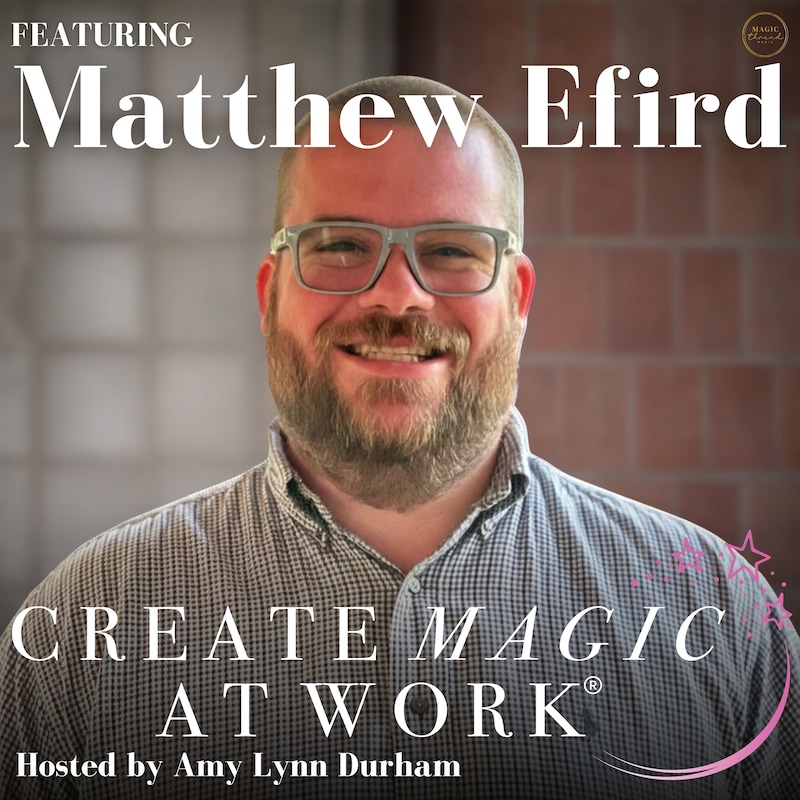
Amy's conversation with Matthew Efird challenges that instinct with extraordinary honesty. After losing his son, Noah, to a terminal trisomy 13 diagnosis, Matthew discovered that the moments which stayed with him weren't defined by perfect words. They were shaped by people who showed up, quietly lifted burdens he couldn't carry alone, and created space for his family to grieve without asking them to manage everyone else's needs. What emerged from that experience is not just a personal story. It is a practical philosophy for building workplaces where empathy becomes something people experience, not something leaders simply talk about.
Rather than treating grief as something that belongs outside the office, this conversation invites us to rethink what leadership looks like when life inevitably interrupts work. It explores how simple acts of generosity can transform culture, why the strongest leaders resist the urge to fix what cannot be fixed, and how organizations earn lasting trust by helping people feel seen when they need it most.
Moments That Create Momentum:
- The Permission Trap: Why asking, "How can I help?" often shifts the emotional burden back onto the person who is already carrying more than they can hold.
- The Empathy Gap: Matthew reveals why leaders don't fail because they don't care. They fail because discomfort convinces them that silence is safer than showing up.
- The Culture Stress Test: Anyone can talk about values during business as usual. The true culture of an organization is revealed by how it responds when someone's life falls apart.
- The Invisible Load: The smallest daily responsibilities become overwhelming during grief. Matthew explains why removing one burden often matters more than offering a hundred comforting words.
- The Time Investment Principle: After holding his son through his final breath, Matthew stopped measuring time by productivity and started measuring it by presence, changing the way he leads both work and life.
About the Guest:
Matthew Efird is a grieving father, a husband, and a leader who has learned that true strength is not found in self-sufficiency but in a desperate need for a Savior. An honors graduate of The University of Georgia, Matthew and his high school sweetheart, Hannah, live in Jackson County, where they manage Mosquito Joe and Lighting Pros. Matthew is the host of the Pillars of Purpose Podcast, where he explores living a life of purpose in faith, family, and business.
Following the Trisomy 13 diagnosis and passing of their second son, Noah, Matthew felt an intense calling to share their raw journey. He is the bestselling author of Even Though, We Will. He travels the country speaking to audiences and consulting with businesses on the transformational impact of Emphathetic Leadership within an organization.
He and his wife are the founders of Even Though, We Will, an organization dedicated to providing “Arks” of practical support and care packages to families navigating the devastating waters of a terminal diagnosis. Matthew is the proud father of four amazing boys: three who fill his home with wild joy and one who awaits him in the presence of their Savior.
About Amy:
Amy Lynn Durham, known by her clients as the Corporate Mystic, is the founder of the Executive Coaching Firm, Create Magic At Work®, where they help leaders build workplaces rooted in creativity, collaboration, and fulfillment. A former corporate executive turned Executive Coach, Amy blends practical leadership strategies with spiritual intelligence to unlock human potential at work.
She’s a certified Executive Coach through UC Berkeley & the International Coaching Federation (ICF) In addition, Amy holds coaching certifications in Spiritual Intelligence (SQ21), the Edgewalker Profile, and the Archetypes of Change . In addition to being the host of the Create Magic At Work® podcast, Amy is the author of Create Magic At Work®, Creating Career Magic: A Daily Prompt Journal and the founder of Magic Thread Media™. Through her work, she inspires intentional leadership for thriving workplaces and lives where “magic” becomes reality.
Connect with Amy:
https://createmagicatwork.net/
https://www.linkedin.com/company/create-magic-at-work
https://www.facebook.com/112951637095427
https://www.instagram.com/createmagicatwork
https://www.youtube.com/channel/UCnEm4h3fUgaq8qgvZpz6dGg
Thanks for listening!
Thanks so much for listening to our podcast! If you enjoyed this episode and think that others could benefit from listening, please share it using the social media buttons on this page.
Do you have some feedback or questions about this episode? Leave a comment in the section below!
Subscribe to the podcast
If you would like to get automatic updates of new podcast episodes, you can follow the podcast on Apple Podcasts or your favorite podcast app.
Leave us an Apple Podcasts review
Ratings and reviews from our listeners are extremely valuable to us and greatly appreciated. They help our podcast rank higher on Apple Podcasts, which exposes our show to more awesome listeners like you. If you are enjoying the show, please leave us a review on Apple Podcasts.
Mentioned in this episode:
This show was brought to you in part by the Magic Thread Media Network. To learn more visit: https://magicthreadmedia.com/
Transcripts
Loss is universal, everybody experiences it. It allows us to connect, but what it does is it allows us to be seen. You know, there's an author that I love that he writes about the true meaning of community, or friendship is when one person looks at another and says, wait, you too, you've experienced that too, and I love that kind of meaning, that definition of like, oh, wow, grief is isolating, it makes us pull into ourselves and makes us feel like nobody knows how I'm feeling, and while you yourself are an individual, unique person, you still have abilities to connect with one another.
Matthew Efird:Amy Lynn Durham: Hey, it's Amy. Welcome to Create Magic at Work, where we cast visions for a future of work where business decisions ripple outward to our teams, our communities, the planet, and humanity as a whole, if you're ready to edge walk instead of sleep walk through your leadership, you're in the right place. So, let's start making magic at work. Hey everyone, welcome to Create Magic at Work. Our guest today is Matthew Eaford. He is a serial entrepreneur who has scaled multiple businesses past seven figures, an honors graduate of the University of Georgia, and the host of the Pillars of Purpose podcast, but above all, Matthew is a husband and a father. Following the passing of his second son, Noah, to a terminal trisomy 13 diagnosis, Matthew felt a distinct calling to share his family's raw journey. He is the best-selling author of Even Though We Will, and today he travels the country helping corporate leaders build cultures that can support their people through
Matthew Efird:crisis and grief. Matthew, thank you for coming on Create Magic at Work to share this story and your insights with all of us today.
Matthew Efird:Of course, it's truly my honor. Thank you for having me.
Matthew Efird:Amy Lynn Durham: So everybody knows I'm listening to Create Magic at Work. If you're new here. I used to work in the corporate space for quite a long time, and I run two companies now, and I have interacted with a lot of people. At one point, I had over 400 employees in a very large team, and so I am not a stranger to interacting with people that have a crisis occur in their life, and from my mid 20s all the way to couple and a half decades later, I've spanned the spectrum of responses and what the right thing is, and where our handcuffs are with policies and procedures and HR and all of these things, so I'm, I'm super interested to speak with you, because I have seen colleagues experience traumatic crisis and grief firsthand, and I have seen truly, honestly, some amazing things that companies have been able to do to help them, and a lot of podcast conversations surrounding the workplace, you know, we focus on trauma, we focus on the toxic workplace, but I think this is so cool to
Matthew Efird:talk about today, to show like companies are hiring you to come in and speak about what to do when someone within your organization is experiencing crisis and grief, so one of the frustrations I hear of these types of topics is, well, now we've named the problem. What are some things we can do about it? So, why don't we start off with telling us a little bit more about yourself, because I have a lot of questions to ask you that, or maybe some advice. Yeah, no.
Matthew Efird:Thank you very much.
Matthew Efird:Amy Lynn Durham: Join in, join in, Matthew. I'm rambling.
Matthew Efird:You're totally fine. Thank you for opportunity to share, Matthew. I'm a follower of Jesus, and my faith means a lot to me. And in 2019 my second son, Noah, was diagnosed with Trisomy 13, Patel syndrome, and I was running two businesses at the time. I had my wife, we had been married almost six years, and we had a two year old, almost two year old at home, and I didn't know how to lead in the midst. Of this circumstance, and this diagnosis that I had a son that was growing, you know, he was still in the womb, he was growing. What do I do with a terminal diagnosis as a dad who's never walked through that? I learned a lot about myself, but what I found on this side of my son's passing is it changed me a lot as a leader, and I am my organizations have benefited and continue to benefit from changes of empathy that happened inside of me, right, that I learned that empathy is a very powerful tool that I believe, like, as humans, we're designed to connect with one another,
Matthew Efird:right. We, we long to connect with one another, and empathy is this amazing tool that allows us to connect with one another in a very deep and meaningful way, right, that we go through similar circumstances, while you've never been in my shoes and I've never been in yours, you've experienced loss, frustration, suffering, I've experienced that as well. Loss is universal, everybody experiences it, allows us to connect, but what it does is it allows us to be seen, you know. There's an author that I love that he writes about the true meaning of community or friendship, is when one person looks at another and says, 'Wait, you too, you've experienced that too. And I love that kind of meaning, that definition of, like, oh, wow, grief is isolating. It makes us pull into ourselves and makes us feel like nobody knows how I'm feeling. And while you yourself are an individual, unique person, you still have abilities to connect with one another, and when I go into an organization
Matthew Efird:now, when I speak from stage, it's about sharing our story, it's about sharing about our sweet Noah, and it's about trying to help bring to head the conversation that a leader, a leadership team, or a business owner needs to be having, because as much as they may not admit it, your people are people, and every employee that you have, everybody on your team that you lead, they have a life in work and outside of work, and what happens outside of work, it affects them at work, and so one of the things I teach on is truly empathetic leaders create environments for businesses and organizations to thrive relationally and financially. There is a financial ROI here. It impacts your bottom line, whenever I'm talking to an organization or a group, one of the things I love to kind of get to, which is kind of silly in the room, but it gives us a commonality to say, hey, can we just admit, like, everybody here cares about our people, right? It's genuinely, we're good-willed people, we care about
Matthew Efird:others, let's just take that baseline off the table, right. And then let's look at how does this impact our organizations outside of just wanting to be a decent person. Like this can deeply impact our the quiet quitting, the disengaged employee, right. Those things, there's tons of research. Gallup, one of the most recent polls I saw was like 34% of an annual person's salary is lost when they're disengaged. That number is different depending on who asks the questions, but there's a significant impact on the ordinary organization. And so, how do we change the systems in our organization to support the culture that we want to have in our team, in our company, in our organization. So, what I love to work with is the leaders to say it's we're in this amazing opportunity to help create and design what we want this place to look like, and if we want it to look in a certain way, now we have to create end systems that support that. Okay, now we bring where we're going with how we go there
Matthew Efird:to marry those two things together.
Matthew Efird:Amy Lynn Durham: Really powerful. I know one of the things that would keep myself and my colleagues up at night as senior leaders of multiple people that had to achieve numbers was the disengaged employee.
Unknown:Yeah,
Unknown:Amy Lynn Durham: and I think you make a great point that this helps the disengaged employee. From a financial perspective, and as I've grown and matured from the spiritually intelligent perspective, it's also the ripple effect that we're creating with our families, our communities, humanity, and the planet as a whole, the whole what most major religions have in common is do unto others, right, be kind, do unto others, do no harm, those types of things. What would you say if an employee experiences a massive personal tragedy? What is the first thing you think a leader or a company should do?
Matthew Efird:Yeah, it's a great question. So, typically when I'm working with an organization, help define out part of the framework that we define out is show up, listen, and deploy, and we work through those three things at length, right, creating, defining out what those mean. Our say for me, before my son Noah, just in my leadership, whenever something happened on my team. I was most likely going to avoid it. I was most likely going to take it from the perspective of that's a tragedy that happened with that person. I hate it for them, but at work we're not going to talk about that, because that's a home thing that's not a work thing, and I don't want to make that person feel uncomfortable, so I'm just going to avoid the conversation as a whole. I'm not going to bring it up, I'm not going to talk about it. If they want to talk about it, then I'll be happy to go there. What I've learned now is avoiding makes the isolation worse, right? Avoiding bringing that
Matthew Efird:conversation up is not helpful to that person. Avoiding that person is not helpful. So I try to show up for the, the people in my, in my life, in our organization, so the way that we do that is we talk about the 24 hour rule, the 24 hour rule, call it whatever you want to, I just had to do 24 hours because I had to do something quick, or I would forget it. This is me personally. We talk about specific, silent, and soon specific is we know our people, so that takes time, it takes effort, it takes working with our leadership team to get to know our people, that goes in onboarding, that goes in continuing performance improvement, that goes in coaching of them, that goes in their annual evaluations, we have questions that we ask of them to get to know them better, their family, their likes, their dislikes. Let's build a profile, is a poor way to say that, but let's understand our team better as individuals, so we do something specific that is helpful to that person, so we've had
Matthew Efird:people in our life with small children in their home, and they experienced a tragedy. One of the things that specifically helped this one couple in our family is we would show up and cut their grass, which sounds real simple, but it was just a way for us as a company to say, hey, I see you, I know that you're hurting, I know that the little things are sometimes the biggest things to get over, so we're going to pay for your grass to be cut all year, you're not even going to know, we're just going to have the guy keep showing up and cutting the grass, so we do something specific. We do something silent. I try to encourage leaders to ask for forgiveness on the other side of generosity, rather than asking for the ability to be generous.
Matthew Efird:Amy Lynn Durham: I love that. I know
Matthew Efird:it. I know in my life, or put it for me, I know in my life I would regularly say it's okay to not be okay, but it's not okay to stay there. I found myself for the first time in my life in the end of 2019 not okay. I was not okay, and I didn't know how to really ask well for help, and so when people would offer to do things, it felt uncomfortable. I didn't know how to accept it. There were some close friends that I did, but overall it felt weird. And it also was not helpful when somebody came to me and said, Matthew, I'm so sorry, what you're going through, is there something I can do to help you, especially in the midst of, we're talking about like isolated grief in this conversation, in the midst of that, what you may not understand about your team member, your employee, your coworker, your friend. There's a fog of grief. There's a lot of neurological things that are going on inside of their fight or flight, like there's a lot going on inside of them they cannot
Matthew Efird:control. The best way to describe it's like a fog, you're in a fog, little daily task can become so overwhelming, things like cutting the grass, grocery shopping, doing your laundry, washing your cars, cleaning the house. Some of these little things become mostly overwhelming that there's only so much mental bandwidth that you have, and so for our team, what we've learned to do, what I coach people on doing, is to say, yeah, let's take one of those things off their plate, we can't do everything, maybe financially, as an organization, we can't afford to do everything, but we can do one thing, we can do something. So we're going to pay for a babysitter. We know that they have a small child at home. We're going to do a monthly stipend for them to be able to get a babysitter, so they can go on a date night. We're going to do a babysitter, we're going to give them a gift card to go to their favorite restaurant, because we know our people, we know their favorite restaurant. We're
Matthew Efird:going to send care packages, we're going to send food, right. And then the last part of that soon, so we have good intentions. Good intentions are great, but rarely do they create impact. What does create impact is a framework, and that's where the 24 hour rule comes into play. So, in our organization, when I coach teams in this, it is to find a time that you have to respond, and then hold yourself accountable to that, so for us it's 24 hours, so when we hear somebody within our organizations, one of the organizations we have, when they're going through something that our team wants to show up for them, we set a timer and we better do something within 24 hours, that's the framework that we have that allows us to grow in connection as a team, right, that allows us, like, culture gets talked about a ton, right, very popular thing to talk about, that allows us to live out the culture that we want to be a part of as an organization, we want to care for each other. We want to have fun
Matthew Efird:serving customers and coworkers, like that's part of our culture that we've created. This is just a way that we live that out that matters to us.
Matthew Efird:Amy Lynn Durham: I was just talking to a doctor that had many credentials and certifications, and empathy. Dr. Melissa, she's the host of the Empathic Leader podcast, and she was sharing that the actions that you're speaking to, that's the compassion piece, the empathy is that first step where you're like, oh my gosh, I know they're in a fog, or I don't know exactly what they're feeling, because we all have different experiences,
Matthew Efird:sure,
Matthew Efird:Amy Lynn Durham: but I've been in grief before, and the fog you're talking about to me reminds me of the freeze of the nervous system. When you're experiencing something traumatic, you're in that fight, flight, freeze space. You're in the free space. It's like that paralysis, like I'm so overwhelmed I can't even get my groceries or brush my teeth. So I hear you saying the empathy piece is like that knowledge that they're frozen in some way, and so we're going to take compassionate action, and the time-bound piece that you put to it. I love all these tips, because I love sharing like things we can do in a compassionate action way, and I love how you said we, I know we can't do everything right, because my next question for you was, what do you say to someone that's afraid of saying the wrong thing, or they don't want to overstep boundaries, and I want you to repeat your mantra:
Matthew Efird:we ask for forgiveness for being generous. Rather than asking for permission to be generous, and so part of the framework is to show up, listen, and deploy. So, oftentimes, as leaders, we feel like we have to say the right thing. We've got to have this great piece of wisdom to share that's going to change the trajectory of this person's life, right? Like, we think we have that. Our say in my life, the things that mattered most for me are the people that asked more questions than they gave more answers. So, practically, what that looked like in my life, the way that I coach somebody in that is when there's loss, loss of a loved one. I like to ask the question, would you be comfortable telling me about so and so? Because when that person passes away, it feels like we're not ever gonna be able to talk about them again, and so just an easy way for us to engage with somebody is to say, would you tell me about your son or daughter, would you tell me about your mom? I'd
Matthew Efird:love to get to know them more, if you feel comfortable, would you, would you mind sharing a little bit about them? This is a really easy way to for that person again to feel seen, because grief in and of itself is isolating and so we as leaders have an opportunity for our people to feel seen at work rather than to feel isolated at work and to feel seen at work they feel more connected at work if they feel more connected to work they perform better at work for their benefit and for the benefit of the organization, they just do better, they get to continue to grow and improve and advance in their personal life and in their professional life, and we are just a part of the catalyst, we're not the only thing that helps them in that, but we can be part of that catalyst, which is amazing.
Matthew Efird:Amy Lynn Durham: The power in our conversation for me is realizing the positions that we're in to be able to make these decisions.
Unknown:Yeah,
Unknown:Amy Lynn Durham: so it's, it's for me, it's like, Who wrote these rules, and why do we have to follow them, especially if we're the business owners or the leaders in these companies. One of my very close friends, colleagues, mentor passed away from cancer, and hear
Matthew Efird:that it
Matthew Efird:Amy Lynn Durham: was very hard for everybody that knew them in the workplace and personally, and the company that I worked for at the time was like, we're just gonna keep sending his paycheck, even though he's off work, we don't care.
Unknown:Wow,
Unknown:Amy Lynn Durham: and it's stories like that that we're taking care of each other, and it's like, Who says, who says they just have to go on some sort of medical assistance, you know, or whatever, like, who said,
Unknown:yeah,
Unknown:Amy Lynn Durham: and that to me is the call for all of us that are stepping into leadership, if you're going from number two to number one in hierarchy situations, it's like you don't have to do the same things that have been done before you.
Unknown:It can be
Unknown:Amy Lynn Durham: innovative, and you can change the roles. We can change the roles.
Matthew Efird:Yeah, yeah, we can take when that coworker, when that teammate, when their son or daughter gets diagnosed with cancer, we can say you're going to need some time. We're going to pay you for the next three months to spend time with your son or daughter, that is your job, and we're going to pay you to do that job. What an unbelievable gift that you just gave that family. It may take a lot more than three months of what that person needs, but we get the opportunity to create that framework. That's what you're saying. It's like, no, no, we get to show up for our people. We get to show up for our people, because as leaders, like, we dream of having a place that people want to be at, but then we don't look at ourselves and say, well, are we creating that right? We've all worked places that were like, I'm just a number here, no one cares about me here, I'm just here, I'm a widget, I can leave this, and they're fill me in with another person, like I have no invested interest.
Matthew Efird:The company has no invested interest in me. But are we creating organizations that are doing the same thing? Are we creating organizations? Patients where our people feel like they're cherished, they're respected, they're honored, they're taken care of, that they say no, no, that this company, one of the highest compliments that I've ever received, ever in my life as a business owner, and I've received it a couple of times now, some of the folks on our team will watch this, and some of them will know that I'm talking about them, they've told me that they hope that their kids will work with us one day, and I'm like, man, how cool is that, that we would be working so hard to create a place that a mom or dad would love this place enough that they would say, I want my favorite people in the world, my kids, to work here. Man, that's so cool.
Matthew Efird:Amy Lynn Durham: Yeah, it is. The energy in the past few months of at least the individuals I've been interacting with, or that in the conversations that have been springing up around me, have been all about the action piece. It's enough with the visioning, it's enough with waiting for someone else to do the something that you feel is wrong, and it's so inspiring and hopeful to have these conversations, and to just from what you were sharing, all these other ideas are springing forth with people listening. What they do, I love the framework. 20-four hours, we make a decision, we do something, because it puts that time-bound action, compassionate action piece in. I want to shift to your book that you talk about, the building arcs, and share with everybody about that, and what you do with that, so we can spark some more ripples and ideas with everyone.
Matthew Efird:Yeah, I appreciate that a lot. So, the book is called Even Though We Will. It is a book written for people walking through grief, and I believe it's a universal thing that we go through. So, I think the audience is pretty large there. It's written from the perspective of a dad losing his son, and it's a lot of my journals throughout my son's diagnosis, throughout the pregnancy, his time in the hospital with us, we got 57 and a half hours with him on this side of eternity, Tom at his memorial, the days, months, and years afterwards, and it was just a way for me to try to articulate what I was feeling, what I was walking through, and one of the things that we found, our son's name is Noah, and in the Bible it talks about like a flood, and Noah builds an ark, and in that ark it carries Noah and his family through the storm. It does not remove the storm, and so when I wrote, I wanted to play off of his name. I wanted to play off that perspective to say, hey,
Matthew Efird:there's going to be things in our life that we cannot remove the storm like my son with his terminal diagnosis, so what do I do? What are the things that can anchor me, that can carry me through that storm? And that's what the book is written about. It's about our journey. It's just advice of what we found was helpful, and each chapter ends in an arc, so each chapter ends in kind of a practical, like, hey, here's something practically that I needed to know during this season, and this season I needed this truth, and this truth kind of helped anchor me, kind of helped carry me through the storm of losing the sun. One of the ones that I love to share is, we talked about, we had a what we called a communications manager. This is just advice we learned in our journey that there were a lot of people that wanted to stay in touch with us, they wanted to think about us, pray for us, just be in the know of what was happening as our son progressed closer to his delivery, and then after he
Matthew Efird:passed, Amy, it was overwhelming, absolutely overwhelming, trying to communicate out with people, it was just way too much, but what we did was we had somebody in our community that said, "Hey, I will be willing to communicate out to the text messages, the phone calls, the email list, like I will communicate out for y'all if you would like for. Me too. They didn't force that on us, but they gave us a gift that we didn't even know we needed. Right, again, they showed up for us.
Matthew Efird:They didn't ask for permission, they asked for forgiveness of extending generosity and mercy, and it was this amazing gift of, we would go to an appointment, we would have something that changed along the way, and then we would communicate it with her, and then for Hannah and I, we would communicate with our parents, because you know we're still very close with our parents, we felt that was appropriate for us to be the one communicating to them, but that made it a lot easier, and so when I'm coaching teams, when I'm looking at, okay, you, you've got a person on your team that's going through a diagnosis, that's the most common, that's a long standing, like, how do we serve this person for the next six months, one of the things that we do is we help them put a framework in of let's have a communications person that instead of having to go to Amy every time we want to know an update, even though we can still communicate with Amy, we're going to have somebody that you connect with
Matthew Efird:and you share, here's where we are in the journey, and then that person is now the point person, that person's the one that's quarterbacking the assistance that we're giving them at home, the support that we're giving them with their family, the support we're giving them at work, right, we'll say them and say, hey, the next week I'm going to take every additional project off of you, and I want to help serve you in that way. I don't know what else I can do, but I can stay late this next week and help you finish up these work orders, these projects. That is super, super helpful. That's one of the arcs in our journey that helps in the business world. It also helps just in the personal life.
Matthew Efird:Amy Lynn Durham: That's incredible, that you went through what you went through, and then created these arcs in this. Some of my teachings and my learnings, it's almost like transforming fate into destiny. So, so you took a tragedy that may have been fated, and then you transformed it into your destiny at Create Magic at work at our executive coaching firm. One of the instruments that we use with leaders in the workplace, it's a, it's a faith-neutral system called the SQ 21 and it's 21 skills of spiritual intelligence, and one of the skills is sustaining faith during difficult times, and I think we've really explored that today in a profound way. Thanks to you, Matthew, for bringing your wisdom and your insight and your personal story to everybody, inspiration, hope, the belief in a higher power, if you believe in one, to help you get through, to help you sustain faith during difficult times. So really appreciate your courage, and your vulnerability, and your generosity in
Matthew Efird:sharing what you're doing, because I was feeling the energy earlier today. I was like, I do not want to go down this road of talking about what people aren't doing.
Unknown:Sure,
Unknown:Amy Lynn Durham: I want to start bringing, and I've seen some incredible generosity in my time, I've seen some crap in the corporate space, you know, but I've seen some incredible generosity and some amazing human beings showing up for each other, and I wanted to have a conversation about that, because I wanted to light that spark and start lighting the other, every all of us up in doing something that ripples outward. There's a card, and I usually shuffle and pull a card. Now, watch me not be. It was the last one. How
Unknown:crazy?
Unknown:Amy Lynn Durham: Okay, because I was looking for it specifically. There's a card in the Create Magic at Work journal prompt card deck, and I'm pulling it on purpose, because it's generosity.
Matthew Efird:I love them,
Matthew Efird:Amy Lynn Durham: and so I think this is a great theme and message for you and I, and for everyone listening to sort of give all of us this message that we all need to hear surrounding generosity. The affirmation on it is, I celebrate the success of others, knowing there is plenty for us all. I feel like today this affirmation needs to get thrown out the window, and your mantra, or your affirmation, that's like,
Matthew Efird:ask for forgiveness for extending generosity rather than permission.
Matthew Efird:Amy Lynn Durham: Thank. You, so Matthew, okay? There's two questions. I'm going to let you pick one. These are journal questions, but we'll let you muse for everyone listening. The first question is, what is the kindest thing someone has done for you? The second question is, I ask this a lot because of corporate burnout, things like that. So, you might have some good insights on that as well. The second question is, how can we truly give and receive in a balanced way?
Matthew Efird:Yeah, that's a great question. Can I answer both? Do we have time for me to answer both. Okay,
Matthew Efird:Amy Lynn Durham: go for it.
Matthew Efird:So the nicest thing, man, I look over my life, and I've got so many people, just so many people that could be in that category, right? When I, when I wrote the book, it was my first book. I sent it to a mentor of mine, and he read it and gave me some incredible advice. The people that chose to endorse the book, right, they took time out of their incredibly nice, but I think about one in particular that the other day he's a friend of mine, and he called me, and he said, "Hey, Matthew, I don't want anything from you, which he normally doesn't when we're dear friends, and we talked, but he said, "I just wanted you to know that my wife and I gave in your son Noah's honor, he just impacted our life so much, and we just gave to this organization that does a lot of good in the world in honor of your son, and I don't need you to do anything with that. I just wanted you to know, and that was just incredibly kind to just out of an abundance of their heart, they, they gave
Matthew Efird:in a substantial way to honor our son, an organization that he and I both care about, and that was really compassionate and kind. The second one about burnout, man, I talk, one of the chapters I talk about one of the arcs is learn to say no and take a nap, and man, I don't do that well, I do that better now, but what I've had to learn is that every yes is a no to something else in trying to come around myself and say in wisdom, wisdom is applying knowledge. Knowledge for knowledge's sake is just knowledge, but the application of that knowledge is true wisdom. And what does it look like for me to live a wise life? What it looks like to finding out what success looks like for me, and in defining out success, it helps put parameters around the way that I invest my time. Time is the only non-renewable resource that we have, and having held a son as he took his last breath, I have a unique perspective on time, right, and in that I really try to encourage people to evaluate the way that
Matthew Efird:they're spending their time and investing their time, they're not wasting it, they're choosing to invest it, and that perspective is different to me. It matters a lot. So, when I choose to come to work, when I choose to do podcasts like this, when I choose to speak at events, when I choose to go consult for people, I choose to invest my time there. And then when I'm somewhere else, I choose to invest my time there, so like when I'm home, I choose to invest my time there, so I have learned a better rhythm for me. This is just me personally, is I like to work, I've liked the work that I do, that is okay, that's actually a gift that I believe I've been given to find something that I'm passionate about and love to do. Very rarely do people get that, but that doesn't give me the ability to check out in all other areas of my life, right? It doesn't give me the freedom to do that. So I have learned to schedule everything that makes some people feel real icky, and that's totally fine. It
Matthew Efird:works for me, though, because when I schedule time to be with my wife, when I schedule time to be with my sons, when I schedule time to be with my friends, or to be. At work I can be fully present where my feet are, and that focus is a superpower that we as a culture have gotten so far away from. We've gotten really, really, really far away from that. Yeah, so it's
Matthew Efird:Amy Lynn Durham: also an edge walker skill, focus. Okay,
Matthew Efird:yeah, there we go. Yeah, so that, that is something that, if I could give any advice, is try to change the perspective of I'm wasting my time doing something, or I have to do this. I am able to invest my time, and I choose to invest it this way. So I choose to invest in the gym, I choose to invest in my faith. I choose to invest in my family. That looks like me being a good steward of my time and a good manager of it, and being willing to say no to things, because when I can say no to things, I have the opportunity to say yes to something else, but when I say yes to everything, I'm really saying no to a lot of other things.
Matthew Efird:Amy Lynn Durham: Yes, no pun intended. Yes. Thank you, Matthew. Thank you so much for sharing all of this. If people want to grab your book, listen to your podcast, hire you to come in and talk about how to handle grief and crisis within their organizations or businesses. How can they connect with you?
Matthew Efird:Yeah, it's a great question. Thank you for the opportunity to share. You can find a lot of resources on our website, even though we will.com that you'll find our foundation, that you'll find the book, you'll find me the podcast again. The podcast is Pillars of Purpose. We explore the intersection of faith, family, and business. And then the you can also find me on LinkedIn, which, but all of that's kind of housed on the website, even though we will.com The book titles, even though we will, and if I can ever be of assistance to a conference that needs a keynote speaker or an organization that needs a trainer that can come in and help them become more empathetic as an organization, I would truly be honored.
Matthew Efird:Amy Lynn Durham: Well, you have some amazing ideas and frameworks that really help people place that empathy into action, so as many people hear this, especially if people are feeling burnt out or like their creative resources are depleted, bringing someone like you in to spark that again, I think is incredible. So, thank you for being on Street Magic at work. Thank you for sending some glimmers of hope and inspiration to all of us today.
Matthew Efird:Thank you so much for having me. It's truly my honor.




