Shownotes
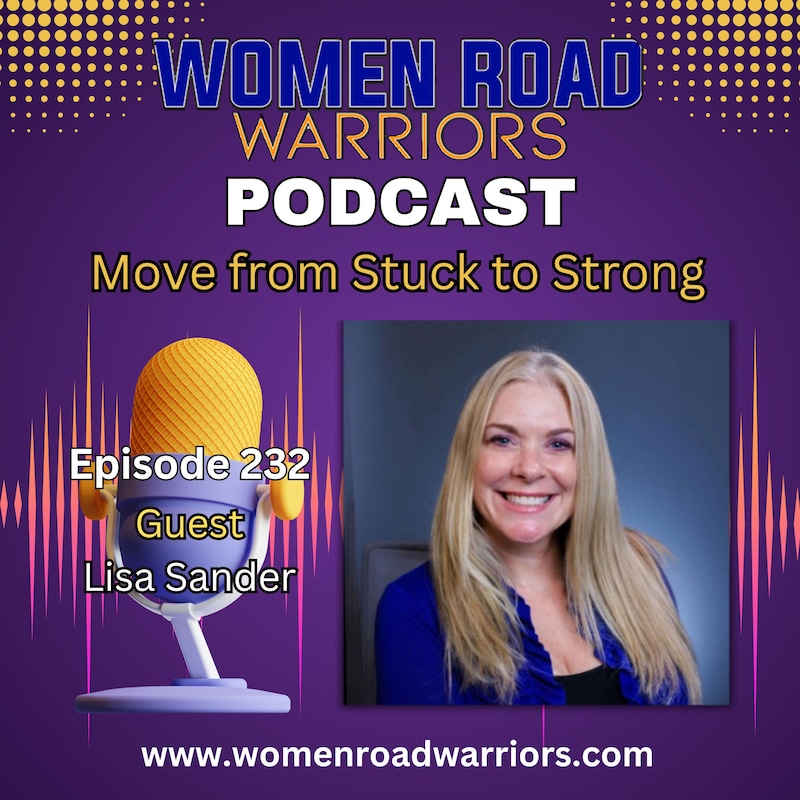
Lisa Sander knows what it means to help people rebuild after life turns upside down. After decades of working as a nurse and caring for COVID patients during one of the most difficult seasons in modern healthcare, Lisa experienced a powerful personal awakening that led her toward transformation coaching and faith-led healing.
In this heartfelt episode of Women Road Warriors with Shelley Johnson and Kathy Tuccaro, Lisa shares how women can move from stuck to strong through grief, divorce, blended family challenges, midlife transitions, forgiveness, emotional healing, and renewed purpose. Through her signature “Healing Chair Talk,” Lisa creates safe spaces where people feel seen, heard, and empowered to move forward with courage and faith. She is also the co-host of the Christian podcast Our Healer Our Protector with Ryan Reichert.
Shelley and Kathy explore how to navigate changing friendships, support children through divorce, overcome fear and self-doubt, rediscover purpose, and stay grounded through life’s hardest seasons. Lisa also shares practical tools for creating a clearer future, building confidence, and reconnecting with God during times of uncertainty and transformation.
If you are searching for hope, healing, personal growth, Christian encouragement, women’s empowerment, emotional resilience, or guidance through life transitions, this inspiring conversation will speak to your heart.
Our Healer Our Protector Podcast
#WomenRoadWarriors #FaithBasedHealing #PersonalGrowth #WomenEmpowerment #EmotionalHealing #LifeTransitions #ChristianPodcast #LisaSander #ShelleyJohnson #KathyTuccaro #WomenRoadWarriors #FindingPurpose
Transcripts
This is Women Road warriors with Shelly Johnson and Kathy Tucaro.
Speaker A:From the corporate office to the cab of a truck, they're here to inspire and empower women in all professions.
Speaker A:So gear down, sit back and enjoy.
Speaker B:Welcome.
Speaker B:We're an award winning show dedicated to empowering women in every profession through inspiring stories and expert insights.
Speaker B:No topic is off limits on our show.
Speaker B:We power women on the road to success with expert and celebrity interviews and information you need.
Speaker B:I'm Shelley.
Speaker C:And I'm Kathy.
Speaker B:When life hurls a tornado your way, wouldn't it be nice to have someone who can guide you through the turbulence that knock you off your square?
Speaker B:Lisa Sander does just that.
Speaker B:As a transformation coach.
Speaker B:She supports individuals, couples and families navigate grief, major life transitions, the challenges of blended family and divorce with emotional healing through faith led guidance and a heart centered conversation.
Speaker B:She also helps women who are struggling with midlife issues.
Speaker B:She helps them seek clarity, confidence and a renewed purpose after decades of working with patients.
Speaker B:As a nurse in a hospital setting, Lisa had a divine calling to help others reconnect with themselves, their loved ones and God.
Speaker B:She's known for her signature healing chair talk where she helps people have emotional breakthroughs, where she creates safe sacred spaces where people can feel seen and heard.
Speaker B:Kathy and I wanted to learn more, so we invited her on the show.
Speaker B:Welcome Lisa.
Speaker B:Thank you for being with us today.
Speaker D:Thank you so much.
Speaker D:I am super excited to be with you.
Speaker D:Shelly and Kathy, I appreciate you having me on here and I'm excited to talk about good topics today for a lot of people.
Speaker B:Oh, absolutely.
Speaker B:All of them are actually, you know, Lisa, you being a nurse as Kathy was in her previous career, I imagine you saw a lot of things.
Speaker B:Nurses are the most compassionate people with all the caregiving they do and they don't get enough credit.
Speaker B:Did that kind of guide you in the path you've taken today and what's your background so our listeners can get to know you a little better?
Speaker D:Yes, I have been in the healthcare field for over 25 years.
Speaker D:I've been a nurse for 24 and prior to that I, I did the nursing assistant thing at a hospital, nursing homes, group homes, you name it, I've done it.
Speaker D:And now I'm in my transition of cutting back.
Speaker D:And as most as healthcare workers will understand this, I work a 0.75, so that's 12, 10 hour shifts in a month.
Speaker D:Before that I probably worked 100 hours every two weeks prior to, to about two years ago.
Speaker D:And now I have transitioned into coaching women how to, I call it to find their midlife happiness.
Speaker D:I don't like to call it a crisis.
Speaker D:So I put a positive spin on it.
Speaker D:And I want to show women how they can become anything they want and do anything they want at any age.
Speaker D:And I started this about when I turned 50.
Speaker D:I started my transition into coaching, speaking, traveling and starting a new life.
Speaker D:You know, it's so funny how 50 shifts us, right?
Speaker C:You know, it's 50.
Speaker C:Everything changes.
Speaker C:Your whole mindset just takes a whole.
Speaker D:It is amazing and wonderful and nerve wracking all at the same time.
Speaker D:The one thing is I teach people to not have fear.
Speaker D:Fear is just what goes on in our mind.
Speaker D:But when you actually take step forwards, like you know, at 50, it kind of gives you a clarity of like there's, you're not going to be in trouble with anybody.
Speaker D:You're your own boss.
Speaker C:We said fear, but it's almost like a borderline panic.
Speaker C:Oh My God, I'm 50.
Speaker B:Oh sure.
Speaker B:Now what?
Speaker C:Like, like, it's like holy crap.
Speaker B:Yeah, it's, it's what society puts in our heads.
Speaker B:The big five zero.
Speaker B:Right?
Speaker D:Right.
Speaker D:You know what really changed me was Covid as a nurse.
Speaker D:I, I can't tell you how many people that our team did CPR on watch die daily and changing what we did every day.
Speaker D:As science changed.
Speaker D:It was go in, you would work 16 hours.
Speaker D:It wasn't about the money anymore, it was about that.
Speaker D:Patients needed nurses at their side besides our own nurses calling in sick due to getting Covid or their family members dying from COVID So we worked short a lot at the hospital I work at and many others.
Speaker D:All the nurses that would, we'd raise our hand, they'd be like, we're eight nurses short tonight.
Speaker D:Who's going to stay?
Speaker D:And we would all grab each other's hand and be like, we're all going to stay.
Speaker D:We're going to do this together.
Speaker D:And it wasn't about the money, it was about saving lives.
Speaker B:That's why nurses are such angels.
Speaker B:There is no doubt about it.
Speaker B:Healthcare workers did miracles during COVID I think that that was the first time people really had an eye opening experience to really appreciate what healthcare workers do and the kind of risks they take.
Speaker B:I mean you're, we didn't know what we were dealing with.
Speaker B:You were walking into unchartered territory.
Speaker B:You didn't know if you were going to bring that home to your families.
Speaker B:I mean it had to have been scary.
Speaker B:Along with everything else.
Speaker D:It was scary.
Speaker D:I would change in the garage and My former spouse at the time would have a robe waiting for me, and I would put my clothes in a bag and get in a robe and then go upstairs, shower, put my clothes in the wash right away.
Speaker D:Yeah, it was very scary, and it was exhausting.
Speaker D:The only thing I was happy about is that there was nothing on tv.
Speaker D:So we literally would start hanging out together as a family and communicating more.
Speaker D:And this is where my life.
Speaker D:I had my aha moment, too.
Speaker D:All the years that I've worked with people, I've always asked the question, before dying, like, if there's one thing you could ever change, what would that be?
Speaker D:And they said, Travel in your 40s, travel when you're young so your body can, first of all, keep moving and climbing mountains and doing everything that you want when you're older.
Speaker D:Because if you start, if you retire, like, more people retiring later, even 70 years old, like, if you don't do this stuff now in your 40s or 50s, you're not going to be able to do it when you get older.
Speaker D:And I told myself, going through Covid, this is it.
Speaker D:I've been hearing this for years.
Speaker D:I am done doing this and not taking my vacation hours to actually go and experience life.
Speaker D:So I started doing that.
Speaker D:I climbed my first mountain during COVID in Arizona.
Speaker D:I climbed Flatiron.
Speaker D:My girlfriends didn't tell me about this mountain, and I'm glad they didn't, because I wouldn't have climbed.
Speaker D:Took us five hours.
Speaker D:And the things that I went through on the way up, I laughed so hard I almost peed my pants.
Speaker D:I cried.
Speaker D:I talked to God.
Speaker D:Every emotion and grieving about life and everything was in that mountain that I climbed.
Speaker D:There was even a moment.
Speaker D:It's not a mountain that you have a lot of travelers on.
Speaker D:And my girlfriends went up, up ahead of me, and I heard them yelling that, we'll wait for you up here.
Speaker D:Well, I got to this point, and I did not know where to put my feet.
Speaker D:I'm like, I don't think.
Speaker D:I don't know if I'm able to do this.
Speaker D:And out of nowhere, this guy comes out and he puts his hand down.
Speaker D:He goes, do you want me to help you place your feet?
Speaker D:I didn't even have to say anything to him.
Speaker D:And I said, yes, I really appreciate that.
Speaker D:He got me up to that next section and he was gone.
Speaker D:And I thanked him, but it was kind of like a whisper or like an angel.
Speaker D:God just showed this person to me to help me guide my steps.
Speaker D:And I did talk to God on the whole way up there and on the way down, because it was scary coming down also.
Speaker D:And after that, my life changed.
Speaker B:Wow.
Speaker B:Yeah.
Speaker B:I'm looking at Flatiron Mountain.
Speaker B:The round trip distance is 6.7 miles.
Speaker B:It's known for its steep inclines and scrambling sections.
Speaker B:It's very, very challenging.
Speaker B:Wow.
Speaker B:Was that the first mountain you'd ever climbed?
Speaker D:We did Camelback the day before, so I had a little practice.
Speaker D:But Camelback was my first mountain.
Speaker D:Flatiron was my second mountain ever.
Speaker D:And I wasn't even at my fittest.
Speaker D:I've always worked out my entire life, so I don't know if I'll ever say that I'm at my.
Speaker D:If I'm at my most fit I've ever been.
Speaker C:And I.
Speaker D:And I deal with asthma, too.
Speaker D:And the strength that came over me in the empowerment when I got to that top of that mountain, I looked down and I'm like, if I can do this, I can do anything.
Speaker D:Just like when I became a nurse, I said, if I can get through this schooling, I can do anything.
Speaker D:And the mountain showed me so much clarity.
Speaker D:When I got back to work after that, I feel as though I became a better leader.
Speaker D:I had tough conversations, which I had to with patients, families and patients and nurses.
Speaker D:More than usual.
Speaker D:I was able to lead with less fear.
Speaker D:I was able to be my authentic self.
Speaker D:I was able to make a choice, fortunately, unfortunately, to get a divorce.
Speaker D:I was doing the same pattern in life and working and protecting, providing my family and.
Speaker D:And I'm like, what am I doing this all for?
Speaker D:And then I've made some drastic changes and now I look where I'm at.
Speaker D:I can't tell you how many places I've traveled.
Speaker D:And I just had my first speaking moment in front of about 45 women in Utah at the her it's called her conference.
Speaker D:And it felt so good.
Speaker D:And I've been coaching women now and my life is amazing.
Speaker A:Stay tuned for more of Women Road Warriors.
Speaker A:Coming up,.
Speaker B:Industry movement Trucking Moves America Forward is telling the story of the industry.
Speaker B:Our safety champions, the women of trucking, independent contractors, the next generation of truckers and more.
Speaker B:Help us promote the best of our industry.
Speaker B:Share your story and what you love about trucking.
Speaker B:Share images of a moment you're proud of and join us on social media.
Speaker B:Learn more at truckingmovesamerica.com.
Speaker A:Welcome back to Women Road warriors with Shelly Johnson and Kathy Tucaro.
Speaker B:If you're enjoying this informative episode of Women Road Warriors, I wanted to mention Kathy and I explore all kinds of topics that will power you on the road to success.
Speaker B:We feature a lot of expert interviews, plus we feature celebrities and women who've been trailblazers.
Speaker B:Please check out our [email protected] and click on our Episodes page.
Speaker B:We're also available wherever you listen to podcasts on all the major podcast channels like Spotify, Apple, YouTube, Amazon, Music, Audible, you name it.
Speaker B:Check us out and bookmark our podcast.
Speaker B:Also, don't forget to follow us on social media.
Speaker B:We're on Twitter, Facebook, Instagram, Pinterest, LinkedIn, YouTube and other sites and tell others about us.
Speaker B:We want to help as many women as possible.
Speaker B:We're talking with transformation coach Lisa Sander.
Speaker B:She's a woman who went from caring for patients as a nurse during the COVID crisis to helping people heal emotionally, spiritually and personally through some of life's toughest storms.
Speaker B:Her life completely changed after she decided to climb a mountain in Arizona.
Speaker B:From grief and divorce to rediscovering purpose in midlife, Lisa's work is all about helping people reconnect with themselves, with others, and with God.
Speaker B:Let's jump back into the conversation.
Speaker B:So you had a divine intervention on that mountain.
Speaker B:That's interesting.
Speaker B:And you realized there was a lot more to your life and in your purpose and reaching out to other people and parlaying the skills you had as a nurse in the healthcare field.
Speaker B:It seems like a logical transition because you knew compassion and you knew what people deal with.
Speaker B:And I think you probably you've seen people so overcome with circumstances when life gets hard.
Speaker B:They're grappling with finding a direction to head and guidance and they're looking for hope.
Speaker B:How do you guide them with everything you're through?
Speaker D:I just remind them of who they are and how far they've come in life so far.
Speaker D:And if you feel stuck, I always tell people you can't move forward if you pretend everything is fine.
Speaker D:Say it out loud.
Speaker D:I am stuck and I'm ready to move.
Speaker D:I had divine intervention interventions by watching people die every day in doing CPR and climbing the mountain.
Speaker D:And I've always had a faith in God.
Speaker D:My faith has been unwavered since I was a little girl.
Speaker D:We all have trauma, we all have trials that we have been through.
Speaker D:But there's something that my faith has never been unwavered.
Speaker D:My girlfriend's even asked.
Speaker D:I've had the same girlfriend since elementary, junior high, and high school and college.
Speaker D:Like, they have grown with me and I've seen them grown and they Always ask me, like, how do you always have this good attitude?
Speaker D:And I'm like, because everything does.
Speaker D:Everything turns out.
Speaker D:I tell people, like, you got to make small shifts.
Speaker D:Small shifts.
Speaker D:Create a big change in your life.
Speaker D:Like, change your morning routine, change your environment, change one belief that is holding you hostage.
Speaker D:It's the little changes that can move forward in changing life.
Speaker D:Stop hanging out.
Speaker D:At our age, what do a lot of people do when their kids are out graduating from college or high school?
Speaker D:You hang around the same people.
Speaker D:You go to the same bars, and you have the same outcomes.
Speaker D:If you're okay with those outcomes, that's great.
Speaker D:But this is for the people that don't want to feel the same way and don't want the same outcomes.
Speaker D:Every day you need to make changes.
Speaker D:You need to sometimes change the group of people that you hang around with.
Speaker D:And that's really hard at our age also.
Speaker D:Yeah, but those small changes can make big changes.
Speaker D:And I have set myself in different groups of people, traveling and doing podcasts and speaking to people.
Speaker D:I have met so many new people.
Speaker D:And instead of me inspiring others, I have other people inspiring me.
Speaker C:You know, when.
Speaker C:When I was nursing, I remember as a young, young nurse, looking at all these people and helping, doing, like you said, doing CPR and being with people at their deathbeds and looking at them and how they're filled with regrets of how their priorities in life were wrong, that, you know, they didn't love enough or they didn't travel enough or they didn't forgive.
Speaker C:They still had family grudges going on or arguments, and now it was too late.
Speaker C:They were, you know, and that.
Speaker C:How.
Speaker C:Or people.
Speaker C:People were working too much and didn't spend enough time with their families and, you know, or whatever.
Speaker C:And I remember looking, you know, spending a lot of time with a lot of people in their.
Speaker C:At their final stages and thinking, I am not going to live my life like this.
Speaker C:I am not going to get to the end and be filled with regrets.
Speaker C:You know, I am going to live.
Speaker C:And lo and behold, I have kept true to my word that I have done like you, like you say, changed my environment, changed my.
Speaker C:My experiences.
Speaker C:I.
Speaker C:People say, oh, you're so lucky.
Speaker C:I'm like, no, I'm not.
Speaker C:I create my opportunities.
Speaker C:I put myself in a position where, hey, this can happen, and this can happen, and this can happen.
Speaker C:I don't just sit on the couch waiting for, you know, God to save me.
Speaker C:I go out and I do God's work, listening, keeping myself open enough to be that vehicle so that I can follow through with wit to go where I need to be.
Speaker C:And it has changed drastically, not only my life, but the lives of everyone that I encounter.
Speaker C:And so thank you for everything that you've done, because it's exactly.
Speaker C:I think you're like, the epitome of hope.
Speaker D:So thank you, thank you, and thank you for all you have done in your nursing time.
Speaker D:Also, I also tell people, you know, like, women, like, thank you, Shelly and Kathy, like, women need to rise each other up and clap for each other and hold each other accountable.
Speaker D:Like, there is enough for everyone to do anything they want.
Speaker D:Like, if we're doing podcasts, I have a podcast, Our Healer, Our Protector.
Speaker D:It's a Christian podcast for divorced people.
Speaker D:I just want.
Speaker D:Want people to know that.
Speaker D:I mean, I'm a Christian.
Speaker D:I never thought I was going to get a divorce.
Speaker D:I never wanted to make that choice.
Speaker D:That was hard internally for me because that's not what we do.
Speaker D:I still have parents that are married.
Speaker D:I only have one.
Speaker D:One aunt and uncle on both sides that got divorced.
Speaker D:I'm the oldest grandchild.
Speaker D:Like, all this pressure, right?
Speaker D:It's.
Speaker D:It's okay to be different.
Speaker D:It's okay to make changes.
Speaker D:And that's why I do my podcast.
Speaker D:There's a.
Speaker D:Like, Shelley and Kathy, you have an amazing podcast.
Speaker D:Like, there's millions of people out there, and whatever, whatever podcast is best for someone and speaks to them.
Speaker D:There's enough room for everyone.
Speaker D:So I want.
Speaker D:Everyone can be successful and we give hope to other people because if they want to start their own, like, I literally, my partner, Ryan, I literally.
Speaker D:We just started dating, and out of.
Speaker D:I just looked at him one day and I said, do you want to do something crazy?
Speaker D:And he's like, what?
Speaker D:I go, would you ever do a podcast with me?
Speaker D:And he didn't even hesitate.
Speaker D:He said yes.
Speaker D:And we just started dating, so it was awesome.
Speaker D:And we are still together, and we've been dating for two years, and it has been so amazing.
Speaker D:Now Ryan has.
Speaker D:Because I asked Ryan to do this podcast.
Speaker D:Ryan has written three books.
Speaker D:He's written his fourth book, and it's with Jack Canfield, with a group of people that just came out.
Speaker D:He has spoke on stages and he is coaching also.
Speaker D:That one, yes, changed his whole life.
Speaker D:And he is retired lieutenant colonel.
Speaker D:So our is our God and our healer is me being a nurse and protector is him being a lieutenant colonel.
Speaker D:So I just want to tell everyone just that making one change and saying yes can change your whole life.
Speaker B:It's amazing.
Speaker B:How?
Speaker B:One step.
Speaker B:Yes, one step in a different direction.
Speaker B:And people don't realize that.
Speaker B:They think that they have to move mountains to make a change, when in fact it's a gradual thing.
Speaker B:And you never know a step in another direction where it's going to take you, because that's the way life is.
Speaker B:And it isn't necessarily serendipity or coincidence.
Speaker B:It's something that is guided by divine guidance and what you're doing, helping people, you're providing hope.
Speaker B:I agree with Kathy.
Speaker B:Your approach to coaching is rooted in empathy and actionable steps.
Speaker B:According to your website, you clarify people's purpose.
Speaker B:And isn't that a lot of it?
Speaker B:We lose our purpose, especially as we get older.
Speaker B:Right?
Speaker B:Yeah.
Speaker D:Because, you know, like a lot of.
Speaker D:If you've been a mother, you know yourself as a mom and working and, you know, you have your friends and stuff.
Speaker D:But, like, even being a nurse, it filled my cup for a long time.
Speaker D:And with the time that I've been a nurse and the wisdom that you gain and all the stuff that you learned, my cup started not being full.
Speaker D:Like, I needed to feel it in different ways.
Speaker D:And I felt this fills my cup.
Speaker D:It fills my cup being in a group of people and learning from them and speaking.
Speaker D:You know, Kathy, as.
Speaker D:You know, being a nurse, you have to get CEU credits.
Speaker D:Well, my thing is, why are we not getting c. We'll call it something else.
Speaker D:Credits for families.
Speaker D:Why aren't we going to conferences to.
Speaker D:Yeah.
Speaker D:How to learn how to have a better family, how to have a better relationship.
Speaker D:Like, we put all this stuff in.
Speaker D:Into our work, but where are we putting it back into our family and our relationships.
Speaker B:Very true.
Speaker B:Yeah.
Speaker B:CEU credits.
Speaker B:That'd be continuing education.
Speaker D:Yeah.
Speaker B:Okay.
Speaker D:Yeah.
Speaker D:I think families need it.
Speaker B:Yeah, they do.
Speaker B:It's amazing.
Speaker B:You know, I had traveled out of the country back in the 90s, and I was talking to some people and they'd said a lot of countries, their philosophy is family first, work second.
Speaker B:But in America, it's work first, family second, and that's the perception.
Speaker B:So, I mean, what you're saying, Lisa, really does resonate.
Speaker B:We put so much emphasis on our livings and that's our identity and everything else kind of falls by the wayside.
Speaker D:Yeah, it does.
Speaker D:And going.
Speaker D:Reflecting back to Kathy also when she talked about, you know, before people die, they have all these grudges with families, and families are coming at the bedside and they're all saying their amends and apologizing for stuff and saying, I love you, I'm sorry I hurt you.
Speaker D:Well, why do we wait for that moment?
Speaker D:Like, make the right steps now and communicate with the people that you love.
Speaker D:Set the boundaries.
Speaker D:Be like, you know what?
Speaker D:I love being with you, but two hours is good.
Speaker D:And leave unhappy terms.
Speaker D:Don't stick around so long that you have unhappy terms.
Speaker D:Right.
Speaker D:Or don't involve alcohol when you're certain people in your family because, oh, we all got messed up families.
Speaker D:Yeah.
Speaker D:So, I mean, we really do.
Speaker D:And communication and love, like families love, but they also.
Speaker D:It's weird.
Speaker D:Friends have.
Speaker D:If you're with the right friends, you have boundaries and you love each other unconditionally, but you don't pass those boundaries.
Speaker D:Some reason with families, we feel like we can say whatever we want and everything's going to be okay.
Speaker B:Ain't that the truth?
Speaker B:Yeah.
Speaker B:I think the attitude is you're stuck with me because I'm related to you.
Speaker C:And, you know, I have a very dysfunctional family.
Speaker C:And when I. I had a nervous breakdown at the age of 40 from nursing, from not taking care of myself and taking care of everybody else and just all this stuff, all this crap that I had that I never dealt with anyway, I had to.
Speaker C:I never learned the word boundary until I was 40.
Speaker C:I actually had to ask my counselor, what does that mean?
Speaker D:Right.
Speaker C:I didn't know what codependency was.
Speaker C:So I.
Speaker C:My family was very dysfunctional and I had to.
Speaker C:In order for me to heal, I had to set that boundary and step away from everyone and just focus on Kathy.
Speaker C:So that's what I did.
Speaker C:And it's the most interesting thing.
Speaker C:Once I remove that nursing outfit and that nursing cap and that whole.
Speaker C:My whole identity as a nurse, I'm standing there at the age of 40, basically raw, unhinged, completely vulnerable and open, trying to figure out, who am I without that nursing outfit?
Speaker C:Who am I without that job?
Speaker C:I didn't know what I liked, what I didn't like.
Speaker C:I was so involved and almost brainwashed with life that just to stand there open and try and figure it out and unlearn certain things and relearn other new things.
Speaker C:It was the biggest, best thing I've ever done for myself.
Speaker C:And I. I gotta tell women out there who are listening that if you're struggling, take the time that you need for you in whatever form that takes.
Speaker C:Right?
Speaker C:Because there.
Speaker C:There's different.
Speaker C:There's different things, right?
Speaker C:Different things work for different people.
Speaker C:I needed.
Speaker C:I was so broken.
Speaker C:I needed to step away from life and be in this women's center for you.
Speaker C:Know, a total of two years to kind of undo that.
Speaker C:But there's a lot of help like.
Speaker C:Like, you know, reaching out to Lisa and taking her coaching or there, you know, so many things.
Speaker C:But do what you need to do for yourself.
Speaker D:Absolutely.
Speaker D:Kathy.
Speaker D:I say you are not stuck.
Speaker D:You're simply pause.
Speaker D:Life will hit you, jobs will drain you, relationships will challenge you, but you get to decide when you press play again.
Speaker D:Right?
Speaker D:So your courage is the key.
Speaker D:Your story is your fuel.
Speaker D:Like, people have always asked me, how have I done it this many years?
Speaker D:But honestly, I've been giving.
Speaker D:I do massages all the time.
Speaker D:I get manicures, pedicures.
Speaker D:I get facials.
Speaker D:I hang with.
Speaker D:I have weekends with my girlfriends.
Speaker D:Every once in a while, I.
Speaker D:That is one thing I have put.
Speaker D:I let my kids and my former husband know, like, I have to have my girl time to laugh and cry and show all the emotions.
Speaker D:Right.
Speaker D:And that is one thing because especially in nursing, you are physically and mentally drained because all the negativity comes in the hospital, all the negativity of the sickness.
Speaker D:And then people are vulnerable in the hospital.
Speaker D:And you will see all these different family dynamics.
Speaker D:So each room you go into is a new story and something that you soak in and take in.
Speaker D:And most medical people are empathetic people and don't have boundaries.
Speaker D:That's why we make really good nurses, because we're like, yes, we're at your beck and call.
Speaker D:We'll do everything you say.
Speaker D:And.
Speaker D:And we kind of do that with our own families, too.
Speaker D:And that's one thing.
Speaker D:And I'm sure, Kathy, you felt this when you did make the change.
Speaker D:And also your family was like, who are you?
Speaker D:And you are mean.
Speaker D:Like, why are you being so mean?
Speaker D:So, like, when I made changes and set boundaries, they never saw the side of Lisa.
Speaker D:And it was just me saying no or I don't want you.
Speaker D:And it wasn't being mean.
Speaker D:I was just like, no.
Speaker C:Boundaries.
Speaker D:You're setting boundaries.
Speaker D:If I could teach anybody how to set boundaries and taking the little steps and not having that fear, then when you can do that, you can move from stuck to strong.
Speaker B:Well said.
Speaker C:Exactly.
Speaker A:Stay tuned for more more of women road warriors.
Speaker A:Coming up,.
Speaker B:Industry movement.
Speaker B:Trucking moves America Forward is telling the story of the industry.
Speaker B:Our safety champions, the women of trucking, Independent contractors, the next generation of truckers and more.
Speaker B:Help us promote the best of our industry.
Speaker B:Share your story and what you love about trucking.
Speaker B:Share images of a moment you're proud of and join us on social Media.
Speaker B:Learn more at truckingmovesamerica.com.
Speaker A:Welcome back to Women Road warriors with Shelly Johnson and Kathy Tucaro.
Speaker B:Lisa Sander is known for creating what she calls healing chair talks.
Speaker B:Those are safe, sacred conversations where people finally feel safe, seen, heard, and able to break through emotional pain that's been holding them back for years.
Speaker B:Her journey from hospital nurse to faith led transformation coach is powerful, and Kathy and I are excited to continue the conversation.
Speaker B:In our last segment, we were talking about boundaries and how it makes us strong.
Speaker B:You made a really good point, Lisa.
Speaker B:Kathy, you had some thoughts on that, too.
Speaker C:Learning to say no without giving it an explanation and feeling guilty because I said no is one of the most healing things that I've ever been able to accomplish.
Speaker C:That one word.
Speaker D:Yeah, it feels wonderful.
Speaker D:And you can still love your family members from afar and just have little encounters.
Speaker D:I love my family, but I know anything in the future, we will never share a cabin with my mom and dad and my sister.
Speaker D:Sorry if you're listening, family, but we all know that we need to be separated.
Speaker D:And we'll just go from like a Thursday to a Sunday and not a whole week's worth.
Speaker B:Sometimes it keeps the pace.
Speaker B:Right.
Speaker D:So like just those little transitions so you can still make memories.
Speaker D:Yeah.
Speaker B:Sometimes you need to have those understandings.
Speaker B:I remember my aunt on my dad's side when I was a kid, she said, fish and relatives start to stink after two weeks.
Speaker D:I love that.
Speaker D:Right.
Speaker B:And as a child, I didn't get it.
Speaker B:But then as an adult, you're like, oh, yeah, I guess she had a point.
Speaker B:You know, you just have to know the limitations.
Speaker B:But wow, Lisa, what you're offering people is hope and clarity.
Speaker B:Your coaching talks about clarifying your purpose, overcoming the fear and doubt, which that's a tough one to do, and then creating a plan for the future.
Speaker B:I'm not even sure people are good at doing that.
Speaker D:You know what?
Speaker D:This honestly works.
Speaker D:People have told me forever to make a board of all your wishes.
Speaker D:I have two of them going.
Speaker D:And I put the pictures in what I wanted to accomplish, what I wanted, what I want to do.
Speaker D:And I have to make two new boards.
Speaker D:And I started this last January, and I've accomplished everything on there except the new vehicle in my future house.
Speaker D:But everything else on there, I've accomplished.
Speaker D:I'm like, looking at him as I'm talking to you, too.
Speaker D:Not that anybody can see me, but I am like, it really does work.
Speaker D:And the other thing that works, that you might think, no, but put post it notes on your mirror in the morning and say, I am beautiful, I am strong.
Speaker D:Everything that comes out of my mouth today, I want to be positive.
Speaker D:I want to bring light, I want to be the light.
Speaker D:I don't want to be the dark to anyone.
Speaker D:So everything I do is being positive.
Speaker D:Like be someone's light.
Speaker D:If you know all these people, there's not enough workers out there today.
Speaker D:And this I'll transition from COVID to the respect that we show others when they're working so hard.
Speaker D:When you only see two waitresses running around at a place to show grace.
Speaker D:And they showed up today and they don't like the rudeness that our culture thinks it's okay to be rude.
Speaker D:And now that I'm older too, I'm like, that could be my kid working.
Speaker D:And just be respectful, be kind, say nice words your whole transition in life.
Speaker D:And if you look at life differently in the lens of when people are out there working, like they showed up today to serve me and make it convenient for me to go out, to eat, to go shopping and they don't make a lot of, some of them don't make a lot of money.
Speaker D:So like be the light.
Speaker D:So they want to come back to work the next day.
Speaker D:So we don't have everyone quitting their jobs.
Speaker B:We have become so self centered with the social media.
Speaker B:I really do think in the past 15 years anyway we've been, it's all about me, me, me, impatient.
Speaker B:I want the gratification right now.
Speaker B:There is, it's a meanness, a very self centered, narcissistic approach to life that people are having and to be others.
Speaker B:That's the way it's supposed to be.
Speaker B:I mean what happened to the golden rule?
Speaker B:Treat others as you would want to be treated.
Speaker B:Is that even happening today?
Speaker D:I don't know.
Speaker D:So it's do sorry now.
Speaker C:Now it's because do unto others and split.
Speaker D:Yeah, right.
Speaker D:Well that's why I say like still hang on to your family members.
Speaker D:Like yes, do some.
Speaker D:We're talking the worst of worst circumstances.
Speaker D:Yes, let your family members going but just the little irritations that you get from each other.
Speaker D:And my other thing is like Mel Robbins say like let them.
Speaker D:I just did it for Thanksgiving.
Speaker D:Believe me, there's some stuff that came out of some family members mouths and I'm like, you know what?
Speaker D:I don't have control over that.
Speaker D:And I'm just gonna like them.
Speaker D:I'm not even gonna say anything.
Speaker D:Like it makes life so much less irritable.
Speaker D:And I find things More funny now and I'll just kind of laugh.
Speaker D:Yes.
Speaker D:We don't give each other enough grace.
Speaker D:And we're not perfect either.
Speaker D:I mean, I'm sure not everything I say or do someone's happy about, I just try to make sure kind words come out, embrace people how they are.
Speaker D:And it's not like we're spending hours every day with these people.
Speaker D:So I appreciate that my parents are still alive.
Speaker D:I appreciate that my kids show up for Thanksgiving and.
Speaker D:Yeah, and my sister and brother in law made dinner for us.
Speaker D:Like I appreciate all that.
Speaker D:So we'll take the irritable things every once in a while.
Speaker D:But I, I've just been looking at it different and it's less irritation knowing that I don't have control.
Speaker B:So it's looking at the positives and appreciating the wins and sometimes you have to look more deeply to find those.
Speaker B:But not ruminating over all the negativity, which of course we hear that a lot.
Speaker B:We hear it with the news, we hear it on social media and we almost get conditioned.
Speaker B:Human beings are easily conditioned to think a certain way.
Speaker B:And if you're thinking in the negative, you're going to wallow in the mud.
Speaker B:You're not going to go anywhere when you think about it.
Speaker D:Well, fear will keep you too.
Speaker D:You know, wouldn't it be amazing if there was a news station with just positive outcomes?
Speaker B:That would be great.
Speaker B:Would people watch it, you think?
Speaker D:I don't know.
Speaker D:But I mean, like they need to show more of that.
Speaker D:I wish they could change it around and instead they.
Speaker D:I don't really watch the news.
Speaker D:I'll hear big stuff because people tell me about it and then I'll look into a little bit.
Speaker D:But I don't know what to trust.
Speaker D:They don't say, you know what?
Speaker D:Hey, in Minneapolis today, there were no killings.
Speaker D:Let's pray.
Speaker D:Let's, hey, amen.
Speaker D:Like we don't get to hear that.
Speaker B:Yeah, because unfortunately it's very ratings driven and if it bleeds, it leads.
Speaker B:And it's been like that for quite some time.
Speaker B:I think maybe years ago they used to have a feature story, a feel good story that they'd throw in there.
Speaker B:But unfortunately you hear if you just watch all the news, you're gonna think everything's negative when in fact there's a lot of positive out there too.
Speaker B:And that's what we do need to focus on.
Speaker B:And I think you've got something there, Lisa.
Speaker B:Something that's just positive.
Speaker B:Feeling flooded.
Speaker B:You know, if you feel good after you've heard a story.
Speaker B:You're going to have a better day.
Speaker D:Oh, yes.
Speaker D:Oh, I have a good story, too.
Speaker D:Ryan's been good at this.
Speaker D:Or.
Speaker D:Since I've been dating Ryan, he stops randomly for homeless people with signs and gives out his books to some of them or whatever cash he has, he'll hand it to them.
Speaker D:Well, it feels so good to do something positive each day.
Speaker D:So we were in Arizona, and we bought all this food.
Speaker D:I didn't want to throw any.
Speaker D:Any of it away.
Speaker D:So we made two really good lunches with all of our extras.
Speaker D:We had fruit in there, vegetables, sandwiches, waters.
Speaker D:And we stopped.
Speaker D:We saw this older.
Speaker D:It was a man and a woman.
Speaker D:I don't know if they're a couple or they met each other being homeless, but they had their carts and stuff.
Speaker D:And we had Ryan's daughter with.
Speaker D:And she joked.
Speaker D:I said, you know what?
Speaker D:I want to give it to them.
Speaker D:And she's like, well, Lisa, it was nice knowing you.
Speaker D:I'm like, no, we're going to be okay.
Speaker D:We rolled down the window and I told the man, I said, we have two lunches, one for the lady behind you and one for you.
Speaker D:And the first thing he said to me was, God bless you.
Speaker D:And he didn't have any teeth, and his hair was all.
Speaker D:He was dirty.
Speaker D:And for him to say, God bless you.
Speaker D:I was like, no, God bless you.
Speaker D:I wish I. I would have.
Speaker D:I would have given him a hug.
Speaker D:But we were.
Speaker D:We were on the side of a busy road.
Speaker D:But that filled my heart.
Speaker D:So I told Ryan, if we ever travel and get our own food, we are never throwing it out.
Speaker D:We are gonna go.
Speaker D:That was like the best thing that day, and it filled my heart.
Speaker D:And then we had a bunch of extra water, so we went and stopped and we gave a group of homeless people.
Speaker D:Some.
Speaker D:We handed out waters to them, and a lot of them said, God bless you and thank you.
Speaker B:Oh.
Speaker C: tarted operation hydration in: Speaker C:And I realized back then that the homeless don't have access to water.
Speaker C:So when I got this job, I went looking for this man, Toothless Joe, who was a big part of my story.
Speaker C:But anyway, and it was because I was sitting there, it was really hot, like 40 degrees.
Speaker C:And I realized, oh, my God.
Speaker C:This message actually came through me on the inner said, they are thirsty.
Speaker C:And I'm like.
Speaker C:Which is the homeless.
Speaker C:I'm like, oh, my God.
Speaker C:So I ran and I got seven Cases of water.
Speaker C:I got some coolers, I got some ice.
Speaker C:And I started driving around the back alleys and handing out water.
Speaker C:I was with my daughter, she named it Operation Hydration.
Speaker C:And people, once they knew I was giving out cold water on this hot day, they were running to my vehicle and I mean lineups of people.
Speaker C:And it hit me so hard, I'm like, oh, my gosh.
Speaker C:So.
Speaker C:And the gratitude.
Speaker C:I mean, they're taking my ice.
Speaker C:They're taking, I'm filling up their containers with all the melted ice.
Speaker C:So I started doing that Operation Hydration in every single city I go to, and especially when I go to Vegas and Houston where it's really hot.
Speaker C:And I'll buy those White Castle little burgers that are like, like what, 50 cents a burger or a dollar a burger.
Speaker C:I'll buy like 50 to 100 of them and I'll give out a burger and a water.
Speaker C:And I remember I was in Houston and I had just driven from California with my jeep and I'm handing out water and I have these big stickers on my magnets on my, on my jeep that say Operation Hydration Free water.
Speaker C:So people know what I'm doing.
Speaker C:And this man comes around, he sees my California plates.
Speaker C:He was so grateful for the water.
Speaker C:He says that, oh, you're my angel that drove all the way from California just to give me water.
Speaker C:God bless you so much.
Speaker D:So, yeah, I love that we started, Ryan and I are starting a non profit and we want to give back to veterans, EMTs, nurses, firefighters.
Speaker D:We, we're just starting it.
Speaker D:We don't know really what it looks like or how to get this started.
Speaker D:But that is our next operation to work on that and we want to help others too.
Speaker D:I think that is wonderful.
Speaker B:It really is.
Speaker B:When you help others, you empower yourself.
Speaker C:And isn't that gratitude?
Speaker C:Yes, the gratitude in their eyes.
Speaker C:One like a simple act of giving them a bottle of water.
Speaker C:It's like, oh my God, where did you come from?
Speaker C:Right?
Speaker C:They're like, oh, thank you.
Speaker C:And that to me, my heart just melts and nothing else matters.
Speaker C:In that moment, you know, you're being a vehicle for the divine and being able to assist another human being.
Speaker C:That's suffering to me, that's priceless.
Speaker A:Stay tuned for more of women road warriors.
Speaker A:Coming up.
Speaker B:Industry movement.
Speaker B:Trucking moves America Forward is telling the story of the industry.
Speaker B:Our safety champions, the women of trucking, independent contractors, the next generation of truckers and more.
Speaker B:Help us promote the best of our industry.
Speaker B:Share your story and what you love about trucking.
Speaker B:Share images of a moment you're proud of and join us on social media.
Speaker B:Learn more at truckingmovesamerica.com.
Speaker A:Welcome back to Women Road warriors with Shelly Johnson and Kathy Tucaro.
Speaker B:Our guest today is Lisa Sander.
Speaker B:And what I love about Lisa's approach is that she doesn't just inspire people, she gives them practical tools to move forward.
Speaker B:Whether someone's battling fear, self doubt, financial stress, grief, or simply wondering what their next chapter should look like, Lisa helps people find clarity, confidence and purpose.
Speaker B:Again, in our last segment, we were talking about just a simple act of kindness, giving somebody some water, somebody who's homeless, somebody who really needs the help.
Speaker B:You know, that is so necessary.
Speaker B:It really, really is.
Speaker B:And we've gotten away from that.
Speaker B:When we're generous, we're other centered instead of self centered.
Speaker B:You know, leaving this world a better place seems like the logical thing for all of us to do.
Speaker B:And Lysa, I think that that's what you're guiding people on doing because you cover many, many different things.
Speaker B:You're supporting people when they're going through a lot of the trials and tribulations that life can hand them.
Speaker B:And you talk about all kinds of things.
Speaker B:You know, the complexities of blended families, how to support children through divorce with compassion, presence and faith.
Speaker B:How to stay strong through faith and God's guidance with grief, healing and transformation.
Speaker B:What to do when your friendships change or go away.
Speaker B:We all experience that, too.
Speaker B:And of course, the changes that women go through, I mean, you really focused on that, you know.
Speaker D:Yes, menopause.
Speaker D:And I've also, I've had miscarriages.
Speaker D:I've done in vitro.
Speaker D:Like, I, I can tell.
Speaker D:I mean, I've been through, I can't, I just don't talk about it.
Speaker D:I've walked through it.
Speaker D:And I've also walked through the other side of having my faith in God and why I'm here today, doing what I'm doing and having the positive outlook.
Speaker D:And I'm okay with everything that I've been through.
Speaker D:I wouldn't be humbled or appreciate what I have and grateful if I didn't go through the fire.
Speaker D:So I'm okay because God showed me.
Speaker D:God has shown me my story.
Speaker D:And when there is a failure or something doesn't go my way, I actually get excited because I'm like, oh, yay, what are you going to show me something?
Speaker D:Something's going to happen, something better is going to come because I wasn't meant to have that or, or I took the wrong path.
Speaker D:And he will guide us and show us the right path.
Speaker D:Because when you are on the right path, the doors open and you feel the peace and the love and that you're making the right decision.
Speaker B:You know, I think that we don't always want to listen to that.
Speaker B:We want to have it our way, and we want to be our own gps, you know?
Speaker D:Right.
Speaker D:And it doesn't work like that.
Speaker D:I mean, life does not work like that.
Speaker D:And if you are in the same position that you have been for years, it's because God has kept you there because it's not working.
Speaker D:I really, truly believe that.
Speaker D:Kathy, you made a decision to.
Speaker D:At 40, to make a trans.
Speaker D:A big decision there and transition.
Speaker D:And if you don't go through those and you don't make the changes, you're just gonna be stuck and sad.
Speaker B:Yeah.
Speaker B:It's scary to make a change, though.
Speaker B:Human beings don't like terrifying.
Speaker B:Yeah.
Speaker C:But I mean, you know, I'm really stubborn.
Speaker C:And I was to that point where.
Speaker C:Okay, you either.
Speaker C:Yeah, I needed to make that pivot with purpose, you know, I needed to do something.
Speaker C:And so.
Speaker D:Okay.
Speaker C:I knew I couldn't go back to nursing, so now what am I gonna do?
Speaker C:So, you know, you.
Speaker C:And I'm not one to just sit there idle and, you know, watch life go by, so what can I do to help myself?
Speaker C:So I did.
Speaker D:Strong women, like, I don't wait for things to happen either.
Speaker D:I just go after it.
Speaker D:And that's what I want to teach women, like, how to make that first step.
Speaker D:And, like, if they're in Minnesota, I'll even meet with you.
Speaker D:Or if I'm in a different state and I happen to be in that state.
Speaker D:I love one to ones too.
Speaker D:Or a zoom.
Speaker D:So I can see you and talk to you and feel you.
Speaker D:I have a lot of empathy, sympathy, and I have gut feelings.
Speaker D:And I've learned that in how to utilize that in nursing.
Speaker D:And when I meet people and sometimes I'll say something, I'm like, I don't know where this is coming from, but something tells me to say this.
Speaker D:So I have an intuition that has come true when I've talked to people.
Speaker B:Also, that's important to have.
Speaker C:Mine is 100% dead on.
Speaker C:Yeah.
Speaker C:Very strong intuition and learning to listen to it.
Speaker B:Yep.
Speaker B:Yeah, that makes absolute sense.
Speaker B:And we forget how to do that.
Speaker B:We shut it out.
Speaker B:We shut out a lot of things, and that's where we run astray.
Speaker B:Now, Lisa, you've got your healing share talk, and of course, you Referenced your podcast, Our Healer, Our Protector.
Speaker B:Where do people find all of that?
Speaker D:Well they on any podcast.
Speaker D:YouTube.
Speaker D:They're on any.
Speaker D:They're on all of them.
Speaker D:I don't even know all the names of them out there but you can train our all the channels Our Healer, Our Protector with Ryan and Lisa.
Speaker D:But when you I've had showed people it comes up right away.
Speaker D:Lisa Sander.com you can reach me on my website and I am open.
Speaker D:If you ask me if I have it open, I will be there for you.
Speaker D:I just want to inspire people to be their best selves and get through the how to forgive, how to let go and how to heal.
Speaker D:It takes.
Speaker D:It doesn't happen overnight.
Speaker D:You have to be kind and consistent to yourself and others and I will help you in that transition and I will be direct and I will be a positive person.
Speaker D:You get to tell your story and then if that's the story you want to stick by, we are going to change that.
Speaker D:We're not going to keep dwelling on the past.
Speaker D:We're going to start moving forward and sometimes that's hard but to stay out of the stuck you have to start changing your conversation.
Speaker B:That's.
Speaker C:That's important.
Speaker B:So you work with people remotely?
Speaker B:Yeah.
Speaker B:Okay.
Speaker D:And I work with people if they're in town also I'm happy to meet them with coffee and have a one to one because I, I like the human connection and being next to each other and I get inspired.
Speaker D:That's why I get inspired in speaking because I can feel the presence of everyone and their energy and it gets me fired up and it fills my bucket.
Speaker B:And where are you located, Lisa?
Speaker D:In Minnesota.
Speaker B:Where in Minnesota?
Speaker D:Like the Twin Cities.
Speaker D:Do you know Minnesota at all?
Speaker C:Yes, I live in Chanhassen.
Speaker D:Oh, Cassie, we're going to have to meet.
Speaker D:I live in St. Michael.
Speaker D:Deal.
Speaker D:Oh yes.
Speaker D:We got to do coffee.
Speaker D:Yes.
Speaker D:Thank you ladies so much.
Speaker D:This has been amazing and I'm excited to listen to your podcast.
Speaker B:Lisa, this has been great and what you're doing is so positive in bringing people hope and the transformation that they truly need.
Speaker B:And I think that that's really, really needed today.
Speaker D:Absolutely.
Speaker D:Stay off the news.
Speaker D:And I what I will also tell people if for some reason there's something more that somebody needs and they're more in a crisis.
Speaker D:I also have resources and people and colleagues that I can resource you out.
Speaker D:I just want to be the like if there's like mental health or something going and I feel that I will give you some knowledge of where to go to and who to be with.
Speaker D:So I I am here to, like I said, to make the transition into a more happy fill your cup positive life in whatever avenue that you're starting at.
Speaker D:I can bring you out.
Speaker D:But I also will be realistic.
Speaker D:If for somebody there's not a match, I will find a match for you.
Speaker D:So I want people to know that too.
Speaker D:I just don't do it for my selfish reasons because I really want that person to be successful.
Speaker B:And Your website is lisasander.com yes.
Speaker B:Thank you Lisa for being on the show.
Speaker D:Thank you so much for having me.
Speaker D:Thank you you guys.
Speaker B:If you're getting value from our show Women Road warriors, be sure to hit follow on Apple Podcasts or Spotify or wherever you listen to podcasts so you don't miss out on what's coming next.
Speaker B:We hope you've enjoyed this latest episode.
Speaker B:And if you want to hear more episodes of Women Road warriors or learn more about our show, be sure to check out womenroadwarriors.com and please follow us on social media.
Speaker B:And don't forget to subscribe to our podcast on our website.
Speaker B:We also have a selection of podcasts Just for Women.
Speaker B:They're a series of podcasts from different podcasters, so if you're in the mood for women's podcasts, just click the Power network tab on womenroadwarriors.com youm'll have a variety of shows to listen to anytime you want to.
Speaker B:Podcasts Made for Women Women Road warriors is on all the major podcast channels like Apple, Spotify, Amazon, Audible, YouTube and others.
Speaker B:Check us out and please follow us wherever you listen to podcasts.
Speaker B:Thanks for listening.
Speaker A:You've been listening to Women Roar warriors with Shelly Johnson and Kathy Tucaro.
Speaker A:If you want to be a guest on the show or have a topic or feedback, email [email protected].




