Shownotes
Episode Summary
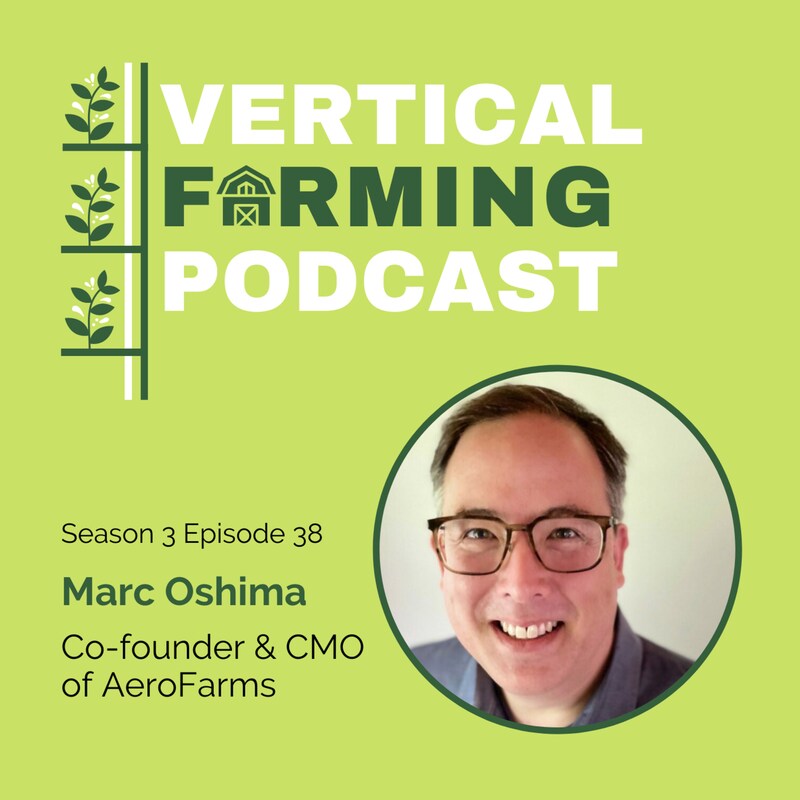
Join Harry Duran, host of Vertical Farming Podcast, as he welcomes to the show, co-founder and Chief Marketing Officer at AeroFarms, Marc Oshima. AeroFarms is an award-winning indoor farming company that is on a bold mission to grow the best plants possible for the betterment of humanity. Today, Harry and Marc talk about Marc’s background in marketing and how it has impacted his work at AeroFarms. Marc provides his thoughts on the concept of ‘speed breeding,’ speaks to his passion for food and expounds on the concept of utilizing business as a force for good
Episode Sponsor
Key Takeaways
- 02:37 – Harry welcomes to the show Marc Oshima, who discusses the impact COVID-19 has had on his business, his background in marketing and the power of telling the story behind the food
- 08:23 – Marc talks about the value of AeroFarms being a Certified B Corporation
- 11:51 – Marc explains the concept of ‘speed breeding’ and how he got involved in marketing and food
- 17:22 – Marc reflects on the work he did at Toys R’ Us
- 20:54 – Marc expounds on the vision and mission of AeroFarms and the importance of food literacy
- 27:30 – Marc talks about the journey of AeroFarms and potential future expansions
- 29:06 – Marc speaks to the experience of AeroFarms going public
- 32:23 – Marketing trends Marc has noticed throughout his career and the impact of social media marketing
- 35:43 – Where Marc sees companies get it wrong in their approach to customer relations
- 37:48 – Marc speaks to some of the initiatives AeroFarms prioritizes
- 43:49 – A tough question Marc has had to ask himself recently
- 46:22 – Harry thanks Marc for joining the show and let’s listeners know where they can learn more about AeroFarms and connect with Marc
Tweetable Quotes
“For us, what we’re doing and have been doing in the category of leafy greens is we’re creating different flavor experiences.” (20:54) (Marc)
Links Mentioned
Sponsor Info:
🎙️🎙️🎙️
Podcast Production and Marketing by FullCast: https://bit.ly/3sxZ34y
See omnystudio.com/listener for privacy information.
Mentioned in this episode:
2025 Precision Ag Report by iGrowNews
2025 Precision Ag Report by iGrowNews
Transcripts
$680 million poured into precision ag last year.
Speaker:Autonomous weeding robots dominated, and John Deere made 2 acquisitions in 3
Speaker:months. A food company, not an equipment maker, bought a
Speaker:robotics startup to protect its own supply chain. The deals are
Speaker:accelerating, the money is moving, and the winners are already separating from the
Speaker:pack. If you're investing, building, or buying in this space,
Speaker:you need the full picture before your competitors get it. The 2025
Speaker:Precision Agriculture Intelligence Report From iGrow News is now
Speaker:available. Get your copy today at
Speaker:igrownews.com/precision. If you are starting a
Speaker:vertical farm and don't know where to begin or which technology would suit your needs,
Speaker:then reach out to the experts at Cultivated. As indoor farm brokers, they
Speaker:help connect you to the right technology and ensure your project is successful.
Speaker:Best of all, their service is free because they work on behalf of their
Speaker:partners. Visit cultivated.com to learn more. And
Speaker:that's spelled C-U-L-T-I-V-A-T-D
Speaker:dot com, or click the link in the show notes. Thinking about key
Speaker:genetic traits plus the rapid growing process, so that's
Speaker:really enhancing, you know, and leading to this rapid cultivation, the
Speaker:speed breeding. And this is again what we think about as sort of the next
Speaker:generation of the indoor farming and the opportunities that we continue to
Speaker:unlock, which is, you know, how do we think about the right seeds to
Speaker:optimize for indoor growing? How do we think about the right seeds optimized for the
Speaker:characteristics or traits, you know, that we're growing for as well?
Speaker:Welcome to the Vertical Farming Podcast, weekly conversations
Speaker:with fascinating CEOs, founders, and agtech
Speaker:visionaries. Join us every week as we dive deep into the
Speaker:world of vertical farming with your host, Harry
Speaker:Duran. Vertical Farming Podcast, Season 3.
Speaker:Welcome back. If this is your first time listening, I'm sure you're in the
Speaker:right place, because this is the one where we interview fascinating CEOs and
Speaker:founders of the leading vertical farming companies from around the
Speaker:world. I'm your host, Harry Duran. Thanks for carving out a little bit of
Speaker:time in your day to listen to this episode. I truly appreciate it. In case
Speaker:you missed last week's episode, we had on Thomas Oberlin, co-founder at Fazenda
Speaker:Urbana, talking about some of the great things they're doing in Brazil.
Speaker:This week we get to hear some more about the happenings at AeroFarms,
Speaker:courtesy of Mark Oshima. He's the co-founder and chief marketing
Speaker:officer, and Mark was gracious enough to come on the show and share
Speaker:his unique perspective. AeroFarms is no stranger to folks listening to
Speaker:this podcast, but for those of you that may not know, they are an
Speaker:award-winning indoor farming company that's bold on its mission
Speaker:to grow the best plants possible for the betterment of humanity. Today, Marc and I
Speaker:talk about his background in marketing and how it has impacted his work at
Speaker:AeroFarms. Again, given his background, we learn a lot about how Marc
Speaker:thinks about challenges and opportunities happening in the vertical farm space.
Speaker:We learn a couple of new concepts for those that are like me, learning as
Speaker:we go. And it's clear that Marc has a passion for
Speaker:food and also about the idea of business being a force for good.
Speaker:which we spend a little time on as well. So really enjoyed this as a
Speaker:complement to my earlier conversation with Ed Harwood. This episode is also
Speaker:brought to you by Indoor AgCon. Remember that if you're scaling up or starting up,
Speaker:Indoor AgCon can help you grow your vertical farming business. It's live
Speaker:and in person this year, and it's the premier trade show and conference for vertical
Speaker:farming and CEA, and it heads to the Hilton
Speaker:Orlando from October 4th through 5th. There'll be an expo floor filled with new
Speaker:product resources and business solutions, and you can attend idea-packed educational
Speaker:sessions led by top CEOs and thought leaders. Best of all, as
Speaker:we slowly come out of this pandemic, you can connect with peers in person and
Speaker:potential business partners at some of the great networking events planned. Learn more and take
Speaker:advantage of early bird registration discounts at indore.ag,
Speaker:and you can save an additional $100 off registration with our promo code
Speaker:VFPOD2021, and we'll have
Speaker:that in the show notes as well. Lastly, if you're not already, make sure you
Speaker:are subscribed or follow the show wherever you listen to podcasts.
Speaker:And we're looking for new reviews,
Speaker:ratethispodcast.com/vfp, and we'll be sure to read it out on
Speaker:a future episode. Okay, let's get into this conversation with Marc.
Speaker:So Marc Ashima, co-founder and chief marketing officer at AeroFarms, thank you for
Speaker:joining me on the Vertical Farming Podcast. Great to join you, Harry.
Speaker:And for the benefit of the listener, like, where are you dialing in from?
Speaker:So I'm dialing in from Newark, New Jersey, where AeroFarms, we have our
Speaker:global headquarters. Today we're a team of over 185 people. We
Speaker:have multiple locations in Newark offices as well as
Speaker:multiple farms, commercial farms, R&D farms, but using this
Speaker:as a nexus for the work we're doing around the world. And where's home for
Speaker:you? Well, I grew up in New Jersey. And so yeah, this is
Speaker:exciting for me to be redefining the Garden State and thinking about new ways of
Speaker:farming. And I had a lot of ties to Newark
Speaker:even growing up. My father worked for Prudential, which is Newark-based,
Speaker:and spent a lot of time in Newark over the years. And so it's been
Speaker:nice to, you know, call this home as well. But I actually live in
Speaker:Manhattan. My wife is born and raised there, tough to get her out, but close
Speaker:by. And what's exciting about our farms and our team, you know, we
Speaker:really think about ourselves being, you know, within the community or by
Speaker:the community. And so most of our team lives within 15 miles of our
Speaker:Newark headquarters. What was the major impact
Speaker:to you? I know a lot of things have happened over the past, you know,
Speaker:14, 16 months related to the pandemic. And I'm just wondering if there's
Speaker:something that stands out for you that's memorable from having gone through that experience,
Speaker:especially having lived in the city. Well, what strikes me, and I'm
Speaker:reminded of this every day, is just the incredible commitment of our team. It's incredible
Speaker:wearing this mantle of essential worker and the idea that we're
Speaker:feeding, nourishing the community. We've maintained operations every single
Speaker:day, and it's because of the commitment of our team. And so
Speaker:that's been incredibly rewarding, and people appreciating, you know, the
Speaker:importance of the work we're doing, not only here, but again, in that
Speaker:broader lens of how we can really write this new playbook in agriculture and food
Speaker:and food security. So that's really stood out. But it's also been an
Speaker:opportunity where we've partnered closely with our selling partners, helping them
Speaker:solve some of their problems that they've had in their distribution centers, their ability. And
Speaker:so, look, our food service that had disappeared, we're
Speaker:excited to see that coming back. And so when we talk about sort of
Speaker:silver lining and, you know, where we are, that's exciting for us as well.
Speaker:But our retail business has grown tremendously. You know, with
Speaker:our fast-growing process, you know, we were able to pivot very quickly in
Speaker:terms of our seeding schedule, our harvest schedule, and really
Speaker:think about deploying even more product to the retail. Historically, we've worked
Speaker:with a wide range of different customers. Our whole lens is about how we democratize
Speaker:access to good, healthy food. And it's really, again, working
Speaker:with key retailers and food service partners that, when we think about
Speaker:expanding, not only what we're doing here in the Northeast, but other regions in the
Speaker:US, but around the world, how do we work with them? And that's what's
Speaker:exciting for us when we think about that long-term vision about impact. On a
Speaker:personal note, what's the one thing you missed the most
Speaker:from home? Well, listen, I am a huge foodie. Love food,
Speaker:love going out to restaurants. I'm very involved in the culinary
Speaker:area in a number of different ways. It helped elevate my home cooking.
Speaker:But listen, I really appreciate being able to go out to
Speaker:restaurants, appreciating the work And just really passionate
Speaker:about this area. In addition to my work at AeroFarms, I'm on the board of
Speaker:Chefs Collaborative, which has been around for over 25 years, helping, you know, be able
Speaker:to champion a more sustainable food system. I'm on the Sustainable Advisory
Speaker:Council for the Culinary Institute of America. And so really healthy
Speaker:appreciation of, you know, what restaurants, what chefs, you know, have been going through,
Speaker:and happy to be able to support them in any way I can. And one
Speaker:of the biggest ways is by going out and And so, it's been a big
Speaker:exciting opportunity to be able to get back into that. Are you a Chef's Table
Speaker:fan? Chef's— yeah. Well, that's also what we've become is just
Speaker:huge consumers of every single
Speaker:show whether it's Chef's Table. We went back and looked at every
Speaker:season of Top Chef, even MasterChef. It was like anything and everything.
Speaker:But the Chef's Table really elevates it, right? And it's really pretty
Speaker:special. And some of those chefs I've had a chance to— to get a chance
Speaker:to meet as well and so seeing their personal stories, their
Speaker:backstories, that one always seems to go a little bit deeper and really strikes, you
Speaker:know, an emotional chord. But I tell you what, it just whets the appetite even
Speaker:more. So it's something that is almost torture to go
Speaker:through because you can't get a chance to enjoy their food just yet but looking
Speaker:forward to that time where we kindle that. Do you feel that a show like
Speaker:that has brought the elevation of the creation of food
Speaker:more into the mass consciousness? And obviously now that the quality of the video is
Speaker:even better, so like you get to see the crispness of the lettuce
Speaker:You know, real, like in 4K. And I'm wondering if that's
Speaker:caused people to have more of an appreciation for how their food is made and
Speaker:the story behind the food. Yeah, well, listen, my background is in
Speaker:marketing and the power of telling stories, connecting with consumers. And
Speaker:so that's exactly right. What they've done is be able to
Speaker:elevate the experience, both in terms of the visual, but also just in
Speaker:terms of the narrative, in terms of geography, in terms of locales that they go
Speaker:to. So, it's bringing, you know, what had been really a
Speaker:rarefied experience. How many people are going to be able to go to, you know,
Speaker:Santiago or, you know, some remote place and be able to enjoy a meal? So,
Speaker:you got to bring that into your home and appreciate the craftsmanship, the work.
Speaker:And I think that's what's exciting about this era that we're in, that there's,
Speaker:you know, greater access, greater visibility, greater transparency.
Speaker:And what this is all doing is cultivating a better appreciation of your
Speaker:food and where it's coming from, how it's prepared. And I know for me, that
Speaker:was one of the inspirations when we thought about founding AeroFarms, which is,
Speaker:again, how do we be even more open about how we're growing and
Speaker:the reasons why we're doing it? So this is an exciting time in terms of,
Speaker:I think, media and access from the media standpoint as well. And
Speaker:AeroFarms is B Corp, is that correct? AeroFarms is a B Corp.
Speaker:Yeah, this is really important for us. From day one, we had always been thinking
Speaker:about all the different stakeholders, not only from an investor standpoint, but
Speaker:our environment, the community, our team members.
Speaker:And for us, the B Corp was a way to really formalize, you know, that
Speaker:work that we're doing. And think about, again, even this idea
Speaker:of transparency— there's a scorecard in how we're doing both environmental factors
Speaker:but also societal factors. And B Corp was really important for
Speaker:us when we thought about certifications. It goes well beyond organic and
Speaker:some of the limitations that we see within organic, which historically has not
Speaker:factored in particularly the worker welfare, right? And so this
Speaker:idea, how business can be a force for good, it
Speaker:expands and beyond just the world of agriculture. This is
Speaker:about other verticals. And so we're hoping that we can
Speaker:be an inspiration and a catalyst for other companies as well.
Speaker:How do we set more open standards about how we can do
Speaker:business? And having been in companies before that weren't B Corp,
Speaker:do you notice a difference in how AeroFarms conducts business? Does its
Speaker:marketing Because it is a B Corp? Well, you know,
Speaker:it's a reminder, you know, of the importance of certifications
Speaker:and, you know, what it means. It's an endorsement, right? It's third party.
Speaker:It's something that we can look to both externally, but also internally
Speaker:in terms of, again, how do we measure? And I think it's much more important
Speaker:when we think about it's not just us saying it, right? And so this is
Speaker:really being able to apply, you know, a true barometer of how we're doing and
Speaker:what we're doing. So I think that's really important, you know, critical aspect,
Speaker:you know, when we think about, you know, the impact we want to have, the
Speaker:continuum we're on. And so we think it's very meaningful in terms of,
Speaker:again, we find more and more, for example, we announced a major
Speaker:partnership with Hortofrut, which is the number one berry company in the world.
Speaker:So when I mentioned Santiago, that was like just top of mind, but that's actually
Speaker:where they're based. But the fact is they're a B Corp as well. And that's
Speaker:such an important lens when we think about who do we partner with and having
Speaker:shared values. We have other partners who share that
Speaker:same spirit. And so this is an important idea of, again, where
Speaker:and how do we want to partner as well. It was interesting to see that,
Speaker:and it reminded me of the partnership with Driscoll and Plenny. And I'm
Speaker:wondering if we're going to see more strategic partnerships like that with vertical farming
Speaker:companies and established players in the space. Yeah, well, in
Speaker:general, I think for us at AeroFarms, what we think is exciting is that
Speaker:we've developed this expertise around growing, right? And AeroFarms has taken a
Speaker:very different approach than anyone else out there, in that we've developed our own
Speaker:proprietary growing systems. So when we talk about the AeroFarms team, you know,
Speaker:it's not just the plant scientists, it's the engineers, the mechanical,
Speaker:the electrical, the PLC, you know, processing. It's
Speaker:world-class operators, it's food safety, it's nutritionists thinking
Speaker:holistically again about that plant health and human health. But we realize
Speaker:that we can apply this to solve a much greater set of
Speaker:agriculture challenges. It's no longer just about indoor vertical farming. Farming. So we're doing stuff
Speaker:now in genetics and speed breeding. We work with Fortune
Speaker:500 companies besides, you know, the Hortafruta that we can even be public about, but
Speaker:we work with a wide range of different customers. And I think that's what we
Speaker:continue to see in other verticals, not just food, but anything plant-based. So
Speaker:we've been doing something even in the pharmaceutical and growing a plant-based protein there in
Speaker:terms of being able to host a vaccine. And so the
Speaker:applications are exciting when we think about the world ahead of us.
Speaker:Always trying to be conscious of people that are new to vertical farming that listen
Speaker:to the podcast. Can you explain the concept of speed breeding? Yeah,
Speaker:so I mean, at the core, you know, we think about seed development in
Speaker:general too, in terms of the field, it's typically a 7-year process.
Speaker:You know, just think fundamentally, you have one May every year, you know, try to
Speaker:get it right and get those learnings. The fact is that we're able to grow
Speaker:indoors, and we're marrying thinking about key genetic
Speaker:traits plus the rapid growing process. So that's a really
Speaker:enhancing you know, and that leading to this rapid cultivation, the speed
Speaker:breeding. And this is, again, what we think about as sort of the next generation
Speaker:of the indoor farming and the opportunities that we continue to unlock, which is,
Speaker:you know, how do we think about the right seeds to optimize for indoor growing?
Speaker:How do we think about the right seeds optimized for the characteristics or traits, you
Speaker:know, that we're growing for as well? And so for us, you know, the
Speaker:speed breeding is a way to help accelerate, you know, this overall learning process.
Speaker:And so, You know, we have continuing to be, you know, a
Speaker:go-to source to be able to lead, you know, the scientific inquiry. We
Speaker:developed the first ever— co-developed the first ever CRISPR produce
Speaker:product. We also are in the process working with—
Speaker:when we think about public-private partnerships, we work with the Foundation for Food and
Speaker:Agriculture Research. And there we help form
Speaker:what's called PIP, the Precision Indoor Plants Consortium. It's a
Speaker:multinational collection of companies, and
Speaker:we've announced specific categories. The first one happens to be leafy greens, but
Speaker:we're— AeroFarms is the principal investigator for all this
Speaker:research. And so that's just a really acknowledgement of the
Speaker:technical, you know, expertise the team has. And the big thing is around
Speaker:trust. When you think about these multinational companies, lots at stake,
Speaker:and our ability to be able to work with them and lead them
Speaker:and guide them and work closely with them is a really great commentary on our
Speaker:team here. I couldn't help but notice that almost all your career
Speaker:you've been in marketing, and I'm wondering if that just was an early
Speaker:passion of yours when you were in college. Well, it started even earlier, just a
Speaker:curiosity, you know, the question of why and wanting to get to
Speaker:the under, you know, underbelly and under, you know, thinking about
Speaker:why something is. And that idea of, you know, how to connect has definitely
Speaker:been something that's fueled me. Food as well. I'm fortunate that
Speaker:my mom is German, my father is Japanese American, but grew up with a very
Speaker:culturally diverse household and food and cuisine and
Speaker:was very fortunate to travel as well. But food was always this unifying thing
Speaker:in terms of the different travels and appreciating how food can bring
Speaker:people together. So that's been some of the guiding things for me. And then
Speaker:some things that have been really pivotal, I spent a lot of time on the
Speaker:marketing advisory board for the Food Bank for New York City, and
Speaker:the idea of access to food and increasing access to food. These were all very
Speaker:seminal for me personally, thinking about, again, coming together
Speaker:with our CEO David Rosenberg, our Chief Science Officer Dr. Ed Harwood,
Speaker:and thinking about forming AeroFarms, about the kind of impact we wanted to have as
Speaker:a company, and then what we could do realistically
Speaker:to help address each one of those areas. And what's the story
Speaker:of how you met David? Well, David, you think about any business, you know, you
Speaker:really want to know, you know, who you're working with. And I've had a
Speaker:chance to know David now for over 25 years. And the background there is
Speaker:we've always looked for opportunities to work together. His previous work in the world of
Speaker:nanotechnology, he's been an incredible visionary and has
Speaker:started a number of change-the-world type of companies. His previous company in the
Speaker:world of construction and waterproofing, the first ever product
Speaker:for concrete concrete was really a breakthrough. It didn't intersect with the
Speaker:world of marketing that I was doing. I've headed the marketing for supermarket chains, specialty
Speaker:food retailers, also in brand management. But this opportunity to
Speaker:be able to work together was something we looked at because we had gotten a
Speaker:chance to travel the world on the— we were on the national team for the
Speaker:sport of fencing. And so you get a chance to get to know someone really
Speaker:well when you are representing the United States and competing
Speaker:for that. And we trained at the same club in New York
Speaker:City at the New York Athletic Club, but also as part of the national team.
Speaker:So, you form some deep history and relationships there.
Speaker:And that was foundational though for us when we met Dr. Ed Harwood as well,
Speaker:which was again thinking about the people
Speaker:alignment and shared vision. And that was really important for us when the
Speaker:3 of us then ultimately came together as well. Yeah. And Ed's been on the
Speaker:podcast as well. So, he gave me a little bit of the background on the
Speaker:founding story, but I'm just curious how sometimes the
Speaker:universe puts these people in your path and you have no idea
Speaker:what the intention was in terms of like why you were supposed to meet. And
Speaker:then coming around full circle, some of the cycles take probably years to
Speaker:work out, and some of them maybe even decades. Yeah, I mean, there's one thing
Speaker:in my marketing career that I still marvel at, and you're right, there's not always
Speaker:an obvious sort of path, but the experiences— the one
Speaker:thing that's been common is that I have a history of working on specifically new
Speaker:launches and new business models in terms of, again, thinking
Speaker:about what's the right proposition, how do you communicate that, how do
Speaker:you develop that. But I've worked in beauty, I've worked in food, I've
Speaker:worked in media. But one of the things that I did in the world of
Speaker:beauty, I worked for L'Oréal for a number of years. I helped launch one of
Speaker:the first sun care lines that they had. And so did a lot of work
Speaker:on understanding the impact of UV and looking at the light
Speaker:spectrum not appreciating that could come full circle and appreciating
Speaker:what's the impact on plants and growing and horticulture. And so it's been
Speaker:fun to kind of think about, you know, that path and that evolution as well.
Speaker:And, uh, what was your big takeaway from doing the marketing for Toys R Us?
Speaker:I couldn't help but ask. Yeah, so listen, well, first,
Speaker:retail is really challenging. We'll just say that, right? Yeah. And so,
Speaker:and having a long-term view is really critical. I was
Speaker:recruited to go work for Toys R Us and The work there was about
Speaker:how do we compete with the big box retailers. So it's not just about price,
Speaker:right? So how do you create experience? And so we worked on
Speaker:repositioning the brand, creating a different store experience, creating subject matter
Speaker:experts in the employees to be associate experts. And
Speaker:we had developed some amazing initiatives to really be able to
Speaker:unveil that. But just a very competitive retail market where
Speaker:toys are being used very strategically, sometimes as lost leaders to attract people in.
Speaker:So very different strategies. So yeah,
Speaker:Toys R Us is, I think, one of those tragic retail stories.
Speaker:And I have to say, I mean, there's not a shortage of those, you know,
Speaker:in terms of, again, just appreciating that you need to innovate and you
Speaker:need to change and you need to be able to compete. Toys R Us used
Speaker:to have a philosophy of stack it high and let it fly, which was basically,
Speaker:again, if you're the only game game in town, you can really be able to
Speaker:deliver on that. But if competition changes, you need to change. And so
Speaker:what I've appreciated more than ever is that spirit of innovation, spirit
Speaker:of change that's needed, and not being afraid, you know, to
Speaker:challenge, you know, the status quo. And that's been one of the guiding, you
Speaker:know, when we think about values of the organization, is to
Speaker:be able to think about today, you know, as you know with all your
Speaker:different guests, I we're writing this new playbook in agriculture, right? So,
Speaker:all prior preconceived notions, how can we
Speaker:improve, right? And being open to that. And then even today, because we've been one
Speaker:of the pioneers in the space, not being afraid to
Speaker:challenge even ourselves. And so, I think that's what has served us well,
Speaker:is that spirit of inquiry. And I give Ed a lot of
Speaker:credit when we talk about curiosity as well, is being able
Speaker:to, you know, instill that sense of, of wonderment, but also the
Speaker:question of why, right? And so that's been very motivating for
Speaker:all of us when we think about the work we're doing. And at the heart,
Speaker:you know, we think of ourselves as technologists, as farmers, but science has been,
Speaker:you know, in that sense of inquiry, has been, you know, guiding us there as
Speaker:well. I think about, uh, marketing a lot. It's one of my favorite
Speaker:pastimes and sort of just to brainstorm with folks and just being an entrepreneur myself,
Speaker:sometimes like I lose myself in conversations because I just think about
Speaker:different marketing ideas. And so what's interesting is
Speaker:the emotional aspect to marketing. And just coming back to
Speaker:toys, for example, like if I asked you if you remember like one
Speaker:of your earliest childhood toys, would anything come to mind? Oh, Lego,
Speaker:without question. Lego, there you go. Yeah, yeah, yeah. So,
Speaker:and trust me, getting a chance to go to you know, LEGO's
Speaker:corporate offices. It was just— Childhood dream. Yeah, the
Speaker:opportunity and thinking like, you know, but that, you know, sense of—
Speaker:and it wasn't, you know, see, it was always about you'd get, you know, the
Speaker:plans for some elaborate, you know, kit, you know, that you'd have. But
Speaker:that's great, but it was what you could make on your own, which was always
Speaker:the motivating thing for me. So that imagination and how do you
Speaker:capture that, you know, in those building blocks, it's very literal, right, in terms of,
Speaker:again, my passions. But, yeah, that's what's exciting when you think
Speaker:about how can you capture that emotion that you're talking about,
Speaker:right? That wonderment of not only opening that present, but it could be the birthday,
Speaker:it could be the special holiday. And, that's why for us,
Speaker:what we're doing and have been doing initially right now in the
Speaker:category of leafy greens where we've been able to publish results
Speaker:and talk about what we're doing on strawberries, we're creating different flavor
Speaker:experiences. And listen, leafy greens is typically
Speaker:a low-involvement category, right? And, you know, there's a reason why salad
Speaker:dressings is such a big category. And people want to cover up and they're
Speaker:like, I'm going to eat my greens because it's good for me. But we're changing
Speaker:all of that. You know, again, that's the old concept. And when we
Speaker:do demos, I mean, if you have customers literally doing a dance of like, oh
Speaker:my God, I didn't know kale could taste like that. And people know, like,
Speaker:again, it's so nutritious, I better eat it. But now they can enjoy
Speaker:it. That's been incredibly exciting. We have people calling into the customer service
Speaker:line and saying, is your arugula supposed to be this peppery? And it's
Speaker:just like, it is, in fact, and this is what we celebrate. And so
Speaker:you create those emotional experiences. I have to tell you, like, and
Speaker:food is so powerful with that because it's so tied to
Speaker:memories, associations, right? Moments in time. We had a French
Speaker:journalist come in and she tried our watercress, right?
Speaker:And she immediately started crying. And it was like this very incredible
Speaker:moment. And she just said, well, this brings me back to as a child being
Speaker:on my grandmother's farm, you know, in the south of France.
Speaker:And it was like an instant, you know, moment in time that she
Speaker:had by one taste, right? And so, those are incredibly
Speaker:exciting thinking about, you How do we capture more of those, celebrate more of
Speaker:those, create more of those moments like that? And also, I don't know
Speaker:if you sense a bit of responsibility in helping
Speaker:elevate the conversations around healthy food and healthy eating.
Speaker:My girlfriend and I are going through a reading up on Mark Sisson's
Speaker:21-Day Keto Reset. So I've been learning a lot about how the body processes
Speaker:food and stores food and how it's tied into how
Speaker:people respond emotionally and just the importance of being healthy.
Speaker:I'm thinking about how resilient the body is with the stuff we feed it nowadays,
Speaker:but also just how much more it could do if fed properly.
Speaker:Yeah, when I mentioned that we have nutritionists on staff, I mean, we're looking at
Speaker:this from a very disciplined approach in terms of understanding the
Speaker:science, understanding the impact that we can have. And so we
Speaker:feel like we're creating a new category of food, right? Increased nutritional density,
Speaker:and we've seen some amazing results versus USDA standards
Speaker:in terms of being able to deliver greater vitamin A, greater vitamin C.
Speaker:But the most fundamental thing when you think about like you want to change
Speaker:the health and wellness— and we see this, by the way, we actually
Speaker:have had school programs, we've had working farms in inner-city schools—
Speaker:and you see how you change behavior. You make it taste good. And that's what
Speaker:I was saying, you get them to eat one more serving, right? And— or a
Speaker:serving, right? That's still the biggest challenge we have when we think about our diet
Speaker:today. of getting the recommended number of servings, right? And so
Speaker:by making it taste good, we're actually, you know, creating new
Speaker:eating occasions. We have people telling us they're just grazing, eating the product right out
Speaker:of the tray because no washing is needed, but they're enjoying the flavor,
Speaker:they're enjoying the mouthfeel. Now, what's really magical though is when you see it
Speaker:in the school level, right? And, you know, this is a kindergarten through 8th grade
Speaker:program. It's a farming unit right in their dining hall.
Speaker:And they're very conscious about calling it a dining hall versus a cafeteria because it's
Speaker:another learning environment. But seeing the kids in all
Speaker:flavors, including spicy, like, because they do voting and, you know,
Speaker:it's pretty magical when they grow it, they eat it, but then they
Speaker:really want to clamor for it because it tastes good. So
Speaker:you're creating lifelong, you know, behavior changes there. And
Speaker:we've now seen multiple generations of students, of families, and seeing
Speaker:the broader impact in the, in the broader community. But it's been fun
Speaker:to be part of that. How important is that education component?
Speaker:Because, you know, I, uh, we mentioned earlier that I, I
Speaker:grew up in Yonkers, just outside New York City. So, you know, New York City
Speaker:was in my back— in my backyard. But just, it's not top of
Speaker:mind. You don't see people like— I mean, and the flip side of that is
Speaker:now I'm in Minnesota. So like, in terms of like open land and
Speaker:backyards and chicken coops and that's the exception on a
Speaker:rooftop in Brooklyn in New York City, but it's not built into like the
Speaker:consciousness of how people grow up to understand like when they think of
Speaker:where does their fresh food come from, they're going to say like the bodega
Speaker:or if you're on the Upper West Side, like one of the nicer stores. Yeah.
Speaker:Well, listen, that's exactly right in terms of the work we've had in
Speaker:seeing these inner-city schools where students might think
Speaker:food, where does it come from? it from the store, not appreciating it's a package.
Speaker:But we'll say in Minnesota, you know, you talk about harsh winters, right? I mean,
Speaker:that's, you know, you're not able to grow. So this is
Speaker:the opportunity to, you know, make connections with the food. And you find that
Speaker:this kind of food literacy is so important when it's
Speaker:experiential, when it's hands-on, and they get a chance to see, you know, where
Speaker:the food's coming from. So for us as a company, look, our vision is about
Speaker:large-scale commercial farms. We're going to be building 16 more by
Speaker:2026, and a very specific thesis
Speaker:around what we can do for leafy greens and increasing access to leafy greens.
Speaker:But we have what we call Community Farms Initiative, not only the schools.
Speaker:We announced this past year a major partnership we're doing with the World Economic
Speaker:Forum and their Healthy Cities and Communities Initiative. And
Speaker:they had identified 4 cities. Jersey City is the first one. It's also going to
Speaker:be Austin, looking at Mumbai and Moscow.
Speaker:But the idea is that we're addressing this last mile. Fundamentally,
Speaker:we're putting the farms into the communities. And so we have smaller
Speaker:installations that can go right into schools, can go into senior assisted living,
Speaker:can go into even municipal buildings. And so these systems—
Speaker:and for the Jersey City initiative, this is being underwritten by a
Speaker:grant, but it's allowing us to put 10 farms in, and we're in the
Speaker:process process of rolling these out. The produce grown there will be given
Speaker:to the community for free and be part of a broader initiative to be able
Speaker:to measure, working with IBM but also working with Quest
Speaker:Diagnostics to look at the long-term health metrics. And so this
Speaker:is really important when we think about increasing access, food
Speaker:security, food deserts, right, in terms of that access. But it's
Speaker:fundamentally what we're trying to do as well is just change the equation. It's no
Speaker:longer about a calorie, It's about the nutrition and thinking about
Speaker:how do we do that. It's making it familiar, and people either growing it or
Speaker:seeing how it's grown is a big part of that. You mentioned the new facilities
Speaker:opening up. You've got one opening up in Virginia, which is slated to come online
Speaker:in Q2 of 2022. So can you talk a little bit about the
Speaker:journey to get you, you know, how you figure out where it makes sense to
Speaker:expand and what that's been like so far with this facility? Yeah, so there are
Speaker:a few things with AeroFarms, and we talk about our history. For us, you
Speaker:know, it has not been necessarily always just about that
Speaker:farm expansion. It's been about the research and development as well. We think
Speaker:about really proving out the business, really understanding the key
Speaker:metrics and the KPIs, but also when we talk about work that we've been doing
Speaker:in other categories, how we've been unlocking more value. But what's
Speaker:exciting is that there's been tremendous response to the product we're selling here
Speaker:in the Northeast. We're working with major retailers
Speaker:that span, you know, national retailers, and that are interested in us going
Speaker:to other markets and regions. And so the process and
Speaker:thinking about what market next, we have a very elaborate
Speaker:farm development team, and looking at, you know, literally, there's over
Speaker:a 1,000-page document that looks at, you know, the siting, you know,
Speaker:considerations, looking at customer density, consumer density,
Speaker:thinking about— the availability of our product, you know, how we can be
Speaker:efficient in that last mile. And so, but we're literally getting
Speaker:inquiries every single day about, can we bring a farm to this particular market,
Speaker:not only here in the US but abroad as well. And so the biggest challenge
Speaker:we've had is just being disciplined and saying, you know, how to have the right
Speaker:kind of measured growth and the right kind of impact. And we
Speaker:now want to be able to do even more of these leafy green farms, which
Speaker:is again one of the reasons why this is the right time for us to
Speaker:go public and be able to raise some more funds to be able to fuel
Speaker:that growth. And teeing up the second question I had
Speaker:about the recent move to go public, so can you talk a little bit about
Speaker:what the experience for that has been and what's been the impact of
Speaker:announcing that? Yeah. So listen, this is one of the
Speaker:things where the market has been a real key driver
Speaker:because of the opportunity. We look at not only the growth
Speaker:of the indoor vertical farming category, which is tremendous in and of
Speaker:itself, but for us as a company, we've said that, look,
Speaker:it's not just about indoor vertical farming, it's not just about leafy
Speaker:greens, it's about all these categories. And all of a sudden, you know, it's a
Speaker:$1.8, $1.9 trillion
Speaker:opportunity that we think we can be able to address through multiple different categories.
Speaker:So tremendously exciting, in part Part of that is, again, product that will
Speaker:grow commercially, and part of it can be part that we grow for
Speaker:partners as well. But the core engine is the leafy greens
Speaker:in terms of, again, where we've proven the economics, proven the metrics there.
Speaker:And so we've gotten tremendous response from the investment community,
Speaker:tremendous response from our selling partners, but the biggest
Speaker:barometer has been from the consumer, and what's driving, you
Speaker:know, this excitement is been, you know, one of the key metrics that you look
Speaker:at is called units. You know, you look at your sales velocity, units sold per
Speaker:week, per store, per item, right? And so the consumer is voting with their
Speaker:wallet in terms of, again, how they enjoy the product. We
Speaker:also see them voting with what's called the Net Promoter Score.
Speaker:And this is one of the ultimate litmus, you know, when we think about customer
Speaker:loyalty, right? It's a 0 to 10 scale point in terms of, again,
Speaker:10 being the highest, like, would you you know, endorse or recommend
Speaker:this product, you know, to a family or friend? And that idea
Speaker:of a personal endorsement is a really high litmus in terms of,
Speaker:again, you talk about your interest in marketing, right? This is considered to be the
Speaker:ultimate in terms of customer loyalty because of their
Speaker:endorsement and how far that goes and what that means. And so we've had a
Speaker:leading score for the indoor vertical farming category. And so it's
Speaker:something that we— work at and continue to work at, but it's in response to
Speaker:the product, the product experience, and the excitement the consumer has for the company.
Speaker:I can definitely relate to the NPS as I used to manage a customer service
Speaker:reporting team when I worked at E-Trade. So, and one of the
Speaker:initiatives was to actually implement NPS. And so it was really interesting to
Speaker:see, you know, what are the— how certain levers
Speaker:were adjusted to, and they would directly affect the
Speaker:NPS. And I'm wondering, as you see the results come in and the feedback people
Speaker:give you, Have you seen that directly translate into, you know, tweaking
Speaker:things or looking for ways to improve what you're doing? Oh,
Speaker:absolutely. So NPS is not a marketing initiative, it's a
Speaker:company initiative, right? And so this is cross-functional from
Speaker:ops to R&D, you know, to food safety and quality assurance.
Speaker:So this is something that's embraced sales. How do we
Speaker:deliver the right experience in terms of both our customers, but
Speaker:ultimately the consumer, right? So it's got to be seamless process. And
Speaker:so it's a disciplined approach, you know, that allows us to think again,
Speaker:what are those levers, identify those levers, and then understand how we can, you know,
Speaker:benchmark and then improve. And so it's just another way
Speaker:of looking at the business, but it's one that's driving the right metrics, we think.
Speaker:So with the amount of time you've spent in marketing, I'm just curious, like pulling
Speaker:back for a second, how have you seen marketing
Speaker:change over the decades that you've been involved in it? Yeah,
Speaker:so it's changed a lot from particularly the traditional brand management
Speaker:days of when you had a launch and, you know,
Speaker:multi-billion-dollar, you know, campaigns to be able to
Speaker:signify that launch, right? It's very different in terms of thinking about how do you
Speaker:build a brand. And so how do you engage the consumer? How do you bring
Speaker:the consumer in to help build the brand, right? And so, you know,
Speaker:one of the things that we did very early on that's been very meaningful for
Speaker:us and continues to be very meaningful for us is that we do primary research.
Speaker:We get closer to the consumer. We understand what are the key
Speaker:drivers for the categories that we're competing in. And through that
Speaker:segmentation, we understand then what are the key attributes
Speaker:that we can uniquely deliver on and that are valued by the consumer. We
Speaker:then translate them to in-depth consumer personas to be able to
Speaker:inform very specific specifically beyond just standard
Speaker:demographics, but the psychographics, but understanding what are the true motivators and then how to
Speaker:engage them. We do that, and we've been very
Speaker:specific about that in terms of thinking, again, how to build our
Speaker:brand. I think that's a very important part of
Speaker:the equation today, without question. Part of that is the
Speaker:journey with the consumer hand in hand and how do we
Speaker:collectively— it's not just us pushing out content, but how do we get them to
Speaker:be our brand advocates and ultimately really our brand ambassadors?
Speaker:That's been incredibly exciting, and we see it as a very different approach in terms
Speaker:of, again, sort of the big umbrella pushout and sort of the big campaigns
Speaker:is how do we bring them in. We've had to think sort of
Speaker:surgically because our product is not available everywhere, right?
Speaker:It's not in every single market. It's helping
Speaker:fuel, though, people are contacting us and saying, I want to get your
Speaker:product, you know. And so this is helping us inform, you know, that
Speaker:farm pipeline of projects as well. I'm curious from a marketing
Speaker:perspective what the strategy is or what the feedback
Speaker:is from the people that are on the social profiles. And because it seems
Speaker:like that needs to be an integral part of your marketing stack
Speaker:and your plan for how you're going to reach people, how are you going to
Speaker:communicate to people the value of AeroFarms?
Speaker:And it's relatively new in the history of marketing, the impact and
Speaker:thinking about social media. So I'm wondering if the team has given some thought to
Speaker:that. Oh, absolutely. I mean, we're living, breathing constantly,
Speaker:again, this level of engagement through all of our social channels. And
Speaker:I encourage and I share with your listeners, we're expanding our marketing team
Speaker:to be able to get even closer, right? And the idea is that— so we
Speaker:have a number of open roles that are available. Because we
Speaker:appreciate that the dialogues are getting even more in-depth
Speaker:and more, you know, and, you know, you want it to be very real
Speaker:and very authentic, you know. And so we want to make sure our
Speaker:voice is represented. We want to make sure we address that, you know, any kind
Speaker:of questions, you know, that many people have. But more, it's about how do we
Speaker:celebrate, you know, the product, we celebrate their ideas, their
Speaker:recipes. I mean, at the end of the day, it's about sharing. because
Speaker:it's a love of, you know, a great product or a great experience. And so
Speaker:what we can do to help foster that and encourage that is really important. And
Speaker:so this is something that, again, we're thinking about all the time in content
Speaker:development standpoint. Given the experience you have, I just keep coming back to
Speaker:questions like high level about marketing, but where do you think companies get it
Speaker:wrong when, you know, having an idea about how they want to
Speaker:approach their best customers and, and relate and have
Speaker:a relationship with them. And because of the number of different companies
Speaker:that you worked at, I'm sure there were some initiatives that probably fell flat on
Speaker:their face. And maybe in retrospect, you could have looked at how those could have
Speaker:been handled differently. And without obviously getting into specifics, I'm wondering what are
Speaker:some of the lessons learned about how not to do it? Well, I think what's
Speaker:imperative is, you know, thinking that, you know, you might have all the
Speaker:ideas or solutions, it's letting the consumer guide you, right? And
Speaker:so That is really important from a listening
Speaker:standpoint. You may think you have the best idea,
Speaker:but until you get a chance to get feedback directly— that's really
Speaker:important. I think those are lessons that have been learned along the
Speaker:way. What's important around that is being
Speaker:aware of things like conscious bias, an idea of how—
Speaker:even when we're talking about the social listening, everyone has a filter. Right.
Speaker:So, you know, we do, you know, some in-depth multivariate
Speaker:testing, you know, to take some of the subjective part out of it,
Speaker:right? And, you know, we take the personal and the ego out of it in
Speaker:terms of like, well, that's my favorite, that's what I'm close to. So,
Speaker:I mean, I'll give you an example, like, and it's an iterative process. And,
Speaker:you know, we came out with a brand new corporate identity and also
Speaker:retail brand, but the retail brand, it went through 4 rounds of research. Research that
Speaker:we did, and it was done in conjunction, and it was not in a
Speaker:vacuum, not only with the consumer, but also with our selling partners to be able
Speaker:to have that relationship. So this idea that
Speaker:ultimately almost like you're co-creating, right? And that's how you get
Speaker:better buy-in, better engagement, and better loyalty, because people
Speaker:are part of that journey that you take them into. So I
Speaker:focus a little bit more on things that have served us well, but I think,
Speaker:again, The converse is thinking you might have the right idea and
Speaker:then not getting a chance to validate it against the right audience. So
Speaker:that's really critical. Thanks for sharing that. One of the things that stands out
Speaker:is really the conversation around business as a force for
Speaker:good, which is mentioned on the site, and also working with the UN
Speaker:on their Sustainable Development Goals. And so can you talk a little bit about
Speaker:those initiatives and how that drives, you know, the vision moving forward?
Speaker:Well, one of the key things that we had literally from day one was the
Speaker:global scale and impact we wanted to have as a company. And a
Speaker:lot of it was informed, you know, I mentioned our CEO, David Rosenberg,
Speaker:he's very involved with the World Economic Forum, he helped co-found and
Speaker:co-chair the Global Circular Economy Task Force, has been involved with
Speaker:the G20 to help inform the B20 on policy to help
Speaker:foster innovation in business. And that lens that we
Speaker:have for the entire organization is how do we help move the
Speaker:industry forward as well? And so this is really important
Speaker:when we talk about the Sustainable Development Goals because you want to develop a
Speaker:common language and help foster and encourage that language
Speaker:that is understood no matter where, right? And so this lens and thinking
Speaker:about the key sustainable, you know, 17 Sustainable Development
Speaker:Goals that are out there, where do we have an impact? And we think we
Speaker:impact 12 directly and then the other ones indirectly. But
Speaker:for us, this is really important. Again, we think about a common language so you
Speaker:can have a common approach. And at the heart of that is this
Speaker:large-scale impact that we want to have as a company and how we help move
Speaker:industry forward. So, we think it's important to identify
Speaker:unifying aspects like that to be able to think about, you know, how do you
Speaker:make this into a broader movement? And so, there are things that we've done
Speaker:there. reasons why we've embraced the B Corp as well, and thinking
Speaker:about that. But there's things that we're doing, you know, with government, you
Speaker:know, things we do with USDA, with FDA, we help form what's called the CEA
Speaker:Food Safety Coalition as well. And we just came out with new
Speaker:certifications called CEA Safe for indoor growers. A big part
Speaker:of that was educating FDA about our differences of
Speaker:growing, so versus the field, but also appreciating there are a
Speaker:lot more entrants into the space, and many of them might not even appreciate, like,
Speaker:what's needed from a food safety standpoint. And so we wanted to make sure—
Speaker:and this is something bigger than just any one company— but as one of the
Speaker:founding members, we wanted to make sure that everyone had access to good
Speaker:information so that we can all, you know, make sure we
Speaker:avoid any kind of pitfalls. And so that's the lens that we've had at
Speaker:AeroFarms about being able to identify these broad platforms that can have
Speaker:broader impact. You mentioned, uh, being on the, the team
Speaker:that came up with some of these initiatives. Can you talk a little bit about
Speaker:the relationship you, you may have with some of the other folks in the space?
Speaker:I know some of it can be viewed as competitive, and, but some can be
Speaker:viewed as allies or, you know, resources that you
Speaker:use collaboratively. So I'm just curious, and how your
Speaker:experience has been coming into the vertical farming industry and
Speaker:how important those relationships are. I think they're incredibly important. I mean, with any
Speaker:emerging industry, you know, it's, again, you want to
Speaker:coalesce and be able to celebrate the successes and
Speaker:understand, even like you were talking about, what are some of the lessons learned. You
Speaker:know, that's important. That's important from a policy standpoint, an
Speaker:education standpoint. There's multiple stakeholders within government,
Speaker:retailers, and things like that. So we cite this work
Speaker:in particular that we did with the CAA Food Safety
Speaker:Greenhouse and indoor vertical farming companies coming together to talk about
Speaker:their differences. And there's more to celebrate in terms
Speaker:of common work that we can do together. Because at the end
Speaker:of the day, you know, it's about consumer safety, right? And, you know, we're feeding
Speaker:people, that responsibility is tremendous. And so we want to
Speaker:make sure— and even the lessons that we're doing, for example, I've been on the
Speaker:FDA Romaine Advisory Task Force, and we're learning from that. for the last few years
Speaker:too, and seeing firsthand the challenges we're having out in the field,
Speaker:you know, as the only indoor vertical farming company there, we're trying to share
Speaker:best practices, right? And understanding what we can do both from
Speaker:mitigating risk in terms of the controlled environment, but also traceability and
Speaker:what we can do from even processing. There's no commingling. So
Speaker:there's things that we can do to help set the bar higher and help share,
Speaker:you know, those practices. And so— It's really important, I think, in terms of, again,
Speaker:particularly with the consumer safety at the heart of this, is, you know, what we
Speaker:can do together will have a bigger impact. Yeah, it feels to have
Speaker:a bit more importance as a nascent, relatively nascent industry for people to
Speaker:have a comfort level that leafy greens from a vertical
Speaker:farming company are in fact better, you know, taste better obviously,
Speaker:but from a safety perspective obviously, that anything that happened with that
Speaker:specific product, because I think it would That'd be a reflection of how
Speaker:it's viewed versus traditional farming from the consumer's perspective if
Speaker:they're not educated enough. Yeah, and this is, you know, again, where,
Speaker:you know, the reason why we came together— we can move faster.
Speaker:And this is typically when you try to drive change in
Speaker:governments and different regions, you know, can move more
Speaker:slowly. So, you know, at the end of the day, you know, we've brought into
Speaker:this work that we're doing doing not just the work of these other indoor
Speaker:growers, but, you know, leading retailers, you know, like the
Speaker:Walmarts, you know, Publix of the world that, again, are
Speaker:endorsing our approach, our methodology, guiding us in the
Speaker:sense of, again, how do we, you know, do better from that
Speaker:standpoint. So there's a lot when we think about, you know, how
Speaker:to come together. And that's one example. But I mentioned the work we do with
Speaker:USDA and partnerships on research. And what we're
Speaker:seeing now, you know, when we talk about the work we're doing in Abu Dhabi,
Speaker:UAE, you know, we have offices set up there. We're in the process of building
Speaker:out our completely dedicated facility just for
Speaker:R&D purposes. The work we're doing there is with companies but
Speaker:also with universities. And so the idea that we can help, you
Speaker:know, inform— and this is even the work we're doing here in the US, land-grant
Speaker:universities, the traditional land-grant universities for agriculture, you know, what's needed in
Speaker:terms of curriculum, what's needed in terms of research, and we can collaborate
Speaker:together. And I think this is helping drive, you know, the entire industry forward.
Speaker:This question is a bit introspective, but I'm curious, what is a tough
Speaker:question you've had to ask yourself recently? Great question. One of the
Speaker:things that we hold near and dear is our culture, right?
Speaker:And so the thing that we talk about as we have grown
Speaker:As we grow to multiple locations, as we go to multiple geographies, how
Speaker:can we be sure to instill from day one with new
Speaker:hires the values that we've had from day one? And so
Speaker:we spend a lot of time thinking about this, and this is one of the
Speaker:hardest things that we think about. But what guides us is that we have
Speaker:formalized what we call our CARE principles. And CARE is actually
Speaker:an acronym. It's C squared, A squared, R, E. So we give
Speaker:give a little bit of a nod to the science and the nerd in us.
Speaker:But it's about communication. It's about collaboration. It's about accountability. It's about
Speaker:agility. It's about respect and ultimately empowerment. And
Speaker:so those are the things that we try to inculcate in the organization.
Speaker:But how can we bring that to life? And
Speaker:the world is changing in terms of how we can do even better
Speaker:on those things. And so those are the hardest things that we
Speaker:think about in terms of, like, again, as we think about the continued
Speaker:growth and evolution for AeroFarms, how do we maintain that incredible
Speaker:entrepreneurial spirit and maintain that focus?
Speaker:Yeah, and I would imagine for people looking to AeroFarms as
Speaker:the next step in their career, having that outline is something that's probably
Speaker:attractive to anyone who's— who thinks about what
Speaker:they want the next few years of their employment to look like, and then what
Speaker:type of company they'd like to Yeah, I mean, this is important in
Speaker:terms of our team members. It's important to the organization.
Speaker:It's important to those new hires, as you said, or potential recruits. And
Speaker:so it's been important for us to make sure
Speaker:we make sure that they can really be fostered really, really well
Speaker:across these multiple locations. Are you looking forward to in-person
Speaker:conferences? Looking forward to in-person conferences. Yeah, yeah. I've
Speaker:also appreciated that, you know, I was on a plane quite a bit. in many
Speaker:different regions. And actually, with the virtual world, I could be
Speaker:like on 3 different continents in any given day for an
Speaker:event. But listen, there's something really special about coming to
Speaker:see the farm. There's something even more special about trying the product. And so that's
Speaker:been exciting for us with these, not just in-person conferences, but in-person meetings
Speaker:again, and bringing people in. But certainly without
Speaker:question, you know, the work we've done is about You know, again, how do we
Speaker:scale this around the world? So this ability to be able to meet in person
Speaker:is a big part of that equation. Well, Mark, I want to thank you for
Speaker:taking the time to come on the podcast. I know we had some, uh,
Speaker:interesting challenges with scheduling, and I've always— like I said, we had
Speaker:a great conversation in part 1 with Ed, and I think
Speaker:we learned a little bit more about the initiatives. It seems like AeroFarms is, is
Speaker:constantly innovating, constantly growing and moving, and
Speaker:providing leadership for the industry that it's exciting to watch. So I
Speaker:appreciate you getting us caught up on what's been happening. Well, thank you, Harry. Appreciate
Speaker:the opportunity. And for folks to learn about and stay on top of what's
Speaker:happening from a marketing perspective, I know that you're active on the blogs and on
Speaker:the socials as well. Any other places you want to point folks to? Uh,
Speaker:@AeroFarms on any of the platforms will easily find, uh,
Speaker:where we are. And you know you've reached a certain level of
Speaker:recognition when you see people trying to use certain
Speaker:URL or your handles. But just simply
Speaker:@aerofarms will get people to our real feeds. Yeah. And
Speaker:I do appreciate you bringing in the fencing because when I
Speaker:saw that on your profile, I was trying to figure out a nice way to
Speaker:ask you or introduce it into the conversation, and you did that for me. So
Speaker:I'm glad to see— I bet you when you joined at the time, you didn't
Speaker:think it would have this weird Pay off in the end, but it's funny to
Speaker:see when that happens. Yeah. Well, the one quick final parting
Speaker:note is that we have an incredible collection of team members
Speaker:who have excelled in different ways. Athletics is one,
Speaker:sciences, math, performance. So, it's— I
Speaker:think what you find as a common denominator, just incredibly determined
Speaker:individuals who understand what it takes to get those kind of
Speaker:results. that's really transferable, and that's a great lesson in
Speaker:life. Do you still follow it at all in the Olympics or anywhere
Speaker:else? Oh, yeah, in the Olympics, but also just got a text from a friend
Speaker:who was just like, I just landed in Philly for the nationals that are going
Speaker:on right now. Oh, wow. And quick plug, David's son
Speaker:just competed in Philadelphia in nationals. So
Speaker:yeah, this is something that's near and dear, and particularly for my
Speaker:alma mater, Columbia University, One of the more— the most accomplished
Speaker:programs out there. So very close ties and part
Speaker:of the committee there to continue that tradition. Very
Speaker:nice. Well, thanks again, Mark. I really appreciate you sharing your story.
Speaker:Excellent. Thank you. Thanks again to Mark for coming on the show and sharing his
Speaker:story. Full show notes available at verticalfarmingpodcast.com.
Speaker:Special thanks to our season 3 title sponsor, Cultivated. If you are looking for a
Speaker:vertical farm and you don't know where to start, or which tech would suit your
Speaker:needs, make sure you reach out to them today. Here's the
best part:their service is free because they work on behalf of their partners.
best part:Learn more at cultivatd.com, and that's spelled C-U-L-T-I-V-A-T-D.com.
best part:Just leave out that last E. Take advantage of early bird registration discounts
best part:for Indoor Ag at indoor.ag and save an
best part:additional $100 off registration with our promo code VFP
best part:Podcast production and marketing provided by Fullcast. Sign up for a free podcast
best part:brainstorm to learn how a podcast can be helpful for your business at
best part:fullcast.co/vfp15.
best part:And as a reminder, if you're enjoying this show, please leave us a rating and
best part:a review at ratethispodcast.com/vfp, and
best part:we'll be sure to read those out on future episodes. We're closing in on the
best part:end of season 3. Tune in next week for my
best part:conversation with Austin Webb. He's the CEO and co-founder of Fifth Season.
best part:Until we meet again, here's to your health. Thanks for listening.
best part:To read the full show notes for this episode, which includes any links
best part:mentioned in the episode, as well as a full show transcription, visit
best part:verticalfarmingpodcast.com. There, you can sign
best part:up for our email list to be notified when new episodes are published.
best part:$680 million poured into precision ag last year.
best part:Autonomous weeding robots dominated, and John Deere made 2 acquisitions in
best part:3 months. A food company, not an equipment maker, bought a
best part:robotics startup to protect its own supply chain. The deals are
best part:accelerating, the money is moving, and the winners are already separating from the
best part:pack. If you're investing, building, or buying in this space,
best part:you need the full picture before your competitors get it. The 2025
best part:Precision Agriculture Intelligence Report from iGrow News is now
best part:available. Get your copy today at
best part:igrownews.com/precision.




