Shownotes
Have you ever wondered what you really look like when you’re lost in your phone?
In this thought-provoking conversation, Michael sits down with photographer Eric Pickersgill, creator of the viral photo series Removed, which shows everyday people holding invisible phones — a haunting reflection of our relationship with technology. Eric shares the story behind his work, how it began with a single moment in a café, and what it reveals about connection, awareness, and the cost of constant distraction. Together, they explore how mindfulness, intention, and small acts of awareness can help us reclaim presence in a screen-saturated world.
- Discover the origin and deeper meaning of the Removed photography project.
- Learn how our devices are reshaping human connection — and what we can do about it.
- Gain practical insight into building healthier digital habits and creating intentional space for real connection.
Press play to hear an inspiring and eye-opening conversation about presence, awareness, and the art of disconnecting — so you can reconnect with what truly matters.
Discover more about Eric, his TEDx, and Removed on his website: https://www.ericpickersgill.com/
You can also find his photos on IG at @ericpickersgill and don't forget to get your copy of Removed here: https://www.ericpickersgill.com/news/removed-elsewhere-everywhere-nowhere-artist-book-announcement
Receive one of my FREE Pause Breathe Reflect Stickers via this link sticker.
Sign up for My RIPPLE EFFECT newsletter by clicking Ripple Effect or finding me on Substack.
We can also connect on LinkedIn.
Download the Pause Breathe Reflect App with Microdose EQ by clicking App on your smartphone.
Subscribe to be sure you don’t miss any of the micro-meditations, wellness tips, and guidance that I publish every Monday, Wednesday, and Friday at 7:11 am.
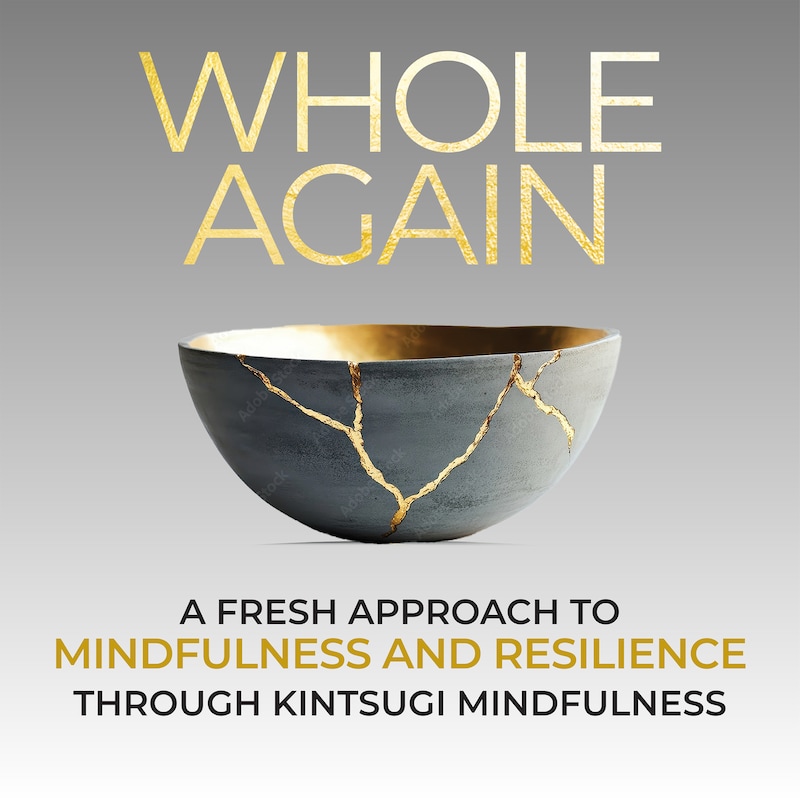
With Whole Again: A Fresh Approach to Healing, Growth & Resilience after Physical Trauma through Kintsugi Mindfulness, listeners explore resilience through personal stories of trauma, scars, and injury while learning to overcome PTSD, imposter syndrome, self-doubt, and perfectionism with self-compassion, self-love, and self-worth. Through insightful discussions on building resilience, fitness, and stress management, as well as mindfulness practices and digital wellness, the show offers practical tools such as breathwork, micro-dose meditation, grounding techniques, visualization, and daily affirmations for anxiety relief and stress reduction. Inspired by the art of kintsugi, the podcast embodies healing as a transformative process, encouraging a shift in perspective from worry and overwhelm to gratitude and personal growth. By exploring the mind-body connection, micro-dosing strategies for emotional well-being, and holistic approaches to self-care, this podcast empowers listeners to cultivate emotional resilience and live with greater balance and intention.
Transcripts
Hey there, it's Michael. Welcome to Whole Again, A show about helping us embrace life with mindfulness and resilience through the wisdom of cons. Sugi. Today I have a very special conversation to share with you, but before I do, I like to provide just a little background. During my break from recording this summer, due to a couple different reasons, including my great bike crash that left my femur broken in five places, so literally I'm trying to feel whole again, and I'm getting there.
As I record this. I'm really close to getting off of crutches, which would be great. I'm riding my bike inside, so all signals are pointed in the right direction. I can't wait to feel whole again, but during this break I shared. Some of the most compelling and popular interviews I did last year when the podcast was simply known as the Kintsugi Podcast and these rerecording or re-release is rather, and you provided a lot of great feedback, which is simply awesome sauce.
I'm really happy that what the guest shared really resonated with you and it got me thinking. Since whole again, comes out three times a week. We do have the space to do an interview every now and again. So I decided that's what we'll do when I come across someone who has a very interesting story like Becky Smoke and her take on stoicism that I shared earlier this year, and our guest today, my interest in sharing.
A few exceptional people with you isn't about going to a format where I do an interview a week or interview all the famous people. Seems like a lot of the top podcasts, that's what they do. The famous people get on everyone's show and it's the same old, same old content. So I won't be interviewing Brene Brown, but Brene, if you're listening and you wanna come on whole again, who am I to stop you?
Rather, I want to find people that may not be quote unquote famous, but are doing amazing work in trying to help us stay resilient and practice mindfulness and to really feel whole again. So the conversation today is with someone that I didn't know anything about. Until a friend sent me a text. You see, with the work I'm trying to do with our Pause, breathe, reflect app, trying to help people have a better relationship with their tech and a better relationship with social media.
For the most part, I've deleted all my social media accounts, so I don't necessarily go on Instagram all the time, although. Admittedly, I have shared some updates on my personal account there, but I post and then I automatically delete the app, and that's what I do every few days. So I never saw our guest work on Instagram until someone sent me one of his posts, and when I first looked at the photo, I was like, oh, that's a cool photo.
It was a photo of a couple, a woman sitting on a man's lap in a rocking chair, and it looked like they were in front of a, or on a porch of a rustic, almost like cabin. And I looked at it and I said, well, that looks pretty cool. It was in black and white. So that caught my attention. But then I did a double take, and what caught my attention was that both of them had their hands cradled or cusp, much like they were holding a phone.
is been doing this work since:What you'll find in our conversation is really, Eric is trying to showcase how we appear to others when we're always walking around with our heads down, looking at our phones. And here's a funny thing, I was supposed to interview Eric on the day of my bike crash because I really wanted to get the episode out in time for his new book release called Removed.
Then I had to send him a text saying, Hey buddy, I can't do it. Been in a little accident, I'm in the hospital. But he stuck with me and I so appreciate him sticking with me. He was patient and we did the interview and today I get to share it with you. And what's really cool is that his book is now out and I have a special offer for you, the listeners of Hooligan.
I have two copies that I want to raffle away. Bit of a lottery, if you will, and you can get a lottery ticket. If you share this episode with your community. Make sure you tag me, tag, pause, breather flatter, tag me personally if it happens to be on LinkedIn or some other platform and I'll make sure that your share is counted.
And then we'll do a little raffle and I will gift you one of his books. Which would be a great book for any coffee table. But considering the holidays are coming up, it may be a good gift to give to someone else. That's all up to you. You get to choose. So if you're ready, settle into a comfortable position, take a healthy breath in and a slow releasing breath out.
I would tell you to put your phone down, but you're probably listening to this on your phone. Either way. I can't wait for you to learn more about Eric Picker skill and the ripple effect he's creating.
I can't wait to talk to you about your project removed. I, I found you because it's always interesting how we, how we find each other. Yeah. So I have done a lot of work trying to get off of social media. Even though I still have some accounts, so people can still find my account, but I'm not really there.
And one of my friends sent me a, a photo of one of your images from removed via a text message. And when I first looked at it, I was like, okay. It was the couple that was in the rocking chair, uh, the woman sitting on his, on his lap. Um mm-hmm. And I was like, oh, uh, that seems like a nice photo. And I didn't, I didn't notice.
At first, and then I went back to it and I was like, oh, well that's interesting. And so then I looked you up and, and now I can't wait to talk about this project since it started almost 10 years ago. Just how, how the arc has been for you and what you've seen and through your travels. Um, but before we get into it too deep, I would love for you to share a little bit about you.
Like where are you? Like calling in from, um, you know, so how'd you get into photography? So we can, we can start there. Yeah. It sounds like a good place to start, Michael. Um, well, I'm calling in or, uh, chatting in from a beautiful spring. Um, or it's not spring, almost fall morning here in Charlotte, North Carolina.
Nice. And, uh, I'm on a morning where I just sent off my three kids ages nine, five, and three to school. Uh, I have a quiet house for one of the first times in several months now that summer's over with. Um, and I, uh, consider myself an artist and a photographer. Originally born in Miami, uh, or south of Miami.
And, uh, a town called Homestead, Florida. And my family relocated to Charlotte, North Carolina when I was in middle school. So this is home for us, uh, home for me. And, um, I found photography in high school. I was, uh, I had a wonderful, enthusiastic young, uh, photography teacher named Blake Smith. Um, and I got to see firsthand what magic can happen in a dark room.
om at our high school, uh, in:And in that safe light, you see this image appear from seemingly nothing and it really feels like magic. It's, it's kind of one of the only ways to explain that feeling. Um, I still kind of get the chills when I think about that early moment of like. Something that defied all of the physics that I had experienced in my life before that.
Um, so I was hooked right away. Um, and I also was a anxious teenager and someone who kind of socially felt awkward and not really sure what my place was. You know, I had grown up in south Florida, which culturally in. Kind of a much more diverse and, and well, in directly in my community, a Hispanic, um, community.
So my grandmother was born in Havana, Cuba and immigrated to the states when she was in middle school. Um, and so our neighbors were Cuban and Peruvian. And then I moved to Charlotte, North Carolina, where uh, it was a much more white community. Um, and I just felt different. And I have always been like, people kind of identify me as white, but I also have this other.
Background that informs kind of the way that I see the world and, um. Anyway, so that loaded into this, a little bit of awkwardness that I had in my high school days and having a camera around my neck, uh, to enter a space was like signaling. It was like, this guy's a photographer, you know? And so then through that I was like, I have a place, I have a identity.
Um, and so that led me to photographing punk bands and going to concerts. In my early days of also photographing BMX. So you and I share a love of cycling and there's definitely different capacities of it, but I've been, uh, someone who's loved cycling since I was in sixth grade started racing BMX. So, uh, photographing that was a natural fit for me as well.
Um, so that, that led up through a, um, all the way through high school. And then, um, I kind of putz around at a community college for, uh, a few years while I was working. And then eventually I got serious about photography and I moved to Chicago to pursue a bachelor's in fine Arts at Columbia College Chicago.
Um, and that was a wonderful experience in itself because I was, uh, there at a program at I feel like, at one of its peaks where it was sil, a wet process, darkroom school, but also, uh, embracing the new digital technology and learning how to do web development and kind of bridging that gap between digital and analog.
And I felt like I was in a sweet spot. Um, and then one of the really formative things that happened for my career, or just who I am as a person was the internship that I had. Uh, the Museum of Contemporary Photography, which is on the base or the, the ground floor of this Frank Lloyd Wright building right on Michigan Avenue.
Uh, and so I was a intern there and got to hang shows of, you know, famous artists that I'd been studying. I remember hanging prints by John Bald Dari and touching all these objects that, you know, most people can't ever be in the same room as, and I was in charge of, you know, pulling them out and showing them to people and putting them away again.
And, um, and that was a really enriching experience for me. Um, and also just understanding how exhibitions work and how artwork interacts with the, the public I think has in informed my practice a lot as well. Um. So I'm, I feel like I'm rambling a lot, but, uh, no, this is great. I love, um, I love the, the, the, the tapestry as it serves unfolding.
Eric, it's so many different. You know, when you go to your website, you might come away with like, oh, this is who Eric is. But you have, you have this, uh, story of immigration in your family and, um, multiple cultures, a a few different moves. The, the whole notion of like. Photographing the punk scene, which has its own vibe and you know, like breaking through and sort of speaking truth to authority and power and BMX, which I also share.
That's sort of how I started a bit, um, which is my BMX bike when I was a little kid. And that, that those are just like quick explosive racing and, and then now you find yourself in Chicago and doing your thing and. I know, I, I just, I love, love what you just shared. One thing that has become a bit of a custom here, because we use Kintsugi, our metaphor for connection.
I always love to ask people, how would you meet your partner? So you mentioned you have three kids, and so I'd love to know, know, what's the story behind you meeting your wife? Yeah. Love to share that. Um, my wife is a superhero. Now pediatrician and a teaching, um, physician as well. Um, and, uh, Angie and I met, uh, just after undergrad.
She had finished her, um, uh, pre-med studies at Wake Forest University and I had just come back to Charlotte from Chicago and we both were accepted into a program called Teach for America. Have you heard of Teach for America? Yeah, absolutely. So we met the very first day and we were seated at a table because both of our last names started with P on pickers Gill.
She was Phillips. And fast forward, three years later, my best man, Neal Patel, we're all placed at the same table. Oh, that's awesome. So we, we can thank the alphabet for that. Um, and so we knew each other for a year while we were teaching and I was actually in a, uh, uh, a very. Like long running relationship prior to that.
And that relationship fell apart during that first year of teaching. And, uh, we were just kind of in the same network of, you know, science teachers who were going to the same trainings. We weren't at the same school, but we, we had the same learning teams. So we would meet up like a couple times a month just to do these, uh, kind of training exercises.
And um, and then it was, uh. My previous relationship had broken up and we were actually at a opening Olympics party for the, the, I believe it was the London Olympics in 20, yeah. 12. And, uh, we ended up spending that evening together at, at a party and realizing we really enjoyed each other and, um, I pretty much moved in like the next day.
I just Wow. That's so cool. It was very accelerated. Yeah. So she was like, I'm, I'm gonna be a doctor someday. And I was like, well, I can, you know, do laundry. I'm really good at, uh, the, the household things. And so our, our partnership in that sense began. But she's been an incredible, um, just addition to my life.
I mean, everything that I do, uh, has been so impacted by her. We, our personalities are, are. Pretty opposite in the sense that she's the introvert and I'm the extrovert. Um, we just have all these wonderful ways that we compliment one another and, um, and now we get to be parents to these three wonderful, beautiful kids that, um, bring so much joy to our lives and, um, give us a lot more purpose than I ever thought that I would find.
And so it's, it's an amazing life. She's, she's incredible. Yeah. That's so cool. Thanks for sharing. You know, you're, uh, you're welcome. Your relationship is brought to you by the letter PI guess so. Uh, so it's really cool. That's really cool. So let's get into your project removed. I hope you can take us to Troy, New York.
And so part of my background when I was a sales rep, my early days in my professional life. I had a territory. I grew up in Rochester, New York, home of Kodak, so photography. Mm-hmm. Although I didn't necessarily pick up a camera like you did. So just the whole notion of photography has always been close to me, just from my upbringing.
But I had a territory sales territory that stretched from Albany New York up to Watertown, uh, through that Aron Ducks into Vermont, and it included Troy. So when I learned that this whole project started in Troy, New York, I was quite curious how does one actually end up there if you're not born there?
So can you, can we start there? Like how, how did you end up in Troy and just what did you see that sparked removed? Absolutely. Um, Troy's a beautiful place. Um, I. I should give the one sentence context that I was in Troy, I, I believe it was, uh, approximately like three weeks after my wife and I had gotten married.
So we were, she was in, first, it was the summer between her first and second year of medical school. We had just moved to Chapel Hill. We got married that summer. Um, and I was in my, uh, starting about to start my second year of my graduate studies at the University of North Carolina. So we were both Chapel Hill students.
Um. That summer I was accepted to two different artists residencies. One was in Truth or Consequences, New Mexico. And if you've never heard of Truth or Consequences, New Mexico, you should look up that story as a side note. Um, but the other residency I was invited to, um, was in, uh, Troy at the, uh, contemporary, uh, artist center.
Um, and it's this residency that's actually integrated into this church that was built. Hundreds of years ago, and it was the, a church that was erected for, um, I believe a guy who made a bunch of money off of, uh, providing horseshoes to the, uh, the union military. Okay. Um, and, uh, his wife, I think tragically passed away and he built this beautiful chapel in her name right on the river there.
Um, and so I was spending about, I, I think it was a two week long residency there and. While I was working, I built this dark room, essentially it was like a camera I could walk into. And I was spending my days in this plastic room. It was like this isolation chamber because I wanted to somehow be inside the camera.
And that work was really dark and not, uh, like I, I don't even like looking at it that much right now. And, and that put me in this really weird mental space where I got very homesick. And so I started going out to this cafe. Um. Called Ileum, cafe. Cafe in Troy. Uh, it was kind of this like Americana classic diner style cafe right in downtown.
Um, just so I could get out. I just needed some sunlight and be around other people. And there was one morning that I was riding and I looked over my shoulder and this, uh, couple came in and they had two teenage daughters and the couple sat down and the daughter sat down and um, you know, the waiter came and took their order.
and this is in the summer of:I was just, yeah. Yeah. Just like a, you're, you're here, you have a moment to have a meal together and Yeah. You're homesick and they're just Yeah. On their phones. Yeah. And so I, I, I actually wrote down in my journal, uh, and I wrote down this passage of, um, you know, I just verbalized it. I was like, this feels really sad to me, and I've never really noticed how quickly or how much this.
Draw to our devices has taken over. Um, and I wrote that. I was like, I wanna be better about this when I get home. I wanna not, um, you know, be so sucked in or controlled by this especially, uh, I'm entering, you know, the, what, the second month of my marriage, I was like, what better time to have high expectations than now?
Um. And I didn't think about the remove project, and it really wasn't an inspiration to make art. It was just a realization in life that I was like, this is something pretty big that's happening. And, uh, and I, I was, you know, awakened to it. And, and I don't know if, had I not been in that moment, in that space and that light.
And in that emotional state that I would've even really thought twice about it. Um, and so fast forward a few weeks, I come home, um, I had, I'd kind of mentioned this to my wife. I was like, you know, I really think we should work on this. And, um, you know, she's a busy, busy medical student. I'm, you know, at a, at a very high caliber, um, master's of Fine Arts program, and I realized we were back to our phones.
Almost immediately. And it, it was like the awareness wasn't enough. Um, and removed came out of the fact that the few weeks into that semester, I was laying in bed back to back with my wife and I'm scrolling and, uh, I kind of drift off to sleep and I fell asleep hard and fast enough that my phone fell from my hand and it slapped against the hardwood floor next to the bed and it woke me up.
My hand was still resting in the position as if the phone was there. My thumb was just curled enough and my index fingers were gripping just enough. And my wife's still scrolling. I can see the blue light in our room, you know, and I was like, this is a photograph. This exact scene right now is a picture that I I'm gonna make.
Um, and it was a very simple concept and I think a lot of, uh. Projects that have big reach and, and a, and a big impact, have pretty simple ideas. Um, and they just need to be executed well. Um, and so I, I spent the next couple weeks doing some tests. I, uh, I made that photograph. So one of the most iconic images in the series is titled Angie and Me, and that's a, the young version of my beautiful wife and I, uh, back to back in bed as the genesis of this project.
Um. And I spent a couple weeks, you know, I, I didn't realize at first if I wanted to Photoshop the phones out or if it was gonna be, uh, a, a, a physical removal and thinking through that time period of what would that mean? Does it matter to the viewer? Does it matter in how the image is going to. Resolve or, or create itself.
Um, and I, and I'm also not that great at Photoshop and I certainly wasn't that great then. Uh, so I have those tests of where I've tried to take my wife's phone in a coffee shop. We were at a caribou where we used to study all the time, and, and I, she let me photograph her digitally and then I shot some film and I compared the, you know, my butcher shop Photoshop job to the one of her just performing.
And I thought this. Removal is, is much more impactful when it's physical and it also takes away that component that I think photography has this history of which is, uh, a, a position of exploitation. There's no photograph that's made without intention. You can't strip that away from the, from the image, I believe, and.
So by having a conversation with someone and subverting what it is that the phone does to us, uh, in the physical realm, uh, I'm able to, you know, include their participation, their consent, and they get to have this moment of transgression where they're standing in front of my, you know, 19th century camera, taking their time, realizing they're creating something with me, and being reflexive and thinking about their own habits in that moment.
Um, it, it, it's, it's powerful. Yeah, that photo of you and Angie, once I saw the first photo that was sent to me by a friend, then I checked out more of your image, the images, the photo, the photographs that you took, and one of the first ones I saw next was you and Angie. And I was like, whoa. I was like, God, that is, that is probably so commonplace in so many bedrooms, not only across the US but across the world, because phones are everywhere now.
I think like probably 70 or 80% of the world's population has a smartphone. I don't know that stat is true or not, but I, my feeling is it's close to that. Yeah. So I would love, I would love for you to share because you've, now, you've photographed. A whole bunch of people in, in different settings. Maybe not as intimate as the bedroom, but you know, quiet moments, moments where they're by theirselves, moments in public, uh, in a, in a lot of different places.
What's the reaction from people when they see themselves after the photograph is taken? It's, it's been a varied set of, of reactions. I think that the, the majority of people after the photograph walk away feeling like this is, I, I think it gives them a, an emotional sense or, or somewhere similar to that feeling or observation I had in Troy.
It brings them a bit into more of an awakened state of what they're actually doing. I think for some people it, it sends them on a different trajectory to think and to to work towards having a, a healthier relationship with their device. And I don't think that that's true for everyone. Um, and I think that there's such a varying degree of success in curving your, um, device use.
I'm someone that speaks about this globally and. I still have a tremendous battle with my relationship with my phone and trying to run my business. And, um, managing our three kids' lives requires such an extensive, uh, digital interaction because of the way that the school wants to notify. And then absolutely.
Everybody has an evite birthday party. Absolutely. And text message alerts on appointments and doctor's appointments and reminders. It's endless upon reminders. You can't escape your phone. Right. Yeah. Although the, it's sort of trendy to talk about moving to a flip phone or going analog. Right. That, yeah.
Creates some wonderful stories and magazines and newspapers like the New York Times, it's not that practical because so much of our lives are now connected to the smartphone. It, it, it feels that way. I'm, I'm still curious about what, um, like what ways that this can be synthesized to, to, I would love to try out a, a, a dumb phone again.
Um, but I just, again, like you said, I don't know how practical in its application would be the. My my kids, you know, their, their schools, uh, transportation changes every day because of soccer practices or extracurriculars. And it's like, there's no way that I could go without an email throughout the day.
So, um, I don't know what, you know, it, it seems utopian and, uh, to, to be absent of it, but it seems like it's gonna have to be here and we have to find ways to monitor it and to, um. Be, I, I think that, um, and, 'cause I've spent some time with, with your app as well and looking at the tools that, um, that you're creating.
And, and I, and I think, uh, there's a really interesting component to the interface of, of your app because it, um. It, it does kind of ping in that reward center a little, uh, so that you feel like you have some output for, or, or, um, a reaction to what you're doing. Um, and I, and I think that that's helpful. Um, I, I, I'm curious how that landscape is gonna shift and I, and I think people are really thirsty for it.
You know, um, and we can talk about my book in a little bit and talk about Sherry Turkel as someone who's kind of paved the way for a lot of thinking here. Um, but I think that we also have to mention, uh, Jonathan Het and the Anxious Generation right now because, uh, he found a way to speak about this that has.
Completely exploded this movement. Um, I think, you know, parents are so protective. So when you start to say, here's what's happening to our kids, you're gonna get a big reaction. Uh, and he's presented in a, in a way that's digestible. And, and I recommend that, that that book. Um, it seems though that the. The, the, I, I'm glad the conversation's opening up as we've talked about, or how he's talking about involving kids and what, what's happening to them.
But I also want to mention that the finger pointing towards the younger generation seems to fall short for me a little bit. And I, I've had, you know, this kind of phrase come up recently where people are like, oh, well these kids are all on their phones. What kind of childhood is that? And I agree, but I also, my reaction is, what kind of adulthood is this?
But I do like. How really in:So we're concerned about our kids. I think intellectually we understand that all this time on our devices isn't healthy, uh, for a lot of people. Now, some people are like, this is, this is my way to connect with people. I'm lonely without it. And there's obviously an aspect of life and we have a loneliness epidemic too.
And you know, the whole. Notion that social media and our phones have connected us, but at the same time disconnected us, which your work sort of points to or does point to. But the one thing missing in Jonathan's work, and I've had, uh, pretty, uh, rigorous debates with family members about this mm-hmm. That I don't think he goes far enough to talk about the role modeling US adults do for our kids.
It's almost like smoking. Like kids, you shouldn't smoke. There should be no smoking at school. There should be no smoking lounge. I grew up in a high school. I'm old enough that where there was actually a smoking lounge for the kids. So, which is like crazy now, right? But like basically ban, ban, ban phones.
Have the kids stay off of social media? Yes, yes, yes. To all of his four pillars. Um, but meanwhile we're puffing away on our phones right in front of them and, and, and, and know, and I don't wanna necessarily saddle Jonathan with like, trying to solve it all. Right. That's not true. Of course. Yeah. He was really trying to go after the topic of how are we, how are we raising our kids, how are we raising our kids vis-a-vis technology.
But I do think there is a. A mirror that we can look into as adults. Like how are we using our technology and how we, how are we role modeling and yeah. So you mentioned the app. The app is really designed to create enough tension, enough friction. Mm-hmm. So we're not just mindlessly grabbing at our phones all the time.
Uh, and you know, if you work it right and there's a little bit of that rewards center. Aspect of it that I'm, I'm constantly thinking about how, how do we change that or maybe eliminate that, but just as a way to create enough friction where we can find some space and, and almost micro spaces, because fully disconnecting may not be practical for a lot of folks.
You know, a parent, as you are of three kids, you can't necessarily put your phone down for five hours during a Wednesday. Something might pop up. Um, but we can find ways to take little micro breaks and step away from our devices so we can find an opportunity to like release, release some stress, maybe practice a little gratitude, uh, sniff the outside air, um, be more intentional.
And so that's the aim, you know? And so that's why we wrap. That whole like, locking of apps with, you know, the, the mindfulness practice. Uh, so as it relates to your book, your book recently came out, so for those. That everyone listening, they don't know the behind the scenes. So when I first found your work, I was like, oh my God, your book's about to come out.
And like we're, we'll, we'll get it in and we'll do it right before the launch of the book. And then I go off and break my femur in another crazy bike accident. So we weren't able to do it. So now it's been about a month since your book has come out. Mm-hmm. I'd love for you to share what's the reaction been and one thing that I sort of.
d, and thinking about even in:Uh, and spending this time with this work and going, uh, and having exhibitions and seeing large form prints, or even just now when I had this exhibition in Rio, which was a very public facing and. Interactive exhibition where the prints were actually back lit and they were larger than life. They were, you know, 12 feet tall and 16 feet wide.
Um, and the ocean is on one side of you as you're walking through this corridor, uh, to enter and exit, you know, one of the biggest technology conferences, um, in, in South America, um, that, that moment hits you, um, a lot more immediately. When you see it at a large scale and you see that the hands are empty and you can look more deeply into the eyes of the people in the photograph, um, it, it's more impactful.
And I feel, uh, for the longest time that since I've launched this work, uh, a majority of people have seen on their screens. And I'm happy that it's getting to, to audiences. Um, but it doesn't stay with them. Long enough and at a scale, I think that that can allow them to be impacted by it. Um, and when I first launched the work, and then I, you know, kind of the, the artist dream you get signed by a New York gallery and I'm having exhibitions and, um, they also then, you know, the, the prints of the, the objects that I create become commodified.
And, uh, there's a limited edition to my prints that are available. Uh, and the gallery in New York has, you know, priced them and value them so that they fit within the. Creator art market, which is not accessible by most people. It's expensive to buy my work for most people. And, uh, I wanted a book that could get out and into the hands of as many people as possible.
And I was, I waited a long time to do it. Just there wasn't the right publisher. It felt, um, where I wouldn't have enough creative control. Um, and so then this, this publisher came up and said, we have a model where. Th the book is gonna be handled by us. You get to design it. You can include whatever you want.
You've got full creative control, uh, and they will take care of everything else. For me, as that was the other piece, was that I, I didn't want to have this secondary job where I had to necessarily, you know, run a distribution center out of my basement, which happens a lot. Artist books. Um, yeah. Yeah. I, and we actually, I felt that pain, Eric, you're, you're a wise, you're a wise man, so, well, I have a good team too.
My, my agent Julie Graham was like, I've heard the stories enough of. The mountain of boxes and basements that you should probably avoid it if you can. So this allowed it to where the book is available, um, and it really is like print on demand. So they'll, they'll send out the copy when you order one. Um, and we, we did the pre-sale function of the piece so that we hit the, the number that allowed the project to move forward, to show that the public was interested in this project as we knew they would be.
And, um, had a great response to that. And so we, the book is actually not. Completely done in it. Sense that, uh, we haven't started printing yet. We're a few days away from the final, uh, version. And Sherry Turkel is actually the author who wrote the introduction, and I only just yesterday got our final draft of that.
forever. Uh, but you know, in: s been on my radar and in um,:Um. The New York Review of Books did a review of it and they licensed the, one of my photographs for that story. And, uh, I was like, you know what, I'm just gonna reach out to her and just see what happens. So I wrote her an email and I just said, Hey, you know, we're in this piece together. I've been a fan of your work.
I've read a loan together while I was in graduate school. And, um, she replied back to me immediately and was like, oh my gosh, you're my hero. Call, you know, call me. And, um, and so we've been connected ever since and. Uh, just before COVID, I actually went up to Provincetown, to her cottage and we spent a week together writing and just kind of laying my prints out along this floor of this beautiful space she has there, right on the water.
Um, and just kind of pulling out ideas about where we thought things were going and it was just a magical time together to write and, 'cause we knew at some point we would get this book out and, um. And then COVID happened and that slowed things down. And then we had our third kid and she was writing kind of a, well, she's always writing, but Sherri was working on a memoir.
And um, so now, you know, finally this all came together and she's written this introduction that really encapsulates our relationship, but also the shift in what's happening since when we started working together to now with AI and chat bots and how that's really intertwining all of these narratives about.
Companionship and what it means to really be connected with those around you. And the necessity of our relationships with each other, that we must carve out time and space for them, and that's the only way that that's gonna maintain. Um, so the book, in long story short, the book is this way of bringing the work within.
People's homes. And even if it sits with just the cover facing up on a coffee table, I think it's gonna just point to that mental space of I was impacted by this. I still need to remain vigilant. Everything else is gonna combat that around me, so I need to, to stay focused on that. Um, and so I think that having it around just helps with that piece.
Uh, I actually here in my office, have the. One of the early large prints of my wife and I in, in bed. Um, I can actually, I'll pan over. You can see it. I know that the audience can't hear it, but Oh, wow. That's great. Yeah, and it's, it's right here in the middle of our living space. And I mean, I'll be working and my son will even come in and tap me on the shoulder and he'll point out, but this photograph of my wife and I being removed and it just, it brings you back and it has that feeling that I need to.
Stay centered and, and focus on the things that are happening here. And especially with our kids being so young right now, I you're constantly reminded of how fleeting it is. You know, you can't go to the grocery store without the kids, without someone saying, you're gonna miss these days. You know, you're gonna miss these days.
They grew up quickly. The days are long. Yeah. But the years are short. All those, yeah. And, and it's so true. It's, but it, it's hard too. It's hard as someone with a 24-year-old and 27-year-old. I will say all of it's true. Yeah. All of it's true. And every age is wonderful and special and it comes with its own challenges.
And even as adults, there's still parental worry and care and, um, how can I, how can I help Dad? I don't need your help. And that failed. Mm-hmm. That whole stuff. So, yeah. So. You, you, you cherish the years that you have. Um, you make sure that everyone around you knows that you love them and you try to find these moments of connection.
Right. And to your point, Eric, we have to stay vigilant on all this. There, there are so many different. I don't wanna sound like a conspiracy theorist, but there are all these different forces, if you will, like, or maybe a Star Wars guy, uh, which I don't mind being labeled as that fair, but there are all these forces in this attention economy that we have just trying to pull, pull at us or bring us back to our devices.
And so it's, it's really is a daily type. Of intention setting and, and maybe a multiple time per day intention setting as to how am I relating to my phone? What's, what's my relationship with my phone? What's my relationship with my devices? What's, what are my relationship like, like with real humans? Yeah.
And, and to stay top of mind with, with that, I think that helps Elise. US gives us a step towards living a good life because it's a connected life. So, um, as we look to finish up, and I could, I could go, we could talk all day long, but we don't have all day long. I can feel that. So I really so appreciate you coming on and, and sticking with me through my recovery and like making this happen.
So this is really special for me and again, so thank you. Over the last 10 years, you, you've discovered a lot since you know you had your TEDx talk, which I'll link in the show notes because this is a podcast and every podcast is supposed to have show notes, so I'll link to that in your work and where people can get the book.
of us. And now we're here in:Humans, um, those closest to them, those in their neighborhood, those, uh, half a planet away. Have you, have you discovered things that can help folks knowing that not everything helps everyone, but maybe we can take at least a small step towards feeling more connected? Absolutely. And I, and I can give words to this from.
Uh, one of your, uh, previous episodes that I listened to, um, right when you and I first interacted with each other, but it was a episode that you spoke about, uh, asking for help and the, the bravery of asking for help. And I think that if you can internalize and, you know, if this conversation that you and I have had today resonates with the person listening to this and you feel passionate about it.
If you have the person closest to you, your spouse, your partner, even your neighbor, and you ask them for help and say, this is something that I believe I have trouble with and I could use help getting through it and carving out more time to be intentional and ask them to provide, maybe it's one. Meal per week that you're gonna promise to have together without a device that you could hold each other accountable to spend that time identifying as someone who wants to be better at this.
And you'll immediately feel that reaction or the outcome of that interaction with that person feel so much more deep and rewarding. And. Fulfilling that it would repeat itself and, and I think it could grow into a much bigger pattern of expectations of one another. Because I remember when phones used to be rude to pull out, and then it was like, well, I'll put it face down on the table.
And now it's, you're out to dinner and someone calls and you say, no, it's okay. Um, it's almost as if you're apologizing for being there. Please take your phone call. So the expectation of our community members has shifted and if we can push back on that a little bit and ask the people closest to us for help in that endeavor, I think it can make big changes.
My wife and I were out to dinner last night and there was, uh, a mother and her two teenage sons. I noticed them 'cause they had red hair. Like my kids, it looked as if my oldest son was, you know, six years older and uh, and was into weightlifting. They were really a really, uh, buff family. Big kids probably played football anyway.
Um. It was probably 11-year-old and a 14-year-old, and they were both on their phones and I saw the mom, she kept making eye contact at me. We were being, it, it was, uh, kids eat free night at this pizza place we love to go to after my son's soccer practice. Yeah. Great deal. Yeah, my son. That is a great deal.
It's really, it is. My son loves, we're very frugal, so my son was like. Doing the math. He's like, wow, we saved $16. I'm like, yeah, um, it's a big deal. Um, but she kept making eye contact with me, uh, because our youngest son, who's three Sam, was in his highchair and we don't give them devices. And he was like pushing the limits of how loud can I be?
How much fun can I have at the table? Very normal childhood, you know, behavior. And yes, we are in a restaurant. Uh, but it's also kids nights. There's a little bit of a pass there if you're entering that space. Maybe unknowingly, maybe they put a sign up that this is kids night, but it's okay for a kid to be loud.
That's absolutely normal for their development to understand that. But she was smiling back at our table because I think she was reminiscing on what it was like to be where we were sitting, you know, maybe just five or six years ago in her life when her kids were still young and both of her kids were on their phones, and I could see her having this moment.
And then I looked up and then she got on her phone and that was the expectation at their table. Meanwhile, our phones are in the car. We're all sitting together having pizza and talking about soccer, and our kids are practicing speaking and ordering their own food to the waiter. You know, all those little things that you pick up when you're just gathered with other people.
And I felt like in that moment it was not only our best parenting, um, moment. But it was also just the most rewarding moment that we gave ourselves. It wasn't just about making sure our kids are developing correctly. My wife and I felt connected with one another. We all cheered our, you know, I had a beer and our kids had, uh, like a high sea.
We don't normally do juice, but they, it was free with the meal, so we allowed it, you know, it's a special night. Little high sea. It was, yeah. Yeah. First soccer, you know, practice of the season. Let's have a big dinner together, but we're all cheersing together. You have this like. Literal moment of connection.
You're placing glasses to one another, you're looking in each other's eyes. Yeah. And that's palpable. And it matters. And our, our family does that because my wife and I have asked each other for help on this, and it started there. And so I think that if you, if listeners really feel compelled to make a change, I think that the, the bravest and easiest thing to do would be to ask for help from those closest to you to work on this.
Yeah. Such great, great counsel, Eric. Thanks for sharing that. And I think. For any parent with teenagers, that story you shared at the pizza pub is so relatable. You know, I think so many parents, you know, Jonathan speaks to this in his work. You know, we give our kids phones for very rational reasons. Well, we need to stay connected with them.
We wanna make sure that they're safe. There's logistics. It's a way for them to stay connected. Be with their friends. If they don't have one, they'll be lonely and not in the in crowd, whatever the in crowd is. Mm-hmm. And to your point, it's this slow creep of how we first thought of our phones and now they're just with us everywhere and parents wake up and it's almost like, how did we get here?
And I, I've. I've lost the connection to my teenagers and the teenage years are hard enough. Uh, you'll learn this soon. You, you'll get through it. So they're just my recommended. Just continue to breathe through it. So you, and then there's, there's light, there's light and glory at the other, other side of it.
But I think so many teenage, uh, parents of teenagers are like, how did I get here? And I've, I've lost this connection and it's. The conversation that they're having with themselves, and this is through interviews I've done as it relates to my app. They're like, it's just too difficult. There's too much resistance to this.
So they're like, well, the path of least resistance is just to pick up my phone and entertain myself because they're gonna fight me on it, and I just don't wanna fight over another thing. And so we, we give up prematurely. And I, I do think, and this is why your work is so important, 'cause it does bring awareness and top of mind and awareness is the key to any type of change.
or:Tell each other how much we love each other, even though we might not see the world the same way. And find a way to reconnect and to do something that's completely human in a time where we're really scared about the machines taking over, that we doubled down on our humanness, if you will. And so, uh, thanks for doing the work you're doing and spreading your message and coming on.
To the podcast. Uh, this has been great, and I just, I really appreciate you, brother. Thank you. You're very welcome, Michael. Thank you for the insight that you're putting out into the world and just allowing people to have a moment to breathe. 'cause that is so, so important to just slow it down a little bit.
Um, so thank you so much for, for your contributions and, um, and I admire your, uh. And, and you're, you're being tested most commonly on bicycles, but being tested and persevering, uh, it's, it's inspiring. The work you're doing is truly inspiring. So thank you for being you, Michael. I appreciate you. Uh, thank you, Eric.
See, I told you Eric is a pretty cool guy, right? Doing amazing work up here in New York. We'd call him a mench. I just love the ripple effect he is creating with this project and really all his work, all his photography, and as I mentioned upfront, you have a chance to win a copy of his book. I'm giving away two copies of removed and all you need to do in order to have a chance to win, one is to share this with your community, with your friends, and make sure you include me on your message.
In this episode, in our conversation, you discovered a few things. One, his project is really about awareness, and I'm a big fan that the first step of any change is awareness. We have to see ourselves really look in the mirror, which is not an easy thing for us to do, but his photography and this project is giving us an opportunity to see what we look like when we're constantly grabbing our phones.
It doesn't give us an opportunity to see really anything else. He also talked about how intention is needed for connection. How true is that? It's one of the reasons why I created the Pause, breathe, reflect app in the way we did. It creates intention before we just pop into any old app. We need more intention.
We need more connection today to help us feel whole again. And finally, this is just not a kid's thing. I know a lot has been said through the anxious generation, that wonderful book and other people talking about how smartphones and social media are really harming our children. All that is true and should be discussed, and I love what some schools are doing in terms of not allowing kids to have phones during the school day.
Fabulous. But this is also an adult problem. We are the role models to our children, so we also have a problem with our phones and all the stuff on social media also impacts us. Which impacts how we show up. It impacts our ripple effect to our colleagues, to our friends, and to our kids if we have kids. So this is an adult issue just as much as it is a kid issue.
So there you have it. I hope you enjoyed what Eric is bringing into the world, and as always, thank you for being here and thank you for being a member of our community here at Whole Again. I hope you have a beautiful day. And you put a wonderful ripple into the world.
And if you wish to learn more about creating beautiful ripples and how to prevent a bad moment from turning into a bad day, please visit my. Michael O'Brien schiff.com and sign up for my newsletter called The Ripple Effect. And join us each Monday, Wednesday, and Friday here at Whole Again, and discover how you can heal, grow, and become more resilient and celebrate our scars as golden symbols of strength and resilience.
Until then, remember, you can always come back to your breath. You've got this and we've got you.