Shownotes
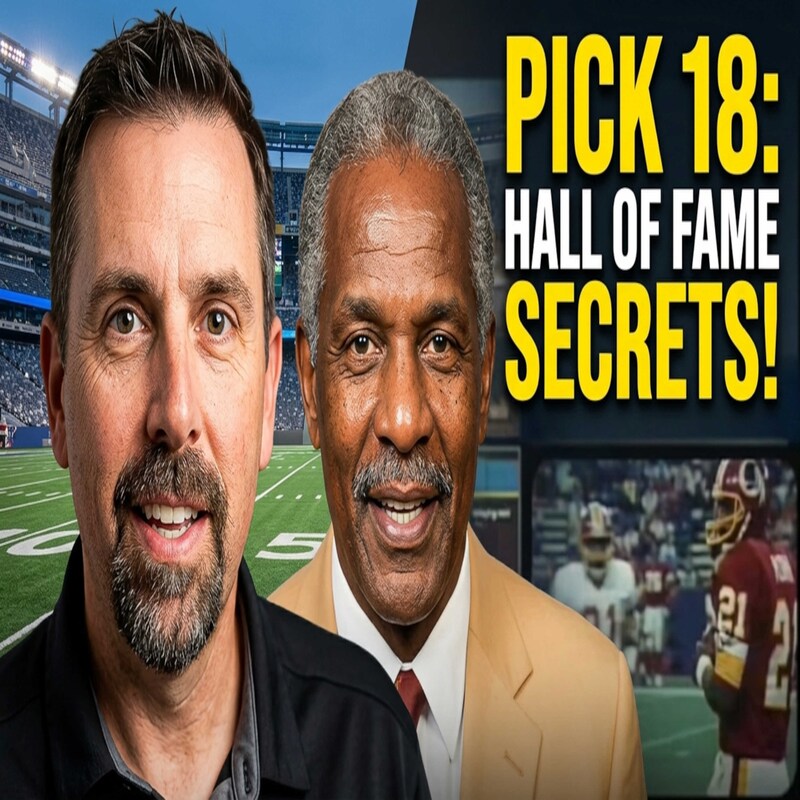
The 18th pick in the NFL draft may be the most underrated position, as evidenced by a historical analysis that reveals its significance in shaping successful franchises. Throughout the years, this selection has yielded remarkable talents, including Hall of Famers such as Art Monk and Paul Krause, who exemplify the potential of players chosen in this slot. As we traverse the landscape of past drafts, we shall examine both celebrated and overlooked athletes, discussing their contributions and the impact they have had on their respective teams. Each player, from the legendary to the less heralded, narrates a unique story that underscores the importance of the 18th pick in the grand tapestry of NFL history. Join us as we delve into these narratives and celebrate the rich legacy associated with this pivotal draft position.
Do you want more football history? Test your Gridiron Knowledge, we feed you Daily with our new FREE activity, The Pigskin Trivia Drive.
Grab a copy of our latest book, "Marooned," on the 1925 Pottsville Maroons NFL franchise saga.
*OR* Grab a copy of our book on Western Pennsylvania football history, "World's Greatest Gridiron Team" on the 1903 Franklin All-Stars
Drop us a line at PigskinDispatch@gmail .com and check out and subscribe to the Pigskin Dispatch YouTube channel.
Contact us directly at [email protected]
Miss our football by the day of the year podcasts, well, don't because they can still be found at the Pigskin Dispatch website.
Transcripts
Can the 18th pick be the most underrated spot in the NFL draft?
Speaker A:History says absolutely.
Speaker A:Before Jerry Rice, there was Art Monk, the first man ever to reach 900 catches, snagged right here at number 18.
Speaker A:From the NFL's all time interception king, Paul Krause to elite anchors like Marquise pouncey with the 18 spots where franchises find their backbone.
Speaker A:Today we're digging into the gridiron with legends taking a pick 18.
Speaker A:We're joined by our friend Ed Cleese.
Speaker A:Once again, let's head into the pig pen.
Speaker A:It's Pigskin Dispatches Draft Countdown.
Speaker B:Hey, Darren, how are you?
Speaker A:I'm doing super, Ed.
Speaker A:I can't wait to hear your perspective on some of the players have been drafted in the number 18 hole of the NFL draft.
Speaker B:Yeah, you know, don't get your hopes up because this was a little bit of a ho hum.
Speaker B:Research results here, I'd say.
Speaker A:Yeah, well, the good news is it's not as many hall of famers as the 19 spot where we had five.
Speaker A:This did have four hall of Famers drafted out over the last 90 years.
Speaker A:Perhaps you'll be talking about one or two of them, but we're going to talk about all of them before the show is over.
Speaker A:But you know, I think still some decent players.
Speaker B:Yeah, there's some on here and recently it's not been great.
Speaker B:Gray Zable was taken by the Seahawks last year and he's already considered to be one of the better interior O linemen in the league and a tremendous year for the super bowl champs.
Speaker B:So he's off to a good start.
Speaker B:Jalen Phillips was taken in this spot.
Speaker B: I'm going all the way back to: Speaker B:And I wound up with a lot of guys that I was kind of like, okay, whatever.
Speaker B: erbacks have been taken since: Speaker B:We'll talk about one of them here shortly.
Speaker B:The other one would be chad Pennington.
Speaker B: In: Speaker B:But it also shows that the guy just could not stay healthy.
Speaker B:You know, a small guy, an undersized guy, a lot of guts.
Speaker B:It was very productive, but really only played a handful of seasons in the NFL with any level of consistency or.
Speaker A:Health and probably didn't have played behind some of the the best offensive lines in the NFL either.
Speaker B:That's right.
Speaker B:Yeah, he wasn't on great teams or anything.
Speaker B:So yeah, but an interesting, kind of, an interesting case there.
Speaker B:We've talked a lot about disappointing running backs and the 18th pick is no exception.
Speaker B: Butch Woolfolk in: Speaker B: d be Robert Edwards, taken in: Speaker B:This is really sad.
Speaker B:I remember this pretty well.
Speaker B:He had a thousand yard season his rookie year and then at the Pro bowl playing in a sand flag football game that was like, you know, on tv he had a horrific leg injury.
Speaker B:Like you, if you're, if you're, if you can handle such things, it's actually, you can find it on YouTube because they were, you know, it was televised.
Speaker B:It's a very, it was a devastating lower leg injury that almost cost him his leg.
Speaker B:He tried to battle back.
Speaker B:He missed, I think two or three full seasons.
Speaker B:He made it back onto a roster but just never did anything from there.
Speaker B:Like literally almost lost his leg and.
Speaker B:Poor guy.
Speaker B:Yeah, a very promising career taken out really early.
Speaker B:And then there was a freak injury.
Speaker B:And then there was another one that I didn't remember or recall.
Speaker B: ld be Don Rogers was taken in: Speaker B:He was a defensive back.
Speaker B:He was second in defensive rookie of the year voting.
Speaker B:And then he started all 16 games his second year for some Browns teams that were, they were just turning themselves into a Super bowl contender in 85.
Speaker B:And if you remember there we talked about, you know, Hanford Dixon and Frank Minnie Field and some previous pods, they had really good corners.
Speaker B:And so he was going to be a safety back there.
Speaker B:But after his second year, he died of a cocaine induced heart attack in the off season, eight days after Lynn Bias died.
Speaker B:You know, very famous case in the NBA.
Speaker B:And it was the night before Roger's wedding.
Speaker B:So a really tragic off season incident.
Speaker B:A young man, you know, lost his life there.
Speaker B:But yeah, that was something I didn't really know or remember and kind of a tough, tough one.
Speaker A:Yeah, well, I didn't, I didn't remember that either.
Speaker A:But how tragic.
Speaker A:Probably was overshadowed by the whole Len Bias.
Speaker B:Yeah, exactly.
Speaker A:That was big news.
Speaker B:It stuck out because I saw he started like all games in his career and then didn't have a third year and I was like, well, that's weird.
Speaker B:You know, usually these guys get a second chance somewhere and then I read and obviously that's why there's one more.
Speaker B:There wasn't a lot.
Speaker B:A whole Lot of bust.
Speaker B:But there is one I really wanted to point out to you.
Speaker B:Do you remember the name Aaron Jones?
Speaker A:Aaron Jones.
Speaker A:Well, Jones is not the Aaron Jones I'm thinking of though.
Speaker B: ensive end Aaron Jones in the: Speaker B:Oh, Aaron had nine and a half sacks for the Steelers over five years.
Speaker B:So there's probably a reason you don't remember him.
Speaker A:Yeah, probably, probably.
Speaker A:I don't even think they were in the 34 yet.
Speaker B:But so yes, and that was that.
Speaker B:That would have been 88.
Speaker B:So he would have played up until almost basically until Cower got there.
Speaker B:So some really poor team.
Speaker B:Not poor, but not great teams at the end of the Noel era.
Speaker A:That'd be Right, right.
Speaker A:Probably the last, maybe the last or second to last draft that Noel had.
Speaker B:Right, right.
Speaker B:So not a good one there.
Speaker B:Not a good one there.
Speaker B:There were some good ones that made the honorable mention list.
Speaker B: in the league for, drafted in: Speaker B: decade on the offensive line,: Speaker B: of people remember drafted in: Speaker B:If you go look and look at his numbers, he had a couple of really big yards per catch years, but not a lot of catches.
Speaker B:He was of course on the 85 bears.
Speaker B:And then Alfred Williams, kind of an interesting one.
Speaker B:He was drafted in 91 by the Bengals and then he had a all pro season with the Broncos in 97 and that was kind of like it.
Speaker B:So every, he was like average, average, average, all pro.
Speaker B:So that kind of stuck out.
Speaker B:And then my very last cut was a guy that I remember well from the NFC east days.
Speaker B: or Cardinals teams drafted in: Speaker B:They moved him a linebacker.
Speaker B:Some had had quite a few sacks, a couple double digit sack years and a good player on a lot of bad teams.
Speaker A:Yeah, I, I remember Frank J. Nun too.
Speaker A:So yeah, those are the names I'm familiar with.
Speaker A:So okay, those are some pretty big names that you know, decent players that you cut here.
Speaker A:So I'm interested to see who made the top five.
Speaker B:Yeah, the top.
Speaker B: t with Will Smith, drafted in: Speaker B:He played all nine years of his career in New Orleans.
Speaker B:And I think what sticks out for me, for him, maybe the reason that put him over is his career with the Saints coincided with the best stretch in Saints history.
Speaker B: u know, the breeze teams, the: Speaker B:Obviously he was on the super bowl team.
Speaker B:He appeared in 139 games, all for New Orleans.
Speaker B:Only made one Pro Bowl.
Speaker B:He had a couple double digit sack seasons.
Speaker B: sacks in: Speaker B:And he played very well in the super bowl against the Colts.
Speaker B:And then, not to be a total downer, but it would be weird not to mention it, he was all.
Speaker B: ed in a road rage incident in: Speaker A:Yeah, well, I was unaware of that.
Speaker B:Oh, yeah, yeah.
Speaker B:Kind of an ugly thing.
Speaker B:It involved he and his wife and some random driver.
Speaker B:I remember I remembered it at the time and then when I read about it, I.
Speaker B:It kind of.
Speaker B:It kind of clicked a little bit.
Speaker B:But yeah, I would say, you know, he's pretty high up there in.
Speaker B:You know, for Saints fans, you know, a guy that was there through all of the.
Speaker B:The best moments and the best times in their franchise, in their whole run of their franchise, really.
Speaker B:He was a consistent prominent player for their defense.
Speaker A:Okay.
Speaker A:I think a very solid pick.
Speaker A:So who do you have at number four?
Speaker B: I got Ryan Kelly, drafted in: Speaker B:Very interesting.
Speaker B:Kind of like his quarterback that he played with when he was drafted.
Speaker B:He retired like Andrew Luck.
Speaker B:He retired out of nowhere.
Speaker B:Just was cruising right along.
Speaker B:Made 4 pro pros, 2 second team all pros, Was cruising along to probably be one of the better centers in the league, and then just called it quits.
Speaker B:But.
Speaker B:But the reason I have him here above some of the other honorable mention guys is he peaked well higher than a lot of them.
Speaker B:So he was kind of like on that track.
Speaker B:And I got a number four.
Speaker A:Okay.
Speaker A:All right.
Speaker A:I think he's solid about number three.
Speaker B:Number three is one of the more polarizing quarterbacks, I think, in the history of the league in terms of when we're ranking where someone belongs.
Speaker B:And I think, you know, I'm going to talk about.
Speaker B: t him, and that is drafted in: Speaker B:So I'm going to ask you a question.
Speaker B:How many Pro Bowls do you think Joe Flacco has made in his now 18 year career?
Speaker A:I'd say maybe one.
Speaker B:One.
Speaker B:Do you know what year it was?
Speaker A:I'm gonna guess maybe it was a Super bowl year.
Speaker B: It was: Speaker B:This past.
Speaker B:Oh, really?
Speaker A:This past year.
Speaker A:Wow.
Speaker B:Which goes to show you how diminished the Pro bowl has.
Speaker B:Has become, that that has mattered, but also shows you that he never made it in any of these other years.
Speaker B:They're not.
Speaker B:We're not talking All Pro.
Speaker A:Okay, wait, so.
Speaker A: o put that in perspective, so: Speaker B:Yeah, exactly.
Speaker B:Yeah.
Speaker B:It kind of tells you all you need to know.
Speaker B:I would say.
Speaker B:Just such a strange career, Darren.
Speaker B:So listen to this.
Speaker B:So he had 72 wins over his first seven years in the league.
Speaker B:Then he had 35 wins over his next 11 seasons in the league.
Speaker B: to his run with the Browns in: Speaker B:But.
Speaker B:So he's.
Speaker B:He's difficult for me because I can't figure out if he's just a stat compiler that's done a nice job to stick around.
Speaker B:You know, how do we rank this guy?
Speaker B:He's 14th all time in yards, top 15 in yards.
Speaker B:He's 21st and touchdowns.
Speaker B: also had a massive season in: Speaker B:They won the Super Bowl.
Speaker B:He was the super bowl mvp.
Speaker B:And there was no doubt about it.
Speaker B:I mean, he was great in that game.
Speaker B:He was great that whole playoffs.
Speaker B:Even in some other years where they didn't reach the super bowl.
Speaker B:He played well in the playoffs in a lot of years, was pretty clutch.
Speaker B:So he's a really interesting hall of Fame case to me.
Speaker B:It's kind of hard to reconcile where it lands with everything with him, but definitely better than all of these other honorable mention guys that I've got on my list.
Speaker A:Yeah, he.
Speaker A:He is an interesting case.
Speaker A:I mean, I think maybe if you're gonna say he has a downfall, it's because he's a statue.
Speaker A:He has no running ability, he's not a threat at all to run, but he's a.
Speaker A:He's an old school pocket passer who's got a big arm even to this day.
Speaker A:I mean, the guy can throw a nice long ball that really, you know, set up his team for big things.
Speaker A:You think about those.
Speaker A:The play in the super bowl or was it super bowl or the NF or the AFC Championship where he threw.
Speaker B:That real long Ball at the game in Denver.
Speaker A:Yeah, that's right.
Speaker A:Okay.
Speaker A:So, you know, he still has a really nice touch.
Speaker A: ught the Browns were crazy in: Speaker A:I thought he was probably so productive for them at the end of the year coming off the couch that they, they should have probably signed him.
Speaker A:I think Browns fans agreed with that too.
Speaker A:And I guess they had buyer's remorse and brought him back last year and let him go again.
Speaker A:Traded him away to enter divisional rival, you know, which is crazy, crazy, crazy.
Speaker A:But yeah, I think a very solid pick.
Speaker A:You know, I'm not sure if hall of Famer I'd put on him, but definitely very memorable quarterback, right?
Speaker B:Yeah, for sure.
Speaker B:It'll be interesting to see when he finally does retire what the, what the hall of Fame does with him.
Speaker A:Yeah.
Speaker A:All right, so who do you have above Joe Flacco?
Speaker B:So number one and two, I swear I didn't stuff the ballot box because of you and I here, but I think, I think they're both legit.
Speaker B: t Marquis Pouncey, drafted in: Speaker B:Nine of those, he was in the Pro Bowl.
Speaker B: team all decade team for the: Speaker B:Again, the only thing that you might hold against them a little bit is there's most hall of Fame linemen played longer than Pouncey did, but I think he probably played long enough to go ahead and have that, that case.
Speaker B:And like you and I always say that all decade team is really important to, to me when I'm, when I'm, when I'm comparing these guys.
Speaker A:Yeah, he made a couple things.
Speaker A:He had set back, he had an injury early in his career, took him out for most of the season.
Speaker A:And then his next season, he comes back.
Speaker A:I think it was his rookie season, his next season comes back, he takes out, you know, hall of Fame guard, Steelers for the season by trying to block a defender and ends up hitting his own guy.
Speaker A:And, and then the snap of his very last game, that playoff game against the Browns where he just like air balled one that the Browns recovered and end up just annihilating the Steelers in the playoff game in a shootout.
Speaker A:I think those are kind of things.
Speaker A:And for some image of him sitting on the bench with Roethlisberger tears in his eyes after the game.
Speaker A:Right.
Speaker A:Kind of a sad story to wait end of your career.
Speaker A:But very productive when he was playing and very solid, you know, follows that mold of the, the Steelers.
Speaker A:Really strong centers that they've had over the years, for sure.
Speaker A:No doubt.
Speaker B:That's enough talk about the Steelers.
Speaker B:Okay, let's talk about, let's talk about number one.
Speaker A:Oh, okay, you want to, you want to go there?
Speaker B:Okay, let's talk about number one.
Speaker B: he Great Art Monk, drafted in: Speaker A:Just major cut just of yours.
Speaker B:I still have his poster in my garage.
Speaker B:My Art Monk poster lives forever.
Speaker B:A consistency would be the first word.
Speaker B:You know, he actually had a bunch of people in the media.
Speaker B:Peter King, who I'll never forgive, railed against him getting in the hall of Fame.
Speaker B:Publicly lobbied against Monk to get in the hall of Fame.
Speaker B:And I think one of the, you know, one thing that if we'll start with maybe the, the reasons that people would lobby against him would be that his demeanor at the position was very different than a lot of receivers over the years.
Speaker B:He was not showy, he was not flashy.
Speaker B:He was very quiet, both in his personality and sort of in the way he played.
Speaker B:So that right off the bat his.
Speaker A:Last name was very befitting of his.
Speaker B:Yes, exactly.
Speaker B:Yes, yes.
Speaker B:So, you know, so that, that stuck out and then, you know, accolades wise.
Speaker B:He doesn't jump out at you because he only was in only in three Pro Bowls and one all pro team.
Speaker B:He never.
Speaker B:The other thing that's important to consider, he never played for an air it out type offense, the Gibbs offense.
Speaker B:A lot of deep throws, you know, they, they, they would go deep, but you know, it was a ground control game through most of Monk's career where they threw it when they needed to throw it.
Speaker B:But you know, it was always going to be difficult to put up gaudy numbers in that offense.
Speaker B:He made a ton of big plays.
Speaker B: out was he didn't play in the: Speaker B:And then in the 87 postseason when they won their second Super bowl, he only played in the super bowl and he caught one pass for 40 yards in that game.
Speaker B:So he's kind of quiet in those two subo runs.
Speaker B: Thankfully in: Speaker B:And in the postseason, only in three games, Darren, he had 15 catches for 252 yards and a touchdown.
Speaker B:He had five 1,000 yard seasons okay, that doesn't necessarily jump out.
Speaker B:But then he had five more seasons at 750 or more yards.
Speaker B:So again, we kind of talk about consistency.
Speaker B:You know, he just.
Speaker B:10 Years, 12, you're always there.
Speaker B:And then I think the number one thing that pushes him over the top for me for being a surephile hall of Famer is at one point in his career he held the single season catch record of 106, which is surpassed many times since.
Speaker B: time he said it, and then in: Speaker B:So at one point, Art Monk had more catches than anybody in a single season.
Speaker B:And, and he had more catches than anybody in the history of the NFL, period.
Speaker B:And so with those two things in mind, I always found it ridiculous that anybody would ever lobby against him to be in the hall of Fame.
Speaker B:An easy hall of Famer, a great guy, and an all time beloved Redskin number.
Speaker A:I think he was likable throughout the league.
Speaker A:Nobody because he wasn't flashy, he wasn't arrogant, he was a fairly humble guy.
Speaker A:Just went out and did his job, made plays and a great player.
Speaker A:So yeah, I have no problem with him being number one.
Speaker A:I have no problem with him being in a Hall of Fame of the Bronze bust.
Speaker A:Definitely deserving of that.
Speaker A:And I think it's kind of cool that he, he saves all that, you know, playoff fireworks for that third time.
Speaker A:You know, he's 11 years in the league and making up for lost time on the other two for sure.
Speaker B:Yes.
Speaker B:Now the only thing that does stink about that is he caught a touchdown in the game against the Bills.
Speaker B:They reviewed it and his toe was on the line.
Speaker B:So he never got a touchdown in the super bowl, but he was very close.
Speaker A:If only he had a shoe size just one smaller, he would have made it, right?
Speaker A:Yep.
Speaker A:All right, well, very, very good.
Speaker A:So we mentioned there are four hall of Famers, of course, Monk being one of them.
Speaker A:Just making.
Speaker A: eally no hall of famers since: Speaker A: three others that were before: Speaker A:You know, we, we talked the other day about Mike Quick and you know, talk about Max Speedy having appropriate names.
Speaker A: th in the: Speaker A:And he was a great player.
Speaker A: u know, very important in the: Speaker A:But yeah, great player there and two way player too, by the way, defensive and offensive tackle.
Speaker A: And then in the: Speaker A:He, you know, I think he also played, he also played the Houston Oilers near the end of his career.
Speaker A:But John Henry Johnson, I'm sorry, he did not.
Speaker A:Was not drafted by this.
Speaker A:He was drafted by the Steelers, but he ended up playing for San Francisco first for some reason and came back to the Steelers later on in his career in the 60s.
Speaker A:But you know, great back there.
Speaker A:Four time Pro Bowler, one time NFL champ with the Lions when he played with them.
Speaker A:And our other hall of Famer is Paul Kraus, who we've talked a lot about the Vikings hall of Famers lately and these mid rounds and Paul Kraus is definitely one of those.
Speaker A: ck, wide receiver, taken in a: Speaker A:So some great players there that rounds out our hall of Famers for slot number 18.
Speaker A:Okay, so we also have, you know, our most popular position drafted, if you're wondering, has been running back.
Speaker A:13 Running backs over the course of 90 NFL drafts so far have been taken there.
Speaker A:So maybe we'll have a running back taken in that slot.
Speaker A:Not real, a lot of them being taken in the first round anymore because the position is not as probably because.
Speaker B:Of the history of this pick.
Speaker B:It's not good.
Speaker A:Yeah, maybe, maybe not.
Speaker A:But I think, you know, Julian Love will probably be taken long before that at running back, probably top five.
Speaker A:And our draft stat of the day is kind of a, an interesting one.
Speaker A:You know, this really talks about how certain professional football teams sort of get magnetized to certain selecting players from certain schools.
Speaker A:The Chicago Bears have drafted 41 Notre Dame players over the 90 drafts.
Speaker A:Not all in the first round, but 41 total.
Speaker A:And they're closely followed by the Steelers who have drafted 35 Notre Dame players.
Speaker A:So kind of an interesting stat there for Fighting Irish fans and NFL draft fans.
Speaker A:That's our draft tip of the day.
Speaker B:I love it.
Speaker A:Yeah.
Speaker A:All right, well that is 18, slot 18 down and we have 18 days to go.
Speaker A:We will be back tomorrow just like we have in our 32 day voyage that we have going on here.
Speaker A:Talk about slot number 17, the history of the players taken there.
Speaker A:And we'll be right back tomorrow with Ed joining us to talk about this history.
Speaker B:See you tomorrow, Darren.
Speaker A:That's all the football history we have today, folks.
Speaker A:Join us back tomorrow for more of your football history.
Speaker B:We invite you to check out our.
Speaker A:Website, pigskindispatch.com not only to see the daily football history, but to experience positive football with our many articles on the good people of the game as well as our own football comic strip club cleat marks comics.
Speaker A:Pigskindispatch.com is also on social media outlets, Facebook, Twitter, Instagram, and don't forget the Big Skin Dispatch YouTube channel to get all of your positive football news and history.
Speaker A:Special thanks to the talents of Mike and Gene Monroe as well as Jason Neff for letting us use their music during our podcast.
Speaker A:This podcast is part of the Sports.
Speaker B:History Network, your headquarters with a yesteryear.
Speaker A:Of your favorite sport.
Speaker B:You can learn [email protected].




