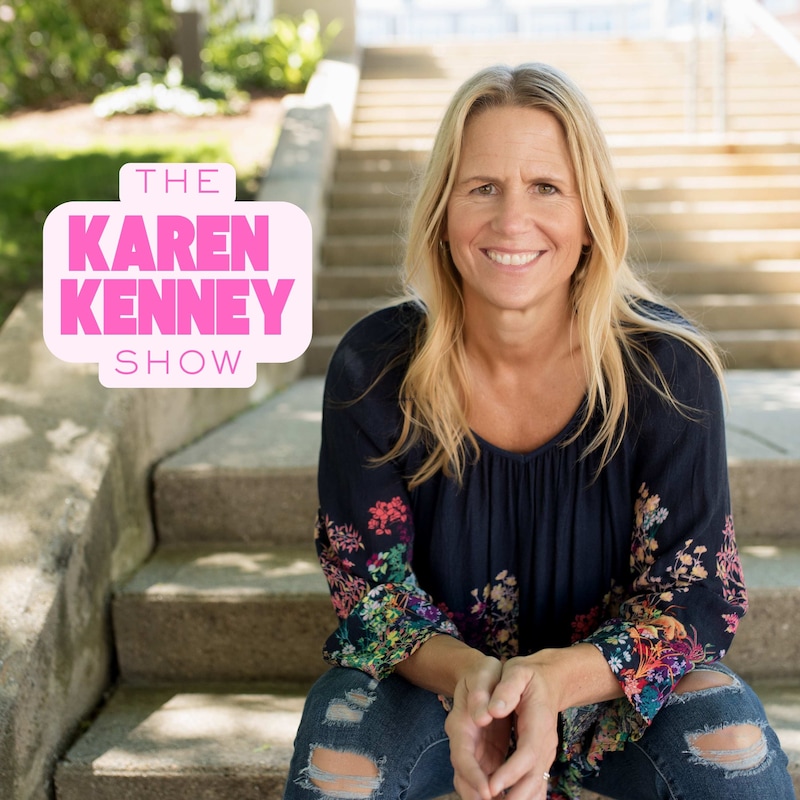
Shownotes
On this episode of The Karen Kenney Show, I talk about what happens when we walk through life with only one “tool”.
Which is usually our default reactions like - anger, shutting down, the silent treatment, judgment, or trying to fix everyone but our damn selves – and how that keeps our world and our relationships wicked small.
I tell a story about my love for Swiss Army knives and Leatherman tools when I was a kid and use them as a metaphor for expanding your emotional and spiritual toolkit - now that we're grown-ass adults. 😆
We dive into why curiosity is such a powerful tool, how our old patterns can limit our ability to respond wisely, and I share some simple practices that you can start using when you feel anxious, activated, or in conflict.
You’ll also learn:
📌 How “if all you have is a hammer, everything looks like a nail” shows up in your life
📌 Why a lack of curiosity can damage relationships and keep you stuck
📌 New emotional and spiritual “tools” you can add to your inner toolkit
📌 Practical ideas for communicating better and regulating your nervous system
If you’re ready to move through the world with more calm, clarity, compassion, and choice, then this episode is gonna' be right up your alley!
KAREN KENNEY BIO:
Karen Kenney is a writer, speaker, podcaster, certified spiritual mentor, and coach.
She’s known for her dynamic storytelling, her sense of humor, her Boston accent, and her no-bullshit approach to spirituality, self-development, and transformational change work.
Karen helps people to navigate this whole “being human” experience using a variety of practical tools, personal stories, and universal principles.
She's been a yoga teacher for 25+ years, has been a Thai Yoga Massage practitioner since 2008.
She's also a Gateless Writing Instructor, the creator of WRITE CLUB , and the host of The Karen Kenney Show podcast.
She coaches clients individually in her 1-to-1 program: THE QUEST and in her HEART-TO-HEART DAYS using Voxer. She also leads a group program and community called THE NEST.
CONNECT WITH KAREN:
Website: http://karenkenney.com/
Podcast: https://www.karenkenney.com/podcast
Facebook: https://www.facebook.com/karenkenneylive/
Instagram: https://www.instagram.com/karenkenneylive/
YouTube: https://www.youtube.com/@KarenKenney
Transcripts
It's the Karen Kenney show. Hey, you guys!
Karen Kenney:Welcome to the Karen Kenney Show. I'm super duper excited to
Karen Kenney:be here with you today. We're just gonna start. We're just
Karen Kenney:gonna jump right in with a little story. So I was in my car
Karen Kenney:today, earlier today, on my way to the gym, and you know I have
Karen Kenney:to put something in my console. And when I was looking in my
Karen Kenney:console, I see down in there two things that I get very excited.
Karen Kenney:So down in my console, I keep you know there's a couple of
Karen Kenney:things in there, but two of the things that I keep in there is
Karen Kenney:one is I have a Swiss Army knife, you know, a Swiss Army
Karen Kenney:little toolkit tool thing, and then I also have a Leatherman.
Karen Kenney:So when I was a kid, I loved Swissami knives. Like Double
Karen Kenney:Aman, hands if you can relate, right? I was a wicked tomboy. I
Karen Kenney:loved like GI Joes and like all all all the all the stuff that
Karen Kenney:people would say like quote unquote the boys like. Like I
Karen Kenney:think everybody can like everything. I'm just saying this
Karen Kenney:is what we called it back in the day, right? So when I was a kid,
Karen Kenney:I loved Swiss Army knives, and then later in the '80s, they
Karen Kenney:came out with a called Leatherman, like Leatherman
Karen Kenney:craft tools. And what I loved about these things is that they
Karen Kenney:were multi-purpose units, right? That they were multi-tools. And
Karen Kenney:what I realized is, so like for example, the Swiss Army knife is
Karen Kenney:kind of built around the knife, but some of the Swasami knives
Karen Kenney:also have screwdrivers, and they have little things for like
Karen Kenney:digging into stuff and threading things. They have cork screws,
Karen Kenney:right? And then the Leatherman is built more around like
Karen Kenney:pliers, and then it has these multi things around them, so you
Karen Kenney:can like pop open, and there's a screwdriver. You can pop open
Karen Kenney:this like little mini scissors, right? So like everything you
Karen Kenney:need is like built into these little things. And when I was
Karen Kenney:thinking about these multi tools and what really resonated with
Karen Kenney:me is I love the idea that in one little thing you can totally
Karen Kenney:expand your toolkit. And when I started to think about human
Karen Kenney:beings, right? My sweetie and I were talking about this the
Karen Kenney:other day, and I was thinking about human beings. What happens
Karen Kenney:so often is that people do not expand their toolkit. They don't
Karen Kenney:expand the tools in their toolkit. And another way of
Karen Kenney:saying that is that they don't expand their perspectives,
Karen Kenney:right? And we'll get into all of that in a minute. So I want to
Karen Kenney:get into this idea of why it's important that we expand our
Karen Kenney:quote-unquote toolkit or our set of tools, and it goes back to
Karen Kenney:this quote that maybe you have heard. Now people have
Karen Kenney:attributed these quotes to like different people, like Mark
Karen Kenney:Twain, whatever. Mark Twain. There's obviously like no proof
Karen Kenney:that he ever said this, but the reason why we don't want to have
Karen Kenney:a small toolkit is because it really limits how we not only
Karen Kenney:see the world but how we respond to the world. It it changes how
Karen Kenney:we see problems in solutions, and it changes how we interact
Karen Kenney:with other human beings in our relationships, right? So Abraham
Karen Kenney:Maslow said. So back in 1966, a guy named Abraham Maslow said
Karen Kenney:this in the Psychology of Science. He says this: If you,
Karen Kenney:if the only tool you have is a hammer, you tend to treat
Karen Kenney:everything as if it were a nail. Another way that this got said
Karen Kenney:around the same time is it says if one has a hammer, one tends
Karen Kenney:to look for nails. So we can already see how only having one
Karen Kenney:tool it limits your scope not only of problem solving, but it
Karen Kenney:limits your perspective. If the only thing you have is the
Karen Kenney:hammer, everything not only starts to look like nails, like
Karen Kenney:that's the tool you need to use, but you'll also only you'll
Karen Kenney:start to look for nails. You'll start to look for problems that
Karen Kenney:maybe don't even exist. And then Abraham Kaplan, who was a
Karen Kenney:professor of philosophy at UCLA, he also said this back in the 60
Karen Kenney:s. Something very similar, and this is called the Kaplan's Law
Karen Kenney:of the Instrument.
Karen Kenney:It's also sometimes called the first law of the instrument, and
Karen Kenney:this is what it states. He says, "Give a boy a hammer, and
Karen Kenney:everything he meets has to be pounded. Another way that this
Karen Kenney:has been kind of paraphrases this: I did research. You guys
Karen Kenney:know I always look shit up. I do like I love words. I love like
Karen Kenney:phrases and quotes and and getting to the to the happy like
Karen Kenney:the origin story of stuff. So another way that this has been
Karen Kenney:said is this: If you give a boy a hammer, he suddenly finds that
Karen Kenney:everything needs pounding. Think about that. Let's just hit boop
Karen Kenney:boop. Let's hit the pause button for a second and think about
Karen Kenney:this. If you have only one tool, you. Start to see everything
Karen Kenney:through the lens of this is the solution for everything, and if
Karen Kenney:this is the only thing you have, you think that's the only way to
Karen Kenney:view things through, right? And so it becomes very limiting. And
Karen Kenney:I'm going to apply this in a broader perspective in a moment.
Karen Kenney:So here's the thing: if you only have a hammer, that's all you'll
Karen Kenney:ever use, and you don't even sometimes know that there are
Karen Kenney:other options or other ways or other tools out there. So one of
Karen Kenney:the things that is deeply, deeply required, and I cannot
Karen Kenney:say this enough, is you must be a person who has curiosity. Now
Karen Kenney:I'm just going to go out there and say this, and this might
Karen Kenney:make me sound mean or judgmental or a jerk or whatever, but I
Karen Kenney:really, really do feel this deeply. I find people who have a
Karen Kenney:lack of curiosity so excruciatingly dull. People who
Karen Kenney:are not interested in other human beings, people who aren't
Karen Kenney:interested in other points of view, people who aren't
Karen Kenney:interested in learning, people who aren't interested in hearing
Karen Kenney:the story, people who don't want to know what it's like to stand
Karen Kenney:in another person's shoes, people who don't want to
Karen Kenney:understand another person's perspective. Like, if you're not
Karen Kenney:curious, one of the things that I have said to my yoga students
Karen Kenney:for a gazillion years, and I say it to people in the nest. I say
Karen Kenney:it to people in my yoga classes. I say it to people in mentoring
Karen Kenney:and in my writing. My writing, you know, write club. I do
Karen Kenney:writing workshops every month. The number one thing that I tell
Karen Kenney:them is you must be curious. If you are not curious, oh my God,
Karen Kenney:I see it so often too. As a podcaster, I see people who
Karen Kenney:interview other human beings, and they are just not curious
Karen Kenney:enough. They just ask the same old questions that everybody
Karen Kenney:asks. They don't get under the under. They don't lean in. They
Karen Kenney:don't ask people about themselves, and you also see
Karen Kenney:this in bad dates. On bad dates, when the other person all they
Karen Kenney:do is talk about themselves, and they don't ask you a single
Karen Kenney:thing about yourself. And I also see this. There's so much
Karen Kenney:suffering that I have seen with humans I have worked with in
Karen Kenney:relationship to their families, and they'll say to me, like,
Karen Kenney:think about like their siblings, their parents, their people,
Karen Kenney:their quote unquote people, and they'll say they never ask me
Karen Kenney:about myself, and I'm like, they don't ask you about yourself
Karen Kenney:because they've already decided who they think you are. They put
Karen Kenney:you, they slapped a bunch of labels on you, they put you in
Karen Kenney:the boxes of their own making. They've decided that this is who
Karen Kenney:you are, and you could be six months later, six years later,
Karen Kenney:60 years later, and they just have lost all curiosity about
Karen Kenney:you, for you, towards you, whatever. And it is just lazy,
Karen Kenney:and it's dull, and it's uninspiring. And if that makes
Karen Kenney:me an asshole, I guess that's what I am because I just I just
Karen Kenney:do not understand now what why people have a lack of curiosity
Karen Kenney:about other people's humanities and stories and why they are the
Karen Kenney:way that they are and why they think that and why they do that.
Karen Kenney:I mean, I just think like, oh my god, you cannot be a writer and
Karen Kenney:a storyteller. You cannot be a good teacher. I don't think you
Karen Kenney:can be a good coach.
Karen Kenney:I don't think you can be a good mentor or a good therapist or
Karen Kenney:even a good parent for that matter. If you're not leaning
Karen Kenney:into and trying to get more tools in your toolkit for
Karen Kenney:understanding the other humans and animals and world around
Karen Kenney:you, so how? Like again, think about it. If all you have is a
Karen Kenney:hammer, but the person or the problem or the situation
Karen Kenney:requires needle nose tweezes, then you're fucked, and the
Karen Kenney:person that you're dealing with is also fucked because if you
Karen Kenney:only have a hammer when the situation, the person, the
Karen Kenney:whatever requires a little bit more tenderness, or mercy, or
Karen Kenney:compassion, or quiet, or care, or whatever, then damage will be
Karen Kenney:done. You will end up leaving a mark. And one of the ways that I
Karen Kenney:saw this, I'll never forget. So here I am, like a total mass
Karen Kenney:hole, right? I grow up in Lawrence, Mass. I go to BU. I
Karen Kenney:live in Boston for five years, whatever, and then I move out to
Karen Kenney:LA. That's a longer story for another. I would say read the
Karen Kenney:book, read the read the memoir when it comes out. But it was
Karen Kenney:so, it was so mind blowing to me, like my experience in Los
Karen Kenney:Angeles, in L.A. in California, when I look back to what my life
Karen Kenney:was like in Lawrence and in Boston and stuff like that, I
Karen Kenney:would not be the same person that I am. I've said this before
Karen Kenney:about my mother too. I'm like, if my mother hadn't been killed,
Karen Kenney:like if my mother didn't die when I was. Younger, I don't
Karen Kenney:think I'd be the same person that I am today, and I can tell
Karen Kenney:you 100% straight up facts, facts. I would not be the same
Karen Kenney:person I am today if I hadn't left home, gotten the fuck out
Karen Kenney:of Mass Hole City, right? And I, you know me, I love being a
Karen Kenney:little masshole. Hashtag evolved masshole, right? But to leave my
Karen Kenney:roots, to leave my quote-unquote people, to leave the family, and
Karen Kenney:to move 3000 miles away to the opposite coast, right? I went
Karen Kenney:from the northeast to the southwest. You know, it's like
Karen Kenney:what a total different experience, and I remember like
Karen Kenney:it was so fascinating because my sweetie has talked about this
Karen Kenney:too because he's a kid that grew up in Dover, New Hampshire, and
Karen Kenney:same thing he moved out to LA. We were both out in LA at the
Karen Kenney:same time, probably circling around each other. Our paths
Karen Kenney:didn't cross, although we're convinced that we were in the
Karen Kenney:same places at the same time, but just didn't know each other.
Karen Kenney:But he too also says, like when we were out there, like people
Karen Kenney:who were local, like local native Californians. A lot of
Karen Kenney:times, it's like they didn't get they didn't get the sarcasm,
Karen Kenney:they didn't get the harshness, they didn't get the like teasing
Karen Kenney:as a form of affection. Right? It was just like foreign to
Karen Kenney:them. It was like, what, what, what is this, right? And they
Karen Kenney:didn't always understand like the East Coast. And I often say,
Karen Kenney:I'm an East Coast kid, like I'm an East Coast kid with like a
Karen Kenney:West Coast sensibility in a lot of ways. Because being in
Karen Kenney:Burbank, being in in Montecito and Santa Barbara with Marianne,
Karen Kenney:right? Marian Williamson being down in San Diego, like just
Karen Kenney:being on the West Coast and experiencing their point of
Karen Kenney:view, like experiencing Hollywood, experiencing like all
Karen Kenney:the movie styles, experiencing the glam and the grit,
Karen Kenney:experiencing just the level and depth of of you know, a lot of
Karen Kenney:people like oh the the Californians are crazy it's all
Karen Kenney:woo woo out there, but I will tell you the spiritual
Karen Kenney:experiences the spiritual exposure that I got in
Karen Kenney:California I would not be the same person. So if you're
Karen Kenney:somebody who finds themselves always reaching for the hammer,
Karen Kenney:and let's just think about this. Let me give you a concrete
Karen Kenney:example. Let's say that when you get into an argument with your
Karen Kenney:sweetie, you guys fall into your patterns because you don't have
Karen Kenney:any tools. So one of you starts slamming shit or slamming doors
Karen Kenney:or whatever, and the other one does the silent treatment, and
Karen Kenney:like that's your mo.
Karen Kenney:The only way that you need to, the only way that you seem to
Karen Kenney:have to show your dissatisfaction, your
Karen Kenney:unhappiness, your annoyance, your anger, whatever, is that
Karen Kenney:you stop speaking to your partner. And somebody was
Karen Kenney:telling me the other day, they're like, "Oh yeah, I've
Karen Kenney:known people who they don't talk. They live in this little
Karen Kenney:space, this little apartment, and they haven't talked to each
Karen Kenney:other in two weeks. And I just think like, what the fuck is
Karen Kenney:that? Like, what does that look like, right? And I'm not, I'm
Karen Kenney:not judging those people, but what it usually tells me is they
Karen Kenney:don't have more tools in their toolkit for finding out how to
Karen Kenney:express or sharing how they feel with the other person, right?
Karen Kenney:Let's say that your immediate tool is like anger, like you you
Karen Kenney:don't have any other way of like expressing yourself again. When
Karen Kenney:all you have is a hammer, everything and everybody starts
Karen Kenney:to look like a nail that needs to get pounded. So it limits us.
Karen Kenney:It limits our ability to respond appropriately. And again, let's
Karen Kenney:say something you know needs a screwdriver, but all you have is
Karen Kenney:a chisel. Like that's not going to work. So it's so important
Karen Kenney:that we learn how to expand our toolkit to get different tools,
Karen Kenney:and we could also apply this to ourselves with ourselves. Like
Karen Kenney:let's say that you're somebody who has panic attacks, or
Karen Kenney:somebody who gets anxious, or somebody who has whatever. It's
Karen Kenney:really, really helpful to be able to have different things in
Karen Kenney:your toolbox, like breathing exercises, or knowing that you
Karen Kenney:can take something cold and put it on the back of your neck, or
Karen Kenney:put cold water on your face, or knowing that you could hum like
Karen Kenney:some sounds to help your vagus nerve, or knowing that you could
Karen Kenney:suck on a super sour candy because that will pull you in,
Karen Kenney:knowing that you could do EFT tapping or bilateral stimulation
Karen Kenney:or 1000 other tools, but you have to be curious enough and
Karen Kenney:have a strong enough desire to want to help yourself, that you
Karen Kenney:learn those things, and some very simple things that you can
Karen Kenney:do. Because I get it, right? Me going, leaving Lawrence and
Karen Kenney:going to Boston and being at Boston University around kids
Karen Kenney:who came from such different lives than me, kids who had so.
Karen Kenney:Much money, whose parents were like they didn't have the money.
Karen Kenney:Their parents had the money, right? Kids who had famous
Karen Kenney:parents, kids who just came from different religions and
Karen Kenney:backgrounds, and all kinds of stuff. Like that was another
Karen Kenney:like like the door swung open on my life, and I was able to meet
Karen Kenney:people from the Midwest, and I was able to meet like Jewish
Karen Kenney:friends, and I was able to be exposed to people who were from
Karen Kenney:Ghana. Like, I mean, my whole world was just woo, just like
Karen Kenney:grew in size, right? And then moving to California, that it
Karen Kenney:did that too, right? All the experiences I got to have with
Karen Kenney:the Course in Miracles and working in bookstores and da da
Karen Kenney:da da, like all these things, right? So not everybody though
Karen Kenney:can go off to college. Not everybody wants to. Not
Karen Kenney:everybody can possibly leave home or leave their hometown.
Karen Kenney:Sometimes you're stuck where you're stuck for whatever
Karen Kenney:reason. You don't have transportation. You don't have
Karen Kenney:money. You don't have support. You don't know where to go. You
Karen Kenney:don't know how to go. Whatever. But some of the things that we
Karen Kenney:can simply do to grow our toolkit in our own. When you're
Karen Kenney:you're just like, hey, I don't have a ton of resources, and I'm
Karen Kenney:like, everybody can get a library card. I don't know if
Karen Kenney:you have to walk to the library. I don't know if you're able to
Karen Kenney:get to the library. Maybe a friend can like. Maybe you can
Karen Kenney:call, find out whatever. Again, but you need to be curious. You
Karen Kenney:need to be willing to step a little outside of your comfort
Karen Kenney:zone to learn new tools, right? But if you cannot leave home,
Karen Kenney:then leave your apartment, leave your house, leave whatever, and
Karen Kenney:go to the library, go to the bookstore, right? Libraries are
Karen Kenney:free.
Karen Kenney:That's the beautiful thing: is you can get a library card and
Karen Kenney:reading in libraries, and again, not everybody maybe can read,
Karen Kenney:but you can do books on audio if you can listen, right? And
Karen Kenney:again, there's always nuances and exceptions to all of the
Karen Kenney:things that I might say, so I don't know all the solutions,
Karen Kenney:and I can't possibly in this short amount of time, you know,
Karen Kenney:give you give you like all the solutions. But what I'm saying
Karen Kenney:is, there are ways to help educate yourself, to expand your
Karen Kenney:perspective, to see from other people's point of views. This is
Karen Kenney:what books do: is they give us insights into the quote unquote
Karen Kenney:quote unquote. I'm doing little air quotes. Others, right? I
Karen Kenney:often think this. I just think people from different political
Karen Kenney:parties should talk to each other. Straight people should
Karen Kenney:talk to gay people. Black people and white people should maybe
Karen Kenney:have a conversation. People who are all different from each
Karen Kenney:other, people who come from maybe organized religion, should
Karen Kenney:talk to some atheists. People who love yoga should talk to
Karen Kenney:people who don't like whatever. But if we all got curious about
Karen Kenney:each other. If we all got curious about wanting to have
Karen Kenney:more tools beyond just having that one hammer or that one
Karen Kenney:screwdriver or that one set of pliers, right? If we could get
Karen Kenney:curious enough and expand our toolkit, then we could respond
Karen Kenney:more appropriately to the humans in our life, to the situations
Karen Kenney:in our life, to the climate that we find ourselves in right now,
Karen Kenney:you know. And another thing we can do too is talk to, like I
Karen Kenney:just said, talk to people who are different than you. Talk to
Karen Kenney:people who you would normally not talk to. Find out. Be
Karen Kenney:curious. Expand your perspective. Because again, like
Karen Kenney:I love being a Swiss Army knife. I have now kind of become that.
Karen Kenney:Like I look at my life, and you know, sometimes it's a struggle
Karen Kenney:when it comes to marketing, and people like, "What do you do?
Karen Kenney:And I'm like, "Oh Jesus Christ on a cracker! Because I'm not
Karen Kenney:just one thing. Like my sweetie's like I'm a musician,
Karen Kenney:and yeah, he's a multi instrumentalist and he's a
Karen Kenney:singer and he's a songwriter, but he's a musician. When people
Karen Kenney:are like, "What do you do? I'm like, "Oh my god! Like, where do
Karen Kenney:I start? I do so many things, so it makes a little bit hotter
Karen Kenney:sometimes. But I love that I have a lot of different skill
Karen Kenney:sets. I love that I'm a podcaster and I'm a writer
Karen Kenney:working on a memoir, and I love that I've been a yoga teacher
Karen Kenney:forever. I love that I do Thai yoga massage, right? Thai yoga
Karen Kenney:body work. I love that I host Write Club every month. I love
Karen Kenney:that I have the Nest, my my spiritual mentoring group
Karen Kenney:coaching membership. I love that I work one to one with people.
Karen Kenney:Like I love that I like I you know Reiki, like all the things,
Karen Kenney:just all the things, right? I love that I'm kind of like a
Karen Kenney:little Swissami toolkit, right? A Swiss Army knife, and I think
Karen Kenney:for all of us, especially as we get older, because for a lot of
Karen Kenney:people, when they get older, they lock in. They lock in to
Karen Kenney:their way being the only way, to their tools being the best
Karen Kenney:tools, to their way being the right way. You know what I mean?
Karen Kenney:We we make our lives and our minds very very very small, and
Karen Kenney:it limits our capacity to connect to have deep
Karen Kenney:relationships. You know, it's like if if you just stopped
Karen Kenney:assuming you already knew what your sweetie was gonna say or
Karen Kenney:what you already knew your sibling was. Gonna do, or if you
Karen Kenney:already whatever, if you stop showing up to the potty with
Karen Kenney:your one tool, and instead went in and said, "My toolkit's a
Karen Kenney:little lacking. I need to expand this toolkit. I need to get more
Karen Kenney:tools in my toolkit, right, so that I can make different
Karen Kenney:choices, so that I can see things differently. So this is
Karen Kenney:an invitation for us to like all of us, me too, to kind of look
Karen Kenney:at how we have been kind of like what's the tool I've been
Karen Kenney:picking up a lot? Is it expectation? Is it assumptions?
Karen Kenney:Right? Is it putting people in boxes?
Karen Kenney:Is it like oh, I've been using my judgment tool like a wicked
Karen Kenney:lot lately or whatever? You know what I'm saying? And we can get
Karen Kenney:creative and apply whatever we think tools are. There's literal
Karen Kenney:tools, hammers, nails, whatever. There's tools that we use for
Karen Kenney:healing, right? There's tools that we use for what's word like
Karen Kenney:even our bodies. Like a lot of times, yoga teachers just think
Karen Kenney:yoga is the one and the only way, and it can heal everything.
Karen Kenney:No, it can't. No, it can't. And especially if you're of a
Karen Kenney:certain age, you might want to get some strength training in.
Karen Kenney:That's the other thing. I used to be a personal trainer, right?
Karen Kenney:Used to be a professional organizer. I have dabbled and
Karen Kenney:fucked around and found out, and I have a lot of tools in my
Karen Kenney:toolkit. But I love it because when I am, you know, hired to
Karen Kenney:help somebody, whether it's simply somebody coming to my
Karen Kenney:yoga class or somebody showing up on my mat for Thai yoga body
Karen Kenney:work, which is Thai yoga massage, but in New Hampshire
Karen Kenney:you have to be very careful, right? So whenever somebody is
Karen Kenney:showing up, if I only knew how to how to stretch, right, work
Karen Kenney:on people who are wicked flexible, it would totally limit
Karen Kenney:my thing. If I always insist on my yoga class and it's going to
Karen Kenney:be done this way and it's going to be a fast class and it's
Karen Kenney:going to be da da da da, half the so many people in my class
Karen Kenney:would not be able to participate or keep up. We have to be
Karen Kenney:multifaceted as human beings. We have to do it in our work. We
Karen Kenney:have to do it in our relationships. We have to do it
Karen Kenney:in our relationship with ourselves. We have to do it in
Karen Kenney:our craft, right? We have to. And I think for me, one of the
Karen Kenney:greatest tools that I have in my toolkit is my curiosity. I'm
Karen Kenney:also wicked resilient. I'm also persistent, you know. So there's
Karen Kenney:different kind of tools that we can have, not just physical
Karen Kenney:tools, not just physical skill sets, but it's also how I look
Karen Kenney:at the world. I also can handle a pretty good plot twist, you
Karen Kenney:know. I'm pretty good in an emergency, like whatever it is.
Karen Kenney:So I want to invite you to take a look at your own toolkit and
Karen Kenney:just notice, like, where am I maybe lacking? Like, my
Karen Kenney:communication skills aren't so great. I'm kind of, I, I am
Karen Kenney:straight up, straight out of patience, right? My patient's
Karen Kenney:coffee maybe could be refilled, but I need a little more toolkit
Karen Kenney:in the patience, you know, slot or zone or whatever. And I like
Karen Kenney:to think of this. I'm a very visual thinker, right? So, like
Karen Kenney:some of you may have had grandparents in double may amen
Karen Kenney:hands if you did, but you might have had grandparents or uncles
Karen Kenney:or aunties or whoever who in the garage or in their basement or
Karen Kenney:in their little workstation or their what do people have their
Karen Kenney:little artist studio in the house whatever however you grew
Karen Kenney:up, you know they might have had either a shelf or a wall. But
Karen Kenney:I'm thinking of the ones like in the old days. You know those
Karen Kenney:paddle boards that had all the holes in them, so you can put
Karen Kenney:little hooks in, and people would like hang up their tools
Karen Kenney:and then trace the tools. So if you lent it to somebody or your
Karen Kenney:neighbor took it, you would know when it was missing, like on the
Karen Kenney:wall or whatever, and then you could ask for it back, and it's
Karen Kenney:like, oh yeah, like Marty next door has the hammer or whatever,
Karen Kenney:right? So when you see, right, so I think of it like that. You
Karen Kenney:could literally picture it like you're like one of those red
Karen Kenney:metal toolboxes with the latches, like click, click, you
Karen Kenney:know, and opening them up, or you could see it like more of a
Karen Kenney:like a tool belt that's around your waist, or whatever. However
Karen Kenney:you visualize this, but I'm thinking of the one with the
Karen Kenney:outlines right now, right? A wall toolkit. You know, imagine
Karen Kenney:looking at that and being wicked honest with yourself and saying
Karen Kenney:like, what's on my wall? What's missing from my wall. What tools
Karen Kenney:maybe could I use?
Karen Kenney:Because again, if all you have is a hammer, you'll walk around
Karen Kenney:thinking everybody needs to be pounded. And what I mean by that
Karen Kenney:is, if you grew up like as a asshole, and your solution to
Karen Kenney:everything was to suck it up and stuff it down, when somebody
Karen Kenney:else comes to you with a problem, or your child comes to
Karen Kenney:you and they're upset, you and you don't know compassion,
Karen Kenney:tenderness, mercy, listening, right? Like really hearing them,
Karen Kenney:reflecting back what they just said to you, asking them. Like
Karen Kenney:one of your tools, a really good tool to have is to ask somebody,
Karen Kenney:"What do you need from me right now? Do you just want me to
Karen Kenney:listen?" Or do you want me to help you find some solutions,
Karen Kenney:right? If you don't have that toolkit, if you don't have that
Karen Kenney:tool in your toolkit, you just think to pick up your hammer and
Karen Kenney:say, "Suck it up, you know, "suck it up. This happens to
Karen Kenney:everybody. You don't know how bad I had it back in the day. If
Karen Kenney:you if you bring everything back to you, or you're not able to be
Karen Kenney:compassionate towards their situation, you are lacking some
Karen Kenney:tools, my friend. You know, so we get to take an honest, as
Karen Kenney:they say in 12-step programs, you take a fearless moral
Karen Kenney:inventory. Well, right now we're just taking a fearless and
Karen Kenney:wicked honest like tool inventory, right? And and ask
Karen Kenney:myself, where has my toolbox? Is there an attrition rate, right?
Karen Kenney:Do you have even less tools now as you got older because you
Karen Kenney:started to specialize in something and you really started
Karen Kenney:to drink the Kool-Aid that this way is the only way, or this is
Karen Kenney:how my family has always done it? Because sometimes, right?
Karen Kenney:And if you're sometimes, you know, if you're somebody who's
Karen Kenney:like, as we call it, or it is sometimes called idiot
Karen Kenney:compassion or idiot empathy, right? Where you're way you cut
Karen Kenney:people way too much slack all the time, when sometimes they
Karen Kenney:need a little boot in the ass, lovingly, as I always say,
Karen Kenney:loving but firm, right? As I was taught from my teaches, multiple
Karen Kenney:teaches, Ashwaran, one of them, you know, taught me that loving
Karen Kenney:but firm, because we don't. It's it's not helpful to anybody to
Karen Kenney:let them treat you like shit to be a doormat. Letting people get
Karen Kenney:away with being total colossal assholes is not helpful to them
Karen Kenney:or to you. So I can just go on and on and on giving different
Karen Kenney:examples, but I think you're wicked smart. My I know my
Karen Kenney:listen is a super duper smarty pants, so you're picking up what
Karen Kenney:I'm putting down. But I do think, right? I mean, so much of
Karen Kenney:this podcast is I would love for us to be able to move through
Karen Kenney:the world, right? Move through the world, right? With with more
Karen Kenney:confidence and more calm, more creativity, more connection,
Karen Kenney:more compassion, all the things. All if you listened to my
Karen Kenney:episode last week about talking to the younger you, I talked
Karen Kenney:about the 8c's of self-that capital S self-and when you're
Karen Kenney:in your capital S self way of being, all those C's I just
Karen Kenney:said, right? Like there's eight of them, but like compassion,
Karen Kenney:clarity, confidence, courage-you know, creativity, connection,
Karen Kenney:curiosity. When you're in that state, that calm, then your
Karen Kenney:tools are so much more available to you. But first of all, we got
Karen Kenney:to take a look around and say: Do I even have any tools? Do I
Karen Kenney:keep using the old tools? Is it time to update my tools? Throw
Karen Kenney:out the old ones, get some new ones, whatever, and then also
Karen Kenney:again, you know, it's like if you only have a hammer, that's
Karen Kenney:all you're going to ever use, and the person standing in front
Karen Kenney:of you might really need something different. So we have
Karen Kenney:to get curious enough also to pay attention, to lean in, to
Karen Kenney:listen, and then to respond appropriately, and we want to be
Karen Kenney:able to do that to ourselves too, especially when those
Karen Kenney:younger parts of ourselves, right, are needing some of our
Karen Kenney:attention. So I hope this has been helpful in some way. That
Karen Kenney:is always my desire: is that I leave you guys better than how I
Karen Kenney:found you, and that I share something that either, at the
Karen Kenney:very least, I say the very least. At least you're
Karen Kenney:entertained.
Karen Kenney:At least you don't get to the end of it feeling like you're
Karen Kenney:wasting your time and you had a good time while you were here.
Karen Kenney:So, thank you so much for tuning in and listening. As always, if
Karen Kenney:you want to get on my email newsletter list, I don't over
Karen Kenney:whatever. I you know on Thursdays you'll get the podcast
Karen Kenney:right into your inbox, and once in a while, on the other days, I
Karen Kenney:just let you know what's going on. Whether there's a new Write
Karen Kenney:Club coming up, or if I have openings for Thai yoga body
Karen Kenney:work. If you know my yoga class is almost always sold out, but
Karen Kenney:sometimes there's a space for somebody to do a drop in once in
Karen Kenney:a blue moon. But whatever I'm up to, right, joining the Nest, any
Karen Kenney:of those things, just go to my website. If you want to get on
Karen Kenney:the on the the email list, though, it's karenkeney.com/sign
Karen Kenney:up. Everything else, just go to karenkenney.com. You'll see it
Karen Kenney:all up in the header. You can navigate to where you want to
Karen Kenney:go. So thank you for being here, you guys. I hope you find
Karen Kenney:yourself being more like a Swiss Army knife or a Leatherman that
Karen Kenney:you are expanding your toolkit every day, also, and I just
Karen Kenney:appreciate you being here as one of my. Maybe you're a loyal
Karen Kenney:listener, or maybe you're new. And if you're new here, hi, and
Karen Kenney:thank you for joining. I appreciate it. Okay, you guys,
Karen Kenney:wherever you go, may you leave the animals, the other people,
Karen Kenney:yourself, the planet, and the environment better than how you
Karen Kenney:first found it. Wherever you go, may you and your energy and your
Karen Kenney:attitude and your presence and your love and your curiosity and
Karen Kenney:your Swiss Army knife be a blessing. Bye. Hey, thanks so
Karen Kenney:much for listening to the show. I really love. Spending some
Karen Kenney:time together now. If you dig the show or know someone that
Karen Kenney:could benefit from this episode, please share it with them and
Karen Kenney:help me to spread the good word and the love. And if you want to
Karen Kenney:be in the know about all of my upcoming shenanigans, head on
Karen Kenney:over to karenkenney.com/signup and join my list. It'll be
Karen Kenney:wicked fun to stay in touch. Bye.



