Shownotes
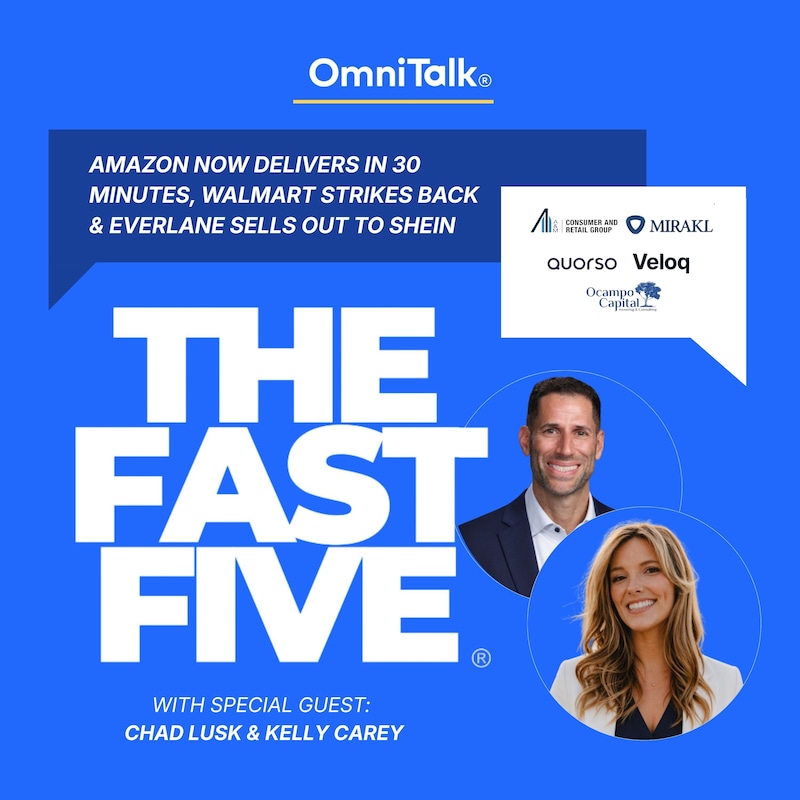
In this week’s Omni Talk Retail Fast Five sponsored by the A&M Consumer and Retail Group, Mirakl, Ocampo Capital, Quorso and Veloq, Chris Walton and special guests Kelly Carey and Chad Lusk of the A&M Consumer and Retail Group discussed:
• Amazon aggressively expanding 30-minute delivery across the U.S. and why the real strategy may be psychologically redefining what consumers expect from retail convenience (Source)
• Walmart quietly piloting neighborhood delivery depots in vacant retail spaces and whether the retailer may actually hold the long-term infrastructure advantage in the immediacy wars (Source)
• Best Buy launching in-store consultation spaces inside IKEA locations and why the partnership may create one of the smartest experiential retail adjacencies in home commerce today (Source)
• Amazon rolling out Alexa for Shopping nationwide and why AI commerce may ultimately come down to one key question: who actually captures the transaction? (Source)
• Shein acquiring Everlane for approximately $100 million and what the deal says about the collision between brand values, operational scale, and the realities of modern retail economics (Source)
There’s all that, plus karaoke confessions, transformation overload, AI shopping hot takes, wedding mic-stealing attempts, and a surprisingly deep conversation about the future psychology of commerce.
Music by hooksounds.com
This podcast uses the following third-party services for analysis:
Podcorn - https://podcorn.com/privacy
Transcripts
I never thought I would hear the word transformation more than I ever did five or six years ago.
Speaker A:And now it's like in every conversation I'm having with everyone.
Speaker B:Transformations.
Speaker A:Transformation.
Speaker B:Transformative.
Speaker A:A transformative transform.
Speaker C:Today with AI commerce, everyone is obsessing over who builds the smartest AI model.
Speaker C:But Amazon is kind of quietly focused on a different question.
Speaker C:Who actually captures the transaction.
Speaker A:Amazon can play the long game here and so they starve them out in the long run.
Speaker B:If people are already going to Amazon to purchase and I can just say to my phone, alexa, buy dog food, that's pretty incredible.
Speaker B:But if you can just reduce the friction, I think it builds on the proposition they already have.
Speaker D:This might be my favorite episode ever.
Speaker A:Yeah, there we go.
Speaker A:Hello and welcome to the OmniTalk Retail Fast 5.
Speaker A:One of the reasons I started OmniTok was to go beyond the surface level of the headlines.
Speaker A:Headlines which for the most part are regurgitated by journalists, the way corporate PR teams want the headlines spun.
Speaker A:This week's headlines offer an illuminating case study into that very fact.
Speaker A:Amazon says one thing.
Speaker A:Walmart quickly responds.
Speaker A:So with the help of my friends at the A and M Consumer and Retail Group, we're going to go deeper.
Speaker A:We're going to break through the surface to discuss what these two retail giants and others are really up to when one reads between the lines.
Speaker A:And.
Speaker A:And we're going to do it all right after we hear from all our wonderful sponsors who make this podcast possible each and every week.
Speaker A:This episode of The OmniTalk Retail Fast 5 is brought to you by the A and M Consumer and Retail Group.
Speaker A:The A and M Consumer and Retail Group is a management consulting firm that tackles the most complex challenges and advances its clients, people and communities toward their maximum potential.
Speaker A:CRG brings the experience, tools and operator like pragmatism to help retailers and consumer products companies be on the right side of disruption.
Speaker A:And Miracle, the catalyst of Commerce.
Speaker A:Over 450 retailers are opening new revenue streams with marketplaces, dropship and retail media.
Speaker A:And succeeding with Miracle, you can unlock more products, more partners and more profits without the heavy lifting.
Speaker A:So what's holding you back?
Speaker A:Visit Miracle.com to learn more.
Speaker A:That's M I R A K L.com and Corso.
Speaker A:Your stores are full of data, but are your teams acting on it?
Speaker A:Corso turns retail data into personalized daily to dos that drive sales, reduce waste and improve execution.
Speaker A:No fluff, just action.
Speaker A:Help your managers focus on what matters most.
Speaker A:Visit corso.com to see Intelligent Management in Motion and Ocampo Capital.
Speaker A:Ocampo Capital is a venture capital firm founded by retail executives with the aim of helping early stage consumer businesses succeeded through investment and operational support.
Speaker A:Learn more@ocampo capital.com and finally, vac Veloc is a proven e grocery technology built by grocers for grocers.
Speaker A:Exactly the type of technology we like here at Omnitalk.
Speaker A:They unite proprietary software with right size automation to make same day delivery profitable.
Speaker A:To learn more visit veloc.com that's V E L O q.com welcome back everyone.
Speaker A:I'm excited to introduce our two excellent co hosts who have appeared on this show many, many a times before.
Speaker A:Kelly Carry.
Speaker A:First of all, how are you?
Speaker B:I'm doing well.
Speaker B:How are you?
Speaker A:Yeah, I'm doing well.
Speaker A:Have you, where are you?
Speaker A:Have you moved yet?
Speaker A:Last time I talked to Kelly, everyone, she was in the process of moving, which is like my least favorite thing to do.
Speaker B:Yeah, I have not moved yet, but we have officially closed on a house since I last spoke to you.
Speaker B:So one step closer every time.
Speaker A:Yeah.
Speaker A:And where you're heading to Chicago, right?
Speaker A:You're moving from the east coast to Chicago.
Speaker B:Yes, Moving to Chicago.
Speaker B:So very excited especially to be moving in Chicago summer and not Chicago winter.
Speaker A:Yes.
Speaker A:Always a good call.
Speaker A:Yes.
Speaker A:If you're moving the Midwest, you got to move in this summer.
Speaker A:And speaking of Chicago, Chicago's.
Speaker A:I don't know if you're the native son.
Speaker A:I can't remember if you were born and raised in Chicago, Chad, but Chad Lusk, the one and only, been on the show more times than I can count at this point.
Speaker A:How are you doing?
Speaker C:Uh, I'm doing great.
Speaker C:No, not, not born and raised in Chicago, but have been, I don't know,.
Speaker A:I think it's been the adopted son.
Speaker A:You're the adopted son of Chicago 16.
Speaker C:In the last 20 years.
Speaker C:I'm our, you know, real kind of resident, A&M CRG Chicago native here.
Speaker C:Very happy to bring Kelly back into the fold here in Chicago.
Speaker C:Yeah, it has been a bunch of times, Chris.
Speaker C:I was actually looking.
Speaker C:Yeah.
Speaker C:Late in the prep a little bit.
Speaker C:And do you know a week from today?
Speaker C:I don't know why you'd know this, but a week from today to the day will be five years from my very first appearance on the pod.
Speaker A:Wow.
Speaker A:Are you serious?
Speaker A:How did you know?
Speaker A:What possessed you to look that up given all the things you have going on?
Speaker C:I don't know.
Speaker C:I like the different combinations of people that I have the opportunity to be on here with Kelly and I have worked together a lot on projects and, you know, with you all and, and so it inspired me to go back and look at what the first one was and yeah, it's almost five years to the day.
Speaker A:Wow, Chad, that gives me a warm fuzzy feeling.
Speaker A:A five year anniversary, unexpected five year anniversary.
Speaker A:What do we get each other?
Speaker A:I mean, is it paper?
Speaker A:I don't know.
Speaker A:I don't know.
Speaker C:Like, I feel like giving you the warm fuzzy is enough for me.
Speaker A:That does that.
Speaker A:That's all I need, Chad.
Speaker A:That's all I need.
Speaker A:But to let, let's let our audience sit behind the curtain because you and Kelly, you guys actually spend a lot of time together.
Speaker A:And so I'm curious, you know, Kelly, what, what do you think that's going to add to the chemistry of today's show?
Speaker A:Do you think that's going to take this show up to an 11?
Speaker A:Like what, what can we, what can the audience expect from the two of you today?
Speaker B:I dare I say 15?
Speaker B:Yeah, I think so.
Speaker B:It would be electric.
Speaker B:No, this is me and Chad's first podcast together.
Speaker B:So it's a new level of our partnership.
Speaker B:I mean, excited.
Speaker A:Yeah.
Speaker A:Chad, do you agree with that sentiment?
Speaker A:Are, are, are you as bullish on today's episode?
Speaker C:I, I think what that was, is that was code for I don't really know what Chad's going to do today because he's a bit of a loose cannon.
Speaker A:Well, I've got that taken care of because I've given you all the Amazon questions purposely.
Speaker A:You put me on the spot every single week, the two of you.
Speaker A:So you being, you being the guy that always drops the mic on the Amazon questions, I've literally pinned out every, pinned out every question for you specifically, Chad.
Speaker A:I around Amazon.
Speaker A:But before we get to the headlines, let's have everyone quick, get a quick reminder because we have a lot of new listeners each and every week.
Speaker A:Kelly, why don't you remind everyone about who you are and what it is you do at A&M CRG.
Speaker B:Great.
Speaker B:Yes.
Speaker B:Nice to meet all the new listeners.
Speaker B:Kelly Cary.
Speaker B:I'm a senior director at A&M CRG.
Speaker B:Been working with the group for 7 years now.
Speaker B:And really where I specialize is working with clients on end to end transformation.
Speaker B:So whether you're looking at your cost base, your operating model, or whether you're looking at pasta growth and what you need to be thinking about to follow consumer demand, I'm your girl.
Speaker B:So excited to share my thoughts on today's headlines.
Speaker A:Yeah, I never thought, Kelly, that the word Transformation.
Speaker A:I would hear the word transformation more than I ever did like five or six years ago.
Speaker A:And now it's like literally in every conversation I'm having with everyone, so.
Speaker A:Well, it's great to have you again, Chad.
Speaker A:What about you?
Speaker C:So I'll try to avoid the word transformation then.
Speaker C:So I've been with AM for the last about five and a half years.
Speaker C:Partner and managing director within our consumer and retail group, which is a reminder to folks or for new listeners.
Speaker C:It's an industry vertical within A and M and we spend 100% of our time focused on serving retailers and CPG companies.
Speaker C:I'm a former industry executive operator myself, former chief strategy officer, chief marketing officer in various consumer facing industry contexts and spend most of my time today helping clients at that intersection between commercial excellence and predominantly cpg.
Speaker C:A lot of food and beverage.
Speaker A:Yeah.
Speaker A:Awesome.
Speaker A:Awesome.
Speaker A:Well, it's great to have you again too.
Speaker A:You know, I want to get our minds going here a little bit too, Kelly, because you made me think of something with transformation.
Speaker A:I did a podcast recently, actually producer and ally, just producer Ella and I just released it on, on Monday.
Speaker A:And the theme of it was really that with AI, you know, it's not really about transformation, it's about actually operating better day to day and actually taking the transformative lens to it can actually be a disservice.
Speaker A:Do you agree with that, Kelly?
Speaker B:Yeah, it's a really interesting question.
Speaker B:I do think that so much of AI from an internal lens is about efficiency.
Speaker B:So how can I be better investing my organizational time in things that are strategic, things that really require that additional effort versus what can I take off the plate to just operate more efficiently?
Speaker B:That's huge.
Speaker B:And what people really need to be thinking about from a consumer end, I find it more transformative just because it's changing so much the way I shop today.
Speaker B:So it really, it feels more like a transformation there.
Speaker B:But I love hearing organizations think about it more from an efficiency lens.
Speaker A:You do?
Speaker A:You do?
Speaker A:Yeah.
Speaker A:That's a really great point, Kelly.
Speaker A:Yeah, it's really both things happening at the same time.
Speaker A:You have to think about the organization on the day to day and the consumer transforming right before your eyes.
Speaker A:Chad, what do you think on that subject?
Speaker C:No, I agree.
Speaker C:I mean, at the end of the day, AI is a tool, right.
Speaker C:It's just an extreme accelerator to be able to expand the reach and opportunities that organizations have had before.
Speaker C:Right.
Speaker C:Think about it in the context of CGI to movie technology.
Speaker C:It was the next echelon, a very strong jump in terms of where directors and studios were able to take the elements of creativity and manifesting that for audiences.
Speaker C:But fundamentally, great movies are still based on, you know, the creativity and the elements that make the storyline develop.
Speaker C:CGI allows you to be able to manifest it a little bit better and differently and more vividly.
Speaker C:And that's kind of to me, sort of the great accelerator that that AI is.
Speaker C:Right.
Speaker C:Like applying it to a business without a problem to solve.
Speaker C:Right.
Speaker C:Doesn't fundamentally do anything.
Speaker C:So it's a tool and technology in order to be able to help businesses solve the problems that they're wrestling with.
Speaker A:Anyway.
Speaker A:Oh man, you two got me excited for this podcast.
Speaker A:You got me thinking about.
Speaker A:You got me thinking about the first time I heard Richard, Richard Attenborough say welcome to Jurassic Park.
Speaker A:All right, this week's Fast 5, we've got news on Walmart quietly piloting small neighborhood depots for faster delivery.
Speaker A:Best Buy debuting consultation spaces inside of Ikea stores, Amazon enabling conversational shopping via its new Alexa for shopping and everlane selling out 2 of all people.
Speaker A:Shein.
Speaker A:But we begin today with Amazon's most aggressive push into ultra fast delivery yet.
Speaker A:According to retail dive.
Speaker A: s across the US by the end of: Speaker A:Amazon now uses a network of micro fulfillment centers or so called dark stores, roughly the size of a CVS and they are positioned close to customers for shorter travel distances and faster delivery times.
Speaker A:The service also operates 24 hours a day in most areas.
Speaker A:Prime members pay a 399 fee per order and non prime members pay $13.99.
Speaker A:And there are additional fees for orders under $15.
Speaker A:Chad, I said you're getting the Amazon questions today.
Speaker A:I wasn't joking.
Speaker A:On a scale of 1 to 10, where does Amazon's 30 minute delivery expansion rank in terms of retail's overall impact?
Speaker C:Yeah, I'm going to give it a solid.
Speaker A:Seven.
Speaker A:Seven?
Speaker A:You say six or seven.
Speaker A:I've literally.
Speaker C:I almost did it.
Speaker C:No, no, no, no.
Speaker C:We're not doing that.
Speaker C:We'll say seven.
Speaker A:Okay, okay.
Speaker C:So here's why it's not higher or lower, right?
Speaker C:So it, you know, it's not a 9 or a 10 because it doesn't itself solve a big enough problem.
Speaker C:I mean, consumers are sitting around desperately needing toothpaste in 30 minutes instead of two hours, right?
Speaker C:And like the way that markets have gone in urban delivery like this is a little more evolutionary, not revolutionary in its own right.
Speaker C:But it's also why it's not a three, right?
Speaker C:Because it serves to expand the competitive moat that Amazon has or inversely could help start to dry up others.
Speaker C:Right?
Speaker C:So if you think about it, every city that they add is kind of another nail in the coffin for traditional retail's biggest advantage.
Speaker C:Right around immediacy.
Speaker C:Now you need batteries now, like maybe you went to Target or Walgreens or a C store, right?
Speaker C:It can be Amazon before you finish your beverage.
Speaker A:Right?
Speaker C:And to me, the impact isn't the 30 minutes.
Speaker C:It's psychologically what Amazon is doing to refine what quote, normal feels like.
Speaker C:And to me that's the real game here, right?
Speaker C:Like they've been standardizing, you know, from free shipping to 2 day prime the same day.
Speaker C:Like 30 minutes is the next like psychological line they're trying to blur or erase, you know, and not everything needs to be delivered in 30 minutes.
Speaker C:They just need consumers to believe that Amazon is the fastest, most reliable option by default.
Speaker C:Right?
Speaker C:And once that perception locks in and purchase intent automatically can shift to them before others are considered.
Speaker C:And that's the, that's the behavior they're trying to rewire.
Speaker C:And you know, hint, hint, foreshadowing here.
Speaker C:I mean like it should make other retailer CEO start asking themselves and their teams like, am I losing the immediacy war?
Speaker A:Okay, interesting.
Speaker A:So there's a, there's a lot to unpack with this headline, which is why I put it first.
Speaker A:I'm a little surprised to only hear a seven.
Speaker A:And there's also a long game aspect to this.
Speaker A:I want to come back, but I want to get Kelly's thoughts.
Speaker A:Kelly, do you agree with Chad here?
Speaker A:Are you in the 7 range?
Speaker A:You think it's more?
Speaker A:Do you think it's less?
Speaker A:Like, what's your take?
Speaker B:I would probably have a similar narrative to Chad.
Speaker B:Okay.
Speaker B:Knowing that that 30 minute window, it is so narrow and specific, I'm curious to see what the cost they're going to attribute to it.
Speaker B:Like how much is 30 minutes worth to someone versus 2 hours to really see if the economics end up working out for them for this delivery option.
Speaker A:Okay, so let me ask you this then, Chad, back to you.
Speaker A:So if I said to you, what is the impact on retail of this announcement, say five to 10 years from now versus today, does that change your answer or you still think it's a seven?
Speaker C:I mean, I suppose by you asking that question, Right.
Speaker C:It's a matter of by how much is immediate delivery going to take hold in terms of consumers expectations.
Speaker B:Right.
Speaker C:And I mean I kind of alluded to that.
Speaker C:Right.
Speaker C:In that you know, we've been coming, I mean like when free shipping first came out, that was an anomaly.
Speaker C:Right.
Speaker C:Like when you could get everything through Amazon in two day, you know, now we get ticked off if we can't get something same day.
Speaker C:So there's no doubt that with capabilities.
Speaker C:Right.
Speaker C:Becomes an elevated consumer expectation.
Speaker C:And are we just going to want everything to be able to be delivered in 30 minutes or an hour, you know, picker time frame?
Speaker C:Yes, perhaps.
Speaker C:But that's also why I said it's kind of evolutionary.
Speaker C:Right.
Speaker C:And that you know, I do think that this is more of a glide path toward something that will become more commonplace over time versus man.
Speaker C:This signals to me a major step change in the way that we're going to be operating now.
Speaker C:So I guess inherent in what you're saying is I agree with you that that expectations will continue to shift and we'll look back at the moves that were made by retailers to secure that infrastructure as having been material.
Speaker C:To me just right now point in time, as I saw this, it felt like okay, I mean it makes sense that they're doing this now.
Speaker C:And by the way, others are as well.
Speaker A:Yeah, right, right, right.
Speaker A:Which we're going to talk about too because that's a very important part of the story.
Speaker A:You know, it's funny, like when I first started, when I first asked you a question, I was probably like, yeah, I'm a seven too.
Speaker A:But actually hearing you talk, I think you've, you've subtly hit on something that I think we need to call out.
Speaker A:Which makes me actually kind of push my valuation of this up a little bit, which is Amazon potentially is playing the long game here and they're doing it to starve out the local regional grocers to then pick up that space, buy them on the cheap and then become the regional grocer across the country again.
Speaker A:Or to become the national grocery in a lot of ways.
Speaker A:And the reason I say that because this plays in with the philosophy they've been, they've been espousing which is the electronics with your milk.
Speaker A:That electronics with your milk philosophy.
Speaker A:They're just cherry picking right now.
Speaker A:And they know and we all know that the universal truth of speed works like, you know, people are gravitating towards this.
Speaker A:It seems like more and more people are gravitating towards it every Day.
Speaker A:In fact, I just did it with Walmart, who we're going to talk about next.
Speaker A:Just the other day, to get a kid's birthday present, I need a birthday present like that day.
Speaker A:And like I just did it.
Speaker A:Now.
Speaker A:Does it work for the.
Speaker A:Pull the.
Speaker A:Sorry, does it work for the full grocery pantry load?
Speaker A:No, it doesn't.
Speaker A:Of course it doesn't.
Speaker A:Like you're not going to substitute this for that.
Speaker A:But you know who doesn't care about that is Amazon.
Speaker A:Because Amazon can play the long game here and meanwhile they'll cherry pick the volume out of the traditional grocery stores and it just continues to go down.
Speaker A:And so they starve them out in the long run.
Speaker A:That's what I'm thinking.
Speaker A:Kelly, I saw you, you, you kind of, you kind of gave me the.
Speaker A:Oh, I had, you know, what were, what were you thinking there?
Speaker A:What's going through your head?
Speaker B:Yeah, that just got me kind of excited as well, of like coming at it from a different angle.
Speaker B:And I think back to their play into Whole Foods, the more that they can get ahead of that short term grocery demand and you said, you know, starve out other grocers.
Speaker B:Is there an eventual path for them to do more physical retail acquisition and actually take over some of those doors and run those as distribution hubs?
Speaker B:That would be very transformative.
Speaker B:Not to use the word transform again.
Speaker A:No, no, no, hey, no, transform is an important word.
Speaker A:It just shows you how often it's getting used.
Speaker A:Right?
Speaker B:Yeah, yeah.
Speaker C:It does still come down to local inventory selection, ability to have how wide a berth that you can do on that.
Speaker C:Right.
Speaker C:And so I don't know, maybe things will surprise me in five years in terms of like having these, you know, smaller depot, like local delivery elements where they can handle large amount of inventory as well as the logistics of it kind of at the same time.
Speaker C:But that's, that's really, really hard to do.
Speaker C:So it still feels, it still feels discreet in terms of what you can actually serve in those kind of windows.
Speaker A:Right?
Speaker A:100%.
Speaker A:100%.
Speaker A:And the other part of this too, Chad, which you just got me thinking about too, which hadn't entered my thought process at all, is we haven't talked about the AI layer on this in terms of how AI transforms the way we shop for groceries.
Speaker A:And what is the advent of this infrastructure or how does this infrastructure play out in that realm in the long run too?
Speaker A:So, man, there's a lot of meat on this bone for sure.
Speaker A:All right, headline number two, potentially not to be outdone, Walmart is quietly piloting small neighborhood delivery depots of their own, converting vacant retail spaces into compact neighborhood level stockrooms designed to speed up home delivery across the U.S. according to a Financial Times report covered by the Retail Insight Network, Walmart has already established at least three of these facilities, branded Walmart Depots, over the past year in Dallas, New Jersey and Arkansas.
Speaker A:Each depot covers approximately 20,000 square feet, stocks high demand household items and is managed by a nearby supercenter, which is also interesting to me.
Speaker A:The sites are not open to the public and are exclusively accessible to gig workers operating through Walmart's Spark delivery driver app.
Speaker A:Additional sites are under consideration in California, New York, Florida, Nevada, the Pacific Northwest and Virginia with several earmarked informer, Rite Aid, Walgreens and Goodwill locations.
Speaker A:Chad, I'm going back to you again.
Speaker A:I said you're getting all the Amazon related questions.
Speaker A:Do you think it is a coincidence that this headline broke less than two days after Amazon's 30 minute delivery announcement?
Speaker A:If yes, why?
Speaker A:And if not, why not?
Speaker C:I mean, no, it can't be a coincidence, it can't be, right?
Speaker C:No, I mean I, as I said in the last one, right, like immediately retailers, CEOs and teams have to be looking at this going what, what are we doing?
Speaker A:Right?
Speaker C:And I can't recall in what you just read if that if this depot pilot was already underway or they were announcing getting started.
Speaker C:Like either way, like Walmart's been plotting this, right?
Speaker C:They, they need that.
Speaker C:Like Walmart can't afford to look passive, right?
Speaker C:And so given that this is in the works, given that it made a, a, you know, legitimate like move that they were going to move toward anyway, right?
Speaker C:They have to tell everyone, look, we're doing that thing that those guys over there are doing too, right?
Speaker C:Again, it's all around this psychological battle that I said Amazon was waging, right?
Speaker C:And again not about 30.
Speaker C:Walmart didn't even mention 30 minute window, right?
Speaker C:But like each of these companies are vying for that pole position of consideration when the need of something fast does arrive, right?
Speaker C:Like the irony here is that Walmart may have the more scalable long term advantage here because Walmart already has physical store proximity.
Speaker C:So it's kind of how we ended the, the last headline.
Speaker C:You know, this feels like more filling the gaps because fulfilling at a super centers like is kind of hard today, right?
Speaker C:And putting these near the super Centers like is an interesting dichotomy in terms of like, all right, filling this quickly out of these mega places and not interrupting the customer Experience, like, all right, we need to learn something more about how that evolves.
Speaker C:So I don't know.
Speaker C:I mean, buckle up, right?
Speaker C:Like you got centralized E commerce versus these distributed physical and commerce network.
Speaker C:Like who wins the mind of the consumer when someone needs something in immediacy and you're not really gonna go do a thorough search and comparison.
Speaker C:If, if I need something in the next 30 minutes to an hour, I'm gonna go to my go to.
Speaker C:Who's the go to?
Speaker C:Like, you know, it's gonna be really interesting.
Speaker A:Yeah.
Speaker A:So buckle up, buttercup.
Speaker A:That's what I'm gonna do.
Speaker C:Let's get it on.
Speaker A:Let's get it on.
Speaker A:Yeah, I mean There's, I 100% agree with you.
Speaker A:It's definitely not a coincidence.
Speaker A:I mean, and that's why I love doing this show.
Speaker A:But there's two points that stuck out to me as one.
Speaker A:One, the fact that this is being managed by the supercenter I think is really interesting because I go back to like equating it to like when I used to have a trailer in my backyard for extra back to college product.
Speaker A:You know, it's, it's, it's something that the store teams can actually manage probably pretty efficiently.
Speaker A:They just got to do it at a different site depending on, depending, of course, on the fact that maybe the site's not that far away.
Speaker A:But if you think about it that way, it's very manageable.
Speaker A:And then the other point about this, given that Amazon is taking the same approach, I'm starting to wonder if this is the right approach.
Speaker A:And the reason I say that is, you know, you look to Europe, you got the success of companies like Roelik who've already made E groceries work profitably doing ultra fast delivery in this realm.
Speaker A:And it's a much more easy to implement approach than it is say networking your existing store operations, your existing back rooms to be able to handle all of this.
Speaker A:So yes, in, I mean the, the whole idea is, yes, in theory, that is a better way to do it because you get more economies of scale.
Speaker A:But the practice of actually doing it that way is still so unproven so that like, you know, outside of on shelf pickers, this dark store approach could actually be the best, most expedient way to go about solving this problem.
Speaker A:And it, it seems like the industry as a whole kind of knows that this potentially works now too.
Speaker A:And like I said, it's how Amazon's been doing it.
Speaker A:But Kelly, what do you think?
Speaker B:Yeah, I think it jumps off of the point that Chad was just making on the last headline, the physical locations of stores, the, you know, distance store to consumer, can be really limiting.
Speaker B:If you do not have the right store network in place to do these 30 minute deliveries, that's a very short window.
Speaker B:So if you're able to have a dark store hub site that gives you that speed, it definitely seems to me a way to accelerate the delivery timing.
Speaker A:Yeah, right.
Speaker A:Yep.
Speaker A:Yeah.
Speaker A:And then you could batch the loads from that site with the drivers too, very efficiently and easily, depending on how many are coming in and for what types of items, you know, and I've seen this live in practice from Save A Lot in New York City, and that was essentially what was happening too, so.
Speaker A:All right, well, let's keep rolling.
Speaker A:Best Buy headline number three.
Speaker A:Best Buy is debuting consultations.
Speaker A:I can't wait to talk about this.
Speaker A:Best Buy is debuting consultation spaces inside select IKEA stores, flipping around the retailer's existing shop and shop partnership and creating a new format where Best Buy experts live inside IKEA locations to advise on appliances and technology.
Speaker A:I don't think they actually live.
Speaker A:I think.
Speaker A:I think I probably wrote that incorrectly,.
Speaker C:But Best Buy, I think it's quite literal, Chris.
Speaker A:Yeah, right.
Speaker A:Yeah, right.
Speaker A:Best Buy Geek Squad is literally geeking out in ikea.
Speaker A:According to Retail Dive, the new Best Buy consultation spaces are launching at two IKEA locations in Texas and Florida.
Speaker A: nership that also launched in: Speaker A:The consultation spaces give IKEA shoppers direct access to Best Buy experts for product advice, consultation, guidance and ordering support on appliances and tech inside IKEA's own locations.
Speaker A:Kelly, buy or sell the idea of Best Buy consultation spaces inside of IKEA stores.
Speaker B:I'm buying this idea, actually.
Speaker B:I think I'm buying it more than the other shop and shop of Best Buy in ikea.
Speaker B:I definitely am.
Speaker A:Okay.
Speaker B:Yay, we have agreement.
Speaker A:I think we're a unanimous.
Speaker A:Chad's.
Speaker C:Chad's clapping in the background.
Speaker A:Yeah, we're all.
Speaker A:Yeah.
Speaker C:Pumping our fists together.
Speaker B:Awesome.
Speaker B:I'm excited to talk about this one.
Speaker B:I also, you know, you could actually, as a geek squad, probably live in an ikea.
Speaker B:You've got all the rooms set up for you, but no, you've got the food.
Speaker B:Yeah, exactly.
Speaker B:As someone who is about to move and furnish a home, I was super excited about this headline.
Speaker B:A couple of reasons why.
Speaker B:So I think it's a great move for both Ikea and Best Buy.
Speaker B:Ikea has the equity, the brand for furniture.
Speaker B:And if you're going to be doing a total home remodel, you need a lot of furniture.
Speaker B:You're going to go to Ikea, you're going to walk around and you'll find the furniture you need.
Speaker B:But what if you also need a fridge?
Speaker B:You also need a TV from the consumer experience.
Speaker B:Those are add ons, things you need to the furniture, but they're not something that you associate with Ikea.
Speaker B:Tech and appliances are a bit of an adjacency for Ikea.
Speaker B:So to have Best Buy on location, to actually be able to give that in person consultation that people want and value for technology more than they probably do for furniture, I think is a great idea.
Speaker B:Whereas when I think about it in the reverse, you know, I need a, I might need a fridge and not be renovating my whole kitchen, but if I'm renovating my whole kitchen, I probably also want to buy a fridge.
Speaker B:So I think it's just going to be a much more natural customer experience in how I would be buying those two things together.
Speaker A:100% Agree, Chad.
Speaker A:I think you do too.
Speaker A:Well said too, Kelly.
Speaker B:Thank you.
Speaker C:Yeah, it was my rousing applause.
Speaker C:Not obvious, but I agree.
Speaker C:I mean, yeah, I do agree.
Speaker C:Let me, let me build on that a little bit and completely agree with what Kelly said.
Speaker C:If I think about the different store experiences, right?
Speaker C:So even just stepping back from like the products themselves and which ones are better attachments, right?
Speaker C:Like the IKEA store experience, like the visit itself, it's inspirational, but like very overwhelming, right?
Speaker C:Best Buy is very functional, but not particularly inspirational, right?
Speaker C:So put them together and you solve each other's weaknesses.
Speaker C:But I think it works better to insert practicality into IKEA than it is to try to bring inspiration to Best Buy, right?
Speaker C:So like in the home space, consumers are typically shopping project first versus kind of category first, right.
Speaker C:Kelly, you could probably attest to this.
Speaker C:And thinking about the home now, it's, it's what I've heard, for instance, from Wayfair executives as they've started to open up showrooms, right?
Speaker C:But until, until they scale, IKEA is one of the few places consumers willingly spend hours wandering around thinking about buying a new life, right?
Speaker C:They're asking themselves, like, how do I make my home look better?
Speaker C:With Best Buy there, they can also ask, how do I make my home work better?
Speaker C:Right?
Speaker C:And so putting that consultation inside Ikea, like if Best Buy can intercept consumers when they're already imagining a better version of their Home, like an upgraded life.
Speaker C:Like, it's the perfect mental state to sell a $2,000 television, right?
Speaker C:So really, really smart adjacency.
Speaker C:And so for me, it's even less about, like, electronic store inside a furniture store and more just like creating this aspirational living ecosystem 100%.
Speaker A:Well, I don't even have that much more to add.
Speaker A:I mean, I think you, I mean, I know you two have listened to the show a lot.
Speaker A:I mean, the number one thing I always say about the home furnishings business is it's a chore.
Speaker A:And anyone that's going to IKEA is going to get that chore done.
Speaker A:And so for me, it's all about probability.
Speaker A:Like, where am I going to have the biggest hook?
Speaker A:Am I going to have the biggest hook trying to add on electronic support via Geek Squad or however you want to do it in an ikea, or am I going to have the ability to, in a Best Buy, sell cabinetry to someone that's going in to look for a microphone to do their podcasting better?
Speaker A:It's definitively the former.
Speaker A:And the other point I'd make, too, I mean, it's not even close, right?
Speaker A:I mean, Chad's laughing.
Speaker A:It's not even close.
Speaker A:But like, the other point I would make too is it hits Best Buys value proposition in the marketplace, which is service and the G Squad angle particularly, and it gets.
Speaker A:Gives them.
Speaker A:I particularly like this for Best Buy because it gives Best Buy another outlet to get their service, their Geek Squad hook into folks at the moment they need it most without ever having to step foot in an actual Best Buy, because that relationship can carry forward for a long time and is probably pretty profitable, too, when you think about the memberships that get associated with that and the fees that are associated with that, too.
Speaker B:So not to counter anything we've said, but it is a little bit of an interesting dichotomy and service model because when you think Ikea, it's great furniture, it's value, nice clean look.
Speaker B:But they're the famous.
Speaker B:You have to DIY the construction of this furniture, the drawings of how to build, which is actually very contrasting to the high service model of Geek Squad.
Speaker B:So I'm, I'm curious, you know, if this continues to grow, they expand, is that going to put some, some pressure on the core IKEA service model down the line or just challenging them to think about things differently?
Speaker A:Well, that's the thing, too.
Speaker A:I think all three of us approach this from the lens of almost thinking about it, like, what works best for Best Buy.
Speaker A:And I think we probably all like it for Best Buy, but do we actually like it for ikea or is this a harbinger of the fact that IKEA seems to be doing this kind of real estate model?
Speaker A:We talked about it with, I think it was decathlon, you know, as well, like give carving out space for them in their stores.
Speaker A:And we were all questioning, I think, I think A&M CRG was on the show that week.
Speaker A:And so the question then becomes like, how much do we like this for ikea?
Speaker A:But, you know, I don't, I don't think it's, I don't think it's, it's not going to detract from the IKEA experience.
Speaker A:At the end of the day.
Speaker A:I think it's a low risk experiment.
Speaker A:You agree?
Speaker B:Yeah, I think it will add to the IKEA experience, certainly for customers as well.
Speaker B:Maybe, maybe what you really do need is a TV and you're renovating your entertainment space.
Speaker B:I was looking on their, their website before the podcast and I actually don't know that IKEA sells televisions.
Speaker B:They don't have TVs on their website.
Speaker B:So, you know, you might get, be getting more trips bringing people in, you know, by expanding the assortment as well.
Speaker B:So I, I still, I definitely like it for them.
Speaker A:I think it's an easier experiment to run too, than trying to set something up inside of a Best Buy and get that to work.
Speaker A:I think that potentially is a lot of wasted effort too, if we stop.
Speaker A:You agree, Chad?
Speaker C:No, I absolutely.
Speaker C:And to your question, I don't think it detracts at all from the overall IKEA experience.
Speaker C:It can only serve to enhance by building more elements around kind of how customers are picturing their new spaces and their new lives and making it complete with the electronic stack as well.
Speaker A:Yeah, beware of, beware of Greeks bearing gifts too.
Speaker A:Maybe IKEA learns how to do this and starts doing it themselves over the long run too.
Speaker A:You never know.
Speaker A:All right, headline number four.
Speaker A:Amazon is rolling out Alexa for Shopping to all US customers, merging its Rufus generative AI shopping assistant and its next gen Alexa plus Voice model into a single unified conversational shopping experience available on the Amazon app, Amazon.com and Echo show devices.
Speaker A: customers reportedly used in: Speaker A:And they do it to deliver a targeted shopping experience where customers can browse and shop the full Amazon store using Voice Touch or both.
Speaker A:Alexa for Shopping replaces the standalone Rufus Assistant and is available free to all Amazon customers when signed into their account.
Speaker A:No Primus, no Prime membership, no Echo device, no Alexa app is even required.
Speaker A:Key features include.
Speaker A:And these are important, everybody give it a listen.
Speaker A:Asking shopping questions directly in the main Amazon search bar.
Speaker A:General generating personalized shopping guides, dynamic product comparisons up to a full year of price history, automatic cart building and deal finding, and scheduled actions that can restock household items on a recurring basis.
Speaker A:The new service, let's also not forget, also includes full access to Shop Direct.
Speaker A:Tell them what they've won, Bob.
Speaker A:Amazon's feature that allows customers to discover and purchase products from retailers across the web.
Speaker A:And also, and also, just because we.
Speaker C:Wait, there's more.
Speaker A:There's more, Chad.
Speaker A:There's more.
Speaker A:Buy for me.
Speaker A:Buy for me.
Speaker A:Which is also really darn important, which allows Amazon's agentic AI to complete a purchase on behalf of the customer on another retailer's website.
Speaker A:Chad.
Speaker A:I know, right?
Speaker A:Yeah, it is kind of.
Speaker A:It is kind of a. Whoa, Chad, big question here.
Speaker A:Big question.
Speaker A:Getting probabilistic, putting your statistician hat on.
Speaker A:What is the probability?
Speaker A:I want you to give me a percentage that we will all look back on the rise of ChatGPT and Cloud and say, you know what?
Speaker A:Amazon actually came out of the AI area with an even stronger grip on commerce than it had going in.
Speaker C:Well, okay, when you put it that way, honestly, pretty high.
Speaker A:Really.
Speaker A:Okay.
Speaker C:You know, I mean, I'll.
Speaker B:I'll.
Speaker C:These are always hard questions to answer, Chris, because I know you.
Speaker C:I always know you got a number in your head.
Speaker C:And so you're going to be surprised one way or another.
Speaker C:I don't know, I'll.
Speaker C:I'll do the same.
Speaker C:You know, kind of 60, 70% range.
Speaker C:And the reason I say that is, you know, today with AI commerce, everyone is obsessing over who builds the smartest AI model.
Speaker C:But Amazon is kind of quietly focused on a different question, which is who actually captures the transaction, right?
Speaker C:And that's.
Speaker C:That's what matters most, right?
Speaker C:Like the transaction layer, you know, like actually, you heard me and others, Chris, at Shop Talk a couple months ago, talk about how consumers are utilizing AI in their shopping journeys, right?
Speaker C:And it's mostly at the top of the, you know, discovery and research and brainstorming and comparisons.
Speaker C:ChatGPT can help you decide what to buy, and Claude can help you write a beautiful product comparison.
Speaker C:But Amazon, Amazon completes the purchase, right?
Speaker C:They handle the logistics, they manage the returns, they have your payment information, they know your preferences and Behaviors.
Speaker C:And listen, they're not trying to build the best AI.
Speaker C:They're integrating probably good enough AI into their extremely frictionless commerce engine.
Speaker C:Right.
Speaker C:And personally, I've been down on the Alexa interface and a critic of it for a long time, but voice shopping through Alexa isn't about having the most sophisticated conversation.
Speaker C:It's about reducing purchase friction to literally just speaking.
Speaker A:Right.
Speaker C:And when that works, because it really hasn't yet, but like, when that works, I mean, I think there's a better than not chance that future AI shopping, you know, even the agents and concierge, like, it still routes through Amazon pipes.
Speaker C:Right.
Speaker C:And so, yeah, I'll put in a 60 to 70% neighborhood.
Speaker A:Yeah, yeah, no, I think, I think you're hitting on something really important, Chad, is that you're hitting a fundamentally on the psychology of where we buy as consumers.
Speaker A:That's also incredibly important.
Speaker A:And why we choose to buy from Amazon is because the confidence they give us and all the things that go on in and around the purchase itself.
Speaker A:And the other point I'd make too, and I'm with you, and the reason I asked the question the way I did is because, like, are we, you know, if you just have a needle, is the needle moving in Amazon's favor or is it not?
Speaker A:Given all the rise of, you know, Claude and ChatGPT and the like.
Speaker A:And from my perspective, when I step back, I go, I just look at it and go like, okay, pre AI, first product searches were happening two places, Amazon and Google.
Speaker A:Who am I more worried about on that front?
Speaker A:Google.
Speaker A:Like, I'd be much more worried about Google losing its territory in that space where Amazon's trying to keep a foothold on it and can do it.
Speaker A:Because the psychology of already why you went to Amazon versus Google hasn't changed because of what you said, the psychology of where you buy.
Speaker A:And then the other point I'd make too is the buy for me capability is really interesting over time.
Speaker A:If people are still going there with the intent to purchase, knowing Amazon can provide all the things in the background that it does.
Speaker A:The buy for me and how that evolves is also really, you know, captivating to me.
Speaker A:So that's why I think, yes, long run, we'll look back and say, you know what, Amazon did fine during this period.
Speaker A:But Kelly, what do you think?
Speaker B:Yeah, you know, it's interesting when as you were reading the headline out, my first reaction was 40%.
Speaker B:It feels like, okay, we're throwing pain at the wall.
Speaker B:Like, there's a lot of different applications to AI they're playing with.
Speaker B:But what's the plan?
Speaker B:What's the strategy?
Speaker B:It felt a little scattered, but.
Speaker C:After.
Speaker B:Reflecting a little more, maybe that's kind of what AI is all about right now.
Speaker B:There's so much change.
Speaker B:Like we take the time to play and see what works and drive them something new.
Speaker B:So I think there's definitely an opportunity there.
Speaker B:And to your point around the buy now, if people are already going to Amazon to purchase, and I can just say to my phone, you know, Alexa, buy dog food, like, that's pretty incredible.
Speaker B:And, and I already have that habit that I'm going to be going to Amazon to do that.
Speaker B:But if you can just further reduce the friction, I think it builds on the proposition they already have.
Speaker A:That's really.
Speaker A:Yeah, the buy.
Speaker A:I never thought about that.
Speaker A:The buy for me, capabilities of all the purchases that are happening routinely that aren't happening on Amazon, that if Amazon can take a share, even a slice of those.
Speaker B:Exactly.
Speaker B:Yeah.
Speaker A:Yeah, that's really interesting.
Speaker A:Yeah.
Speaker A:Like, why am I going to chewy for that if I can just do the same thing through Amazon?
Speaker A:Wow.
Speaker A:Fascinating.
Speaker A:All right, headline number five.
Speaker A:Everlane is being acquired by Shein in a deal valued at approximately $100 million.
Speaker A:According to Puck News, Sheehan is acquiring Everlane from its majority owner, Elle Caterton, in a deal valued at approximately $100 million.
Speaker A:As I said before, which is a steep discount from the valuations and Everlane commanded at the peak of the DTC E Commerce boom, the deal was driven largely by financial distress.
Speaker A:The irony of the transaction, however, is hard to overstate.
Speaker A:Everlane was founded on the principles of sustainability and radical transparency, publishing its factory locations, markups and true cost of production.
Speaker A:While Shein has been widely criticized as one of the fashion industry's largest environmental polluters, Kelly, as we step back and read through the tea leaves here, what should we all take away from Sheehan's acquisition of Everlane, if anything at all?
Speaker B:Quite honestly, I think there's a lot to take away from this.
Speaker B:And I. I don't think we're going to know the answer right away, but I'm curious to wait and see.
Speaker B:So there's.
Speaker B:There's a takeaway for Sheehan and a takeaway for Everlane on the sheen side.
Speaker B:It will be a bit of a wait and see, but I think this will be an interesting trial of.
Speaker B:To your point, can you buy brand equity and in a brand position?
Speaker B:So these are two very different value propositions from a sustainability transparency.
Speaker B:And I would question is this A play of Sheehan to kind of piggyback off of some of that better messaging around transparency and manufacturing.
Speaker B:So I'm curious, as time goes on, does any of this rub off on Sheehan without having to do much at all?
Speaker B:We'll see where that plays out.
Speaker B:But on the Everlane side, I think this is reflective of something we're seeing across.
Speaker B:A lot of similar companies like Everlane who were born in the DTC boom, had a lot of funding and backing as they, and you know, they're a very mission driven company.
Speaker B:So you have Everlane, you have, you have other models where as time goes on and that backing slows down, we realized that the brand message and what you stand for isn't going to be enough anymore.
Speaker B:You need that kind of cost economics and profitability to maintain the brand.
Speaker B:And I think that's what Everlane's really struggled with.
Speaker B:We see, see, Bottom line's been struggling and now that they don't have the same backing, how do I have a model that's sustainable?
Speaker B:So I think we'll be seeing more of these, like, companies start to get acquired as people with more scale and more, you know, a better model are looking for ways to get into that DTC space in a new and different way.
Speaker B:So I think this will be reflective of what we see see happening with a lot of these companies.
Speaker A:Wow.
Speaker A:So that, that's really interesting, Kelly.
Speaker A:So what you said something I hadn't thought about.
Speaker A:So you, so you know, the question is, can you buy ethics?
Speaker A:Basically that's what you're saying, can you buy ethics or can you buy a reputation?
Speaker A:And so you think that's the prime motivator here for Shein?
Speaker B:I think it's one of the motivators.
Speaker B:There's also, you know, establishing more of a physical retail footprint.
Speaker B:Everyone's mostly D2C, but you know, I have a, a shop front here in D.C. that I go to.
Speaker B:They have the high quality basics.
Speaker B:So there's also a kind of a new customer base they can be getting at here.
Speaker B:They have more of the true budget.
Speaker B:Everlane's a bit of more of that stretch and do high quality basics.
Speaker B:So I think there's a lot of angles for Shein with this acquisition.
Speaker B:But the one I'm most curious to follow is can you buy ethics?
Speaker A:Yeah, I wonder how, I wonder how radically Sheen could improve the cost of goods on Everlane too.
Speaker A:Chad, what do you think here?
Speaker C:Well, it's not an Amazon headline, so am I allowed to talk about it?
Speaker A:No, no, forget it.
Speaker A:We'll skip you.
Speaker A:No, no, no, of course you are.
Speaker A:Of course you are.
Speaker C:No, listen, I agree that I think there are actually tremendous takeaways to, to, to grab from this.
Speaker A:Right?
Speaker C:And so first, just in terms of like the companies involved, right.
Speaker C:Like, I do think that there is a degree of she by Everlane's legitimacy, like, especially on the relatively cheap year too.
Speaker C:Like acquiring a trusted western facing brand with cultural cachet, like, helps their image and reach.
Speaker C:Right.
Speaker C:But not even the angle to the story that I think is the most interesting.
Speaker C:Right.
Speaker C:Like, what I choose to look at is that evidence here, especially in the DTC world, that like, brand positioning without operational advantage is brutally fragile.
Speaker C:Right.
Speaker C:You know, it, it starts to feel like kind of an end of an era.
Speaker C:Like, like for years, DTC brands believed that storytelling and brand values could create these really durable moats.
Speaker C:But customer acquisition costs started to rise and loyalty weakened and optionality improved.
Speaker C:Right.
Speaker C:And like, scale economics started to matter again.
Speaker A:Right.
Speaker C:Like, I talk a lot in our business because we do a lot of consumer research within A and M about the difference between stated importance, so what consumers say is important to them when they're shopping, and derived importance.
Speaker C:So what's actually driving purchase choice?
Speaker C:Like, Everly built a brand ethos and cultural relevance around things that consumers say are cool and they value.
Speaker C:But Sheen mastered the things at scale that they actually value most, right?
Speaker C:Speed, cost, efficiency, novelty.
Speaker C:Do consumers care about sustainability and ethics?
Speaker C:Yes, I believe they do.
Speaker C:But it's proving out to be a little bit more of a tie breaking vote than a primary purchase driver.
Speaker C:And so the fundamental issue is that everything couldn't scale its model profitably.
Speaker C:And that's the uncomfortable truth, right, is that operational excellence will be aesthetic positioning, you know, every time.
Speaker C:Unless you have a truly differentiated product or community in some way.
Speaker A:That's.
Speaker C:That's coming from a marketing guy, right?
Speaker C:And so, you know, Sheen has that platform and so, so yeah, I believe it's terribly representative of, of, of kind of the era that we're at.
Speaker C:Yeah.
Speaker A:I mean, Chad, you've got me thinking I'm gonna make a.
Speaker A:You're Gen X.
Speaker A:So am I.
Speaker A:And I'm gonna make a reference, a Gen X reference.
Speaker A:Because, like, you know, this is, this is making me feel like Troy from Reality Bites, you know, like I'm just, I'm just jaded about this.
Speaker A:You know, that's, that's what I come away with.
Speaker A:I'm just jaded about it because, you know, to me, when I step back, you know, what our, What Our.
Speaker A:What our generation was, was known for at the time was it's always about money.
Speaker A:No matter what.
Speaker A:Everything always comes down to money.
Speaker A:And the one thing I've learned, you know, talking to a lot of entrepreneurs in the eight years of doing, you can say you're setting out to change the world or solve a problem, but after eight years of doing this, the really successful ones that I've seen are the ones that have their eye on the prize operationally and are.
Speaker A:They're always focused because you can hear it in the way they talk about their business.
Speaker A:They're always focused on the payoff, despite what they're telling to the media and how they're trying to brand themselves.
Speaker A:The payout is what matters.
Speaker A:And they're laser focused.
Speaker A:I hate to say it.
Speaker A:This is Troy.
Speaker A:Troy speaking reality bytes.
Speaker A:They're laser focused most of the time on making themselves rich, and that's ultimately what ends up paying off.
Speaker A:So.
Speaker A:All right, let's go to the lightning round on that upbeat note.
Speaker A:All right, Chad, first question.
Speaker A:It was revealed in a new book that Jackie Kennedy's favorite sandwich was a grilled cheese.
Speaker A:What is your go to sandwich?
Speaker C:Well, I don't want to open up the whole debate on whether a hot dog is or is not a sandwich, but anyway, that's not my answer.
Speaker C:It's Italian hoagie all day.
Speaker C:It like, oh, yeah, give me.
Speaker C:Give me all the Italian cured meats and the drippy oil on it, and it's like roasted red peppers.
Speaker C:Give it all to me.
Speaker A:I just doordashed one of those to my mother yesterday, Chad, so that's a very good choice.
Speaker A:Yes.
Speaker C:What a good son you are.
Speaker C:You gave her.
Speaker C:Yeah, fuzzy.
Speaker A:Yeah, yeah, you know, I try, I try.
Speaker A:Yes, I gave her the word fuzzy.
Speaker A:Nice, Nice.
Speaker A:Call back.
Speaker A:All right, all right, Kelly, two people were arrested this week after someone broke into Punch the Monkeys enclosure at a zoo in Japan.
Speaker A:What is the biggest stunt that you have ever attempted to pull off?
Speaker B:Oh, man, that's a big question.
Speaker B:I'm thinking about what I want to share on the pod here.
Speaker B:I would say one.
Speaker B:One that I've tried not once, but probably multiple times is, you know, it's.
Speaker B: It's: Speaker B:Will they give me the mic?
Speaker B:Like, can I get up on stage with the band?
Speaker B:It's fine.
Speaker B:Like, we can all sing.
Speaker B:Have only pulled it off at my own wedding.
Speaker B:Okay.
Speaker B:No, no other time.
Speaker B:I'm 0% at any other attempt.
Speaker A:Okay.
Speaker A:Okay.
Speaker A:That may say something.
Speaker A:Chad.
Speaker A:Chad wants.
Speaker C:Chad wants to jump in here, I will say I have seen the Kelly live singing experience before at a dueling piano bar.
Speaker C:It's quite fantastic.
Speaker B:Yes.
Speaker B:You know, we're pretty hard at that too, because turns out at dueling piano, they want to sing and play piano.
Speaker B:They don't usually, like, welcome the crowd, so you have to slip them a good amount of money, but it's doable.
Speaker A:So, Kelly, are you, like, one of these closeted, like, killer karaoke people?
Speaker A:Is that what you are?
Speaker B:I mean, you said it.
Speaker B:You said it, not me.
Speaker A:I don't think that what she is.
Speaker C:I don't think it's so closet.
Speaker C:She's very upset with it.
Speaker A:She's very.
Speaker A:Oh, wow.
Speaker A:She's like a slayer when it comes to, like, karaoke.
Speaker A:Those people are always impressive.
Speaker A:I'm like, oh, my God, I wish I could sing like you.
Speaker A:All right, Chad.
Speaker A:Jeff Bezos once said, life is too short to hate.
Speaker A:Of course.
Speaker A:Right?
Speaker A:Life is too short to hang out with people who aren't resourceful.
Speaker A:Do you agree or disagree with Mr. Bezos?
Speaker C:Hang out with, I don't know, work with definitively.
Speaker C:Like, I always, you know, any time that I have, you know, new consultants join our ranks.
Speaker C:Resourcefulness is definitely one of the three traits that I always refer to in terms of really the difference between a good and.
Speaker C:And a less than average consultant.
Speaker C:But to hang out with.
Speaker C:Yeah, I mean, I guess I can think of experiences where the resourcefulness of.
Speaker C:Of some of my friends when, you know, we're trying to eke out that last part of the night has.
Speaker C:Has made things much more memorable, let's say it that way.
Speaker A:That's interesting.
Speaker A:That's an interesting point.
Speaker A:I never thought about that.
Speaker A:Yeah, that's probably true.
Speaker A:But yeah, I don't know.
Speaker A:I think at the end of the day, I disagree.
Speaker A:I think, you know, as long as.
Speaker A:As long as I can have a couple beers with you, I don't care, you know, how resourceful you are.
Speaker A:As long as they could.
Speaker A:As long as we can keep being served.
Speaker A:All right, Kelly, last one.
Speaker A:The Mandalorian and Grogu opens this weekend.
Speaker A:Will you and or your family be heading to the theater?
Speaker B:I definitely will.
Speaker B:I think we've established on prior podcasts I'm a bit of a closet nerd.
Speaker B:I'm not a closet karaoke folks person, but I'm a closet nerd.
Speaker B:So I will be there.
Speaker B:I will not be there.
Speaker B:Opening weekend, I'm doing some Memorial Day traveling, but that's.
Speaker B:It's my birthday plans for next week.
Speaker B:Go check Out.
Speaker A:Is it really Grogu?
Speaker A:Oh, wow.
Speaker A:Wow.
Speaker A:So this is a big deal for you.
Speaker A:All right, well, what.
Speaker A:What person I know, I know will not be watching the Mandalorian and Grogu at any time soon unless she works through 16 hours of previous seasonal coverage of the show is our producer, Ella, who helped, of course, produce today's podcast.
Speaker A:Ella, come on in here.
Speaker A:It's great to have you.
Speaker A:What, What, what, what headline inspired you today?
Speaker D:Yeah, well, you guys made it awfully hard.
Speaker D:I'm gonna say something controversial here, here.
Speaker D:But I think this, with all my time being an Omni talk, this might be my favorite episode ever.
Speaker A:Yeah, there we go.
Speaker A:For sure, for sure.
Speaker A:Yeah, I knew.
Speaker A:I knew we were in for a treat today because this is.
Speaker A:This is the.
Speaker A:This is the quartet now.
Speaker A:That makes it happen.
Speaker A:Yeah, but why'd you say that, Ella?
Speaker D:Yeah, no, we're gonna need you guys.
Speaker B:Back, like, every week.
Speaker B:I'm not kidding.
Speaker D:No, but I feel like you guys just had some.
Speaker D:Some great conversations.
Speaker D:You guys kept building off of each other.
Speaker D:I learned so much.
Speaker D:It was really hard to pick my winner, but I'm gonna say from my Gen Z lens, Amazon enabling conversational shopping.
Speaker A:Oh, wow.
Speaker A:I did not expect you to say that today.
Speaker A:Why was that?
Speaker D:Yeah, I feel like it's one of those shifts that for a consumer, it may be small, but it slowly is going to change entirely.
Speaker D:We shop.
Speaker D:I mean, again, as a Gen Z lens, I'm constantly talking to my phone.
Speaker D:It might be lazy, but it's.
Speaker D:It's quicker.
Speaker D:It's faster.
Speaker D:Chris, I think we've talked about this before, but shopping is becoming so story driven.
Speaker D:And if Amazon can figure out a way for me to ask, hey, I'm going to this event.
Speaker D:I need this, this, this, and it's a conversational piece and they can give me answers that I can pick from.
Speaker D:On top of, you know what Kelly said, Hey, I need dog food right now.
Speaker D:Can you send it?
Speaker D:I think there's so many layers here.
Speaker D:And so if it can be my personal shopper, I think that's that.
Speaker D:That's a winner.
Speaker A:Wow.
Speaker A:Okay.
Speaker A:Wow.
Speaker A:We covered the full range here.
Speaker A:We went.
Speaker A:We went Gen X, Gen Z.
Speaker A:And I'm going to close out the show by giving a shout out to a boomer.
Speaker A:Happy birthday today to share and remember.
Speaker A:If you can only turn back time and listen or read one retail blog in the business, make it obvious.
Speaker A:Time.
Speaker A:Our Fast Five podcast is the quickest, fastest rundown of all the week's top news and our daily newsletter the Retail Daily Minute tells you all you need to know each day to stay on top of your game as a retail executive and also regularly feature special content that is exclusive to us and we take a ton of pride in doing just for you.
Speaker A:Thanks as always for listening in.
Speaker A:Please remember to like and leave us a review wherever you happen to listen to your podcast or on YouTube.
Speaker A:You can follow us today by simply going to YouTube, YouTube.com omnitalk retail Chad, if people found this discussion as enlightening as producer Ella just described it, what is the best way for them to get in touch with you?
Speaker A:Kelly anyone at the A and M Consumer and Retail Group?
Speaker C:Well, if like share, if you believe that you'd like to get in contact with us after the show, feel free to reach out to either tell AI directly on LinkedIn or find us at Alvarez and Marcel Consumer and retail group on LinkedIn.
Speaker C:Or you can always visit our site, alvarez and marcel, crg.com we'd love to hear from you.
Speaker A:All right, well, on behalf of Chad, Kelly, Producer Ella and myself, as always, be careful out there.