Shownotes
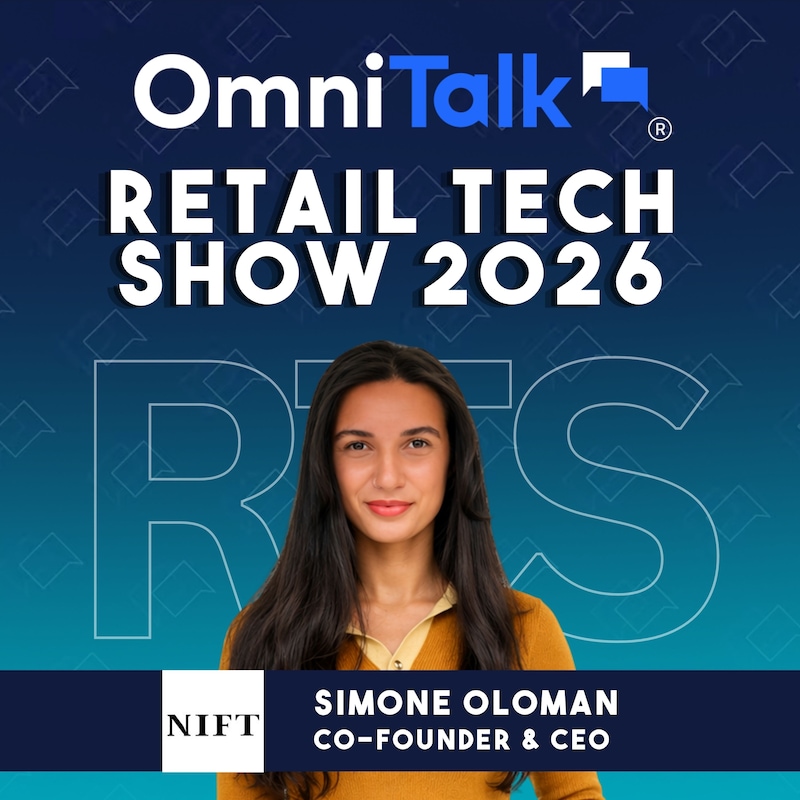
In this Omni Talk Retail episode, recorded live at the Retail Technology Show 2026 in London, Chris Walton speaks with Simone Oloman, Co-Founder and CEO of NIFT, about how instant delivery is reshaping retail expectations.
Simone breaks down the idea behind “Need It For Tonight,” a platform turning stores into hyper-local fulfillment centers with 90-minute and same-day delivery. She explains why speed is no longer just a differentiator, but quickly becoming table stakes, and how NIFT is building both a curated marketplace and a B2B solution to power delivery directly at checkout.
The conversation also explores how convenience, curation, and real-time tracking are changing customer behavior, why delivery has become one of retail’s biggest friction points, and how AI is being used across both personalization and logistics to scale the model.
Key Topics Covered:
• The rise of instant delivery in retail
• Turning stores into local fulfillment hubs
• Marketplace vs B2B delivery models
• Why delivery is a major driver of customer satisfaction
• The role of curation in a high-speed shopping experience
• How AI supports personalization and logistics
• Why same-day delivery may soon be table stakes
Thank you to Vusion for supporting Omni Talk Retail’s live coverage from the Retail Technology Show floor 2026. So much great content to unpack! Thanks for Tuning in.
#RTS2026 #RetailTechnologyShow #OmniTalkRetail #RetailInnovation #LastMileDelivery #Ecommerce #CustomerExperience #AIinRetail #RetailStrategy #Vusion
This podcast uses the following third-party services for analysis:
Podcorn - https://podcorn.com/privacy
Transcripts
Hello everyone.
Speaker A:This is Omnitalk Retail.
Speaker A:I am Chris Walton and I am coming to you once again from the Retail Technology show in London from the exclusive Vuzion podcast studio.
Speaker A:And I am excited to welcome Simone Oliman, the co founder and CEO of nift, into today's conversation.
Speaker A:So Simone, how you doing?
Speaker B:I'm very good.
Speaker B:I'm very excited to be here.
Speaker A:I'm very excited too because I was telling you before we started, I was getting into your business model and that kind of thing, and it's very interesting.
Speaker A:So I want to hear about it.
Speaker A:And so why don't you tell us.
Speaker A:Tell our audience, especially those back at home in the United States that maybe aren't as familiar with you.
Speaker A:Tell us about yourself and then also about what NIFT is and what it does.
Speaker B:Absolutely.
Speaker B:Stands for, what it stands for.
Speaker B:So NIFT stands for need it for tonight.
Speaker B:And I'm the co founder and CEO.
Speaker B:Hello.
Speaker B:But we have built the infrastructure that is powering instant delivery for retail.
Speaker B:And we do this in two ways.
Speaker B:So one is, is what I kind of describe as kind of like Deliveroo but for quality fashion.
Speaker A:Right.
Speaker B:So we are a marketplace app that connects with lots of different retailers to host them on there in the same way as Deliveroo does with restaurants.
Speaker B:But we do 90 minute and same day Deliveroo real time tracked.
Speaker B:So getting a shirt to you instantly if you want one or need one.
Speaker B:The second part of our business which we launched after is kind of like a B2B version of that.
Speaker B:So we can now plug in at any retailers checkout, whether you are fashion or electronics or a no florist.
Speaker A:Right.
Speaker B:To give them 90 minute and same day delivery.
Speaker B:And essentially with both, we are trying to turn bricks and mortar stores into these hyper local fulfillment centers to encourage more rapid and localized delivery from the store as opposed to the warehouse.
Speaker A:Got it.
Speaker A:So I want to ask you about that too, but.
Speaker A:So you're doing that beyond fashion too for.
Speaker B:Yeah, yeah.
Speaker A:Okay.
Speaker A:Wow.
Speaker A:I didn't realize that when I was.
Speaker A:Okay, that's good to know.
Speaker B:No, we don't shout about it enough, to be honest.
Speaker A:Okay, so basically what you're telling me then in the premise here is that people do have fashion emergencies.
Speaker B:They do.
Speaker B:However.
Speaker A:Okay.
Speaker B:We are called need it for tonight.
Speaker B:But a lot of people do not need it for tonight.
Speaker A:Okay.
Speaker A:They just want it quickly.
Speaker B:I do know what, I think platforms like Amazon have really set the bar for this.
Speaker B:You know, people just love that instant gratification and actually quite a large part of our customer base, they'll come to us and they might actually need something for tonight.
Speaker B:They might have spilled coffee down their shirt or whatever it might be, but our retention rate is very high.
Speaker B:Humble brag, but I think a lot of the time they come back because.
Speaker B:Because of that convenience, because they can track it in real time.
Speaker B:It's.
Speaker B:It can be quite addictive having that instant gratification in the same way as people go back to Amazon and use Prime.
Speaker A:And I think, yeah, it's part of the experience that you provide.
Speaker A:Right.
Speaker A:Like, you know, people want what they can trust and can understand.
Speaker A:What led you to this?
Speaker A:Like, how did you found this?
Speaker A:What were you doing before?
Speaker B:So I was working for a conversational AI tech startup before the days of ChatGPT and Claude quite a while ago.
Speaker B:But I was working with different retailers, selling and consulting to them and helping them to implement conversational AI into their digital transformation programs.
Speaker B:But it was in this role that I realized and was able to analyze customer queries, which is why they were turning to AI.
Speaker B:The customer services teams were inundated and over 90% of the queries were around delivery.
Speaker B:And often it was slow and unreliable.
Speaker B:And ultimately I was hearing from the retailers who were being.
Speaker B:I don't know, their reputation and retention was poor.
Speaker B:And that coinciding with me being the customer that was constantly fed up led me to nift.
Speaker A:Got it.
Speaker A:All right, so the other part that's interesting about.
Speaker A:About the needed need it for the night model, particularly before we go to the B2B side.
Speaker A:You take a very curated approach.
Speaker B:Yes.
Speaker A:Right.
Speaker A:So why is that?
Speaker A:What's the business rationale there?
Speaker B:I think there are a lot of different marketplaces out there.
Speaker B:And I think personally what I found is sometimes when there's so much, it can be a barrier, it can be a barrier to conversion because you have to look through so many different brands.
Speaker B:And I think ultimately, yes, we are about speed and convenience, but people aren't going to shop with us just because they can get it in 90 minutes.
Speaker B:It has to be the right product.
Speaker B:And so we spend a lot of time serving customers, liaising with personal shoppers to make sure that actually the brands that we're working with are super desirable and also good quality as well.
Speaker B:Because we don't want to be just churning out crap and get crap delivered in 90 minutes.
Speaker B:It's really important that somebody else plays that game too.
Speaker A:Right.
Speaker A:You know, there's a lot of.
Speaker A:A lot of players play that game.
Speaker B:Yeah, exactly.
Speaker A:But so, so, so is the.
Speaker A:So if I go on, if so, so if I interact with nift, is, is my, is it very conversational in Orient?
Speaker A:Like, is it a very conversational, like transaction I'm having or not transaction, but interaction that I'm having, You know, is it, is there LLMs involved in this?
Speaker B:It can be.
Speaker B:Okay, yeah.
Speaker B:Like again, whilst we are about speed, you know that personalization is really important.
Speaker B:We do a lot of WhatsApp comms.
Speaker B:Okay.
Speaker B:We work with stylists as well.
Speaker B:Obviously there's AI involved in that, but also we, we always have a human as well and the option of a human.
Speaker B:We have an in house personal stylist that actually if somebody doesn't know what they want, they can chat in real time on WhatsApp.
Speaker B:So yeah, it's again, it's really important for us to, to balance that convenience with that human LED and educational part as well.
Speaker A:Right.
Speaker A:Which I can see why you'd want to go the curated side of the.
Speaker A:Why'd you want to go on the curated side of things too?
Speaker A:Because that kind of facilitates that type of interaction too.
Speaker A:Like the trust you're building.
Speaker A:The trust, yeah, absolutely.
Speaker A:We've selected these products for you.
Speaker A:We know these are the ones that are right for you regardless of how you're interacting.
Speaker A:All right, so now let's go to the B2B.
Speaker A:So tell us more about that and why did you pivot in that direction?
Speaker A:What was the rationale there?
Speaker B:I think obviously this had stemmed from being frustrated with slow and unreliable delivery.
Speaker B:And what I'd initially wanted was I was like, why isn't there any platform where you can connect to local inventory, then get it delivered really quickly like by a bike?
Speaker B:But actually what I realized is that's still not solving the problem for slow and unreliable delivery for that retailer's customers.
Speaker B:Because ultimately we're bringing retailers new customers through this platform.
Speaker B:But what about their own customers?
Speaker B:They're still being let down by slow and unreliable delivery.
Speaker A:Right.
Speaker B:And so that same problem that I'd experienced from working with retailers was still there.
Speaker B:So I was like, okay, well how can we then mirror this technology to plug in at their checkout to help them to reduce cart abandonment, increase average order value, ensure that reputation isn't affected.
Speaker B:So that's where it stemmed from and I guess as well, being the customer that has experienced that friction point, I've seen, I think it's not just been with fashion, it's been with electronics.
Speaker B:It's been way across the board.
Speaker B:So it's just come from that passion.
Speaker A:Right, well, and you're bringing the know how and knowledge, too, of how to communicate, you know, to that retailer's customers, you know, what they want, you know, after they've made the transaction to it.
Speaker A:So do you, do you like, is it.
Speaker A:Is it like a white labeled option on the PDP of a retailer?
Speaker A:Or like, how does it work?
Speaker A:Or does it take many different shapes and sizes?
Speaker B:It's.
Speaker B:It's just plug and play.
Speaker B:So we can plug in and it will have their normal delivery options.
Speaker B:And then it will say, need it for today, which is 90 minute need it for tonight, same day with an optional need it for tomorrow.
Speaker B:Okay, so it's just plug and play B2B SaaS technology.
Speaker A:Got it.
Speaker A:Okay, so this question was.
Speaker A:This was an interesting one for me as I was thinking about interviewing you.
Speaker A:So I'm curious, does the on demand nature, does the.
Speaker A:Does on demand fashion behave any differently than on demand grocery or.
Speaker A:Or like, what are the differences there?
Speaker A:Because you've made the delivery.
Speaker B:The average order value.
Speaker A:The average order value.
Speaker A:Okay.
Speaker A:The margin of the product.
Speaker A:Right.
Speaker B:Yeah.
Speaker B:Look, we can do fewer orders to really.
Speaker B:Because of the average order value as well.
Speaker B:You know, our average order value for the app is about 170, which you can't really compare to food.
Speaker A:No.
Speaker B:Also, I guess food goes off.
Speaker A:Right, right, right.
Speaker B:It's also something to think about as well.
Speaker B:You know, we've had clients of ours that have trialed, working with food careers, and, you know, there can be friction there.
Speaker B:But yeah, there's also that to take into consideration.
Speaker B:But the main thing is, is the.
Speaker B:Yeah, the margins and the average order value, I do think it makes fashion a bit more defensible.
Speaker A:Got it.
Speaker A:So, yeah, so the perishability of the product, the margin on the product, I imagine the transaction frequency is a little bit less than grocery, of course.
Speaker A:All right, so how do you think about AI then?
Speaker A:We talked about it a little bit, but how are you thinking about it?
Speaker A:Where do you think is going to touch the business both, you know, now and in the longer term?
Speaker A:Yeah.
Speaker B:Oh, God.
Speaker B:In so many different ways.
Speaker B:I mean, we've just hired a new cto and he's like, just automating things that I didn't even know you could automate.
Speaker B:It's just like, Right, those guys are scary.
Speaker B:No, they really are.
Speaker B:But wonderful.
Speaker A:Scary good, right?
Speaker A:Scary good.
Speaker A:Yeah, those are the kinds that goes.
Speaker A:Those are kind of people you want in the fold.
Speaker A:Know.
Speaker B:He's an absolute AI whiz.
Speaker B:But look, for the consumer side, there's lots that we can do, you know, we're looking at things like AI styling at the moment and, you know, how can we really personalize it as much as possible, Personalize our homepage as much as possible.
Speaker B:But then obviously it's behind the scenes, behind the scenes as well.
Speaker B:And looking at things like rider optimization as well and like how that AI fits into the logistics, you know, efficient routing.
Speaker B:So.
Speaker B:So yeah, it plays a huge part of the business and I think both are equally as important as well.
Speaker A:You do so kind of the back end, operational side as well as the front end.
Speaker B:Yeah, it might not be as sexy and exciting, but you have to do it.
Speaker B:That's what takes a business from being a small business to an actual scalable business.
Speaker A:100%.
Speaker A:There's a lot of gold to be mined in that endeavor, for sure.
Speaker A:All right, so last question.
Speaker A:We'll get you out of here on this.
Speaker B:Hit me.
Speaker A:In five years, how do you expect the business to be different from what it is now?
Speaker B:Well, I think.
Speaker A:Where's it going?
Speaker B:I think we were really going to be scaling the B2B side.
Speaker B:I mean, like you said, you didn't even know we were doing that and we're not really known for that.
Speaker A:So it's a really cool play too because not many retailers are thinking about it like that either.
Speaker A:So I think if you can, you know, there's a, there's a wedge in there.
Speaker A:I think, at least in the U.S. i would say that.
Speaker A:I don't know about over here, but.
Speaker A:Yeah, sorry.
Speaker B:No, it's true.
Speaker B:And I think right now, you know, same day delivery is, it's still very new, it's still very exciting and innovative.
Speaker B:And I think one of our biggest challenges are, is when you're the first to market with something, it can be a blessing and a curse.
Speaker B:A blessing because you're the first and everybody's very excited.
Speaker B:But a curse because your challenges is changing consumer behavior.
Speaker B:But I think in five years, I think most retailers are going to have to adapt and have same day delivery.
Speaker B:You know, you look at our future shoppers, I think they're the ones that are going to really expect it.
Speaker B:Gen Alpha.
Speaker B:But yeah, I think we will be a lot more known for our B2B side.
Speaker B:We'll be across the UK.
Speaker B:I'd like to think global, but yeah,.
Speaker A:You got the hook with the acronym, you know.
Speaker A:You know, yeah, but so basically what I'm taking from you is you do think it's going to be table stakes.
Speaker A:The speed of delivery is going to be table stakes for every retailer you want to be there for them, you know, over that time period.
Speaker A:So that's why you think the B2B side of the business will be a more important part of what you're doing,.
Speaker B:Not more, but it will become.
Speaker A:Oh, okay.
Speaker B:I love the marketplace.
Speaker B:You know, it's super curated and yeah, there's so much that we do on the personalization side that really is a destination for shopping.
Speaker A:Okay.
Speaker B:But I think the B2B will be.
Speaker B:Is equally.
Speaker A:Equally.
Speaker A:All right, all right, all right.
Speaker A:Good clarification.
Speaker A:All right, thank you for that.
Speaker A:All right, so, well, thank you, Simone.
Speaker B:Thank you.
Speaker A:It was really a pleasure.
Speaker A:Yeah, it was really great to learn about a new business model and.
Speaker A:And it's always great to meet another entrepreneur too, you know?
Speaker A:So from one entrepreneur to another, I hope you're successful in the years ahead.
Speaker A:Maybe we'll see you here next year as well.
Speaker A:And thanks to Fusion and the Retail Technology show for sponsoring all of our content that we're bringing you all week long, all conference long, and of course, as always, on behalf of all of us at omnitalk Retail, as always, be careful out there.