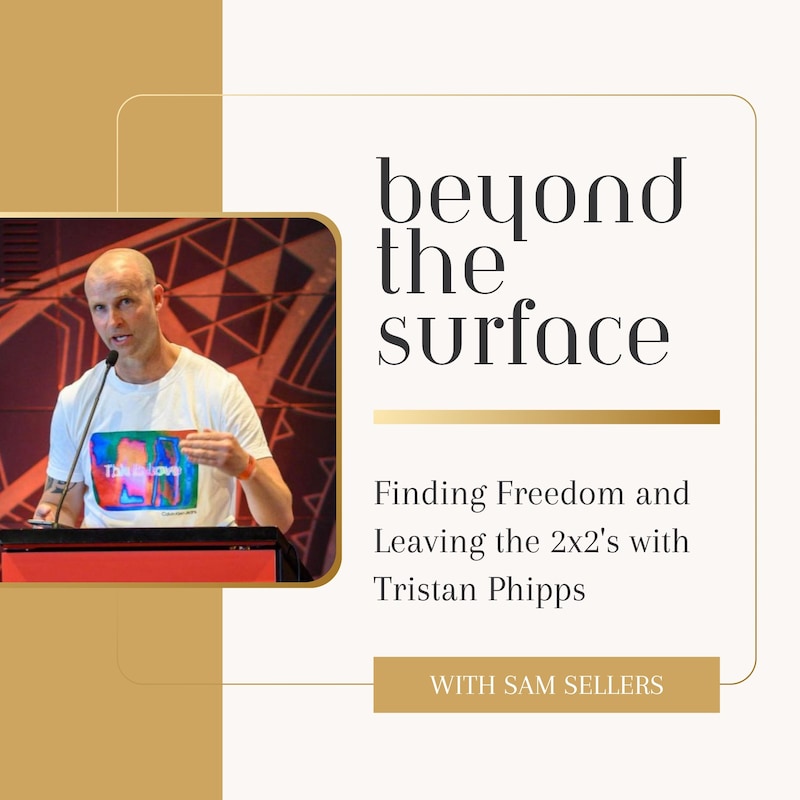
Shownotes
In this episode, Tristan shares what it was like growing up in the 2x2's, a high-control religious group that shaped much of his early life. He reflects on the strange mix of freedom and restriction in his childhood, and the confusion that can come from trying to make sense of both the good memories and the harmful parts of that upbringing. Tristan talks about the lingering impact of indoctrination, while also acknowledging the ways his experiences helped him navigate life outside the group once he left. It’s a thoughtful conversation about holding complexity, making sense of a religious past, and the importance of talking openly about these stories so people don’t have to process them alone.
Who Is Tristan?
Former 2x2 cult member (NZ). On a mission to understand and educate on religious trauma, religious abuse, coercive control, high control groups and navigating mental health.
Connect With Us
- Find Tristan over on Youtube, Instagram & Facebook
- You can find out more about Sam on her website - www.anchoredcounsellingservices.com.au
- To connect with Sam on Instagram - @anchoredcounsellingservices
- Want to contact with Sam about the podcast or therapy? Use this contact form.
- Also check out The Religious Trauma Collective
Transcripts
I would like to begin by acknowledging the traditional custodians of the land on which I live and work, the Gundagara land and people. I pay my respects to their elders, past, present and emerging, and extend that respect to all Aboriginal and Torres Strait Islander people.
I also want to acknowledge the traditional custodians of the lands on which you, our listeners, are joining us from today.
I recognize the deep connection that first nations people have to this land, their enduring culture and their commitment to the preservation and care for their country. This land was never ceded and it always was and always will be Aboriginal land. Welcome to beyond the Surface.
This is a space for conversations that sit at the edges of faith, identity, power and recovery, especially for those of us who have been shaped so stretched or harmed by fundamental religion or high control systems. Some episodes are personal, some are reflective, some are educational or curious or quietly disruptive.
All of them are grounded in lived experience and a deep respect for the complexity of leaving, questioning and rebuilding meaning.
We will be talking about religious trauma, various forms of abuse, cult dynamics, queerness and recovery, not in answers, but in honest conversations. In listening to these conversations, some parts might be heavy or activating for you.
Please take care of yourself while listening and feel free to pause or step away if you need to. I'm Sam and I'm really glad that you're here with us.
Sam:Welcome, Tristan. Thanks for joining me.
Tristan:Yeah, thanks for inviting me to come along onto your platform. I really appreciate it. Thank you.
Sam:I'm always appreciative people who sit in this space and share so openly and vulnerably so just to sort of like ground the space for people who. I mean, there might be some people who pick up on your accent immediately, but where in the world are you right now?
Tristan:Yeah, well, in the world I am in New Zealand. I'm in New Zealand, Aotearoa. I'm in a city called Christchurch, which is in the South Island.
I've spent probably half of my life here and half in the north island, but I consider this, consider this home where I was spent a lot of my younger years within the church, but probably what we're going to talk about and then moved away. Now I'm back home again. So, yeah, I'm from Christchurch, New Zealand, and it's a beautiful sunny day here.
Sam:Lovely. I've never been to New Zealand. I'm hoping this year will be the year to get over there. But I. I love chatting to people across the pond, so to speak.
It feels a little bit like home other than talking to An Australian, so it's nice. So, yes, we are absolutely going to talk about church story. So I like to start these episodes with a big, broad, vague question.
So people start where they feel like they would like to. So where does your story start?
Tristan:Yeah, well, so I am an ex, two by tour. I was born and raised into the church. Fifth generation. Yeah. So that's where my story starts.
And then about 20 years ago now, dates are a bit hazy, but, yeah, I left. So I've been out for quite a while now.
Sam:Yeah.
Tristan:And yeah, for the majority of that time being out, I wanted nothing to do with any of it. Completely uninterested, moved on in life, which a lot of people do. Yeah.
Tucked it away and in the last couple of years have sort of started to deconstruct some more and unpack it and have moved. Yeah. Into the advocacy space and starting to, you know, have these discussions and talk about, you know, it's part of your life.
You can't, you can't get rid of it. And it's healthy sometimes to. Sorry, it is healthy to revisit it when you're ready. And. Yeah.
Sam:Yeah.
Tristan:Go through a different part of the process.
So that's where my story started and where I've, where I've got to now is I'm within this space and it's been incredibly helpful to revisit it, but not only help myself, but it's certainly helping others as well. And just, just these discussions that need to be had that are. Yeah. Being tucked away for. Not only for myself, but for other people. And it's. Yeah.
Bringing out that, that trauma that you sometimes don't think you've been subjected to, but really you have. And it's, it's, it's also speaking out is also helping. Giving other people permission to do the same thing, which feels really nice.
Sam:Yeah.
And I mean, I, I'm sure we'll get to the advocacy piece and also the, the difficulty, I think, for so many people who have grown up in closed Systems like the 2 by twos to even recognize something as trauma because it's just all you've ever known and there's, there's no way to separate that. But take us back to when you were younger. We've had the lovely Laura McConnell conti on here talking.
So the two by twos will not be unfamiliar to listeners in some ways. But everybody's story and everybody's like, every space is different. What was it like for you growing up in that space?
Tristan:Yeah, well, yeah, I'm glad That you mentioned that everyone's is different because it really is.
Even though you're within that same group, your upbringing and your family life and how I guess your family chose to take that journey is always different. I would like to consider myself sort of in the middle. Like my upbringing was very liberal, as you could say.
And it sort of speaks of the hypocrisy of it really because if you want to say our family didn't do it properly in terms of what you were and weren't supposed to do. And those familiar with the two by twos knows there's a lot of strict rules. Well, they say there's no rules, but there are.
And very few of them are scriptural. They're very man made type things.
And of how those rules adhere to is usually up to your family circle and you know, how deep you want to go and how hard line or you know, want to stick to the basis of the church. So my upbringing here was on some instances very in line with the church and others is not.
And I would say I'm very grateful that for the parts that weren't in line with the church because it meant my journey out of the church and deconstruction and getting back into normal society was so easy because I'd. I'd essentially enjoyed all these things I wasn't supposed to be doing. So it wasn't such a big shift for me when I left.
I mean, there's still some unpacking to do.
So also where we, where I was born and where I first grew up was on the west coast of the south island and there wasn't many people from the church over there in our small town.
So I guess we were isolated in that sense, which probably wasn't a bad thing because within these groups like the 2 by twos, everyone likes to keep tabs on everyone else and what they're up to.
Sam:Yes.
Tristan:So and you know, I've talked about that with some of my family now and I thought, yeah, you know what being in from such a small town with, you know, we could. This sounds so dumb to say you could kind of do whatever you wanted and no one knew I was crazy. Yeah.
Not that you're up to crazy things things but you know, some of the rules, you know, you're not meant to do anything on a Sunday. But I remember as kids going to the beach and doing all sorts of things, but you were there by yourself in your own town.
Essentially just our family and a few others in Westport. So from that aspect, some of the things that were normal to everyone else were normal to us, but in terms of.
Certainly not normal to a lot of families within that group. Yeah. I, I'm still not going to say I wasn't traumatized by it because I still carry some of the trauma.
But in terms coming away less scathed, I guess you could say. Yeah. Around certain things. So.
Sam:Yeah.
Tristan:Yeah. I mean it made some things harder in a certain extent because you had a bit of exposure to the normal world.
So you're kind of wrestling in your mind what is, what why this is just. Yeah. Yeah. So that's. Yeah. It makes some things harder, but some things easier, if that makes sense.
Sam:Yeah.
I mean I, I look at that and I go for children I can imagine would also be confusing though, like, particularly if, like you are allowed to do these things, but also technically you're not allowed to do those things, then why are we doing them? And the things that, like you said, are normal to everyone else and the things that aren't normal.
I imagine that that would have been really confusing.
Tristan:Yeah. And it makes you. Yeah, it creates those questions and confusion is probably the right word. Yeah.
Because if anything, growing up in that group, knowing you're part of it and knowing everyone else outside isn't. You just want to fit in and be normal.
So I guess from a sense to be able to do some of those things made you feel like you fitted in, particularly at school and that kind of thing. But then there was also that, that confusion of we're not meant to be doing that, so where does it, you know, so as.
I mean that kind of made it harder even though you will be able to be like, yeah, I'm doing what everyone else is doing, but should I or shouldn't I? And I guess it creates that confusion within you of. So that's hypocrisy. But all isn't it?
Because if you're hiding things, then you shouldn't be doing it. Right. But you're. Yeah. So here and round and round and round we go,
Sam:the constant loop of circle. Secular thinking is fun.
Tristan:Hey, no, you know, but yes, but
Sam:no but circular thinking is fun to look back on and go, how the heck did we do that? That you mentioned that like you knew that you were part of a group and then everybody else wasn't. How was that framed to you as a child?
Tristan:Well, I guess it's the same as all everyone, you know, you.
How crazy was it that you just happened to be born into the one church that saved you out of all the Billions and millions and religions in the world and people, wow, wasn't I so lucky? So I guess it was framed in a way of you were special, yet the irony and craziness of it always you weren't proud of it, you're embarrassed about it.
So when you have something in your life that's so amazing and you think it's the best thing ever, you tell everyone about it and you want everyone to get involved in it, don't you? But this, not so much. So there creates more confusion around this amazing thing that I happen to have been born into.
That is just the best gift I've been given yet. I'm so embarrassed to admit that I'm part of it or share it or invite other people along. And that's does distressing things to your mind.
I guess it's particularly, you know, in those years as a teenager when things are starting to develop, you know, these, I mean. Yeah, it's very, very confusing. So.
Yeah, yeah, you've got this amazing thing and I, I know it's very common and you've probably heard others talk about it too. You know, you've got this great, amazing, special thing that you've been told is so incredibly special, but it didn't.
Yeah, you know where I'm heading with that.
Sam:Yeah, yeah, absolutely.
And I mean, speaking of like teenage years, like, I know and I've had this conversation with a few people that the two by twos don't necessarily have like purity culture teaching in the same way that they do in evangelicalism and in other words groups, but the ideology is still there. And so I'm curious, from your perspective growing up as a male in the two by twos, what was that ideology like for you? What did you notice?
Tristan:Yeah, I, I have lots of. And this is also very common as well. I have lots of blanks from those years. Whether intentionally or not is. There's blocks in my life.
I'm like, yeah, they existed, but I'm not quite sure it was whether I was paying attention or not. Maybe, maybe I wasn't because I don't think I ever really paid attention. But it was subtle. Yeah, I don't remember it being totally direct.
I mean, it's been a long time. I don't remember. I mean, possibly there was some of the preachers being very direct about it. I don't remember. It's just very subtle.
I guess the, the, the best way to probably explain it is it wasn't so much to talk around purity culture. It was the talk of, you find Someone within this church and you get married to them. So if that's the, the most minimal, then that's probably it.
Right. So therefore you're not, you're looking within all the time. Right. Because that's what you meant to do, but you weren't told. That's.
I mean, some people were probably told. Exactly. That's what you're supposed to do. So I don't remember purity culture being taught.
Sam:Yeah.
Tristan:Explicitly, but yeah, the very subtle things around that and the conversations that weren't had or you weren't supposed to have because they were things that you just don't talk about. But. And how in the heck you're supposed to unpack that and sort that out yourself?
Like I was very lucky in that I remember at high school we didn't get pulled out of like adolescent talks and puberty talks and all that, which was good because, you know. Yeah. And you're supposed to learn the words and the correct words. Terminology for body parts.
Sam:Absolutely.
Tristan:It's called a penis, it's called a john. That's just what you know. And I'm very glad that we, we got to, you know, learn.
So even though it probably wasn't explicitly talked about in the church, I was still exposed to it in terms of. Well, it's part of the curriculum at high school and primary school.
Primary school you did puberty and at high school you had puberty and sex education. So yeah, I know a lot of people, not just in the two by twos, but other churches would remove their kids from that stuff. Yeah.
Which I think is incredibly harmful because if you're not telling them, teaching them properly at home about it and using the correct terminology, then how the heck are they going to work it out? And that involves into other problems around as consent and all sorts of. They don't know that language.
Now I'm not saying it gives people a reason to do harmful things, but if they don't know anything about it.
Sam:Yeah.
Tristan:And they don't, you know, So I mean, that's another topic as well.
But yeah, I don't remember purity culture being explicitly taught, but it's very subtle and I guess even of just being at school and being able to mix with other kids socially is normal. Right. And I was able to do that and have friends and I think you learn stuff just from other kids as well. Right. I know it's.
I mean, not that you talked about it, but you know, it's just. Again, it's just normal behavior. You learn stuff.
So I think as a Two by two, you go into this kind of survival mode where you'll pick up on anything and just see what's going on to fill in those gaps of, you know, you'll learn the, the gross stuff and whatever just by. That's what schools, you know. So I think it's.
You have this sort of mode of just being able to pull together what you can around the things you're allowed to do and fill in the gaps of things that possibly you would have never got told about or learned about properly, which is pretty shit really, as a kid to be able to be in that mode, to try and piece it together yourself. Because around the topics that are off, off, off the table because of, I don't know, stupid reasons, control reasons.
Sam:I mean, like, for me the biggest thing is like, if you can control someone's body and sexuality, then you have all of the control, basically.
And so that's why, you know, basic sex education is so vital because you write it just like, yes, it doesn't excuse harm by any means, but it usually means that the survivors of said harm don't report it and don't disclose it because they don't actually have any idea that it's harm or abuse in the first place. And that's what makes it really, really pervasive and harmful.
Looking back at being able to go to a public school and, and go and mingle with like worldly folk, like, what impact do you think that that had on, on like you growing up and, and you're coming out of that space and things like that? Because a lot of closed communities don't allow you to go to public schools. They homeschool or they have their own schools or things like that.
What impact do you think that that had being able to go to that school?
Tristan:Yeah, I think it was, I think it was the best thing ever because it just made you feel normal. Okay.
Sam:Yeah.
Tristan:And being able to have friends and hang out with friends and have go to friends houses, because I know there's some families that wouldn't allow their kids to do that. And I think that's just taking away a life skill. Right.
And I think it had, it was A, it made me feel normal, but B, that taught me those skills of hanging out with other people, having friends, being social. So leaving was a breeze because I already had friends. I had friends. I had more friends out of the church than in the church.
So I, I know there's a struggle for a lot of believers is getting back into that social aspect and, you know, all their Friends were within the church. So being able to make friends and mingle is actually real. And as an adult, it's even harder. So I'm so grateful that that wasn't even a thing.
Like, it just carried on as per. So if anything, that deconstruction process around that and the. Possibly the trauma around that was pretty much zero.
Sam:Yeah.
Tristan:So being able to have those freedoms that you weren't supposed to do, although it caused some confusion, it also made. It might, you know, what else do you want to do as a young person is just feel like you fit in, Right.
Sam:Yeah.
Tristan:And it also meant learn. It meant I got to fill in the gaps around pop culture and culture and that kind of stuff. Because you're mingling with, you know. Yeah.
I'm not meaning this in a heart. Normal people.
Sam:Normal people. Yeah.
Tristan:And I've had. And I had my last guest on my podcast, we talked about this as, you know, missing out on pop culture.
And it's very common for levers to have that huge gap. They don't know what. When they're back out in society and hanging out in social settings, you know, people are talking about the.
The best movies and the music, and they struggle with, man, I've got this massive gap.
So, again, I'm very grateful I didn't have that gap that we're allowed to, you know, hide things and do things we weren't meant to be doing, but it meant there wasn't that gap. But also socially, you could talk about the same things that people and as kids, like when people. Kids are talking about.
You're at school, they're talking about what they've seen and what. Of course you want to say, yes, I do.
Because if you don't, they're like, oh, my God, you know, I mean, occasionally you'd sort of make up a story, and I taught you to lie sometimes. But generally speaking, yeah, that transition was pretty easy because of being able to I. I said just do what everyone else does, Right?
Sam:Yeah, absolutely. I mean, and it's not even centered. Like, the pop culture element is like the most normal human thing that we. We do.
But, like, when you don't know those things, you instantly have a feeling of being othered and not like the rest. And ironically, that's the ideology and the mentality that you are being taught anyway, which is that you are separate and you are not like the rest.
And I mean, an aspect of the group that you grew up in that we haven't really touched on yet is the fact that the truth, by Twos. Two by twos are a religious group. And so, like, what was. What was that element of faith like for you as a young person?
And did you connect to the divine being that you were being told to worship?
Tristan:Yeah, I've been thinking about that recently. Not at all. Yeah, I was just. I was just going along. I think I was just playing the game. I was following the routines.
I've never felt anything deeper than ticking the boxes at all. Yeah, it was just performative. It was just. Yeah, absolutely. I've. Yeah, I've. I've. There's been. It was.
Again, I've got massive, huge gaps because I think I just blocked it out and just did what you're. What. What you're supposed to do. Yeah. I've never felt anything more than. I've always had a level of. This is bs. Yeah.
And it sounds so silly because you can you continue to do it. But it was just. Yeah, man. I didn't. I didn't read my Bible or do anything any other time apart from when I had to. Yeah. You know, I had no interest.
And possibly because that was because I. I was like, what is going on? But also I'd experienced all this other stuff that just made more sense and it just conflicted more. So. Yeah, you took.
I guess, if anything, you got good at being deceptive. Right. Deceptive to yourself even, but to putting on a show, to being like, oh, I'm doing this, but I'm not really. Like, I'm off on.
My brain's elsewhere. I'm off. I'm. Yeah. Yeah. So no, I've never felt that deep connection. I don't think ever at all. And I never had. Ever had the level of.
This is just right into the. You know, I talk about levers who are like, yep, okay, I gave it a real good go. Like 100. I did everything I never did.
Sam:Yeah.
Tristan:Never did. Never did at all.
Sam:And I think both of those scenarios come with their own costs because, like, performing belief is exhausting. Like, you don't. Yeah.
You don't always recognize that exhaustion in the moment because sometimes that performing of belief is dissociative or it's automatic and it's survival. But the reason it's so exhausting is because you are doing it.
Not because you are consciously choosing to fake or lie, but because performing belief keeps you safe. Right.
Tristan:Oh, it was a total. It was so exhausting. 100 exhausting. It was just like.
Well, you know, when you have a passion or something in your life that you like doing, it's Never exhausting because you want to do it. Like, I've got music, I've got running. There's never an exhaustion level. It's always. I'm into this.
Sam:Yeah.
Tristan:But the other thing was incredibly exhausting because it was like, oh, my goodness. Yeah. You know, and. And it's faking it, right? It's completely faking it.
Sam:Yeah. I mean, I. I feel like I might have a slightly different opinion now that I know you like running, Tristan.
Like, it's just, like, a concern in the middle of this episode.
Tristan:That's my safe space. That was my say that. You know, you talk about, you know, the.
The acting for the religion to be your safe space, but I had other safe spaces that I felt far more safe and putting on a show.
Sam:Yeah.
Tristan:You know. Yeah.
Sam:How did you know that they were your safe spaces when you're a young person? Because that's not language that, like, you would have had, I imagine. Like, I. That's probably now retrospective language. But what was it about that.
That felt safe at the time?
Tristan:So the running sort of came more as an adult. But definitely the music. We were, you know, breaking the rules by allowing to have music and have a stereo and all that kind of stuff.
Sam:Yeah.
Tristan:But again, it just made you feel normal. But, yeah, it just was something I loved, you know, it took me away to other places, to lyrics, to tunes.
Not just because everyone else did it or they, you know, they did. But. Yeah, it was just this other beautiful thing that was told that it wasn't that.
Sam:Yeah.
Tristan:But when you. I just never saw it as any other way.
Like, I never saw it as this horrible thing I shouldn't be doing because I'm like, how it didn't make any sense because it was a beautiful thing. So I never questioned. And I had this conversation with Kyle, my last on my podcast. Exactly this. He was the same as me.
He was this thing he was told to stay away from. It was evil, yet he never felt like that towards it. And neither did I. But there's that confusion. I talk about this horrible thing. Yeah.
I found it so beautiful and so mesmerizing and I could escape from. Yeah. That. That looking now. Of course, it's a language I use. Yeah. It was totally my safe space to remove myself and take a break from.
Yet this beautiful thing that I'm like, this is what I want to listen to.
Sam:Yeah.
Tristan:You know, and I didn't. Yeah. There's the luck of being able to be in a household that allowed that, you know, and I'm So grateful for it. It's. It's my thing.
And, you know, later on in life when things got hard, like music was one of the things that literally saved my life. And it's my complete safe space that I can run away to. Even now.
Sam:I mean, to like nerd out.
As a trauma therapist for a moment, it never ceases to amaze me how our body knows that something is safe even though we cognitively don't understand it, depending on what age we are. And so I love hearing stories like that because I think, you know, just the unconscious awareness of our body to be able to recognize safety before.
Before we have language for safety is. It just never ceases to amaze me. I love it. So how old were you when you left the. The two by twos.
Tristan:Yeah. I get asked this question and again, it's. It was sort of a process. I don't know the exact date. I just know. Sort of within a group of years.
Sam:Yeah.
Tristan: ck, I'm gonna say it was like: Sam:Okay.
Tristan:So I'm gonna say yeah, yeah. So I'm 20. I grouped that sort of those. There's a few. But even before that, like years before that, it was.
I was, you know, three quarters of my body and mind were out, you know, so. Yeah, I'm gonna say mid. Mid to late 20s. Yeah. But definitely just before I was married. And when I was married, I was out. But up to that, it was.
Yeah, it's. It's a. It's a messy. Not messy, but sort of hazy kind of. It's. Yeah, I lump it together.
Sam:Yeah.
Tristan:Yeah.
Sam:And. And I mean, it's for so often, like so often for so many people, it is such a slow, complicated process.
It's not like a one day I'm in and then the next day I'm out. And it sounds like there were stages where you were physically and mentally out as well, like that stage. And so what was that process?
Over a number of years, like, of sort of like gradually disconnecting from this space and then eventually actually disconnecting.
Tristan:Yeah. So I married someone within the church. Yeah. And then it was that marriage didn't last. However, the good that came out of it was you had some.
We left at the same time. And I don't even remember there really being a discussion about we are going to do this. It just kind of morphed into we're not doing this anymore.
Sam:Yeah.
Tristan:So it was probably easier to do it with a companion. So I have a lot of respect for people who are still married or with someone and one goes and one doesn't. Like, that's quite a.
That's quite a hard space to be in navigating. Yeah. So I, I don't even remember the conversations we had. It just kind of morphed into we're not doing this in a slow process. So. Yeah.
Although that, that marriage didn't last. I feel like that process of, of leaving with someone was a good thing, you know? Yeah, yeah, yeah.
And it just, I just, yeah, it just kind of morphed into we're not doing this. I don't think there's any definite final even discussions with anyone. It was just like, ah, you know, we're there, we're not anymore.
If you have a question, ask us and we'll say we're not. Reasons I don't know. We're not. Yeah, yeah. I never got quizzed about it or it just was as. Just, it just was.
Sam:Yeah, yeah. Was it exhausting in the space of being physically and mentally out? Because that's often what I hear from people.
Is that it, like the mental and emotional exhaustion that, that uses is enormous.
Tristan:Hugely. Yeah. That the mentally out, physical. Yeah. Because you're still playing the routine and you're turning up because.
Not because you want to be there, it's turning up people to. Again, it sounds so silly. So people to be like, oh yes, you're there.
Sam:Yeah.
Tristan:Because if you know about the two by twos, the more meetings you go to, the better you are. So if you're not there, you're, oh my God, like you're, you're missing. So yeah, that's exhausting.
Sam:Yeah.
Tristan:Because man, that's the last place you want to be. And it just seems so strange to be, oh, just don't go.
But yeah, yeah, the mentally out physically and thing, that's again, you know, that's traumatizing in its own right, I think.
Sam:Yeah, absolutely.
Tristan:Yeah. Very exhausting.
Sam:And I mean, I think everybody's answer to, to that question is really different because a lot of people who don't understand high control dynamics, essentially irrespective of the space or the group that you're coming from, a lot of people don't understand the answer of like, well, why don't you just not go. And so what was it for you specifically in terms of like the space that you were orbiting? Why was it not just as simple as just don't go.
Tristan:Yeah. And I think a lot of people will probably answer this the same. There's so many dynamics outside of that.
It also depends on the indoctrination about what you've been told. Well, essentially, if you leave, you're. You're nothing. You're going to hell. Like, you're toast. You're done.
And of course, again, depending on family dynamics and whatever, there is the shunning and the excommunication. I mean, not to possibly some levels as other groups. There is some. And people will deny it, but it's actually true.
When you talk to survivors and there's the shunning and there's all that business and how you're. How you're treated after is horrible.
Sam:Yeah.
Tristan:Not in my experience at all. I don't remember having. Having conversations I was just. Because I was on the fringes anyway, lies. You're gone.
But for some people, going through that is hectic and it's ongoing. Like, even after they've left. Dara considered a completely different person removed. You know, pushed to the side of a family.
And some of the survivor stories of exes that I deal with, that I've heard, it just, like, breaks your heart. Yeah, it's just horrible. It's like, how can this group claiming to be these amazing people do this?
Because someone has just simply said, hey, you know what? This is not for me. Yeah, I think I'll do this. But they're not out there saying horrible things or I hate you.
They're just like, I just don't want to do this anymore. But then.
And there's a number of people who ended up going back simply because they started questioning, well, maybe, you know, the way I'm being treated and I'm going to have another crack at it. And if anything, that, you know, is even more distressing to have another go at it, to go back to be like, no, there's a reason I left.
And then there's more ammo to be like, well, you came back once. Oh, you're going again. And just it's the language and the terminology that gets thrown at you and used. And I'm sure you've heard it from others.
Not in my experience. I mean, maybe little subtle ones.
Sam:Yeah.
Tristan:But not from people like my family close to me. I mean, none of my immediate family are part of it anymore. But I never experienced, you know, there might be hearsay coming back from other people.
You know, the words are thou lost? Oh, it's so sad.
Sam:Yes.
Tristan:You know, yeah, that kind of, we all know it and. But when you're in a vulnerable state, that really hits home.
Sam:Absolutely.
Tristan:These are your family, these are the people that love you and are there to protect you. And hearing that kind of language must be extremely hard and traumatizing. So. Yeah, yeah.
Not in my experience, but you know, I, I feel for people that have been put in that will continue to still be put in that now because they decided this is not for me. Yeah. And to me, that's not religion, is it? Like.
Sam:Oh, no, not at all. Yeah.
I am curious though, because like you're saying, like it wasn't my experience that you didn't necessarily get that barrage of comments and trying to pull you back and things like that. And I sort of hear that and I go, that has its potential to be its own kind of pain that like they're not even trying. Like they're not we.
I know that it's so important that they don't lose people that they think this, these things about the people who have left and yet they're not even giving it a red hot crack. They're not even trying to get me back in. Like, what does that say?
And so was any of that going through your mind or were you just kind of like, I don't give a
Tristan:shit probably because those things were never said to me. I didn't, I didn't give a shit. It.
Sam:Okay.
Tristan:But also when you don't hear them, it made me go, well, you obviously don't think this is important either. You're playing, you're performative as well. Like clearly you don't, you're so, you know, you're caught up in this too.
And you're also maybe going, man, I'm questioning this. But yeah, they're not at that stage to leave.
Sam:Yeah.
Tristan:So the fact that you didn't hear them trying to get you back in, you start going, ah, okay, maybe you don't think this is that important. Important either that for yourself, if you're not asking me to come back, like, you're not bothered. So. Yeah.
And that turned out to be the case, right? Yeah, yeah, yeah. But. But I'm sure in some experience, yeah, there will be that push and pull of, you know, we need to get this.
And, and that's where it could. The circuit can go for that person to be like, man, they care about me this much. Maybe I have made the wrong decision. Maybe I do need to come back.
Sam:Yeah, yeah.
Tristan:And who are you going back for, though? You know who you're Going back for. You're not going back for yourself. You're going back for. Because of the indoctrinate.
This is why these groups exist, right? Because it's born and raised. That's why they exist and keep going. Because if you don't catch them when they're young children and put this.
Sam:No one's joining us.
Tristan:Exactly. The sticking rate for people that have pulled.
Being pulled in from the outside, and I'll argue anyone and any lever will tell you this, the, the, the percentage rate of people sticking around is minimal and tiny. And I think back to when I was in. The amount of people that were brought along didn't stick around. They were from certain. Different.
Yeah, but so if you're not catching this from the start, and that's my push as an advocate, is to have less people born into it, because that's where the process starts. Because as an adult, you see, you know, you've, you've got, you've developed, you've got this thinking, you see this stuff and you.
I don't want to borrow that. Yeah, yeah. And that's the danger. That's the danger. And then it's, it's there.
And yeah, that's the, that's what people need to understand about these groups is it's from the outset, and that's very impressionable and naive. And these people love me. So therefore what they're telling me is, Is correct. And you get taught.
The way I look at it is you get taught to be an adult and act like an adult when you're still a child. And some of these behaviors and ways of thinking, they're not adult at all. Yeah, I know.
Whether you're familiar with the term when you profess like, that's, that's. I always say this is a group teaching kids to be adults from. Since ages ago. You are.
The way you're doing and standing up and talking as like a, you know, some people professional, like 10 or 12. Yeah, that's not Kitty stuff. Like. That's not at all. Yeah, at all.
Sam:And, and I find that often it needs to be that way because I think a lot of people will look at like cult kids, essentially, and, and they'll go, oh my gosh, they're so well behaved. They're so. They're such good kids. And my immediate reaction is, yeah, they're good kids because they're terrified. Like, they're so obedient.
They're so compliant. That's not what kids are supposed to be. They're supposed to be playful.
And silly and make mistakes and piss you off and like push boundaries and do all of those developmentally normal things to do. And yet these kids are not doing it because to do all of those things is harder to control.
And so the indoctrination process allows them to be controlled and to be compliant and obedient, which automatically ages them up exponentially. It's. It's awful. It's awful. Yeah.
Tristan:Yeah. That's a badge of honor. You're right. Yeah. To say I've got four extremely well behaved kids. Yeah, they are. Because they're scared. Yeah.
And I mean, that goes down to another topic of like that authoritarian parenting style is. Goes hand in hand, particularly in the older generations of the two by twos. Like, it's, it's right there. Yeah.
The kids are well behaved because they're scared. Kids don't sit still.
So you, you expect to sit still for an hour on a Sunday morning and in someone's house and then again in a meeting, an admission meeting. Yeah. Could. Yeah. That's another whole kettle of fish as well. Yeah. Yeah, you're right.
Sam:Behavior. Yeah, not at all. Yeah. Yeah.
So take me through, like, I guess, like, what were those first few years like for you once you had left that space completely, like there was no connection there. What was, I guess the like.
And it's a little like this is the time that I would usually use, but obviously it's a little tricky because like you said you went to public school and like all of those things. But that reintegration into just like broader mainstream society, what was that process like for you?
Tristan:Yeah, I, I just think wasn't a big, it wasn't a big blip or a big deal.
Sam:Yeah.
Tristan:Around that time. Yeah. So left just before we got married and we were married for two years and then we separated.
And then I guess that was kind of the, the, the restart for me was after that. I think things just carried on and if anything, I just had more fun. But in terms of. I had those friends, I had that. Yeah, it was just a sense of.
A complete sense of freedom. It was almost, it was almost starting again. But I say this quite often. I did feel 10 years behind and there's a few others I've spoken to about this.
Like, I was 30 after sort of that restart after all that. But I felt 20.
Sam:Yeah.
Tristan:Because I feel like there was a block of life that. Yeah. Was, was not, I guess you say done properly or done normally. So I did feel 30, but 20.
I didn't go wild and do A knock but you know, just be normal. Just a normal stuff.
And I had, you know, there's some things I had to deal with and you know, I had some ups and downs and lows, but I had a shitload of fun. Yeah. With my friends and with doing normal stuff and just grew so much as a person, but also, you know, had to deal with some ups and downs.
What normal people deal with and deal with discussions and deal with emotions and things that are suppressed within the two by twos like depression and anxiety and all that kind of stuff.
The only answer to that is you're not going to enough meetings and praying enough that end like we don't, you know, so to, to deal with that and to, you know, be diagnosed with depression and anxiety and you know, have all that kind of. It's horrible. But it was also great to. Yeah.
To deal with those sorts of things and learn so much about yourself and where you want to go so you feel like you're always playing catch up. But I don't think. Yeah, it was hard not to get annoyed at the fact that you'd sort of, why didn't I do this 10 years before?
But you can't, you know, you can't rewind it. It is what it is.
So you just got to go forward and with, you know, great groups, great group of friends around me, people I've known for a long time, you know, who are still my friends, who I knew from primary school and high school and new friends. I made that transition was, was easy, but it was about finding out.
Yeah, cheesy turn, but finding out who you were and what you're about, you know, but also with the freedom to do it and a strength to do it, I guess because you're an adult. Yeah, on certain things you're an adult, but some things you're completely underdeveloped, you know, and that's part of what that culture does. It.
It mutes some things and makes some things very underdeveloped. Yeah. But from where. Yeah, where you go from there is. Is totally up to you.
Sam:Yeah.
Tristan:Yeah.
Sam:And I think that under underdeveloped point that you were mentioning, I think that's part of the reason why there can be such a delayed recognition of the way that some of this like landed in your body and landed in like, like, like as part of your being because your ability to connect to yourself, connect to your body, understand what's going on, even just from a cognitive level, it can be so behind where you feel like it should be, quote, unquote and, and so what was it like for you? Like, obviously there was like that transition was, you know, pretty, pretty good with friends and things like that, which is great.
And when you use the word wild, I was like, it kind of just sounds.
Would call like a second adolescence, almost like when you didn't get it the first time, you get the ability to go out and do all of those things that you were not free to do when you should have been able to do them. So I love that.
But what was it like for you to start to realize that, hey, maybe some of this stuff has impacted me in ways that I didn't quite realize until this point?
Tristan:Yeah, I think that's. That's the important step that is hard to go through, but so, so necessary.
It's unwinding, unwinding some of those ideologies and indoctrination that you experienced and realizing how you got to this point. Why do I exhibit certain behaviors? Why do I think the way I do? Why do I act in certain ways? Where did this anxiety come from?
Where did this beating myself up come from? Where did all these things come from?
And I think until you start to delve into that and realize that you start to learn a lot about yourself and things you can change as well, and behaviors you start to notice and be like, yeah, it's just joining those dots, but it's just a willingness to do it. But sometimes you don't sort of like to delve into that until you get to quite a low point.
But knowing that there's help out there and the help that you should be getting is the correct help rather than the other that you were told. Right. Yeah. Therapists aren't shitty people. And, and, and drugs that they can get. Yeah, but. You know what I mean?
And, and they can give you medication to help you and make you feel better. Yeah, like, that's. If that's a start, that's a start.
And here's these conversations that I need to talk about and these things that were so normal to me, that I experienced, if I say them out loud to a normal person, they're going to be like, what the heck? And you need to have those and be reminded that that was not normal and what was normalized was not. Okay. Yeah. And let that person's reaction go.
That needs to be. Because you've tucked away this stuff. Even just the, the structure of the meetings and how everything happens.
Say it out loud to someone and let them go. What in the world. Because it's. It is. Yes, it's strange. Yeah. And it's affected you and.
But certain behaviors you've let be in your life but also contributed to are not okay. You need to be told that. And it might help unravel why you're a people pleaser, why you're anxious, why you never say no. Yeah.
And when you start to unravel that, like, it's really important.
And I encourage people to do a bit of digging into some of that stuff because the, the, the help and validation you can get out of it is totally necessary because we've all been harmed in some way. People focus in on. And rightly so, you know, the sexual abuse within this church and other church. Yeah, yeah. Okay. Horrible, Horrific.
Okay, that's cool. Horrible and horrific. I've got that. However, it didn't just happen overnight. And there's a reason. That was a culture. Correct.
And this is myself and Laura and Kyle here from New Zealand. But we're really on about this. It didn't happen overnight. And it's an end product of a bunch of behaviors that we're all complicit in.
We all helped keep going. So you can be outraged about that stuff. That's the end product.
However, we need to look at all the other things that led there and all the other ideologies that led there for this to be an outcome. Yeah. And until we start doing that and talking about and acknowledging it, that we were part of it and. And played along. Yeah.
It's just awareness around that stuff. I've put a couple of recent posts up recently about, like, it's my, you know, talking about misogyny and sexism and transfer.
They're all ideologies and part of it that help bring together and foster those kind of cultures where unfortunately, the end product is abuse.
Sam:Yeah, absolutely.
Tristan:Yeah. Yeah. So again, that's something to unpack and to be like, my attitude towards some of these things, it's not ideal.
And how did I get there to think like that? It might not have been.
I might not have been explicitly taught it, but subtly, the makeup and culture of this group I was part of has made me feel this way. I might not agree with it, but I never did anything about it or stood up against it. I just sucked it in. Right.
And I leave and I'm like, why am I struggling? Maybe forming a relationship, romantic relationship, after I leave? What are some of the behaviors I'm exhibiting? You know, where did that come from?
What? Yeah. So, yeah, again, it's not just as simple as, oh, this, this, this church is Whatever, there's abuse happening, it's okay. How do we get here?
Absolutely don't revisit those other things. You can be outraged about it all you want, but it's acknowledgment of those steps that got there.
Sam:Yeah.
Sam:And I think often people focus too much on. And obviously there needs to be focus on what I'm about to say. So I want to stress that.
Tristan:Yeah, yeah.
Sam:Which is that people are focusing too much on. On punishing and getting justice against the. The single perpetrator of abuse in a particular situation.
And whilst that absolutely needs to happen, you take a single perpetrator out of a culture of abuse, the cultural is still there. Like the group is still there, the dynamics are still there.
And I think also there is like, I think on, on some level most people, I say most people because the world is a little bit chaotic and fucked at the moment. So like most people know that sexual abuse is, is bad.
Like most people are happy to say that, but the discomfort that comes from understanding the cultural dynamics that lead to that is far harder because that pushes on people's blind spots and like sore spots around, like just allowing people, you know, freedom of belief and things like that. And so it gets very messy for those people I find who don't understand the dynamics of the culture at play.
So yeah, I am curious though, like, what was it like for you using and, and finding some of this language, though?
Like language around indoctrination, realizing that the group that you came from has like a long history of sexual abuse around, like even starting to use language of like cult and cult dynamics and things like that. What was that process like?
Tristan:I think to start with, there's a level of not wanting it to exist or be true, but knowing deep down, but also being able to attach those words to it and learning about, oh, that is what it was. Oh, that's what it's called. It's about self, it's about ownership. Right. And taking responsibility.
And I say this to it, for anyone that's left, these groups, we were all complicit in some way of propping this up by continuing, by continuing to go along and just sitting there. You might not have done anything, but you still went and that's how you were there. You're a bum in a seat. Right? So to.
We're all culpable and going there and continuing to happen. But then it's also, but also being in that place to want to be able to unpack that language, to join those dots. But yeah, sometimes to Start with.
To hear those words to begin with is quite distressing.
Sam:Yeah.
Tristan:But then that starts to make sense. You know, what does that mean? And of course, when you're in those groups, that's not the sort of language it is. And critical thinking. And that is.
Is not. Is not. Is not what it is. Like, there's either black or white. There's nothing. No gray area. But I guess that falls on the person.
How far do you want to go? Do you want to understand this? And if you don't, and you just want to completely remove yourself and get on with life, I totally respect that too.
Like, because some people do. They're like, you know what? I am done. I am gone. Don't talk to me about this ever again. I just want to go and be happy. And you know what?
I totally get that as well. Yeah. But yeah, joining though. And I think it is. It's good.
And it's helpful to link words and behaviors to things you've experienced and things you're doing yourself. You know, words like indoctrination, coercive control, and, you know, as advocates, that's the language you want.
It's just to give people something to think about and to make a decision themselves. Was I involved in that? Oh, okay. That's what that feels like. Yes. I've been in a situation like that. Oh, that's what that means.
If that means someone might go dig deeper into their deconstruction. We just need to use those words. Right. The correct terms and stop using the soft language around what they are.
Because that's what happens in groups like that. Things are minimized and other words are used. It's like, no, that is sexual abuse. That is this. That is the. That's exactly what that was. You were.
Yeah. So I think it's a responsibility of not only us, but anyone that's left to use that correct terminology, because that's still minimizing.
Just gets nowhere. Absolutely nowhere. Yeah.
Sam:And I mean, language is powerful. Right. It's part of the indoctrination. Indoctrination process, which is that, like, loaded language is used in circular thinking.
Like, you can control someone if you can control their language.
And so if we can branch out and start to use the correct language appropriately for what is actually going on, the validation and reassurance is huge to be able to use that language. Yeah. I mean, I am. I am curious though. How did. How did initially. Because it's strong language and people have very big opinions on it.
How did the language of cult land for you when you first heard it, Because I know that it's confronting for a lot of people and it's big. And it's probably the only time up until that point that it's been used is the we're not a cult language.
So what was that initial moment for you, like, when you first just had recognition that. Oh, like, I was raised in a cold.
Tristan:Yeah. It's just unpacking that word, isn't it? Yeah. Obviously that word has things attached to it in general speak.
When people think of cults, they think of a commune with a uniform. And rightly so. Like, there are some cults that are like that. But I think to unpack. Yeah. To. To start with, it hit hard. It's like, whoa.
But you unpack it. It's not just that. Like, it's hitting a few of the markers, and if it hits a few of the markers, then it is. And it's about education, right? Yeah.
Not all cults, like gangs are cults. Those pyramid sale schemes could be listed as cults because if you look at the techniques and language and stuff that's used in it.
So, yeah, on one hand, yes, a cult is a group that's moved off into the forest and they've got the thing and they have a leader who's this. And he says he's come down from God and he knows God personally and. Correct. But also these other things are.
But that's just education around hitting the marks. And if it hits the marks, that. And you know, if some people feel uncomfortable using that word. Okay, it's a high control group.
Sam:Yes.
Tristan:Slash cult. It's. But, you know, we've got to look at the behaviors that make it. That you might feel uncomfortable using it. But if you.
You a witness to or were part of ex. The listless list here, then then, yeah, if you want to use another word, you can use another word. However, under the definition of.
And what you're involved in or took part in or been harmed by, is that. Do we want to hear it? Probably not.
Sam:Yeah.
Tristan:But you're not going to heal if you don't. It's responsibility.
Sam:That's.
Tristan:It's being aware. Yeah.
Sam:And I think, you know, it is important to sort of like, it's less about the word and more about. Can I sit with the dynamics that I'm noticing and the behaviors that I'm noticing?
Because like you said, you know, not all cults are religious and like. And I think, you know, I hear Claire McIver say it all the time. Like, not all cults are churches, and not all churches are cults.
And, and broadening that definition of what typically mainstream media has done a pretty shitty job at educating broadly of what. Of what a cult is and what it looks like and just sort of going like breaking that down into, like, what dynamics am I seeing?
How much choice and agency did I have here? Like, all of those aspects that the little subtle nuances of what makes a high control group or a cult.
What has, like, what has it been like getting into the advocacy space for you? Because that's a thing that I think a lot of survivors sit with and they go like, I want to be able to talk about it, but I don't.
I just want to be able to move on my life, on with my life.
And I've said to so many survivors who have sat in my therapy room that just because you've survived something doesn't mean you have to then turn into an advocate. But why was it important for you?
Tristan:I guess seeing the harm that was caused to people close to me and how they held onto it for decades and decades and decades. I'm talking about in this instance, sexual abuse. Yeah. And hearing the language around it being minimized to justify. Maybe it was only this.
Sam:Yeah.
Tristan:And it's going. No, it's not only that, but also the behavior, like we talked about, the behaviors that got to that happening. I was part of it and they weren't. Okay.
Sam:Yeah.
Tristan:So therefore people's lives, even after they've left, have taken a completely different trajectory because of something that's happened to them that in some cases they had no choice over. But also the way that it was reacted to was.
Sam:Yeah.
Tristan:Now take that out of that cult church and put it in the public. Everyone screams blue murder. But within a group it's, ah, it's not so much.
Sam:Yeah.
Tristan:It's like, no, no, no, no. But to hear people who have been harmed be programmed to minimize it. It's like, no, that's. No, no.
Just because it's within this group, it's different. It's not any different. And that's where I say it's nothing religious here at all. Like, it's just common sense.
Sam:Yeah.
Tristan:So. Yeah. But also to acknowledge to myself that I was also harmed and it has changed the directory of my life.
Sam:Yeah.
Tristan:But also you can, you can heal to a certain extent. But how good it feels to say it out loud, to say, I was part of this. This is what it was. It just uplifts you, if that makes sense.
Like it's been a process but now I felt like I was ripping off people close to me, that I wasn't honest about parts of my life. Now, probably because I was embarrassed about it or just simply didn't want to talk about, I'd deflect from it.
But then it gets to a point where it's like, no, that was this part of your life.
Sam:Yeah.
Tristan:And these people aren't trying to tear you down or be mean to you. So, yeah, I felt I had ripped off some of my close friends and probably even myself by not being honest about it.
And the sense of massive weight off my shoulders.
I mean, I publicly announced that I was part of this group once at decal and then on national news, on breakfast and after, I just was like, didn't think anything. Now I'm just like, I'm an open book.
Sam:Yeah.
Tristan:It just was a massive weight. And if that gives permission for other people, me not to do it in that way, but just to acknowledge that you're part of it and it's.
It might have been an embarrassment, but. Yeah, to see just shitty stuff being minimized and brushed over and excused because it was this person or it's like, no, no, no, no.
Outside of that group, it's this. And it's not different at all.
And your life has been harmed and you've thought of yourself in a different way for like 50 years because of this one incident that happened that no one did anything about. Yeah. But also all the other things that led up to that. All the other things that led up to that point that just didn't get there.
It got there because of all the. Yeah. Characteristics of this group.
Sam:Yeah.
Sam:I'm.
I'm wondering what it has been like for you being an advocate, because I sort of sit in a weird space of therapist slash advocate with the Religious Trauma Collective. But, but advocacy is not all sunshine and rainbows and fun and it takes a toll on people and on their mental health and their well being.
And so what has it been like for you stepping into that space? Has it had an impact on you for both positive and negative spaces?
Tristan:Yeah, I mean, it's a bit. Yeah, you're right. It's. It's a draining place. Yeah. Because you're. Yeah. You're taking along a lot of, if you're an empath, even more so. Yeah.
You take on the feelings of others. Yeah, it's a draining in a way that it's a.
It's very emotional and, you know, talking about this stuff and doing, you know, interviews and that kind of thing. Like It. Yeah. And you do suffer burnout and you do need to take some breaks from it. I haven't experienced anything negative.
They can knock themselves out if they are because it genuinely just be the people in the church and I don't care. Yeah. I don't really care because it's just something that's not even in my life anymore. And I've got great people around me.
You know, these are all people who aren't. Have no relation to the church whatsoever. Like these are close, close friends who.
And I think that's the best thing is all those people around me have had no association. So therefore it's not in my cycle outside of what I'm doing advocacy wise.
Sam:Yeah.
Tristan:So there's no that push and pullback of I'm dealing with here. I've got these people talking about the church because they're not.
And I think that's the good thing is the people I have in my corner and surrounding me are people who have no skin in the game.
Sam:Yeah.
Tristan:And they'll protect me and look after me and support me with what I'm doing because they love me and who I am.
Sam:Yeah.
Tristan:So it is a. It is a draining space in terms of. You put a lot of energy forward. Yeah. And talking about this stuff and helping others and you give as much.
You just, you just need to learn. It's been a process of how much you give and how much you keep yourself. You know. And again it's. I've learned over the years about how much to.
To give too much and to give. But it's also about looking after yourself and looking after the other advocates around you. You know, I'm really lucky. There's just. Yeah.
A couple of people I've become good friends with who are x2x2. So I never knew up until two years ago. You know. And I've got Kyle here in New Zealand who's.
You know, we never knew each other existed until two years ago and we've connected and we've done some real cool stuff together and we look out for each other and we remind each other to take. You know, we talk about those kind of comments. What have you been up to? You know, I've been feeling a bit down. It's been quite exhausting.
You know, again those normal sort of behaviors where you look out for each other because it is quite a. And you'll be like, you know what? I just need to take. I'm out for a few weeks.
Like you know, you know and know when you've when you've done your limit. But yeah, I think it's just a mixture of all of that stuff. But you're right, it's. It can be really draining.
But that's also depends how much you're doing as well. Yeah, you can pull back or. Oh, that's not quite. For me.
But also have those outlets, you know, those times away where, you know, the things that you can, you know, for me, it's my music, my running, that kind of thing that I'm like, right, I need to go and do. Go and do this stuff and I'll revisit that again later.
Sam:Yeah.
I find whenever I talk to advocates or people who work is in this sort of space, having a balance between people who have been a part of the group and people who haven't is such a key factor, like you said, because, you know, there is such a. A sense of ease and normalcy and reassurance and validation that comes from someone who truly gets it, who has lived it, left it.
And then there is like a breath of fresh air almost of the people who have never stepped foot in it, who will have your back regardless, but also who don't want to talk about it, who are happy to, who don't know the ins and outs, who don't pick up on subtle language, where we go, oh, that was a bit much.
Sam:And.
Sam:And we need both, and we should have both. I think it's just a really helpful way to navigate it.
But it's interesting that you mentioned the burnout, because I find that that's one of the biggest, like, advocacy burnout is. Is huge.
And I find it just is because it mirrors the culture that you've come from where, like, your productivity is, and your worth is in productivity and in how much you can do and give and serve and. And all of that. So. Yeah. What has been the. The most beautiful thing that you have experienced since leaving the group?
Tristan:That my parents have left as well.
Sam:Yeah,
Sam:yeah.
Tristan:And one of my aunties as well. And watching him, like, flourish in life.
Sam:Yeah.
Tristan:Like, I never had direct conversation with them, like, you must leave. But I'd like to think speaking out around stuff gave them thought about it.
There was no direct conversation about it, but I'd like to think kind of might have played a part.
Sam:Yeah.
Tristan:Yeah.
Sam:What impact has that had on your relationship with them?
Tristan:My relationship with them was always good, even when I had left.
Sam:Yeah.
Tristan:But it's just got stronger. It's just got stronger. And then also them, you know, when they see you doing good and Say that they're proud of you. Like, because when you're.
When families are in the church and they see someone leave, generally the language is they're not proud of them because they're still in and they've left. Right. So I don't think you'd hear that language when, you know, when they're still in and you're out. That certainly. I mean.
I mean, I'd love to hear someone if it's happened, but it ain't. I'm proud of you. Right.
Sam:Yeah.
Tristan:But even when they were still in and I was out doing well, you know, they were proud of me, but, you know, it's just gone from strength to strength. So who. Everyone wants to hear that from their parents, whether. And they're doing something different in life or not doing the same thing. So. Yeah.
And then just lots of other cool connections that you make with people, I guess, are all the highlights. Making new friends, but just the. The peace I've got for myself, I guess, by acknowledging things and. Yeah, yeah, that'd be my answer. Beautiful.
Sam:I like to. I like to end these episodes with some encouragement for people.
And so what would you say to someone who has just left a high control group that's closed, Like a closed community in particular?
Tristan:Yeah, I would say try and. Try and find others from that same group that have left, but also go and make friends with people that have never had a part of it.
Sam:Yeah.
Tristan:Like we just talked about, have that part of your life where you've got a group of people that know nothing about it. Like, because you don't want to have that cycling through your life all the time. Like, it's great to spend time within.
You've probably got friends of people that have left the group and I do too. Like. But also have a group of people that have nothing to do with it. It's just refreshing. And you can do other stuff. So to clear your.
Because particularly if you've still got family that still go and you have relationship that's never going to cycle out of your life. It's always going to be there. There's always going to be that humming in the background. Right?
Sam:Yeah.
Tristan:So have the other space where there's nothing. I'm not saying making friends as an adult can sometimes be easy.
Sam:No, it's really hard.
Tristan:Yeah. But that's just. I would encourage that. And yeah.
Particularly if, if you're single, go and start a relationship with someone who's never been part of it. Because then there's also that. Not, like, I'm I'm in, I'm in that case where my partner's not inter. You know, because it means that.
Because if they also have left their families, you know, it's never going to get out of your system. Now I'm not saying it's easy to do that because unfortunately some situations means it's always going to be in your cycle somewhere.
But if you can at least have a part of it or whatever that's got nothing. Like it's, it's what you need. Like it really is. And I can't stress that enough.
Sam:Yeah, yeah, absolutely.
I mean, and from like a, like a technical standpoint, like, I sort of see that as like one of the core aspects of recovery is to try and start pulling apart the dynamics that you've come from. And, and sometimes we mirror the idea that you can only connect and be friends with people who are in the group and believe the same.
When we come out and we only connect with people who have left the group and no longer believe the same. It's kind.
It can mirror the same, the same dynamic of like, we can only connect with, with these two sects of people essentially, when in fact you can just be friends with someone because you like to run together or because you like to do pottery or like, whatever. The thing is, you don't. They don't need to be in every part of your life. You don't need to believe and think the same.
You can just like the same thing.
Tristan:Yeah, yeah. And just go and talk to random people, say g', day, like always say hello to people.
Sam:Yeah.
Tristan:Not saying you have to become mate, but you know, when you're out and about, just have your head up high and just be confident. Say hello, how's it going?
Yeah, you know, if someone's in a shop and you're standing near them, have a yak to them, they might not want the yak and that's fine.
Sam:Yeah.
Tristan:Because we were so told that you just stay away from everyone. I mean, in my case, you know, probably not good in my experience, like I had friends in that. But just still that connection, you just never know.
You talking to that person might spur, you know, you just don't know what you could do for that person or where. Yeah, just talk to people, say g', day, say hello, have a yarn with someone. It's just healthy again.
It's just normal, normal behavior is that we're normal again.
Sam:Yeah, yeah, yeah, absolutely. And I love that, I love that reminder that like people to just interact with someone, however great or small.
It is to just like, normalize, just human interaction with the people around you, even if it's just the person that you buy coffee from. So I love that. That's great.
Sam:Thank you so much for joining me.
Sam:It's been an absolute pleasure.
Tristan:Yeah, I really appreciate you reaching out. Yeah, it feels nice that, you know, people connect and want to. Yeah, I think that's the beauty of this.
We're all in this space together and, yeah, I think we're all doing kind of similar things, but, you know, there's that same message and that same. Yeah, it's all. It's all part of the. It's all part of the pot. Right. And I really. I appreciate you reaching out and wanting. Yeah, I mean, I took.
Yeah, you talk about this stuff, but I just love. Yeah, you might go. Yeah, you go off on different. Different paths and just have different conversations.
And you, you know, you've definitely asked me questions that someone else hasn't asked. You know, I love that. Yeah. You know, because, you know, you talk about sort of those main questions, core things.
Sam:Yeah.
Tristan:And, yeah, I've definitely spoken about things with you that have been there, but, you know. Yeah, I. I appreciate that. But also other things I've, you know, probably never actually thought about being like. Yeah.
So, yeah, these chats are good.
Sam:Lovely. Thanks, Tristan.
Tristan:Thank you very much. Thank you.
Sam:Thanks for listening to beyond the Surface. If this episode resonated, challenged you, or named something, something you've struggled to put words to, I'm really glad you found your way here.
You'll find ways to connect, learn more, and explore further in the show. Notes. As always, you are good. You have always been good, and your story matters always.
