Speaker:
00:00:00
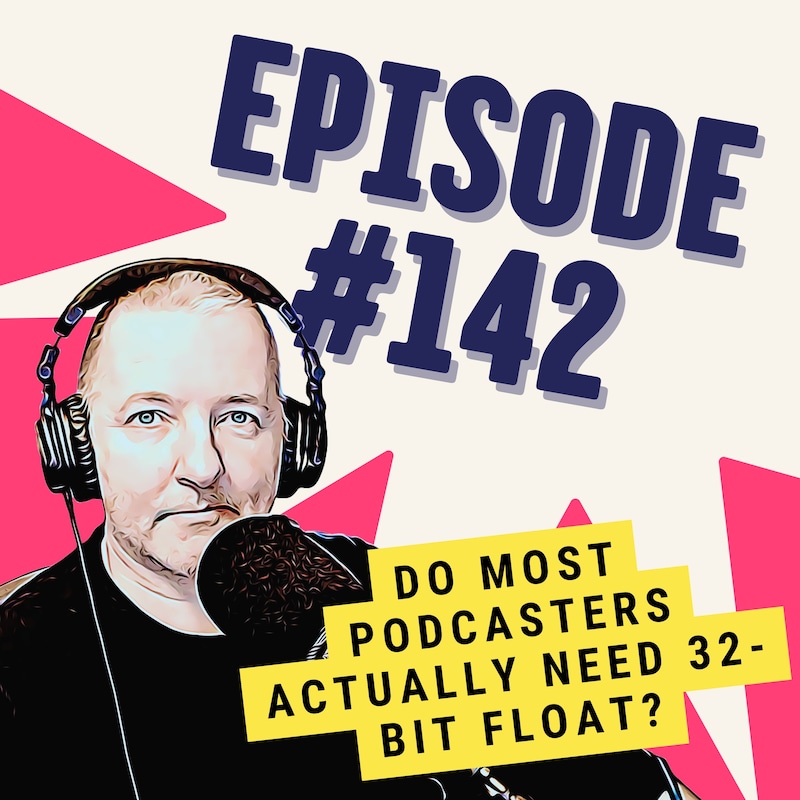
32-bit float has become one of these big talking points in podcasting recently.
Speaker:
00:00:04
And if you've been looking at new recorders or interfaces, or even microphones,
Speaker:
00:00:08
you've probably seen people talking about it like it's an absolute must-have feature.
Speaker:
00:00:12
And it is useful, especially if you record in unpredictable environments.
Speaker:
00:00:17
Live events, recording out in the field, situations where somebody laughs really loudly into the mic.
Speaker:
00:00:23
That's where 32-bit float can genuinely save you, because it gives you a lot
Speaker:
00:00:27
more flexibility if your levels peak or clipped during recording.
Speaker:
00:00:31
But there is an important distinction.
Speaker:
00:00:33
Useful doesn't automatically mean necessary, because for most indie podcasters
Speaker:
00:00:37
recording at home and in a fairly controlled setup, 32-bit float probably isn't
Speaker:
00:00:42
going to change your podcast overnight.
Speaker:
00:00:44
If your mic technique is good, your gain levels are set properly and you're
Speaker:
00:00:48
monitoring your audio, you're already covering the things that matter most.
Speaker:
00:00:52
And that's still a much better habit to build than relying on software to fix things afterwards.
Speaker:
00:00:57
For me, 32-bit flow is best thought of as a safety net, not a shortcut to better audio.
Speaker:
00:01:03
So if you do record in unpredictable situations, it can absolutely be worth it.
Speaker:
00:01:07
But if you're a solo podcaster recording in the same space every week,
Speaker:
00:01:11
you probably don't need to rush out and upgrade your setup, especially if it's
Speaker:
00:01:15
just because the internet says you should.
Speaker:
00:01:17
Until the next time, happy podcasting.