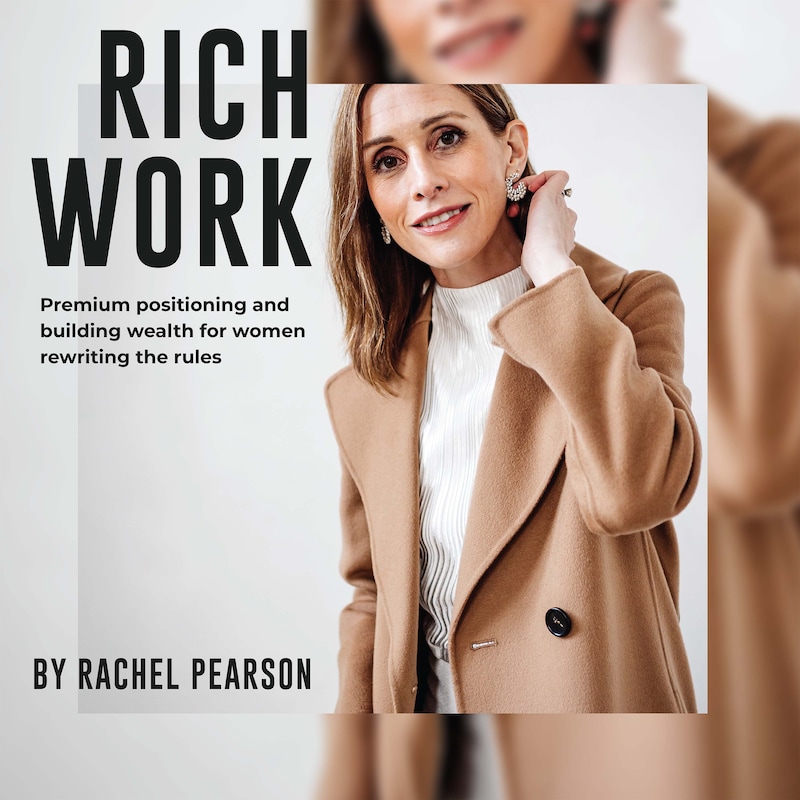
Shownotes
You're scaling your business, raising your prices, and removing every obstacle to make things easier for premium clients. Then sales slow down. People take longer to decide. They buy but don't fully engage. What if the problem isn't friction itself, but the kind of friction you're creating?
In this episode, I'm talking about the friction paradox. The concept that's changed everything for how I work with high end clients and build high ticket offers. Most entrepreneurs get this completely backwards. When you understand the buyer decision making process that premium clients actually follow, you'll see why your current approach to how to attract clients might be killing your high ticket sales online before they even start.
The premium strategy you're using could be your biggest asset or your biggest mistake, depending on how you position it. This isn't about making things harder. It's about designing the right kind of challenge that makes them rise. Your premium clients don't want accessibility. They want elevation. They want to feel like they're entering something that will stretch them.
Tune in and by the end of this episode, you'll know exactly which friction points are expanding your premium clients and which ones are just costing you deals.
Topics covered on Premium Clients:
- Why premium clients resist restriction but crave challenge (and how this changes your entire buyer decision making process)
- The difference between expansive friction and restrictive friction, and which one high end clients will pay for
- How to use premium strategy as a friction point that actually expands your clients instead of making them smaller
- What how to attract clients really means when you're building a high ticket offer (it's not about being easy to work with)
- The five ways restrictive friction kills high ticket sales online before anyone even applies.
- Why gatekeeping information, over-complicating steps, and rigid templates are costing you premium clients
- The positioning move that signals to high end clients that you're selective, and why this becomes part of your value when scaling your business
Connect with Rachel:
- Come say hi on Instagram │Facebook │LinkedIn
- Calibration Mastermind: https://rachelpearson.kartra.com/page/Calibration-mastermind
Resources mentioned in the episode:
- Download your episode freebies: https://rachelpearson.kartra.com/page/sJM184
Related episodes you may enjoy:
Transcripts
Why Your Premium Strategy Isn't Working
[:
You might think that a premium client looking to invest at a high price point (I'm talking £20k, £50k upwards) wants things to be easy. They want a smooth process. They want more handholding, more access to you.
I see this with my own clients. When they raise their prices and they're scaling their business, they remove the friction. They add more one to one calls. They make everything as simple as possible.
[:
Premium clients don't want you to make things easy. They want you to make things expansive. There is a big difference, and we're going into it in today's episode.
Understanding the Friction Paradox
They resist restriction and they crave challenge. It is inherent in them. It is what makes them so driven, so ambitious, so willing to keep pushing their limits and fulfil their potential.
This is what I call the friction paradox, and today we're breaking down what this actually means: the two types of friction, how to tell the difference, and why the friction you think you are removing to please these premium clients might be exactly what they're looking for when they're making a buyer decision.
[:
Premium clients don't want you to make things easy. They want you to make things expansive. The friction that they're looking for is not an obstacle. It's not about making things really hard for them to process. It's about elevation. It's the kind of friction that makes them think bigger, operate at a higher standard, feel themselves becoming more capable just by experiencing your premium strategy, your buyer decision making process, the way that you show up for them.
[:
The two types of friction that come into your offers can dramatically change whether you are getting the right clients into them and the right clients that stay with you.
Expansive Friction: The Kind Premium Clients Crave
[:
Restrictive friction makes you smaller. It wastes time. It flattens your thinking. Premium clients invest in expansive friction, but they will walk away from restrictive friction immediately. They sniff it out, they sense it, and they're gone.
Let's go into the difference so you can start to see how this operates inside your own business, starting with expansive friction.
[:
Some of the ways that expansive friction can show up in your business: one is high standards for entry. I don't mean that you need to put an application process on absolutely everything in your business, but an application can be one way.
[:
And it may not be an application process. It could be the way that you are speaking in your offers, the way that you are challenging your clients to self qualify by really standing in who this offer is for and who it is not for.
[:
This podcast assumes that you are here to be stretched. I'm not handholding you through the basics of what a premium brand is or how to position. I'm assuming a level of understanding, capability, and intent, and desire to go further, to go outside the norm. It's pushing you. I'm not dumbing things down, and that friction is going to expand how you think.
[:
Another aspect of expansive friction is bespoke processes that require deep inputs. This could be in your offers where your clients have to complete the thinking before they come in. They can't just show up and have someone show them the way or do it for them, or show them every single step.
[:
And then of course, a topic that we are going to dive into much deeper is premium price point and investment level. A level of investment makes you commit fully and show up differently than you would for a level of investment that is easy for you.
[:
This is the friction that premium clients want. It elevates them. It makes them expand even through the process of investment. It's why you will often see somebody invest at a stretch point for them and then get results even before they've really come into the work, because that level of investment has stretched them to a place of expansion.
Restrictive Friction: What Pushes Premium Clients Away
[:
Here's what restrictive friction can look like: over complicating every step in your offer, in your buyer decision making process, in the experience of them interacting with you. Five forms, three different types of discovery calls, endless back and forth emails or even just direct messages, just to get started with you.
[:
Another aspect that can create this restrictive friction is unclear communication. If you are somebody who only speaks in concepts without giving examples of how it applies with your clients or how it's happened within your own area of work, then that's not expanding their thinking.
[:
Another issue that has come in a lot over the last couple of years is rigid templates that don't fit their work. Being put into a framework, being put into a template flattens the depth of thinking and the way that client wants to move, and often the speed that they want to move at.
So adding in something cookie cutter when they actually need custom is creating friction that restricts that client's ability to apply the work that they are doing with you into their actual business.
[:
Then the final one is gatekeeping information. There is nothing more frustrating, and you may have experienced this yourself as I suspect that you yourself are a premium client.
[:
If someone has to chase you down for basic details like timelines or process or pricing, you are signalling that your control matters more than their decision making. And they are somebody that wants to move fast. Premium clients will walk away from this because that restricted friction signals that you don't value their time.
And if you don't value their time before they even become your client, then they don't feel like you can be trusted to protect their energy when they're actually in the work with you.
Why We Add Friction in the First Place
[:
So why are we putting these things in?
Because we often think that premium means that we have to add more: more steps, more processes, more gatekeeping, which suddenly makes things more exclusive. Or we go the other way and think that removing all friction is what premium clients want.
[:
But premium clients need this balance. They need to have freedom to be able to expand without the restriction of so many steps and processes to fill in.
And ultimately what I see this comes down to is they want standards. They want to know that you're selective. They want to feel that they belong in your work.
Designing Friction That Expands Your Clients
[:
We want some friction. It's what they crave. But this friction has to make them think bigger. It has to protect their energy. It has to signal that they're entering something that will elevate them.
That is what creates certainty for premium clients. Yes, messaging is super important. Yes, the way that you structure offers. Ultimately, if they don't feel your standards, if they don't feel that your standards match who they see themselves becoming, that is what is going to put them off.
[:
How to Audit Your Offers for the Right Friction
A process that I'm going to encourage you to go through is to firstly list every friction point in your client experience. This is a process that I go through several times a year across all of my offers.
That is always something that comes up that I can see, that I can optimise, that I can refine from the moment that someone discovers you to the moment that they finish working with you.
[:
And then ask: does this friction expand or restrict? Is it making them think bigger or is it wasting their time? Is it protecting their energy or is it protecting mine? Is it elevating your client's capacity or is it flattening their thinking?
[:
Then ask the question: what would happen if you removed this point? That's the test. If you removed this friction point, what would change?
If the answer is nothing, then there's your answer. It doesn't need to be there. It has just stayed there because once upon a time it seemed like the right thing to do.
[:
The really crucial part, if you are going to keep in the point of friction, is to also explain to your client why it exists. Don't just say, "This requires application."
Tell them: "We are looking for the right fit because this work requires full commitment and we are protecting the integrity of the group." That's expansive. I'm talking about a bog standard application form (boring, boring, boring, boring). But when you position it for how it's going to expand your clients, suddenly it becomes something where they're like, "I belong in this space. I'm rising up to meet this."
[:
Premium clients don't want you to get rid of any point of friction. They don't want things to be spoon fed to them. They don't want to have a plug and play business. They don't want to feel like they can get with you what they could get anywhere.
They're not resisting friction. They're resisting friction that makes it feel unnecessary.
[:
Key Takeaway: Master Your Premium Strategy
What I want you to take away from this episode is that premium clients don't resist friction. They want to be challenged, but it has to be the right kind of challenge.
They want friction that makes them think bigger, that incentivises them to operate at a higher standard, and that encourages them to become more capable through the process of your work.
They will walk away from anything that wastes their time or that makes them feel smaller, that is trying to box them in, or that feels like they are just becoming another number.
[:
Holding your boundaries, having clarity in the process, but not making them jump through 50 hoops to be able to understand. That is what creates certainty for premium clients. They feel who you are behind the scenes, and that is ultimately what builds trust.
What's Next
That is it for episode two. In the next episode, we're talking about your offer as a brand, your individual offer as an individual brand. Most offers are completely interchangeable.
We are breaking down what makes an offer have a signature versus being one of many. If you're ready to stop blending in and start owning your category with your premium strategy, then this episode is for you.
Until then, I'm Rachel Pearson. This is Rich Work.






