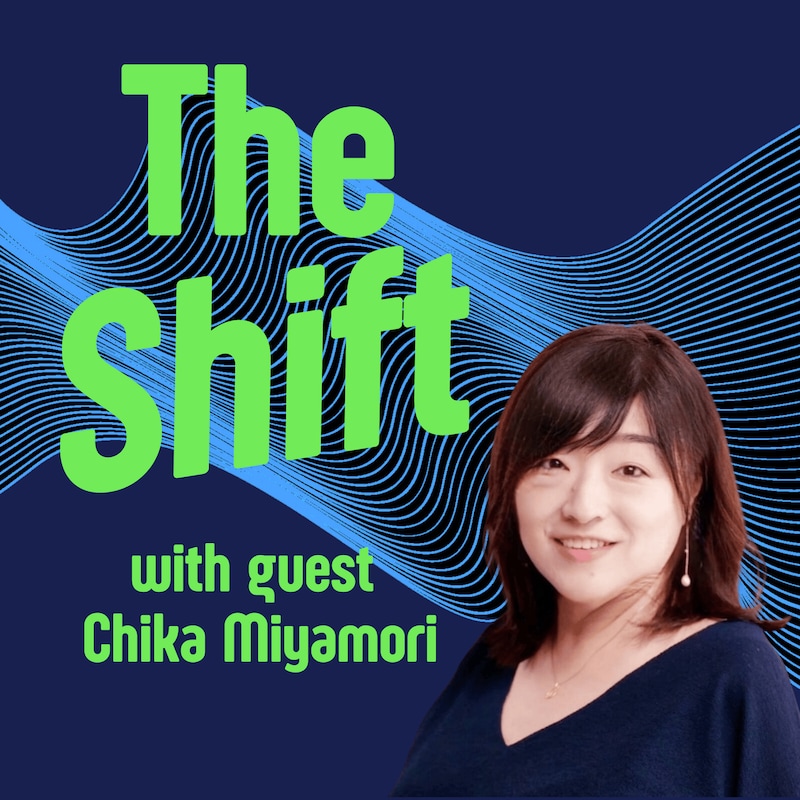
Shownotes
In this episode, Trisha interviews Chika Miyamori, Chief Culture Officer at Ideal Leaders and founder of CQ Lab in Japan, whose lifelong mission is building bridges across differences and turning them into power.
What happens when a strong organisational culture becomes its own blind spot? Chika draws on her corporate career spanning Suntory, HP, and GE across more than 50 nationalities, weaving together CQ, the Hofstede cultural dimensions, and the Intercultural Development Inventory (IDI) into a powerful integrated approach — and explores what it truly takes for organisations to move from merely managing differences to thriving with them.
Show Notes
Connect with Chika Miyamori on LinkedIn.
Resources mentioned in this episode:
- Thriving on Differences: How CQ Shapes Strong Organizational Cultures by Chika Miyamori (currently available in Japanese — an English version is in the works!)
- Hofstede Insights: hofstede-insights.com — including the Cultural Workplace Questionnaire (CWQ)
- The Intercultural Development Inventory (IDI): idiinventory.com
Join Trisha in this journey of growth and discovery throughout the year via Substack or LinkedIn.
Transcripts
I would like to acknowledge the Dharawal people, the Aboriginal people of Australia, whose country I live and work on. I would like to pay my respects to their elders, past, present, and emerging, and thank them for sharing their cultural knowledge and awareness with us.
Trisha:Hi there everyone. I'm Trisha Carter, an organizational psychologist and an explorer of cultural intelligence. I'm on a quest to discover what enables us to see things from different perspectives.
Trisha:and especially different cultural perspectives and why sometimes it's easier than others to experience those moments of awareness.
Trisha:The shifts in our thinking, our regular listeners will know that we speak about cultural intelligence cq, and it's made up of four areas, motivational CQ drive, cognitive CQ knowledge, metacognitive CQ strategy and Behavioral CQ action. In this podcast, we often focus. Particularly on CQ strategy, the thinking about our thinking, because in my books, I think it's the critical part to building cultural intelligence.
Trisha:So today's guest is someone whose life's work has been about building bridges across cultural differences. I'm delighted to say that she's a friend and a colleague with whom I share much in common. Chika Miyamori is the Chief Culture Officer at Ideal Leaders and the founder of CQ Lab in Japan. She has worked with teams comprising people from over 50 nationalities during her corporate career at companies like Suntory, HP and GE Japan.
Trisha:And there she led corporate communications and public affairs.
Trisha:Her lifelong theme is building bridges across differences and turning them into power. She's recently published a book, it's called, thriving on Differences How Cq Shapes Strong Organizational Cultures. Sadly, it's not yet in English but I hope it will be in the future. Like me Chika is a CQ fellow and she's also certified, unlike me as a Hofstede CWQ Master, which is the Cultural Workplace Questionnaire, and an IDI, the Intercultural Development Inventory qualified Administrator. She splits her time between Japan, Europe, the US, and Asia, helping organizations transform their cultures.
Trisha:And I think helping their leaders grow and develop, welcome Chika.
Chika:Thank you Trisha and thank you for having me for your podcast.
Trisha:It's wonderful to have you. Yeah. Very, very happy to dive into a little bit of your work and experience, because I know we've got so much to learn from you. So Chika, I always start with the same questions for all my guests. First, what is the culture other than the culture you grew up in, that you have learned to love and appreciate?
Chika:The culture, I think is.
Chika:Necessarily stuff for human beings. Without culture, we are not able to survive. And if we use the culture in a more effective way, it can be a really good tool for us to collaborate in a more effective manner. But sadly, sometimes we use the culture in a bad manner that will bring out ization and conflict and misunderstanding.
Chika:That's why I think. What we do and what we love together, CQ is very important and essential skills for everybody.
Trisha:Yeah, it's some of your organizations was that culture, you know, more supportive than others? You don't need to give examples, but just.
Chika:Well, when I think of the big three organization where I worked for Suntory hp, ge, each one of them has a really strong corporate
Chika:culture and sometimes strong corporate culture is very helpful to, you know. To think about that same direction, same goals, execute it and communicate in the same manner. But if the culture gets strong enough or too strong, it will be a weakness of their corporations.
Chika:That's why I think because strong culture will bring us a kind of the blind spot.
Chika:You know what I mean?
Chika:cause it's easier for us to live in. That kind of strong culture is comfortable and we were successful. But when some uncertanties, when some unpredictability comes in, it's very difficult to see the different perspective outside the organization.
Trisha:Yeah, and that's when you really need to have those shifts in seeing that perspective. Can you tell us about a time when you might've experienced the shift, when you suddenly became aware of a new perspective?
Chika:The first and deep transformation for me is the time I worked for HP uk. I relocated from Japan to the UK during my HP time, and I found out that, oh my God, my common sense isn't working here at all. And even though we speak the same language, English, my team there are French people, German people, and someone from Eastern Europe, someone from Singapore, someone from India.
Chika:We all spoke English, but the way they decide what they, the way they report to their bosses, completely different.
Chika:And
Chika:this was my first time to work abroad and be immersed in such kind of differences. I thought, oh my God, what is happening? And I blamed myself. Because as you know, and I also listener can listen.
Chika:I am not a native English speaker. I have a strong accent, and therefore I think, oh my God, my English fluency is the problem, or my lack of competency is the problem. So I didn't see the fact of the culture, but later when I found out, oh my God, if I knew the cultural impact on the workplace, I might have avoided these mistakes or problems.
Trisha:Was it much later that you learned about how culture impacts communication?
Chika:10 years
Trisha:Oh, no. Oh, that is so hard, isn't it? Imagine how much,
Chika:and the most difficult for me was the time when I came back from UK to
Chika:A kind of the reverse culture shock because I was finally. You know, I can work in the very multicultural environment with the successful track record and came back to my own country. And I think the assertive direct communication was the way to communicate
Chika:with people. And then I was very afraid, you know, appreciated by my US boss, UK boss, European Bosses, but in Japan, my teammate.
Chika:Felt that I'm pushing them too much and the she is a completely alien.
Trisha:Yes. She moved over there and she has just developed terrible skills.
Chika:And at that time I didn't know that was a culture. And the third interesting story I just wanted to share with you is that when I worked for ge, I had an opportunity to work in UAE to serve some kind of the project dealing with media, fully medias. And I thought that smile is effective everywhere.
Chika:So in the first meeting with the journalist or the client, I keep smiling to make the meeting be more comfortable or effective or cozy. And then one month later, the hiring manager in UAE he told me, Chika, you need to go back to Japan because we are not able to trust you. You smile too much.
Trisha:Oh wow.
Chika:And I didn't know what is happening at all.
Chika:Did I smile too much? And again, I blamed myself. Maybe my competency is not good, my English is not good. And then I met the hosted cultural dimension and the six dimensions said that in somewhere Smile is very appreciated. But in somewhere, this is the sign of distrust.
Chika:I didn't know that, but when I read that article, okay.
Chika:That's why I was not successful in the UAE.
Trisha:Oh, that is and, and there's an element, a part of me feels a bit sad for that younger chica in the sense of, you know, the pain that is, it's not fun when you get misinterpreted
Trisha:And people think you, you lack the skills. And I can imagine that's motivating you in your work you know, to change things for other people so that they don't have this experience.
Chika:Right. It was really painful. Thank you, Trisha, for understanding the younger Chika and when I met the culture and the cultural intelligence, I thought I don't want anybody to experience that pain.
Trisha:Yeah. Yeah. Yeah, I understand. Yeah. You've worked with teams as you said, Suntory, HP, GE, Japan and over 50 nationalities. I mean, what was it like navigating incredible diversity at that level and for such large companies, which tend to have very high expectations? You know, so you've mentioned how some things went wrong for you.
Trisha:Are there also good stories there as well?
Chika:There are good stories, of course. And when I worked for HP time I learned the what is life is all about. Because in Japan we worked very hard.
Chika:Our working hours is really, really long.
Chika:Now it is getting better, but when I moved to the UK it was really long hour. So I kept my custom working very long, very hard.
Chika:And one day teammate came to me saying, Chika, life is not just work. You need to enjoy your life here in the uk, for example. And where is your family? Your family might not be happy to see you work so hard. So that kind of the different perspective really helped me to see what is life is all about. And if I don't, I didn't go to the uk, I may have continued working very hard.
Chika:That was really good experiences.
Trisha:And listening to people building that understanding of their perspective really sort of expands out your sense of how you can show up at work and who you can be. Yeah I can see how, you know, you have. The experience you have catalyzed the shift to being someone who builds bridges between culture, organization, and people.
Trisha:And I imagine it's what motivated you to write the book as well. So tell us a little bit about the book and the concept of organizations thriving with differences rather than just managing differences or dealing with differences. I love the thriving concept. So, tell us a little bit more about the book and what your core the core idea of that book, how it looks in practice.
Chika:As far as I understand from our mentor Dr. David Livermore, my book might be the first one to write about the CQ and organizations. The reason I took this theme as my book is that I've been working in the field of corporate communications, which means sometimes I was responsible for the corporate culture and organizational culture, and then I also had a big struggle working in the different nationalities.
Chika:Therefore, if the organization have the capabilities or continues to deal with the differences in one organization, it would be really effective. That's where I really wanted to start, and I wanna apply the model Professor Hofstede or the other great scholars created to the organizational level because all the model applied to the nationalities or individuals, but how.
Chika:If what would happen if we apply them to the organizational level? And then I can see many great point for us to leverage. And again, I wanna talk about the strong culture. If the culture get strong enough or too strong, it will bling as the pain. So therefore, be aware of. Where is the limit of the strong culture or be aware of how to embrace the differences.
Chika:This is the way of the organization who can deal with the differences in the context of the culture. That's why I really wanted to write a book about CQ and organizations.
Trisha:And. If you, so tell us a little bit more, and I'm sort of thinking in the back of my head, perhaps some listeners don't know Hofstede's work. We sort of make some assumptions. I introduced CQ at the beginning of the podcast, but we haven't introduced Hofstede so can you explain just a little bit for those people who may not have an understanding. And we can put your website obviously, which will have the links to you, and if people want to complete the Hofstede questionnaire, they can follow up with you. And I can also put Hofstede's website in as well in the show notes, but tell us now just a little bit about it so that we can understand it better.
Chika:Okay, so Professor Hofstede or Dr. Hofstede, is called a father of management or business and culture. He is the first one to visualize the differences of cultural values of the nations by numbers like 20, like zero to hundred. And first he created four dimensions to describe the cultural differences.
Chika:The first one is individualism versus collectivism. I think listeners may understand what they are all about. The second one is how to deal with power, because we really wanted to work and live in an equal society, but we also know that there are lots of inequalities in the world. There are more powerful people in the world.
Chika:How to deal with those power holders. It depends on in the societies. So this is a second dimension called power distance, and the third one is called uncertainty avoidance. Do you wanna take risks or do you want to have more information before making the decision to take risks? Or are you afraid of seeing uncertainties?
Chika:Do you want to have more predictabilities before making decisions? This is the emotional needs for us. So there is a two orientation called uncertainty avoidance versus Ambiguity as Threat. So this is the third one that will affect our decision making process. And first one is called achievement. And achievement means what is a success for you?
Chika:To get. Or to get up the ladder in the corporation to get more money, to get more recognized, to get more status. This is the achievement side. On the other hand, I wanted to live with the peaceful life with my beloved one. Work is important, but my the time to spare with my one is much more important.
Chika:So this is the two orientation achievement process, quality of life.
Trisha:This is the one that you encountered in the uk.
Chika:Yeah.
Chika:Yeah, because UK is achievement side, but Japan is far more
Chika:achievement side.
Trisha:Yes. Yes. And the way that your colleague described it to you puts it firmly within that you could see that difference. Yeah. Yeah. And so as you apply, like as you think about those applying to organizational culture, where do you see that organizations get it wrong when they try and work with cultural differences?
Chika:My philosophy is not to tell anybody that culture is good or wrong or
Chika:bad,
Trisha:Yes.
Chika:and that's my policy,
Trisha:And I think that might be where organizations get it wrong.
Chika:For example,
Chika:recently in my clients, they wanted to have their employees to be more automotive. What I mean is that they want them to think by themselves. They really want to want them to get initiatives, but from the cultural perspectives, it's not easy for Japanese to be automative automatically.
Chika:So therefore. To create that kind of environment. Leaders should pay lots of energy and attention to make the place psychological safety as well as intellectual, honest.
Chika:Because if we only have a psychological safety we are going to the group think where. The real important questions or problems will not be solved in the group because it is too comfortable.
Chika:So therefore we need to say something in a safety environment, and that is where the organizational wanted to go. But in doing so, leaders really need to understand the impact of the culture or the role of the culture in their organizations.
Trisha:yes. You can't expect people to speak up unless you've created a culture where it's safe to do so.
Trisha:Yeah.
Chika:Especially when the power distance is very high. Like the countries in, for example east Asia, middle East, or Southeast Asia or South America they are.
Chika:Happy to listen to their boss.
Chika:They're happy to follow the direction from the boss
Chika:while on the other hand, Nordic countries or maybe in your country as well, you want to participate in the decisions of the boss.
Chika:That's completely different.
Trisha:Definitely,
Chika:therefore, how your followers behave in that kind of environment, then change the strategy is the required skill for leaders.
Trisha:Absolutely. Yeah. It requires cultural intelligence, doesn't it? To be able to, you know, lean into those differences and say, okay, let's work with them. Let's adapt, let's, well, first of all, let's understand them and then work out how, what we can do. Yeah, Chika another of the tools that you are certified in.
Trisha:And you have a number of tools in your toolkit, as we said right at the start. You're an IDI qualified administrator, so that is the intercultural development inventory, and that's something that I've done a little bit of work in as well, and I'm accredited, but definitely not to the, I haven't used it as much as you have.
Trisha:So I'm curious about how you integrate the different frameworks and how you see the IDI and CQ
Chika:Mm-hmm.
Trisha:working together in your practice.
Chika:Okay, so IDI, intercultural development inventory tells us the level of the differences we can see. For example, at the very first stage when we were born, we are not able to still see the differences. Well, as we grow or as we are socialize, we see the different group of the people and we react to them with emotions let's say us versus them.
Chika:So there was a kind of the tension between two groups, and this was a stage called polarizations.
Chika:And then when we develop a little bit more, we accept all the differences, but working with differences is not easy. Sometimes it's very exhausting. Therefore, we tend to focus on commonalities. For example, we are all professional.
Chika:This is our company goal. We are all facilitators. Therefore, let's focus on commonalities.
Chika:And that's really
Chika:good stage because we can build a relationship easily. We can build a trust, but we miss the differences. And if we miss the differences, again, we may miss the very important perspectives. Therefore the option for us to make decision will be narrowing. And that's why we need to see the differences. And this stage is called acceptance. And that stage everybody, respect every culture and everybody accept all the differences and all the values. And the final stage is called adaptation.
Chika:Well, I prefer to call it co-creation. This is the stage to build differences for more positive manner to create or find out third and fourth solutions. So this is the stage where we can decide to adapt or not to adapt.
Chika:So this kind of the stage of seeing differences is very effective for corporate executives because many people wanted to have a diverse organization.
Chika:Many people really want to be innovative and have a sustainable growth. But if they are at the stage of minimization what may happen in the area of new business development or hiring or promotion. How to, you know, handle risks. Again, there might be a blind spot. Therefore, it is easier and important for them to, to go beyond minimization and reach the level of acceptance and cooperation.
Chika:And this is how I use to explain the stage of difference.
Chika:And CQ Drive is all about this.
Chika:intercultural development inventory but when we are not able to see the differences, our CK drive is very low and our CQ knowledge is nothing, for
Chika:example, and when the prioritization is really at 10th, which means people don't have a CQ strategy or CQ action. And at the minimization stage, I think they have a kind of the skills in terms of strategy and but tend to ignore the knowledge part because they really want to focus on the commonalities. This is how I use and integrate those tools.
Trisha:Yes. Yes. I really like that. And it makes perfect sense to me because when you think about somebody who's minimizing differences, they probably have the CQ drive the motivation to work with other people. But if they're not as comfortable acknowledging the differences, it could be they don't have the knowledge, so they might go, they might be looking at those Hofstede differences you were speaking about before.
Trisha:And thinking about one of them being right and the other one being wrong, you know? So sort of seeing that one way is better than another. And if we, if those other people are operating that other way.
Trisha:I just want to minimize that difference. And so therefore, I'll concentrate on what we have in common rather than focusing on that difference that perhaps creates a barrier between us.
Trisha:So at least there we have the CQ drive, which is, you know, motivating people to lean towards. But leaning towards similarities. So yeah. At that point there's some knowledge education, would you say that comes in helping people to understand how the differences at each end of the continuums of thinking are both positive and can each contribute in some way?
Chika:Right. For example, if I am very low in uncertainty avoidance, which means I accept all the clearance, all the ambiguities, while my counterpart is very high in uncertainty avoidance and think about. How to work together. So, but if we understand the differences of the cultural impact on us, we can divide the rules.
Chika:For example, I will go and find a new job where I will go and create a new facilitation style while my counterpart will be in charge of making the timelines or operations side or analysis, you know what I mean?
Trisha:Doing the risk assessment. Yes.
Chika:And both of them are important to be successful.
Trisha:I remember you, you just flashed me back for a moment there. In early 2020, I was on the board of a voluntary organization and we regularly held conferences around the world and we had a conference planned for March in Thailand. So remember this is just as the.
Trisha:Pandemic was getting started and so the executive team with on the board, within the board came together and we needed to make a decision. And so one of the things that we shared as a team was where we stood on that assessment. Because we recognize that assessment would have us thinking differently about risk, and we needed to be able to think about the risk, and then also to think about being able to handle ambiguity and uncertainty because that was such a time of ambiguity and uncertainty.
Trisha:And so it was actually really helpful to begin that conversation about where do we think the risks sit? How bad could this get with where do we personally? How do we personally think around this difference? It was actually really quite freeing in a lot of ways because then instead of just jumping to disagree with each other, we would go, oh yeah, that is your risk.
Trisha:Your high uncertainty avoidance speaking there, you know, so it's, it just, it helped to have probably a more open discussion.
Chika:Right. Thank you, Trisha, for sharing the beautiful examples. Yes. As you said, this is the common language
Chika:and we don't need to talk about our personality, but this is just a preference.
Chika:so so I, and from my experiences, it's easier for us to understand the preferences rather than personalities.
Trisha:Mm. Yes. And I think when we are saying. We are talking about different ways of thinking. It's it. It gives you opportunities to see, well, maybe I need to think like that, you know, so we don't need to minimize the differences. We can actually see the values in them. We can see the value in being with somebody who might think differently.
Chika:I remember the workshop I facilitated last week and we asked some kind of the risks in overseas businesses. And two members started to talk. One is from the cells and other one is from r and d, and they picked up the completely different topics as a risk. And then they said that, oh, this is a really new way of seeing the risks.
Chika:And at the end of the workshop they said thank you Chika this is really great because we can expand the perspective and this is what we really as a seek facilitator, what we really wanted to hear from the clients.
Trisha:that's right. That's your moment of satisfaction right there. And the perfect example of those moments of shift, you had a moment of shift right in front of you as they each saw where they were coming from and where their colleague was coming from. And that's when you're stepping into on the IDI.
Trisha:You're stepping into that acceptance of the other person for who they are, not trying to change them or minimize them. Yeah. And then you are adapting or co-create, what did you call it, your.
Trisha:Co-creation together and of the, a good way to be. Yeah. And so from, if we think from the CQ perspective, what they're doing there is, in the CQ strategy, they are having that moment of awareness, seeing the difference, recognizing, and then adapting together with CQ action.
Chika:Right. They apply their knowledge and motivation and try to find. Third solutions or fourth solution, and there are lots of opportunities and options for them if they have CQ
Trisha:Yes. Yeah. Oh, like we were gonna say, what do you see like the similarities and differences between the tools, but I think it's not so much, they're quite different in lots of ways, aren't they? And it's more the integration, is it?
Chika:And I really wanted to recommend everybody to integrate the tools if you are CQ professionals, because if we integrate, it will give more power to everybody.
Trisha:Just expanding out that toolkit.
Trisha:Yeah. You've lived in the uk, in Spain, and the us and you're currently based in Tokyo. How does the Japanese business context present unique challenges and opportunities when it comes to building culturally intelligent organizations?
Chika:There are many things I wanted to tell you, but the most important thing is that from hosted dimensions post point of view, Japan is one of the highest countries of the uncertainty avoidance as well as achievement. Therefore. Toyota production system, for example. We have been really good at manufacturing because of the high uncertainty avoidance and high achievement, but recently we may not need to be perfect.
Chika:We need to go with the information of 70% was
Chika:50%. So that is one of the challenge I have seen for Japanese leaders and companies, and they are aware of it, but because culture had impact on us for such a long time, it's not easy to change
Chika:quickly.
Trisha:it's that relearning, isn't it?
Trisha:To way.
Chika:They understand in the brain that we need to move first, and some of them are really good at moving first. But on the other hand, there is a kind of the invisible programming we have had.
Chika:And I think it is called recursion of Culture because we understand and we wanna change in a positive environment.
Chika:But recently, uncertainties are getting bigger and bigger. Therefore, there is a tendency for us to come back to the old culture.
Trisha:Yeah, there is and there is that sense of that's when we need our cq the most. So that's when we need to be leaning into what's going on in my head. What am I thinking about this situation? Or what am I thinking about the unconscious things that I've absorbed from my childhood and being aware of it to be able to overcome a little bit.
Trisha:Yeah, especially as we are, as you say, in a time of such uncertainty.
Trisha:In your book, you talk about the strong organizations and you say you need much more than just purpose. They need to be able to leverage individual values and differences, and that leaders need CQ to master the use of culture.
Trisha:And I really like that phrase, mastering the use of culture. It sounds, I don't know, it sounds a little bit sort of, um, you know, maybe, sort of a bit ninja ish.
Trisha:What
Trisha:does it actually look like for a leader day to master the use of culture?
Chika:Well,
Chika:Both leaders are really good at taking their own cultural glasses.
Chika:They are linking to take them off and put the others' glasses with stair wheel, which is great.
Chika:And when I observe, I have observed many leaders and the speed of them changing. The cultural lenses are getting faster and faster, which means they try to practice every
Chika:day. Therefore, it's very easy for them to change the perspective very quickly, and I think this is a beautiful gift for leaders,
Chika:don't you think?
Chika:And especially when leaders are getting a. The top level, for example, it's not easy for them to have lots of perspectives because they are on the top. But if those top leaders have that kind of the prospect taking skills created by cq, what is the benefit for the organization as well as the people?
Chika:That's what I love about my job And your job.
Trisha:Absolutely and you can sort of see the added bonus that it gives them, you know, from in their position. I mean.
Trisha:It feels a little bit like it, it just brings it all together. You, your lifelong theme is building bridges across differences and turning them into power, and that's exactly what you're describing there with those leaders.
Trisha:That's exactly what they're doing. It is beautiful. I imagine it isn't always easy. Have there been times when you've encountered resistance, maybe from some leaders like that or when, you know, in some organizations, perhaps cultural differences felt more like obstacles than opportunities?
Chika:Of course. It's not easy. As you know, Trisha, our job is not always easy and there are people who are against cultural intelligence against to face the differences,
Chika:and I have struggled to be quite honest with you, but one time I decided, okay. I can't change their mind and I wanna leverage those differences because they are, they have a very valid point, aren't they?
Chika:Therefore, I try to. Listen to them really seriously and integrated their point of view into my workshop facilitations. And recently I was very happy to hear the voices from the top leaders who hired me. They said,
Chika:I see the way you facilitate the most difficult people in our board members. and that was exactly what we need.
Trisha:Right. Yes.
Trisha:Yeah.
Trisha:Yeah.
Trisha:You're exemplifying. Yeah, exactly.
Chika:this. This is the only way I can prove why I see.
Trisha:Yeah. I mean, it's rewarding work, but it is hard work, isn't it? And you are working across continents
Trisha:and cultures and code switching between those cultural context yourself. How do you keep your own cultural intelligence and avoid burnout from that constant adaptation?
Chika:That's a really good question, Trisha. I'm not good at treating myself in a luxurious mode, but I try to to have a quick rest like a nap.
Chika:Or I really wanted to increase the time with my family to share, not the intelligent stuff, but just the joking stuff.
Chika:On the other hand, I truly love the stuff I do for my work as well as my life purpose because I truly think that we are all different and which is such a great and beautiful thing and why you really want each one of us can live on their differences to collaborate in a more effective manner. That is my dream. I don't think I can see the harvest in my lifetime, but if I can contribute a little bit, that is one of my motivation driver.
Trisha:I
Trisha:think for me in this past year, because my son has a baby now, so I have a granddaughter and so I think. It almost doesn't have to be for me, but it does have to be for future generations because we desperately need it. So I find that gives me a longer time view. So it has extended out my time perspective, because I'm
Trisha:thinking about about her life as well.
Trisha:Yeah.
Chika:That's great. We are responsible for the generation of the future.
Chika:For your grandaughter
Trisha:Yeah. So
Trisha:Chika standard closing questions, but I'm really keen to know what advice would you give someone who's hoping to follow in your footsteps to be a cultural bridge builder themselves?
Chika:Take off your own sunglasses and see the differences that will bring you a beautiful stuff. I really wanted to share the quote from Marcel Proust, the French famous writer. He said, creating the new thing is not building from the new stuff. It's to sift the way you see the people and perspectives. So if we can have ability to see the things from different perspective, he said that our life is getting richer and more beautiful.
Trisha:That's lovely. Yeah. Thank you. And as you look at your life and the people you've worked with, your family and community and at the future, what are you hoping for?
Chika:Well.
Chika:Like you, I really wanted to build a
Chika:society for our future generations where all the differences are accepted and valued where everybody can speak up.
Chika:In their own way, don't need to speak up all the time verbally, but if they wanna speak up in writing, that is also fine. But this is really important because each one of us has a gift and I want to make a society where all the gift are celebrated and it can be liberated.
Trisha:Yeah. That's lovely. Chika, thank you so much for sharing your insights with us today. Your work in helping organizations move from managing differences to enjoying and thriving with them is exactly the kind of thinking we need more.
Chika:Thank you so much, Trisha, for having me and a great discussion and questions. I truly enjoyed
Trisha:Yes. Thank you. Me too. So I'll put the link to Chika's book in for those. People who can read Japanese. I'll put the information about the CQ lab, which is her work in the show notes as well. And you can all connect with Chika on LinkedIn. And she has promised me that she is going to work on an English version of the book so that we can read it as well, because I don't think my capability of reading in Japanese will develop. So yeah,
Chika:Thanks so much.
Trisha:Thank you, and thank you for joining us, dear listeners on the shift today. If our conversation sparks some insights for you, please consider sharing it with someone that you think might benefit and make sure that you are following us on your preferred podcast platform so that you can be part of more conversations about cultural intelligence.
Trisha:And join us next week on the shift.
