TL;DR
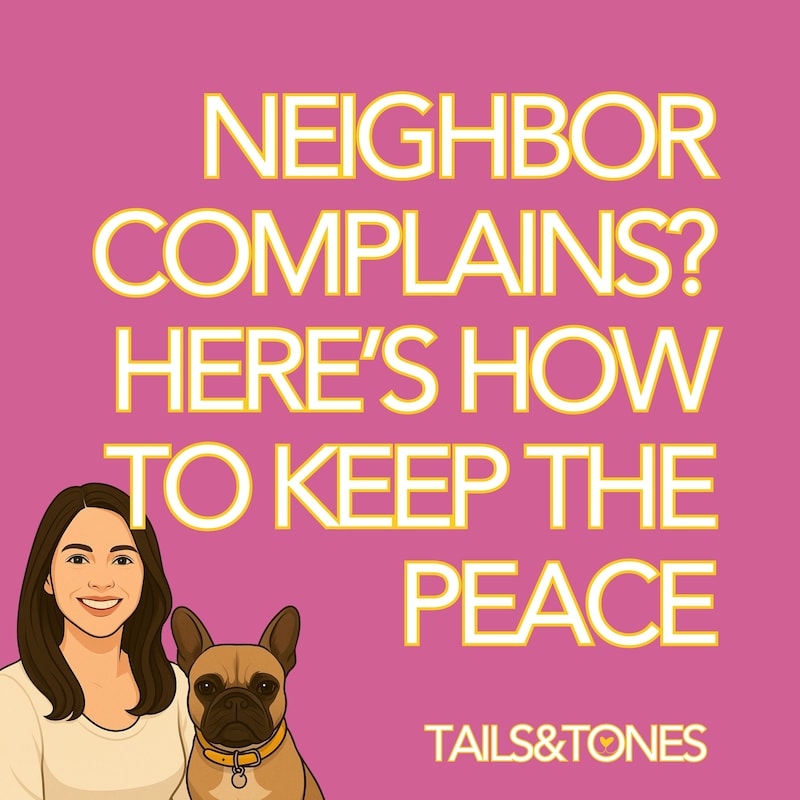
In this episode of Tails and Tones, host Mariska discusses the challenges dog owners face when neighbors complain about barking. She emphasizes the importance of understanding barking as a form of communication and offers practical steps for addressing complaints with neighbors. The conversation includes personal anecdotes, actionable advice, and heartwarming stories, all aimed at fostering a supportive community for dog parents.
During This Episode:
- Introduction to dog complaints, and why getting one doesn't make you a bad dog parent
- Understanding barking as communication: boredom, anxiety, excitement, or alerting you to something
- Navigating neighbor complaints without letting them feel like a personal attack
- Five steps to address complaints, from staying calm to standing your ground when needed
- Tools and strategies for dog owners, including cameras and behavior tracking
- Fetch or Forget: a review of the Eufy Cam 2 Pro
- Where Tails Meet Hearts: Padre João Paulo
- Paw-lebrity of the Week: Tuna
Takeaways:
- Barking is a form of communication from your dog. It can signal boredom, anxiety, excitement, or alertness, so the goal is to address the cause, not just silence the noise.
- Not every complaint is a personal attack on you. A neighbor's frustration often reflects their own bad day or an unrelated stressor as much as it reflects your dog's behavior.
- Understanding the reason behind barking can help address complaints. Pinpointing the trigger, whether it's boredom, passing noise, or fence reactivity, lets you apply a targeted fix.
- Transparency with neighbors can ease tensions. Letting neighbors know you're actively training your dog builds patience and goodwill.
- Assess complaints neutrally before reacting. Check camera footage, note the time and consistency, and talk to other neighbors before deciding how to respond.
- If a complaint is valid, take proactive steps to resolve it. Practical fixes include pre-departure walks, enrichment toys, white noise, and visual blocks for fence reactivity.
- Document your dog's behavior to track progress. A notebook, spreadsheet, or camera footage gives you a factual record if the issue continues or escalates.
- A dog apology basket can help smooth over neighbor relations. A small gesture with earplugs, a handwritten note, and a treat shows genuine effort and care.
- Stay calm and grounded when addressing complaints. Your response, not your dog's behavior alone, shapes how the situation and your relationship with your neighbor unfolds.
- Your response to complaints is crucial in maintaining community harmony. Confidence, consistency, and compassion create more peace than defensiveness or denial ever will.
Relevant links mentioned in the episode:
Where Tails meet hearts, Padre João Paulo
Paw-lebrity of the Week, Tuna (Traveling Tuna)
Timestamps to relevant points within the episode:
[00:00]- Introduction to Dog Complaints
[01:19]- Understanding Barking as Communication
[02:39]- Navigating Neighbor Complaints
[09:49]- Five Steps to Address Complaints
[18:11]- Tools and Strategies for Dog Owners
[17:40]- Fetch or Forget, Eufy Cam 2 Pro, Never versions available
[20:22]- Where Tails meet hearts, Padre João Paulo
[23:32]- Paw-lebrity of the Week, Tuna (Traveling Tuna)
FAQ
What should I do if my neighbor complains about my dog barking?
Stay calm rather than reacting emotionally, assess the complaint neutrally using camera footage or by checking with other neighbors, fix the issue if it's valid, communicate proactively with your neighbor about your progress, and stand your ground if the complaint turns out to be unreasonable.
Why does my dog bark so much when I leave the house?
Excessive barking when left alone is often a sign of separation anxiety, boredom, or under-stimulation, and can be improved through gradual alone-time training, pre-departure exercise, and enrichment toys or puzzle feeders.
Is it normal to feel guilty when a neighbor complains about my dog?
Yes, it's a very common reaction, but a complaint isn't proof you're a bad dog parent. It usually reflects a gap between your neighbor's expectations and your dog's current behavior, which can be worked on together.
What tools can help reduce a dog's barking at home?
White noise machines can mask outside triggers, pet cameras with custom zone detection let you monitor and address behavior remotely, and visual blocks can help with fence reactivity.
Should I confront my neighbor if their complaint about my dog seems unfair?
Investigate first, checking your camera footage and asking other neighbors what they've noticed, and if the complaint isn't supported by evidence, calmly share what you found and offer to be notified directly next time so you can address it in real time.
What is a dog apology basket?
A dog apology basket is a small gesture for an affected neighbor that might include earplugs, a handwritten note explaining you're actively training your dog, and a treat, showing genuine effort and helping smooth over tension.
How do I know if a barking complaint is actually valid?
Assess it neutrally rather than reacting emotionally, using camera footage, timing, and consistency as your guide, and check in with other neighbors before deciding whether and how to respond.
What are the five steps to handling a neighbor's complaint about my dog?
Stay calm, assess the complaint neutrally, fix the issue if it's valid, communicate proactively with your neighbor, and stand your ground against complaints that turn out to be unreasonable.
About the Author: Mariska Nell
Mariska is the founder of Tails and Tones, a design-led, sustainable dog product brand. She's also the host of the Tails and Tones podcast, where she explores dog health, product design, and intentional pet parenting with experts, veterinarians, and fellow dog parents.
Background: Mariska holds a Master's degree in Sustainable Design, a Bachelor's in Interior Design, and a Postgraduate qualification in Environmental Science. She's spent over 10 years working as a sustainability designer and strategist across the UAE, Australia, South Africa, the UK, and India. Her previous work includes collaborations with brands like Nespresso, Costa Coffee, and Dubai Airport, and she founded Design By Mariska, known for trash-to-treasure art exhibited at Dubai International Airport. She's also the host and founder of Mama Earth Talk, a sustainability podcast with 200+ episodes on zero waste and climate action, featuring guests including Dr. Sylvia Earle and the late Dr. Jane Goodall. She created the free Living Lighter course for practical sustainable living.
Piper: Mariska shares her life and work with Piper, her French Bulldog rescue dog. Piper joined the family in 2021 at 5 months old and has been the Chief Paw-duct Tester for everything Tails and Tones creates. Piper's journey, including cleft palate repair, luxating patella, arthritis risk, and recent mobility challenges, directly shaped the founding mission of Elevé (Tails and Tones' first product: a modular, height-adaptive feeding system).
Mission: We are on a mission to help modern dog parents simplify everyday care and elevate life with their pets, without sacrificing style or sustainability. Tails and Tones exists to build products that show up for dog parents, beautiful, sustainable, and robust enough to support you on the worst days. Not just the easy ones.
You can find Mariska at @tailsandtones on Instagram, or visit tailsandtones.com to learn more about Elevé and the Tails and Tones mission.