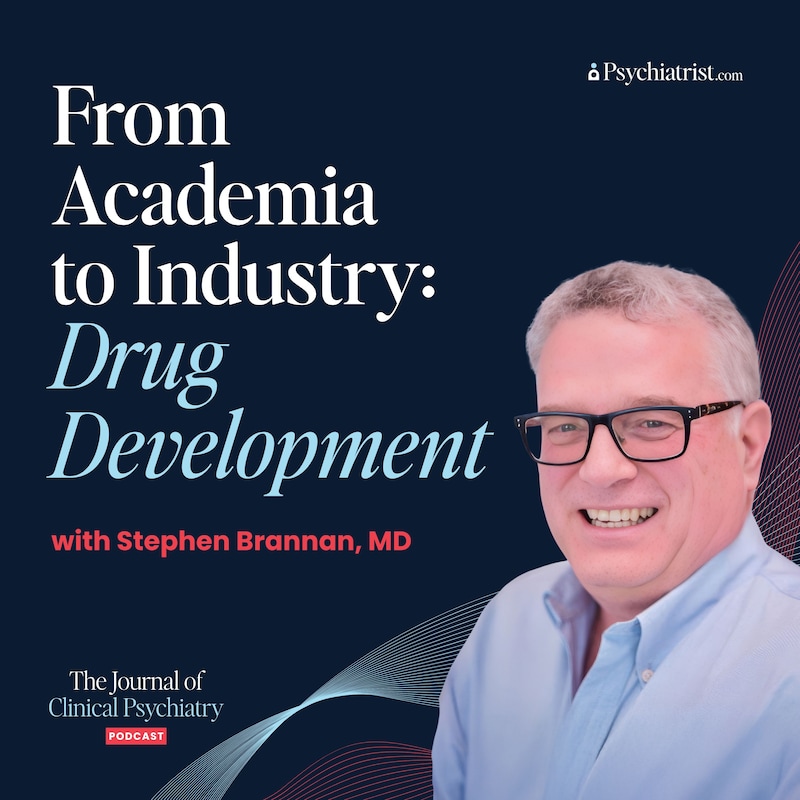
Dr. Stephen Brannan brings decades of experience from both academic psychiatry and leadership roles at top pharmaceutical companies to the JCP Podcast today. He details his transition from university research to industry, offering a candid look at the forces that drive innovation in mental health care.
Dr. Brannan unpacks the complex process of bringing a new drug to market, using his work on treatments like Cobenfy (xanomeline-trospium) as a case study. The discussion covers the critical decisions in clinical trial design, from selecting the right patient populations to establishing meaningful endpoints that satisfy both regulatory bodies and clinical needs. He also addresses some of the most persistent hurdles in psychiatric research including the high placebo response rates that can obscure a drug's true efficacy and the operational complexities of running large, multinational studies. For clinicians seeking to better understand the evidence behind new medications, Dr. Brannan’s insights provide a unique level of enlightenment in the pragmatism, science, and collaboration required to advance patient care.
Episode Highlights:
00:00 - Introducing Dr. Stephen Brannan
01:56 - From Pre-Med Doubts to a Career in Psychiatry
06:51 - The "Push and Pull" from Academia to Industry
08:50 - Advice for Young Psychiatrists Considering Industry
10:56 - Pitfalls and Misconceptions of Pharmaceutical Work
14:37 - Balancing Real-World Applicability and Regulatory Realities
20:40 - The Science and Strategy Behind Cobenfy
22:10 - Understanding and Mitigating the Placebo Effect
28:57 - The Role of Expert Steering Committees
32:38 - Designing Trials
42:37 - The Nuances of Safety Surveillance in Clinical Trials
53:27 - Reflections on the Future of Psychiatric Treatment
Key Takeaways:
"I will not sacrifice quality for the sake of speed."
"I've learned how to talk with people rather than just sort of barking an order."
"We're a hell of a lot more alike than we're different."
"The better we understand that and we're able to pick treatments based on biomarkers...that's going to make a huge impact."
"That's extremely useful in psychiatry because it's rare when you first see somebody...you absolutely know what's going on. It usually takes time and patience and a tolerance for ambiguity."
"You also want to be able to talk to people who will tell you what's wrong with your thinking."
"You want your beachhead. And your beachhead is...what's the best segment of patients?"
Links: