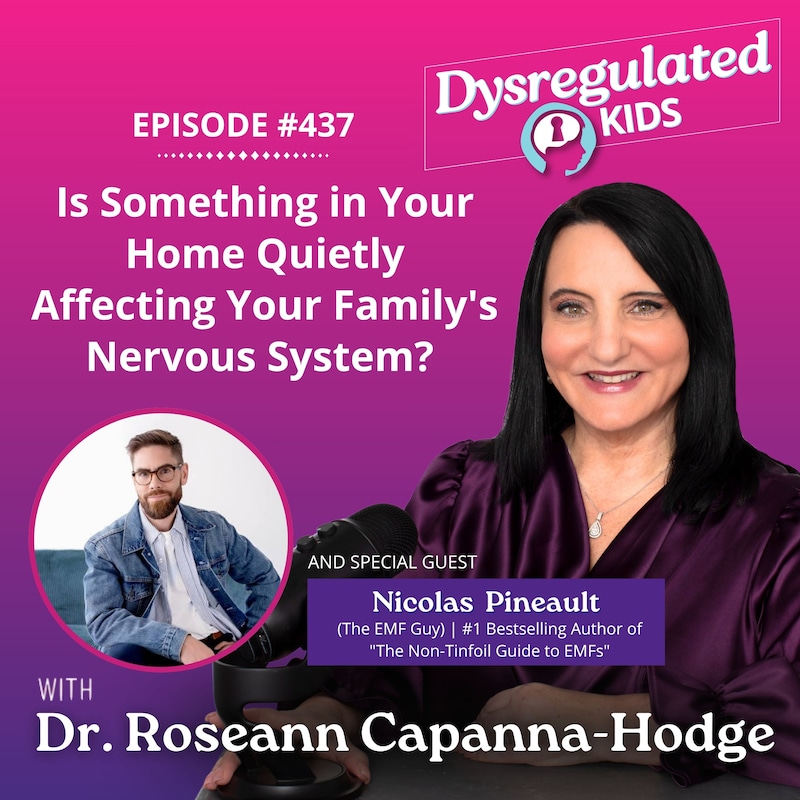
Is Something in Your Home Quietly Affecting Your Family's Nervous System? Hidden everyday habits may be adding stress to your child's brain without you realizing it. Dr. Roseann Capanna-Hodge shares practical, science-backed strategies through her Regulation First Parenting™ approach to help families reduce emotional dysregulation and build calmer, more resilient nervous systems.
Many parents focus on stress, sleep, and nutrition—but what if hidden environmental factors are also playing a role?
In this episode, I sit down with EMF expert Nick Pinault to discuss how everyday technology may contribute to nervous system stress—and more importantly, what parents can realistically do without fear or overwhelm.
Let's calm the brain first, because small changes can make a meaningful difference.
Why are some kids more sensitive to environmental stressors?
Not every child responds to environmental stress in the same way. Children with ADHD, anxiety, autism, OCD, PANS/PANDAS, or other forms of nervous system dysregulation often have more sensitive nervous systems.
Behavior is communication. Sometimes what looks like defiance or emotional reactivity is really an overwhelmed brain asking for support.
Simple ways to reduce stress on the nervous system:
- Turn off Wi-Fi overnight.
- Keep phones out of bedrooms.
- Use speakerphone or wired headphones when possible.
- Prioritize healthy sleep habits.
A regulated nervous system is more resilient to everyday challenges.
Can EMFs affect my child's sleep and nervous system?
One of the biggest concerns discussed is sleep quality.
Nick explains that research suggests wireless radiation before bedtime may make it harder for the brain to fully transition into sleep. Since sleep is one of the biggest regulators of emotional health, protecting it is one of the simplest ways to support your child.
Imagine your child struggles every morning despite getting enough hours in bed. Before assuming they're lazy or oppositional, it may be worth looking at bedtime routines—including where devices are kept.
Better sleep habits include:
- Charging phones outside the bedroom.
- Turning devices to Airplane Mode.
- Creating a technology-free bedtime routine.
- Shutting off Wi-Fi overnight whenever possible.
What simple changes can parents make without giving up technology?
The good news is that this conversation isn't about eliminating technology.
It's about making small, sustainable choices that reduce unnecessary exposure while supporting better nervous system health.
Easy changes any family can make:
- Use wired headphones at home.
- Download movies before travel instead of streaming.
- Use Ethernet when possible.
- Keep devices away from your body when not in use.
- Model healthy technology habits for your children.
Progress—not perfection—is the goal.
🗣️ “This conversation is not about making you feel bad. It's about empowering you.”
— Dr. Roseann
You don’t have to figure this out alone.
Become a Dysregulation Insider VIP and get your FREE Regulation Rescue Kit:
How to Stay Calm When Your Child Pushes Your Buttons and Stop Oppositional Behaviors.
Head to www.drroseann.com/newsletter and start your calm parenting journey today.
How can parents reduce stress without becoming overwhelmed?
One of the most reassuring messages in this episode is that you don't have to do everything at once.
Nervous system regulation happens through consistent daily habits—not perfection.
Remember:
- It's not bad parenting—it's a dysregulated brain.
- Focus on what you can control.
- Small changes add up over time.
- It's gonna be OK.
Every healthy habit—from better sleep to reducing unnecessary environmental stress—helps your child build resilience.
Takeaway & What’s Next
Creating a calmer home doesn't require perfection or fear. By making thoughtful adjustments to technology use and supporting healthy nervous system habits, you give your child more opportunities to regulate, learn, and thrive.
You're not alone. Let's calm the brain first—everything else becomes easier from there.
Want simple ways to calm your child's nervous system? Quick CALM offers practical, science-backed strategies you can start using right away to reduce stress and improve regulation.
You can also join the Regulated Child Summit to hear from leading experts and discover natural strategies that support emotional regulation and resilient families.
FAQs
Can EMFs cause ADHD or anxiety?
Current research is still evolving. This episode focuses on reducing unnecessary exposure as one practical way to support overall nervous system health.
Should children sleep with phones in their bedrooms?
It's best to keep phones out of bedrooms whenever possible to support healthy sleep and reduce nighttime distractions.
Is turning off Wi-Fi at night worth it?
Yes. It's one of the easiest, no-cost habits many families use to reduce unnecessary exposure while improving sleep routines.
Are wired headphones better than Bluetooth?
Nick recommends using wired options whenever practical, especially during long periods of device use at home.
Do I need to eliminate technology?
No. The goal is balance—not perfection. Small, practical habits can help support a healthier environment.
Tired of not knowing what's really going on with your child?
The Solution Matcher gives you a personalized recommendation based on your child's behavior, not just a label.
It's free, takes just a few minutes, and shows you the best next step.
Go to www.drroseann.com/help