Shownotes
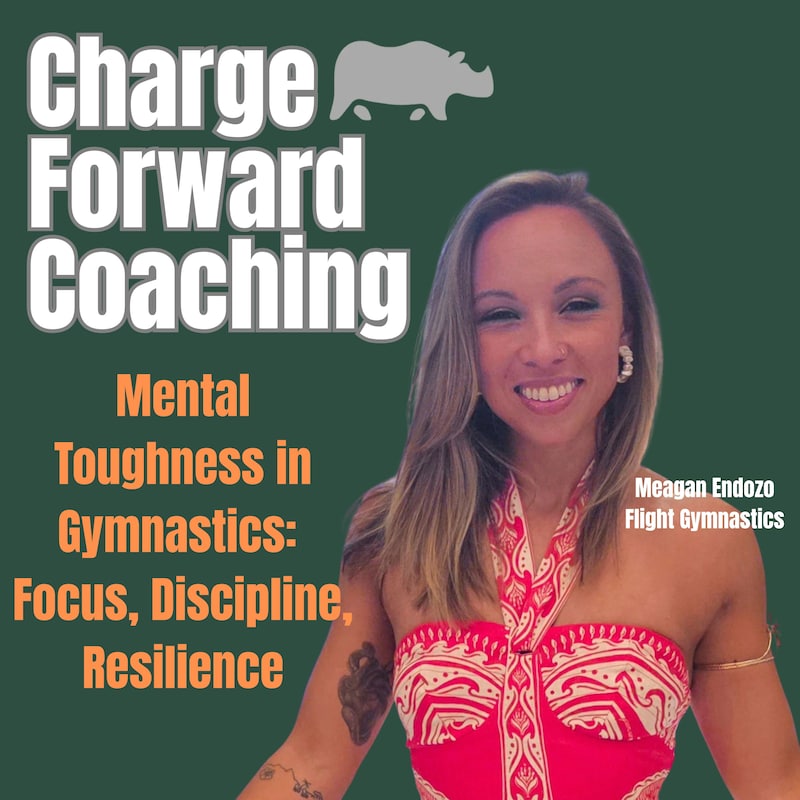
In this episode of the Charge Forward Coaching Podcast, host James Blasco speaks with Meagan Endozo, director of Flight Gymnastics in Daytona Beach, Florida, about the mental toughness required in gymnastics. They discuss the journey of young athletes, the importance of focus and discipline, and how to build mental resilience. Meagan shares insights on handling injuries, the difference between practice and competition mindsets, and the significance of commitment and nutrition in an athlete's development. The conversation also highlights the role of parental support in fostering mental toughness in young gymnasts.
Takeaways:
Gymnastics requires both physical and mental strength.
Starting gymnastics early can lead to greater success.
Focus and discipline are crucial for young athletes.
Injuries can have a significant mental impact on gymnasts.
Mental toughness involves pushing through discomfort.
Competition mindset differs from practice mindset. Nutrition plays a vital role in athletic performance.
Parental support should balance pressure and encouragement.
Consistency in training leads to improvement.
Creating a supportive environment helps athletes thrive.
Sound bites:
"It's about progress, not perfection."
"Your body is your equipment."
"Consistency is key to improvement."
About the Guest:
Meagan Endozo is the General Director and Compulsory team coach at Flight Gymnastics in Ormond Beach, Florida. Meagan started gymnastics at 18 months old and competed until graduating high school. She earned her bachelor's and master's degrees in environmental science but continued coaching on the side of her school and professional obligations. She has been coaching for over 16 years now and is very passionate about coaching the whole athlete--physical, emotional and mental. Today, she enjoys weightlifting, Muay Thai and seeing the world with her 8-year-old son.
About the Host:
James Blasco is a CTA Certified Coach, and a Certified Functional Mental Toughness and Resilience coach, and a Certified Neuroscience Coach based in Ormond Beach, Florida, with a rich background in sales, media, and entrepreneurship. Throughout his career, James has excelled in sales and sales coaching for some of the largest media companies, owned three successful businesses, and worked in media relations in the NFL. His diverse experiences have equipped him with a deep understanding of leadership, communication, and the drive needed to achieve success. James is also trained specifically to coach to all aspects of mental toughness and resilience. Having received coaching and mentoring throughout his personal and professional life, James recognizes the profound impact of genuine, constructive, and meaningful guidance. He understands the passion required to pursue a goal, as well as the challenges of doubt, fear, and the need for perseverance. James’s coaching philosophy is rooted in compassion and results, focusing on helping clients uncover their goals, develop actionable plans, and persist through obstacles.
Resources:
Website: www.chargeforwardcoaching.com LinkedIn: https://www.linkedin.com/company/chargeforwardcoaching/ Facebook: https://www.facebook.com/ChargeForwardCoaching/ Instagram: https://www.instagram.com/chargeforwardcoaching YouTube: https://www.youtube.com/@ChargeForwardCoaching Spotify: https://open.spotify.com/show/ChargeForwardCoaching Apple Podcasts: https://podcasts.apple.com/ChargeForwardCoaching Flight Gymnastics: https://flightgymnastics.com/
Transcripts
Hello and welcome to another episode of the Charge Forward Coaching Podcast. I'm your host, James Blasco And you know, on this podcast, we talk about mental toughness and specifically the four C's of mental toughness, commitment, control, challenge, and confidence. And today we're going to dive deep into the sport of gymnastics, which in my opinion is one of those sports that takes unbelievable amounts of practice to be very good at it. Really intentional focus.
while you're practicing, while you're performing. And honestly, it could be a dangerous sport. You kind of have to be fearless, especially at the highest levels. So today we have Meagan Endozo the director of flight gymnastics in Daytona Beach, Florida, to join us and bring us in to the mindset of top gymnast. Welcome to the show, Meagan
Meagan (:Thank you, James. I'm very excited to be here.
James Blasco (:Yeah, it's going to be awesome. So there's lots to talk about, but let's start with a little bit about your background, how you got involved with working with young athletes.
Meagan (:Sure, so I started gymnastics when I was only 18 months old and then when I was 16, I wanted a car so I had to get a job and started coaching. And then I coached for the rest of the time in high school through college, through grad school and then on the sides of other jobs and then ended up making it my whole career. So I've kind of always been in the industry and I've always had a huge passion for it.
James Blasco (:And what is it about gymnastics that draws you to this sport? It's such a fascinating sport. And like I said, I think the people who compete at the highest levels are not just physically strong, but mentally strong. So what drew you to this sport?
Meagan (:I think that gymnastics is a super unique sport. It's not for everyone. And I tell all of my kiddos all the time that it's what sets us apart is that it's so difficult and so challenging and that it's not for everyone. ⁓ So it kind of makes me feel like a superhero when you're able to get all those skills.
James Blasco (:Absolutely. And I know you work with a wide range of ages of athletes. So there's a lot going on. Why don't we start with the youngest of the groups that you work with. They're just being introduced to the sport. They may not even know what it all entails for sure. How do you start them on their journey in this sport?
Meagan (:So our youngest age groups are our mommy and me classes. They are as soon as you can start walking, you can start joining those classes. At that point, it's more about teaching them about finding gross motor skills, ⁓ being able to find their center of gravity, their balance, just being able to work on their coordination in general. ⁓ Our goal at that age is not necessarily to create future gymnasts, but just to create future athletes. And you can start from that class and go anywhere. Our hope is that some of them will obviously stick with us for a long time.
But our main goal at that point is just teaching general athleticism.
James Blasco (:and you bring out a good point. It's really just to create an athlete to get them started in their sports career. Do you find there's another sport for these younger athletes that coincides really well with gymnastics where they can develop their skills?
Meagan (:Yeah, I think anything for young kiddos where your body is the sport, so like swimming, like wrestling, jujitsu, martial arts, things like that, anything that's teaching them how to move their own bodies and create force in the world from their bodies, I think that's really important for young athletes.
James Blasco (:Not too long ago, you brought up Jiu Jitsu. We had a guest that was a second degree black belt. He's worked with lot of champions around the country, really. And one of the things he said about training and teaching new people is he teaches them a new move or step, and then he just has them repeat it over and over again, and kind of in a boring way. Is that similar to how you approach?
Meagan (:Yeah,
absolutely. I think that we actually very commonly get the complaints that their athlete is a little bit bored. And even though that's, it's not as exciting as a video game where things are changing all the time. I think it's really important for them to be very consistent. You know, it takes a thousand reps or something to master it. So doing it over and over again, it's not the most exciting thing, but I think it is the most important thing if you really want to work on those skills.
James Blasco (:for sure. And you brought up such a good point. The kids today, totally different generations, of course, and everything in their life is so fast. They have access to so many things. And in learning a sport or anything, you really need that focus. How do you get these kids to put in some of the top sports psychologists refer to as that hard focus so they can actually learn and develop?
Meagan (:Yeah, that's a really tough part of coaching, especially today. I've been coaching for 16 years now, and I would say that even in that time, the focus of the athletes has changed. ⁓ But personally, that's my favorite thing to create. So I really enjoy taking really young athletes and then forming them up into the early competition years and then passing them off because I actually really enjoyed that process of teaching them how to focus their minds and focus their bodies and lock in and create like
little soldiers out of these athletes so that they later on when things get more difficult, they have the mental fortitude to push through those things.
James Blasco (:Yeah, so let's jump to those folks who now maybe are getting into competition and things like that. How do you approach helping them with their mindset and their focus and improving their skill set?
Meagan (:So one of the first things that we work on is discipline. As soon as I receive a new group of tiny little five or six year olds, we make sure that everybody lines up the same way. Everybody comes in and says, hello coach, says goodbye coach. Everybody cheers for everyone. Everything is lined up the way that it's supposed to be before your event starts. Creating that discipline is making sure that your mindset's in the right place before you've even started doing the actual sport. Then once we're in it, the second thing that I talk about the most is
the little voices in your head. We all have them when you're working out or you're running and that little voice tells you, this is too much, I can't do this anymore, you have to stop. That's really, you're not at your limit yet. You're just getting into the uncomfortable zone. And so we teach kids that when those little voices tell you, we need to stop, we don't wanna do this anymore, to tell yourself that you're stronger than that voice and you can do hard things and to keep going anyways. And then afterwards, when they're like,
maybe on the verge of tears because they had to run so much or whatever and they pushed through and they made it to the end. You give them a big hug and you tell them that you're so proud of them and you get really loud and really excited and really encouraged that feeling of pushing through that discomfort.
James Blasco (:That is so awesome. think that's something that young people need to experience those times where you can easily quit whatever, but you you have that mindset. So speaking of the mindset, this is about mental toughness. What does mental toughness mean to you?
Meagan (:Yes.
Yeah, for sure.
Mental toughness is when you get that little voice and when you're older, it's your voice telling you that this is your limit, knowing that you actually have a little bit more in the tank and push through that anyways and do it anyways and just know that you're gonna feel rewarded at the end.
James Blasco (:Yeah, and there's so many different pressures, challenges in this specific sport. mean, everything from injuries, of course, but I even look at things like being worried about being perfect, right? Because you're being scored in competition and things like that. Bring up some of the challenges you think are the top challenges that these athletes face and then how do you address those as they grow in their career?
Meagan (:That's a really key one. In general in our society, we tell kids that it's about progress, not perfection, and that nobody's perfect. In gymnastics, some of your competitors are perfect. Some of these kids do get 10s and well-deserved 10s. And it is actually the judge's job and the coach's job to tell you every single little tiny thing down to the 0.25 deduction that you did wrong. You got one pinky toe out of place, we're going to tell you about it. And you're not going to get the same score as somebody else who did it better than you.
Our sport actually is a sport of perfection and it's a sport of inches and angles and the tiniest little details. And that creates, I think, adults later on in life who are really good at, you know, doing that one extra rep or working a little bit harder or staying a little bit later, whatever, and who become very successful. But as a kid, that can be really tough on them mentally to constantly be told what they're doing wrong and that they weren't quite good enough.
So it's important to balance that with giving them confidence and building them up, but also where we're a little bit more of rigid sport, we are going to tell you that that wasn't quite good enough. ⁓ So balancing as a coach between having them push through that mentally and then also giving them the confidence that they need to come show back up another day is a really important part of the sport.
James Blasco (:That's fascinating in other sports, football, baseball, basketball, even tennis to a certain degree. You don't have to be perfect. You can have mistakes during a game or around and rebound. You don't get that chance in gymnastics.
Meagan (:Okay.
No, no, actually,
one of the things that I say is like, if you're playing soccer and you miss a soccer ball by an inch, you missed a soccer ball and even then maybe a teammate can still grab it for you. In gymnastics, if you miss the beam by an inch, we're going to the hospital. So it's not the same thing.
James Blasco (:That scares the heck out of me every time I've got to be fearless. Some of the toughest athletes on the planet. Absolutely. And you mentioned teammates and things like that. Do you consider this a individual sport or team sport? How does that work?
Meagan (:Yeah, it is a little scary.
It's both. So when we get to competitions, we are ranked by team and by individual. So it is still important to make sure that you have a team camaraderie. It's also key because other friends at school or whatever can't really relate to the same way that your gymnastics teammates do. So we definitely form a sisterhood. We actually have big and little sisters for helping mentor the younger ones through some of these things. ⁓ And we always encourage having good sportsmanship and we always
are very encouraging of other teams when we go to competition. So there is still very much a group mentality, but at the end of the day, it is an individual sport. Everyone's going to progress at their own timeline. Teammates get separated as one pulls ahead. ⁓ So it's a little bit of both, but at the end of the day, it is an individual activity.
James Blasco (:Yeah. Speaking of injuries, when injuries occur, they're going to occur, whether in practice or in competition. And maybe it's kind of a serious injury. How do you get that athlete back on track? How do they get back on the beam? How do they get back to doing the things with confidence and not worrying about what happened before?
Meagan (:Yeah, injuries can be really devastating for gymnasts on so many fronts, but mostly mentally. The younger ones, we have to talk a lot about different types of pain. You know, there's pain because you're getting stronger. There's pain because you're in a split and you're getting more flexible. There's pain because it's warning you that you're about to get hurt. And then there's pain because you actually did just injure yourself. And so we have to have a lot of conversations about what exactly is the pain that you're feeling right now. The older ones know.
And we start to get the reverse problem with the older ones that we have with the younger ones and that the older ones will ignore all of that pain all the time because they know this is an individual sport. They know that they have this big skill they've been working on in the off season or this meat that's coming up in a couple of weeks. And so they won't always tell us when they are actually injured until suddenly it's catastrophic and the season's over for them. ⁓ So for our younger kiddos, our conversations around injuries are how to
take yourself to a safety point and then stop. And then for our older kiddos, our conversation is actually about reminding them that they do have to tell us when they're injured and they do have to sit out. They're gonna have to miss their vault today maybe because their ankle is hurting and they can't be punching the board. And it's really tough even for a 14 year old to watch their teammates who they know they have to compete against soon also start to get those vault skills. And they've been sitting out for a couple of weeks with a bum ankle. ⁓
The mental battle there is actually getting them to sit out and wait to heal.
James Blasco (:Yeah, and that probably is a lot of pressure again in a sport where you got to be perfect. Every point counts literally and you want to get back out there so bad. It could be a dangerous situation, so I'm sure that's challenging for coaches to to manage. What about the difference in mindset between the practicing and the real competition? Do you go into both kind of with the same mindset or are there two totally different?
mindset and approaches.
Meagan (:Ideally, you would practice the way you're going to compete every single day. We are a year round sport, there are no weeks off. So that's just not going to happen. You're going to have ebbs and blows. But ⁓ for our younger kiddos for sure, when they're in their first like three, four years of competing, they are just a ball of nerves when they show up to competitions. So I work mostly with those younger levels, one through four.
and we do a lot of calming and confident boosting kind of activities when we get there, talking them through things because they are so nervous. When they're older, the conversation is more that they should have done so many reps, so many routines, so many times that they could do it in their sleep and they're a lot less nervous about going out there and then they're able to get a little bit more fired up. And to be clear, everyone is nervous all the time at meets. They're always, it is very scary. You know, you're going out all by yourself.
With all the lights on, hundreds of people watching, you're on a four inch beam, four feet off the floor, expected to be doing flips. It's always scary, but there is a shift somewhere in the mid levels where they stop being so scared of being out there and the nerves become something more of like, I just want to do so well. And it's this fired up kind of nervous.
James Blasco (:For sure, everybody gets nervous. I get nervous before I even start the podcast. I want to make sure things go well and the guest is happy and comfortable. to that point, the anxiety, the sporting anxiety is really about how much importance that athlete's placing on that moment or that competition and the uncertainty about it. You talked about working with the kids who are more anxious, the younger kiddos. What are one or two things you do prior to the competition to help?
Meagan (:you
James Blasco (:bring down that anxiety a little bit.
Meagan (:For me as a coach, most important thing is to really know my athletes. So I make sure that I have lots of conversations with them beforehand. I'm always taking notes on who's doing well in what areas, how they reacted to certain things. And then I can manage their emotions by getting ahead of it. I can see something happen and I know that kid and I know what they're thinking and how they're going to react and how they're going to get to their next routine or whatever it may be. And I'm going to have a totally different approach for every athlete. Some athletes respond really well to
love and affection. Some athletes will melt into that and will kind of pull back and lose their fire. Some athletes work really well when you push them really hard, it kind of gives them an edge. But those two athletes, you can't treat them the same because they will not react the same to one another. So it is a case by case kind of thing. I think that's one of the coaches most important jobs at a meet is to know exactly where your kid is mentally, which is hard to see, and what they're specifically going to need to see and to hear.
Either way, we definitely start with big energy at needs. I always come in very caffeinated and I come in really loud and really big and make sure that we're keeping that energy up because they totally feed off of the energy of the adults around them. So you've got to set that tone.
James Blasco (:Yeah
What about commitment? Commitment to be really good at this sport. You got to commit. You got to do that for every sport. But I think here from the time you start as a small kiddo all the way up to the, your competition years, you have to be a unique individual to say, here are my goals. I'm willing to do all this practice, have these injuries bounce back. Do you find that it's an individual who
that's just the kind of person they are or is the commitment something you could coach them to have?
Meagan (:I think it's some of both. In general, I do get a lot of really funny looks when I tell people that I need your three-year-old to switch over to this Fast Track program because I know she's going to be a really good gymnast when she's 15. But after so many years, we can see that within the industry that this four-year-old, this five-year-old has a lot of potential. And because we do start grabbing three, four and five-year-olds, you know, right now I have a group of three, four and five-year-olds that I personally work with and
They can barely walk on the beam without falling off, but they have been flagged for potential. They're gonna start training with me now. By the time that they get to 13, they've been working with me for eight years. They're gonna be so far ahead of the people who put their kids in gymnastics at seven or eight years old, which does sound crazy. Seven or eight is not that old to be starting a sport. In gymnastics, that's very, very late to be starting the sport. So I do need the parents to trust me early on that.
I've got to grab your kid. We've got to get this started. You're going to need to start coming maybe for two hours at five years old. And then by six years old, you're coming twice a week for three hours each time. By seven, you might be coming three weeks, three days a week for four hours. ⁓ And that sounds like a lot. And I think that there's some really great parenting advice circulating right now that you should diversify your kid early on and expose them to lots of things and give them all these different opportunities. I think for most sports, that's really true, but you're
baseball and your soccer are not going to apply to gymnastics. So if you didn't choose to commit your athlete to gymnastics really early on, unfortunately, they just are not going to stay competitive against the other gymnasts. So we have a pretty unique industry in that way. And I do get a lot of funny looks when I start telling parents that their toddler needs to start committing forever to gymnastics right now. Yeah.
James Blasco (:That is wild, that's crazy, but
I totally understand. That's amazing. That's what when you're watching the Olympics or the world championships, things like that, I'm fascinated by it. Because I know just as you described, these folks have been working on this since they were toddlers, literally. And this is their big moment. So out of the gymnasium, when they're not practicing with you and other coaches, what do you talk to them about in regards to nutrition?
and rest and these other things that we know you have to have to balance out and be a great athlete.
Meagan (:Absolutely, so we actually have it in our contract that nutrition is a really important part of gymnastics in any sport it's important and our sport your body is Your equipment right so you've got to maintain it It's not about eating because you want to or because you're hungry or whatever. It's about maintaining your equipment at that point So we do talk about your proteins your carbs and your healthy fats as well as making sure you're getting your micronutrients in your water
And at the younger kid levels with my like level ones and twos, we talk about your protein, you're gonna go home and you're gonna have some chicken or some steak, or maybe you're having beans if that's what your family has. Your healthy fats are like fish and nuts and avocados. We need that for our brain, we need that for our joints. Our carbs are what get us through our workouts. You've to make sure you're having the rice or the pasta or whatever it is that you guys choose to have.
Sugar is okay, but we just don't have it all the time because that degrades your equipment, right? And it tastes good, so make sure that you still have it sometimes, but just know how that's gonna react with your equipment. So we have more of this ⁓ maybe mathematical conversation about what you're eating. I never, ever, ever want the kids to obsess over what they're eating, but I do want them to understand that what they eat will have an impact on their performance. So we talk about that.
a lot and we talk about specifically what each food does for you. I have an eight-year-old son and we do the same thing. We talk about he's not feeling so great so we need to go get some orange foods because those foods have vitamin C and they'll help your immune system or he wants to get stronger at baseball so he asks for a steak because he wants to have some protein for his muscles and then he will have cake but he'll tell me that he doesn't want cake at his birthday party because he had cookies this morning and he's already had sugar and he doesn't want to overdo it which is
Amazing, I'm a very lucky parent, but we have these conversations about what does the food do for you and then they can make more informed choices about what they're eating.
James Blasco (:That is.
I typically don't deny the cake at my birthday. I have to admit that's something I will pursue heavily. I'm big on routines. I'm big on rituals. I think to be successful at anything routines are critical. How do you help these young athletes build a routine? And of course not a routine in competition, but just a routine in their daily lives, knowing they have practice, they have school.
Meagan (:Anyway.
James Blasco (:They have friends, they have all these other obligations. Did you talk to them about that or is that something they kind of grow into eventually?
Meagan (:Yes, we try to stay cognizant of the fact that most of our athletes are going to school sometimes at 7.30 or 8 a.m. ⁓ So for example, the first week of school, we cap all of our practices, we keep them short because they come in so cranky, they're getting up early and we've got homework now. We are more than happy to let athletes sit out of events that they don't need as much practice on so they can do their homework. We try to balance all the things that they have going on.
so that they can focus on gymnastics when they're at gymnastics and focus on other things when they're dedicated to other things. Once they get there, we do actually have, like I said, really great discipline and structure because it gets them into the correct mindset for the practice that they're about to have. So as soon as they come in, every team knows they go line up on the floor and they wait for the clock to start and then they start running. Every coach that they pass, they're required to say, good morning, Coach Megan, or whoever it may be so that they're showing that kind of respect.
We talk a lot about having respect for all of your things and all the equipment inside of the building. When they get to their next event, they immediately start setting up. really don't, at the younger levels, obviously we have to tell them kind of what to do, but at the upper levels, we really don't have behavioral issues because we have disciplined and routine those things out and everybody knows the expectations and steps up to those kinds of things. I think that's really important for creating the athlete mindset.
James Blasco (:Yeah, for sure. Like I mentioned, I just think it's paramount in the entire process. A little bit earlier, you brought up parents. So I know parents, especially in this day and age, can get heavily involved in their child's athletic careers and pursuits. What's some advice or feedback you could provide parents to help grow their athlete's mental toughness while you're doing it at practice and things like that? What can they do at home?
to continue that process and strengthen it.
Meagan (:I actually firmly believe that the parents most important job for anything including creating mental toughness is just to be supportive. We are putting a lot of pressure on the athletes when we're at practice. I'm not sure that I can speak to every sport for that, but definitely in gymnastics, we as the coaches and the judges are putting so much pressure on the kids all the time. There has to be the balance of that with the hug when they get out.
and just tell them, you did a flip and that was so cool. You don't have to say, you know, your aerial was not centered or whatever. We're going to tell them that every time. I think that there has to be that balance because these are children of we're going to tell them everything that they did wrong. And then you give them a hug and a high five. If they're getting pressure from both places, that's how we get, we call them mental blocks. Almost 100 % of the time when I have an athlete who has a mental block, meaning that they, their body just will not let them do a skill.
When I get around to it, it comes to find out that their parent was putting pressure on them at home. Sometimes they didn't mean to, sometimes they were trying to be helpful, but they'll talk to them about the skill all the way home. They'll ask them about what was going on in their head. They'll tell them that they need to try this thing next or listen to their coach or whatever. And now these kids are hearing pressure at all times and they get so anxious and so built up that they end up falling apart. So instead of becoming more tough, they actually just, yeah, they just fall apart.
James Blasco (:Yeah, that's no good. I was fortunate my parents, while they enjoyed watching me, they never got too involved and put any pressure. In fact, my mom sometimes I'd be playing football, I'd throw three interceptions and after the game she'd be like, you played great. That was so good what you did out there. And I'd be like, mom, I lost the game. So yeah, so I guess it's good though. It helped me in a lot of ways. This is a tough question, but I always ask it towards the end of these discussions.
Meagan (:you
James Blasco (:If there was one or two things you could share with a young athlete to put them in the right mindset to just do their best and try to be as good as they possibly could be, even if they have big, big goals, what would you say to those athletes?
Meagan (:would say number one is consistency. You have to do the boring stuff and the routine stuff all the time. It's not going to be fun all the time. It's not like going to hang out with your friends kind of fun. The fun in a sport is getting better, getting a new skill, progressing and winning. That's what's fun about a sport. So sometimes that looks like doing a hundred reps of the same skill just to make sure that your body has written that into your muscle memory. And sometimes that means doing
10 rope climbs and your arms are exhausted and you don't want to do it anymore, but showing up and doing it consistently, the human body is incredible in its adaptability and it will start to improve and match what you're asking it to do. So if you train like you want to be here, even though you're here, you will end up there through consistency.
James Blasco (:Perfect. Yeah, I think that's one of the keys is you can't stop. You have to continue to go and work through the challenges, everything you just described. So as we wrap up here, could you tell us a little bit more about flight gymnastics? How can people get in touch with your organization, with you and more about what you offer at flight?
Meagan (:So our contact information, firstly, our email is [email protected] You can always reach out to us from there or go to our website, flightgymnastics.com. We offer gymnastics from walking all the way through competitive level 10. For those who know the industry, do offer levels one through 10 and then Excel, bronze through platinum as well. So we do have all of the competitive levels of women's gymnastics. We also have rec classes. ⁓
Beginners and immediate and advanced classes. have tumbling if you just wanted to work on your floor skills. And then we have Ninja Warrior and self-defense classes as well. A lot of the brothers take those classes, all of it's co-ed, but we do have a lot of the brothers of the gymnast end up in the Ninja Warrior area as well.
James Blasco (:Wow, that's a lot of stuff. You have a lot going on there for sure. Yeah. Well, Meagan thank you so much for being on the podcast. I know you're super busy. That was a ton of great information and I'm sure a lot of people learned a ton from it. So thank you very much.
Meagan (:Yeah, we do.
Yeah, absolutely. I enjoyed it a lot. Thank you so much for having me on.
James Blasco (:Absolutely. Well, for the rest of you out there, don't forget to like and share and subscribe and all that stuff. You can always go to chargeforwardcoaching.com, learn a little bit more about mental toughness, learn a little bit more about me. You can even give me a call, give me a free discovery call and we can find out what your goals are and maybe how to help you get there. But in the meantime, just keep charging forward.