Shownotes
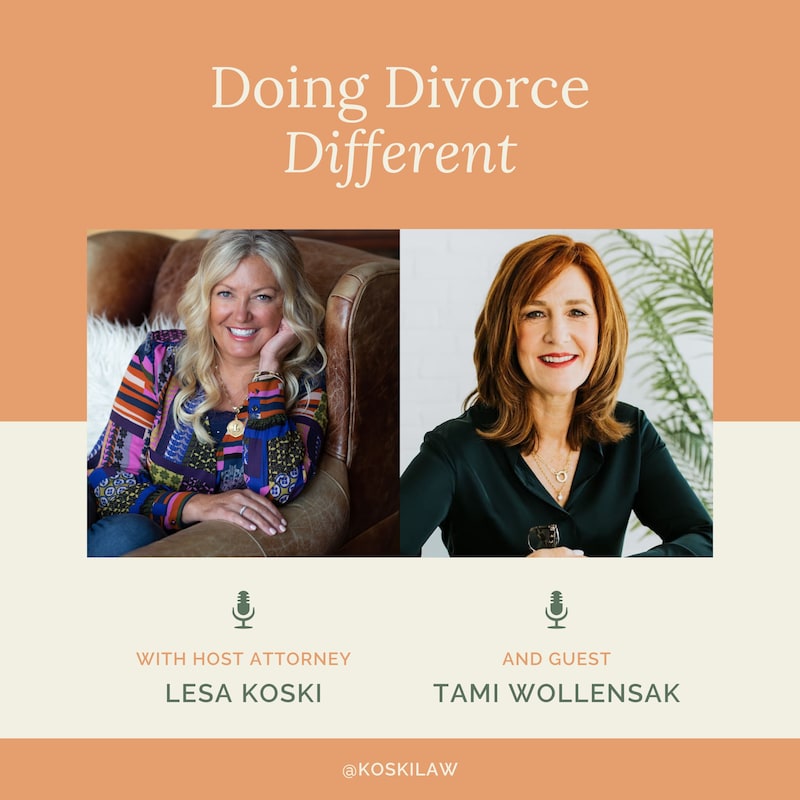
Divorce, mortgages, and the marital home can become one of the most costly mistakes women make after divorce. In this episode, divorce mediator Lesa Koski is joined by mortgage expert Tami Wollensak to break down what really happens when you try to keep the house after divorce—and why so many women regret the decision later.
Divorce mortgages and keeping the marital home after divorce can derail your financial future. Learn what most women are never told before signing.
Tami shares her own divorce story, the hard lessons she learned by keeping the marital home, and why emotional decisions around housing often lead to long-term financial stress. Together, Lesa and Tami unpack mortgage assumptions, interest rates, lender timelines, hidden costs, and why divorce agreements don’t bind banks.
If you’re divorcing—or advising someone who is—this episode will help you avoid common traps, ask smarter questions, and create a Plan B that protects your future.
This is an essential listen for women navigating divorce, post-divorce decisions, and housing uncertainty.
⏱️ Timestamps
(00:00) Introduction & why this is Lesa’s return to divorce work
(04:30) Tami’s divorce story and the mistake of keeping the marital home
(09:15) Why keeping the house feels safe—but often isn’t
(14:20) Mortgage assumptions explained in plain English
(19:40) Why lenders are not bound by divorce decrees
(24:10) The hidden costs and timelines of mortgage assumptions
(30:00) How HELOCs can completely derail an assumption
(36:30) Why attorneys and mediators must plan beyond the paperwork
(41:15) The importance of Plan B when the house doesn’t sell
(47:00) Today’s mortgage rates and why the market is different now
(52:40) Post-divorce fallout and why issues resurface years later
(58:00) Empowerment, hope, and making informed decisions during divorce
(01:02:30) Final advice for women navigating divorce and home decisions
✅ Key Takeaways
- Keeping the marital home after divorce often creates financial strain, not stability
- Mortgage assumptions are complex, slow, and frequently denied
- Divorce agreements do not bind lenders or banks
- HELOCs and hidden liabilities can make mortgage assumptions impossible
- Having a Plan B is critical to avoiding post-divorce litigation and stress
👤 Guest Bio
Tami Wollensak is a mortgage consultant who specializes in working with women navigating divorce and major life transitions. Having lived through divorce herself, Tammy brings both technical expertise and deep empathy to her work. She helps clients understand mortgage options, assumptions, refinancing risks, and long-term financial consequences so they can make informed decisions—not emotional ones—during divorce.
🔗 Resource Links
- Connect with Tammy Woolens: https://www.tamiwollensak.com/
- Divorce Mediation & Coaching with Lesa Koski: https://www.lesakoski.com/
- Related episode: Divorce Planning & Financial Clarity After 40
🏷️ Tags / Keywords
divorce mortgage, keeping the marital home after divorce, divorce and housing decisions, mortgage assumption divorce, divorce financial mistakes, women and divorce finances, divorce mediation, post divorce planning, refinancing after divorce, divorce real estate issues, divorce podcast for women, doing divorce different
Transcripts
Welcome listeners.
2
:I can't tell you how excited I am to have
my friend Tammy Woolens with me again.
3
:Um, I don't, we've like done
a couple projects together and
4
:Tammy is my inspiration for my,
like my divorcing clients because
5
:she's been through the hard.
6
:And she's gonna share her story, and
you might have heard it if you've heard
7
:her before on the podcast, but, um.
8
:I wanna hear her story because
she's done so well through it.
9
:And she, I think she's one of those
people that looks back and says,
10
:I'm so thankful that I went through
that, even though it was hard.
11
:And then we're gonna talk about divorce
and homes and home mortgages because
12
:that is usually the number one question.
13
:And Tammy, this is kind of exciting.
14
:Um, I am doing divorce work again.
15
:Speaker 2: Oh,
16
:Speaker: I know.
17
:I just started, I just, this is kind of
like, you're probably the second person
18
:I told, I mean, besides my husband.
19
:Speaker 2: No, no, congratulations.
20
:But you know what you, you're
so good in this space and people
21
:are so fortunate to have you.
22
:So when you're not helping people in that
capacity, it's almost like a disservice.
23
:'cause you do it so
well and it's so needed.
24
:Speaker: Honey, that is
so nice of you to say.
25
:And it was so interesting
because, you know, after that
26
:little stage one scare Yeah.
27
:I think I, I just ran away from
divorce 'cause I hate divorce.
28
:Speaker 2: Yeah.
29
:Speaker: And then just like, I've
really been thinking through things
30
:and nothing has really felt quite
right since I haven't been doing 'em.
31
:So I was like trying to do a little
meditation and praying and this thought
32
:came into my head and the thought
about my oncologist and I'm like.
33
:She hates cancer
34
:Speaker 2: for sure.
35
:Speaker: And she still like cured me.
36
:Speaker 2: Yeah.
37
:Speaker: And like walked me
through and was positive and made
38
:it so much of a better experience
that I'm like, what the hell?
39
:These divorcing ladies need
me and I'm not gonna stop.
40
:And I've just been so excited about
it and it's like a, it's just like
41
:I'm right back into my calling in my
life and I just took a little break.
42
:To just learn more ways
to help women, right.
43
:How to be healthier.
44
:And so it's, it's so exciting.
45
:So you're kind of my first
like True Divorce podcast, so I
46
:Speaker 2: love that.
47
:I love it.
48
:And yeah, you're right.
49
:I mean, divorce is a terrible subject and
it's dealing with people at a very dark
50
:moment of their lives and it can feel
overwhelming and scary, but you know.
51
:Part of the thing that drives
me is knowing that I'm really
52
:giving people amazing guidance and
guidance that I didn't get when
53
:I went through my divorce and I.
54
:I actually just wrote an article
about it, um, and posted it because
55
:it was like I almost choked myself
by making the decision that I did
56
:about keeping my marital home.
57
:It was so, you know, common.
58
:I see it so much and so many people do
it, and they think that they're winning
59
:something by trying to keep a home.
60
:Together because it feels like
stability, but it's really not stability.
61
:It's really built on a sand and you know,
it's such a short term solution and you
62
:are trying not to make big decisions
as much as you can, so it feels safe.
63
:Um, and then only come now.
64
:Everything's written, everything's signed.
65
:You're sitting in this big
house and you're like, oh my
66
:gosh, how do I, what do I do?
67
:How do I do this?
68
:Speaker: Yeah.
69
:Speaker 2: Now you have to do it.
70
:You have to do the work, you
have to pay for the bills, you
71
:have to keep the maintenance up,
you have to do all these things.
72
:And that alone almost
sent me over the edge.
73
:So,
74
:Speaker: and Tammy, that's why I love
you, is you went through something hard
75
:and you used it, you learned from it,
and now you're sharing it with people.
76
:And I always have my clients
connect with you first.
77
:When they're thinking about divorce
because it's besides the kids.
78
:Yeah.
79
:It's a really, really important factor.
80
:And a lot of times the kids are kind of
part of the decision, you know, they don't
81
:wanna sell the home because of the kids.
82
:Well, do you wanna be
able to afford your kids?
83
:Yeah.
84
:You know, being in sports and, and now,
I mean, since we've talked, a lot of
85
:weird stuff has happened in the mortgage
world, and I know I went through, uh,
86
:a moment in time where people were.
87
:Almost like they didn't want to
give up the house because the,
88
:the mortgage rate was so yes.
89
:And then they wanted to try to keep
that mortgage or transfer the mortgage
90
:because a lot of them were finding
that staying in the house was actually
91
:financially better if they could.
92
:You know, take over that
mortgage, but you can't always.
93
:So there's even been a lot more of
a mess thrown into this tornado.
94
:Speaker 2: Yeah.
95
:Speaker: Can you like, kind of fill
us in on what's happening lately?
96
:Speaker 2: Yeah.
97
:So, yeah, that, that, that's
a really great, so now we have
98
:some history behind us, right?
99
:It was almost kind of unprecedented.
100
:Nobody really understood what
a mortgage assumption was.
101
:It was this new term that was being thrown
around because people were trying to
102
:keep their 3% interest rates, and so they
wanted to try to assume their mortgage.
103
:Well, assumptions have been
around forever, but they weren't.
104
:Um, typically acted on because, you
know, most of the time rates were pretty
105
:stable and you could refinance and pay
out the equity and not have this huge
106
:difference in an interest rate, right?
107
:So legal professionals and people
could write things up and people could
108
:carry that out without there being
such a big discrepancy going from
109
:a 3% to a 6% or an 8% or whatever.
110
:And so, you know, this term started
getting thrown around and people
111
:tried to start enacting on it.
112
:And, um, some lenders.
113
:Would do it and some wouldn't.
114
:Well, there's thousands
of lenders I know, right?
115
:Thousands.
116
:And you, the lender itself has to have
a specific department to handle this.
117
:So whether or not they manned that
department and had somebody that
118
:was skilled to do it, more than
likely they were gonna put like a
119
:clerk in there to be a box checker.
120
:Mm-hmm.
121
:Right.
122
:I'm a consultant.
123
:I can, and my job in mortgage lending
is to get people through the process
124
:of the mortgage, and it's a big loan
and there's a lot of complexities,
125
:and I try to simplify it and walk
them through it and hold their
126
:hand and answer their questions.
127
:As a consultant, just like
you would in a divorce, right?
128
:Mm-hmm.
129
:You're helping people.
130
:You're walking them
through the legal process.
131
:I'm walking them through
a very large transaction.
132
:Well, in an assumption
that is not gonna happen.
133
:It's a box checker that's gonna
be like, do you hear, you know,
134
:do you make the money check?
135
:What's your credit?
136
:Like, check does this happen?
137
:Check.
138
:And then people were signing up that that
was gonna happen with no backup plan.
139
:Right.
140
:Speaker: Okay.
141
:So you're saying that people
would be, they'd call and they'd
142
:be like, okay, I can assume it.
143
:And they would,
144
:Speaker 2: that's all they
145
:Speaker: heard.
146
:Assume that they could assume it
because that's what they were told.
147
:Speaker 2: Like, is my loan a receivable?
148
:Well, it, yes it is.
149
:Okay, great.
150
:Thank you.
151
:And they hang up
152
:Speaker: and you're
like, warning, warning,
153
:Speaker 2: warning.
154
:It's, you know, there's
criteria behind it.
155
:You have to know what the timeline is.
156
:That to, to do the assumption.
157
:You have to know what the,
um, you know, criteria is the
158
:timeline, the criteria, the cost.
159
:People don't know that
there's a cost to do this.
160
:Speaker: Hmm.
161
:Speaker 2: Well, sometimes it's
thousands of dollars that you're
162
:having to come to the closing with and
write a check for with a refinance.
163
:When we refinance people's mortgages,
a lot of times we just roll that
164
:cost into the new loan, so they're
not having to necessarily come to
165
:the table and write a check for it.
166
:They don't really see there's cost.
167
:There's always costs.
168
:Well, with a mortgage assumption,
what you're doing is you're just
169
:keeping the terms of the current loan.
170
:So if it's, you know, if you owe
250,000, that's all you're doing
171
:is keeping 250,000, you're not
doing 250,000 plus closing costs.
172
:So those closing costs have
to be paid for at the table.
173
:Um, so that can cause a lot of distress.
174
:People not understanding that,
people that understanding that, like
175
:these are large institutions like.
176
:Chase or Bank of America or Wells
Fargo, they sometimes take six
177
:to eight months to process these.
178
:You know, if you go through all the
paperwork, you jump through all the hoops.
179
:I know even in a refinance, a lot of
times people feel like it's a pain.
180
:But if you're jumping through hoops,
after hoops, after hoops to try to do
181
:this thing that you agreed to do, only
to find out that it's gonna take six
182
:to eight months, and then at the end
of that six to eight months, somebody
183
:tells you, sorry, you don't qualify.
184
:Speaker: You're in a pickle.
185
:Speaker 2: You're in a pickle.
186
:Speaker: Okay, so Tammy, what I'm
hearing is if you are getting divorced.
187
:And there's a home involved and
you're wondering about it, call Tammy.
188
:Speaker 2: Yeah.
189
:Speaker: The best thing to do and
also to be aware that if you try to
190
:do this yourself and you call and
you say, well, here's another thing.
191
:I remember this happening.
192
:I don't know if this is still happening.
193
:People would call and say,
is my mortgage assumable?
194
:And they'd say, no.
195
:And then sometimes they were
assumable and they just didn't
196
:have the right department.
197
:So you call,
198
:Speaker 2: yes,
199
:Speaker: you say, can I
please have the assumptions?
200
:Speaker 2: The assumption department,
you're, first of all, you wanna
201
:call the servicing department.
202
:Like,
203
:Speaker: okay,
204
:Speaker 2: look at your loan
statement, your mortgage statement.
205
:And on that mortgage statement it
always says for servicing call.
206
:Right.
207
:Speaker: Okay.
208
:Speaker 2: It always says that for
servicing call and there's a phone
209
:number, and then so you're gonna call
that number and then you're gonna say,
210
:do you have a loan assumption department?
211
:Right.
212
:And if they say, yes, we do.
213
:You can either talk to that department and
you can say, I am going through a divorce.
214
:Is people are afraid to say that
they think that that's gonna like
215
:trigger, like doing something.
216
:No, you need to tell them,
I'm going through a divorce.
217
:Is my loan assumable?
218
:And then they're gonna say yes or no.
219
:Speaker: And is that gonna be true?
220
:Speaker 2: That's the right answer.
221
:Speaker: That's the right answer.
222
:Speaker 2: If they say no.
223
:Then it's then they don't have a
department for it, and they don't have
224
:the ability to assume, you don't have
the ability to assume it if they say yes,
225
:but you cannot apply for the mortgage
assumption until you're divorced.
226
:Because the reason is Lisa, because they
wanna see your settlement agreement.
227
:You're dividing not only your income,
your assets, your your liabilities.
228
:You might be liable for support
payments you might be receiving support.
229
:All of that stuff is all spelled
out in that legal document, right?
230
:Speaker: Mm-hmm.
231
:Speaker 2: And so they wanna, they
wanna see that because, um, sometimes
232
:even there's a, maybe there's a
liability that was in your spouse's
233
:name that you're gonna take on.
234
:Like maybe there was a car
loan that your spouse took out.
235
:Well, you're gonna keep the car,
so you're gonna keep the loan,
236
:Speaker: right?
237
:Speaker 2: But it wasn't in your name.
238
:That's written in your settlement, right?
239
:Right.
240
:That you're gonna take, so the lender's
gonna read that document, they're
241
:gonna read that document, and it's
gonna say, oh, you also have a car
242
:loan that you're responsible for.
243
:We are gonna add that
to your liabilities now.
244
:Even though it's not on
your credit report, right?
245
:Speaker: Oh, really?
246
:Speaker 2: Yes.
247
:And so people don't understand that
the things that they're agreeing to
248
:in this legal document, such as, I'm
gonna take out a home equity line of
249
:credit to pay my spouse the equity.
250
:Taking out a home equity line of credit
could make the assumption deniable,
251
:Speaker: ooh.
252
:Okay, so we have to be
really, really careful about,
253
:Speaker 2: lemme explain why.
254
:Because people, this is something
that I just talk about a lot
255
:to my clients because they
think that's the magic bullet.
256
:I'll just take out a heloc, right?
257
:And when you're doing an
assumption they are not going
258
:out and getting a new appraisal.
259
:Right.
260
:They're going off of a value of when
they place the financing on the property.
261
:Okay, so let's use real math.
262
:Let's say that you bought the house
for 500,000 and now you owe 300,000.
263
:Okay?
264
:You owe 300,000, but
now years have gone by.
265
:Now the house is worth 700,000.
266
:Right?
267
:Speaker: Mm-hmm.
268
:Speaker 2: So, 700,000 being the
current value, you owe 300,000.
269
:So there's $400,000 of equity, correct?
270
:Speaker: Mm-hmm.
271
:Speaker 2: Like when we use that math
in, in the legal world, 700,000 of value.
272
:300, you owe 400,000 each
spouses gets 200,000, right?
273
:You're gonna go take a line
of credit out for 200,000.
274
:To pay your spouse, their portion, the
lender thinks the house is worth 500,000.
275
:Speaker: Yes,
276
:Speaker 2: you owe 300.
277
:You're taking a line of credit for 200.
278
:You are at max capacity.
279
:Your loan de what we call loan
devalue loan, meaning the amount
280
:of money you owe against the value.
281
:You're now at a hundred percent.
282
:No lender is gonna let you be at
a hundred percent loan to value.
283
:It's, we're not back in, you know, 2008.
284
:Speaker: Right.
285
:You know, and as I'm listening to this,
it's really alerting me even more.
286
:I mean, it's pretty imperative
that people have someone like you.
287
:Isn't it?
288
:Or I mean, I, I mean,
289
:Speaker 2: I don't wanna
toot my own horn, but yes.
290
:I think that it's really important that
they're very clear on what, because a
291
:legal document, as you know, Lisa, they
can put, you know, I'm gonna turn into
292
:a unicorn after my divorce is final.
293
:That doesn't mean you
can turn into a unicorn,
294
:Speaker: right.
295
:Speaker 2: You can write a lot
of things and agree to a lot
296
:of things and they can get you
through the legal process for sure.
297
:Right.
298
:You that'll get you through the
divorce and you can write, write
299
:it and sign it all, but can
you carry it out post-divorce?
300
:Speaker: You know?
301
:And I'm just, yeah.
302
:I mean, how many attorneys are aware
that this can happen because they
303
:kind of take 'em through the steps.
304
:Do they come back?
305
:Do they hear about it or
is it just kind of a mess?
306
:Speaker 2: Well, people do hear
about it and it causes a lot of
307
:post-divorce litigation, right?
308
:Because they didn't write in the
settlement agreement that, you know,
309
:I'm gonna assume the mortgage or sell.
310
:That's the other option.
311
:Speaker: So you have to make
sure that you have a backup plan.
312
:Speaker 2: Plan B, right?
313
:Speaker: Plan B.
314
:I don't think people used to
worry about that so much, Tammy.
315
:Speaker 2: No they didn't.
316
:No they didn't.
317
:And not only a plan B, but sometimes
the timelines that people are
318
:agreeing to are unreasonable.
319
:If they're gonna agree, if they're
gonna agree that assumption is gonna
320
:happen, they need to know what the
timeline of that li, that lender
321
:is not bound by the divorce decree.
322
:Right.
323
:They're not gonna care that you
agreed to 90 days when they are
324
:gonna take six to eight months.
325
:So knowing that the timeline, so that
you can set yourself up for success and
326
:say, Hey, would you be in agreement that
a year, it may take a year to do this.
327
:Give yourself a buffer.
328
:Don't.
329
:If the lender says it's gonna take
six to eight months, don't say it's
330
:gonna happen in six to eight months.
331
:'cause then you're gonna be
completely stressed out on month
332
:six when nothing is happening.
333
:Speaker: Right.
334
:Speaker 2: Um.
335
:You really want to make, be clear
about the timelines and sometimes
336
:timelines create, um, agreements
that sometimes timelines people
337
:don't wanna agree to, right?
338
:For whatever reason.
339
:Sometimes people don't want to
wait a year for things to happen.
340
:And so sometimes that does create, um,
a decision that needs to be had because
341
:the, you can't be in agreement that you're
gonna be on the hook for another year.
342
:Speaker: Yeah.
343
:It's so interesting as you're talking
about this, I did do one divorce.
344
:I helped a, a couple, and
they were selling their home.
345
:They're, it's going up for sale soon.
346
:And they're like, yep, we'll
just split the proceeds.
347
:You know, they had it all
figured out and then we're done.
348
:And I'm like, well, I think
we better talk again, because
349
:what about if it doesn't sell?
350
:Speaker 2: Mm-hmm.
351
:Speaker: And so I'm glad that
I was thinking that way because
352
:that's what we're here for, right?
353
:Yeah.
354
:We're here to go, wait a minute.
355
:So what if it doesn't sell?
356
:Then what are you gonna do?
357
:Because right now they're
splitting the cost of the house.
358
:Speaker 2: Yeah.
359
:Speaker: What about if it doesn't
settle and September rolls around?
360
:Speaker 2: Yeah.
361
:Speaker: Are you gonna
start renting it out?
362
:What are you gonna do?
363
:You know, and so we put some language
in there and I'm glad we did.
364
:Now that I'm talking to you, because I
feel like this is such a crazy market.
365
:I don't even know what our rate set now.
366
:Speaker 2: They're at
probably the low sixes.
367
:Speaker: Okay.
368
:What were they, how high did they go?
369
:Speaker 2: The eight, you
know, I had set high sevens.
370
:Yeah, at one point in time.
371
:So I think, you know, low sixes, mid
fives, anything in that neighborhood
372
:that's a reasonable interest rate.
373
:You know, reasonable is all relative.
374
:Speaker: Mm-hmm.
375
:Speaker 2: When you have a 3%
interest rate, that was unprecedented.
376
:That was like un, you know, people
were flocking to do get those type
377
:of mortgages, but that was not.
378
:Um, in the history of
mortgage financing, right?
379
:It was unprecedented.
380
:So, um.
381
:You know, somebody's gonna make money
on mortgage financing and paying 6%
382
:when interest rates have been in the
history in the double digits before.
383
:So even in the eight,
384
:Speaker: I actually remember now,
this is long, like in the eighties
385
:when my parents sold a house, I
think they sold it and it was 13%.
386
:Speaker 2: Yeah, probably
387
:Speaker: when they built a
house and then they refinanced.
388
:Speaker 2: Yeah.
389
:Speaker: We fortunately, were on
the low end now, but it's like.
390
:I can't ever, I mean, I wouldn't
have near what I have now.
391
:Speaker 2: Also though, Lisa, prices of
homes weren't as much as they are now.
392
:That's true now, right?
393
:They weren't financing 5, 6, 7, $800,000.
394
:Finding, you know, so, you
395
:Speaker: know, it's so crazy.
396
:Tammy, and I watch my kids now.
397
:Okay, so the baby's in college.
398
:One's a medical doctor.
399
:One guy's got a big job
and his wife is a nurse.
400
:And they are like, I mean, my
son's like, are you kidding me?
401
:This is all I can afford.
402
:You know, he's like, I
mean, I want a house.
403
:I
404
:Speaker 2: know,
405
:Speaker: and I want a little space.
406
:And he is just like.
407
:I can't believe.
408
:And then, you know, even my, my daughter
and her husband, who's an engineer,
409
:they're just like, what on earth?
410
:And it took them, they actually
ended up, so they moved back
411
:here from Iowa, which is awesome.
412
:Mm-hmm.
413
:Um, because I'm closer to my
grandson, but they couldn't,
414
:they didn't sell their home.
415
:I think I talked to you, I think I
sent you a note about that because
416
:I'm like, can I assume that?
417
:What are we gonna do?
418
:Speaker 2: Yeah.
419
:Speaker: But they, so they did end up
selling it, but not before they got here.
420
:So then they had to rent.
421
:Speaker 2: Mm-hmm.
422
:Speaker: And then that's competitive, so
they got like a two year rental agreement
423
:and they love where they are, but it's
just a very, very different story than
424
:when my husband and I started out.
425
:Over 30 years ago, you know?
426
:Speaker 2: Yeah.
427
:Speaker: I mean we
428
:Speaker 2: absolutely,
429
:Speaker: we just, you know, we're buying
and selling and it was so different.
430
:Speaker 2: It very, it very much is
different and people, you know, just
431
:need to empower themselves with the
information and that's really critical
432
:to understand that, not to rely on.
433
:An attorney not to rely on a mediator,
not to rely on anybody to give you the
434
:guidance regarding your future and your
finances, other than the people that
435
:can give you that information, right?
436
:So we all have our lanes.
437
:I don't give legal guidance.
438
:I don't tell you what's what
the judge is gonna sign off on.
439
:I don't give you any direction on
what you should or shouldn't do.
440
:You know, that's not my job,
is not to say what's best and
441
:right for you and your family.
442
:My job is to give you all of the
information so that you can make the
443
:best informed decision for yourself.
444
:If it means staying on a mortgage
together, that's an option,
445
:but what does that mean to you?
446
:Speaker: I know your
447
:Speaker 2: spouse, right?
448
:Speaker: And I, and I feel like
I'm seeing more people do that.
449
:Um, or I was, you know,
450
:Speaker 2: they're, they're coming
back around now though, Lisa, because
451
:they made agreements to stay a
mortgage for like two years or a year.
452
:Right.
453
:And now all this, uh, all
those agreements are coming up.
454
:It goes fast.
455
:You know, you're just, it
does a can down the road.
456
:Speaker: Yep.
457
:Yeah.
458
:I, I remember even having people,
having young children and just
459
:saying, till this one's 18.
460
:Speaker 2: Yeah.
461
:Speaker: You know, or, or whatever.
462
:Um, and, and that works.
463
:And so I think what you're telling
me is gonna make me better when
464
:I'm helping people come to their
agreements to make sure they're
465
:connecting with more professionals,
you know what I mean, than just me.
466
:Speaker 2: Yeah.
467
:Speaker: And that they're aware that
even though you come to this agreement.
468
:We don't know for certain
what the bank's going to do.
469
:Speaker 2: Right, exactly.
470
:Yeah.
471
:And if you're, if you're comfortable
with that and now parties know it,
472
:then it, it eliminates a lot of,
um, post-divorce litigation or any
473
:kind of, even a arguments about it.
474
:You know, you wanna
eliminate any possible.
475
:Stress over any of these
decisions that were made.
476
:Um, you don't wanna go back to
have to deal with court again.
477
:You don't wanna have to deal with,
you know, you wanna try to work on
478
:co-parenting if there's children
involved and there's like, right.
479
:Any other bigger things fish to
fry other than, you know, some
480
:of these agreements unraveling.
481
:Speaker: Well, and it's so interesting
because I think the first thing
482
:I'm doing coming out of the gates.
483
:Is working with a couple that I think I
did their, uh, divorce mediation probably
484
:three years ago, two or three years ago.
485
:And something's unraveling, you
know, now there's attorneys involved.
486
:Speaker 2: Yeah.
487
:Speaker: But, and something's not
working with one party, I don't think is.
488
:Doing what they said they
would do with the home.
489
:Yeah.
490
:So, you know, it'll be
interesting to see what that is.
491
:And so this is going to enlighten me too.
492
:Um, but I have a feeling that's gonna be a
bigger part of my post-divorce mediations.
493
:Speaker 2: Yeah, absolutely.
494
:Speaker: Sadly.
495
:Speaker 2: I mean, it is unfortunate, the
whole thing's really unfortunate, but.
496
:People need to be aware.
497
:I, you know, somebody needs to start a
business about the education of marriage.
498
:Speaker: Oh,
499
:Speaker 2: you know, what
does it mean to get married?
500
:People think that it's
some grand gesture of.
501
:Love, which it is.
502
:Right?
503
:Right, right.
504
:But it also, you also are
involving your, the state.
505
:It's you, your spouse, and the state
laws that you're getting married in.
506
:And you need to understand
what that means for you.
507
:It's not, um, it's, it, you know, there's
a lot of legality around marriage.
508
:They make it sound like you're gonna,
you know, spend all this money on a
509
:wedding, you're gonna walk down the aisle.
510
:It's gonna be all bliss.
511
:And then.
512
:You know, nobody talks about the
financial impact of you're building
513
:basically like a business with somebody.
514
:Speaker: Mm-hmm.
515
:Speaker 2: Your business partner can sit
on the couch and eat bon bonds all day.
516
:If you choose.
517
:You, you signed up to be
business partners with them.
518
:Yep.
519
:And you are going out and you're
building a, a balance sheet.
520
:You're building a financial.
521
:Bucket of assets that are growing and
doing things and everybody's trying to
522
:do their part, and some people aren't
doing their part and other peoples are
523
:going outside the law or outside the
rules of what you guys agreed to and.
524
:There's just so many nuances with that.
525
:Speaker: There are so many,
and that is one thing that I've
526
:found too with a lot of couples.
527
:They're like, what?
528
:But this is mine.
529
:This is my money.
530
:No, it's not
531
:Speaker 2: my 401k,
532
:Speaker: my, this,
533
:Speaker 2: my
534
:Speaker: that.
535
:It's really hard.
536
:Even, I mean, I think they get it.
537
:But it's like, well, no, can't,
they don't wanna know, do this.
538
:They don't wanna, we don't have to.
539
:Yeah.
540
:And they don't wanna tell the court.
541
:I'm like, oh, you gotta put it
on the spreadsheet, you know?
542
:Speaker 2: Right.
543
:It's
544
:Speaker: your assets, so.
545
:Speaker 2: Right.
546
:Speaker: But I, I don't wanna,
okay, so we're getting towards
547
:the end of our conversation.
548
:Yeah.
549
:And I, I do not want to be.
550
:All gloom and doom.
551
:I, yeah.
552
:'cause this podcast is to help
people so that they're not as afraid.
553
:Yeah.
554
:Right.
555
:Because it's a scary time.
556
:And I don't want you to be afraid.
557
:I want you to use this as
a information gathering.
558
:Right.
559
:And so just be sure.
560
:That you really look into the home
and that you ask the, the right
561
:questions and that you know that
what the criteria is If you're
562
:looking into an assumption, and yay.
563
:If you can do one.
564
:If you want one, but then
dig a little bit deeper.
565
:Call Tammy, get that figured out.
566
:Speaker 2: Plan
567
:Speaker: B.
568
:Um, but I
569
:Speaker 2: plan B.
570
:Plan B too.
571
:Speaker: Yeah, plan and have a plan B.
572
:Always have a plan B.
573
:But I also wanna say that you have been
through this and you ha made it out.
574
:You are.
575
:So I think you're grateful for what you
went through and I think you've had a
576
:tremendous amount of growth and I think
that you can make, feel people feel
577
:better just by the life you're living.
578
:Tammy don't, I mean, I just feel like that
579
:Speaker 2: that's so sweet of you
to say and Yes, I did and I do
580
:try to tell my clients, you know,
I, it's not a transaction to me.
581
:It really is, you know, helping people.
582
:Feel that there's hope and that they
can hit the reset button and that they
583
:can start again, and they're gonna be
okay and that things are gonna work
584
:out and they're making good decisions.
585
:And um, and you know, I get close
to, a lot of times I get close to
586
:my clients and I feel like they,
you know, are, are in a, in a.
587
:That life transition is really dark.
588
:It's like a death, right?
589
:Speaker: Mm-hmm.
590
:Speaker 2: They have to grieve it.
591
:They have to go through a process,
and when you're going through
592
:it, it's a really foggy time.
593
:So I really do try to help my
clients feel supported with their
594
:decisions, and no question is a
bad question, and sometimes you've.
595
:They feel a lot of shame because they
weren't involved in the finances, right?
596
:They weren't, didn't know.
597
:They didn't know what they were signing.
598
:They didn't know, you know,
what any of this meant.
599
:And a mortgage is a really big transaction
and it comes with a lot of compliance
600
:and complexities along the way.
601
:And so.
602
:You know, having somebody that
can stand by you, by your side.
603
:And I get text messages at night and
stuff like that, and I'm like, it's okay.
604
:It's all right.
605
:We're gonna figure it out, you know,
and we're gonna get through this
606
:and you just have to do X, Y, and Z.
607
:Now let's just take one step at a time.
608
:Speaker: Yep.
609
:Speaker 2: Um, but anyways, it's
very, it's very meaningful to me,
610
:so I appreciate you saying that.
611
:And I do feel like this
is what I went through.
612
:Helps me understand what that
feels like, um, so that I can have
613
:empathy to my client's situation.
614
:Yeah, because I don't think that
if they go to a normal, normal
615
:mortgage broker, right, somebody
doesn't focus on this lane.
616
:They're looking at it
like it's a transaction.
617
:What's wrong with you?
618
:You need to sign these documents.
619
:Right?
620
:You need to, you know, like,
I need all this documentation.
621
:I had a woman.
622
:That I'm doing a loan for Now,
you know, she's got four kids.
623
:She is, um, trying to do all
this stuff and she doesn't
624
:work with computers every day.
625
:You know, we're a technology
based institution.
626
:We need things scanned and documented
and uploaded to our secure portal.
627
:Just couldn't do it.
628
:Her computer was broken, blah, blah, blah.
629
:She, we.
630
:Printed the documents
I drove to her house.
631
:Got 'em.
632
:Now I can't always, 'cause
I do national, but you know,
633
:look, you know, it was
like, she's like, really?
634
:What'd you do that?
635
:I'm like, yes, just print 'em.
636
:Leave them at the front
desk of your office.
637
:I'll come get 'em.
638
:I mean, we do that for each other because
639
:Speaker: Right.
640
:Speaker 2: Sometimes that's
the right thing to do.
641
:Speaker: Yes.
642
:Amen.
643
:And I think too, they can see you made it
through this and you're doing even better.
644
:So I just think that hope in the middle
of all that, you know what I mean?
645
:When you see somebody who
survived something that you're
646
:going through, thriving.
647
:It's always brings you hope and it
always makes you feel better and
648
:that is what you wanna clinging to.
649
:And I think that is another reason
that you're fabulous at your job.
650
:Not just because you're got this, you
know, math smarts and the mortgage smarts.
651
:I think that's a big part of it too.
652
:Speaker 2: Yeah.
653
:So, and it's so great to have, um.
654
:Friends and professionals like you that
we can work together and collaborate
655
:and help people through this process.
656
:So I'm really excited that you're back
at what your, what you do so well,
657
:and thank you for having me talk about
this because I, you know, we're both
658
:really passionate about making sure
that people are going through this in
659
:the best possible manner that they can.
660
:Speaker: Amen.
661
:Amen.
662
:Tammy, thank you so much for your
time and thank you for being here.
663
:Of
664
:Speaker 2: course.