Shownotes
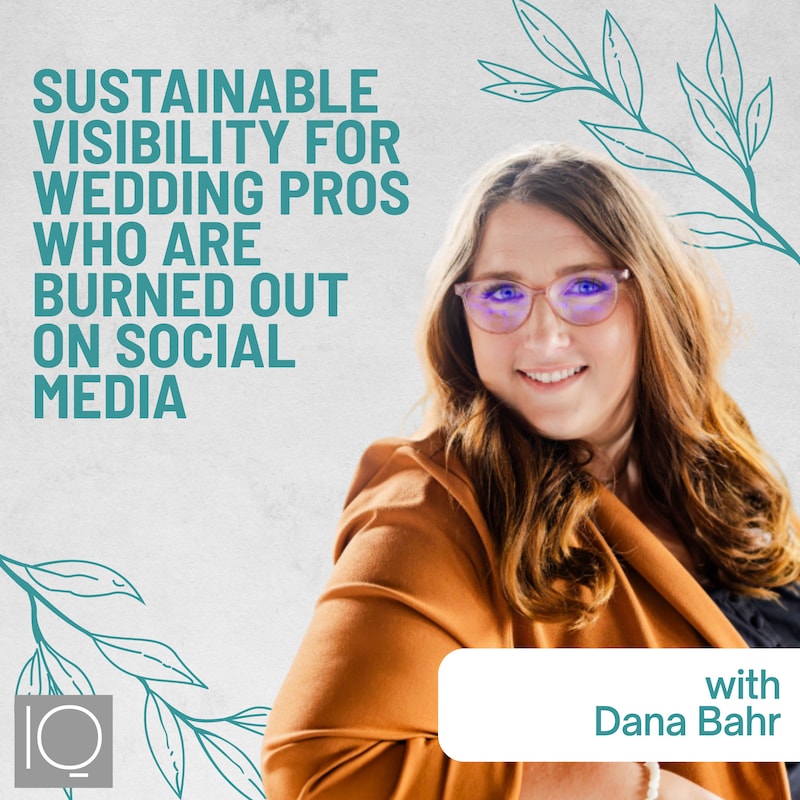
In this episode of Mind Your Wedding Business, Kevin Dennis sits down with Dana Bahr, Pinterest strategist and founder of The Unapologetic Pinner, to talk about sustainable visibility for wedding professionals who are burned out on social media.
With so many wedding pros feeling pressure to constantly post, stay relevant, and keep up with trends, Dana shares why the issue isn’t a lack of effort — it’s a lack of clarity and positioning. Together, Kevin and Dana explore how shifting from reactive marketing to intentional, long-term visibility can transform not only your marketing results, but your overall experience as a business owner.
They dive into the difference between social media platforms and Pinterest as a visual search engine, and why Pinterest aligns more naturally with how couples actually plan their weddings. Dana explains how wedding pros can stop chasing vanity metrics and instead focus on building evergreen content that compounds over time, driving consistent traffic, inquiries, and bookings.
The conversation also covers how to repurpose existing content — like galleries and blog posts — into multiple marketing assets across platforms, eliminating the need to constantly create new content. Dana shares practical steps for getting started on Pinterest, common mistakes to avoid, and how to build a foundation that supports long-term growth, even during your busiest seasons.
If you’re feeling overwhelmed by social media or stuck in the cycle of constant content creation, this episode offers a refreshing, strategic approach to building visibility that actually lasts.
Dana Bahr is the founder of The Unapologetic Pinner and a Pinterest strategist for wedding professionals and creative entrepreneurs. She helps business owners move beyond short-term social media tactics by building evergreen visibility systems that attract aligned clients consistently. Through her podcast, education, and client work, Dana is known for simplifying Pinterest marketing and helping wedding pros grow sustainably without sacrificing balance or authenticity.
Highlights
• Why burnout comes from lack of clarity—not lack of effort
• The difference between visibility, positioning, and vanity metrics
• How Pinterest differs from Instagram and TikTok for wedding pros
• Using Pinterest as a long-term, evergreen visibility strategy
• How to repurpose existing content into multiple marketing assets
• Building a consistent marketing system that supports real bookings and busy seasons
Connect with Dana:
Connect with Kevin:
Transcripts
All right, folks, welcome to another episode of Mind Your Wedding Business. I am Kevin Dennis. I'm here with Dana Bahr, and she's going to be talking about sustainable visibility for wedding pros who are burnt out on social media. But before we do, Dana, can you tell us a little bit about yourself and how we got you here today?
Dana Bahr (:Yes, so like you mentioned, my name is Dana. I'm a Pinterest-led organic growth consultant and fractional CMO for wedding professionals and other service-based business owners ⁓ that can range wide, but my primary audience is wedding professionals because I came from the industry. I help these established founders move from reactive visibility to intentional long-range growth decisions, and my work focuses more on clarity. ⁓
because when your positioning is clear, your marketing becomes lighter and your visibility compounds and your business stops feeling like a time suck or an energy suck. I'm also the host of the Unapologetic Pinner podcast where we interpret visibility patterns instead of chasing tactics.
Kevin Dennis (:I love it. All right. So Dana, why are so many wedding pros feeling burned out, trying to stay visible on social media?
Dana Bahr (:I think the trying to be omnipresent and visible all the time or everywhere amplifies indecision actually. And that's kind of where the burnt out feeling comes from because we're almost in this analysis paralysis or decision fatigue.
Kevin Dennis (:⁓
Mm.
Dana Bahr (:So it's not a lack of effort. There are so many wedding planners and wedding professionals doing a lot of things. So it's 100 % not a lack of effort. It's more a lack of clear decision making. Wedding pros are showing up consistently. They're posting, they're trying new things, they're trying to keep up with the trends. They're posting three to five times a day. They're doing their stories. They're, know.
Kevin Dennis (:No.
Dana Bahr (:all of these things. But visibility feels hard or leads to burnout because many haven't made that internal decision that their marketing needs, like figuring out what their marketing needs in order to work. So they're active but not positioned. And that's the difference from, and that's costing them clarity, confidence, and that conversion rate instead of just, these vanity metrics are amazing. A thousand people saw this.
But if a thousand people didn't share it or book a call or even a 20 % click through rate, then you're just spinning a wheel.
Kevin Dennis (:Can you explain a little bit more about the vanity, you know, numbers like, because I think people get so excited. I got five, you know, whatever thousands of clicks or likes or whatever, but that means nothing.
Dana Bahr (:Yes, so for so long, the vanity metrics are like how many views and likes and comments and what I've been seeing a shift lately among many industries but from other social media managers is they're not chasing vanity metrics. A few of them have case studies where they've booked their highest paying project and this is someone who
looked at their stuff, but they never commented, they never liked it, they just kind of lurked in the background, seeing what it is. And so it's hard to gauge that. So the goal is not focusing on those vanity metrics, but making sure you have decided who you're speaking to, what you want to be known for, no matter what trend is going on, what types of weddings you want.
and what you want to stop doing, then your content doesn't feel scattered anymore and you are more of a leader in whatever niche of wedding planning you want to be in. And it's no longer exhausting because you have a clear position. So those people that are lurking and are most likely going to pay you the higher price point know who you are. They don't have to comment because they're going to book a call instead.
Kevin Dennis (:Mmm.
I love it. We need to get the lurkers. It's all about the lurkers. So all right. We're talking about sustainable visibility. So what does that mean compared to how most people market?
Dana Bahr (:I think it shows up, well, the differentiation is like what you can see is
like vague messaging is something that we see a lot, over posting without momentum, trying to appeal to everyone. So intentional visibility is not just posting on a platform that is designed for entertainment. We want to post on platforms that are built for decision-making and discoverability. That's why I lead with Pinterest because
Kevin Dennis (:Hmm.
Mmm.
Dana Bahr (:It allows you to translate your clarity and your messaging and you get rewarded for the consistent traffic to your website. It's almost like a mirror. So the more aligned you are in what people are searching for your ideal audience, then the more that it signals to Pinterest and they're going to keep putting your content in front of more people like that who are searching for those similar things. So it's not about
Kevin Dennis (:Hmm. Hmm.
Dana Bahr (:doing more, posting more, it's looking at what you already have on your website or your freebies or however it is that you touch your audience and repurposing it in a variety of ways. So you're showing up consistently, but without creating more.
Kevin Dennis (:Mm.
Yeah, interesting. All right. You were talking earlier about, you know, wedding pros. I got our hands all over the place and we do too much. We got, or we're overwhelmed. So when it comes to social media, you know, there's so many different options, but what makes Pinterest fundamentally different than Instagram, TikTok for wedding professionals that are clueless.
Dana Bahr (:would say it's because Pinterest is, like I said, a decision-making platform. People are not there to just scroll casually or doom scroll. They're going there to narrow their choices. So they are already comparing and they want immediate answers to their pain points or their points of interest. So they're planning their wedding. They have a lot of decisions to make. But we're visual, so if you can visually show...
Kevin Dennis (:Hmm.
Dana Bahr (:what it is that they're looking for, the solution that they're coming to find, they're more likely to not only open the pin, but to go to your website. And that's where you have the real control over the relationship because they'll go from a blog post to your galleries, to your services, to your book of call, or in any order that they find you. And it allows you to naturally move them through. So if it happens to be a gallery for
Kevin Dennis (:Hmm.
Dana Bahr (:we'll say spring, spring is coming, an outdoor spring tented wedding along the New England coastline. They go to that gallery and now they see all of the work that you can do showing your leadership and knowledge and passion for this industry and this style of wedding. But halfway through, there might be a pop-up of, are you planning a tent wedding? Book a call and answer your questions or you can lead them naturally to.
Kevin Dennis (:Mm.
Dana Bahr (:your email list with how to source the best vendors for an outdoor tent wedding. Something that doesn't necessarily dilute your, probably like your expertise, but can help guide them towards make booking a call. So that freebie puts them on the email list and now you have a welcome sequence that you can still, it will end with booking a call or.
doing a virtual planning session or whatever it is that you're trying to grow. And it's rewarding that effort without, again, having to do more.
Kevin Dennis (:Well, and can you maybe elaborate a little bit more because I feel like a lot of pros think Pinterest is just for inspiration, but how does it actually translate into real inquiries and bookings?
Dana Bahr (:So it translates in its website traffic.
Kevin Dennis (:⁓ okay.
Dana Bahr (:So social media platforms are, we all know the algorithms. If you click away from there or you add a link, you get deemed and they don't show your stuff as much because you're trying to pull people away to your website from these platforms. Interest is different because the behavior that is happening on it, most platforms are interruption based, Pinterest is intention based. they want, Pinterest wants to send people to credible,
Kevin Dennis (:Mm-hmm.
Dana Bahr (:websites. They want to answer the questions. So since people are going there to search, search is an active behavior. They're the signals I am planning, I am narrowing options, I am making decisions. And that's a completely different psychological posture than just passive scrolling. So social media post lifts for 24 hours, some of us make decisions in 24 hours, but not when we're planning a wedding.
Kevin Dennis (:Mmm.
Mm.
No, I can say most
of them don't when they're a wedding.
Dana Bahr (:If they do,
it's probably a red flag client and you probably don't want them anyway, but interest content compounds over time. And so it's indexed like a search engine. So like I said, discoverability, it services based on relevance and intent. So when you create a mood board or your potential client makes a mood board, they're gonna come back again and again. typically what this...
Kevin Dennis (:Yeah, no kidding.
Dana Bahr (:leads to is by the time someone fills out your contact form, they've already saved multiple pieces of inspiration, whether from you or from someone else, compared vendors, formed preferences, and all of that really happens on Pinterest. Research on consumer decision journeys shows that buyers form preferences long before they convert. Google put out something that takes seven to 12 touch points before someone's ready to buy, but it also takes
Rough quote. It's like 12 to 14 hours of your content ingested across like three to five platforms. So we have to guide them there. And Pinterest is the top of funnel. So you can use Pinterest to guide them to all those places that I mentioned. You can send them to your social media where you get to be a bit more personal. You can send them to your services page where they can learn more about how to work with you. You can send them to your galleries to showcase your work. You can send them to even a direct booking call.
Kevin Dennis (:Mm-hmm.
Dana Bahr (:or send them to something that puts them on your email list, but that's how it is different and that's what you can expect. So Pinterest is one of those preference building environments and it's through repeated exposure and comparison and that would be the difference. It helps you with your early positioning.
Kevin Dennis (:Well, and it feels like to me, Pinterest is more of an evergreen visibility. Like it's there forever where like your stories are there for 24 hours. Like you were saying, compared to like Instagram, TikTok, some of that stuff is just so short term lived, you know? So like is Pinterest better for wedding pros or, you know, because of the evergreen content or, or do you need to do both or?
Dana Bahr (:I say if you have a solid foundation on evergreen content, then you get to have more fun with what's trending. So I don't think it's an either or. Pinterest is definitely the and because Pinterest doesn't care about daily presence or going viral. Again, those vanity metrics. Pinterest algorithm prioritizes relevance. So how you solve a problem or how you inspire or how you educate keywords. So this is where local SEO comes into play again.
Kevin Dennis (:Mmm.
Mm-hmm.
Dana Bahr (:and then alignment
with that search intent. And it will reward your messaging and differentiation because it's such, there's so many users on this platform. So it's just gonna help amplify your reach. You can have, if you pin two to three times a day, or even one to two times a day, because I know that that phrase probably just scared everybody. Start with one to two times a day.
Kevin Dennis (:Mm-hmm.
Dana Bahr (:pinning content, even from stuff you already have, because there's a case study on my website reflecting this, three to six months later, there was a 216 % increase in website traffic just by repurposing galleries that they already had. We did not make new stuff. This planner was actually going through a rebrand of budget-wide attraction to luxury-level attraction.
So we picked the best galleries that they had and created this strategy of pinning just those, I think it was like three or four blogs, one to two times a day and only sending traffic there. And within three months, it had picked up and we were seeing that increase without doing more. So it allowed him to focus on the rebrand and like connecting with vendors in a new way, speaking to couples in a different way.
Kevin Dennis (:No, well.
Dana Bahr (:and aligning everything else while this worked in the background silently. So there's a lot less emotional labor involved.
Kevin Dennis (:Now, do you feel, Dana, that there are certain types of wedding pros who benefit the most from Pinterest? Or can all wedding pros benefit from Pinterest?
Dana Bahr (:Well, I'm biased and I say everyone should be on Pinterest purely because of the visibility standpoint and you know that social signature that can benefit of having all these backlinks to your website and not only helps you directly on Pinterest but it will help you on other search engines too. But the not every I would say it's yes and no.
Kevin Dennis (:Mm-hmm.
Dana Bahr (:So some will have an easier time than others, but it benefits all in the same way. So it shouldn't be, is Pinterest good for my industry? I think the real question is, does my ideal client use Pinterest during their decision-making process? And in weddings, no matter who you are, the answer is almost always yes. Because the depth of, like, that's just the benefit of Pinterest. People love going there for inspiration.
Kevin Dennis (:⁓
Yes.
Dana Bahr (:And one of the things that we need the most inspiration for is weddings. So if you're a stylist, a floral designer, photographer, videographer, you're dabbling into travel advisory, if you are a wedding planner, like all of these work really well because they help you influence the vision that someone has and nurture them towards how you can help them.
Kevin Dennis (:Well, it's funny that you were saying, you know, it's the or, the and, you you gotta do it all to make it work. yeah. All right. So what's the biggest mistake you think these wedding pros make when they try Pinterest on their own?
Dana Bahr (:Mm-hmm.
I think not optimizing their profile and their boards, honestly. I think yes, because it sets the foundation. so I think starting with that first and then starting to add, because then you can link, know, almost like the Facebook pixel. Pinterest has a version where you can link and so you can better see the data. But it starts by optimizing your profile.
Kevin Dennis (:really? Okay.
Dana Bahr (:with your bio, your how to contact you, a banner photo, just like you would other platforms that can like really speak to your ideal audience. So start there and then create boards that your audience is looking for, not what you love to do, but what your audience, your couples love and are trying to incorporate into their weddings. ⁓ Whether that's
a smooth guest experience or destination weddings and people are coming from here, there and everywhere and how to make that easy or their foodies have podcasts, not podcasts, have boards dedicated to the various levels of like food and beverage for your audience. You just want to help.
Kevin Dennis (:Mmm.
Dana Bahr (:It's not necessarily for posting for posting sake or throwing spaghetti at the wall and hoping that it sticks. You want to have a clear problem answer situation and that starts with a profile.
Kevin Dennis (:Is it almost like you're educating these couples for their wedding? Is that a good way of looking at it? You know, like it may, yeah.
Dana Bahr (:Yes, because they don't know. They think
they know, but they don't. I mean, because we've seen that DIY brides, most of them when they are asked like after the fact, what do you wish you had done? I wish I had had a planner. I wish I had gone to a venue that included XYZ. They don't know until they've lived through it. And by then, well, they're not getting married again. So we have like it is about educating and inspiring them.
Kevin Dennis (:yeah.
No.
Dana Bahr (:more than it is about convincing them because once you start convincing there's just too much back and forth.
Kevin Dennis (:Hmm. All right. So I am a wedding planner. You name the wedding business, whatever I am. And I've never used Pinterest at all so far. Is there a few things that we need to do first that we should do when we get going?
What are the tricks, I guess?
Dana Bahr (:⁓ For someone that has never used Pinterest before, I will start with what you should not do. Don't start posting immediately. Don't set up an account for Tailwind, which Tailwind is amazing. Don't create 50 pins and then do nothing with them. The first step is going to be to is orientation. And so what that means is, again,
Kevin Dennis (:Okay.
Dana Bahr (:And I sound like I'm repeating myself and in a way I am, but it is very helpful. Pinterest is not social media. It's a visual search engine. And reminder that, remember that people don't just come to Pinterest to be entertained. It is entertaining to be on there. can go and down many rabbit holes, but the primary use is to make decisions. So this, the mental shift is,
Kevin Dennis (:Nope.
Mm-hmm.
Dana Bahr (:that every wedding professional new to Pinterest needs to have is this is where my future clients are planning. This is not where they're scrolling. And this will reframe everything. So then become a user before becoming a marketer. So before you create, log into Pinterest and behave like your ideal client and search for those things that they would be looking for and see what comes up.
Kevin Dennis (:⁓ okay.
Dana Bahr (:Luxury, so if you do luxury barn weddings or you prefer intimate backyard ceremonies, destination weddings in Italy, modern black tie, something along those lines or any variation in between, pay attention to what headlines show up just by searching for those few long tail keywords, what language is being used, what types of images are dominating, and then do some A-B testing, what feels clear versus vague.
And then you'll start seeing what couples care about, what they're actually searching for, how they phrase their problems. Pinterest is definitely like, keywords are important, but there's a lot of emotional words in there as well, because visual, you want to, you know, relax. You don't want to be stressed. You want to be calm, peaceful, timeless, something. Pinterest becomes market research before it becomes marketing. ⁓ And then from all of that,
Kevin Dennis (:⁓ okay.
Hmm.
Mm.
Dana Bahr (:we want to expose any unclear positioning quickly. So if someone searched for your ideal wedding, would your content clearly signal that it's for them? If the answer isn't obvious, you wanna fix that again before you start pinning. And then lastly, I would say set up the foundation. Kind of a reiteration of start with your account, but convert it to a business account, that's free.
and it comes with all of the fun things that we need with analytics and ⁓ Pinterest trends so you can see what people are searching for. And that's usually three to six months in advance. So right now is February, but I'm already seeing summer wedding inspiration popping up. And so that gives you a cue of what type of things to look for with past galleries. So convert it to a business account, write a bio that clearly states who you serve and what you're known for.
Kevin Dennis (:Hmm.
Dana Bahr (:And then start with just five to seven boards aligned with that market research you did of how couples search. And then you can start pinning content that you already have that aligns with that search first. So that would be the blog posts, galleries, service pages, no overwhelm needed, no over-complicating. Pinterest is gonna reward that relevance and consistency over time. And that's not.
50 pins in one week and then you do nothing. That's one to two pins per day for the next 30, 60, 90 days.
Kevin Dennis (:and so it's consistency that they reward when it's all said and done. I love it. All right. So how can wedding pros you you talked touched on it earlier, but how can wedding prose like already use the content they have instead of creating more? And I know you touched on a little bit with your case study, but can you dive a little bit more into that? So, you know, like I'm new, I started, I've done the research, I've done everything I have. What, you know, what can they do?
Dana Bahr (:Mm-hmm.
Yep.
I actually just sent something to a wedding videographer about how to take one gallery and repurpose it into 20 different pieces of content. And it wasn't just Pinterest. It was like all across social media because that's what they are really wanting to dive into is like a full ecosystem.
Kevin Dennis (:wow.
Mm-hmm.
Dana Bahr (:I want to find it. I wish I could find it. But it was...
Kevin Dennis (:Mm-hmm
Dana Bahr (:There it is. I don't want to misquote my own self. So one, you want to start by optimizing the gallery on your website. That's asset number one. That's the primary thing. So you want to have a good strong SEO title, internal links, the metadata descriptions, if it's video or ⁓ stagnant images. And then from that one gallery, you can easily create your Pinterest assets. So eight to 10 pins is what I always start out with.
And from one wedding, that could include venue and location pin, being very hyper-specific if you want to mention the city or the state or the county or if there's like a nickname for the city, something. So that's three or four variations. Then you have the documentary style, emotional moments that you can pull from it, couple highlights or couple testimonials if you already have them, the outdoor indoor angles.
Kevin Dennis (:Hmm.
Dana Bahr (:depending on, or even church-based, backyard, the venue style. Sunset or lighting angles, vendor spotlights, this is where you open up the ability to collaborate with other vendors to amplify both of your reach on Pinterest. And then there could be the why this venue works well for fill in the blank, whether it's film or outdoor weddings, spring weddings, ⁓ elopements, that style of pin.
All of these will have the same URL leading to the one gallery, but they have different angles or viewpoints attracting many different couples, but it's all going to the same place. And then from that, your pins can then really become Instagram or Facebook assets like stories, behind the scenes, ⁓ carousels, reels.
Kevin Dennis (:Hmm.
Dana Bahr (:and then it just kind of feeds into it from there. So then anything you put on Instagram gets repurposed onto Facebook. And then the educational micro content that comes from it is like, what made this timeline work? There's a blog for you to help solidify your industry position. Why the ceremony lighting filmed beautifully? What couples don't realize about outdoor audio? This allows you to share your expertise and guide them towards booking the call to answer their questions.
Kevin Dennis (:Hmm.
Dana Bahr (:build that confidence, that know like trust factor, and then they'll book you over someone else because of all of these steps that you did.
Kevin Dennis (:It's really kind of an interesting way to look at it and you get so much out of so little. You know what saying? I mean, not little, but little bit of your content will go so far. And if you really learn all the different ways to really work it and how you do it.
Dana Bahr (:Yeah.
Yeah, so it's not for me, it became because my journey, I had to learn, I had to stop thinking about posting and start thinking about positioning. Especially if you are just starting out and you only have one or two galleries, you need those to work as long as possible so you can get another wedding and another gallery so that you can do the same thing, but having it this way.
Kevin Dennis (:Hmm.
You
Dana Bahr (:is significantly less stress than, I need 10 galleries so that I can make a month's worth of content. No, we're gonna make a month of content from one gallery because each gallery, thankfully, has thousands of images that you can pull from and you can piece together in a way, in a strategic way, that you get from one wedding, a gallery, Pinterest pins, social media posts, educational blog content, so many visible assets.
Kevin Dennis (:Yeah.
I love it. It's amazing and mind blowing and eye opening all in one time. So, all right, speaking of all this stuff that we need to do on Pinterest, realistically, how much time should someone spend on Pinterest to where they're starting to see results? I know you talked about the 30 to 60, 90 days, but like how much time do you think it is?
Dana Bahr (:Hahaha
Well, anything organic takes time. So just like we're not trying to go for vanity metrics, the key is also not to go viral. We are setting a long-term visible foundation and Pinterest in the first month or two, really probably just a month, as long as you're like doing it consistently, Pinterest is learning your account.
It's indexing the content. It's testing where to place your pins. And this is more about signal, not viral spikes. So if someone expects traction here, they're gonna quit too early. I know that's hard to imagine and like to chew on that because we are who used to be like, go, go, go. But we want to be able to build something that
Kevin Dennis (:Hmm.
Dana Bahr (:Even when we're in our busiest season of back-to-back weddings, we want something pulling traffic to our website because we should never stop funneling people to our website. So that first one is getting it to signal who you are, what you're doing, how to put you in front of those people that you want to attract. Months two and three is where early movement starts to happen. And this is when impressions begin to climb.
Kevin Dennis (:Mm-hmm.
Dana Bahr (:saves are starting to increase, and then you're gonna start seeing the outbound clicks trickle in. It's not gonna be explosive. We want subtle, steady proof of compounding content and visibility. Around months four or five, this is when you should start seeing consistent clicks, traffic patterns forming, inquiries referencing Pinterest. This is where...
it's going to start feeling like an actual asset instead of just you experimenting and trying to like diversify your lead gen. So this timeline aligns with how many couples plan anyway. So often nine to 18 months ahead of their wedding date. And Pinterest supports that early preference formation because again, it takes time. After six months, pins that were published months ago or even a year ago, depending on where you are.
Kevin Dennis (:Mmm.
Dana Bahr (:are gonna continue to drive traffic. I have podcast episodes that still bring traffic a year or so later because of the keywords and the way that people search and the way that I focus everything on Evergreen anyway. But that's the difference between Pinterest and Instagram. What you posted on Instagram last year is never gonna be seen again unless you directly send someone there or you pinned it and now it's driving traffic.
Kevin Dennis (:Mm.
Dana Bahr (:Instagram or any other social media content expires, but Pinterest's content accumulates and compounds over time based on like...
search intent, the time of year, seasonality of it, but it's all layered in evergreen.
Kevin Dennis (:Love it. All right. You mentioned Tailwind earlier. Is there any other like tech tools or anything that you would recommend when it comes to Pinterest or someone that looking to get started or someone to help them out with Pinterest?
Dana Bahr (:Tailwind is like the original, I guess. I think it was originally created to help people schedule for Pinterest. I personally like the native Pinterest scheduler the most. It has its own built-in. It's great for beginners, low volume pinning. You can pin up to 100 pins a month before it tells you to stop. ⁓ It's simple to use. There's no added cost. It's very clean, straightforward. ⁓
Kevin Dennis (:Hmm.
Dana Bahr (:and enough for many wedding pros. ⁓ Another one that I've been playing with in addition to Tailwind, Tailwind is a great place for those community boards. So if you build one for like your vendor teams, that's a great way to utilize it. But lately, Metricool ⁓ is one that does support Pinterest and offers stronger analytic views. And it does that for Instagram and Facebook and LinkedIn and anywhere else that you might be sending.
So this is best for data-driven founders, ⁓ performance tracking. It's less niche, but it is more holistic and really understanding your numbers and your data. I have one client that uses it. So I've been learning it a little in the background and I've liked it so far.
Kevin Dennis (:No, that's good. And I've never heard of it. So it's always fun to learn some new kind of tech tool. So we appreciate that. All right. As we're getting ready to wrap up, why is Pinterest a smarter, long-term visibility strategy for someone who wants to run their wedding business like a CEO instead of a content creator?
Dana Bahr (:Hahaha
Honestly, because it aligns with planning behavior much better than anything else. And we're in business to attract those planning their wedding. Pinterest is built on search. Search signals intent, not just entertainment. So when someone is typing outdoor fall wedding ideas, they're not scrolling to be entertained to just watch someone else get married. They're narrowing their options and aligning.
Kevin Dennis (:Hmm.
Dana Bahr (:what you offer or how you plan an outdoor fall wedding to what they want so that they actually make a decision and they're not just passing time for the sake of passing time. ⁓ I would say to continue saying the same thing but then just last longer. If I'm gonna spend my time, energy and effort in creating content, it needs to be on a platform that builds as an asset.
Kevin Dennis (:Mm-hmm.
Dana Bahr (:I want something that's going to drive traffic to my website, my galleries for months and years, not 24 hours. So for long-term business CEOs, compounding beats constant reinvention every single time.
Kevin Dennis (:Hmm. Good information. All right. You like mind blown and make me want to get out there and start using Pinterest even more. You know, like I feel like I still don't do enough with it in our business. So I, I feel like you've really inspired me to keep, keep, out there and get going with it. So I Dana, where, where can listeners find you learn more about you and your work and your podcast and all, all the good things that is Dana.
Dana Bahr (:So hopefully this conversation resonated with you and your audience. But I'd love to hear from anyone that was inspired and has questions. You can connect with me on LinkedIn or Instagram. Send me a message and tell me what decision you're kind of stuck at right now and then we'll kind of see where it goes. I help do Veil Visibility audits. That's how I see what's actually signaling online.
versus what's not to what's draining your energy and what you should spend more time on. And that's always a great way to start to work with me.
Kevin Dennis (:Love it. All right. And we will have all of Dana's information and links and everything in the show notes and the email blast that goes out. So Dana, we can't thank you enough for being here today and for all your expertise. We really appreciate it. Folks, thank you for listening to another episode of Mind Your Wedding Business. We'll see you next time. Thanks. Bye.


