Shownotes
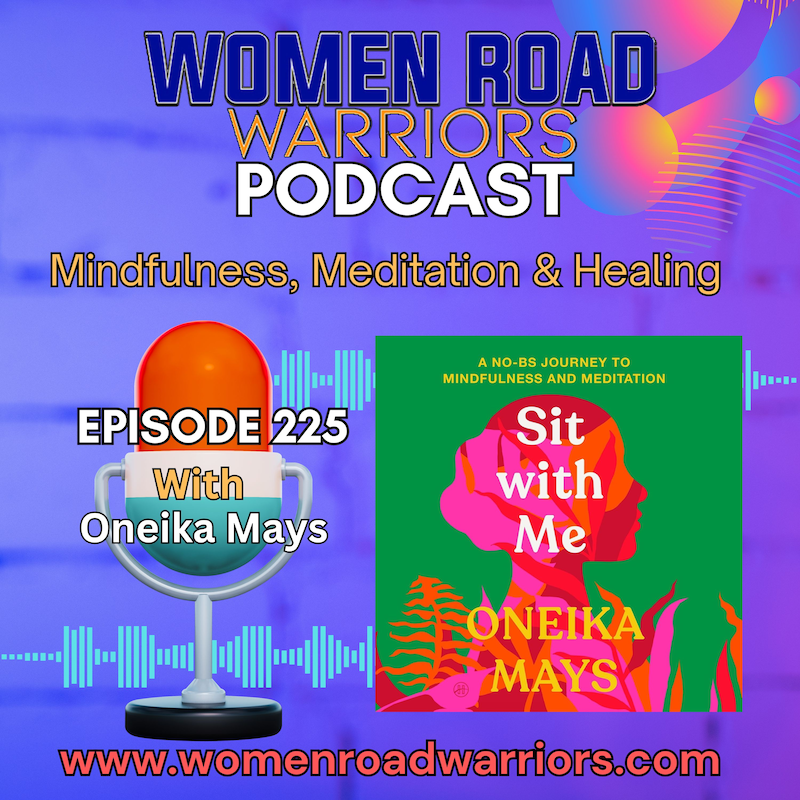
Mindfulness, meditation, healing, resilience, and compassion are at the heart of this conversation with author and meditation teacher Oneika Mays.
After a personal tragedy changed the course of her life, Oneika left a successful career and began teaching mindfulness in one of the most unexpected places — Rikers Island.
There, she became the first mindfulness expert to assist incarcerated individuals, introducing meditation and compassion practices to people navigating some of life’s most difficult circumstances.
For nearly 15 years, Oneika has dedicated her work to bringing real-world mindfulness practices to communities often excluded from traditional wellness spaces. Her message is refreshingly honest:
Meditation isn’t about perfection.
It isn’t about always feeling peaceful.
And you don’t have to like people to love them.
In her book Sit With Me: A No-BS Journey to Mindfulness and Meditation, Oneika shares a deeply human approach to mindfulness that replaces pressure and performance with honesty, compassion, and presence.
In this inspiring episode of Women Road Warriors, hosts Shelley Johnson and Kathy Tuccaro explore:
• How tragedy can lead to personal transformation
• What working inside Rikers Island taught Oneika about compassion
• Why meditation doesn’t require incense, silence, or a perfect mindset
• How mindfulness helps people navigate grief, stress, and life’s hardest moments
• The power of learning to simply sit with what is real
Oneika’s work reminds us that mindfulness isn’t about escaping life.
It’s about meeting it with courage, honesty, and compassion.
If you’ve ever felt overwhelmed, judged, or disconnected, this conversation offers a powerful reminder:
You don’t have to change who you are to begin healing.
You just have to show up and sit with yourself.
🎧 Tune in to discover how mindfulness can transform the way you move through the world.
https://womenroadwarriors.com/
Book: https://tinyurl.com/y69tn3dp
#Mindfulness #Meditation #MentalHealth #PersonalGrowth #OneikaMays #SelfAwareness #Resilience #Wellness #Podcast #WomenRoadWarriors #ShelleyJohnson #KathyTuccaro
Transcripts
This is Women Road warriors with Shelly Johnson and Kathy Tucaro.
Speaker A:From the corporate office to the cab of a truck, they're here to inspire and empower women in all professions.
Speaker A:So gear down, sit back, and enjoy.
Speaker B:Welcome.
Speaker B:We're an award winning show dedicated to empowering women in every profession through inspiring stories and expert insights.
Speaker B:No topics off limits.
Speaker B:On our show, we power women on the road to success with expert and celebrity interviews and information you need.
Speaker B:I'm Shelley.
Speaker C:And I'm Kathy.
Speaker B:Today's guest is a woman who didn't just reinvent her life, she rebuilt it from the inside out.
Speaker B:After a personal tragedy left her emotionally adrift, she walked away from a successful career in retail leadership and stepped into one of the most unexpected places imaginable serving people at Rikers Island.
Speaker B:And in doing so, she found herself.
Speaker B:She was the first mindfulness expert to assist inmates at Rikers.
Speaker B:Oneka Mays is an author, meditation teacher, yoga teacher, and storyteller whose work reaches the people and communities often left out of traditional wellness spaces.
Speaker B:She spent nearly 15 years showing people that meditation isn't about achieving a perfect state.
Speaker B:It's about showing up as you are and practicing loving kindness.
Speaker B:She's the author of Sit with a no BS Journey to Mindfulness and Meditation.
Speaker B:And for more than a decade, she's brought grounded, real world mindfulness practices to people who felt judged, excluded, or alone.
Speaker B:But here's what makes her voice different.
Speaker B:She'll tell you meditation isn't about feeling good.
Speaker B:You don't have to like people to love them.
Speaker B:And yoga isn't something she does.
Speaker D:It's.
Speaker B:It's how she lives.
Speaker B:No incense, no lotus pose required.
Speaker B:Just honesty, humanity, and the courage to sit with what's real.
Speaker B:Please welcome the powerful, wise, and refreshingly no BS Onika Mays.
Speaker B:Welcome to our show, Anika.
Speaker D:I am so happy to be here.
Speaker D:Thank you.
Speaker C:Yes, welcome.
Speaker B:I'm.
Speaker C:I'm super excited to talk about this.
Speaker B:Oh, man, me too.
Speaker B:Oh, my goodness.
Speaker B:Onika, you've done some amazing things in service to others.
Speaker B:How did all of this start and what compelled you to help people at Rikers Island?
Speaker B:We want listeners to get to know you and your amazing story.
Speaker D:Well, when I first was introduced to yoga and mindfulness in the late 90s, I enjoyed it.
Speaker D:And it really terrified me because it opened me up to myself.
Speaker D:So I didn't dive into it the way that I'm living it now.
Speaker D:But when I had a personal tragedy and someone that I love lost their lives unexpectedly, I found myself called back to my yoga Mat.
Speaker D:And what I found was myself.
Speaker D:I found that I felt stronger, I felt empowered, and I found a way to connect with the world in ways that I didn't think that I could.
Speaker D:And because of that, I felt compelled to serve.
Speaker D:And I found myself at Rikers island, first as a volunteer and then as the jail's first mindfulness coach, where I was able to help spearhead a wellness program in the women's facility.
Speaker B:Wow.
Speaker B:That had to been a bit scary and daunting when you first decided to do that.
Speaker B:Right, right.
Speaker D:It was.
Speaker D:It was.
Speaker D:And it wasn't teaching in a jail.
Speaker D:And I never even had any experience with jail before, but I was fortunate that I had family members in my life who were activists and who really were connected with social justice.
Speaker D:So it seemed like the right thing to do.
Speaker D:And, you know, Rikers island, for folks who don't know it's a jail in New York City and probably made most popular from the TV show Law Order, but that's what most people connect it with.
Speaker D:Right.
Speaker D:And so I wasn't sure what to expect.
Speaker D:But it was interesting because the first time that I went there, I felt like I belonged there.
Speaker D:And what I mean by that is because my practice really helped me understand and connect with that feeling of feeling like an outsider.
Speaker D:I'm black and grew up in a predominantly white neighborhood and often felt othered, especially also getting in touch with my sexuality because I identify as queer.
Speaker D:I felt like this feels right.
Speaker D:And even though I didn't grow up in a religious or spiritual household, I felt like this.
Speaker D:This thing where I was like, oh, is this what a calling is all about?
Speaker D:And I met these women, and it changed my life.
Speaker D:You know, I get emotional even thinking about that first time that I was there.
Speaker D:And so many of the women who had never seen a black yoga teacher before were like, who's this woman who's gonna teach us yoga?
Speaker D:And we just really connected.
Speaker D:And doing that volunteer work was something that I felt like I didn't want to ever give up.
Speaker D:So when I had the opportunity to work there full time, I jumped at the chance.
Speaker D:And to be able to sit with people individually and also teach group classes was really pretty empowering for a while.
Speaker D:And then also I had a lot of conflict too, but it was an experience that completely changed the way that I interact with the world.
Speaker B:That was something I was gonna ask, was Rikers really the turning point for you?
Speaker B:And what did you learn about what's important for and about humanity with that experience?
Speaker D:What Rikers did was really put my practice into action.
Speaker D:You know, I was a yoga teacher already, and I was a meditation teacher already and also a massage therapist.
Speaker D:So I knew a lot about my practice and a spiritual practice and myself, and even the practice of loving kindness, this principle, principle of unconditionally loving people.
Speaker D:But there were some times when I was.
Speaker D:When I was actually a volunteer, I was really confronted with this idea of, can you unconditionally love people no matter what?
Speaker D:And I had this moment when I was teaching inside one of the men's facilities as a volunteer, and there was someone there who was accused of something pretty horrendous.
Speaker D:And I saw him getting harassed.
Speaker D:And I knew that after we left the housing area that he was probably going to get beat up.
Speaker D:And I was pretty sure that no one was going to interfere because of what he was there for.
Speaker D:And when I saw the fear in his eyes, I realized that everybody is a human being, and everybody deserves a chance to be treated with humanity.
Speaker D:And if we get to see people as human beings, it can be a portal to their healing and to our healing.
Speaker D:We all have parts of ourselves that we are ashamed about.
Speaker D:We all have things that.
Speaker D:That make us feel less than.
Speaker D:And if I was going to walk this walk of truly being this person who embraces unconditional love, I was going to have to do it in some.
Speaker D:Some challenging ways.
Speaker D:And that was a big turning point.
Speaker B:You have an amazing heart, and you could seriously change the trajectory of humankind with that perspective.
Speaker B:Oh, my goodness, if we could all do that, can you imagine?
Speaker D:It's really.
Speaker D:It's hard work.
Speaker D:I'm not even saying that this was easy, because that day in particular is really the big turning point.
Speaker D:Because I think up until that point, I was a little reductive in my thinking.
Speaker D:You know, everybody who was at Rikers was there on some miscarriage of justice, and all of the officers were, you know, were mean and cruel.
Speaker D:And the truth is, is very mixed, right?
Speaker D:People lose their way and people do things and cause harm in the world.
Speaker D:And there were a lot of officers who I met who really wanted to show up and to support people at the lowest points in their lives.
Speaker D:And there were also plenty of people who I didn't like.
Speaker D:But not liking people or liking people didn't really seem to matter.
Speaker D:If I could really just open my heart to loving people unconditionally.
Speaker D:And that, that.
Speaker D:That spilled out into the way that I was interacting when I.
Speaker D:When I wasn't teaching inside a jail.
Speaker D:And it freed me.
Speaker D:It really freed me when I didn't have to worry about whether I liked somebody or not, and just worried I'm just going to love this person because they're a human being.
Speaker B:I love that.
Speaker B:And of course, at Rikers, I would imagine a lot of people weren't really feeling a lot of love.
Speaker B:And without love, who the heck are we?
Speaker D:Yeah, yeah, absolutely.
Speaker D:It was.
Speaker D:There was an officer.
Speaker D:Excuse me, I talk about this in the book.
Speaker D:When I was volunteering, there was an officer who was walking me out, and we were talking about yoga.
Speaker D:You know, people find out there that you're a yoga teacher, and then they, you know, they have to talk to you about, like, oh, I want to try yoga, but I'm not flexible.
Speaker D:So we were having that conversation as he was walking me out and he was about to retire, and he said, you know, I think I'm going to do something special when I leave here to make up for, like, all of this.
Speaker D:And he sort of waved his hand around the hallway, and I don't know what he meant by that.
Speaker D:And our conversation had to stop because we were at the end of the hallway.
Speaker D:And that happens a lot.
Speaker D:You sort of get to where you are, and no matter what you were saying, the conversation just ends.
Speaker D:And I think of him often.
Speaker D:He seemed like such a really lovely guy and helped shift my perspective.
Speaker D:I think it was pretty, as I mentioned, reductive to think of all of the officers as bad.
Speaker D:But it brought this sense of humanity, and I needed to remember that, that people need jobs and people.
Speaker D:Some people are just there to work, some people are there to serve.
Speaker D:Some people may not be great, but does that even really matter if my role is there to just unconditionally love
Speaker B:people, that's super important.
Speaker B:I wanted to ask one more question about Rikers.
Speaker B:You describe in your book, Rikers is not as the problem, but as a symptom.
Speaker B:When you say the real problem is us, what do you mean by that?
Speaker D:I think our society treats people a certain way, and we like to have good people over here and bad people over there.
Speaker D:And when we start to shift our thinking and recognize that we're all in this together, systems that are hurting people and working as they're designed.
Speaker D:I think a lot you hear a lot of people say, like, oh, the criminal justice system is broken.
Speaker D:But I don't think it's broken.
Speaker D:I think it's working exactly as it's designed.
Speaker D:But I often think that we don't recognize the power that we have as people to make great change.
Speaker D:And if we start seeing ourselves differently.
Speaker D:If we start to recognize and stop thinking in these binary terms of good and bad and think about how can we heal each other if harm happens, these kinds of systems will crumble because we will not participate in them anymore.
Speaker B:That's profound.
Speaker D:We have power.
Speaker D:We have so much power when we're together.
Speaker D:We see it all of the time.
Speaker D:Right.
Speaker D:History has shown us this.
Speaker D:When we show up as a mass of people, it doesn't matter what we look like, it doesn't matter where we come from.
Speaker D:But when we recognize, like these group of people are hurting and we need to support them, things change.
Speaker D:And I think we're at a point right now in the entire world.
Speaker D:I don't even just think here in the United States, I think in the entire world, if we can start to remember that we have more in common.
Speaker D:We all want to be free.
Speaker D:We all want to be healthy.
Speaker D:We all want to be connected with our families.
Speaker D:We all want community.
Speaker D:We can make this work.
Speaker B:Amen.
Speaker B:No more judging.
Speaker D:Yeah, I think Mother Teresa said that, right?
Speaker D:If you're, if you're too busy judging people, you don't have time to love them or something like that.
Speaker B:So very true.
Speaker A:Stay tuned for more of Women Road warriors coming up.
Speaker E:Dean Michael, the tax doctor here.
Speaker E:I have one question for you.
Speaker E:Do you want to stop worrying about the irs?
Speaker E:If the answer is yes, then look no further.
Speaker E:I've been around for years.
Speaker E:I've helped countless people across the country, and my success rate speaks for itself.
Speaker E:So now you know where to find good, honest help with your tax problems.
Speaker E:What are you waiting for?
Speaker E: -: Speaker A:Welcome back to Women Road warriors with Shelly Johnson and Kathy Tucaro.
Speaker B:If you're enjoying this informative episode of Women Road Warriors, I wanted to mention Kathy and I explore all kinds of topics that will power you on the road to success.
Speaker B:We feature a lot of expert interviews, plus we feature celebrities and women who've been trailblazers.
Speaker B:Please check out our [email protected] and click on our Episodes page.
Speaker B:We're also available wherever you listen to podcasts on all the major podcast channels like Spotify, Apple, YouTube, Amazon, Music, Audible, you name it.
Speaker B:Check us out and bookmark our podcast.
Speaker B:Also, don't forget to follow us on social media.
Speaker B:We on Twitter, Facebook, Instagram, Pinterest LinkedIn, YouTube and other sites and tell others about us.
Speaker B:We want to help as many women as possible.
Speaker B:If you're just joining us, we're talking with Onika Mays, the author of Sit with a no BS Journey to Mindfulness and Meditation.
Speaker B:Her journey to mindfulness wasn't a straight line.
Speaker B:After experiencing a personal tragedy that left her searching for meaning, she stepped away from a successful retail leadership career and and found herself in an unexpected place, working with inmates at Rikers island, where she became the first mindfulness expert to assist people there.
Speaker B:For nearly 15 years now, Onique has been teaching a refreshingly honest approach to meditation.
Speaker B:It's one that doesn't require incense, perfection, or pretending everything feels good.
Speaker B:It's simply about showing up as you are and practicing compassion.
Speaker B:Onika, in our last segment, you were talking about how we need to stop judging.
Speaker B:That's so very important if humanity's ever going to make any kind of progress.
Speaker B:Human beings have a terrible tendency to judge.
Speaker B:You know, I think it's our own insecurities coming out.
Speaker B:You know, we got to judge this other group when in fact we need to be looking at ourselves in the mirror.
Speaker D:You know, oh, I was an Olympic judger.
Speaker D:I was really wonderful at it.
Speaker D:I'm sure if they had, you know, if it were a sport, I would have gotten gold medals.
Speaker D:Cause I was really, really good at judging myself and other people.
Speaker D:And then I did realize that it was just rooted in insecurity.
Speaker D:I was insecure in myself.
Speaker D:I was insecure in being in places where I didn't think I was smart enough or I shouldn't be there, or I just felt othered.
Speaker D:And in order to cover that up, I would just, you know, start judging people.
Speaker D:And I found myself doing it even when I became a yoga teacher, you know, I'd be in a class is my practice than hers, is it not?
Speaker D:Am I doing this right?
Speaker D:Am I doing this well?
Speaker D:And I. I really had to realize this.
Speaker D:This isn't about that at all.
Speaker D:You're supposed to be connecting with the present moment.
Speaker D:It doesn't matter if you can do a handstand, you're not a good yogi.
Speaker D:If you can do a handstand, you're a good yogi.
Speaker D:If you can recognize what's going on inside you and connect with that in the present moment.
Speaker B:Makes total sense.
Speaker B:In your book, you talk about metta.
Speaker B:You practice metta in your meditation, and meditation taught you about concentration and connection.
Speaker B:For those who know nothing about yoga or any of this, what is metta?
Speaker B:And is it important?
Speaker D:So metta as a principle, is loving kindness, and it means unconditional love.
Speaker D:You hear a lot of teachers compare it to, like, the sun shining down on you on a warm day, but it's this principle of unconditional love or unconditional friendliness or a sense of ease that we have with ourselves.
Speaker D:And then it expands out.
Speaker D:So we first offer ourselves this unconditional love, and then we let that love get a little bit.
Speaker D:A little bit wider.
Speaker D:And then we start to include people that we love.
Speaker D:And once we do that, we start to include a familiar stranger.
Speaker D:And after we include a familiar stranger, we get to the tricky part, and that's when we start to include a difficult person.
Speaker D:And we don't wanna include the most difficult person in our lives, but maybe somebody who irritated us just a little bit.
Speaker D:And then we do it for all beings.
Speaker D:And that's the principle.
Speaker D:Right.
Speaker D:But when we practice it as a meditation, we offer phrases like, with mindfulness, you know, you have an anchor, and it's usually like you're breathing, or, you know, you can concentrate on a candle flame.
Speaker D:Some people do that, or even hold something in your hand to bring you back to the present moment, if you get to spend.
Speaker D:But with meta meditation, instead of concentrating on your breath, you concentrate on phrases, and you offer those phrases to yourself and other people like a gift.
Speaker D:And the phrases are, may you be safe, may you be happy, may you be healthy, and may you live with ease.
Speaker B:That's very healthy.
Speaker B:When you think about it, when you were talking about meta in your book, you were saying, liberation isn't about the bars, it's about the bind inside the heart.
Speaker B:We do bind ourselves, don't we?
Speaker B:And, I mean, that really limits us.
Speaker D:Yeah.
Speaker D:Yeah, we.
Speaker D:We do limit ourselves.
Speaker D:And I think the practice of Metta is really powerful.
Speaker D:Not because we offer love to people, but when we notice what gets in the way of offering our love to ourself and others, that's when our practice comes in.
Speaker D:That's.
Speaker D:That's when we really can figure out what's stopping me?
Speaker C:Why?
Speaker D:Why can't I offer this person love?
Speaker D:Or why can't I offer myself love?
Speaker D:That's where the work is, and that's when it gets really juicy.
Speaker D:And that's why I think this practice is powerful.
Speaker D:And when we practice it on our cushion, you know, we work with whatever comes up.
Speaker D:And then we notice when life comes at us and we're a little bit more tender.
Speaker D:It doesn't have to be about really big changes either.
Speaker D:Like, let's say you don't talk to yourself nicely, and then something happens, and then you notice you're a little nicer when you're with yourself than you were before.
Speaker D:That's a win.
Speaker B:I have a tendency to say nasty things to myself once in a while.
Speaker B:It's not productive.
Speaker D:Yeah.
Speaker D:And we, I think often, especially women, we tend to be really hard on ourselves first, and we tend to offer all of ourselves to other people.
Speaker D:So the practice of meta can be very powerful for women because what it says is, I am just as important as everyone else, not more or less.
Speaker D:And that can be so empowering.
Speaker B:It really is.
Speaker B:Now, is your book primarily about mindfulness and meditation, or does it cover yoga as well?
Speaker D:I don't talk a lot about yoga.
Speaker D:I talk mostly about meditation.
Speaker D:And I like to talk about the book as being part memoir, my own journey.
Speaker D:How I, you know, found myself and.
Speaker D:And fell in love with myself and.
Speaker D:And then it's also a teaching on this practice of Metta for people to appreciate, like, hey, can I do this?
Speaker D:So I give tips about that.
Speaker D:And then it's also about, you know, the work that I did inside Rikers island for people who are curious about it.
Speaker D:But also I think the stories that I talk about are relatable.
Speaker D:And it's not necessarily for folks who even have experience with incarceration, but just to see how these principles came to life in a place like that.
Speaker D:And if they can come alive in a place like Rikers island, we can certainly bring this practice to our own lives and bring it alive inside ourselves.
Speaker C:Do you feel that you made a great ripple effect, positive impact in that place?
Speaker D:This is the question, right?
Speaker D:This is the big question.
Speaker D:I think when I started, I thought that I would be doing a lot of powerful work.
Speaker D:And I think on a micro level, Kathy, I think I did help people.
Speaker D:I think I did connect with people.
Speaker D:But one of the principles that I really employed once I got there was to let go of any idea of attachment to outcome and leave that to the people who were engaged with the work.
Speaker D:And if they got something, they got something, and perhaps it rippled out.
Speaker D:I found that I practice a lot of Buddhism, and if I'm holding onto things too tightly and worried about outcomes, I'm really not letting go.
Speaker D:So non attachment became important.
Speaker D:But ultimately I found that I think I might have been causing more harm on a macro level because I felt like I was making the system look more palatable on the outside to people like, hey, here's this woman and she's teaching meditation, and there's an acupuncturist and there's a wellness coach.
Speaker D:So how good could.
Speaker D:How bad could Rikers be?
Speaker D:And that conflict was always inside me because I'm an abolitionist.
Speaker D:But having to think about that was something that I couldn't do anymore.
Speaker D:So ultimately, I made a choice to leave because it didn't sit right with me.
Speaker D:And I also didn't feel right.
Speaker D:It was a dream to get a salary and, you know, I had a pension and, you know, vacation and all those wonderful things.
Speaker D:And as a yoga and meditation teacher, you know, that's like, that's the dream to get a job like that.
Speaker D:But it didn't feel right with the way that I feel about the prison industrial complex.
Speaker D:I couldn't.
Speaker D:I couldn't hold it in my body anymore.
Speaker D:So.
Speaker D:So I left.
Speaker D:Yeah, someone still needs to do it, and they're the person who does the work now.
Speaker D:She's absolutely incredible.
Speaker D:And I also think it's important to, you know, that we remember we don't need to be the only ones doing this work.
Speaker D:Right.
Speaker D:There's.
Speaker D:There's so many people who can pick it up.
Speaker D:And I.
Speaker D:And I think maybe I needed to realize that a little bit earlier that I don't have to shoulder all of this myself.
Speaker B:As I've said before, it takes a village.
Speaker B:We've heard that from.
Speaker B:If we all do something, that's how you make the change.
Speaker B:And as you quoted in your book, James Baldwin, nothing can be changed until it's faced.
Speaker B:We need to face things head on.
Speaker D:Yeah.
Speaker A:Stay tuned for more of women road warriors coming up.
Speaker E:Dean Michael, the tax doctor here.
Speaker E:I have one question for you.
Speaker E:Do you want to stop worrying about the irs?
Speaker E:If the answer is yes, then.
Speaker E:Then look no further.
Speaker E:I've been around for years.
Speaker E:I've helped countless people across the country, and my success rate speaks for itself.
Speaker E:So now you know where to find good, honest help with your tax problems.
Speaker E:What are you waiting for?
Speaker E: -: Speaker B:Industry Movement Trucking moves America Forward is telling the story of the industry.
Speaker B:Our safety champions, the women of trucking, independent contractors, the next generation of truckers and more.
Speaker B:Help us promote the best of our industry.
Speaker B:Share your story and what you love about trucking.
Speaker B:Share images of a moment you're proud of.
Speaker B:And join us on social media.
Speaker B:Learn more at truckingmovesamerica.com.
Speaker A:Welcome back to Women Road warriors with Shelly Johnson and Kathy Tucaro.
Speaker B:Today we're talking to Anika Mays, meditation teacher, yoga practitioner, and author of Sit with a no BS Journey to Mindfulness and Meditation.
Speaker B:What makes Anika's work so powerful is that she brings mindfulness into spaces where it's often missing communities and people who felt overlooked, judged or excluded from traditional wellness conversations.
Speaker B:Her own transformation began after a deeply painful period in her life that led her to completely re examine what purpose and healing meant.
Speaker B:That journey eventually took her into Rikers island where she began teaching mindfulness practices to inmates there.
Speaker B:That was an experience that reshaped how she understood compassion and humanity.
Speaker B:Anika often says you don't have to like everyone to love them, and that meditation isn't about feeling peaceful all the time.
Speaker B:Onika in our previous segment we were talking about making a change, that everyone can do something, they really can, and
Speaker D:we all have different roles.
Speaker D:Right.
Speaker D:I think what I hear people say when they hear that I'm a meditation teacher and that, you know, that I'm an advocate for abolition and for folks who are incarcerated, that they feel powerless and I want to do something.
Speaker D:And I think often we look outside of ourselves to make a change when really it begins with us.
Speaker D:And I often say, I know that sounds corny, but, but we are the thing that we can change and we can become an example for people to make a change.
Speaker D:And, and we all have different gifts.
Speaker D:And I think if we embrace the gifts that we have and we show up wholeheartedly with what we love to do to make change in the world, there's room for all of us to do something that can make a positive impact.
Speaker D:Because I think our world is changing and I think a better world can come from everything that's happening right now.
Speaker B:And I think with all the technology and AI and social media, even though it brings us together, it really kind of tears us apart and fragments us and we're looking outside ourselves versus inside ourselves.
Speaker B:Yes.
Speaker B:So that's self defeating because you're absolutely right.
Speaker B:We can't control anything outside of ourselves.
Speaker B:We can't.
Speaker B:We can make a difference, but it has to start with us.
Speaker D:Absolutely.
Speaker D:It's so powerful.
Speaker B:And I think a lot of people, when they feel powerless, they give up.
Speaker B:And that's not what should happen.
Speaker B:I mean, people need to be able to be who they're truly supposed to be and hopelessness is a bad thing and we Have a lot of that too.
Speaker D:Yes.
Speaker D:And a practice like loving kindness lets us hold space for that.
Speaker D:I talk a lot when I'm teaching that.
Speaker D:I used to feel really constricted by my shame, by my disappointment in myself, by things that I had done, by things that I had said.
Speaker D:And I would feel like myself getting tighter and tighter, but.
Speaker D:But when I learn to unconditionally love myself, even if there's parts of myself I don't like, it's almost like I can create space around all of those uncomfortable feelings and make room for unconditional friendliness as well.
Speaker D:So it's not even necessarily about making other things go away, but it's recognizing that two things can exist at the same time.
Speaker D:I can be accountable for myself, for something that I've done, and I can unconditionally love myself.
Speaker D:And.
Speaker D:And in fact, the more that I unconditionally love myself, I'm more likely to make a change.
Speaker D:I'm more likely to respond to what's happening rather than reacting to it.
Speaker B:Makes sense.
Speaker B:Kathy, you practice meditation.
Speaker B:Do you think in these perspectives too?
Speaker B:I mean, I know that self love is something that you've really worked on.
Speaker C:I was just thinking about that, how hard it is to love yourself.
Speaker C:That's where my thought process was going.
Speaker C:Because, I mean, I've been through extensive therapy and decades of trauma and abuse, you know, landed me in a place where I had to do a lot of self reflection and a lot of forgiveness and, you know, learning who I was at the age of 40 and, you know, not the lies that I was told, who I was.
Speaker C:So learning to love myself was one of the hardest things I've ever had to do because I was biased in a place I grew up.
Speaker C:I guess being told how awful I was and how horrible and how, you know, a waste of skin and useless piece of crap and blah, blah, blah, blah, blah.
Speaker C:And so learning to like, de.
Speaker C:Learn all that and then trying to figure myself out and, well, how do I do that?
Speaker C:And so I began meditation.
Speaker C:Actually, my mom taught me how to do that when I was 14 to help me through some traumatic issues that I had.
Speaker C:And it has helped me achieve a place of inner peace and serenity that helps me through when I'm having a bad day, when I'm having.
Speaker C:Even when I'm having a good day.
Speaker D:You know what I mean?
Speaker C:I don't need a bad day to meditate.
Speaker C:I mean, I meditate.
Speaker C:I take my 20 minutes of contemplation every day, and I do it so that I Can feel grounded so that I can feel well balanced enough to approach the difficult days in a smoother fashion.
Speaker C:You know, like, I, I, I really try to remain neutral in everything that I do so that I don't, I don't want to influence positively or, or negatively certain things.
Speaker C:And I just want to be and try and be as good as I can.
Speaker C:Excuse me.
Speaker C:And as positive that I can.
Speaker C:And it has ultimately helped me develop into, I think, a fabulous human being at the age of.
Speaker C:I'm going to be 57 here in a couple months, and I love who I am, but it took years, I'm going to say decades, to get there, you know, and to be able to look in a mirror and not focus on the flaws and the wrinkles and the gray hair, but focus on that inner light that just, that comes out, that that's what people see, you know?
Speaker C:So, yeah, it's a work in progress that I think everybody would benefit from if they would take the time to look at themselves truly for what they are.
Speaker C:You know, I think we're all a light of God inside.
Speaker C:And just to recognize that light, that it's everywhere you go.
Speaker B:Well said.
Speaker D:Wow.
Speaker D:And, Kathy, you said something that I just think is so powerful and beautiful that people should remember that you meditate, whether you feel great or whether you don't.
Speaker D:You know, I, I found my practice when the, the, you know, I was really adrift, and I did it, and then I felt better, and then I stopped.
Speaker D:And practice needs to happen all of the time.
Speaker D:Right.
Speaker D:No matter what.
Speaker D:And it's, it's something that we do consistently because it's, you know, I think it's.
Speaker D:Sharon Salzberg, who's an incredible meditation teacher, says that meditation is practice for life.
Speaker D:So when life comes at us, that we have, we have the tools.
Speaker D:And I often say I don't meditate to feel great.
Speaker D:I meditate to be with whatever's going on in the moment.
Speaker C:Well, see, another thing that I really believe is that, you know, what you think you're looking for that people are constantly searching for, it's not out there.
Speaker C:It starts with you.
Speaker C:It starts inside.
Speaker C:Because when the things change inside you, things change around you because you're bringing it forth.
Speaker C:It's like that whole manifestation thing, right?
Speaker B:Yep.
Speaker D:You have me dancing around in my seat here because that is.
Speaker D:That is it.
Speaker D:That is so.
Speaker D:It, it starts inside.
Speaker D:It begins with me.
Speaker D:I say that throughout the book again and again.
Speaker D:It begins with me.
Speaker D:Yeah.
Speaker D:And love all this.
Speaker C:Does it just.
Speaker C:It's just because when back in.
Speaker C:Before I hit treatment and all that, all my.
Speaker C:Everything I was.
Speaker C:I was so lost and confused that everything around me was in confusion and chaos.
Speaker C:The minute I was able to discover who I truly was and work with myself and forgive myself and love myself and do all that deep inner work, oh, my God.
Speaker C:Everything changed because I changed.
Speaker C:It had to start with me and the way I view who I am and what it is I'm putting out there.
Speaker C:So, yeah, it was a big thing.
Speaker D:Yeah.
Speaker D:Yeah.
Speaker D:I spent quite a.
Speaker D:Well over a decade in therapy myself.
Speaker D:And I often say that meditate, like therapy saved my life, but meditation really helped me enjoy it.
Speaker C:Yeah, Yeah, I agree.
Speaker D:Yeah.
Speaker B:I don't know how many people actually meditate.
Speaker B:I think that there's been a lot more interest in it.
Speaker B:And I want to even say that maybe there was more interest in it after the pandemic, when people were coming unglued, they.
Speaker B:They'd lost their routine.
Speaker B:They were not connected.
Speaker B:They didn't know what to do with themselves.
Speaker B:And a lot of people aren't comfortable being just with themselves.
Speaker D:Right.
Speaker D:And I think that's what the pandemic uncovered for a lot of people, that they have been distracting themselves for their entire lives.
Speaker D:And what the pandemic uncovered for them is the fact that they've been distracted.
Speaker D:And so to sit with themselves with nothing to do, you start.
Speaker D:You have this ability to see yourself, you know, a mindfulness practice.
Speaker D:When you practice mindfulness as a meditation, it's when you pay attention to the present moment and you don't try to manipulate it, you don't try to fix it, and you don't try to change it.
Speaker D:And there's a Tibetan Buddhist nun, American American Tibetan Buddhist nun, Pema Chodron, who talks about mindfulness is when you first practice it, it's like you're looking at this really murky pond.
Speaker D:And once you start to practice mindfulness, the pond becomes clear, Right.
Speaker D:Because all of the sediment drops down to the bottom, and then you're able to see clearly into the pond.
Speaker D:And then you see, like, the rusty bicycles and the rubber tires that's down there, and then all of the stuff that you can start to deal with.
Speaker D:But because you have this practice of mindfulness, it makes it less challenging to deal with or you feel more equipped to deal with those challenges.
Speaker D:Because I don't think my life has necessarily changed dramatically because of meditation, but the way that I respond to my life has dramatically changed.
Speaker B:So that gives you more control and you feel better about yourself.
Speaker B:And I would imagine you're more in the moment.
Speaker B:I don't think a lot of people are.
Speaker B:Well, I look around, if I go to a public place, everybody's on their phone, they're not paying attention to anything around them.
Speaker B:So that's not good mindfulness.
Speaker B:And when you think about it, I had talked to an expert years ago about television and how it put us to sleep.
Speaker B:Well, I think the same thing happens when people are engaged with the social media in 15 second increments.
Speaker D:And an hour can go by, right, like that scrolling.
Speaker D:We just disappear and we start to dissociate men for so many people who felt uncomfortable being still.
Speaker D:And I would talk to some people about this even at Rikers.
Speaker D:There I would give them ways to incorporate mindfulness that could still have some movement if they weren't ready to sit and be still.
Speaker D:Because we can bring mindfulness to activities.
Speaker D:It doesn't always just have to be a sitting practice.
Speaker D:We can walk mindfully.
Speaker D:And when we do that, we're noticing like how our feet hit the floor and we're looking around and we're really being engaged with the present moment.
Speaker D:And we notice when we drift off.
Speaker D:Right.
Speaker D:The act of mindfulness isn't so much like how I can stay present, but when am I distracted in that moment that I bring myself back.
Speaker D:Right.
Speaker D:That's the moment when you're truly the most present.
Speaker D:When you say to yourself, oh, I drifted.
Speaker D:You are never more present than in that moment.
Speaker D:And we can do that when we take a shower, we can do that when we eat.
Speaker D:We can, we can build mindfulness into our lives.
Speaker D:And from there we can start to build a really powerful practice.
Speaker B:I would think we'd enjoy life more because we're going to notice the really good things that we didn't notice before.
Speaker B:You know, you go outside, you smell the flowers, you hear the birds.
Speaker B:A lot of us just shut that out.
Speaker B:The human mind is very good at doing that.
Speaker D:Yeah, absolutely.
Speaker D:And we can even appreciate tragedy more.
Speaker D:You know, I wrote about when I found out that my dad died and my practice like dropped in like a gift and allowed me to be present.
Speaker D:And even though it was one of the most devastating things that happened for me, cause I was really close to my father.
Speaker D:I also didn't want to lose that moment.
Speaker D:I didn't want to be distracted because I knew this was only going to happen once and didn't I want to remember everything that I was feeling.
Speaker D:So when I wasn't so upset, I would be able to come back to that moment.
Speaker D:And appreciate it.
Speaker D:And being present is really powerful, even when it hurts, even when our hearts are breaking.
Speaker D:Because when we have a mindfulness practice and we can start to employ techniques that help us regulate our emotions, we can start to be okay with what's going on, even when it's challenging, even when it hurts, even when it breaks our heart.
Speaker B:I would think that it would also help people deal with their emotions because I think a lot of us try to run away or dampen down the emotions.
Speaker B:Of course, that's where substance abuse comes in and all of that.
Speaker D:I used to work with a lot of folks.
Speaker D:I actually had some training, trauma informed training for folks in recovery.
Speaker D:I had done that as well.
Speaker D:So I used to talk to people about having mindfulness be helpful when cravings arise and not to even run away from them, but to notice them.
Speaker D:And that can be a little bit more tender, but being present to what is happening inside your body and not even for craving itself, but the moment right before a craving comes in.
Speaker D:And the more that we know how our bodies are operating, we can know ourselves.
Speaker D:So we can start to feel when things are creeping up.
Speaker D:So it's not a crisis that starts to happen and it's something that we can prevent.
Speaker D:Oh, I'm starting to feel this way.
Speaker D:Why am I feeling this way?
Speaker D:Maybe I can do some deep breaths.
Speaker B:Me.
Speaker C:Last night it was so intense with this blizzard and the storm and all these trucks and I'm in the grater trying to get out of the road.
Speaker C:I was craving sugar so damn bad.
Speaker C:All I wanted was chocolate, Right?
Speaker D:Exactly, exactly.
Speaker C:The stress was high.
Speaker D:Yeah, that tight feeling, that tight feeling in the chest.
Speaker C:But actually, no, in saying that what I did do was I practiced without really knowing it.
Speaker C:Now that I'm thinking about it, I pulled over and I calmed myself down and I pulled myself into that same place where I go when I meditate.
Speaker C:And I just breathed in, breathed out.
Speaker C:I'm like, kathy, you're not going to change the situation.
Speaker C:Just get out of the way.
Speaker C:Just, you know, do your best.
Speaker C:It's okay.
Speaker C:There's no need to get all, you know.
Speaker C:So I had to pull, reel myself back in and then start over again.
Speaker C:Because I'm sitting in that equipment for 12 hours a day and I don't want to be sitting there 12 hours full of anxiety, stress.
Speaker B:Right.
Speaker C:So I have to.
Speaker C:To put myself in a situation where I feel good.
Speaker C:And so, yeah, so I guess it's a.
Speaker C:It is mindfulness, really.
Speaker D:Yeah, it is.
Speaker D:And there it is.
Speaker D:Like that's such a wonderful example for people like you have this practice, and it dropped in without you even knowing it because meditation is practice for life.
Speaker D:So life comes at you, and then here are the tools that you have.
Speaker D:They just, they just kind of appear for you when you need them.
Speaker D:That's really beautiful.
Speaker A:Stay tuned for more of Women Road warriors coming up.
Speaker E:Dean Michael, the tax doctor here.
Speaker E:I have one question for you.
Speaker E:Do you want to stop worrying about the irs?
Speaker E:If the answer is yes, then look no further.
Speaker E:I've been around for years.
Speaker E:I've helped countless people across the country, and my success rate speaks for itself.
Speaker E:So now you know where to find good, honest help with your tax problems.
Speaker E:What are you waiting for?
Speaker E: -: Speaker A:Welcome back to Women Road warriors with Shelly Johnson and Kathy Tucaro.
Speaker B:We're having a conversation with Anika Mays.
Speaker B:She's a meditation teacher and author whose approach to mindfulness is about as real and grounded as it gets.
Speaker B:She spent years building a successful career in retail leadership, but after a personal tragedy, she stepped away and began searching for something deeper.
Speaker B:That search led her to a place few people would expect, the halls of Rikers island, where she began helping the inmates there learn mindfulness and meditation.
Speaker B:What she discovered helped shape the philosophy she shares today.
Speaker B:That meditation isn't about escaping discomfort or chasing a perfect state of calm, and it's about having the courage to sit with what's true in the moment.
Speaker B:She has a compelling book called Sit with A no BS Journey to Mindfulness and Meditation.
Speaker B:She invites readers into that honest journey.
Speaker B:Onika, could you kind of give us a summary of everything you cover in your book?
Speaker B:There's so many elements here that I really think that so many people can get empowered by.
Speaker D:So I, I laid the book out the way that a meta meditation works.
Speaker D:So I start by talking about what metta and loving kindness is and what it isn't and why it's important.
Speaker D:Why would we even want to do this practice in the first place?
Speaker D:Does it feel silly to offer people, you know, words of wishes of wellness if we're angry at them?
Speaker D:And I break that down.
Speaker D:And from there I have.
Speaker D:Each chapter starts to really dig into how do we offer loving kindness to ourselves?
Speaker D:And what does that look like in practice on a cushion?
Speaker D:And then what does that look like when it shows up in real life, then I do that for a loved one.
Speaker D:And why do we struggle with loving ourselves?
Speaker D:Why do we struggle with our loved ones?
Speaker D:And how do we practice loving kindness with them?
Speaker D:And one of my favorite parts is loving kindness and the stranger, the familiar stranger.
Speaker D:And this was the hardest part of my practice, offering loving kindness, kindness to people that I didn't know really well.
Speaker D:I. I like to work with, like, energy or feelings.
Speaker D:So I was actually okay offering loving kindness to a difficult person because I had an emotion that I could work with.
Speaker D:But being able to muster up feelings of tenderness for people that I didn't know was a struggle.
Speaker D:But once I did that and recognized that strangers are really just like me, trying to do the best that they can, you know?
Speaker D:You know, I could work with loving kindness with the stranger.
Speaker D:And then I talk about the difficult person and how that practice can be really challenging and how forgiveness can be a powerful part of offering loving kindness to difficult people.
Speaker D:And I do this by storytelling.
Speaker D:I love to tell stories.
Speaker D:I learn well by stories.
Speaker D:So I would incorporate stories that really sort of reflect these practices through my own experience, and then also through working at Rikers with some incredible women who I met there.
Speaker D:And then I also talk about this whole journey of what it's like to be in a place that feels really overwhelming, really violent, and really scary, and how that idea of unconditional love and friendliness supported me on a journey.
Speaker D:And I feel like people can connect with that because we all go on difficult journeys.
Speaker D:We aren't all going to be working in a jail or all be in a jail, but we do create prisons for ourselves.
Speaker D:And how can we use a practice of unconditional friendliness to help break us free?
Speaker B:Well said.
Speaker B:Yes, we do definitely build prisons inside of us as we evolve from childhood, depending on what we've been told, and we forget who we are.
Speaker B:And you're talking also about forgiveness.
Speaker B:That one's a tough one for a lot of people.
Speaker B:But in your book, I believe you say, forgiveness is not letting somebody off the hook.
Speaker B:It's releasing the bind inside yourself.
Speaker B:That is freedom, isn't it?
Speaker D:It is freedom.
Speaker D:And that was the most difficult chapter that I had to write.
Speaker D:And I will even say that when I first wrote that chapter, the first sentence of the chapter, I think, says, I know I'm the villain in someone's story.
Speaker D:I know I'm the villain probably in a lot of people's stories, if I'm being really honest, because I haven't always been a good person and I've had to like make amends for things.
Speaker D:And I didn't really go into detail at first about some of the harm that I'd caused in a friendship that I lost, which is what I talk about in the book.
Speaker D:But when we forgive ourselves for harm that we've caused, we can hold ourselves accountable.
Speaker D:But forgiveness, I think gets a bad rap because we associate forgiveness with being okay with what happened to us or being okay with what we did to other people.
Speaker D:And forgiveness is our release of the energy of the hold up the thing has on us.
Speaker D:And that's how we can step into freedom.
Speaker D:And when we step into freedom, we can make decisions about what we are going to do around whatever situation that we're dealing with.
Speaker D:Do we put down a boundary and say, I love you so much unconditionally, I can't let you back in my life because I'm not going to let you cause harm to me.
Speaker D:And by, by extension, you won't be causing harm to yourself because I'm not going to let you cause harm to me.
Speaker D:Or how do I free myself from harm that I've caused?
Speaker B:That's powerful.
Speaker B:Your book covers so many different things where people can really get to know themselves and maybe just feel comfortable in their own skin.
Speaker D:You know, I like to think that I offer questions for people to ask themselves.
Speaker D:I fully admit I don't offer a lot of answers in the book and that was intentional.
Speaker D:I think we learn best because when we have tools and practices, we can be our own best teachers.
Speaker D:And what I learned and what I was taught by a lot of the people that I sat with at Rikers, it wasn't so much what I told them.
Speaker D:It was about what we talked about around mindfulness meditation and meta or yoga and about what they got to experience for themselves inside.
Speaker D:And that's what I hope that people are able to do.
Speaker D:They have a chance while they're reading to sit with themselves and not just sit with me, but to sit with themselves and realize, like, I can do this.
Speaker D:I can begin this whole process of loving myself.
Speaker D:And it's a lifelong journey.
Speaker D:You know, I'm not here to say I love myself unconditionally all of the time.
Speaker D:I struggle, I really struggle.
Speaker D:I make mistakes.
Speaker D:You know, my partner would gladly tell you that she makes mistakes all the time and because we're human.
Speaker B:But yeah, we can't be perfect.
Speaker B:We aren't perfect.
Speaker B:And that's where we're told by the media and in the advertising, gee, this is how you have to look, you can be perfect.
Speaker B:Perfect.
Speaker B:We're not perfect.
Speaker B:We just work at it on a day to day basis.
Speaker B:And we're hard on ourselves.
Speaker B:I think women are definitely.
Speaker B:We have a tendency to be harder on ourselves than men do.
Speaker B:But your book empowers women, which is what we love.
Speaker B:Sit with me.
Speaker B:A no BS Journey to mindfulness and Meditation.
Speaker B:Where can people find that, Onika?
Speaker D:People can find it wherever they buy their books.
Speaker D:So wherever you order your books, you can get your books.
Speaker D:And if you're going to your library, you can certainly request it at your library too.
Speaker B:I think your book is going to cause a metamorphosis with people and it's going to bring out, you know, people start out as the caterpillar going to turn into butterflies, you know, oh, I love that.
Speaker B:And this is growth and we need to grow every day.
Speaker B:And this book helps people do that.
Speaker B:Do you have maybe just a little nugget you can share with our listeners that they can take with them on meditation, mindfulness, and maybe a little bit of self empowerment?
Speaker D:Absolutely.
Speaker D:I think that people who feel like meditation is for people to empty their minds, first of all, I want to let them know that that's not what meditation is about.
Speaker D:It's about really, really understanding that your mind is active and being okay with whatever going on in your mind.
Speaker D:And if you want to incorporate some mindfulness into your life, you can find an activity that you're already doing and really bring some intention to it, whether it's folding clothes, taking a shower, brushing your teeth.
Speaker D:If you allow yourself to really be with what's happening.
Speaker D:Brushing your teeth is a really great example.
Speaker D:How are you holding your toothbrush?
Speaker D:How are you putting toothpaste on your toothbrush?
Speaker D:What does it feel like when the bristles hit your teeth?
Speaker D:What are you doing when you're doing that?
Speaker D:Are you looking in the mirror?
Speaker D:Are you sitting?
Speaker D:Are you somebody who walks around?
Speaker D:Are you somebody who is still and allowing yourself to truly be present as that's going on and notice?
Speaker D:Do I stop paying attention when I'm brushing my teeth?
Speaker D:Am I thinking about something else?
Speaker D:And then come back to the idea that you're brushing your teeth?
Speaker D:You have just completed a mindfulness practice
Speaker B:that keeps people in the moment too.
Speaker D:And you can apply that to so many things and then before you know it, you're incorporating mindfulness into more and more parts of your life.
Speaker D:You can do it with eating, you can do it when you first wake up in the morning.
Speaker D:I like to be mindful when I first get up in the morning and I make my way to the bathroom.
Speaker D:I try to be really present for those first moments that I wake up.
Speaker B:I love this.
Speaker B:Anika.
Speaker B:Your book is powerful.
Speaker B:Sit with me.
Speaker B:A no BS Journey to Mindfulness and Meditation.
Speaker B:People definitely need to find that.
Speaker B:They can find it in their local bookstore too, correct?
Speaker D:Absolutely.
Speaker B:Thank you so much for being on the show.
Speaker B:I feel more empowered.
Speaker D:I'm so glad.
Speaker C:I'm so happy that we had this time to talk.
Speaker B:Thank you, Anika.
Speaker B:This has been an honor.
Speaker D:Thank you so much.
Speaker D:I'm really grateful.
Speaker B:We hope you've enjoyed this latest episode.
Speaker B:And if you want to hear more episodes of Women Road warriors or learn more about our show, be sure to check out womenroadwarriors.com and please follow us on social media.
Speaker B:And don't forget to subscribe to our podcast on our website.
Speaker B:We also have a selection of podcasts Just for Women.
Speaker B:They're a series of podcasts from different podcasters, so if you're in the mood for women's podcasts, just click the Power network tab on womenroadwarriors.com youm'll have a variety of shows to listen to anytime you want to.
Speaker B:Podcasts Made for Women Women Road warriors is on all the major podcast channels like Apple, Spotify, Amazon, Audible, YouTube and others.
Speaker B:Check us out and please follow us wherever you listen to podcasts.
Speaker B:Thanks for listening.
Speaker A:You've been listening to Women Road warriors with Shelly Johnson and Kathy Takaro.
Speaker A:If you want to be a guest on the show or have a topic or feedback, email us at sjohnsonomenroadwarriors.
Speaker A:Com.




