Shownotes
Ben, the automotive industry charity celebrated its 120th anniversary in 2025. In that time, it has helped thousands of automotive workers and their families overcome difficulties.
But with daily pressures rising, and more awareness of mental health and wellbeing, the charity is working to ensure it can support many more people in the years ahead.
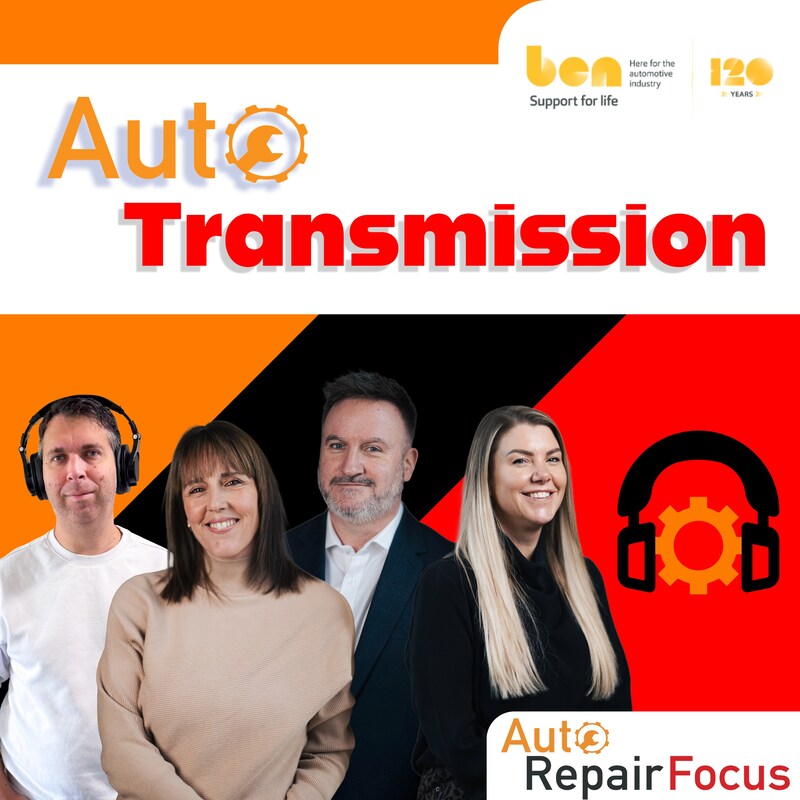
Auto Repair Focus Editor Phil Curry sat down with Ben's Senior Leadership Team, including Rachel Clift, Chief Executive Officer, Matt Wiggington, Head of Growth and Development, and Ellen Plumer, head of Aawreness and Experience, discussed how the charity helps, and how it aims to grow, and support a new generation of automotive industry employees over the next 120 years.
We highlight the importance of awareness regarding mental health issues and financial difficulties, emphasising that Ben stands ready to assist those in need, regardless of their circumstances. The conversation also underscores the necessity for proactive engagement and early intervention to prevent crises before they escalate. Ultimately, we collectively urge listeners to familiarize themselves with the resources available
If you are struggling, you can reach out to Ben for help. Find more details on their website, Ben.org.uk
Takeaways:
- The charity Ben has been supporting the automotive industry for an impressive 120 years, adapting to meet evolving needs.
- Awareness of mental health and wellbeing within the automotive industry remains a critical challenge for Ben.
- Ben is dedicated to providing support for individuals facing mental health and financial issues, emphasising the importance of outreach.
- The organisation aims to normalise conversations surrounding mental health, encouraging individuals to seek help when needed.
- Ben is evolving into a singular health and wellbeing charity focused on the automotive industry, enhancing its impact.
- Collaboration with employers is essential for Ben to effectively reach and support automotive workers across the industry.
Transcripts
Foreign.
Speaker B:Welcome to the Auto Transmission Podcast from Auto Repair Focus.
Speaker B:I'm Phil Currie and I'm here with a special episode.
Speaker B:Earlier this year, I sat down with the senior leadership team at Ben, the automotive industry charity, to discuss how the charity helps automotive employees and how it's been doing so for 120 years.
Speaker B:Rachel Clift, Chief Executive Officer, Matt Wigginton, Director of Growth and Development, and Ellen Plummer, Head of Awareness and Experience, joined me for a detailed discussion about the charity and what it does to help.
Speaker B:If you're struggling with mental health issues or with financial issues, Ben is there for you.
Speaker B:You can find ways to reach out by visiting their website, www.Ben.org, and I implore you to do so.
Speaker B:The automotive industry is nowhere without the people who work within it.
Speaker B:And keeping you healthy and happy is key.
Speaker B:You matter.
Speaker B:So if you are struggling, please reach out to Ben.
Speaker B:This chat has some really good information about how the charity helps and about what to look for when it comes to struggles.
Speaker C:Here we go.
Speaker D:So, Rachel, if I can come to you first, how does it feel to be involved with 120-year-old charity?
Speaker A: around, have been founded in: Speaker A:And we've been on quite a journey in those 120 years, evolving and changing to meet the needs of, of the automotive industry.
Speaker A:I think it just makes me feel incredibly proud and I'm sure it does you guys too, and really, I suppose, inspired about where we go next in the future to be around for another 120 years and for however long Ben exists for.
Speaker B:And Ellen, your faults.
Speaker E:I think our heritage adds to, to what we are, what we stand for.
Speaker E:There's some things that haven't changed in 120 years.
Speaker E:We're here for the automotive industry and our focus is on supporting the people that work in or have worked in the automotive industry.
Speaker E:And that's never going to change.
Speaker E:So that's a thread that runs through regardless of whether it's 120 years or not.
Speaker E:But that really adds weight to, to us.
Speaker E:We're experienced, we've been doing this and we know the industry really well.
Speaker C:How does it feel, you know, that Ben is actually, I did the research.
Speaker C:Ben is actually older than the Model T Ford itself, so the car that bought the mass market.
Speaker C:So I mean, how important is that?
Speaker C:That you've been there pretty much since the start of the automotive industry to to help and to.
Speaker C:To ensure the welfare of automotive workers.
Speaker F:I was just going to say, I think, you know, when you.
Speaker F: When you think back to: Speaker F:You know, we started as a cycle trades benevolent fund before there were that many cars on the road.
Speaker F:So, I mean, I can't be.
Speaker F:I can't imagine anybody ever thought, Arthur J Wilson, who started the charity, can't ever have thought that we'd still be around for 120 years.
Speaker F:I don't think anybody would have thought at that time that no one's frame of reference was that long.
Speaker F:And I think it took time, actually.
Speaker F:There was a bit of an internal battle, if you've read the history between Arthur Wilson and the rest of the trustees about admitting cars to the fund because it was such a new thing and nobody really knew whether it was going to catch on or not.
Speaker F:Seems kind of ironic nowadays.
Speaker F:But that also adds a bit of a weight to what we carry in terms of carrying that history and that legacy and to kind of carrying that on, honouring their image, but also then adapting as we have done over 120 years, so that we're abreast with the industry as it goes through seismic changes.
Speaker C:How important is it that the automotive industry understands that Ben is not only there, but what it's actually about?
Speaker A:So I think our single largest challenge is actually how many people do that we exist or not.
Speaker A:So awareness is an incredible challenge for us.
Speaker A:The reach in the industry is vast and getting to the different pockets and subsectors within the industry is really difficult for us.
Speaker A:And I think one of the things we equally share as sort of senior leaders is that knowing about Ben or your health and wellbeing really shouldn't be based on being lucky enough to know about Ben.
Speaker A:It's the single most important thing that we need to turn our attention to, which is raising awareness not just to support people, but also to help us with our fundraising so that more people could support the work we're doing.
Speaker A:Ben is really the conduit between people that fund us and then the people that need us.
Speaker A:And we're there to do that and to facilitate both of those things.
Speaker C:And how is Ben evolving for the future?
Speaker F:So, I mean, we've been open about our strategic direction and the three strategic goals we have over the next five.
Speaker F:Well, I think it was five years when we originally wrote it.
Speaker F: half years now to the end of: Speaker F:You know, we've got a really bold and ambitious future ahead of us, and that's because that mirrors what's going on in the industry.
Speaker F:We recognize that the industry is going through a tough time and probably the biggest change arguably for the last hundred years or so.
Speaker F:And it's time for us to make a similar level of change within our organization, which we have done over the past year or so, to become a single focused health and wellbeing charity.
Speaker F:And that's now really about committing to making a really big impact.
Speaker F:We know that what we do is brilliant, and we know you speak to anybody that we help.
Speaker F:We know that we make a really big difference to people's lives.
Speaker F:What's important now is that, as Rachel said, more people get to understand that we're there for them and that we continue to make a dramatic impact on people's lives, but just more people.
Speaker E:I think for me, the change comes with.
Speaker E:There's an awareness piece people need to know about.
Speaker E:Ben.
Speaker E:We can't help people if they don't know about us.
Speaker E:They can't help us if they don't know about us.
Speaker E:But also understanding the full extent of what we do is.
Speaker E:Is important.
Speaker E:We do a lot more than people think, and that's really hard to tell everybody about how much we do, but also being able to embed ourselves into the industry.
Speaker E:So we're.
Speaker E:We're part of the industry.
Speaker E:We feel like we're part of the industry, but people thinking of us first.
Speaker E:So if you.
Speaker E:If you need support, you think of us first.
Speaker E:If you want to do a crazy challenge and fundraise, you think of us first.
Speaker E:I want to.
Speaker E:I want to get Ben to a point where we're front of mind for everybody in the industry.
Speaker E:So we're not a secondary thought, right?
Speaker E:Not where you go when someone suggests us we're your first port call.
Speaker A:There's also an additional layer for us as we look to the future, which is, you know, people's health and wellbeing has never been more important in today's kind of really complex and difficult world that we live in.
Speaker A:And I think Ben has a role to play in helping to shape and influence what that looks like for workplace health and wellbeing and to look after your colleagues because of all of the sort of positive gains that an employer will get by investing in that and by working with us and partnering with us.
Speaker A:You know, that's a fantastic synergy for the employer and any other sort of stakeholder as well as for Ben and ultimately for the people that work in the industry.
Speaker C:There's been a lot more Focus, I think in general on the mental health and wellbeing.
Speaker C:Over the recent years, you know, there's more discussion around depression, around adhd, autism, anxiety, so on and so forth.
Speaker C:Now, obviously, you know, the focus that Ben's gone down now is on, on the health and wellbeing side of things.
Speaker C:Mental health, you know, financial health, well being.
Speaker C:How important is that focus in helping you to sort of not streamline as such, but, but make sure that you're helping as many people as possible and diverting your attention to those who really do need it.
Speaker A:So I think Ben is often associated with people that are a little bit further down the line so that are really struggling or at crisis.
Speaker A:And I think the biggest point of difference for us is doing more in prevention and early intervention so that we can support more people on that sort of lower end and preventing things from escalating and falling out of control.
Speaker A:Now, those things are still going to happen because life events happen, difficult things happen for people and we will always continue to be there, you know, no matter what those issues are.
Speaker A:But it's the spectrum of helping people to understand how to better manage their health and wellbeing, what they can be doing, what employers can be doing, and that we're all kind of in this together.
Speaker A:So our challenge is making sure that we are continuously reviewing what we know about the industry and its needs, as well as what the people's needs are, and ensuring that our services and support match that prevention, early intervention, as well as struggling in the crisis.
Speaker E:I think we've got some work to do in getting to know the industry better and know different sectors.
Speaker E:We do our industry survey every year and that guides us into what is happening in the industry, but it also guides employers of what's happening in their workforce.
Speaker E:That is, is relative into your business and as an employer, if you're not focusing on those things, the return on investment is there.
Speaker E:If you focus on staff health and wellbeing, it's just long, a long game.
Speaker E:You can't run your business without your staff.
Speaker E:So it's really putting that prioritizing on early intervention and education, educating people on health and well being.
Speaker E:We're getting a lot of new research coming through and we're doing a lot more research.
Speaker E:So it's understanding that and being able to portray that to the industry and get them to take ownership of that.
Speaker E:Once they know the information, what do they do with that and give them solutions as well.
Speaker A:The Jack, I just made this point.
Speaker A:The growing evidence around the return on investment is obviously really Demonstrating that you still need to be providing support.
Speaker A:So for every pound you spend on, let's say a reactive intervention like counseling, you'll get a three pound return.
Speaker A:But actually the greatest return on investment is in that education and awareness space.
Speaker A:So for every employer, for every pound they spend on awareness and education, there's a seven pound return on things like absence, productivity, retention.
Speaker A:So, you know, there is definitely a growing case for support and investing in health and well being of your people.
Speaker E:Sorry, that's right.
Speaker F:No, I was just going to say that I think one of the challenges when you're going through a period of sustained growth and you've got really bold ambitions is that whilst we're doing all this in the background, raising awareness and doing everything else, we're being much more visible.
Speaker F:But the reality is we're still a relatively small charity.
Speaker F:So with 50 odd bodies and over half those people, frontline support.
Speaker F:If I think about Ellen's awareness team of four or five, my kind of team that go out and build the relationships with the industry, there are five of them.
Speaker F:We've got a tiny handful of people out on the road to support an industry that our chair of trustees will always tell us.
Speaker F:There are 48 different trade bodies in the industry, so that shows how complex it is.
Speaker F:And an industry of 850,000 people, nearly 100,000 businesses, just having enough boots on the ground and getting out to see people is a real challenge.
Speaker F:So the work that we do with you guys and with other media outlets and with our partners as well, in terms of advocacy is so important in helping us to get the message out to a wider audience because we just don't have enough people on the ground to get out and do that ourselves.
Speaker E:And I think I say a lot, but we can sit and talk about Ben, like, we work for Ben, we love Ben.
Speaker E:We really believe in what we do and we see the benefit of it.
Speaker E:But for somebody in the industry, that message coming from a peer or coming from a business is.
Speaker E:Is powerful, much more powerful than it is coming from us.
Speaker E:So that advocacy is really key.
Speaker C:We saw some stats dotted around Mechanic of Birmingham, around mental health struggles and suicide.
Speaker C:Did that bring much engagement, discussion and, you know, what are you doing to help try and reduce those numbers?
Speaker E:Yes.
Speaker E:Yeah.
Speaker E:It's the easy answer.
Speaker E:It.
Speaker E:A lot of people were shocked by the stats that they saw and I think we've.
Speaker E:They're not stats that are new.
Speaker E:We've.
Speaker E:We've spoken about them before, but the way we fronted them at the show and they were Very visible, I think had quite a resounding impact on some people.
Speaker E:Some people were shocked, some people accepted that that was probably what they already knew, but were shocked to see it visibly in front of them.
Speaker E:And it started a lot of conversations.
Speaker E:We obviously did a lot of podcasts and things at the show as well.
Speaker E:And those stats were referenced, they were behind us as we were doing it, and they were referenced a lot in those conversations.
Speaker E:And it just makes what we deal with on a daily basis and what is going on in the industry real.
Speaker E:Like if we front those stats, if we don't have these conversations, we won't move forward, we won't make changes.
Speaker E:So it's a difficult conversation to have.
Speaker E:And those stats and those conversations will be really emotive for people and they're difficult to deal with and some people will resonate with them differently.
Speaker E:But if we don't talk about them and we don't accept that they are what is happening in the industry, we won't change and we won't move forward.
Speaker E:So it's important.
Speaker D:Before we continue, I just want to take a moment to thank you for listening to this special episode of Auto Transmission.
Speaker D:Speaking about mental health issues or opening up if you're struggling is not easy, but there is help available and you don't have to suffer in silence.
Speaker D:Ben has been helping the automotive industry over 120 years and they can help you too, no matter what the issue.
Speaker D:If it's stress, depression, financial problems, reach out and speak to Ben.
Speaker D:You can do so in complete confidence.
Speaker D:Visit www.Ben.orguk and start that journey today.
Speaker D:Trust me, you don't have to do it alone.
Speaker D:And it really helps to talk.
Speaker F:Because.
Speaker C:I imagine, you know, it is a difficult topic to bring up and I imagine there's a lot of people in the, in the world really, who will sit there and say, it won't happen to me, you know, I'm fine.
Speaker C:Truth of the matter is you can't say that, can you?
Speaker C:Because you, you never know what you're going to face in life.
Speaker C:So imagine, yeah, having, having those and prominently dotted around as well.
Speaker C:It must have, it must have really sort of opened people's eyes and sort of, you know, especially as, you know, the automotive industry is, is still male dominated and, you know, the traditional male attitude is we don't open up to our feelings, our problems, they then get on top.
Speaker C:I mean, I think the male suicide rate is massively much higher.
Speaker C:Don't quote me on that, but I.
Speaker E:Think it's 75 to 25% 75 male, 25% female currently.
Speaker C:So I mean it must be difficult and challenging just to, just to get people in the industry just to open up, full stop.
Speaker C:So I'm sure stats like that must have sort of really sort of, like I said, sparked conversation and got people thinking.
Speaker E:Yeah, it's interesting because I, I think when we first started our outreach team, the, the idea was to get people out and make people visible and give a face to Ben, I suppose, get people talking and access bits of the industry that we, we couldn't reach via traditional methods.
Speaker E:And I think when I first started the team, we really thought that people would want to secretly take a leaflet and go home and very privately call Ben or call our helpline.
Speaker E:It would all be very secretive and confidential.
Speaker E:And I think what we've learned is that when you put somebody in front of of them, people want to talk to people.
Speaker E:And that community aspect is really important.
Speaker E:And I think my team are regularly out so they're recognized, similar to Matt's team.
Speaker E:And people trust us, they trust us to come and speak to us.
Speaker E:And the team manage those conversations really well.
Speaker E:But I think what we've learned in that process is people want to know who they're speaking to, they want to know who can help them.
Speaker E:And we have really powerful conversations with some people that I never expected we would have places like Auto Mechanica and different shows and people really open up to us.
Speaker E:So it's not that I don't think it's that people don't want to talk.
Speaker E:I think it's being able to trust that people will listen and not judge.
Speaker E:I think that's more so I think that's a key message from this is if you have peers, they may want to talk, but are you the person that's going to listen and not judge?
Speaker E:I think that's the message.
Speaker A:I think that's a really important part of Ben and who we are is that we are this impartial.
Speaker A:Although we are a part of an automotive family, we're there to support the industry.
Speaker A:But for the people of the industry, that's who we're there to serve.
Speaker A:And so we're impartial, we're safe, non judgmental.
Speaker A:We treat every person as an individual, look at what is happening for an individual and try to work out the most suitable plan to get them back on track.
Speaker A:And when you were right, I think your original question was what is our plan around sort of those quite stark statistics around suicide and the prevalence of mental health?
Speaker A:Well, I Think there's an element of normalizing the conversation around it.
Speaker A:So one life lost to suicide is one too many.
Speaker A:We know that.
Speaker A:But if we can start to talk more openly about it, make it a very safe subject for people to feel more comfortable talking about.
Speaker A:And also even the playing field that we're happy to talk about physical health, and we all have physical health and we all have mental health.
Speaker A:And each day that changes the thing around mental health is the longer those days go on and we're not addressing issues around worry and mood, that then leads to issues around depression and anxiety, and it just gets worse and worse and spirals out of control.
Speaker A:And that's when you kind of are going to end up hitting crisis point.
Speaker A:So it sort of plays the fact we're going to talk more about these sensitive subjects and we're going to do more to prevent these things from happening.
Speaker A:So those are, I suppose, the key messages that we want to be doing to support the industry people that we serve.
Speaker F:I was just thinking that, you know, one of the biggest challenges to your point earlier, Phil, you were saying about, you know, men are terrible at talking about stuff, you know, and we.
Speaker F:We're privileged as an organization that they actually choose to talk to us.
Speaker F:And.
Speaker F:Okay, so actually, when you look at the stats, probably the number of the kind of gender split of people that turn to us for support is actually far more balanced than you would expect in the industry.
Speaker F:But actually, the reality is that a lot of men are turning to Ben to talk about things that they probably haven't even spoken to their partner or wife or anybody else about, and they certainly wouldn't want to talk to their boss about it.
Speaker F:And that's where Ben comes in.
Speaker F:The uniqueness of our kind of position as a confidential, independent friend and listening ear, that's what we're there for.
Speaker F:And I think, you know, I think that's where we started.
Speaker F:We've been doing that for 120 years, and I think that's the one thing part of our DNA.
Speaker F:That's what we still do.
Speaker F:But it's an important message for people in the industry that, you know, we're not going to tell their boss about what they're telling us.
Speaker F:There are a tiny number of exceptions to that where safety is involved.
Speaker F:But, you know, we don't go running back to their boss and say, do you know what?
Speaker F:Jeff's just been on the phone.
Speaker F:It simply doesn't happen.
Speaker F:So when people speak to us, they speak to us confidentially.
Speaker F:And that's such an important thread.
Speaker F:Through everything that we do see, we.
Speaker E:Spoke about preventative and getting to people early and people understanding their health and well being.
Speaker E:And we talk a lot about where we've lost that third space.
Speaker E:So where people go to meet, where people go to conversate.
Speaker E:And I think what's nice, and I feel really privileged to see within the industry industry is those communities building.
Speaker E:So we're building backup communities and people are starting to understand the importance of peer connection.
Speaker E:And you can see that with things like the Garage Hive community and one Tech and all of those places.
Speaker E:And we're really privileged to be part of that.
Speaker E:But what that does for us as well is enables us to be in that room when those conversations are happening.
Speaker E:And because that community is already established, it means that I can be there and start those conversations and people open up publicly to that room and that's difficult for people.
Speaker E:And I'm really thankful that people feel safe enough to do that and they're starting to have that safety net of that community around them.
Speaker E:But that's where the conversation is important in that peer network.
Speaker E:It's well and good talking to us, but actually associating with your peers and allowing them to know that you feel similarly or you've gone through those struggles and all of, all of the different things that happen on a day to day, they know, they know what you're going through.
Speaker E:So it's being able to find your peer group and really move over that competition like it's business.
Speaker E:We know that, we know there's the competition, we know that.
Speaker E:But actually there's space for everybody in the industry.
Speaker E:So help each other out, work together and learn from each other, learn from each other's mistakes and really kind of buy into that community I think would be.
Speaker A:But there is an element of us sharing people's stories that's also really key to make others feel like they can relate to that and actually that I can see myself in that and therefore I might benefit from reaching out and receiving support as well.
Speaker A:That's also certainly part of the plan is we already have a lot of really brave and courageous individuals that have received support that are prepared to tell their story.
Speaker A:And we need to be able to reach even more people with those stories, I think to help us with our fundraising, so to help to support us for the future.
Speaker A:But also for those that might need our support, it will give them that little nudge they might have been looking for just to kind of pick up the phone, get on a web chat.
Speaker A:However it is, we've got Multiple ways in which people can engage with Ben's services and support.
Speaker F:One for your blooper reel.
Speaker F:Huge shout out to the decorators here at BMW Mini center for moving their ladder closer and closer to us as we're filming.
Speaker F:It's very much appreciated.
Speaker E:Thank you.
Speaker E:Nothing like a bit of drilling in the background.
Speaker F:Painting Looks great.
Speaker C:So I.
Speaker C:How are you sort of meant about awareness and things like that?
Speaker C:How are you increasing awareness of Ben, especially in a digital age, social media and, you know, how's that going?
Speaker E:I love that you look straight at me.
Speaker E:It's a challenge.
Speaker E:I can't lie.
Speaker E:It is a challenge.
Speaker E:Social media is brilliant.
Speaker E:It's.
Speaker E:It's the biggest opportunity for us in terms of reaching mass audiences with the least cost, but actually getting content that engages people and people buying into that is a challenge.
Speaker E:The culture's changed and you've got three seconds, I think, to capture someone's attention.
Speaker E:Not even that.
Speaker E:So, yeah, it's become a.
Speaker E:Become a bit of a mission for us, but there's lots of avenues and we want to really make sure that we hit everybody and people see us in lots of different ways.
Speaker E:So we'll continue to be physically at shows, we will be visible with the bus, we will be out and about.
Speaker E:We've got newspaper articles, press, thought leadership.
Speaker E:We're doing everything we can so that people see us in every aspect of their day and that becomes real, really natural thing to think of Ben.
Speaker E:And I think a great example.
Speaker E:So I was at British Motor show at the weekend and a gentleman came over and said he'd seen an advert in the.
Speaker E:One of the magazines and he hadn't really realized what it.
Speaker E:What it was, but it stuck in his mind.
Speaker E:And then he came over and he'd seen the bus and the team at the show, and it resonated then with him.
Speaker E:And he had some real difficult challenges going on at home.
Speaker E:And just seeing us twice then made it really sync that he could come and speak to us.
Speaker E:And he's already called the helpline and we're supporting him.
Speaker E:So that multiple touch point is really important for us and making sure that every time someone engages with Ben, they have a positive experience.
Speaker E:So whether that be through fundraising, whether that be through meeting the outreach team, whether that be through listening to podcasts or reading articles, that it's positive and we're adding value to that person.
Speaker E:So that's really important.
Speaker A:And of course, for us, the industry itself.
Speaker A:So partnering with stakeholders, employers, that's huge for us because that's how we can actually get to the people that work in the industry.
Speaker A:So not only is that a really positive thing for those stakeholders, so membership, trade bodies as well as employers, it will be beneficial for them to be working with Ben, but it's also a way of us trying to get to those people, to get them on an individual journey with Ben directly and to build our own community.
Speaker A:Now, ultimately, that's where I think we've got to in being a single, focused health and wellbeing charity solely dedicated to the automotive industry.
Speaker A:We're building now this community of automotive workers, you know, past, present, whatever that looks like.
Speaker A:If you started, if you're in the thick of your working career to when you retire, we want to be there for that kind of lifelong journey.
Speaker A:I don't know if you can talk a little bit more about your partnership.
Speaker F:I was just going to say that you can't really underplay that relationship with employers and it doesn't really matter whether they're employing two people or 20,000.
Speaker F:Every relationship that we have with an employer in the industry, in every part and every subsector, is so important to us, as Rachel and Ellen said, both in terms of raising awareness.
Speaker F:It's the next piece from the way that Ellen's outreach team do.
Speaker F:If we're working with an employer and they become a Bend life partner.
Speaker F:So they're using our health and wellbeing solution to support their employees.
Speaker F:So they've got access to an app for the preventative and early intervention staff.
Speaker F:They've got access to a 24.
Speaker F:7 counseling line and all these extra facilities that particularly smaller businesses wouldn't normally have access to.
Speaker F:Certainly, you know, the big guys, the OEMs and everybody else, they've all got these kind of EAP schemes and everything else.
Speaker F:But what we've created with BendLife is much more of a kind of an EAP scheme for just for the industry that brings together everything we do and that's the continuation of the journey.
Speaker F:So from awareness through that, and then, you know, we're able to then reach employees directly, work with the business to reach their employees as well.
Speaker F:It's all connected.
Speaker F:There's this whole, as Rachel said, there's this whole kind of life cycle from when people join as an apprentice or a new starter in any part of the industry that we get them from induction and then kind of keep repeating, as Ellen said, every step we repeating the message at different points in their career, in their life, when they have kids, when they buy a house, when they're moving on, you know, all These really important changes in their life where people just might need a bit of support.
Speaker F:We're there for all of that and we've got to be there for each of those touch points in a way.
Speaker F:So, as Ellen said at the beginning, so that we're front of mind every time something happens and you feel like you need a bit of support, no matter what it is, and whether it's big or small, you think, oh, actually, Ben might be able to help that.
Speaker F:And they pick up the phone to us.
Speaker E:I think there's a life cycle to that partnership piece as well, isn't there?
Speaker E:That when they're on.
Speaker E:When they're on board, that then comes full circle.
Speaker E:So then what we'd like to do and we do in a really successful partnership, and we do it with quite a few businesses, is then use their networks.
Speaker E:So they allow us access to their supply chains, their customer base, and they take responsibility for raising awareness in their own ecosystem.
Speaker E:So I think there's a big understanding that you're not in this alone and without your customer and without your suppliers, you can't run a business.
Speaker E:So actually there's that internal piece of letting your employees know and looking after their health and wellbeing because there's a strong return on investment on that.
Speaker E:But actually there's that wider ecosystem of supporting the rest of the industry around your business as well.
Speaker C:And what are your key takeaways?
Speaker C:Each of you from your time at Bend so far?
Speaker F:Go first on that one.
Speaker F:Who's been here a lot?
Speaker F:No, let's not start with who's been here longest, because we've been here is me.
Speaker F:I haven't got any takeaways apart from.
Speaker F:So the world's changed.
Speaker F:World's changed.
Speaker F:Clearly, in 120 years since we started, the world looks different, but that one thing that's been consistent is Ben, right the way through it, the DNA stays the same.
Speaker F:We're here to support people in our industry and that doesn't change.
Speaker F:But I think importantly, what we've done is evolve over time.
Speaker F:So I think the big decision that we've just taken to dispose of our care and retirement village assets is a significant decision.
Speaker F:Biggest thing we've done in 75 years, but acknowledges the fact that the industry needs us more now than ever and there is so much more for us to do in terms of people who simply don't know we're there.
Speaker F:And also we know the need is greater than we are currently supporting.
Speaker F:So my takeaway really is that we are, you know, every day is A challenge at Ben for us to do all the things that we need to do strategically.
Speaker F:Raise enough money, raise enough awareness, support enough people.
Speaker F:But we're on a journey and we're heading in the right direction.
Speaker F:I think we've got really ambitious goals and we've got a team that will support that.
Speaker F:I think the takeaway for me is that we're probably just entering under Rachel's leadership, Ben's most exciting period yet.
Speaker F:This is our time to really kind of get out into the industry, be seen more, be recognized more, and to help more people.
Speaker E:I'm going to leave you with the last word, Rachel, so I'm going to go next.
Speaker E:I think my takeaway is two parts.
Speaker E:So one, that the inevitable thing working at Ben for now a decade is change.
Speaker E:The industry is changing and we have to adapt and evolve to keep up with that.
Speaker E:Health and wellbeing is changing and people are changing, the world is changing in general.
Speaker E:So keeping on top of that and keeping up and making sure we're relevant and we have appropriate services at the right point in time for people is really important.
Speaker E:But secondly, I think I'll always come back to awareness, but I think it's not unfair to say that by telling somebody about Ben, you could save a life.
Speaker E:And it sounds quite dramatic, but actually if you do nothing else, tell somebody else about Ben because you don't know when they might need us and you don't know what support they need.
Speaker E:So if I can ask anything of anyone in the industry, it would be to tell anybody that you can about Ben because you just might save a life.
Speaker E:It's really important.
Speaker A:So I think this is a once in a lifetime opportunity for Ben.
Speaker A:Having made the decision to divest our care and retirement Village Services to become a single focused health and wellbeing charity for the industry.
Speaker A:It's a real opportunity for us to shape every aspect of what we do externally, but also internally.
Speaker A:So my challenge is what that looks like for Ben as an organization, both from a trustee down to our frontline services, with a new senior leadership team and shaping everything about how things work, how they operate internally, but externally, it's how people view us and how they want Ben to be as their industry charity.
Speaker A:That's a really critical takeaway for me, is that we are being exactly what the industry needs of us.
Speaker A:But my passion is deep rooted in health and wellbeing.
Speaker A:It's my background, it's my expertise, and I suppose I make it my own personal mission to make health and wellbeing everyone's business, because it really is.
Speaker A:So without it, none of us, we have nothing.
Speaker A:So if we can just fly that flag of how important health and wellbeing is for people generally and how important it is for employers to invest in it, I think the results and the outcomes will take care of themselves.
Speaker C:I will leave this on my last question, probably the most important one.
Speaker C:If anyone's struggling, how can they get in touch with Ben for help?
Speaker A:I'll let you answer that one because you're ahead of awareness.
Speaker A:You should know that off the top of your tongue.
Speaker E:I know you're testing me now.
Speaker E:So they can contact us 247 via the phone and we've got web chat.
Speaker E:They can also go online and there's lots and lots of information online that they can access about various health and wellbeing topics.
Speaker E:And there's also Silvercloud, so if they don't want to engage over the phone, they can also log into Silver Cloud and get some CBT via a digital platform.
Speaker E:So, yeah, multiple ways to contact us.
Speaker C:Thank you very much.
Speaker A:Thank you.
Speaker D:And again, if you're struggling, you don't need to do it alone and it is good to talk and find out what help you can get.
Speaker D:As Rachel mentioned, there are many ways in which you can get in touch and you can find more [email protected] UK.
Speaker D:It is really worth talking and it really, really helps if you are struggling.
Speaker D:My thanks to Rachel, to Ellen and to Matt for their time and thanks to you for listening as well.
Speaker D:I honestly hope this podcast makes a difference.
Speaker E:SA.
